
 A SCHOLARLY BOOK REPOSITORY
3 start with O start with O

This book investigates the controversial claim by welfare critics that public assistance programs like Food Stamps and the National School Lunch programs contribute to obesity among the poor. The author synthesizes empirical evidence from an array of disciplines--anthropology, economics, epidemiology, medicine, nutrition science, marketing, psychology, public health, sociology, and urban planning--to test this claim and to test whether other causal processes are at work.
With a lucid presentation that makes it a model for applying research to questions of social policy, the book lays out the different hypotheses and the possible causal pathways within each. The four central chapters test whether "public assistance causes obesity," "obesity causes public assistance," "poverty causes both public assistance and obesity," and "Factor X causes both." The factors in the last category that may relate to both public assistance and obesity include stress, disability, and physical abuse.
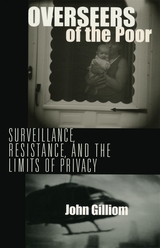
This powerful book lets us in on the conversations of low-income mothers from Appalachian Ohio as they talk about the welfare bureaucracy and its remarkably advanced surveillance system. In their struggle to care for their families, these women are monitored and assessed through a vast network of supercomputers, caseworkers, fraud control agents, and even grocers and neighbors.
In-depth interviews show that these women focus less on the right to privacy than on a critique of surveillance that lays bare the personal and political conflicts with which they live. And, while they have little interest in conventional forms of politics, we see widespread patterns of everyday resistance as they subvert the surveillance regime when they feel it prevents them from being good parents. Ultimately, Overseers of the Poor demonstrates the need to reconceive not just our understanding of the surveillance-privacy debate but also the broader realms of language, participation, and the politics of rights.
We all know that our lives are being watched more than ever before. As we struggle to understand and confront this new order, Gilliom argues, we need to spend less time talking about privacy rights, legislatures, and courts of law and more time talking about power, domination, and the ongoing struggles of everyday people.
READERS
Browse our collection.
PUBLISHERS
See BiblioVault's publisher services.
STUDENT SERVICES
Files for college accessibility offices.
RECENTLY PUBLISHED




UChicago Accessibility Resources
home | accessibility | search | about | contact us
BiblioVault ® 2001 - 2025
The University of Chicago Press