
 A SCHOLARLY BOOK REPOSITORY
32 start with P start with P
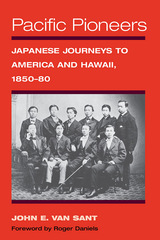
Although Japanese immigrants did not start arriving in substantial numbers in the West until after 1880, in the previous thirty years a handful of key encounters helped shape relations between Japan and the United States. John E. Van Sant explores the motivations and accomplishments of these resourceful, sometimes visionary individuals who made important inroads into a culture quite different from their own and paved the way for the Issei and Nisei.
Pacific Pioneers presents detailed biographical sketches of Japanese such as Joseph Heco, Niijima Jo, and the converts to the Brotherhood of the New Life and introduces the American benefactors, such as William Griffis, David Murray, and Thomas Lake Harris, who built relationships with their foreign visitors. Van Sant also examines the uneasy relations between Japanese laborers and sugar cane plantation magnates in Hawaii during this period and the shortlived Wakamatsu colony of Japanese tea and silk producers in California.
A valuable addition to the literature, Pacific Pioneers brings to life a cast of colorful, long-forgotten characters while forging a critical link between Asian and Asian American studies.
The twenty-first century is witnessing a dynamic broadening of how blackness signifies both in the U.S. and abroad. Literary writers of the new African diaspora are at the forefront of exploring these exciting approaches to what black subjectivity means. Pan-African American Literature is dedicated to charting the contours of literature by African born or identified authors centered around life in the United States. The texts examined here deliberately signify on the African American literary canon to encompass new experiences of immigration, assimilation and identification that challenge how blackness has been previously conceived. Though race often alienates and frustrates immigrants who are accustomed to living in all-black environments, Stephanie Li holds that it can also be a powerful form of community and political mobilization.
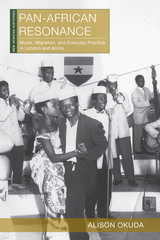
As African and Caribbean nations gained independence from Britain in the 1950s and 1960s, many young musicians, students, and professionals crossed the Atlantic in search of new opportunities and built vibrant communities. Pan-African Resonance: Music, Migration, and Everyday Practice in London and Accra traces these journeys from Ghana, Trinidad and Tobago, Jamaica, Saint Lucia, Barbados, and Guyana, exploring how migrants practiced pan-Africanism through music across continents and generations. Drawing on musical recordings, newspapers, oral histories, and government documents from six countries, Alison Okuda demonstrates that pan-African solidarity thrived through the everyday creation and enjoyment of popular music. The book unfolds in two parts. Starting in the 1950s, it examines how Ghanaian highlife and Trinidadian calypso brought together musicians and young members of the independence generation, first in London and later in Accra. Even amid cultural tensions, Ghanaian and Caribbean communities expressed aspirations for freedom and unity in nightclubs, recording studios, private homes, and public streets. Before Ghana’s 1966 coup d’état, Ghanaians and diasporic Africans collaborated to shape an independent African-Atlantic world. Although the coup disrupted formal Pan-Africanist organizing, in the second part of the book Okuda shows that in the 1970s a new generation sustained dynamic networks of solidarity through highlife, reggae, and other popular styles—heard in recordings, radio broadcasts, live performances, and community events. Influenced by generational change and musical fluidity, African diasporic unity has remained central to popular music, migration, and politics in Ghana and the wider African-Atlantic world into the twenty-first century. Offering a rich interdisciplinary approach, Pan-African Resonance will appeal to readers interested in popular culture, transnational history, diaspora studies, and modern African history.
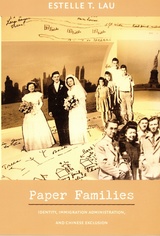
Drawing on these documents as well as immigration case files, legislative materials, and transcripts of interviews and court proceedings, Lau reveals immigration as an interactive process. Chinese immigrants and their U.S. families were subject to regulation and surveillance, but they also manipulated and thwarted those regulations, forcing the U.S. government to adapt its practices and policies. Lau points out that the Exclusion Acts and the pseudo-familial structures that emerged in response have had lasting effects on Chinese American identity. She concludes with a look at exclusion’s legacy, including the Confession Program of the 1960s that coerced people into divulging the names of paper family members and efforts made by Chinese American communities to recover their lost family histories.
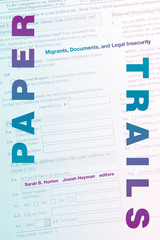
Contributors. Bridget Anderson, Deborah A. Boehm, Susan Bibler Coutin, Ruth Gomberg-Muñoz, Sarah B. Horton, Josiah Heyman, Cecilia Menjívar, Juan Thomas Ordóñez, Doris Marie Provine, Nandita Sharma, Monica Varsanyi

Tajikistan is one of the most remittance-dependent countries in the world. Moving beyond economistic push-pull narratives about post-Soviet migration, Paradoxes of Migration in Tajikistan foregrounds the experiences of those who “stay put” in the sending society and struggle to reproduce their moral communities. In this first book-length ethnography of migration in Tajikistan, Elena Borisova examines the role of mobility through historical and cultural ideas about the good life. She demonstrates how mobility becomes entwined with people’s efforts to become good, moral, and modern subjects. Addressing the complex relationship between the economic, imaginative, and moral aspects of (im)mobility, Borisova shows that mass migration from Tajikistan is as much a project of navigating ethical personhood as it is a quest for economic resources.
This book is a beautifully crafted ethnographic account that reveals how transnational regimes and structures of mobility, citizenship, and histories map out in the intimate spheres of the body, the person, and the family. It is a major contribution to contemporary migration research, which is mostly centered on Europe and North America, and to the field of Central Asian studies. Highly readable, it will be of interest to researchers of migration, (im)mobility and citizenship, and to scholars of all disciplines working on Central Asia.
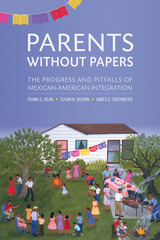
Parents Without Papers provides both a general conceptualization of immigrant integration and an in-depth examination of the Mexican American case. The authors draw upon unique retrospective data to shed light on three generations of integration. They show in particular that the “membership exclusion” experienced by unauthorized Mexican immigrants—that is, their fear of deportation, lack of civil rights, and poor access to good jobs—hinders the education of their children, even those who are U.S.-born. Moreover, they find that children are hampered not by the unauthorized entry of parents itself but rather by the long-term inability of parents, especially mothers, to acquire green cards.
When unauthorized parents attain legal status, the disadvantages of the second generation begin to disappear. These second-generation men and women achieve schooling on par with those whose parents come legally. By the third generation, socioeconomic levels for women equal or surpass those of native white women. But men reach parity only through greater labor-force participation and longer working hours, results consistent with the idea that their integration is delayed by working-class imperatives to support their families rather than attend college.
An innovative analysis of the transmission of advantage and disadvantage among Mexican Americans, Parents Without Papers presents a powerful case for immigration policy reforms that provide not only realistic levels of legal less-skilled migration but also attainable pathways to legalization. Such measures, combined with affordable access to college, are more important than ever for the integration of vulnerable Mexican immigrants and their descendants.
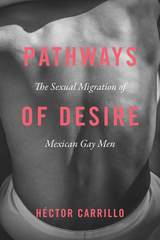
Further, Carrillo shows that sexual globalization must be regarded as a bidirectional, albeit uneven, process of exchange between countries in the global north and the global south. With this approach, Carrillo challenges the view that gay men from countries like Mexico would logically want to migrate to a “more sexually enlightened” country like the United States—a partial and limited understanding, given the dynamic character of sexuality in countries such as Mexico, which are becoming more accepting of sexual diversity. Pathways of Desire also provides a helpful analytical framework for the simultaneous consideration of structural and cultural factors in social scientific studies of sexuality. Carrillo explains the patterns of cross-cultural interaction that sexual migration generates and—at the most practical level—shows how the intricacies of cross-cultural sexual and romantic relations may affect the sexual health and HIV risk of transnational immigrant populations.
This collection gathers a unique group of contributors, including representatives from Congress, the United Nations, and Israel’s Ministry of Justice, as well as senior diplomats from Canada, Bulgaria, Portugal, Spain, and Turkey. Presenting their diverse perspectives, the contributors address regional and policy issues related to the mass migration of people, as well as questions concerning citizenship and national security, human trafficking in the form of prostitution, and cultural discrimination. The result is a multifaceted exploration of issues underlying many of the world’s economic, security, and social challenges. Other topics include the impact of state failure on migration, immigration in California, security measures and “preferred” immigrants in Canada after September 11, 2001, and Albanian migration into Greece.
Contributors. Alexandre Afonso, David Binder, Andrew C. Danopoulos, Constantine P. Danopoulos, Francis M. Deng, Mohamed A. El-Khawas, Omar G. Encarnación, Rochelle Gershuni, Larry L. Gerston, Ahmet Içduygu, Benjamin Kline, Bojan Korenic, Erin Kruger, Robert S. Leiken, Marlene Mulder, Elena Poptodorova, Tom Tancredo

Alcalde draws on interviews, surveys, participant observation, and textual analysis to argue that to belong is to exclude. To that end, transnational Peruvians engage in both subtle and direct policing along the borders of belonging. These acts allow them to claim and maintain the social status they enjoyed in their homeland even as they profess their openness and tolerance. Alcalde details these processes and their origins in Peru's gender, racial, and class hierarchies. As she shows, the idea of return—whether desired or rejected, imagined or physical—spurs constructions of Peruvianness, belonging, and home.
Deeply researched and theoretically daring, Peruvian Lives across Borders answers fascinating questions about an understudied group of migrants.

This massive annotated bibliography of all known significant eyewitness accounts of nineteenth-century central overland travel fills a conspicuous gap in historical literature, and will greatly accelerate research, writing, and collecting.
Platte River Road Narratives includes not only all identifiable overland accounts, but also a number of those identifiable in manuscript form only. Over 2,000 entries identify the author, the form of the passage, overland trip, and give Matte's authoritative commentary and evaluation, as well as identification of the repository of the source material.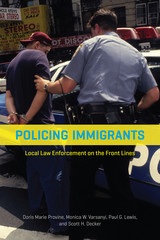
Policing Immigrants traces the transition of immigration enforcement from a traditionally federal power exercised primarily near the US borders to a patchwork system of local policing that extends throughout the country’s interior. Since federal authorities set local law enforcement to the task of bringing suspected illegal immigrants to the federal government’s attention, local responses have varied. While some localities have resisted the work, others have aggressively sought out unauthorized immigrants, often seeking to further their own objectives by putting their own stamp on immigration policing. Tellingly, how a community responds can best be predicted not by conditions like crime rates or the state of the local economy but rather by the level of conservatism among local voters. What has resulted, the authors argue, is a system that is neither just nor effective—one that threatens the core crime-fighting mission of policing by promoting racial profiling, creating fear in immigrant communities, and undermining the critical community-based function of local policing.

Polish Cities of Migration analyzes Poland’s transition to become a “country of immigration.” Incorporating in-depth interviews with thirty-seven Polish returned migrants, seventy Ukrainians, and seventeen foreigners living in Kalisz, Plock, and Pila, the book explores two interconnected puzzles: how Poland’s migration transition is influenced by its current status as an emigration country, and why migrants are spreading out beyond the metropolises. It argues that migrants’ feelings of comfort in such locations are explained by network and lifestyle considerations, as well as the social acceptance of migration by former migrant Poles.
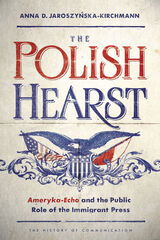
Anna D. Jaroszyńska-Kirchmann mines seven decades' worth of thoughts expressed by Ameryka-Echo readers to chronicle the ethnic press's role in the immigrant experience. Open and unedited debate harkened back to homegrown journalistic traditions, and Jaroszyńska-Kirchmann opens up the nuances of an editorial philosophy that cultivated readers as content creators. As she shows, ethnic publications in the process forged immigrant social networks and pushed notions of education and self-improvement throughout Polonia. Paryski, meanwhile, built a publishing empire that earned him the nickname ""The Polish Hearst.""
Detailed and incisive, The Polish Hearst opens the door on the long-overlooked world of ethnic publishing and the amazing life of one of its towering figures.
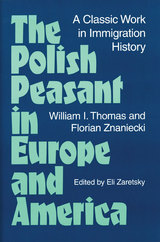

The 1948 war ended in the expulsion of hundreds of thousands of Palestinians from their villages and homes. Israeli settlers moved in to occupy their land and the Palestinian refugees found themselves in refugee camps, or in neighbouring Arab countries. Today there are nearly four million Palestinian refugees -- and they want the right to go home. Their problem is the greatest and most enduring refugee problem in the world.
Since 1948 Israeli refugee policy has become a classic case of denial: the denial that Zionist "transfer committees" had operated between 1937 and 1948; denial of any wrong-doing or any historical injustice; denial of the "right of return"; denial of restitution of property and compensation; and indeed denial of any moral responsibility or culpability for the creation of the refugee problem.
The aim of this book is to analyze Israeli policies towards the Palestinian refugees as they evolved from the 1948 catastrophe (or nakba) to the present. It is the first volume to look in detail at Israeli law and policy surrounding the refugee question. Drawing on extensive primary sources and previously classified archive material, Masalha discusses the 1948 exodus; Israeli resettlement schemes since 1948; Israeli approaches to compensation and restitution of property; Israeli refugee policies towards the internally displaced (‘present absentees’); and Israeli refugee policies during the Madrid and Oslo negotiations.
Masalha asks what rights Palestinians possess under international law? How can a refugee population be compensated, and will they ever be able to return to their homes? Masalha questions the official Israeli position that the only solution to the problem is resettlement of the refugees in Arab states or elsewhere. This book is a valuable resource for anyone interested in the subject that lies at the heart of the ongoing conflict in the Middle East.
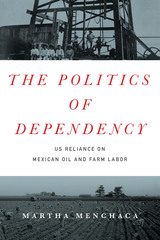
The United States and Mexico trade many commodities, the most important of which are indispensable sources of energy—crude oil and agricultural labor. Mexican oil and workers provide cheap and reliable energy for the United States, while US petro dollars and agricultural jobs supply much-needed income for the Mexican economy. Mexico’s economic dependence on the United States is well-known, but The Politics of Dependency makes a compelling case that the United States is also economically dependent on Mexico.
Expanding dependency theory beyond the traditional premise that weak countries are dominated by powerful ones, Martha Menchaca investigates how the United States and Mexico have developed an asymmetrical codependency that disproportionally benefits the United States. In particular, she analyzes how US foreign policy was designed to enable the US government to help shape the development of Mexico’s oil industry, as well as how migration from Mexico to the United States has been regulated by the US Congress to ensure that American farmers have sufficient labor. This unprecedented dual study of energy sectors that are usually examined in isolation reveals the extent to which the United States has become economically dependent on Mexico, even as it remains the dominant partner in the relationship. It also exposes the long-term effects of the agricultural policies of NAFTA, which led to the unemployment of millions of agricultural workers in Mexico, a large percentage of whom relocated to the United States.
Migration to new destinations in Europe and the United States has expanded dramatically over the past few decades. Within these destinations, there is a corresponding greater variety of ethnic, cultural, and/or religious diversity. This timely volume, The Politics of New Immigrant Destinations, considers the challenges posed by this proliferation of diversity for governments, majority populations, and immigrants.
The contributors assess the effectiveness of the policy and political responses that have been spawned by increasing diversity in four types of new immigrant destinations: “intermediate” destination countries—Ireland and Italy; culturally distinct regions experiencing new migration such as Catalonia in Spain or the American South; new destinations within traditional destination countries like the state of Utah and rural towns in England; and “early migration cycle” countries including Latvia and Poland.
The Politics of New Immigrant Destinations examines how these new destinations for immigrants compare to traditional destinations, with respect to their policy responses and success at integrating immigrants, offering perspectives from both immigrants and natives.
Contributors include: Dace Akule, Amado Alarcón, Rhys Andrews, Francesca Campomori, Tiziana Caponio, Scott Decker, Erica Dobbs, Melissa M. Goldsmith, Aleksandra Grzymała-Kazłowska, Claudio A. Holzner, Magdalena Lesińska, Paul Lewis, Helen B. Marrow, Laura Morales, Katia Pilati, Marie Provine, Monica Varsanyi, and the editors.
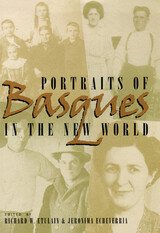
A collection of new essays on notable historic and contemporary Basques of America's Far West that offers a perceptive and lively examination of the lives of one of the West's most resilient and successful ethnic minorities. It is essential reading for anyone interested in the Basque people or those interested in the process of immigration and assimilation: these profiles illustrate how America's Basque immigrants have achieved success in mainstream society while retaining strong ties to their ancient Old World culture.
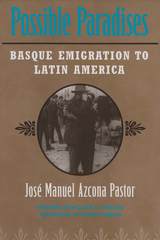
Possible Paradises, José Manuel Azcona Pastor's engaging and meticulously researched study of Basque emigration to the Americas, is a path breaking work of monumental importance. Ranging over the entire former Spanish American empire from Tierra del Fuego to the U.S. Southwest and covering over five centuries of history, Azcona examines the roles and fates of the Basques who came to the New World. He also studies the impact of the New World on the Basque Country, from the importance in the modern Basque diet of such American foodstuffs as corn and beans to the encouragement given to traditional Basque industries by the colonizers' demand for ships and iron tools. He considers the role of Basques in the Spanish imperial expeditions of exploration and conquest; their participation in transatlantic commerce and communication.
The Basque diaspora, although worldwide in dimension, has had its greatest presence and importance in the Americas. Azcona's pioneering study views the Basque presence in the New World through the broadest possible lens, linking Basque communities and activities from Argentina to the North American West.
Foreword by William A. Douglass. Translation by Roland Vazquez.
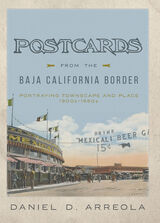
This form of place study calls attention to how we can see a past through a serial view of places, by the nature of repetition, and the photographing of the same place over and over again. Arreola draws our focus to townscapes, or built landscapes, of four border towns—Tijuana, Mexicali, Tecate, and Algodones—during the first half of the twentieth century. With an emphasis on the tourist’s view of these places, this book creates a vivid picture of what life was like for tourists and residents of these towns in the early and mid-twentieth century. Postcards from the Baja California Border is a rich and fascinating experience, one that takes you on a time-travel journey through border town histories and geographies while celebrating the visual intrigue of postcards.
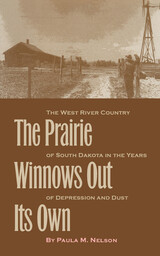
Between 1900 and 1915, in the last great land rush, over one hundred thousand homesteaders flooded into the west river country of South Dakota, a land noted for its aridity and unpredictable weather, its treelessness, and its endless sky. The settlers of “the last, best west” weathered their first crisis in the severe drought of 1910-1911, which winnowed out many of the speculators and faint of heart; they abandoned their founding hopes of quick success and substituted a new ethos of “next year country”—while this year was hard, next year would be better, an ironic phrase at once optimistic and fatalistic.
“Next year,” however, was in many of those years not better. The collapse of the agricultural economy in the immediate aftermath of the boom years of World War I set in motion a pattern of regional decline amid national prosperity and cultural change: the rise of radio and mass culture increased rural folks' awareness of national trends and tastes, a development which paradoxically increased their own sense of remoteness and isolation. The failure of the farm economy to recover to any substantial degree in the twenties caused a less dramatic but cumulatively greater impact on the west river country's population and prospects—a second great crisis.
The Great Depression and the dustbowl years of the thirties were the greatest test of the west river people. The drought of 1910-1911, heretofore seen as the benchmark of bad times, faded even in the remembrances of the original pioneers in the face of the thirties' relentless drought, grasshoppers, blowing dust, and the accompanying starvation, struggle, and despair. The Depression in the west river country was a blast furnace from which a hardened yet still hopeful people emerged, scathed but undefeated. The Prairie Winnows Out Its Own is the voice of this experience.

Precarious Motherhood is a deeply human investigation of the lives of racially minoritized mothers as they navigate the intersecting challenges of financial hardship and the UK’s hostile immigration policies. Based on thorough ethnographic research, Rachel Benchekroun examines how these mothers forge relationships to access support, maintain their children’s well-being, and carve out spaces of belonging in an often unwelcoming system. The book captures the resilience and the relentless precarity of motherhood in migration, where every relationship shapes social barriers and everyday survival.
Through the voices of over twenty migrant mothers, this work sheds light on the personal and political dimensions of motherhood. It provides critical insights into state policies and social infrastructures that shape migrant lives, making it a valuable resource for scholars of migration and social justice.

Browne finds that when asked to identify themselves by race, these immigrants either reject racial identities entirely or draw on belief systems from Mexico and the Dominican Republic that emphasize European-indigenous mixed race identities. When branded as typical Latines in the U.S., Mexican middle-class immigrants emphasize their social class or explain that a typical Latine can be middle-class, while Dominicans simply indicate that they are not Mexican. Rather than blame systemic racism, both Mexican and Dominican middle-class immigrants often attribute misperceptions of their identity to non-Latines’ ignorance or to individual Latines’ lack of effort in trying to assimilate.
But these middle-class Latine immigrants do not simply seek to position themselves on par with the U.S.-born white middle class. Instead, they leverage their cosmopolitanism—for example, their multilingualism or their children’s experiences traveling abroad—to engage in what Browne calls “one-up assimilation,” a strategy that aims to position them above the white middle class, who are often monolingual and unaware of the world outside the United States. Middle-class Latines’ cosmopolitanism and valuing of diversity also lead them to have cordial relations with African Americans, but these immigrants do not see themselves as sharing African Americans’ status as oppressed minorities.
Although the stereotype of the typical Latine has made middle-class Latine immigrants susceptible to stigma, they insist that this stigma does not play a significant role in their lives. In many cases, they view the stereotype as a minor issue, feel that opportunities for upward mobility outweigh any negative experiences, or downplay racism by emphasizing their class privilege. Browne observes that while downplaying racism may help middle-class Latine immigrants maintain their dignity, it also perpetuates inequality by reinforcing the lower status of working-class undocumented immigrants. It is thus imperative, Browne argues, to repeal harsh anti-immigration policies, a move that will not only ease the lives of the undocumented but also send a message about who belongs in the country.
Offering a nuanced exploration of how race, social class, and immigration status intersect, Precarious Privilege provides a complex portrait of middle-class Latine immigrants in the United States today.

Examines the role of digital technologies in the lives of Kaqchikel Maya women whose husbands work abroad.
Anthropologist Meghan Farley Webb’s ethnography, Public Loves, Private Troubles, uses the lens of cellphones and other digital technologies to unpack marriage, love, sexuality, and family issues of Kaqchikel Maya women who remain in Guatemala while their husbands are part of the transnational migration workforce. Indigenous intimacy has been underexplored in ethnographic literature, and this is among the first books to focus on information technology's impact on intimacy and family in the Maya area. Overall, Webb shows how Maya women are empowered with their more autonomous lives when the husbands are absent but also are constrained by social media monitoring of their activities.
To begin, Webb surveys the Tecpán highland setting and civil war and migration history. She discusses how neoliberal policies are manifested in the financial and emotional stress of having to leave for the United States for economic opportunities. Chapter 1 characterizes the lives of Maya women in Guatemala who “endure” while their husbands are working abroad. Webb describes how marriage, family, and even the Catholic Church shape how the women see themselves and their situations. Chapter 2 delves into the history and use of technologies, such as cellphones and WhatsApp, and how they affect communication in these transnational households. Insight is given to the family and personhood. Chapter 3 focuses on the prominent use of the Facebook platform. Men use the app to conduct extramarital affairs, but the app is also used by couples as a way to express a public performance of devotion and a happy family. Chapter 4 focuses on the surveillance, including malicious gossip, that Kaqchikel women are subjected to especially from their mothers-in-law, who live nearby or in the same household. The narrative culminates in a discussion of how many wives are happier and more empowered without the men at home, yet they still can experience uncertainty, loneliness, and depression.
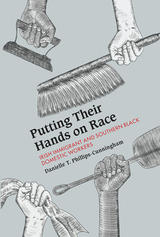
Putting Their Hands on Race offers an important labor history of 19th and early 20th century Irish immigrant and US southern Black migrant domestic workers. Drawing on a range of archival sources, this intersectional study explores how these women were significant to the racial labor and citizenship politics of their time. Their migrations to northeastern cities challenged racial hierarchies and formations. Southern Black migrant women resisted the gendered racism of domestic service, and Irish immigrant women strove to expand whiteness to position themselves as deserving of labor rights. On the racially fractious terrain of labor, Black women and Irish immigrant women, including Victoria Earle Matthews, the “Irish Rambler”, Leonora Barry, and Anna Julia Cooper, gathered data, wrote letters and speeches, marched, protested, engaged in private acts of resistance in the workplace, and created women’s institutions and organizations to assert domestic workers’ right to living wages and protection.
READERS
Browse our collection.
PUBLISHERS
See BiblioVault's publisher services.
STUDENT SERVICES
Files for college accessibility offices.
RECENTLY PUBLISHED



UChicago Accessibility Resources
home | accessibility | search | about | contact us
BiblioVault ® 2001 - 2026
The University of Chicago Press