logo for University of Minnesota Press
Parent Education
A Survey of the Minnesota Program
Edith Davis
University of Minnesota Press, 1939
Parent Education: A Survey of the Minnesota Program was first published in 1939. Minnesota Archive Editions uses digital technology to make long-unavailable books once again accessible, and are published unaltered from the original University of Minnesota Press editions.Institute of Child Welfare Monograph Series, Number 17The University of Minnesota Child Welfare Institute surveys its program in this volume, which describes the organization and development of its study groups and makes a thoroughgoing analysis of the amount and type of information on child training acquired by 23,000 parents who attended classes in cities and rural communities throughout the state over a period of six years.The effect of attendance at the study groups was measured by tests administered before and after instruction, recording changes in the mothers’ attitudes toward various behavior traits – delinquent, neurotic, and personal-social – in boys and girls from five to fifteen years of age.From the group study records, and aided by their own long experience in parental education, the authors work out conclusions and suggestions that will be of value to psychologists and persons organizing or carrying on similar programs.
[more]

logo for University of Minnesota Press
Parent Education
The Northwest Conference on Child Health and Parent Education
Richard Beard
University of Minnesota Press, 1927
Parent Education was first published in 1927. Minnesota Archive Editions uses digital technology to make long-unavailable books once again accessible, and are published unaltered from the original University of Minnesota Press editions.This volume, containing papers read before the Northwest Conference on Child Health and Parent Education in 1927, includes a foreword by Lotus D. Coffman, President of the University of Minnesota. Parents who realize that “instinct” is insufficient equipment for fulfilling their responsibilities toward their children, and all others interested in the welfare of children will fund much valuable assistance in this collection of twenty-two papers.The contributors include such nationally known experts as: Henry F. Helmholz, Mayo Clinic; George Draper, Columbia University; Lydia J. Roberts, University of Chicago; Bird T. Baldwin, University of Iowa; Smiley Blanton, Vassar College; and Max Seham, Richard E. Scammon, and John E. Anderson, of the University of Minnesota.
[more]

logo for Temple University Press
Parent Trip
Unexpected Roads to Form a Family
Anndee Hochman
Temple University Press, 2026
Families are created through conception, adoption, fostering and family-blending. As a Philadelphia Inquirer columnist for nearly a decade, Anndee Hochman interviewed hundreds of parents—older and younger, single and coupled, straight and queer—about the paths they forged and the obstacles they faced on the road to form a family. Parent Trip is Hochman’s collection of these poignant, wry, and complicated stories.

Hochman recounts the fraught emotions of couples struggling with infertility, the joy of a single gay man becoming a father in his forties, and the anxiety of people waiting for the adoption worker to call with good news. Parent Trip tells of sperm donors and gestational surrogates, midwives and miscarriages; it chronicles how children prompt parents to recalibrate their lives.

In personal essays that weave throughout the profiles, Hochman connects her interviewees’ lives to the love, heartbreak, and uncertainty in her own path to parenthood. Through myriad mundane and extraordinary moments, Parent Trip not only chronicles the magic and labor of childrearing, it also celebrates the infinite ways real families come to be.

[more]

front cover of The Parental Experience in Midlife
The Parental Experience in Midlife
Edited by Carol D. Ryff and Marsha Mailick Seltzer
University of Chicago Press, 1996
Most adults experience parenthood. But the longest period of the parental experience—when children grow into adolescence and young adulthood and parents themselves are not yet elderly—is the least understood. In this groundbreaking volume, distinguished scholars from anthropology, demography, economics, psychology, social work, and sociology explore the uncharted years of midlife parenthood. The authors employ a rich array of theory and methods to address how the parental experience affects the health, well-being, and development of individuals. Collectively, they look at the time when parents watch offspring grow into adulthood and begin to establish adult-to-adult relationships with their children.

With a strong emphasis on the diversity of midlife parenting, including sociodemographic variations and specific parent or child characteristics such as single parenting or raising a child with a disability, this volume presents for the first time the complex factors that influence the quality of the midlife parenting experience.
[more]

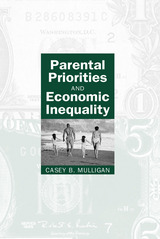
front cover of Parental Priorities and Economic Inequality
Parental Priorities and Economic Inequality
Casey B. Mulligan
University of Chicago Press, 1997
What determines whether children grow up to be rich or poor? Arguing that parental actions are some of the most important sources of wealth inequality, Casey B. Mulligan investigates the transmission of economic status from one generation to the next by constructing an economic model of parental preferences.

In Mulligan's model, parents determine the degree of their altruistic concern for their children and spend time with and resources on them accordingly—just as they might make choices about how they spend money. Mulligan tests his model against both old and new evidence on the intergenerational transmission of consumption, earnings, and wealth, including models that emphasize "financial constraints." One major prediction of Mulligan's model confirmed by the evidence is that children of wealthy parents typically spend more than they earn.

Mulligan's innovative approach can also help explain other important behavior, such as charitable giving and "corporate loyalty," and will appeal to a wide range of quantitatively oriented social scientists and sociobiologists.
[more]

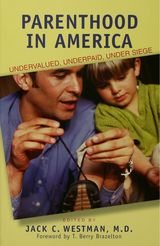
front cover of Parenthood In America
Parenthood In America
Undervalued, Underpaid, Under Siege
Jack C. Westman, M.D.
University of Wisconsin Press, 2001
Our society is engaged in heated debates about family values, child care, education, and the future of children. Largely missing from these debates is any serious discussion of the complex vocation we call "parenthood." This book recognizes parenthood as a lifelong process in which parents and children grow together. The distinguished contributors call for families, employers, communities, government, and society to give parents real help with their day-to-day concerns and challenges.
    Parenthood in America brings the insights of experts in child development, education, health, media studies, economics, history, sociology, and human services to bear on practical aspects of childrearing and on the kinds of policies that have a real effect on parenting. In response to the stresses of parenthood today, they call for:
o family-friendly workplaces and decent childcare options
o pediatric health care for all
o programs that aid children’s development as well as their physical health
o recognition by professionals of parents’ expert knowledge about their own children
o alternatives to vapid or violent games and TV programs
o prioritization of time for family meals, talks, chores, and activities
o valuing of caring relationships above wealth and possessions
o appreciation of cultural and religious diversity
o supportive networks among parents, teachers, pediatricians, and childcare providers.
[more]

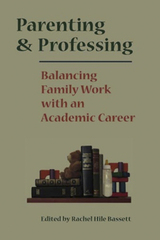
front cover of Parenting and Professing
Parenting and Professing
Balancing Family Work with an Academic Career
Rachel Hile Bassett
Vanderbilt University Press, 2005
Featuring many personal accounts, the twenty-four essays in this collection explore the challenges and possibilities confronting those, especially women, who combine parenting and academic work. Written by a diverse group of educators who present a real-world variety of situations, the collection also includes ideas for change at the individual, interpersonal, policy, and system levels.
[more]

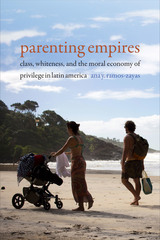
front cover of Parenting Empires
Parenting Empires
Class, Whiteness, and the Moral Economy of Privilege in Latin America
Ana Yolanda Ramos-Zayas
Duke University Press, 2020
In Parenting Empires, Ana Y. Ramos-Zayas focuses on the parenting practices of Latin American urban elites to analyze how everyday experiences of whiteness, privilege, and inequality reinforce national and hemispheric idioms of anti-corruption and austerity. Ramos-Zayas shows that for upper-class residents in the affluent neighborhoods of Ipanema (Rio de Janeiro) and El Condado (San Juan), parenting is particularly effective in providing moral grounding for neoliberal projects that disadvantage the overwhelmingly poor and racialized people who care for and teach their children. Wealthy parents in Ipanema and El Condado cultivate a liberal cosmopolitanism by living in multicultural city neighborhoods rather than gated suburban communities. Yet as Ramos-Zayas reveals, their parenting strategies, which stress spirituality, empathy, and equality, allow them to preserve and reproduce their white privilege. Defining this moral economy as “parenting empires,” she sheds light on how child-rearing practices permit urban elites in the Global South to sustain and profit from entrenched social and racial hierarchies.
[more]

front cover of Parenting for Primates
Parenting for Primates
Harriet J. Smith
Harvard University Press, 2005

What parent hasn’t wondered “What do I do now?” as a baby cries or a teenager glares? Making babies may come naturally, but knowing how to raise them doesn’t. As primatologist-turned-psychologist Harriet J. Smith shows in this lively safari through the world of primates, parenting by primates isn’t instinctive, and that’s just as true for monkeys and apes as it is for humans.

In this natural history of primate parenting, Smith compares parenting by nonhuman and human primates. In a narrative rich with vivid anecdotes derived from interviews with primatologists, from her own experience breeding cotton-top tamarin monkeys for over thirty years, and from her clinical psychology practice, Smith describes the thousand and one ways that primate mothers, fathers, grandparents, siblings, and even babysitters care for their offspring, from infancy through young adulthood.

Smith learned the hard way that hand-raised cotton-top tamarins often mature into incompetent parents. Her observation of inadequate parenting by cotton-tops plus her clinical work with troubled human families sparked her interest in the process of how primates become “good-enough” parents. The story of how she trained her tamarins to become adequate parents lays the foundation for discussions about the crucial role of early experience on parenting in primates, and how certain types of experiences, such as anxiety and social isolation, can trigger neglectful or abusive parenting.

Smith reveals diverse strategies for parenting by primates, but she also identifies parenting behaviors crucial to the survival and development of primate youngsters that have stood the test of time.

[more]

front cover of Parenting on the Frontlines
Parenting on the Frontlines
Stories of Love, Loss, and Wonder
Kelly Cooper Paradis
Michigan Publishing Services, 2023

Each day of working parenthood is a rollercoaster of success and failure. My child ate a carrot! Then spit it out on the dog. I got to work on time! But there is a mystery stain on my dress shirt and this Tide stick is definitely making it worse. Also yes, that was “Baby Shark” I was humming while accidentally unmuted on the Zoom call, and no, I am not going to be able to sew an octopus costume from scratch by Friday. Please tell me there is something available at Target. 

As a parent, we live through levels of both joy and sorrow that we didn’t even know existed before. And we wonder—is it only me? Am I alone in this? In Parenting on the Frontlines, we explore both the lighter and heavier sides of working parenthood. The stories shared here are written by healthcare workers at Michigan Medicine, but all caregivers will find pieces to which they can relate. Most importantly, we want you to know that you are not alone on your journey, no matter where it takes you. 
[more]

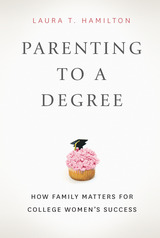
front cover of Parenting to a Degree
Parenting to a Degree
How Family Matters for College Women's Success
Laura T. Hamilton
University of Chicago Press, 2016
Helicopter parents—the kind that continue to hover even in college—are one of the most ridiculed figures of twenty-first-century parenting, criticized for creating entitled young adults who boomerang back home. But do involved parents really damage their children and burden universities? In this book, sociologist Laura T. Hamilton illuminates the lives of young women and their families to ask just what role parents play during the crucial college years.
           
Hamilton vividly captures the parenting approaches of mothers and fathers from all walks of life—from a CFO for a Fortune 500 company to a waitress at a roadside diner. As she shows, parents are guided by different visions of the ideal college experience, built around classed notions of women’s work/family plans and the ideal age to “grow up.” Some are intensively involved and hold adulthood at bay to cultivate specific traits: professional helicopters, for instance, help develop the skills and credentials that will advance their daughters’ careers, while pink helicopters emphasize appearance, charm, and social ties in the hopes that women will secure a wealthy mate. In sharp contrast, bystander parents—whose influence is often limited by economic concerns—are relegated to the sidelines of their daughter’s lives. Finally, paramedic parents—who can come from a wide range of class backgrounds—sit in the middle, intervening in emergencies but otherwise valuing self-sufficiency above all.
           
Analyzing the effects of each of these approaches with clarity and depth, Hamilton ultimately argues that successfully navigating many colleges and universities without involved parents is nearly impossible, and that schools themselves are increasingly dependent on active parents for a wide array of tasks, with intended and unintended consequences. Altogether, Parenting to a Degree offers an incisive look into the new—and sometimes problematic—relationship between students, parents, and universities. 
[more]

front cover of Parenting While PhDing
Parenting While PhDing
Surviving and Improving the Working Conditions of Graduate Student Parents
Jackie Hoermann-Elliott
Rutgers University Press, 2025
Being a PhD student is not easy. Navigating the highly competitive world of academia while working hard for little or no pay would be stressful for anyone—but it’s especially challenging for graduate students who are also parents.
 
Featuring contributions from more than forty current and former graduate students raising children, Parenting While PhDing offers valuable advice for students and administrators. Parents will get practical recommendations on both child care and self-care, learning how to form supportive personal and professional networks while establishing a healthy work/life balance. The collection also offers thoughtful suggestions on how to make graduate programs less toxic and more inclusive.
 
Recognizing that not all graduate students have similar backgrounds or needs, Parenting While PhDing features a diverse range of viewpoints, including queer, trans, disabled, BIPOC, immigrant, and first-generation college students. The authors represent a variety of disciplines, from the natural and social sciences to the humanities and health care professions. Together, they share fresh perspectives on the experiences of graduate students with children and offer strategies they can use to navigate the dual pressures of the academy and parenting.
[more]

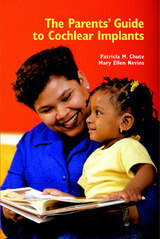
front cover of The Parents' Guide to Cochlear Implants
The Parents' Guide to Cochlear Implants
Patricia M. Chute
Gallaudet University Press, 2002
Now, parents of deaf children have at hand a complete guide to the process of cochlear implantation. Written by two eminent professionals in deaf education, The Parents’ Guide to Cochlear Implants explains in a friendly, easy-to-follow style each stage of the process. Parents will discover how to have their child evaluated to determine her or his suitability for an implant. They’ll learn about implant device options, how to choose an implant center, and every detail of the surgical procedure. The initial “switch-on” is described along with counseling about device maintenance.

Most importantly, parents will learn their roles in helping their child adjust to and successfully use the cochlear implant. The Parents’ Guide to Cochlear Implants emphasizes such critical subjects as learning to listen through home activities, implants as tools for language development, and critical issues regarding school placement. This encouraging book considers the implications for performance in light of the whole child, including issues related to Deaf culture and cochlear implants. The authors also include brief stories by parents whose children have had implants that provide reassuring actual experiences to parents considering the procedure for their own child. With a last word on parenting perspectives and a rich source of resources in the appendices, this one-of-a-kind guide will arm parents of deaf children with complete confidence to make informed decisions about cochlear implantation.
[more]

front cover of Paternity
Paternity
The Elusive Quest for the Father
Nara B. Milanich
Harvard University Press, 2019

“In this rigorous and beautifully researched volume, Milanich considers the tension between social and biological definitions of fatherhood, and shows how much we still have to learn about what constitutes a father.”
—Andrew Solomon, author of Far from the Tree: Parents, Children, and the Search for Identity


For most of human history, the notion that paternity was uncertain appeared to be an immutable law of nature. The unknown father provided entertaining plotlines from Shakespeare to the Victorian novelists and lay at the heart of inheritance and child support disputes. But in the 1920s new scientific advances promised to solve the mystery of paternity once and for all. The stakes were high: fatherhood has always been a public relationship as well as a private one. It confers not only patrimony and legitimacy but also a name, nationality, and identity.

The new science of paternity, with methods such as blood typing, fingerprinting, and facial analysis, would bring clarity to the conundrum of fatherhood—or so it appeared. Suddenly, it would be possible to establish family relationships, expose adulterous affairs, locate errant fathers, unravel baby mix-ups, and discover one’s true race and ethnicity. Tracing the scientific quest for the father up to the present, with the advent of seemingly foolproof DNA analysis, Nara Milanich shows that the effort to establish biological truth has not ended the quest for the father. Rather, scientific certainty has revealed the fundamentally social, cultural, and political nature of paternity. As Paternity shows, in the age of modern genetics the answer to the question “Who’s your father?” remains as complicated as ever.
[more]

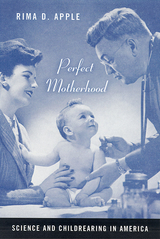
front cover of Perfect Motherhood
Perfect Motherhood
Science and Childrearing in America
Apple, Rima
Rutgers University Press, 2006

Parenting today is virtually synonymous with worry. We want to ensure that our children are healthy, that they get a good education, and that they grow up to be able to cope with the challenges of modern life. In our anxiety, we are keenly aware of our inability to know what is best for our children. When should we toilet train? What is the best way to encourage a fussy child to eat? How should we protect our children from disease and injury?

Before the nineteenth century, maternal instinct—a mother’s “natural know-how”—was considered the only tool necessary for effective childrearing. Over the past two hundred years, however, science has entered the realm of motherhood in increasingly significant ways.  In Perfect Motherhood, Rima D. Apple shows how the growing belief that mothers need to be savvy about the latest scientific directives has shifted the role of expert away from the mother and toward the professional establishment. Apple, however, argues that most women today are finding ways to negotiate among the abundance of scientific recommendations, their own knowledge, and the reality of their daily lives.
[more]

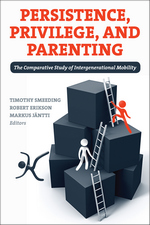
front cover of Persistence, Privilege, and Parenting
Persistence, Privilege, and Parenting
The Comparative Study of Intergenerational Mobility
Timothy Smeeding
Russell Sage Foundation, 2012
Americans like to believe that theirs is the land of opportunity, but the hard facts are that children born into poor families in the United States tend to stay poor and children born into wealthy families generally stay rich. Other countries have shown more success at lessening the effects of inequality on mobility—possibly by making public investments in education, health, and family well-being that offset the private advantages of the wealthy. What can the United States learn from these other countries about how to provide children from disadvantaged backgrounds an equal chance in life? Making comparisons across ten countries, Persistence, Privilege, and Parenting brings together a team of eminent international scholars to examine why advantage and disadvantage persist across generations. The book sheds light on how the social and economic mobility of children differs within and across countries and the impact private family resources, public policies, and social institutions may have on mobility. In what ways do parents pass advantage or disadvantage on to their children? Persistence, Privilege, and Parenting is an expansive exploration of the relationship between parental socioeconomic status and background and the outcomes of their grown children. The authors also address the impact of education and parental financial assistance on mobility. Contributors Miles Corak, Lori Curtis, and Shelley Phipps look at how family economic background influences the outcomes of adult children in the United States and Canada. They find that, despite many cultural similarities between the two countries, Canada has three times the rate of intergenerational mobility as the United States—possibly because Canada makes more public investments in its labor market, health care, and family programs. Jo Blanden and her colleagues explore a number of factors affecting how advantage is transmitted between parents and children in the United States and the United Kingdom, including education, occupation, marriage, and health. They find that despite the two nations having similar rates of intergenerational mobility and social inequality, lack of educational opportunity plays a greater role in limiting U.S. mobility, while the United Kingdom’s deeply rooted social class structure makes it difficult for the disadvantaged to transcend their circumstances. Jane Waldfogel and Elizabeth Washbrook examine cognitive and behavioral school readiness across income groups and find that pre-school age children in both the United States and Britain show substantial income-related gaps in school readiness—driven in part by poorly developed parenting skills among overburdened, low-income families. The authors suggest that the most encouraging policies focus on both school and home interventions, including such measures as increases in federal funding for Head Start programs in the United States, raising pre-school staff qualifications in Britain, and parenting programs in both countries. A significant step forward in the study of intergenerational mobility, Persistence, Privilege, and Parenting demonstrates that the transmission of advantage or disadvantage from one generation to the next varies widely from country to country. This striking finding is a particular cause for concern in the United States, where the persistence of disadvantage remains stubbornly high. But, it provides a reason to hope that by better understanding mobility across the generations abroad, we can find ways to do better at home.
[more]

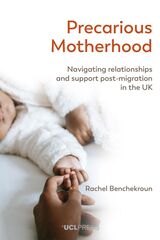
front cover of Precarious Motherhood
Precarious Motherhood
Navigating Relationships and Support Post-Migration in the UK
Rachel Benchekroun
University College London, 2025
When the state withdraws support, migrant mothers build their own safety nets—a look at the strategies and struggles of those raising children under immigration insecurity.

Precarious Motherhood is a deeply human investigation of the lives of racially minoritized mothers as they navigate the intersecting challenges of financial hardship and the UK’s hostile immigration policies. Based on thorough ethnographic research, Rachel Benchekroun examines how these mothers forge relationships to access support, maintain their children’s well-being, and carve out spaces of belonging in an often unwelcoming system. The book captures the resilience and the relentless precarity of motherhood in migration, where every relationship shapes social barriers and everyday survival.

Through the voices of over twenty migrant mothers, this work sheds light on the personal and political dimensions of motherhood. It provides critical insights into state policies and social infrastructures that shape migrant lives, making it a valuable resource for scholars of migration and social justice.
 
[more]


Send via email Share on Facebook Share on Twitter