
 A SCHOLARLY BOOK REPOSITORY
14 start with P start with P
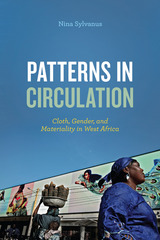
Sylvanus brings wax cloth’s unique and complex history to light: born as a nineteenth-century Dutch colonial effort to copy Javanese batik cloth for Southeast Asian markets, it was reborn as a status marker that has dominated the visual economy of West African markets. Although most wax cloth is produced in China today, it continues to be central to the expression of West African women’s identity and power. As Sylvanus shows, wax cloth expresses more than this global motion of goods, capital, aesthetics, and labor—it is a form of archive where intimate and national memories are stored, always ready to be reanimated by human touch. By uncovering this crucial aspect of West African material culture, she enriches our understanding of global trade, the mutual negotiations that drive it, and the how these create different forms of agency and subjectivity.
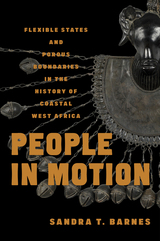
Beginning in the late fifteenth century, more than two million people were taken from areas that lay behind the Bight of Benin, enslaved, and forced into the perilous Middle Passage bound for the New World. While a vast swath of scholarly work on this region has explored the relationships among the transatlantic slave trade’s ruling elites and overseas merchants, the practices that shaped the region’s political and cultural dynamics, especially those that dealt with other kinds of trade, have yet to be thoroughly examined.
Sandra T. Barnes offers a history focused on the Benin Region’s patchwork of small states and ports that saw a constant movement of people and goods for centuries. As such, this book widens the lens of scholarship to include people of all social levels behind the political rivalries and dynamic changes that marked the period. Barnes concentrates on protective relationships and the violence people were forced to endure during a fast-moving, tumultuous period of history, examining how they organized their lives and why this mattered. The result is a refreshingly original work that challenges long-held assumptions about West Africa’s past, explaining what life was like for people on the coast during the transatlantic slave trade.
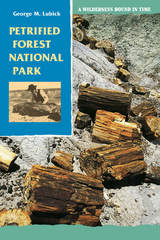
Petrified Forest National Park: A Wilderness Bound in Time speeds the reader on an ancient ecological journey, from the time of dinosaurs to the discovery of their Triassic fossils and on through a century of political maneuvering to create a place for the forest in American history. George Lubick describes how a dedicated few understood the environmental importance as well as the unique beauty of the park's Triassic Chinle Formation and the Painted Desert. Nearly a million people "visit the Triassic" annually; this environmental history of the ancient forest is important for those who know the park as well as those interested in natural America. Petrified Forest National Park is one of the few complete histories of any national park, a well-told, balanced treatment of the environmental, political, and historical factors that shape America's natural history.
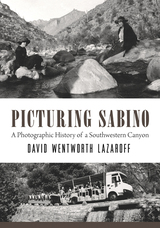
The story is vividly told through numerous historical photographs, lively anecdotes, and an engaging text, informed by decades of research by David Wentworth Lazaroff. Along the way the reader makes the acquaintance of ordinary picnickers as well as influential citizens who helped to reshape the canyon, while witnessing the canyon’s evolving relationship with its growing urban neighbor. The book will fascinate readers who are already familiar with Sabino Canyon, as well as anyone with an interest in local or regional history, or in historical photography.
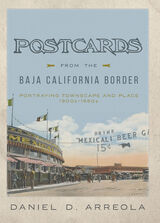
This form of place study calls attention to how we can see a past through a serial view of places, by the nature of repetition, and the photographing of the same place over and over again. Arreola draws our focus to townscapes, or built landscapes, of four border towns—Tijuana, Mexicali, Tecate, and Algodones—during the first half of the twentieth century. With an emphasis on the tourist’s view of these places, this book creates a vivid picture of what life was like for tourists and residents of these towns in the early and mid-twentieth century. Postcards from the Baja California Border is a rich and fascinating experience, one that takes you on a time-travel journey through border town histories and geographies while celebrating the visual intrigue of postcards.

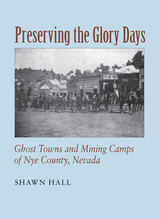
Nye County is Nevada’s largest and least populated county, but it is also the site of many of the state’s most colorful ghost towns and mining camps. The county’s economy throughout its history has been largely based on its mines--first, exploiting veins of gold and silver, and more recently deposits of raw materials for modern industry, such as molybdenum and barite. It was here that famous boomtowns like Tonopah and Rhyolite sprang up after the discovery of nearby lodes brought in rushes of prospectors and the merchants who supported them. But the county includes many smaller, shorter-lived camps and numerous abandoned stagecoach and railroad stops associated with defunct mining operations.This book offers a lively, informative record of Nevada’s isolated interior. Hall first published a guide to Nye County’s ghost towns in 1981. Since then, he has continued his research into the county’s past and has uncovered much new information and corrected some errors. To prepare this revised and greatly expanded edition, he revisited all 175 sites recorded earlier and has added more than 20 previously unlisted sites.
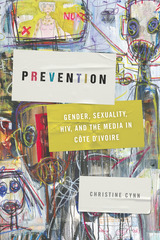
More specifically, Cynn argues that through the bolstering of normative conceptions of gendered sexualities and families, HIV prevention media campaigns seek to actively create proper subjects, a goal corresponding with nation-building projects and reproducing their terms of belonging. During periods of increasingly virulent political and economic struggles in Côte d’Ivoire, such HIV prevention messages have lent support to lender- and state-mandated structural adjustment policies and to the exclusionary logic that casts some—such as those suffering from AIDS-related illnesses, those labeled as “homosexual,” sex workers, intravenous drug users, and the HIV-positive child—as implicitly unassimilable to the community and nation. Deeply interdisciplinary, Prevention brings to light new forms of exclusion and expands scholarship on gender and sexual normativities as it intersects with that on public health, neoliberalism, and film and media.

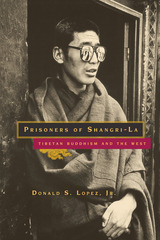
Upon its original publication, Prisoners of Shangri-La sent shockwaves through the field of Tibetan studies—hailed as a timely, provocative, and courageous critique. Twenty years hence, the situation in Tibet has only grown more troubled and complex—with the unrest of 2008, the demolition of the dwellings of thousands of monks and nuns at Larung Gar in 2016, and the scores of self-immolations committed by Tibetans to protest the Dalai Lama’s exile.
In his new preface to this anniversary edition, Lopez returns to the metaphors of prison and paradise to illuminate the state of Tibetan Buddhism—both in exile and in Tibet—as monks and nuns still seek to find a way home. Prisoners of Shangri-La remains a timely and vital inquiry into Western fantasies of Tibet.
"Lopez lifts the veil on America's romantic vision of Tibet to reveal a country and a spiritual history more complex and less ideal than popular perceptions allow. . . . Lively and engaging, Lopez's book raises important questions about how Eastern religions are often co-opted, assimilated and misunderstood by Western culture."—Publishers Weekly
"Proceeding with care and precision, Lopez reveals the extent to which scholars have behaved like intellectual colonialists. . . . Someone had to burst the bubble of pop Tibetology, and few could have done it as resoundingly as Lopez."—Booklist
"Fascinating. . . [A] provocative exploration. Lopez conveys the full dizziness of the Western encounter with Tibet and Tibetan Buddhism."—Fred Pheil, Tricycle: The Buddhist Review
"A timely and courageous exploration. . . . [Lopez's] book will sharpen the terms of the debate over what the Tibetans and their observers can or should be doing about the place and the idea of Tibet. And that alone is what will give us all back our Shambhala."—Jonathan Spence, Lingua Franca Book Review
"Lopez's most important theme is that we should be wary of the idea . . . that Tibet has what the West lacks, that if we were only to look there we would find the answers to our problems. Lopez's book shows that, on the contrary, when the West has looked at Tibet, all that it has seen is a distorted reflection of itself."—Ben Jackson, Times Higher Education Supplement
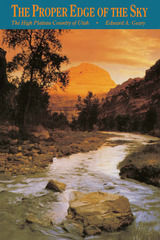
Edward Geary’s collection of writings on the High Plateau country of central and southern Utah, a combination guidebook, travel narrative, personal essays, and natural, social, and literary history, encompasses each of those forms with a sweep as broad as the landscape it describes.
It traces the progress of travelers to the region, including the historic Dominguez-Escalante party in 1776, and trappers and explorers such as Jedediah Smith, John C. Freemont, and Kit Carson. Scandinavian and English descendants of the early Mormon pioneers, sent to settle Manti and surrounding areas by Brigham Young in 1849, populate many of the pages and dominate the agrarian villages described by the author. The book also describes the multiethnic society of French Basque, Greeks, Slavs, Italians, Chinese, Welsh, and Finnish laborers and coal miners that developed in the region.
Geary writes of all these people with affection and a deep sense of place, of belonging to a distinctive landscape and its history. It is a book that will bring a rush of understanding to those who have lived in the High Plateaus and greater depth of appreciation to visitors.

While there is an abundance of social science studies giving voice to the dominant actors of hegemonic violence in Hausa society, there is a dearth of works that center the voices of the afflicted, unprivileged, and marginalized class, among whom are women and youth. One aim of this book is to examine the ways popular songs and fiction fill up the humanistic urgency to capture the dignity of the life of those dehumanized by local, national, and international hegemonic religious and secular forces. The book focuses on the resistance narratives of one female novelist and six song composers and performers that generate alternative counterhegemonic responses to dominant patriarchal discourses produced by cultural, religious, and political elites, thus reaching out to marginalized local and national communities and global audiences. Alidou interweaves the social, political, and biomedical epidemics with the concept of “Hausa interiority” to create a unique perspective on contemporary Hausa culture and politics through the lens of artistic productions.
READERS
Browse our collection.
PUBLISHERS
See BiblioVault's publisher services.
STUDENT SERVICES
Files for college accessibility offices.
RECENTLY PUBLISHED



UChicago Accessibility Resources
home | accessibility | search | about | contact us
BiblioVault ® 2001 - 2026
The University of Chicago Press