
 A SCHOLARLY BOOK REPOSITORY
6 start with R start with R
In many vulnerable neighborhoods, structural racism and classism prevent residents from having a seat at the table when decisions are made about their community. In an effort to overcome power imbalances and ensure local knowledge informs decision-making, a new approach to community engagement is essential.
In Resilience for All, Barbara Brown Wilson looks at less conventional, but often more effective methods to make communities more resilient. She takes an in-depth look at what equitable, positive change through community-driven design looks like in four communities—East Biloxi, Mississippi; the Lower East Side of Manhattan; the Denby neighborhood in Detroit, Michigan; and the Cully neighborhood in Portland, Oregon. These vulnerable communities have prevailed in spite of serious urban stressors such as climate change, gentrification, and disinvestment. Wilson looks at how the lessons in the case studies and other examples might more broadly inform future practice. She shows how community-driven design projects in underserved neighborhoods can not only change the built world, but also provide opportunities for residents to build their own capacities.
Instead of outdated methods that bury or channelize streams, Ann L. Riley offers a proven alternative: working with natural systems to restore ecological balance while protecting people and property. You’ll gain practical strategies rooted in watershed-level thinking, land-use planning, site design, and gentle channel restoration—approaches that repair damage and prevent future problems.
The benefit? You’ll walk away with the confidence to initiate or support restoration projects in your own community. The book provides essential background to ask the right questions, hire the right help, and guide smart decision-making. You'll also learn how to access funding and navigate federal programs.
Rich with real-world examples and over 100 photos, Restoring Streams in Cities is more than a manual—it’s a call to action with a clear path forward. Readers will leave empowered to turn neglected urban streams into living, resilient systems that protect communities, restore nature, and enhance quality of life.

Inspired by the plight of the Mexican gray wolf, retiree Bobbie Holaday formed the citizens advocacy group Preserve Arizona's Wolves (P.A.WS.) in 1987 and embarked on a crusade to raise public awareness. She soon found herself in the center of a firestorm of controversy, with environmentalists taking sides against ranchers and neighbors against neighbors. This book tells her story for the first time, documenting her eleven-year effort to bring the gray wolf back to the Blue.
As Holaday quickly learned, ranchers exerted considerable control over the state legislature, and politicians in turn controlled decisions made by wildlife agencies. Even though the wolf had been listed as endangered since 1976, opposition to it was so strong that the Arizona Game and Fish Department had been unable to launch a recovery program. In The Return of the Mexican Gray Wolf, Holaday describes first-hand the tactics she and other ordinary citizens on the Mexican Wolf Recovery Team adopted to confront these obstacles. Enhanced with more than 40 photographs—32 in color—her account chronicles both the triumphs of reintroduction and the heartbreaking tragedies the wolves encountered during early phases.
Thanks to Holaday's perseverance, eleven wolves were released into the wild in 1998, and the Blue Range once again echoed with their howls. Her tenacity was an inspiration to all those she enlisted in the cause, and her story is a virtual primer for conservation activists on mobilizing at the grassroots level. The Return of the Mexican Gray Wolf shows that one person can make a difference in a seemingly hopeless cause and will engage all readers concerned with the preservation of wildlife.
All royalties go to the Mexican Wolf Trust Fund administered by the Arizona Game and Fish Department.
Rivers at Risk is an invaluable handbook that offers a practical understanding of how to influence government decisions about hydropower development on America's rivers.
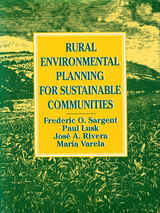
Rural Environmental Planning for Sustainable Communities offers an explanation of the concept of Rural Environmental Planning (REP) along with case studies that show how to apply REP to specific issues such as preserving agricultural lands, planning river and lake basins, and preserving historical sites.
READERS
Browse our collection.
PUBLISHERS
See BiblioVault's publisher services.
STUDENT SERVICES
Files for college accessibility offices.
RECENTLY PUBLISHED






UChicago Accessibility Resources
home | accessibility | search | about | contact us
BiblioVault ® 2001 - 2025
The University of Chicago Press