
 A SCHOLARLY BOOK REPOSITORY
16 start with R start with R

Exploring the development of racial photography wherever it took place, including countries like France and England, Morris-Reich pays special attention to the German and Jewish contexts of scientific racism. Through careful reconstruction of individual cases, conceptual genealogies, and patterns of practice, he compares the intended roles of photography with its actual use in scientific argumentation. He examines the diverse ways it was used to establish racial ideologies—as illustrations of types, statistical data, or as self-evident record of racial signs. Altogether, Morris-Reich visits this troubling history to outline important truths about the roles of visual argumentation, imagination, perception, aesthetics, epistemology, and ideology within scientific study.




According to Andrew Baruch Wachtel, the fall of the Berlin Wall and the creation of fledgling societies in Eastern Europe brought an end to the conditions that put the region's writers on a pedestal. In the euphoria that accompanied democracy and free markets, writers were liberated from the burden of grandiose political expectations. But no group is happy to lose its influence: despite recognizing that their exalted social position was related to their reputation for challenging political oppression, such writers have worked hard to retain their status, inventing a series of new strategies for this purpose. Remaining Relevant after Communism considers these strategies—from pulp fiction to public service—documenting what has happened on the East European scene since 1989.

Remembering Communism examines the formation and transformation of the memory of communism in the post-communist period. The majority of the articles focus on memory practices in the post-Stalinist era in Bulgaria and Romania, with occasional references to the cases of Poland and the GDR. Based on an interdisciplinary approach, including history, anthropology, cultural studies and sociology, the volume examines the mechanisms and processes that influence, determine and mint the private and public memory of communism in the post-1989 era. The common denominator to all essays is the emphasis on the process of remembering in the present, and the modalities by means of which the present perspective shapes processes of remembering, including practices of commemoration and representation of the past.
The volume deals with eight major thematic blocks revisiting specific practices in communism such as popular culture and everyday life, childhood, labor, the secret police, and the perception of “the system”.

During the period of state socialism, both the reinterpretation of the folk music heritage and the domestication of Western forms of music offered ways to resist and redefine imposed identities. With the removal of state control and support, music was free to channel and to shape emerging forms of cultural identity. Stressing both continuity and disjuncture in a period of enormous social and cultural change, this volume focuses on the importance and evolution of traditional and popular musics in peasant communities and urban environments in Hungary, Poland, Romania, Russia, the Czech Republic, Ukraine, the former Yugoslavia, Macedonia, and Bulgaria. Written by longtime specialists in the region and considering both religious and secular trends, these essays examine music as a means of expressing diverse aesthetics and ideologies, participating in the formation of national identities, and strengthening ethnic affiliation.
Retuning Culture provides a rich understanding of music’s role at a particular cultural and historical moment. Its broad range of perspectives will attract readers with interests in cultural studies, music, and Central and Eastern Europe.
Contributors. Michael Beckerman, Donna Buchanan, Anna Czekanowska, Judit Frigyesi, Barbara Rose Lange, Mirjana Lausevic, Theodore Levin, Margarita Mazo, Steluta Popa, Ljerka Vidic Rasmussen, Timothy Rice, Carol Silverman, Catherine Wanner


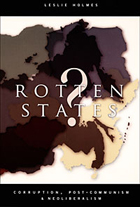
Drawing on data including surveys commissioned especially for this study, Holmes examines the causes and consequences of official corruption as well as ways of combating it. He focuses particular attention on the timing of the recent increase in reports of corruption, the relationship between post-communism and corruption, and the interplay between corruption and the delegitimation and weakening of the state. Holmes argues that the global turn toward neoliberalism—with its focus on ends over means, flexibility, and a reduced role for the state—has generated much of the corruption in post-communist states. At the same time, he points out that neoliberalism is perhaps the single most powerful tool for overcoming the communist legacy, which is an even more significant cause of corruption. Among the conclusions that Holmes draws is that a strong democratic state is needed in the early stages of the transition from communism in order to prevent corruption from taking hold.
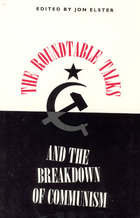
These essays capture the historical circumstances of these countries—their traditions, customs, and the balance of influence between competing factions—that often took precedence over constitutional ideals. In five country-specific reports, senior scholars provide detailed accounts of the talks in Bulgaria, Poland, Hungary, Czechoslovakia, and the German Democratic Republic. Also included is an essay on the political factors underlying the failure of negotiations between reform groups and the Chinese regime, providing an illuminating counterpoint to the path taken in Eastern Europe.
This book is an invaluable resource for scholars of constitutional design and democratization and for specialists in Eastern Europe.
READERS
Browse our collection.
PUBLISHERS
See BiblioVault's publisher services.
STUDENT SERVICES
Files for college accessibility offices.
RECENTLY PUBLISHED







UChicago Accessibility Resources
home | accessibility | search | about | contact us
BiblioVault ® 2001 - 2026
The University of Chicago Press