
 A SCHOLARLY BOOK REPOSITORY
158 start with R start with R
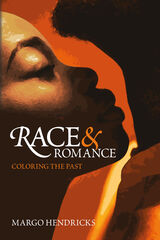
Race and Romance: Coloring the Past explores the literary and cultural genealogy of colorism, white passing, and white presenting in the romance genre. The scope of the study ranges from Heliodorus’ Aithiopika to the short novels of Aphra Behn, to the modern romance novel Forbidden by Beverly Jenkins. This analysis engages with the troublesome racecraft of “passing” and the instability of racial identity and its formation from the premodern to the present. The study also looks at the significance of white settler colonialism to early modern romance narratives. A bridge between studies of early modern romance and scholarship on twenty-first-century romance novels, this book is well-suited for those interested in the romance genre.
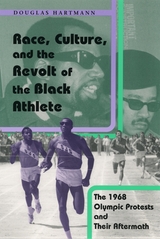
Drawing on extensive archival research and newly gathered oral histories, Douglas Hartmann sets out to answer these questions, reconsidering this pivotal event in the history of American sport. He places Smith and Carlos within the broader context of the civil rights movement and the controversial revolt of the black athlete. Although the movement drew widespread criticism, it also led to fundamental reforms in the organizational structure of American amateur athletics. Moving from historical narrative to cultural analysis, Hartmann explores what we can learn about the complex relations between race and sport in contemporary America from this episode and its aftermath.

Scholars exploring the history of science under the Nazis have generally concentrated on the Nazi destruction of science or the corruption of intellectual and liberal values. Racial Hygiene focuses on how scientists themselves participated in the construction of Nazi racial policy. Robert Proctor demonstrates that the common picture of a passive scientific community coerced into cooperation with the Nazis fails to grasp the reality of what actually happened—namely, that many of the political initiatives of the Nazis arose from within the scientific community, and that medical scientists actively designed and administered key elements of National Socialist policy.
The book presents the most comprehensive account to date of German medical involvement in the sterilization and castration laws, the laws banning marriage between Jews and non-Jews, and the massive program to destroy “lives not worth living.” The study traces attempts on the part of doctors to conceive of the “Jewish problem” as a “medical problem,” and how medical journals openly discussed the need to find a “final solution” to Germany’s Jewish and gypsy “problems.”
Proctor makes us aware that such thinking was not unique to Germany. The social Darwinism of the late nineteenth century in America and Europe gave rise to theories of racial hygiene that were embraced by enthusiasts of various nationalities in the hope of breeding a better, healthier, stronger race of people. Proctor also presents an account of the “organic” health movement that flourished under the Nazis, including campaigns to reduce smoking and drinking, and efforts to require bakeries to produce whole-grain bread. A separate chapter is devoted to the emergence of a resistance movement among doctors in the Association of Socialist Physicians. The book is based on a close analysis of contemporary documents, including German state archives and more than two hundred medical journals published during the period.
Proctor has set out not merely to tell a story but also to urge reflection on what might be called the “political philosophy of science”—how movements that shape the policies of nations can also shape the structure and priorities of science. The broad implications of this book make it of consequence not only to historians, physicians, and people concerned with the history and philosophy of science, but also to those interested in science policy and medical ethics.

A study of all of the major tragedies of Jean Racine, France's preeminent dramatist-and, according to many, its greatest and most representative author-Mitchell Greenberg's work offers an exploration of Racinian tragedy to explain the enigma of the plays' continued fascination.
Greenberg shows how Racine uses myth, in particular the legend of Oedipus, to achieve his emotional power. In the seventeenth-century tragedies of Racine, almost all references to physical activity were banned from the stage. Yet contemporary accounts of the performances describe vivid emotional reactions of the audiences, who were often reduced to tears. Greenberg demonstrates how Racinian tragedy is ideologically linked to Absolutist France's attempt to impose the "order of the One" on its subjects. Racine's tragedies are spaces where the family and the state are one and the same, with the result that sexual desire becomes trapped in a closed, incestuous, and highly formalized universe.
Greenberg ultimately suggests that the politics and sexuality associated with the legend of Oedipus account for our attraction to charismatic leaders and that this confusion of the state with desire explains our continued fascination with these timeless tragedies.

A groundbreaking history of political struggle in the Spanish New World, where commoners and elites alike challenged the social order through the remarkable power of paperwork.
As Spanish conquistadors swept through the New World, the Crown envisioned that a rigidly hierarchical aristocratic order would flourish in their wake. At first, this vision seemed to be within reach: the great conquistadors ruled as noblemen over millions. Yet contrary to all expectations, the Spanish empire in the New World quickly became a hotbed of radical efforts to overturn the emerging order. With the conquistadors in retreat, new enclaves controlled by powerful friars and native lords arose. But they too collapsed, again to the surprise of many.
As Jorge Cañizares-Esguerra and Adrian Masters show, these social orders broke down thanks to the challenges mounted by countless individuals across the Spanish Americas—including non-elite Spanish and Indigenous people, women, and the enslaved. To achieve their goals, they turned not only to outright violence but also to massive amounts of paperwork: petitions, complaints, lawsuits, and secret testimonies. Through this grassroots “lawfare,” vassals undercut the emerging seigneurial dynasties of the conquistadors, stripped the friars of theocratic authority, and curtailed the might of native lords. Collectively, they spearheaded movements against tyranny and slavery, proposed and challenged laws, produced new types of knowledge, created archives and historical accounts, and questioned the nature of truth itself. In the process, however, these actors also gradually co-created a lasting new society of orders—one that would solidify in the 1570s with viceroys, bishops, and inquisitors at its apex.
Dramatically recasting a pivotal era in colonial history, The Radical Spanish Empire illuminates how the power of paperwork forever transformed the New World.
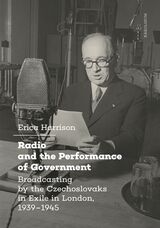
Between 1939 and 1945, Czechoslovakia disappeared from the maps, existing only as an imagined ‘free republic’ on the radio waves. Following the German invasion and annexation of Bohemia and Moravia and the declaration of independence by Slovakia on 15 March 1939, the Czechoslovak Republic was gone. From their position in exile in wartime London, former Czechoslovak President Edvard Beneš and the government that formed around him depended on radio to communicate with the public they strove to represent. The broadcasts made by government figures in London enabled a performance of authority to impress their hosts, allies, occupying enemies, and claimed constituents.
This book examines this government program for the first time, making use of previously unstudied archival sources to examine how the exiles understood their mission and how their propaganda work was shaped by both British and Soviet influences. This study assesses the strengths, weaknesses, and limitations of the government’s radio propaganda as they navigated the complexities of exile, with chapters examining how they used the radio to establish their authority, how they understood the past and future of the Czechoslovak nation, and how they struggled to include Slovakia and Subcarpathian Ruthenia within it.

Returns us to Gertrude Stein’s theater by way of the modernist medium of radio
What happens when we listen to Gertrude Stein’s plays as radio and music theater? This book explores the sound of Stein’s theater and proposes that radio, when approached both historically and phenomenologically, offers technical solutions to her texts’ unique challenges. Adam J. Frank documents the collaborative project of staging Stein’s early plays and offers new critical interpretations of these lesser-known works. Radio Free Stein grapples with her innovative theater poetics from a variety of disciplinary perspectives: sound and media studies, affect and object relations theory, linguistic performativity, theater scholarship, and music composition.
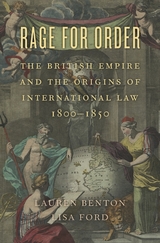
International law burst on the scene as a new field in the late nineteenth century. Where did it come from? Rage for Order finds the origins of international law in empires—especially in the British Empire’s sprawling efforts to refashion the imperial constitution and use it to order the world in the early part of that century.
“Rage for Order is a book of exceptional range and insight. Its successes are numerous. At a time when questions of law and legalism are attracting more and more attention from historians of 19th-century Britain and its empire, but still tend to be considered within very specific contexts, its sweep and ambition are particularly welcome…Rage for Order is a book that deserves to have major implications both for international legal history, and for the history of modern imperialism.”
—Alex Middleton, Reviews in History
“Rage for Order offers a fresh account of nineteenth-century global order that takes us beyond worn liberal and post-colonial narratives into a new and more adventurous terrain.”
—Jens Bartelson, Australian Historical Studies
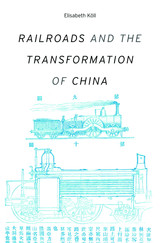
As a vehicle to convey both the history of modern China and the complex forces still driving the nation’s economic success, rail has no equal. Railroads and the Transformation of China is the first comprehensive history, in any language, of railroad operation from the last decades of the Qing Empire to the present.
China’s first fractured lines were built under semicolonial conditions by competing foreign investors. The national system that began taking shape in the 1910s suffered all the ills of the country at large: warlordism and Japanese invasion, Chinese partisan sabotage, the Great Leap Forward when lines suffered in the “battle for steel,” and the Cultural Revolution, during which Red Guards were granted free passage to “make revolution” across the country, nearly collapsing the system. Elisabeth Köll’s expansive study shows how railroads survived the rupture of the 1949 Communist revolution and became an enduring model of Chinese infrastructure expansion.
The railroads persisted because they were exemplary bureaucratic institutions. Through detailed archival research and interviews, Köll builds case studies illuminating the strength of rail administration. Pragmatic management, combining central authority and local autonomy, sustained rail organizations amid shifting political and economic priorities. As Köll shows, rail provided a blueprint for the past forty years of ambitious, semipublic business development and remains an essential component of the PRC’s politically charged, technocratic economic model for China’s future.

To Mary Augusta Ward, Sarah Grand, and Charlotte Perkins Gilman, housekeeping represented public responsibilities: making the food supply safe, reforming politics, and improving the human race itself. Raising the Dust places their writing in the context of the late-Victorian era, in particular the eugenics movement, the proliferation of household conveniences, the home economics movement, and decreased reliance on servants. These changes affected relationships between the domestic sphere and the public sphere, and hence shaped the portrayal of domesticity in the era's fiction and nonfiction.
Moreover, Ward, Grand, and Gilman articulated a domestic aesthetic that swept away boundaries. Sutton-Ramspeck uncovers a new paradigm here: literature as engaging the public realm through the devices and perspectives of the domestic. Her innovative and ambitious book also connects fixations on cleaning with the discovery of germs (the first bacterium discovered was anthrax, and knowledge of its properties increased fears of dust); analyzes advertising cards for soap; and links the mental illness in Gilman's “The Yellow Wall-Paper” to fears during the period of arsenic poisoning from wallpaper.

O’Connor focuses on how four particularly troubling physical conditions were represented in a variety of literature. She begins by exploring how Asiatic cholera, which reached epidemic proportions on four separate occasions between 1832 and 1865, was thought to represent the dangers of cultural contamination and dissolution. The next two chapters concentrate on the problems breast cancer and amputation posed for understanding gender. After discussing how breast cancer was believed to be caused by the female body’s intolerance to urban life, O'Connor turns to men’s bodies, examining how new prosthetic technology allowed dismembered soldiers and industrial workers to reconstruct themselves as productive members of society. The final chapter explores how freak shows displayed gross deformity as the stuff of a new and improved individuality. Complicating an understanding of the Victorian body as both a stable and stabilizing structure, she elaborates how Victorians used disease as a messy, often strategically unintelligible way of articulating the uncertainties of chaotic change. Over the course of the century, O’Connor shows, the disfiguring process of disease became a way of symbolically transfiguring the self. While cholera, cancer, limb loss, and deformity incapacitated and even killed people, their dramatic symptoms provided opportunities for imaginatively adapting to a world where it was increasingly difficult to determine not only what it meant to be human but also what it meant to be alive.
Raw Material will interest an audience of students and scholars of Victorian literature, cultural history, and the history of medicine.
Bely expected his audience to participate in unraveling the work's many meanings, narrative strains, and patterns of details. In their essays, the contributors clarify these complexities, summarize the intellectual and artistic contexts that informed Petersburg's creation and reception, and review the interpretive possibilities contained in the novel. This volume will aid a broad audience of Anglophone readers in understanding and appreciating Petersburg.
In the wake of Stalin’s death in 1953, the Soviet Union entered a period of relative openness known as the Thaw. Soviet citizens took advantage of the new opportunities to meditate on the nation’s turbulent history, from the Bolshevik Revolution, to the Terror, to World War II. Perhaps the most influential of these conversations took place in and around Novyi mir (New World), the most respected literary journal in the country. In The Readers of Novyi Mir, Denis Kozlov shows how the dialogue between literature and readers during the Thaw transformed the intellectual life and political landscape of the Soviet Union.
Powerful texts by writers like Solzhenitsyn, Pasternak, and Ehrenburg led thousands of Novyi mir’s readers to reassess their lives, entrenched beliefs, and dearly held values, and to confront the USSR’s history of political violence and social upheaval. And the readers spoke back. Victims and perpetrators alike wrote letters to the journal, reexamining their own actions and bearing witness to the tragedies of the previous decades.
Kozlov’s insightful treatment of these confessions, found in Russian archives, and his careful reading of the major writings of the period force today’s readers to rethink common assumptions about how the Soviet people interpreted their country’s violent past. The letters reveal widespread awareness of the Terror and that literary discussion of its legacy was central to public life during the late Soviet decades. By tracing the intellectual journey of Novyi mir’s readers, Kozlov illuminates how minds change, even in a closed society.
In this volume, Scholes’s scholarship is included alongside original essays, providing a resource for those considering everything from the place of the English major in the twenty-first century to best practices for helping students navigate misinformation and disinformation. Reading and Writing Instruction in the Twenty-First Century not only keeps Scholes’s legacy alive but carries it on through a commitment, in Scholes’s (1998) own words, to “offer our students . . . the cultural equipment they are going to need when they leave us.”
Contributors:
Angela Christie, Paul T. Corrigan, Lynée Lewis Gaillet, Doug Hesse, Alice S. Horning, Emily J. Isaacs, Christopher La Casse, Robert Lestón, Kelsey McNiff, Thomas P. Miller, Jessica Rivera-Mueller, Christian Smith, Kenny Smith
In an age of social media and reality television, reading and consumption habits in India now demand homegrown pulp fictions. Ulka Anjaria categorizes post-2000 Indian literature and popular culture as constituting “the contemporary,” a movement defined by new and experimental forms—where high- and low-brow meet, and genres break down.
Reading India Now studies the implications of this developing trend as both the right-wing resurges and marginalized voices find expression. Anjaria explores the fiction of Chetan Bhagat and Anuja Chauhan as well as Aamir Khan’s television talk show, Satyamev Jayate, plus the work of documentarian Paromita Vohra, to argue how different kinds of texts are involved in imagining new political futures for an India in transition. Contemporary literature and popular culture in India might seem artless and capitalistic, but it is precisely its openness to the world outside that allows these new works to offer significant insight into the experiences and sensibilities of contemporary India.
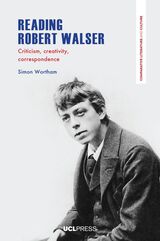
Robert Walser’s letters to Frieda Mermet, the laundry manager at a Swiss psychiatric hospital, offer an intimate and enigmatic glimpse into the mind of a writer whose literary fortunes waned even as his influence grew in the decades following his death. Covering nearly thirty years, from 1913 to 1942, these letters chart Walser’s transition from a celebrated modernist to a man institutionalized, yet still deeply engaged with language and identity.
In Reading Robert Walser, Simon Wortham studies Walser’s letters within the broader context of modernist literature and deconstruction, and also imaginatively reconstructs Mermet’s possible lost responses, blurring the lines between criticism and creativity. The result is an innovative exploration of authorship and the act of reading itself—one that deepens our understanding of Walser’s life and work while questioning the very nature of literary correspondence.
Winner of the 2013 Sonya Rudikoff Award for best first book in Victorian Studies
Short-listed for the 2013 British Society for Literature and Science Book Prize.
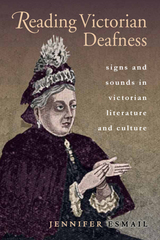
Reading Victorian Deafness is the first book to address the crucial role that deaf people, and their unique language of signs, played in Victorian culture. Drawing on a range of works, from fiction by Charles Dickens and Wilkie Collins, to poetry by deaf poets and life writing by deaf memoirists Harriet Martineau and John Kitto, to scientific treatises by Alexander Graham Bell and Francis Galton, Reading Victorian Deafness argues that deaf people’s language use was a public, influential, and contentious issue in Victorian Britain.
The Victorians understood signed languages in multiple, and often contradictory, ways: they were objects of fascination and revulsion, were of scientific import and literary interest, and were considered both a unique mode of human communication and a vestige of a bestial heritage. Over the course of the nineteenth century, deaf people were increasingly stripped of their linguistic and cultural rights by a widespread pedagogical and cultural movement known as “oralism,” comprising mainly hearing educators, physicians, and parents.
Engaging with a group of human beings who used signs instead of speech challenged the Victorian understanding of humans as “the speaking animal” and the widespread understanding of “language” as a product of the voice. It is here that Reading Victorian Deafness offers substantial contributions to the fields of Victorian studies and disability studies. This book expands current scholarly conversations around orality, textuality, and sound while demonstrating how understandings of disability contributed to Victorian constructions of normalcy. Reading Victorian Deafness argues that deaf people were used as material test subjects for the Victorian process of understanding human language and, by extension, the definition of the human.
Jane Austen has more readers today than at any time in history. Many of Austen’s legions of fans, however, came to her novels after first seeing films or other adaptations made for twenty-first-century audiences. Austen herself conversely spent her literary career undermining romantic clichés and rethinking novel conventions. Confident that she and her contemporaries shared a common reading culture, Austen deliberately constructed her novels to set readerly expectations, only to disrupt or confound those expectations by challenging her readers’ assumptions and values. In Reading with Jane Austen, Elaine Bander carefully rereads the great author’s novels—beginning with her late work of juvenilia, “Catharine, or The Bower,” and ending with her final fragment, “Sanditon”—against the rich context of late Georgian literary and intellectual culture. In doing so, Bander invites us into the transformative experience that Austen intentionally designed for her earliest readers, adding new layers of appreciation for those who love her work.
Published by Bucknell University Press. Distributed worldwide by Rutgers University Press.
Exploring the books and reading practices behind the creation of Transcendentalist philosophy and community
Transcendentalism emerged in early 19th century New England as a uniquely American philosophical, spiritual, and literary movement. Its first generation of thinkers—including Ralph Waldo Emerson, Theodore Parker, and Margaret Fuller—created a worldview that stressed the inherent goodness of the “self-reliant” individual and the presence of the divine in nature. These intellectuals gathered in informal symposia devoted to what Emerson called “creative reading,” a practice that stresses the transformative potential of the written word that was central to the movement’s emergence, growth, and spread. But what were these thinkers reading and how did it influence the development of Transcendentalism?
In Reading with the Transcendentalists, renowned literary scholar Philip F. Gura focuses on 10 American, British, and European books that were essential to the movement’s thoughts, writings, and activities. Many of the authors of these books—James Marsh, Madame de Staël, Samson Reed, George Ripley, Thomas Carlyle, Albert Brisbane, and George Sand—stood outside of Transcendentalism yet profoundly influenced it. Others such as Emerson, Parker, and Fuller were the movement’s central architects, whose writings in turn inspired the next generation, including Henry David Thoreau and Caroline Healey Dall. Each of these books challenged prevailing religious, philosophical, and social conventions in ways that resonated deeply with burgeoning Transcendentalist ideals.
Blending intellectual biography with book history, Gura crafts a captivating cultural history that reconstructs the dynamic social networks of the early Transcendentalists, in which ideas from the written word circulated, evolved, and acquired new meanings. The result is an rich portrait of reading as a creative and communal act, and an exploration of how books ignite curiosity, sustain friendship, and catalyze intellectual transformation. Through a carefully developed narrative structure that is filled not only with books and reading but with headline-worthy scandals, disputes, and falling outs and realignments, Gura traces the historical arc of a transnational intellectual movement that helped lay the foundation for the idea of “America.”
In Reading Wittgenstein with Anscombe, Going On to Ethics, Cora Diamond follows two major European philosophers as they think about thinking, as well as about our ability to respond to thinking that has miscarried or gone astray. Acting as both witness to and participant in the encounter, Diamond provides fresh perspective on the importance of the work of these philosophers and the value of doing philosophy in unexpected ways.
Diamond begins with the Tractatus (1921), in which Ludwig Wittgenstein forges a link between thinking about thought and the capacity to respond to misunderstandings and confusions. She then considers G. E. M. Anscombe’s An Introduction to Wittgenstein’s Tractatus (1959), in which Anscombe, through her engagement with Wittgenstein, further explores the limits of thinking and the ability to respond to thought that has gone wrong. Anscombe’s book is important, Diamond argues, in challenging contemporary assumptions about what philosophical problems are worth considering and about how they can be approached. Through her reading of the Tractatus, Anscombe exemplified an ethics of thinking through and against the grain of common preconceptions. The result drew attention to the questions that mattered most to Wittgenstein and conveyed with great power the nature of his achievement.
Diamond herself, in turn, challenges Anscombe on certain points, thereby further carrying out just the kind of ethical work Wittgenstein and Anscombe each felt was crucial to getting things right. Through her textured engagement with her predecessors, Diamond demonstrates what genuinely independent thought is able to achieve.
The contentious relationship between modernism and realism has powerfully influenced literary history throughout the twentieth century and into the present. In 1930s Korea, at a formative moment in these debates, a “crisis of representation” stemming from the loss of faith in language as a vehicle of meaningful reference to the world became a central concern of literary modernists as they operated under Japanese colonial rule.
Christopher P. Hanscom examines the critical and literary production of three prose authors central to 1930s literary circles—Pak T’aewon, Kim Yujong, and Yi T’aejun—whose works confront this crisis by critiquing the concept of transparent or “empiricist” language that formed the basis for both a nationalist literary movement and the legitimizing discourse of assimilatory colonization. Bridging literary and colonial studies, this re-reading of modernist fiction within the imperial context illuminates links between literary practice and colonial discourse and questions anew the relationship between aesthetics and politics.
The Real Modern challenges Eurocentric and nativist perspectives on the derivative particularity of non-Western literatures, opens global modernist studies to the similarities and differences of the colonial Korean case, and argues for decolonization of the ways in which non-Western literatures are read in both local and global contexts.
Realism after the Individual offers a new theoretical paradigm for understanding realist novels published in the United States between 1900 and 1920, a period that has been described wrongheadedly as a “gulf” or a “valley” in American literary history. In this generation of writers, only three have remained in favor among critics: Kate Chopin, Edith Wharton, and Theodore Dreiser. Others have disappeared from view altogether—writers such as Robert Grant, Robert Herrick, and Booth Tarkington, all of whom were critically acclaimed bestsellers in their day.
As Rafael Walker shows, this generation of writers deserves new attention for the way they revised many core facets of the nineteenth-century novel in response to the historical shifts around it. This generation of novelists not only rejected liberal individualism but also formulated alternative paradigms for conceptualizing selfhood. The result was a slew of woman-centered realist novels that broke with literary precedent: The novels punish characters not for desiring too much but for failing to desire enough, they depict subjectivity not as private and interior but as outward-facing, and they view closure not as the novel’s aim but as a convention to flout. Realism after the Individual both revises prevailing views of American realism and lays the foundation for an alternative account of the development of literary modernism, one that illuminates the continuity between realism and the modernism that followed it.
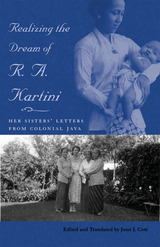
Realizing the Dream of R. A. Kartini: Her Sisters’ Letters from Colonial Java presents a unique collection of documents reflecting the lives, attitudes, and politics of four Javanese women in the early twentieth century. Joost J. Coté translates the correspondence between Raden Ajeng Kartini, Indonesia’s first feminist, and her sisters, revealing for the first time her sisters’ contributions in defining and carrying out her ideals. With this collection, Coté aims to situate Kartini’s sisters within the more famous Kartini narrative–and indirectly to situate Kartini herself within a broader narrative.
The letters reveal the emotional lives of these modern women and their concerns for the welfare of their husbands and the success of their children in rapidly changing times. While by no means radical nationalists, and not yet extending their horizons to the possibility of an Indonesian nation, these members of a new middle class nevertheless confidently express their belief in their own national identity.
Realizing the Dream of R. A. Kartini is essential reading for scholars of Indonesian history, providing documentary evidence of the culture of modern, urban Java in the late colonial era and an insight into the ferment of the Indonesian nationalist movement in which these women and their husbands played representative roles.
Transcendentalism never came to an end in America. It just went underground for a stretch, but is back in full force in Robert Brandom’s new book. Brandom takes up Kant and Hegel and explores their contemporary significance as if little time had expired since intellectuals gathered around Emerson in Concord to discuss reason and idealism, selves, freedom, and community. Brandom’s discussion belongs to a venerable tradition that distinguishes us as rational animals, and philosophy by its concern to understand, articulate, and explain the notion of reason that is thereby cast in that crucial demarcating role.
An emphasis on our capacity to reason, rather than merely to represent, has been growing in philosophy over the last thirty years, and Robert Brandom has been at the center of this development. Reason in Philosophy is the first book that gives a succinct overview of his understanding of the role of reason as the structure at once of our minds and our meanings—what constitutes us as free, responsible agents. The job of philosophy is to introduce concepts and develop expressive tools for expanding our self-consciousness as sapients: explicit awareness of our discursive activity of thinking and acting, in the sciences, politics, and the arts. This is a paradigmatic work of contemporary philosophy.
How General Washington Avoided the Peril From Within His Own Forces
"It gives me great pain to be obliged to solicit the attention of the honorable Congress to the state of the army...the greater part of the army is in a state not far from mutiny...I know not to whom to impute this failure, but I am of the opinion, if the evil is not immediately remedied and more punctuality observed in future, the army must absolutely break up."—George Washington, September 1775
Mutiny has always been a threat to the integrity of armies, particularly under trying circumstances, and since Concord and Lexington, mutiny had been the Continental Army's constant traveling companion. It was not because the soldiers lacked resolve to overturn British rule or had a lack of faith in their commanders. It was the scarcity of food—during winter months it was not uncommon for soldiers to subsist on a soup of melted snow, a few peas, and a scrap of fat—money, clothing, and proper shelter, that forced soldiers to desert or organize resistance. Mutiny was not a new concept for George Washington. During his service in the French and Indian War he had tried men under his command for the offense and he knew that disaffection and lack of morale in an army was a greater danger than an armed enemy.
In Rebellion in the Ranks: Mutinies of the American Revolution, John A. Nagy provides one of the most original and valuable contributions to American Revolutionary War history in recent times. Mining previously ignored British and American primary source documents and reexamining other period writings, Nagy has corrected misconceptions about known events, such as the Pennsylvania Line Mutiny, while identifying for the first time previously unknown mutinies. Covering both the army and the navy, Nagy relates American officers' constant struggle to keep up the morale of their troops, while highlighting British efforts to exploit this potentially fatal flaw.
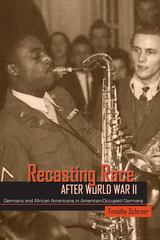
The segregation of U.S. Army forces fed a growing debate in America about whether a Jim Crow army could truly be a democratizing force in postwar Germany. Schroer follows the evolution of that debate and examines the ways in which postwar conditions necessitated reexamination of race relations. He reveals how anxiety about interracial relationships between African American men and German women united white American soldiers and the German populace. He also traces the importation and influence of African American jazz music in Germany, illuminating the subtle ways in which occupied Germany represented a crucible in which to recast the meaning of race in a post-Holocaust world.
Recasting Race after World War II will appeal to historians and scholars of American, African American, and German studies.

From the outbreak of civil war in El Salvador in 1979 through its conclusion in 1992, some 1.5 million Salvadorans fled the violence. This book focuses on the displaced Salvadorans who remained in Central America, seeking refuge in Belize, Costa Rica, Guatemala, Honduras, Nicaragua, and Panama. Their story has been almost entirely overshadowed by the greater numbers who fled farther north to the United States; however, as Rachael De La Cruz shows, the Central American history of Salvadoran refugees is rich, complex, and instructive for scholars of refugee studies, international relations, and human rights.
The isthmus nations that received Salvadoran refugees did not react consistently, and the arriving Salvadorans themselves were not passive participants. National mythologies, perceptions of economic contributions and burdens, regional militarization, state violence, and varying capacities for refugee activism, compounded by the fraught and variable circumstances of the Cold War, together shaped the multitude of government attitudes and policies toward the refugee communities within these countries’ borders. Rarely were refugees simply “a problem to solve”; rather, they represented and acted as catalysts for economic, social, and geopolitical change.
Reveals how literary scenes of recognition stage the process of coming to know reality
In this deeply researched and thought-provoking study, Jessica C. Resvick traces nineteenth-century German realist writing’s paradoxical investment in mediated accounts of the world and the direct, unfiltered experience of reality. Focusing on the motif and operation of recognition in its Aristotelean sense, Resvick examines self-reflexive narratives in which the authors struggle to resolve this tension between the media they choose and the immediacy they hope to create.
Through close readings of key works by canonical authors such as E. T. A. Hoffmann, Annette von Droste-Hülshoff, and Adalbert Stifter, Resvick demonstrates the medially influenced and historically contingent ways in which they represent reality. Each chapter focuses on a different form of recognition, reconstructing the techniques that allow these authors to generate an effect of presence. Exploring the history and poetics of knowledge exchange, Recognizing Reality: German Realism and the Mediation of Presence expands on recent media histories of realism, examining the material bases for realist aesthetics while also investigating media’s epistemological accomplishments, and astutely elaborates the role of recognition as a medium-specific tool.
With Reconstructing the National Bank Controversy, Eric Lomazoff offers a far more robust account of the constitutional politics of national banking between 1791 and 1832. During that time, three forces—changes within the Bank itself, growing tension over federal power within the Republican coalition, and the endurance of monetary turmoil beyond the War of 1812 —drove the development of our first major debate over the scope of federal power at least as much as the formal dimensions of the Constitution or the absence of a shared legal definition for the word “necessary.” These three forces—sometimes alone, sometimes in combination—repeatedly reshaped the terms on which the Bank’s constitutionality was contested. Lomazoff documents how these three dimensions of the polity changed over time and traces the manner in which they periodically led federal officials to adjust their claims about the Bank’s constitutionality. This includes the emergence of the Coinage Clause—which gives Congress power to “coin money, regulate the value thereof”—as a novel justification for the institution. He concludes the book by explaining why a more robust account of the national bank controversy can help us understand the constitutional basis for modern American monetary politics.
A selection of essays revealing the singular brilliance of Ferguson’s critical writing over four decades.
Ranging across literature, philosophy, and social thought, Frances Ferguson asks how forms—whether aesthetic, legal, or bureaucratic—help to assign value and thereby organize our relations as well as our personal identities. Ferguson is a literary critic who takes her lead, unexpectedly, from Jeremy Bentham, showing how modernity tracks and makes perceptible the values of a host of human activities—the knowledge that comes from early learning exercises, the specialized knowledge that funds particular professions, and the exacting if unspecialized knowledge of the social world of courtship or hanging out.
Gathering Ferguson’s most influential and still timely essays, Records of Reward includes, among others, “The Nuclear Sublime,” in which Ferguson turns to Mary Shelley’s Frankenstein to examine how the aesthetic logic of the sublime obscures the claims of domesticity and the beautiful; “Rape and the Rise of the Novel,” which examines the history of rape law to highlight the importance of Samuel Richardson’s foregrounding of consent in Clarissa; “Pornography, the Theory,” where she explores the threshold between speech and action to identify environments—such as schools and workplaces—in which pornographic expression can be harmfully potentiated; and “Jane Austen, Emma, and the Impact of Form,” in which she analyzes Austen’s use of free indirect style to depict both her protagonist and her reader engaged in acts of “over-knowing” others in everyday life. Most unexpectedly, perhaps, the collection also includes an essay analyzing Bitcoin as a small language model that exerts enormous affective pressure on its partisans.
A vivid demonstration of the enduring rewards of theory and close reading alike, Records of Reward will be essential reading across the fields of literary studies, cultural studies, and political thought.

From 1950 to 1990, the Soviet Army conducted a global topographic mapping program, creating large-scale maps for much of the world that included a diversity of detail that would have supported a full range of military planning. For big cities like New York, DC, and London to towns like Pontiac, MI and Galveston, TX, the Soviets gathered enough information to create street-level maps. What they chose to include on these maps can seem obvious like locations of factories and ports, or more surprising, such as building heights, road widths, and bridge capacities. Some of the detail suggests early satellite technology, while other specifics, like detailed depictions of depths and channels around rivers and harbors, could only have been gained by actual Soviet feet on the ground. The Red Atlas includes over 350 extracts from these incredible Cold War maps, exploring their provenance and cartographic techniques as well as what they can tell us about their makers and the Soviet initiatives that were going on all around us.
A fantastic historical document of an era that sometimes seems less distant, The Red Atlas offers an uncanny view of the world through the eyes of Soviet strategists and spies.

In 1908 Ellen Wilkinson, a fiery adolescent from a working-class family in Manchester, was “the only girl who talks in school debates.” By midcentury, Wilkinson had helped found Britain’s Communist Party, earned a seat in Parliament, and become a renowned advocate for the poor and dispossessed at home and abroad. She was one of the first female delegates to the United Nations, and she played a central role in Britain’s postwar Labour government. In Laura Beers’s account of Wilkinson’s remarkable life, we have a richly detailed portrait of a time when Left-leaning British men and women from a range of backgrounds sought to reshape domestic, imperial, and international affairs.
Wilkinson is best remembered as the leader of the Jarrow Crusade, the 300-mile march of two hundred unemployed shipwrights and steelworkers to petition the British government for assistance. But this was just one small part of Red Ellen’s larger transnational fight for social justice. She was involved in a range of campaigns, from the quest for official recognition of the Spanish Republican government, to the fight for Indian independence, to the effort to smuggle Jewish refugees out of Germany.
During Wilkinson’s lifetime, many British radicals viewed themselves as members of an international socialist community, and some, like her, became involved in socialist, feminist, and pacifist movements that spanned the globe. By focusing on the extent to which Wilkinson’s activism transcended Britain’s borders, Red Ellen adjusts our perception of the British Left in the early twentieth century.
Between 1946 and 1948, roughly five thousand ethnic Italians from the northern Adriatic shipbuilding town of Monfalcone relocated to the newly communist Yugoslavia. This rare case of eastward Cold War migration demonstrates how ordinary people conceived of liberation during the transitional years between World War II and the early Cold War—a time when Monfalcone was both the object of competing Italian and Yugoslav territorial claims and the subject of Anglo-American military occupation.
In The Red Italians of Monfalcone, Luke Gramith undertakes a deep and detailed analysis—based on archival sources in Italy, Slovenia, and the United States—of how the Monfalconesi came to understand Fascism and communism through everyday experience and how those emergent ideologies affected and were affected by their migration. In the course of his analysis, Gramith also examines the failure of “defascistization” and how it fueled strong (but ultimately unsuccessful) pro-Yugoslav and communist movements.
The Soviet Union killed over six hundred thousand whales in the twentieth century, many of them illegally and secretly. That catch helped bring many whale species to near extinction by the 1970s, and the impacts of this loss of life still ripple through today’s oceans. In this new account, based on formerly secret Soviet archives and interviews with ex-whalers, environmental historian Ryan Tucker Jones offers a complete history of the role the Soviet Union played in the whales’ destruction. As other countries—especially the United States, Great Britain, Japan, and Norway—expanded their pursuit of whales to all corners of the globe, Stalin determined that the Soviet Union needed to join the hunt. What followed was a spectacularly prodigious, and often wasteful, destruction of humpback, fin, sei, right, and sperm whales in the Antarctic and the North Pacific, done in knowing violation of the International Whaling Commission’s rules. Cold War intrigue encouraged this destruction, but, as Jones shows, there is a more complex history behind this tragic Soviet experiment. Jones compellingly describes the ultimate scientific irony: today’s cetacean studies benefited from Soviet whaling, as Russian scientists on whaling vessels made key breakthroughs in understanding whale natural history and behavior. And in a final twist, Red Leviathan reveals how the Soviet public began turning against their own country’s whaling industry, working in parallel with Western environmental organizations like Greenpeace to help end industrial whaling—not long before the world’s whales might have disappeared altogether.

With their powerful blend of political and aesthetic concerns, Edward W. Said's writings have transformed the field of literary studies. This long-awaited collection of literary and cultural essays, the first since Harvard University Press published The World, the Text, and the Critic in 1983, reconfirms what no one can doubt--that Said is the most impressive, consequential, and elegant critic of our time--and offers further evidence of how much the fully engaged critical mind can contribute to the reservoir of value, thought, and action essential to our lives and our culture.
As in the title essay, the widely admired "Reflections on Exile," the fact of his own exile and the fate of the Palestinians have given both form and the force of intimacy to the questions Said has pursued. Taken together, these essays--from the famous to those that will surprise even Said's most assiduous followers--afford rare insight into the formation of a critic and the development of an intellectual vocation. Said's topics are many and diverse, from the movie heroics of Tarzan to the machismo of Ernest Hemingway to the shades of difference that divide Alexandria and Cairo. He offers major reconsiderations of writers and artists such as George Orwell, Giambattista Vico, Georg Lukacs, R. P. Blackmur, E. M. Cioran, Naguib Mahfouz, Herman Melville, Joseph Conrad, Walter Lippman, Samuel Huntington, Antonio Gramsci, and Raymond Williams. Invigorating, edifying, acutely attentive to the vying pressures of personal and historical experience, his book is a source of immeasurable intellectual delight.
Expanding upon prior studies that focus more specifically on literary manifestations of the movement, Reframing Russian Modernism features original research that ranges broadly, from political aesthetics to Darwinism to yoga. These unique complementary perspectives counter reductionism of any kind, integrating the study of Russian modernism into the larger body of humanistic scholarship devoted to modernity.
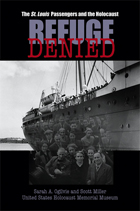
Although the episode of the St. Louis is well known, the actual fates of the passengers, once they disembarked, slipped into historical obscurity. Prompted by a former passenger’s curiosity, Sarah Ogilvie and Scott Miller of the United States Holocaust Memorial Museum set out in 1996 to discover what happened to each of the 937 passengers. Their investigation, spanning nine years and half the globe, took them to unexpected places and produced surprising results. Refuge Denied chronicles the unraveling of the mystery, from Los Angeles to Havana and from New York to Jerusalem.
Some of the most memorable stories include the fate of a young toolmaker who survived initial selection at Auschwitz because his glasses had gone flying moments before and a Jewish child whose apprenticeship with a baker in wartime France later translated into the establishment of a successful business in the United States. Unfolding like a compelling detective thriller, Refuge Denied is a must-read for anyone interested in the Holocaust and its impact on the lives of ordinary people.
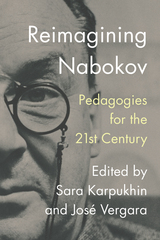
“It is both timely and refreshing to have an influx of teacher-scholars who engage Nabokov from a variety of perspectives… this volume does justice to the breadth of Nabokov’s literary achievements, and it does so with both pedagogical creativity and scholarly integrity."—Dana Dragunoiu, Carleton University
"[A] valuable study for any reader, teacher, scholar, or student of Nabokov. Amongst specific and urgent insights on the potential for digital methods, the relevance of Nabokov for students today, and how to reconcile issues of identity with an author who disavowed history and politics, are much wider and timeless questions of authorial control and the ability to access reality."—Anoushka Alexander-Rose, Nabokov Online Journal
Contributions by Galya Diment, Tim Harte, Robyn Jensen, Sara Karpukhin, Yuri Leving, Roman Utkin, José Vergara, Meghan Vicks, Olga Voronina, Lisa Ryoko Wakamiya, and Matthew Walker.
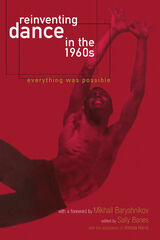
The 1960s was a pivotal decade in dance, an era of intense experimentation and rich invention. In this volume an impressive range of dance critics and scholars examine the pioneering choreographers and companies of the era, such as Anna Halprin’s West Coast experiments, the innovative Judson Dance Theater, avant-garde dance subcultures in New York, the work of Meredith Monk and Kenneth King, and parallel movements in Britain. The contributors include Janice Ross, Leslie Satin, Noël Carroll, Gus Solomons jr., Deborah Jowitt, Stephanie Jordan, Joan Acocella, and Sally Banes.

A revealing account of how German Protestant leaders embraced democratic ideals after WWII, while firmly and consequentially refusing to account for their earlier complicity with Nazism.
Germany’s Protestant churches, longtime strongholds of nationalism and militarism, largely backed the Nazi dictatorship that took power in 1933. For many Protestant leaders, pastors, and activists, national and religious revival were one and the same. Even those who opposed the regime tended toward antidemocratic attitudes. By the 1950s, however, Church leaders in West Germany had repositioned themselves as prominent advocates for constitutional democracy and human rights.
Brandon Bloch reveals how this remarkable ideological shift came to pass, following the cohort of theologians, pastors, and lay intellectuals who spearheaded the postwar transformation of their church. Born around the turn of the twentieth century, these individuals came of age amid the turbulence of the Weimar Republic and were easily swayed to complicity with the Third Reich. They accommodated the state in hopes of protecting the Church’s independence from it, but they also embraced the Nazi regime’s antisemitic and anticommunist platform. After the war, under the pressures of Allied occupation, these Protestant intellectuals and their heirs creatively reimagined their tradition as a fount of democratic and humanitarian values. But while they campaigned for family law reform, conscientious objection to military service, and the protection of basic rights, they also promoted a narrative of Christian anti-Nazi resistance that whitewashed the Church’s complicity in dictatorship and genocide.
Examining the sources and limits of democratic transformation, Reinventing Protestant Germany sheds new light on the development of postwar European politics and the power of national myths.
Can religion help societies achieve peace and stability? What actions can religious leaders take to facilitate conflict resolution? This book addresses these critical questions in terms of numerous contemporary conflicts within and between countries.
In the aftermath of the 9/11 attacks, public attention to religion shifted away from its relationship to politics and toward its connection to violence in civil conflicts, wars, and terrorism. Religion’s role in sowing discord became more prominent than its ability to unify. Only recently have discussions turned toward the positive impact of religion and spirituality in the public sphere and to the role of faith in resolving diplomatic, political, and social problems. The essays in this book contribute to this discourse by examining past, present, and future opportunities to promote peace through religion and spirituality.
The contributors to this volume explore topics such as humanitarianism, philosophy, counterextremism, human rights, rituals, populism, foreign policy, and environmentalism. Some of the chapters approach these topics from a transnational perspective, while others focus on specific countries in Africa, Asia, Europe, Latin America, and the Middle East.
Contributors:
- Jonathan C. Agensky
- Slavica Jakelić
- Afra Jalabi
- Brandon Kendhammer
- Loren D. Lybarger
- Cecelia Lynch
- Peter Mandaville
- Jeremy Rinker
- Margaret M. Scull
- Amy Erica Smith
This study in religious anthropology explores the social history of popular belief. The book begins with an evocation of the river towns, open fields, and vineyards of Champagne. In addition to the historical geography and quantitative material that are hallmarks of the French tradition, the author studies the rich artistic evidence that still graces the provincial churches.
Galpern interprets religious behavior at the beginning of the century as a lingering response to difficulties of the late Middle Ages. The nascent Protestant movement highlights the ways in which many Catholics modified their practices, yet remained orthodox. The book charts the paths of antipathy that converged in civil war, and concludes with a discussion of the late-sixteenth-century atmosphere of revivalism, which mimicked the earlier spiritualclimate.
Support of the Ottoman Empire was official British policy for some forty years following the Crimean War. A widespread and astonishing confidence prevailed in England: whatever past and continuing deficiencies might exist, the Ottoman Porte, as the government of the Empire was known in Europe, was determined to westernize and in fact was becoming more British every day. But reports of a series of alleged massacres by the Turks against their Bulgarian subjects scandalized Britain in 1876, igniting a firestorm of protest that shook the nation. Reluctant Icon tells the story of one of the most relentless social crusades of the Victorian era. Under the leadership of former prime minister William Ewart Gladstone, a loose coalition of Nonconformists, Radicals, and High Churchmen created a climate of indignation over the massacres that was strong enough to call into question the Disraeli government’s policy toward the Near East.
This absorbing analysis by Ann Pottinger Saab draws on contemporary newspaper accounts, parliamentary petitions, and the diaries and personal papers of Gladstone to recreate a pivotal episode in late nineteenth-century British history. Saab provides an informative historical backdrop to her study by tracing the multiple sources of strain in British–Ottoman relations that existed before the massacres. She then examines Gladstone’s evolving role as public idol and backstage adviser to a coterie of special groups that became bonded to him by a shared moral vision and a sense of continuing emergency. Through the lens of the Bulgarian agitation, Gladstone emerges as a man motivated more by his own complex emotional and political drives than by opportunism, a somewhat different picture from that presented by earlier historians. The heart of the book is Saab’s richly detailed exploration of the nascence and maturation of the militant, extra-parliamentary, multi-class protest movement itself, which mobilized the anger of groups previously outside politics such as newly enfranchised working men.
Reluctant Icon yields new insights on Gladstone, on the language of Victorian social protest, and on a national protest movement remarkable as much for its cohesiveness and longevity as for its fervor. It will be welcome reading for all those with an abiding interest in the Victorian age and especially for scholars and students of social, religious, and diplomatic history.
Featured in the 2020 Association of University Presses Book, Jacket, and Journal Show
Why do we allow our governments to get away with “bystanding” to genocide? How can we, when alerted to the mass slaughter of innocents, still not take a stand? Reluctant Interveners provides the most comprehensive answers yet to these confronting questions, focusing on the complex relationships between the citizenry, the media, the political elites, and institutions in the most powerful nation in the world, the United States of America.
Eyal Mayroz offers a sobering account of the interactions between the governing and the governed, and the dynamics which transformed moral concerns for the lives of faraway “others” into cold political calculations. Exposed are the processes that turned the promise of “never again” to a recurring reality of ever again, the role of the office of the presidency in their advancement, and the resultant image of America as seen by the rest of the world. In a time of ubiquitous social media and populist revival, a greater role for the U.S. citizenry in decision-making on responses to genocide may be in the cards. The question is, in which directions will these trends take American foreign policy?
In the early hours of November 5, 1605, Guy Fawkes, an English Catholic who had served with the Spanish army in Flanders, was discovered in a storeroom under the Palace of Westminster—and with him, thirty-six barrels of gunpowder earmarked to obliterate England’s royal family, top officials, and members of Parliament gathered for Parliament’s opening day. Had it succeeded, this Gunpowder Plot—a Catholic conspiracy against the recently crowned Protestant King James I and his government—English history would have been shaped by a terrorist act of unprecedented proportions.
Today Guy Fawkes—whose name has long stood for the conspiracy—is among the most notorious figures in English history; and Bonfire Night, observed every November 5th to memorialize the narrowly foiled Gunpowder Plot, is one of the country’s most festive occasions. Why has the memory of this act of treason and terrorism persisted for 400 years? In Remember, Remember James Sharpe takes us back to 1605 and teases apart the tangled web of religion and politics that gave rise to the plot. And, with considerable wit, he shows how celebration of that fateful night, and the representation of Guy Fawkes, has changed over the centuries.
James Sharpe’s colorfully told story has wide implications. The plot of 1605 has powerful resonances today, in a time of heightened concern about ideological conflict, religious fanaticism, and terrorism. And his account of the festivities marking the momentous event comments on the role of rituals in constructing national histories.

A powerful remembrance of the lessons and legacy of Jan Karski, who risked his life to share the truth with the world—and a cautionary tale for our times.
Richly illustrated with stills from the black-and-white film adaptation of the acclaimed stage play, Remember This: The Lesson of Jan Karski tells the story of World War II hero, Holocaust witness, and Georgetown University professor Jan Karski.
A messenger of truth, Karski risked his life to carry his harrowing reports of the Holocaust from war-torn Poland to the Allied nations and, ultimately, the Oval Office, only to be ignored and disbelieved. Despite the West's unwillingness to act, Karski continued to tell others about the atrocities he saw, and, after a period of silence, would do so for the remainder of his life. This play carries forward his legacy of bearing witness so that future generations might be inspired to follow his example and "shake the conscience of the world."
Accompanying the text of the stage play in this volume are essays and conversations from leading diplomats, thinkers, artists, and writers who reckon with Karski's legacy, including Secretary of State Madeleine Albright, Ambassador Stuart Eizenstat, award-winning author Aminatta Forna, best-selling author Azar Nafisi, President Emeritus of Georgetown Leo J. O'Donovan, SJ, Ambassador Samantha Power, Ambassador Cynthia P. Schneider, historian Timothy Snyder, Academy Award nominated actor David Strathairn, and best-selling author Deborah Tannen.
The Remembered and Forgotten Jewish World investigates the politics of heritage tourism and collective memory. In an account that is part travelogue, part social history, and part family saga, acclaimed historian Daniel J. Walkowitz visits key Jewish museums and heritage sites from Berlin to Belgrade, from Krakow to Kiev, and from Warsaw to New York, to discover which stories of the Jewish experience are told and which are silenced. As he travels to thirteen different locations, participates in tours, displays, and public programs, and gleans insight from local historians, he juxtaposes the historical record with the stories presented in heritage tourism. What he finds raises provocative questions about the heritage tourism industry and its role in determining how we perceive Jewish history and identity. This book offers a unique perspective on the importance of collective memory and the dangers of collective forgetting.
For many, 1989 is an iconic date, one we associate with the fall of the Berlin Wall and the end of the Cold War. The year prompts some to rue the defeat of socialism in the East, while others celebrate a victory for democracy and capitalism in the reunified Germany. Remembering 1989 focuses on a largely forgotten interregnum: the months between the outbreak of protests in the German Democratic Republic in 1989 and its absorption by the West in 1990. Anke Pinkert, who herself participated in those protests, recalls these months as a volatile but joyous “laboratory of radical democracy,” and tells the story of how and why this “time out of joint” has been erased from Germany’s national memory.
Remembering 1989 argues that in order to truly understand Germany’s historic transformation, we must revisit protesters’ actions across a wide range of minor, vernacular, and often transient sources. Drawing on rich archives including videotapes of untelevised protests, illegally printed petitions by Church leaders, audio recordings of dissident meetings, and interview footage with military troops, Pinkert opens the discarded history of East European social uprisings to new interpretations and imagines alternatives to Germany’s neoliberal status quo. The result is a vivid, unexpected contribution to memory studies and European history.

Remembering Communism examines the formation and transformation of the memory of communism in the post-communist period. The majority of the articles focus on memory practices in the post-Stalinist era in Bulgaria and Romania, with occasional references to the cases of Poland and the GDR. Based on an interdisciplinary approach, including history, anthropology, cultural studies and sociology, the volume examines the mechanisms and processes that influence, determine and mint the private and public memory of communism in the post-1989 era. The common denominator to all essays is the emphasis on the process of remembering in the present, and the modalities by means of which the present perspective shapes processes of remembering, including practices of commemoration and representation of the past.
The volume deals with eight major thematic blocks revisiting specific practices in communism such as popular culture and everyday life, childhood, labor, the secret police, and the perception of “the system”.
Remembering Paradise studies three major eighteenth-century nativist scholars in Japan: Kada no Azumamaro, Kamo no Mabuchi, and the celebrated Motoori Norinaga. Peter Nosco demonstrates that these scholars, frequently depicted as the formulators of rabid xenophobia, were intellectuals engaged in a quest for meaning, wholeness, and solace in what they perceived to be disordered times. He traces the emergence and development of their philosophies, identifying elements of continuity into the eighteenth century from the singular Confucian-nativist discourse of the seventeenth century. He also describes the rupture between nativism and Confucianism at the start of the eighteenth century and the quest for ancient, distinctly Japanese values.
The emphasis on patriotism and nostalgia in the works of these three scholars may have relevance to the kind of nationalism emerging in Japan in the 1980s, manifested in a renewed interest in visiting one's home place and in the history and culture of the seventeenth through mid-nineteenth centuries. The current fusion of nationalism and nostalgia can perhaps be better understood through Nosco's analysis of comparable sentiments that were important in earlier times.

Experiencing urban space conjures visions of the past alongside contemplation of the present. This edited volume investigates this feeling of seeing double by investigating Paris—a city that has come to embody the tension of this sensation—through a dual lens of nostalgia and modernity.
Contributors survey Paris in film, poetry, and prose in the nineteenth and twentieth centuries, presenting the city as both a concrete reality and as a collection of the myths associated with it. Interdisciplinary and deeply researched, the essays distill complex concepts of the urban, the textual, and the modern for a wide readership.
On February 2, 1848, representatives of the United States and Mexico signed the Treaty of Guadalupe Hidalgo, officially ending hostilities between the two countries and ceding over one-half million square miles of land to the northern victors. In Mexico, this defeat has gradually moved from the periphery of dishonor to the forefront of national consciousness. In the United States, the war has taken an opposite trajectory, falling from its once-celebrated prominence into the shadowy margins of forgetfulness and denial.
Why is the U.S.–Mexican War so clearly etched in the minds of Mexicans and so easily overlooked by Americans? This book investigates that issue through a transnational, comparative analysis of how the tools of collective memory—books, popular culture, historic sites, heritage groups, commemorations, and museums—have shaped the war's multifaceted meaning in the 160 years since it ended. Michael Van Wagenen explores how regional, ethnic, and religious differences influence Americans and Mexicans in their choices of what to remember and what to forget. He further documents what happens when competing memories clash in a quest for dominance and control.
In the end, Remembering the Forgotten War addresses the deeper question of how remembrance of the U.S.–Mexican War has influenced the complex relationship between these former enemies now turned friends. It thus provides a new lens through which to view today's cross-border rivalries, resentments, and diplomatic pitfalls.
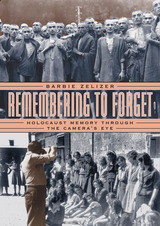
"[A] fascinating study. . . . Here we have a completely fresh look at the emergence of photography as a major component of journalistic reporting in the course of the liberation of the camps by the Western Allies. . . . Well written and argued, superbly produced with more photographs of atrocity than most people would want to see in a lifetime, this is clearly an important book."—Omer Bartov, Times Literary Supplement
A rare and remarkable example of Indo-Persian autobiography by the poet Mir Taqi Mir.
Mir Muhammad Taqi Mir (1723–1810) is the author of six collections of Urdu poetry and widely regarded as the finest ghazal poet in that language. However, he also wrote one volume of verse and three prose works in Persian, including Zikr-e Mir, or Remembrances, a rare and remarkable example of Indo-Persian autobiography.
Remembrances recounts Mir’s ancestry, his father’s spiritual quest, and his own struggles to find education and patronage both in his native Agra and in Delhi. While the work may offer few glimpses into the author’s private life or professional literary activity, it presents a vivid picture of political events and intrigues between 1760 and 1789, when north India witnessed extensive warfare.
The Persian text, presented here in the Naskh script, includes all the author’s additions and alterations properly identified and chronologically arranged, along with a newly revised English translation. Mir concludes his autobiography with a series of jokes and witty anecdotes, some of them quite risqué, that are printed here for the first time.
Renunciation as a creative force in the careers of writers, philosophers, and artists is the animating idea behind Ross Posnock’s new book. Taking up acts of abandonment, rejection, and refusal that have long baffled critics, he shows how renunciation has reframed the relationship of artists and intellectuals to society in productive and unpredictable ways.
In a work of remarkable synthesis that includes traditions and genres from antiquity to postmodernity, Posnock discovers connections among disparate figures ranging from Lao Tzu to Dave Chappelle and Bob Dylan. The thread running through these acts of renunciation, he argues, is an aesthetic and ethical resistance to the demand that one’s words and actions be straightforward and immediately comprehensible. Modern art in particular valorizes the nonconceptual and the intuitive, seeking to make silence articulate and incompletion fertile.
Renouncers reject not only artistic and scholarly conventions but also the public roles that attend them. Wittgenstein, Rimbaud, and Glenn Gould brazenly flouted professional and popular expectations, demanding that philosophy, poetry, music play by new rules. Emerson and Nietzsche severed all institutional ties, while William James waged a guerrilla campaign from his post at Harvard against what all three considered to be the enemy: the pernicious philosophical insistence on rationality. Posnock also examines renunciations in light of World War II—the veterans J. D. Salinger and George Oppen, and the Holocaust survivor Paul Celan—while a fourth cluster includes the mystic Thomas Merton and the abstract painters Ad Reinhardt and Agnes Martin.
Winner of the Herbert Baxter Adams Prize
A Longman–History Today Book Prize Finalist
A Sheik Zayed Book Award Finalist
Winner of the Thomas J. Wilson Memorial Prize
A Times Literary Supplement Book of the Year
“Deeply thoughtful…A delight.”—The Economist
“[A] tour de force…Bevilacqua’s extraordinary book provides the first true glimpse into this story…He, like the tradition he describes, is a rarity.”
—New Republic
In the seventeenth and eighteenth centuries, a pioneering community of Western scholars laid the groundwork for the modern understanding of Islamic civilization. They produced the first accurate translation of the Qur’an, mapped Islamic arts and sciences, and wrote Muslim history using Arabic sources. The Republic of Arabic Letters is the first account of this riveting lost period of cultural exchange, revealing the profound influence of Catholic and Protestant intellectuals on the Enlightenment understanding of Islam.
“A closely researched and engrossing study of…those scholars who, having learned Arabic, used their mastery of that difficult language to interpret the Quran, study the career of Muhammad…and introduce Europeans to the masterpieces of Arabic literature.”
—Robert Irwin, Wall Street Journal
“Fascinating, eloquent, and learned, The Republic of Arabic Letters reveals a world later lost, in which European scholars studied Islam with a sense of affinity and respect…A powerful reminder of the ability of scholarship to transcend cultural divides, and the capacity of human minds to accept differences without denouncing them.”
—Maya Jasanoff
“What makes his study so groundbreaking, and such a joy to read, is the connection he makes between intellectual history and the material history of books.”
—Financial Times
France in the mid-nineteenth century was shaken by a surge of civic activism, the "resurrection of civil society." But unlike similar developments throughout Europe, this civic mobilization culminated in the establishment of democratic institutions. How, Philip Nord asks, did France effect a successful transition from Louis-Napoleon's authoritarian Second Empire to a functioning republic based on universal suffrage and governed by middle-class parliamentarians? How did French civic activism take this democratic turn?
Nord provides the answers in a multidimensional narrative that encompasses not only history and politics but also religion, philosophy, art, literature, and gender. He traces the advance of democratic sentiment and the consolidation of political dissent at its strategic institutional sites: the lodges of Freemasonry, the University, the Paris Chamber of Commerce, the Protestant and Jewish consistories, the Paris bar, and the arts. It was the particular character and unfolding of these struggles, Nord demonstrates, that made an awakening middle class receptive to democratic politics. The new republican elite was armed with a specific vision that rallied rural France--a vision of solidarity and civic-mindedness, of moral improvement, and of a socioeconomic order anchored in family enterprise.
Nord's trenchant analysis explains how and why the Third Republic (1870-1940) endured longer than any other regime since the 1789 revolution. The convergence of republican currents at midcentury bequeathed to the French nation a mature civil society, a political elite highly trained in the arts of democratic politics, and an agenda that encompassed not only constitutional reform but also a reformation of private life and public culture.

Kabalek argues that such simplistic depictions of the majority versus minority obscure the complex motivations and situations that led people in Nazi Germany to help persecuted Jews. Against the view that the rescuers were “forgotten” after the war, he shows that portrayals and interpretations of helping Jews appeared in various media and social discourses in East, West, and unified Germany and were used to actively debate questions of collective morality. Rescue and Remembrance analyzes the varied and changing depictions of rescue in the distinct German politics from the Nazi period, examining how the very notions of “majority” and “collective” were articulated and reformulated.
This is the story of a Holocaust rescuer, Pierre Toureille, a French Protestant pastor whose efforts resulted in the rescue of hundreds of refugees, most of them Jewish. Inspired by his Huguenot heritage, Pastor Toureille participated in international Protestant church efforts to combat Nazism during the 1930s and headed a major refugee aid organization in Vichy France during World War II. After the war, Pastor Toureille was honored by the Jewish organization Yad Vashem as one of the "Righteous Among the Nations."
In telling Toureille’s story, Tela Zasloff also depicts the wide-ranging network of Protestant pastors and lay people in southern French villages who participated in an aggressive rescue effort. She delves into their motivations, including their heritage as members of a religious minority. Toureille’s rescue work under the Vichy regime, partly official and then increasingly clandestine as the war progrressed. was a crucial part of the French non-violent "spiritual resistance" against Nazism.
In February 1943 the Gestapo arrested approximately 10,000 Jews remaining in Berlin. Most died at Auschwitz. Two thousand of those Jews, however, had non-Jewish partners and were locked into a collection center on a street called Rosenstrasse. As news of the surprise arrest pulsed through the city, hundreds of Gentile spouses, mostly women, hurried to the Rosenstrasse in protest. A chant broke out: "Give us our husbands back."
Over the course of a week protesters vied with the Gestapo for control of the street. Now and again armed SS guards sent the women scrambling for cover with threats that they would shoot. After a week the Gestapo released these Jews, almost all of whom survived the war.
The Rosenstrasse Protest was the triumphant climax of ten years of resistance by intermarried couples to Nazi efforts to destroy their families. In fact, ninety-eight percent of German Jews who did not go into hiding and who survived Nazism lived in mixed marriages. Why did Hitler give in to the protesters? Using interviews with survivors and thousands of Nazi records never before examined in detail, Nathan Stoltzfus identifies the power of a special type of resistance--the determination to risk one's own life for the life of loved ones. A "resistance of the heart..."
The authors expressly situate this terrifying period within the wider context of mutual Indonesian violence and the use of violence by the Japanese, British and Dutch against Indonesian citizens. Java, Sumatra, and other islands are discussed in the book, as well as the complex issue of the number of victims. Finally, they discuss the development of the term "bersiap" over the past 75 years, which grew into a key concept in the Netherlands to describe the earliest phase of the Indonesian War of Independence.
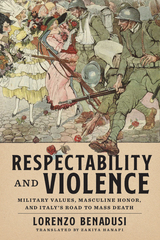
In the aftermath of national unification in the 1860s, the Italian army was tasked with molding generations of men from warring regions and different social strata into obedient citizens of a centralized state. Integrating large numbers of the educated middle classes into the young kingdom’s armed forces proved decisive in establishing the army as the “main school” and backbone for mass nationalization. Lorenzo Benadusi examines the intersection of Italian military and civil society over the last century as they coalesced in the figure of the gentleman-officer—an idealized image of an altruistic, charming, and competent ruling class that could influence the choices, values, and behavior of the “new Italians.”
Respectability and Violence traces the relationship between civic virtues and military values from the post-Risorgimento period through the end of World War I, when the trauma of trench warfare made it necessary to again redefine ideas of chivalry and manliness and to accept violence as a necessary tool in defense of society and state. The language of conflict and attitudes about war forged in these decades—characterized by patriotism, heroism, and sacrifice—shaped the cultured bourgeoise into loyalists who ushered in Italy’s transition to a powerful Fascist political system. This unique study of the officer is crucial for understanding the military, social, and political history of Italy.
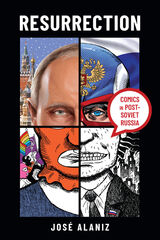
Resurrection: Comics in Post-Soviet Russia traces the “kopecks to rubles” journey of Russian comics at the turn of the century. As the follow-up to José Alaniz’s groundbreaking Komiks: Comic Art in Russia (2010), Resurrection authoritatively and exhaustively details the Russian comic landscape of the last three decades: beginning after the 1991 fall of the Soviet Union and encompassing the fourth Putin administration, the COVID-19 crisis, and beyond. Bolstering his analysis with interviews with some of the major figures in Russia’s comics industry, Alaniz particularly focuses on the representation of masculinity, disability, historical trauma, and superheroes, as well as on the recent rise of fandom, alternative micropresses, and nonfiction graphic narrative. Resurrection is a sweeping discussion of the metamorphosis of contemporary Russian comic art from its rebirth to its entry into mainstream culture.
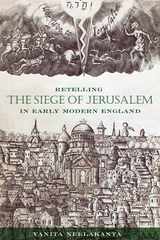
Published by University of Delaware Press. Distributed worldwide by Rutgers University Press.
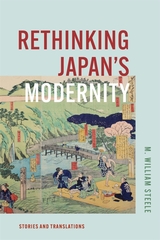

In diverse essays the authors provide fascinating studies of objectivity in such areas as anthropological research, corporate and governmental bureaucracies, legal discourse, photography, and the study and practice of the natural sciences. Taken together, Megill argues, this volume calls for developing a notion of "objectivities." The absolute sense of objectivity--that is, objectivity as a "God's eye view"—must be supplemented, and in part supplanted, by disciplinary, procedural, and dialectical senses of objectivity. This book will be of great interest to a broad range of scholars as it presents current thinking on a topic of fundamental concern across the disciplines in the humanities and social sciences.
Contributors. Barry Barnes, Dagmar Barnouw, Lorraine Code, Lorraine Daston, Johannes Fabian, Kenneth J. Gergen, Mary E. Hawkesworth, Barbara Herrnstein Smith, Evelyn Fox Keller, George Levine, Allan Megill, Peter Miller, Andy Pickering, Theodore M. Porter
“Compact and engaging, Retrieving Realism is more approachable than its weighty subject matter might predict…[An] adventurous combination of arguments and mixing of philosophical cultures.” —Boston Review
“A picture held us captive,” writes Wittgenstein in the Philosophical Investigations, describing the powerful image of mind that underlies the modern epistemological tradition from Descartes onward. Retrieving Realism offers a radical critique of the Cartesian epistemic picture that has captivated philosophy for too long and restores a realist view affirming our direct access to the everyday world and to the physical universe.
According to Descartes, knowledge exists in the form of ideas in the mind that purportedly represent the world. This “mediational” epistemology—internal ideas mediating external reality—continues to exert a grip on Western thought, and even philosophers such as Quine, Rorty, and Davidson who have claimed to refute Descartes remain imprisoned within its regime. As Hubert Dreyfus and Charles Taylor show, knowledge consists of much more than the explicit representations we formulate. We gain knowledge of the world through bodily engagement with it—by handling things, moving among them, responding to them—and these forms of knowing cannot be understood in mediational terms. Dreyfus and Taylor also contest Descartes’s privileging of the individual mind, arguing that much of our understanding of the world is necessarily shared.
Once we deconstruct Cartesian mediationalism, the problems that Hume, Kant, and many of our contemporaries still struggle with—trying to prove the existence of objects beyond our representations—fall away, as does the motivation for nonrealist doctrines. We can then begin to describe the background everyday world we are absorbed in and the universe of natural kinds discovered by science.
In this first comprehensive study of the effect of Lucretius's De rerum natura on Florentine thought in the Renaissance, Alison Brown demonstrates how Lucretius was used by Florentine thinkers—earlier and more widely than has been supposed—to provide a radical critique of prevailing orthodoxies.
To answer the question of why ordinary Florentines were drawn to this recently discovered text, despite its threat to orthodox Christian belief, Brown tracks interest in it through three humanists—the most famous of whom was Machiavelli—all working not as philologists but as practical administrators and teachers in the Florentine chancery and university. Interpreting their direct use of Lucretius within the context of mercantile Florence, Brown highlights three dangerous themes that had particular appeal: Lucretius's attack on superstitious religion and an afterlife; his pre-Darwinian theory of evolution; and his atomism, with its theory of free will and the chance creation of the world.
The humanists' challenge to established beliefs encouraged the growth of a "Lucretian network" of younger, politically disaffected Florentines. Brown thus adds a missing dimension to our understanding of the "revolution" in sixteenth-century political thinking, as she enriches our definition of the Renaissance in a context of newly discovered worlds and new social networks.
The clever peasant Arnaud du Tilh had almost persuaded the learned judges at the Parlement of Toulouse when, on a summer’s day in 1560, a man swaggered into the court on a wooden leg, denounced Arnaud, and reestablished his claim to the identity, property, and wife of Martin Guerre. The astonishing case captured the imagination of the continent. Told and retold over the centuries, the story of Martin Guerre became a legend, still remembered in the Pyrenean village where the impostor was executed more than 400 years ago.
Now a noted historian, who served as consultant for a new French film on Martin Guerre, has searched archives and lawbooks to add new dimensions to a tale already abundant in mysteries: we are led to ponder how a common man could become an impostor in the sixteenth century, why Bertrande de Rols, an honorable peasant woman, would accept such a man as her husband, and why lawyers, poets, and men of letters like Montaigne became so fascinated with the episode.
Natalie Zemon Davis reconstructs the lives of ordinary people, in a sparkling way that reveals the hidden attachments and sensibilities of nonliterate sixteenth-century villagers. Here we see men and women trying to fashion their identities within a world of traditional ideas about property and family and of changing ideas about religion. We learn what happens when common people get involved in the workings of the criminal courts in the ancien régime, and how judges struggle to decide who a man was in the days before fingerprints and photographs. We sense the secret affinity between the eloquent men of law and the honey-tongued village impostor, a rare identification across class lines.
Deftly written to please both the general public and specialists, The Return of Martin Guerre will interest those who want to know more about ordinary families and especially women of the past, and about the creation of literary legends. It is also a remarkable psychological narrative about where self-fashioning stops and lying begins.
The term “resentment,” often casually paired with words like “hatred,” “rage,” and “fear,” has dominated US news analysis since November 2016. Despite its increased use, this word seems to defy easy categorization. Does “resentment” describe many interlocking sentiments, or is it just another way of saying “anger”? Does it suggest an irrational grievance, as opposed to a legitimate callout of injustice? Does it imply political leanings, or is it nonpartisan by nature?
In The Return of Resentment, Robert A. Schneider explores these questions and more, moving from eighteenth-century Britain to the aftermath of the French Revolution to social movements throughout the twentieth century. Drawing on a wide range of writers, thinkers, and historical experiences, Schneider illustrates how resentment has morphed across time, coming to express a collective sentiment felt by people and movements across the political spectrum. In this history, we discover resentment’s modernity and its ambiguity—how it can be used to dismiss legitimate critique and explain away violence, but also convey a moral stance that demands recognition. Schneider anatomizes the many ways resentment has been used to label present-day movements, from followers of Trump and supporters of Brexit to radical Islamicists and proponents of identity politics. Addressing our contemporary political situation in a novel way, The Return of Resentment challenges us to think critically about the roles different emotions play in politics.

Published by Bucknell University Press. Distributed by Rutgers University Press.

Is Venezuela’s Bolivarian revolution under Hugo Chávez truly revolutionary? Most books and articles tend to view the Chávez government in an either-or fashion. Some see the president as the shining knight of twenty-first-century socialism, while others see him as an avenging Stalinist strongman. Despite passion on both sides, the Chávez government does not fall easily into a seamless fable of emancipatory or authoritarian history, as these essays make clear.
A range of distinguished authors consider the nature of social change in contemporary Venezuela and explore a number of themes that help elucidate the sources of the nation’s political polarization. The chapters range from Fernando Coronil’s “Bolivarian Revolution,” which examines the relationship between the state’s social body (its population) and its natural body (its oil reserves), to an insightful look at women’s rights by Cathy A. Rakowski and Gioconda Espina. This volume shows that, while the future of the national process is unclear, the principles elaborated by the Chávez government are helping articulate a new Latin American left.
Despite its Latin etymology, “revolution” in its modern understanding arguably did not exist in antiquity, and revolution as we know it today is considered by many theorists to be a term born in modernity. While they certainly had times of momentous political upheaval, the Greeks and Romans tended to understand such events as part of a narrative of political continuity rather than novelty or rupture. Nevertheless, modern revolutions have repeatedly appropriated tropes of classical discourse, such as freedom, tyranny, tragedy, and fraternity.
With this book, Miriam Leonard offers a conceptual history of revolution, unraveling modernity’s yearning for the new and questioning why ancient concepts continue to play such an important role in political uprisings. Leonard looks at examples of appeals to antiquity during the French and Haitian Revolutions, in anticolonial struggles, and feminist and queer movements and considers works of theorists such as Karl Marx, Hannah Arendt, and Sigmund Freud that foreground an engagement with antiquity.
Moi first introduces Wittgenstein’s vision of language and theory, which refuses to reduce language to a matter of naming or representation, considers theory’s desire for generality doomed to failure, and brings out the philosophical power of the particular case. Contrasting ordinary language philosophy with dominant strands of Saussurean and post-Saussurean thought, she highlights the former’s originality, critical power, and potential for creative use. Finally, she challenges the belief that good critics always read below the surface, proposing instead an innovative view of texts as expression and action, and of reading as an act of acknowledgment. Intervening in cutting-edge debates while bringing Wittgenstein, Austin, and Cavell to new readers, Revolution of the Ordinary will appeal beyond literary studies to anyone looking for a philosophically serious account of why words matter.
READERS
Browse our collection.
PUBLISHERS
See BiblioVault's publisher services.
STUDENT SERVICES
Files for college accessibility offices.
RECENTLY PUBLISHED



UChicago Accessibility Resources
home | accessibility | search | about | contact us
BiblioVault ® 2001 - 2026
The University of Chicago Press