
 A SCHOLARLY BOOK REPOSITORY
51 start with S start with S
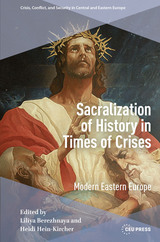
The contributors seek to identify the political, societal and religious actors promoting the sacralization of history. They consider which networks promote sacralized visions of history and who is excluded from the sacralized community of national belonging. They also explore which historical topics seem best suited for the sacralization of history and question what happens to the rituals, objects, or spaces, formerly regarded as sacral: are they profaned, neglected, or re-inscribed by new national histories, and is there a religious language of national history? These are the major questions of this book.

The refugee issue has always been controversial and Lavenex's analyses add fuel to an already heated debate. She analyses the various bi- and multilateral processes by which the countries of Central and Eastern Europe (CEECs) are being gradually incorporated into a restrictive refugee regime established among the EU member states, in which the CEECs serve as "gate-keepers" for refugees and immigrants heading towards Western Europe.
At a time when many transition countries are trying to enter the EU, Lavenex highlights the CEECs consent to adapt to Western European policies aimed at fighting illegal immigration and reducing the numbers of asylum seekers as a political bargaining tool in exchange for future membership in the EU. She also argues that the regime undermines the values of international refugee protection and diffuses states' responsibilities by establishing a system of negative redistribution for the handling of asylum claims.
Safe Third Countries is the first comprehensive study on the extension of the emergent European refugee regime and highlights, in an innovative manner, the complex entanglement of domestic policies, European integration and international relations.


The latest title in the Central European Medieval Texts series contains the lives of saints who were canonized in the eleventh through thirteenth centuries in the newly Christianized countries of Central and Eastern Europe (Bohemia, Poland, Hungary, and Dalmatia). A rejoinder to the earlier volume in the series, the Saints of the Christianization Age of Central Europe (CEMT, Vol. 6), containing hermits, missionaries, and martyrs, this second volume of hagiography is dominated by political or ecclesiastical leaders who became saintly patrons of their region and were highly venerated throughout the Middle Ages.
The legends in the volume present the two Hungarian holy kings Stephen and Ladislas, the holy duke Emeric, the Czech holy abbot Prokop of Sázava, three bishops, the Venetian-Hungarian Gellért of Csanád, the Polish Stanislas of Cracow (both martyrs), and the Dalmatian holy bishop Saint John of Trogir. Each “vita” is published in Latin original with an English translation and with prefaces discussing the textual tradition.
Saints’ lives have been recognized as an invaluable source of information on social and economic history, the history of mentalities and everyday life, cultural history, and, above all, as a special genre with crucial importance and prevalence in medieval literature.



In the best micro-historical tradition, Carlo Ginzburg, himself one of the founders and icons of this genre of historiography, dissects four moments of European intellectual history. This book relives the experience that participants in the Natalie Zemon Davis Lecture Series at the Budapest campus of Central European University had in 2019 listening to Ginzburg's eloquent and engaging discourses. For the purposes of this volume he has re-edited and completed the leporello of cases charged with the inherent ambiguity between secularism and religions.
Secularism is often identified with rejection or at least distancing from the sacred. However, if one assumes that secularism also appropriates and reworks the sacred, its ambiguities come to the fore. The dilemma accompanies the reception of La Boétie's Servitude volontaire between 1574 and today. Before Walter Benjamin, the lesser-known 19th-century Léon de Laborde defended the profanity of reproducing the arts. The tension around the secular pervades the case of the College de Sociologie (Paris, 1937-1939), an attempt to analyze the ideological components of fascism. The fourth lecture approaches a much-discussed contemporary phenomenon – fake news – from a long-term perspective. To what extent are some disturbing features of the world we live in the result of a long, tortuous, unpredictable trajectory?

The Roman Catholic Church has played a unique role in the history of Poland in the twentieth century: the people and the Church drew closer and closer together during Nazi rule, the Stalinist period and the somewhat milder, though strongly anti-religious and repressive Gomulka regime (1956-1970). The power struggle between the Church and the communist government did in fact play a role in shaping world politics, the Polish Church having been the force behind the opposition movement in Poland. Against this background, a Polish pope appeared and made a major contribution to the collapse of communism.
The Seeds of Triumph, the most comprehensive recent book on the opposition of Church and State in post-war Poland, compares the characteristics and consequences of this relationship during three different periods: the first and second periods of Gomulka's rule, and the Stalinist era between the two Gomulka periods. It examines the balance of power, studying to what degree the Church and other factors in the political environment influenced governmental policy-making. The author disproves the common stereotype, held at the time, that domestic conditions played only a marginal role. In examining the regime's policies, she covers the legal background, the general policy characteristics, the specific policies implemented during the period, and the role of the individual actors, most notably the pivotal role of the two main protagonists, Cardinal Wyszynski and Wladislaw Gomulka.
In her landmark study, Diskin makes a significant contribution to the study of authoritarian systems and greatly enhances our understanding of the centrality of the Church in recent Polish history.


Discusses the process of the economic annihilation of the Jews in Hungary, who– from the economic point of view – were more influential than any other Jewish community in Europe. Following the German occupation in March 1944 the collaborating Hungarian government attempted to assert its claim concerning the complete confiscation of Jewish assets at all stages of the road leading to the extermination camps. The cooperation with the Germans proved to be the most problematic in this area.
The story of the Jewish Gold Train is a relatively small but all the more emblematic chapter of the economic annihilation. The circumstances of the freight’s assembling, the German-Hungarian conflicts concerning the train, the looting attempts, the fate of the assets seized by the Allies (double victimization of the survivors) provide the reader with an insight into the history of the repeated looting of the Hungarian Jewry
The book analyzes the role played by SS-Obersturmbannführer Kurt Becher, one of the most controversial and mysterious figures in the Hungarian and universal history of the Holocaust. Becher, delegated to Hungary by Himmler, administered and benefited from the confiscation of an enormous amount of Jewish assets.


These memoirs read as a significant contribution to scholarship, full of important facts and characterizations. At the same time, they become an original intellectual novel with real-life protagonists seen from the point of view of a child, teenager and young woman. The position of the narrator creates a “defamiliarizing” effect similar to the one about which the Formalists and first and foremost Viktor Shklovsky wrote. However, this powerful effect is “hidden in plain view” – the style of Bogatyreva’s memoirs is strikingly transparent and non-pretentious, which makes her book available even for an unprepared reader.
Mark Lipovetsky, Columbia University
A masterpiece of twentieth-century Hungarian fiction, Kosztolányi's Skylark is a classic portrait of provincial life in the Austro-Hungarian monarchy. Set in the autumn of 1899, it focuses on one extraordinary week in the otherwise uneventful lives of an elderly Hungarian couple. Their ugly spinster daughter, nicknamed Skylark, has left them for an unprecedented holiday with relatives in the country. At first, the couple, whose entire existence revolves around their daughter, are devastated by her absence. Slowly, however, they rediscover the delights and diversions of small-town life, finally reaching the shocking conclusion that their daughter is a burden to them.
In this beautifully written tale Kosztolányi turns family sentiment on its head with an irony that is as telling now as it was nearly seventy years ago.


The Sorrowful Eyes of Hannah Karajich is a lyrical, deeply moving story of love and the pain of emancipation, set in the now vanished world of rural East European Jewish village life. Hanna is the most beautiful girl in all Polona, a Hasidic community in the remote province of Sub-Carpathian Ruthenia. Involvement in the exciting new movement of Zionism takes her away to a commune in a nearby town. But there she meets and falls in love with the strangely named Ivo Karajich: a Jew, yet not a Jew. The agonizing drama that follows, plants into her beautiful almond-shaped eyes the hard grain of sorrow that her children, too, will inherit.
Olbracht's novella is both a great love story and a marvellous portrait of a world that modernity threatened and Hitler destroyed.

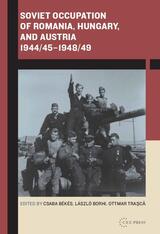
This first detailed account of Soviet military operations is based on access to unpublished material in Soviet archives, which have recently been reclassified.
The major contribution made by the book is its source material, which reveals new information on the organization, command, strategy, and tactics of the Soviet armed forces which invaded Hungary in 1956. Particularly interesting is the precise documentation of the irrationally large size of the forces. The volume is based on research in Soviet archives, and this alone makes it of unique scholarly importance.
The book opens with a substantial introductory essay by the editors, and includes a major study by the Russian military historian Alexandr Kirov, based on research in Soviet military archives. One of the real strengths of the book is that it also includes the memoirs of General Yevgeny Malashenko, in 1956 a colonel in the Soviet Army and acting Chief of Staff of the Special Corps in Budapest. He provides unparalleled insights into Soviet military procedures, politico-military co-operation, and the actual fighting strengths and weaknesses of the Red Army. Very few other high-ranking Soviet officers have ever published their memoirs in the West.

The war in Ukraine, with the exposure of nuclear power stations and the danger of atomic warfare, has made the legacy of the Soviet nuclear sector of critical importance.
The two authors map the Soviet nuclear industry in a shifting historical context, making sense of a complex socio-technical and environmental history. Taking an innovative approach, this book explores the history of atomic power in the former Soviet Union using the spatial dimensions of the nuclear industry as a point of departure. The key concept is that of the archipelago – a network of nuclear facilities spread throughout the Soviet territory, but mutually reliant on each other and densely connected.
The story traces the emergence of nuclear science and technology for military and civilian purposes through to the post-Soviet Russian nuclear corporations as providers of resources and technology. The book explains how nuclear developments in the Soviet Union interacted with processes of environmental and landscape change. The spatial lens offers an analytically fruitful and pedagogically stimulating way to comprehend the nuclear histories of the Soviet Union and its successor states.
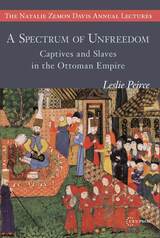
Without the labor of the captives and slaves, the Ottoman empire could not have attained and maintained its strength in early modern times. With Anatolia as the geographic focus, Leslie Peirce searches for the voices of the unfree, drawing on archives, histories written at the time, and legal texts.
Unfree persons comprised two general populations: slaves and captives. Mostly household workers, slaves lived in a variety of circumstances, from squalor to luxury. Their duties varied with the status of their owner. Slave status might not last a lifetime, as Islamic law and Ottoman practice endorsed freeing one’s slave.
Captives were typically seized in raids, generally to disappear, their fates unknown. Victims rarely returned home, despite efforts of their families and neighbors to recover them. The reader learns what it was about the Ottoman environment of the sixteenth and seventeenth centuries that offered some captives the opportunity to improve the conditions of their bondage. The book describes imperial efforts to fight against the menace of captive-taking despite the widespread corruption among the state’s own officials, who had their own interest in captive labor.
From the fortunes of captives and slaves the book moves to their representation in legend, historical literature, and law, where, fortunately, both captors and their prey are present.

Possession, a seemingly irrational phenomenon, has posed challenges to generations of scholars rooted in Western notions of body-soul dualism, self and personhood, and a whole set of presuppositions inherited from Christian models of possession that was “good” or “bad.” The authors of the essays in this book present a new and more promising approach. They conceive spirit possession as a form of communication, of expressivity, of culturally defined behavior that should be understood in the context of local, vernacular theories and empiric reflections.
With the aim of reformulating the comparative anthropology of spirit possession, the editors have opened corridors between previously separate areas of research. Together, anthropologists and historians working on several historical periods and in different European, African, South American, and Asian cultural areas attempt to redefine the very concept of possession, freeing it from the Western notion of the self and more clearly delineating it from related matters such as witchcraft, devotion, or mysticism. The book also provides an overview of new research directions, including novel methods of participant observation and approaches to spirit possession as indigenous historiography

The cultural phenomenon of exhibiting non-European people in front of the European audiences in the 19th and 20th century was concentrated in the metropolises in the western part of the continent. Nevertheless, traveling ethnic troupes and temporary exhibitions of non-European humans took place also in territories located to the east of the Oder river and Austria. The contributors to this edited volume present practices of ethnographic shows in Russia, Poland, Czechia, Slovenia, Hungary, Germany, Romania, and Austria and discuss the reactions of local audiences. The essays offer critical arguments to rethink narratives of cultural encounters in the context of ethnic shows. By demonstrating the many ways in which the western models and customs were reshaped, developed, and contested in Central and Eastern European contexts, the authors argue that the dominant way of characterizing these performances as “human zoos” is too narrow.
The contributors had to tackle the difficult task of finding traces other than faint copies of official press releases by the tour organizers. The original source material was drawn from local archives, museums, and newspapers of the discussed period. A unique feature of the volume is the rich amount of images that complement every single case study of ethnic shows.


Deals with the period of takeover and of ‘high Stalinism’ in Eastern Europe (1945–1955). These years are considered to be fundamentally characterized by institutional and ideological transfers based upon the premise of radical transformism and of cultural revolution. Both a balance-sheet and a politico-historical synthesis that reflects the archival and thematic novelties which came about in the field of communism studies after 1989.
Contains contributions analyzing various aspects related these topics for each country of the former Soviet bloc (with the exception of Albania). The essays are based on new archival research, some are reassessments of the author’s previous research and others are critical appraisals of the specific literature published on issues related to the main topic. A path-breaking comparative framework for interpreting the relationship between late Stalinism and the communist takeovers in former Eastern Europe. A bonus for the volume is that it also provides detailed, sectorial analyses for the Romanian case, something that the field paritcularly lacks.


Eric Fassin examines the trend of State anti-intellectualism in France using the nation as a case study to demonstrate that this tendency is not limited to ostensibly illiberal regimes. He argues that today’s world requires an examination of this phenomenon beyond Cold War geopolitical divisions and highlights a global shift towards authoritarian neoliberalism. His book is a plea for the political urgency of intellectual work in a global moment of political anti-intellectualism.
The book covers the period from President Sarkozy to Prime Minister Valls and includes both firsthand and public cases of attacks against academics, not only in France, but also in Brazil, Hungary, Russia, Turkey, and the United States, with examples of State racism and the argument of the State against antiracism. The book also considers issues of censorship and cancel culture, concluding with Fassin’s firsthand account of attacks on him from the far-right.


Through a skillful combination of economic and cultural history, this book describes the impact on Moldavia and Wallachia of steam navigation on the Danube. The Danube route integrated the two principalities into a dense network of European roads and waterways. From the 1830s to the 1860s, steamboat transport transformed time and space for the areas that benefited from regular services. River traffic accelerated urban development along the Lower Danube and contributed directly to institutional modernization in one of Europe’s peripheries.
Beyond technological advances and the transportation of goods on a trans-imperial waterway, steamboat travel revolutionized human interactions, too. The book offers a fascinating insight into the social and cultural milieu of the nineteenth century, drawing on first-hand accounts of Danube cruising. Describing the story of travelers who interacted, met, and visited the places they stopped, Constantin Ardeleanu creates a transnational history of travel up and down the Danube from Vienna to Constantinople. The pleasures and sometimes the travails of the travelers unfold against a backdrop of technical and economic transformation in the crucial period of modernization.
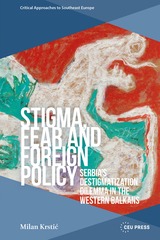
The central argument is that Serbia’s decision-makers grappled with a “destigmatization dilemma,” perceiving that actions aimed at facilitating Serbia’s destigmatization within international society could simultaneously undermine its security in regional relations with former adversaries. This produced a dillema between prioritizing destigmatization or security concerns. Through an examination of Serbia’s relations with Croatia and Bosnia and Herzegovina, the book explores how decision-makers navigated this dilemma, focusing on two key perceptions: the level of threat posed by the former adversary, and the perceived importance of the bilateral relationship for its destigmatization goals.


Rejecting the cliché about “weak identity and underdeveloped nationalism,” Bekus argues for the co-existence of two parallel concepts of Belarusianness—the official and the alternative one—which mirrors the current state of the Belarusian people more accurately and allows for a different interpretation of the interconnection between the democratization and nationalization of Belarusian society.
The book describes how the ethno-symbolic nation of the Belarusian nationalists, based on the cultural capital of the Golden Age of the Belarusian past (17th century) competes with the “nation” institutionalized and reified by the numerous civic rituals and social practices under the auspices of the actual Belarusian state.
Comparing the two concepts not only provides understanding of the logic that dominates Belarusian society’s self-description models, but also enables us to evaluate the chances of alternative Belarusianness to win this unequal struggle over identity.
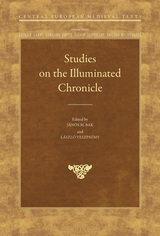
The present volume of studies—a joint publication with the National Széchényi Library, Budapest—is the first Subsidium of the Central European Medieval Text series, accompanying CEMT vol. IX on the Illuminated Chronicle, composed in the fourteenth century at the royal court of Louis I of Hungary. The large size of the volume, with the text and its annotations, did not permit the inclusion of a detailed scholarly introduction, unlike other CEMT items, so it is here printed separately.
The first essays analyze the text and the illuminations of the Illuminated Chronicle (formerly called the Vienna Chronicle) from literary-historical, art historical and heraldic perspectives. They also summarize the literature on the chronicle for the past two hundred years. Additional studies address the narrative. Since the chronicle starts with the history of the Huns, the imaginary ancestors of the Hungarians, one essay addresses the Attila tradition in Hungarian historiography. Others devote attention to the dynastic struggles of the eleventh century, placing them in the context of amicitia and deditio, and to the image of St. Ladislas I as the “ideal king”. The final essays examine the fate of the fourteenth-century chronicle texts over the subsequent centuries, their appearance in legal texts, and their reception abroad.
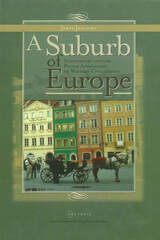
In this lively and original book, the distinguished Polish historian Jerzy Jedlicki tells the story of a century-long Polish dispute over the merits and demerits of the Western model of liberal progress and industrial civilization.
As in several countries of Europe, also in Poland, intellectuals--conservatives, liberals, and (later) socialists--quarrelled about whether such a model would suit and benefit their nation, or whether it would spell the ruin of its distinctive cultural features.
This heated debate revolved around several pairs of opposing ideas: native cultures v. cosmopolitan civilization; natural v. artificial ways of economic development; Christian morals v. capitalist laissez-faire; traditional customs v. mobile society; romanticism v. scientism, and so on. It is these various aspects of the main issue which the author analyzes and links together here. He describes how difficult and painful the process of modernization was in a nation deprived of its political independence and cultural autonomy.

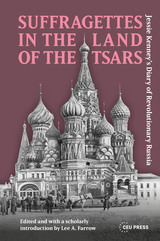

In this historical monograph on non-urban communist Albania, Artan Hoxha discusses the ambitious development project that turned a swampland into a site of sugar production after 1945. The author seeks to free the history of Albanian communism from the stereotypes that still circulate about it with stigmas of an aberration, paranoia, extreme nationalism, and xenophobia.
This micro-history of the agricultural and industrial transformation of a zone in southeastern Albania, explores a wide range of issues including modernization, development, and social, cultural, and economic policies. In addition to analyzing the collectivization of agriculture, Hoxha shows how communism affected the lives of ordinary rural people. As elsewhere in the Communist Bloc, the Albanian regime borrowed developmental projects from the past and implemented them using social mobilization and a command economy. The abundant archival resources along with interviews in the field attest to the authorities’ efforts to increase consumption and to radically transform people’s tastes. But the book argues that despite the repressive environment, people involved in the sugar project were not simply passive receivers of models from the nation's capital. The author also describes that—in defiance of Cold War bipolarity—technological requirements and social policy considerations required a degree of engagement with the broader world.
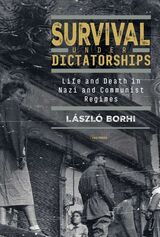
A complex array of individual responses to the abuse of power by the state is represented in this book in three horrific episodes in the history of East-Central Europe. The three events followed each other within a span of about ten years: the deportation and murder of Hungarian Jews in Nazi death and labor camps; the Arrow Cross terrorist rule in Budapest; and finally the Stalinist terror in Hungary and East-Central Europe. Through the prism of survival, László Borhi explores the relationship between the individual and power, attempting to understand the mechanism of oppression and terror produced by arbitrary, unbridled power through the experience of normal people.
Despite the obvious peculiarities of time and place, the Hungarian cases convey universal lessons about the Holocaust, Nazism, and Stalinism. In the author's conception, the National Socialist and Stalinist experiences are linked on several levels. Both regimes defended their visions of the future against social groups whom they saw as implacable enemies of those visions, and who therefore had to be destroyed for sake of social perfection. Furthermore, the social practices of National Socialism were passed on. And although Stalinism was imposed by a foreign power, some of the survival skills for coping with it were rehearsed under the previous hellish experience.

Leading social scientists, empirical analysts, and policy practitioners demonstrate the various ways in which the insights of János Kornai, a renowned early analyst and critic of the command economies of Eastern European communist states, are stirring academic and policy discussions about current challenges. While dissecting the economic theories and practices in the Soviet Bloc, Kornai devised and applied concepts such as soft-budget constraints, rush versus harmonic growth, surplus versus shortage economy, non-Walrasian equilibrium, bureaucratic coordination, and the invisible power of the communist party. These concepts are commonly applied to a variety of issues in the contexts of fundamental transformation. The cases discussed in this volume include the transitional paths of post-communist economies, the pitfalls of East European market-building, economic repercussions of the dissolution of Yugoslavia, and the process of integration in the Eurozone.
In conclusion János Kornai’s thoughts on a variety of research topics as well as the value of democracy are included as he delivered at the conference celebrating his 90th birthday in 2018.
READERS
Browse our collection.
PUBLISHERS
See BiblioVault's publisher services.
STUDENT SERVICES
Files for college accessibility offices.
RECENTLY PUBLISHED




UChicago Accessibility Resources
home | accessibility | search | about | contact us
BiblioVault ® 2001 - 2026
The University of Chicago Press