
 A SCHOLARLY BOOK REPOSITORY
5 start with S start with S

A gorgeously illustrated ode to the beauty and significance of orchids—and to those fighting to save these unique plants across the globe.
Until recently, a myriad of lifeforms enriched our lives. In some places, listening to a nighttime chorus of frogs in the neighborhood marsh was an archetypal touchstone of childhood. Children would search for tadpoles, just steps away from native Lady’s Tresses orchids. Year by year, the chorus became quieter. Today, only a few frogs and orchids remain. Is this the world we want our children to inherit? Do we want orchids to slip through our fingers and, eventually, to vanish?
For biologists Philip Seaton and Lawrence W. Zettler, and the intrepid orchid defenders they introduce in this book, the answer is no. Seaton and Zettler have traveled the world over the past three decades, studying orchids—flagship species for plant conservation. Stunningly illustrated, this book is a culmination of stories about the people—young and old alike—dedicated to protecting these remarkable plants from extinction. In the 19th century, collectors removed, shipped, and sold vast numbers of orchids from the wild. Today, scientists strive to reverse this harm—to protect and rebuild remnants of orchids’ original habitats against human disruption, including climate change. Seaton and Zettler reveal these plants’ bizarre pollination partners, risky liaisons with fungi, and adaptation to human domestication to show that learning orchids’ scientific secrets—and finding human helpers—is key to these plants’ survival.
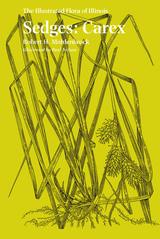
Unique in several respects, Carex is by far the most numerous genus of plants in Illinois. Because of the vast number of species, the similarity of many of the species, and the relatively small size of the critical reproductive structures, the members of this genus are extremely confusing to identify. This book, with its detailed descriptions, key, and precise illustrations, should aid the interested person in the identification of these plants.
Since more than three-fourths of the species of Carex in Illinois are inhabitants of wetlands, an understanding of the genus is critical for those working in wetlands. Amateur and professional botanists will find the information extremely valuable, as well as environmental and conservation groups, garden clubs, farm bureaus, home extension groups, scout organizations, and school libraries. Persons working in natural areas programs and in rare and endangered species programs and those working on environmental impact assessments and wildlife management projects will also find the information pertinent.

Embodying Cold War political and gendered tensions, Brazil's increasingly violent military government mounted fierce challenges to student political activity just as students were beginning to see themselves as representing an otherwise demobilized civil society. By challenging the students' political legitimacy at a pivotal moment, the dictatorship helped to ignite the student protests that exploded in 1968. In her attentive exploration of the years after 1968, Langland analyzes what the demonstrations of that year meant to later generations of Brazilian students, revealing how student activists mobilized collective memories in their subsequent political struggles.
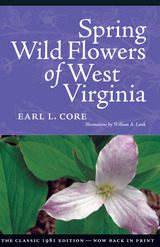
Back in print just in time for spring! Originally published in 1948, this is the germinal text on nearly 250 species of spring wildflowers found in West Virginia. Common or English names and scientific or Latin names are given for each species. The descriptions are in two sections: The first description includes the meaning of the name of the flower, uses, habitats, and ranges in West Virginia. Secondly, the plant itself is described in deep detail to help in identification. Each description is accompanied by a facing page detailed line drawing. This book is a must have for those interested in the beauty and science of West Virginia's spring flora. The author, Earl L. Core, also co-wrote the four-volume Flora of West Virginia. He received his bachelor's and master's degrees from West Virginia University and his doctorate from Columbia. He was a biology professor at WVU where the 75-acre arboretum managed by the university bears his name. The illustrator, William A. Lunk, received his doctorate at the University of Michigan and went on to become curator of their University Museums.
READERS
Browse our collection.
PUBLISHERS
See BiblioVault's publisher services.
STUDENT SERVICES
Files for college accessibility offices.
RECENTLY PUBLISHED




UChicago Accessibility Resources
home | accessibility | search | about | contact us
BiblioVault ® 2001 - 2026
The University of Chicago Press