
 A SCHOLARLY BOOK REPOSITORY
27 start with S start with S

The media are in crisis. Confronted by growing competition and sagging advertising revenue, news operations in print, on radio and TV, and even online are struggling to reinvent themselves. Many have gone under. For too many others, the answer has been to lay off reporters, join conglomerates, and lean more heavily on generic content. The result: in a world awash with information, news organizations provide citizens with less and less in-depth reporting and a narrowing range of viewpoints. If democracy requires an informed citizenry, this trend spells trouble.
Julia Cagé explains the economics and history of the media crisis in Europe and America, and she presents a bold solution. The answer, she says, is a new business model: a nonprofit media organization, midway between a foundation and a joint stock company. Cagé shows how this model would enable the media to operate independent of outside shareholders, advertisers, and government, relying instead on readers, employees, and innovative methods of financing, including crowdfunding.
Cagé’s prototype is designed to offer new ways to share and transmit power. It meets the challenges of the digital revolution and the realities of the twenty-first century, inspired by a central idea: that news, like education, is a public good. Saving the Media will be a key document in a debate whose stakes are nothing less crucial than the vitality of democracy.

A sweeping intellectual history of the concept of economic scarcity—its development across five hundred years of European thought and its decisive role in fostering the climate crisis.
Modern economics presumes a particular view of scarcity, in which human beings are innately possessed of infinite desires and society must therefore facilitate endless growth and consumption irrespective of nature’s limits. Yet as Fredrik Albritton Jonsson and Carl Wennerlind show, this vision of scarcity is historically novel and was not inevitable even in the age of capitalism. Rather, it reflects the costly triumph of infinite-growth ideologies across centuries of European economic thought—at the expense of traditions that sought to live within nature’s constraints.
The dominant conception of scarcity today holds that, rather than master our desires, humans must master nature to meet those desires. Albritton Jonsson and Wennerlind argue that this idea was developed by thinkers such as Francis Bacon, Samuel Hartlib, Alfred Marshall, and Paul Samuelson, who laid the groundwork for today’s hegemonic politics of growth. Yet proponents of infinite growth have long faced resistance from agrarian radicals, romantic poets, revolutionary socialists, ecofeminists, and others. These critics—including the likes of Gerrard Winstanley, Dorothy Wordsworth, Karl Marx, and Hannah Arendt—embraced conceptions of scarcity in which our desires, rather than nature, must be mastered to achieve the social good. In so doing, they dramatically reenvisioned how humans might interact with both nature and the economy.
Following these conflicts into the twenty-first century, Albritton Jonsson and Wennerlind insist that we need new, sustainable models of economic thinking to address the climate crisis. Scarcity is not only a critique of infinite growth, but also a timely invitation to imagine alternative ways of flourishing on Earth.

A revelatory look at the ways that gender, power, and the media are intertwined.
It all comes down to sex and money: how the media are organized, how they work, what they say, who gets to say it and to whom. That is the message this book delivers—and then parses for its meaning to society and culture. Forcefully and persuasively, this groundbreaking volume uses the media to show how questions of gender and economics are inextricably linked to issues of power in Western capitalist societies. Integrating political economy and feminism, it offers a new understanding of communication at the personal, experiential, institutional, and structural levels-and exposes all the subtle and complex ways in which sex and money are sutured into individuals’ daily lives.
Contributors: Robin Andersen, Fordham U; Ellen Balka, Simon Fraser U; Amy Beer; Carolyn M. Byerly, Ithaca College; Ramona Curry, U of Illinois; Fred Fejes, Florida Atlantic U; Nancy Hauserman, U of Iowa; Michèle Martin, Carleton U, Canada; Stana Martin, Central Missouri State U; Lisa McLaughlin, Miami U, Ohio; Roopali Mukherjee, Indiana U; Angela R. Record; Karen Ross, Coventry U; H. Leslie Steeves, U of Oregon; Angharad N. Valdivia, U of Illinois; Janet Wasko, U of Oregon; and Justin Wyatt.
Analyzing a Chinese city’s dazzling rise to global megacity status
Until around 1990, Shanghai was China’s premier but sluggish industrial center. Now at the beginning of the twenty-first century, the joint impact of global forces and state power has turned Shanghai into a dynamic megacity. Shanghai’s remarkable growth in economy, infrastructure, and global presence has prompted questions about the Shanghai “miracle.” This collection places the city’s unprecedented rise in a rare comparative examination of U.S. cities, as well as with Asian megacities Singapore and Hong Kong, providing a nuanced account of how Shanghai’s politics, economy, society, and space have been transformed by macro- and micro-level forces.
Contributors: Stephen W. K. Chiu, Chinese U of Hong Kong; K. C. Ho, National U of Singapore; John D. Kasarda, U of North Carolina; Hanlong Lu, Shanghai Academy of Social Sciences; Tai-lok Lui, Chinese U of Hong Kong; Ann R. Markusen, U of Minnesota; Anthony M. Orum, U of Illinois, Chicago; Yuan Ren, Fudan U Shanghai; Saskia Sassen, Columbia U; Jiaming Sun, Texas A&M U, Commerce; Fulong Wu, Cardiff U; Pingkang Yu, George Washington U; Tingwei Zhang, U of Illinois, Chicago; Zhenhua Zhou, Development Research Center, Shanghai Municipal Government.

Next Generation e-book nonfiction 2023 Indie Book Award Prize.
While social network analyses often demonstrate the usefulness of social media networks to affective publics and otherwise marginalized social justice groups, this book explores the domination and manipulation of social networks by more powerful political groups. Jeffrey Layne Blevins and James Lee look at the ways in which social media conversations about race turn politically charged, and in many cases, ugly. Studies show that social media is an important venue for news and political information, while focusing national attention on racially involved issues. Perhaps less understood, however, is the effective quality of this discourse, and its connection to popular politics, especially when Twitter trolls and social media mobs go on the attack.
Taking on prominent case studies from the past few years, including the Ferguson protests and the Black Lives Matter movement, the 2016 presidential election, and the rise of fake news, this volume presents data visualization sets alongside careful scholarly analysis. The resulting volume provides new insight into social media, legacy news, and social justice.
The essays here highlight the problems that the European pension reform process faces and how it differs from that of the United States. This timely volume will significantly enrich the debate on pension reform worldwide.

Dr. Nguyen Anh Tuan, former Minister of Finance of the Republic of South Vietnam, addresses a common perception of Vietnam: that South Vietnam was a fragmented society which did not deserve to succeed because of its internal weaknesses. According to Tuan, however, South Vietnam in the last decade of its life developed considerable governmental cohesion and internal social strength. Before the final failure of will, the South and its defenders were well on the way to becoming a viable society that had managed with American assistance to lift itself by its bootstraps to the point to economic take-off. Tuan argues that South Vietnam’s fall was not inevitable. This controversial book will be of great interest to all those concerned with the Vietnamese experience during the period 1954-1975.
“A fascinating insight into the evolution of China’s financial policy and its strategic investments using leveraged foreign exchange reserves.” —Diane Coyle, Enlightened Economist
“[Liu] shows that Chinese sovereign funds are so different from better-known sovereign wealth funds, such as those of the governments of Abu Dhabi and Norway, that she prefers to call them ‘sovereign leveraged funds’...These various exotic workarounds, which Liu skillfully traces, produce ‘shadow reserves.’” —Andrew J. Nathan, Foreign Affairs
“Follow the money, find the politics...Liu shows how China pioneered a whole new class of sovereign wealth funds.” —Times of India
One of the keys to China’s global rise has been its strategy of deploying sovereign wealth on behalf of state power. Since President Xi Jinping took office in 2013, China has doubled down on financial statecraft, making shrewd investments with the money it has made by leveraging its foreign exchange reserves. Sovereign Funds tells the story of how the Communist Party of China (CPC) became a global financier of surpassing ambition.
Zongyuan Zoe Liu offers a comprehensive and up-to-date analysis of the evolution of China’s sovereign funds, including the China Investment Corporation, the State Administration of Foreign Exchange, and Central Huijin Investment, showing how these institutions have become mechanisms not only for transforming low-reward foreign exchange reserves into investment capital but also for power projection. Sovereign funds are essential drivers of the national interest, shaping global markets, advancing the historic Belt and Road Initiative, and funneling state assets into strategic industries such as semiconductors, fintech, and artificial intelligence. Liu uncovers how the CPC is a leader in both foreign exchange reserves investment and economic statecraft, using state capital to encourage domestic economic activity and create spheres of influence worldwide.

“Necessary reading for scholars interested in theorising the spectacle's relation to the labour theory of value, commodity fetishism and subjectivity under post-Fordism.” - https://www.triple-c.at/index.php/tripleC/article/view/1015/1176
Spectacle 2.0 recasts Debord's theory of spectacle within the frame of 21st century digital capitalism. It offers a reassessment of Debord’s original notion of Spectacle from the late 1960s, of its posterior revisitation in the 1990s, and it presents a reinterpretation of the concept within the scenario of contemporary informational capitalism and more specifically of digital and media labour. It is argued that the Spectacle 2.0 form operates as the interactive network that links through one singular (but contradictory) language and various imaginaries, uniting diverse productive contexts such as logistics, finance, new media and urbanism. Spectacle 2.0 thus colonizes most spheres of social life by processes of commodification, exploitation and reification. Diverse contributors consider the topic within the book’s two main sections: Part I conceptualizes and historicizes the Spectacle in the context of informational capitalism; contributions in Part II offer empirical cases that historicise the Spectacle in relation to the present (and recent past) showing how a Spectacle 2.0 approach can illuminate and deconstruct specific aspects of contemporary social reality. All contributions included in this book rework the category of the Spectacle to present a stimulating compendium of theoretical critical literature in the fields of media and labour studies. In the era of the gig-economy, highly mediated content and President Trump, Debord’s concept is arguably more relevant than ever.
What did it mean to run a large, commercialized agrarian polity according to the best Confucian principles?
This book is intended as a contribution to both intellectual and political history. It is partly a study of how Confucian-trained officials thought about the grain trade and the state's role in it, particularly the "ever-normal granaries," the stockpiles of grain maintained by every county government as protection against shortages and high prices. The author investigates the scope and limits of belief in market forces among those critical of government intervention, establishing that rudimentary economic arguments for state withdrawal from the grain trade were available by 1750. She then explores challenges, from within the ruling apparatus, to the state's claim that its own stockpiling served the public interest, as well as the factors behind decisions in the mid- and late 1740s to suspend or decrease state purchases of grain.
As a study of Confucian government in action, this book describes a mode of public policy discussion far less dominated by the Confucian scriptures than one might expect. As a contribution to intellectual history, the work offers a detailed view of members of an ostensibly Confucian government pursuing divergent agendas around the question of "state or merchant?"
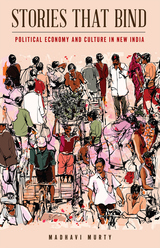
Moving between mediascapes to create an archive of popular culture, Murty advances our understanding of political economy through material that is often seen as inconsequential, namely the popular cultural story. These stories stoke our desires (e.g. for wealth), scaffold our instincts (e.g. for a strong leadership) and shape our values.

Many consumers feel powerless in the face of big industry’s interests. And the dominant view of economic regulators (influenced by Mancur Olson’s book The Logic of Collective Action, published in 1965) agrees with them. According to this view, diffuse interests like those of consumers are too difficult to organize and too weak to influence public policy, which is determined by the concentrated interests of industrial-strength players. Gunnar Trumbull makes the case that this view represents a misreading of both the historical record and the core logic of interest representation. Weak interests, he reveals, quite often emerge the victors in policy battles.
Based on a cross-national set of empirical case studies focused on the consumer, retail, credit, pharmaceutical, and agricultural sectors, Strength in Numbers develops an alternative model of interest representation. The central challenge in influencing public policy, Trumbull argues, is not organization but legitimation. How do diffuse consumer groups convince legislators that their aims are more legitimate than industry’s? By forging unlikely alliances among the main actors in the process: activists, industry, and regulators. Trumbull explains how these “legitimacy coalitions” form around narratives that tie their agenda to a broader public interest, such as expanded access to goods or protection against harm. Successful legitimizing tactics explain why industry has been less powerful than is commonly thought in shaping agricultural policy in Europe and pharmaceutical policy in the United States. In both instances, weak interests carried the day.
Examining detailed case studies of the International Court of Justice and the transition from the General Agreement on Tariffs and Trade to the World Trade Organization, Leslie Johns finds that a court’s design has nuanced and mixed effects on international cooperation. A strong court is ideal when laws are precise and the court is nested within a political structure like the European Union. Strong courts encourage litigation but make states more likely to comply with agreements when compliance is easy and withdraw from agreements when it is difficult. A weak court is optimal when law is imprecise and states can easily exit agreements with minimal political or economic repercussions. Johns concludes the book with recommendations for promoting cooperation by creating more precise international laws and increasing both delegation and obligation to international courts.
The collapse of neoliberal hegemony in the western world following the financial crash of 2007-8 and subsequent rise of right-wing authoritarian personalities has been described as a crisis of 'the political' in western societies. But the crisis must be seen as global, rather than focusing on the west alone.
Pakistan is experiencing rapid financialization and rapacious capture of natural resources, overseen by the country's military establishment and state bureaucracy. Under their watch, trading and manufacturing interests, property developers and a plethora of mafias have monopolized the provision of basic needs like housing, water and food, whilst also feeding conspicuous consumption by a captive middle-class.
Aasim Sajjad-Akhtar explores neoliberal Pakistan, looking at digital technology in enhancing mass surveillance, commodification and atomization, as well as resistance to the state and capital. Presenting a new interpretation of our global political-economic moment, he argues for an emancipatory political horizon embodied by the 'classless' subject.
Much of the innovative programming that powers the Internet, creates operating systems, and produces software is the result of “open source” code, that is, code that is freely distributed—as opposed to being kept secret—by those who write it. Leaving source code open has generated some of the most sophisticated developments in computer technology, including, most notably, Linux and Apache, which pose a significant challenge to Microsoft in the marketplace. As Steven Weber discusses, open source’s success in a highly competitive industry has subverted many assumptions about how businesses are run, and how intellectual products are created and protected.
Traditionally, intellectual property law has allowed companies to control knowledge and has guarded the rights of the innovator, at the expense of industry-wide cooperation. In turn, engineers of new software code are richly rewarded; but, as Weber shows, in spite of the conventional wisdom that innovation is driven by the promise of individual and corporate wealth, ensuring the free distribution of code among computer programmers can empower a more effective process for building intellectual products. In the case of Open Source, independent programmers—sometimes hundreds or thousands of them—make unpaid contributions to software that develops organically, through trial and error.
Weber argues that the success of open source is not a freakish exception to economic principles. The open source community is guided by standards, rules, decisionmaking procedures, and sanctioning mechanisms. Weber explains the political and economic dynamics of this mysterious but important market development.
Through a sharp reconstruction of the key historical developments, Daher focuses on the reasons behind the transition of a peaceful uprising into a destructive war with multiple regional and international actors. He argues that other approaches have so far neglected a global analysis of the conflict’s economic, social and political characteristics. He also shows that it is impossible to understand the Syrian uprising without a historical perspective dating back to the seizure of power by Hafez al-Assad in 1970.
A result of years of research and discussions with activists, students, members of political parties and Syrian academics, this book will be the go-to analysis of Syria for years to come.

Leading social scientists, empirical analysts, and policy practitioners demonstrate the various ways in which the insights of János Kornai, a renowned early analyst and critic of the command economies of Eastern European communist states, are stirring academic and policy discussions about current challenges. While dissecting the economic theories and practices in the Soviet Bloc, Kornai devised and applied concepts such as soft-budget constraints, rush versus harmonic growth, surplus versus shortage economy, non-Walrasian equilibrium, bureaucratic coordination, and the invisible power of the communist party. These concepts are commonly applied to a variety of issues in the contexts of fundamental transformation. The cases discussed in this volume include the transitional paths of post-communist economies, the pitfalls of East European market-building, economic repercussions of the dissolution of Yugoslavia, and the process of integration in the Eurozone.
In conclusion János Kornai’s thoughts on a variety of research topics as well as the value of democracy are included as he delivered at the conference celebrating his 90th birthday in 2018.
READERS
Browse our collection.
PUBLISHERS
See BiblioVault's publisher services.
STUDENT SERVICES
Files for college accessibility offices.
RECENTLY PUBLISHED


UChicago Accessibility Resources
home | accessibility | search | about | contact us
BiblioVault ® 2001 - 2026
The University of Chicago Press