
 A SCHOLARLY BOOK REPOSITORY
8 start with T start with T
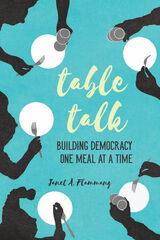
The civic virtues of a seat at the table
Etiquette books insist that we never discuss politics during a meal. In Table Talk, Janet A. Flammang offers a polite rebuttal, presenting vivid firsthand accounts of people's lives at the table to show how mealtimes can teach us the conversational give-and-take foundational to democracy. Delving into the ground rules about listening, sharing, and respect that we obey when we break bread, Flammang shows how conversations and table activities represent occasions for developing our civil selves. If there are cultural differences over practices--who should speak, what behavior is acceptable, what topics are off limits, how to resolve conflict--our exposure to the making, enforcement, and breaking of these rules offers a daily dose of political awareness and growth. Political table talk provides a forum to practice the conversational skills upon which civil society depends. It also ignites the feelings of respect, trust, and empathy that undergird the idea of a common good that is fundamental to the democratic process.
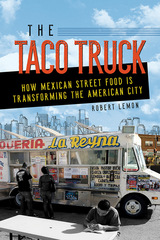
Drawing on interviews with taco truck workers and his own skills as a geographer, Robert Lemon illuminates new truths about foodways, community, and the unexpected places where ethnicity, class, and culture meet. Lemon focuses on the San Francisco Bay Area, Sacramento, and Columbus, Ohio, to show how the arrival of taco trucks challenge preconceived ideas of urban planning even as cities use them to reinvent whole neighborhoods. As Lemon charts the relationships between food practices and city spaces, he uncovers the many ways residents and politicians alike contest, celebrate, and influence not only where your favorite truck parks, but what's on the menu.
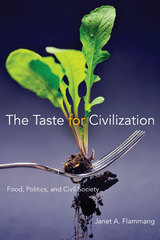
This book explores the idea that table activities--the mealtime rituals of food preparation, serving, and dining--lay the foundation for a proper education on the value of civility, the importance of the common good, and what it means to be a good citizen. The arts of conversation and diplomatic speech are learned and practiced at tables, and a political history of food practices recasts thoughtfulness and generosity as virtues that enhance civil society and democracy. In our industrialized and profit-centered culture, however, foodwork is devalued and civility is eroding.
Looking at the field of American civility, Janet A. Flammang addresses the gendered responsibilities for foodwork's civilizing functions and argues that any formulation of "civil society" must consider food practices and the household. To allow space for practicing civility, generosity, and thoughtfulness through everyday foodwork, Americans must challenge the norms of unbridled consumerism, work-life balance, and domesticity and caregiving. Connecting political theory with the quotidian activities of the dinner table, Flammang discusses practical ideas from the "delicious revolution" and Slow Food movement to illustrate how civic activities are linked to foodwork, and she points to farmers' markets and gardens in communities, schools, and jails as sites for strengthening civil society and degendering foodwork.
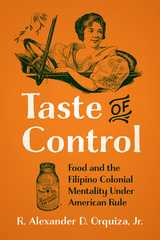
Winner of the 2021 Gourmand Awards, Asian Section & Culinary History Section
Filipino cuisine is a delicious fusion of foreign influences, adopted and transformed into its own unique flavor. But to the Americans who came to colonize the islands in the 1890s, it was considered inferior and lacking in nutrition. Changing the food of the Philippines was part of a war on culture led by Americans as they attempted to shape the islands into a reflection of their home country.
Taste of Control tells what happened when American colonizers began to influence what Filipinos ate, how they cooked, and how they perceived their national cuisine. Food historian René Alexander D. Orquiza, Jr. turns to a variety of rare archival sources to track these changing attitudes, including the letters written by American soldiers, the cosmopolitan menus prepared by Manila restaurants, and the textbooks used in local home economics classes. He also uncovers pockets of resistance to the colonial project, as Filipino cookbooks provided a defense of the nation’s traditional cuisine and culture.
Through the topic of food, Taste of Control explores how, despite lasting less than fifty years, the American colonial occupation of the Philippines left psychological scars that have not yet completely healed, leading many Filipinos to believe that their traditional cooking practices, crops, and tastes were inferior. We are what we eat, and this book reveals how food culture served as a battleground over Filipino identity.
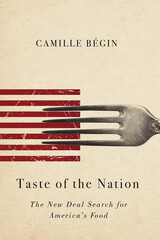
Camille Begin shapes a cultural and sensory history of New Deal-era eating from the FWP archives. From "ravioli, the diminutive derbies of pastries, the crowns stuffed with a well-seasoned paste" to barbeque seasoning that integrated "salt, black pepper, dried red chili powder, garlic, oregano, cumin seed, and cayenne pepper" while "tomatoes, green chili peppers, onions, and olive oil made up the sauce", Begin describes in mouth-watering detail how Americans tasted their food. They did so in ways that varied, and varied widely, depending on race, ethnicity, class, and region. Begin explores how likes and dislikes, cravings and disgust operated within local sensory economies that she culls from the FWP’s vivid descriptions, visual cues, culinary expectations, recipes and accounts of restaurant meals. She illustrates how nostalgia, prescriptive gender ideals, and racial stereotypes shaped how the FWP was able to frame regional food cultures as "American."
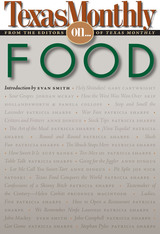
From reviews of the newest, hippest restaurants in cities across Texas to stories about the comfort foods we all love, Texans have long relied on Texas Monthly to dish up some of the best writing about food in the Lone Star state. This anthology brings together twenty-eight classic articles about food in Texas and the culture that surrounds it—markets that purvey exotic and traditional foods, well-known chefs, tributes to the cooks and cookbooks of days gone by, and even a feature on how to open a restaurant. Many of the articles are by Patricia Sharpe, Texas Monthly's longtime restaurant critic and winner of the James Beard Journalism Award for Magazine Feature Writing without Recipes. Joining her are Texas Monthly editor Evan Smith and contributors Gary Cartwright, Jordan MacKay, Skip Hollandsworth, Pamela Colloff, Anne Dingus, Suzy Banks, Joe Nick Patoski, and Prudence Mackintosh.
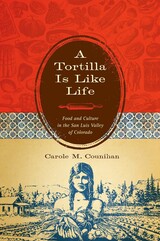
Located in the southern San Luis Valley of Colorado, the remote and relatively unknown town of Antonito is home to an overwhelmingly Hispanic population struggling not only to exist in an economically depressed and politically marginalized area, but also to preserve their culture and their lifeways. Between 1996 and 2006, anthropologist Carole Counihan collected food-centered life histories from nineteen Mexicanas—Hispanic American women—who had long-standing roots in the Upper Rio Grande region. The interviews in this groundbreaking study focused on southern Colorado Hispanic foodways—beliefs and behaviors surrounding food production, distribution, preparation, and consumption.
In this book, Counihan features extensive excerpts from these interviews to give voice to the women of Antonito and highlight their perspectives. Three lines of inquiry are framed: feminist ethnography, Latino cultural citizenship, and Chicano environmentalism. Counihan documents how Antonito's Mexicanas establish a sense of place and belonging through their knowledge of land and water and use this knowledge to sustain their families and communities. Women play an important role by gardening, canning, and drying vegetables; earning money to buy food; cooking; and feeding family, friends, and neighbors on ordinary and festive occasions. They use food to solder or break relationships and to express contrasting feelings of harmony and generosity, or enmity and envy. The interviews in this book reveal that these Mexicanas are resourceful providers whose food work contributes to cultural survival.
READERS
Browse our collection.
PUBLISHERS
See BiblioVault's publisher services.
STUDENT SERVICES
Files for college accessibility offices.
RECENTLY PUBLISHED




UChicago Accessibility Resources
home | accessibility | search | about | contact us
BiblioVault ® 2001 - 2026
The University of Chicago Press