
 A SCHOLARLY BOOK REPOSITORY
67 start with T start with T


As standard-bearers for intellectual freedom, school and children’s librarians are in ideal positions to collaborate with educators to not only protect the freedom to read but also ensure that valued books which touch upon important topics are not quarantined from the readers for whom they were written. In this best-selling classroom- and library-ready book of discussion guides, thoroughly updated and expanded to include genres such as graphic novels and nonfiction, award-winning champion of children's literature Scales shows that there is a way to teach these books while respecting all views. Also freshened to include only books that are in print, this resource
- reprints Judy Blume's stirring introduction from the first edition;
- aids educators and librarians in stimulating the critical thinking skills of young readers aged 9-18 while also encouraging freedom of thought and expression, in either classroom or book club settings;
- spotlights titles dealing with sensitive but vital issues such as bullying, racism, bigotry, making tough choices, other cultures, and our uncertain future;
- offers tips for introducing each book and its associated topics;
- provides open-ended questions for discussion which explore the book as a whole rather than simply its "controversial" aspects, along with research and writing activities; and
- includes short summaries of each book, plus a read-alikes section to keep the conversation going.
At the same time, the resources, research techniques, and assignments that business students need to master often have little in common with a traditional research paper. Teaching Business Information Literacy provides guidance to new business specialists, generalists, and subject librarians in other disciplines being asked to teach business research classes for the first time. Featuring more than 40 practical, classroom-proven lesson plans for one-shot, embedded, and credit-bearing library classes, it’s divided into nine sections:
- Basic Business Research
- Finance and Accounting
- Entrepreneurship
- Management
- Marketing
- Specialty Subjects
- Data Literacy/Data Visualization
- Experiential Learning/Career
- Using Technology in the Classroom
Chapters cover such crucial topics as competitive intelligence, market research, financial analysis, ethics, intellectual property, accounting and auditing, supply chain management, job searching, and more. Each one guides you through the background of the topic and activity being taught, pre-class planning and preparation, a step-by-step lesson plan, how to adapt the activity for other institutional contexts, and learning outcomes. Additional supporting materials such as slide decks, worksheets, and game boards are freely available in the ACRL Sandbox (sandbox.acrl.org) and findable with the tag “#bizinfolit.”
Volume 1
- Part I: Reading in the Disciplines
- Part II: Reading for Specific Populations
Volume 2
- Part III: Reading Beyond Scholarly Texts
- Part IV: Reading to Evaluate
- Part V: Reading in the World
Each of the 45 chapters contains teaching and programmatic strategies, resources, and lesson plans, as well as a section titled “Critical Reading Connection” that highlights each author’s approach for engaging with the purpose of reading critically and advancing the conversation about how librarians can foster this skill.
Academic librarians and archivists have a long history of engaging with different types of literacy and acting as a bridge between faculty and students. We understand the different reading needs of specific student populations and the affective challenges with reading that are often shared across learner audiences. We know what types of sources are read, the histories—and needed changes—of how authority has been granted in various fields, how students may be expected to apply what they read in future professional or civic settings, and frequently look beyond our local institutions to think about the larger structural and social justice implications of what is read, how we read, and who does the reading.
These volumes can help you make the implicit explicit for learners and teach that reading is both a skill that must be practiced and nurtured and a communal act. Teaching Critical Reading Skills demonstrates librarians’ and archivists’ deep connections to our campus communities and how critical reading instruction can be integrated in a variety of contexts within those communities.
Volume 1
- Part I: Reading in the Disciplines
- Part II: Reading for Specific Populations
Volume 2
- Part III: Reading Beyond Scholarly Texts
- Part IV: Reading to Evaluate
- Part V: Reading in the World
Each of the 45 chapters contains teaching and programmatic strategies, resources, and lesson plans, as well as a section titled “Critical Reading Connection” that highlights each author’s approach for engaging with the purpose of reading critically and advancing the conversation about how librarians can foster this skill.
Academic librarians and archivists have a long history of engaging with different types of literacy and acting as a bridge between faculty and students. We understand the different reading needs of specific student populations and the affective challenges with reading that are often shared across learner audiences. We know what types of sources are read, the histories—and needed changes—of how authority has been granted in various fields, how students may be expected to apply what they read in future professional or civic settings, and frequently look beyond our local institutions to think about the larger structural and social justice implications of what is read, how we read, and who does the reading.
These volumes can help you make the implicit explicit for learners and teach that reading is both a skill that must be practiced and nurtured and a communal act. Teaching Critical Reading Skills demonstrates librarians’ and archivists’ deep connections to our campus communities and how critical reading instruction can be integrated in a variety of contexts within those communities.
Volume 1
- Part I: Reading in the Disciplines
- Part II: Reading for Specific Populations
Volume 2
- Part III: Reading Beyond Scholarly Texts
- Part IV: Reading to Evaluate
- Part V: Reading in the World
Each of the 45 chapters contains teaching and programmatic strategies, resources, and lesson plans, as well as a section titled “Critical Reading Connection” that highlights each author’s approach for engaging with the purpose of reading critically and advancing the conversation about how librarians can foster this skill.
Academic librarians and archivists have a long history of engaging with different types of literacy and acting as a bridge between faculty and students. We understand the different reading needs of specific student populations and the affective challenges with reading that are often shared across learner audiences. We know what types of sources are read, the histories—and needed changes—of how authority has been granted in various fields, how students may be expected to apply what they read in future professional or civic settings, and frequently look beyond our local institutions to think about the larger structural and social justice implications of what is read, how we read, and who does the reading.
These volumes can help you make the implicit explicit for learners and teach that reading is both a skill that must be practiced and nurtured and a communal act. Teaching Critical Reading Skills demonstrates librarians’ and archivists’ deep connections to our campus communities and how critical reading instruction can be integrated in a variety of contexts within those communities.

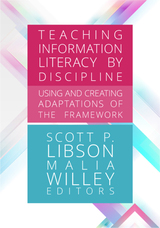
In nine thorough sections, Teaching Information Literacy by Discipline shows the great diversity in how librarians understand, adapt, and apply the Framework. It explores how frames are applied when drafting learning outcomes, building research guides, crafting assignments, designing curricula for a particular discipline, and more.
- Arts
- Writing
- Humanities
- Interdisciplinary Studies
- Social Sciences
- Business
- Education and Behavioral Studies
- Health
- Sciences

The six threshold concepts outlined in the Framework for Information Literacy for Higher Education are not simply a revision of ACRL's previous Information Literacy Competency Standards for Higher Education. They are instead an altogether new way of looking at information literacy. In this important new book, bestselling author and expert instructional librarian Burkhardt decodes the Framework, putting its conceptual approach into straightforward language while offering more than 50 classroom-ready Framework-based exercises. Guiding instructors towards helping students cross each threshold, this book
- discusses the history of the development of the Framework document and briefly deconstructs the six threshold concepts;
- thoroughly addresses each threshold concept, scaffolding from the beginner level to the intermediate level;
- includes exercises that can be used in the one-shot timeframe as well as others designed for longer class sessions and semester-long courses;
- offers best practices in creating learning outcomes, assessments, rubrics, and teaching tricks and tips; and
- looks at how learning, memory, and transfer of learning applies to the teaching of information literacy.
Offering a solid starting point for understanding and teaching the six threshold concepts in the Framework, Burkhardt's guidance will help instructors create their own local information literacy programs.

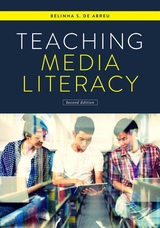
Foreword by Michelle Ciulla Lipkin, Executive Director, National Association for Media Literacy Education
Preface by Denise E. Agosto
Though media literacy and information literacy are intertwined, there are important differences; and there has never been a more urgent need for an incisive examination of the crucial role librarians and other educators can play in teaching the skills necessary to access, analyze, evaluate, and create media. Media literate youth and adults are better able to understand the complex messages emanating from television, movies, radio, the internet, news outlets, magazines, books, billboards, video games, music, and all other forms of media. In this book, international expert De Abreu melds advice from a diverse array of practitioners and subject experts with her own research findings to examine how consuming media and technology impacts the learning of K–12 students, tackling such paramount issues as
- fake news/alternative facts;
- critical thinking
- digital literacy and digital citizenship;
- social inclusion and equity;
- global interconnectivity; and
- social justice and advocacy.
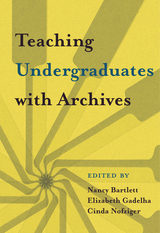
"The contributions to this volume capture exceptionally well the passion and the creativity that archivists and special collections librarians who teach and do outreach with primary sources are bringing to their work in this increasingly important activity domain."
-- Martha O’Hara Conway, Director, Special Collections Research Center, University of Michigan Library
"As teaching with archival materials has moved to the foreground of the archival mission for many institutions, this timely, inspiring, and practical volume, which comes out of the multi-day symposium solely devoted to teaching undergraduates with archival materials, is a required reading for anyone who teaches with archival materials, or who would like to. It really captures the spirit and enthusiasm that these authors brought to that symposium."
-- Josué Hurtado, Coordinator of Public Services & Outreach, Special Collections Research Center, Temple University Libraries
"Reflecting the increasing priority of teaching in archives and special collections libraries, this book captures a variety of perspectives, insights, approaches, and prognostications that will enlighten, challenge, and inspire a growing community of practitioners."
-- Bill Landis, Head of Public Services, Manuscripts and Archives, Yale University Library
"Building on the momentum generated at the symposium, this book is a treasure trove for professionals in the field who are eager for innovative ideas regarding collaboration and experimentation in teaching with archival material."
-- Elizabeth Williams-Clymer, Special Collections Librarian, Kenyon College

Consortium on Chicago School Research finds.
-Illuminates how the design of YOUmedia shapes youth participation
-Describes the teens that YOUmedia serves, their patterns of participation, and the activities in which they engage
-Provides examples of the benefits youth perceive from their participation
-Characterizes the roles adults play in engaging teens and the ways programmatic choices have shifted
-Offers suggestions for organizations intending to launch similar initiatives
-Illustrates how YOUmedia instantiates elements of the emerging Connected Learning Model
Technical Services isn’t the hidden discipline it once was. Even so, despite all the cross-departmental interaction, misconceptions about the work are all too common. It’s incumbent on technical services staff to take a proactive approach by communicating to others their value to the library and institutional mission. Spotlighting several successful initiatives, this collection will give you the guidance to bolster communication within departments, across the library, and campus-wide. You’ll learn about
- applying the 7 principles of communities of practice to break down silos;
- software such as Trello, Basecamp, and Confluence that can improve communications workflows;
- ticketing systems and training to help frontline staff solve e-resource access problems;
- engaging faculty in collection decisions using a mix of communication channels;
- how informational classes on metadata can improve the work of staff across the library;
- supporting research data management through metadata outreach;
- using focus groups to develop shared expectations with subject librarians;
- 4 narrative strategies to market library resources;
- using infographics as a dynamic way to illustrate progress in a collection management program;
- developing an external communication plan for a library de-selection project;
- using portfolio management to collaboratively implement new services; and
- planning a cross-departmental retreat.
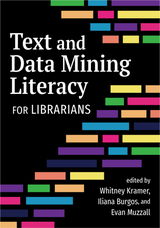
Text and Data Mining Literacy for Librarians collects ways that academic libraries are supporting TDM literacy through services, workflows, and professional development. In five parts, it offers a variety of perspectives, insights, and experiences that can help you address the challenges of supporting TDM research, fit it into your existing reference and instruction work, and conduct your own.
- Essentials of Text and Data Mining (TDM) Literacy
- Data Literacy, Licensing, and Management Challenges with TDM
- TDM Research in Action: Practical Applications and Case Studies
- Generating Insights from Library Reference Data
- Proprietary TDM Software: Examples and Implementations

Emerging as a discipline in the first half of the twentieth century, the information sciences study how people, groups, organizations, and governments create, share, disseminate, manage, search, access, evaluate, and protect information, as well as how different technologies and policies can facilitate and constrain these activities. Given the broad span of the information sciences, it is perhaps not surprising that there is no consensus regarding its underlying theory—the purposes of it, the types of it, or how one goes about developing new theories to talk about new research questions.
Diane H. Sonnenwald and the contributors to this volume seek to shed light on these issues by sharing reflections on the theory-development process. These reflections are not meant to revolve around data collection and analysis; rather, they focus on the struggles, challenges, successes, and excitement of developing theories. The particular theories that the contributors explore in their essays range widely, from theories of literacy and reading to theories of design and digital search. Several chapters engage with theories of the behavior of individuals and groups; some deal with processes of evaluation; others reflect on questions of design; and the rest treat cultural and scientific heritage. The ultimate goal, Sonnenwald writes in her introduction, is to “encourage, inspire, and assist individuals striving to develop and/or teach theory development.”
In four sections, Thriving as a Mid-Career Librarian collects the experiences of mid-career librarians as they grapple with these questions and the roles that marginalized perspectives, intersectionality, and privilege have played in their careers:
- Section 1: Staying Engaged in Your Career
- Section 2: The Role of Identity in Shaping Mid-career Librarianship
- Section 3: Being Your Own Advocate
- Section 4: To Lead or Not to Lead?
It can feel like everything gets harder, more political, and further under-resourced with each passing year. Thriving as a Mid-Career Librarian offers strategies of community, support, and advocacy that can help make it possible for us to thrive and help others to thrive. At mid-career, we may not have the same bright-eyed enthusiasm we possessed as new information professionals, but we have other things: the contributions we make to our communities and the wealth of experience we have built up since those days.
Toward Inclusive Academic Librarian Hiring Practices, rather than focusing just on how to diversify applicant pools, breaks down the many considerations involved in hiring and the intentional, thoughtful preparation and self-examination that leads to successful recruitment and retention in three parts.
- Training for Search Committees and Stakeholders
- Removing Barriers for Candidates
- Transforming the Process for All
Throughout are practical solutions for emphasizing inclusivity and accessibility throughout the hiring process, including instructions and examples for developing the position description and job postings, tips for creating diversity statements, interview instructions and preparation lists, interview itineraries, sample candidate emails and feedback forms, evaluation rubrics, ideas for onboarding and mentorship, and more.
While you are evaluating potential hires, they are evaluating you. Toward Inclusive Academic Librarian Hiring Practices can help you center equity in your hiring, attract job seekers, and support both candidates and search committees through these time-intensive, laborious, and crucial processes.
Toxic Dynamics: Disrupting, Dismantling, and Transforming Academic Library Culture provides practical solutions for confronting these complex issues and innovative ways to promote a healthy and sustainable work culture. It addresses critical and timely challenges such as faculty versus staff or us versus them mentality, unionization, gendered labor, organizational change, self-care, tenure, and promotion. Authors from all sizes and types of academic libraries provide evidence-based solutions to mitigate the negative effects of toxicity, change management strategies, and ways to confront and challenge values that harm library workers and their well-being.
By understanding the root causes of toxic cultures, recognizing their impact, and implementing solutions, leaders can create a more supportive and positive work environment and improve morale, retention, and productivity. Toxic Dynamics is an important resource for anyone interested in improving workplace culture and addressing issues related to toxicity and inequity, and for library leaders at all levels.

In two volumes, Training Library Instructors collects examples of how we train our colleagues to teach, whether they’re student workers, non-librarian staff, new or experienced librarians, or something else entirely. Volume 1, A Guide to Training Graduate Students, focuses on teacher training for graduate students in LIS programs and in academic libraries. It presents existing literature and theories, approaches to teaching library school students to teach, and critical reflections from librarians about their varied experiences receiving teacher training.
A Guide to Training Graduate Students provides a useful introduction, detailed examples, and salient reflections to help us better train library instructors during their time as graduate students through coursework and work experience. You’ll discover ideas for designing courses, internships, and other programs and ways to mentor graduate students who are interested in becoming library instructors.

In two volumes, Training Library Instructors collects examples of how we train our colleagues to teach, whether they’re student workers, non-librarian staff, new or experienced librarians, or something else entirely. In Volume 2, A Guide to Training Librarians, librarians share their knowledge about teaching, learning, and pedagogy through a variety of replicable activities: formal and informal workshops, courses, communities of practice, peer observation, and more. Programs include mock instruction, nano-teaching, and other feedback and homework mechanisms; happen at the individual, institutional, or consortial level; and can involve collaborations across library or university departments.
So many librarians value lifelong learning and the opportunity to learn from each other. A Guide to Training Librarians provides a starting point for readers considering their own teach-the-teacher programs and various approaches to learning together, exploring library instruction for the first time, or expanding existing knowledge through continued education.
In two volumes, Training Library Instructors collects examples of how we train our colleagues to teach, whether they’re student workers, non-librarian staff, new or experienced librarians, or something else entirely. Volume 1, A Guide to Training Graduate Students, focuses on teacher training for graduate students in LIS programs and in academic libraries. It presents existing literature and theories, approaches to teaching library school students to teach, and critical reflections from librarians about their varied experiences receiving teacher training. In Volume 2, A Guide to Training Librarians, librarians share their knowledge about teaching, learning, and pedagogy through a variety of replicable activities: formal and informal workshops, courses, communities of practice, peer observation, and more.
Training Library Instructors provides detailed, easily implemented and modified plans for courses, internships, teach-the-teacher programs, and other instructional methods and opportunities for graduate students and library workers at all levels of teaching experience.
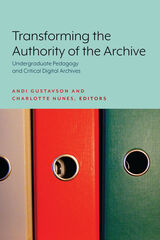
Contributions to this volume represent a range of institutions including small liberal arts colleges, HBCUs, Ivy Leagues, large research institutions, and community-based collections. The assignments, projects, and initiatives described across this volume are fundamentally concerned with the challenge to model digital archival collections so as to center individual and community voices that are historically under-engaged in the archives. To address this challenge, contributors describe various approaches to substantively, often radically, redistribute archival resources and authority. The chapters within Transforming the Authority of the Archive offer thoughtful and creative pedagogical approaches to counter the presumed neutrality of the archive and advocate a shared understanding of the contingency of archival collections. This book is a must-read for liberal arts faculty, graduate students, archivists (both community- and institutionally-affiliated), information-studies professionals, librarians, and other professionals working and teaching in archives, museums, libraries, and other cultural heritage institutions.

Foreword by John M. Budd; with contributions from Denise E. Agosto, Jeanie Austin, Michael Cart, Mary K. Chelton, Karen Coats, Kate McDowell, Cherie Givens, Mary Ann Harlan, Kafi D. Kumasi, Wendy Schaetzel Lesko, Mike Males, Paulette Rothbauer, Lucia Cedeira Serantes
How should LIS envision its young adult users? Now showcasing an even more rigorous debate about the theory and practice of YA librarianship than its first edition, this "provocative presentation of diverse viewpoints by leaders in the field" (Catholic Library World) has been updated and expanded to incorporate recent advances in critical youth studies. A comprehensive, evidence-based treatment that offers LIS instructors, students, and practitioners a valuable tool for aligning YA services to more fully reflect our diverse populations of young people, this collection delves deeply into such topics as
- the historical roots for current theories and practice;
- how intellectual freedom, storytelling, library collections, and other service topics can connect with the library's notion and vision of young adults;
- diverse YA identities, including critical race theory;
- competing perspectives on young adults’ rights in libraries;
- envisaging YA librarianship from a teen-centered perspective;
- youth identities and the school library; and
- moving beyond coaching to copilot with young adults.
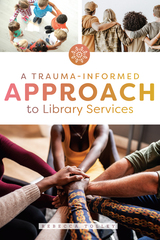
We are only now coming to terms with how common trauma really is; a landmark Kaiser study that surveyed patients receiving physicals found that almost two-thirds had experienced at least one form of abuse, neglect, or other trauma as a child. Though originating in the fields of health and social services, trauma-informed care is a framework that holds great promise for application to library work. Empathetic service, positive patron encounters, and a more trusting workplace are only a few of the benefits that this approach offers. In this important book Tolley, experienced in both academic and public libraries, brings these ideas into the library context. Library administrators, directors, and reference and user services staff will all benefit from learning
- the six key principles of trauma-informed care;
- characteristics of a trusting and transparent library organization, plus discussion questions to promote a sense of psychological safety among library workers;
- how certain language and labels can undermine mutuality, with suggested phrases that will help library staff demonstrate neutrality to patron ideas and views during information requests;
- delivery models that empower patrons;
- advice on balancing free speech on campus with students’ need for safety;
- how appropriate furniture arrangement can help people suffering from PTSD feel safe;
- guidance on creating safe zones for LGBTQIA+ children, teens, and adults; and
- self-assessment tools to support change toward trauma-responsive library services.
- delve into what trauma is and how it impacts library work;
- be introduced to a framework for utilizing a trauma-informed lens in your interactions;
- practice exercises to spur personal reflection on common concerns bound up with library work and the policies relating to these issues; and
- gain hand-on tools and techniques, including strategies for de-escalation and guidance on the impacts of involving law-enforcement and banning patrons.
You will also explore various scenarios which provide the opportunity to integrate what you’ve learned and practice responding through a trauma-informed lens, including
- Mental Health Challenges
- Sleeping at the Library
- Strong Personal Odor
- Personal Belongings
- Suspected Intoxication/Under the Influence
- Substance Use
- Threatening Verbal and Nonverbal Behavior
- Unsheltered Teens
- Adult Self-Neglect
- Child Abuse or Assault
- Solicitation or Panhandling
- Stealing
- Child Unattended After Closing
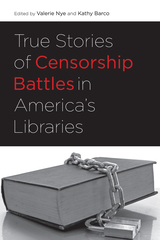
Intellectual freedom is a core value of librarianship, but fighting to keep controversial materials on the shelves can sometimes feel like a lonely battle. And not all censorship controversies involve the public objecting to a book in the collection—libraries are venues for displays and meetings, and sometimes library staff themselves are tempted to preemptively censor a work. Those facing censorship challenges can find support and inspiration in this book, which compiles dozens of stories from library front lines. Edifying and enlightening, this collection
- Tells the stories of librarians who withstood difficult circumstances to champion intellectual freedom
- Touches on prickly issues such as age-appropriateness, some librarians' temptation to preemptively censor, sensitive cultural expressions, and criminality in the library
- Presents case studies of defenses that were unsuccessful, so librarians facing similar challenges can learn from these defeats
There are fewer situations more stressful in a librarian's professional life than being personally confronted with a demand to remove a book from the shelves or not knowing how to respond to other kinds of censorship challenges. Reading this book will help fortify and inform those in the fray.
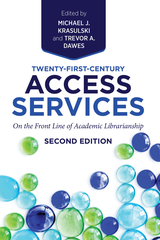
This thoroughly revised edition of 2013’s seminal Twenty-First-Century Access Services highlights the expanded duties of these departments; the roles these services continue to play in the success of the library, students, and faculty; and the knowledge, skills, and abilities these library workers need. In four parts it explores:
- Facilitating Access
- Leading Access Services
- Assessing Access Services
- Developing Access Services Professionals
Twenty-First-Century Access Services demonstrates access services’ value, defines their responsibilities and necessary skills, and explores how access services departments are evolving new and traditional services to support the academic mission of their institutions. It is geared toward both access services practitioners and library and information science graduate students and faculty.
READERS
Browse our collection.
PUBLISHERS
See BiblioVault's publisher services.
STUDENT SERVICES
Files for college accessibility offices.
RECENTLY PUBLISHED


UChicago Accessibility Resources
home | accessibility | search | about | contact us
BiblioVault ® 2001 - 2026
The University of Chicago Press