
 A SCHOLARLY BOOK REPOSITORY
9 start with T start with T

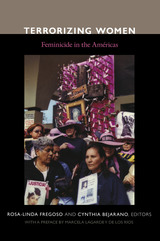
Terrorizing Women brings together essays by feminist and human rights activists, attorneys, and scholars from Latin America and the United States, as well as testimonios by relatives of women who were disappeared or murdered. In addition to investigating egregious violations of women’s human rights, the contributors consider feminicide in relation to neoliberal economic policies, the violent legacies of military regimes, and the sexual fetishization of women’s bodies. They suggest strategies for confronting feminicide; propose legal, political, and social routes for redressing injustices; and track alternative remedies generated by the communities affected by gender-based violence. In a photo essay portraying the justice movement in Chihuahua, relatives of disappeared and murdered women bear witness to feminicide and demand accountability.
Contributors: Pascha Bueno-Hansen, Adriana Carmona López, Ana Carcedo Cabañas, Jennifer Casey, Lucha Castro Rodríguez , Angélica Cházaro, Rebecca Coplan, Héctor Domínguez-Ruvalcaba, Marta Fontenla, Alma Gomez Caballero, Christina Iturralde, Marcela Lagarde y de los Ríos, Julia Estela Monárrez Fragoso, Hilda Morales Trujillo, Mercedes Olivera, Patricia Ravelo Blancas, Katherine Ruhl, Montserrat Sagot, Rita Laura Segato, Alicia Schmidt Camacho, William Paul Simmons, Deborah M. Weissman, Melissa W. Wright
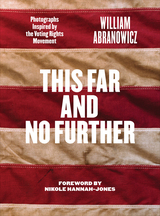
Standing on the Edmund Pettus Bridge in Selma, Alabama, in 2017, photographer William Abranowicz was struck by the weight of historical memory at this hallowed site of one of the civil rights movement's defining episodes: 1965's “Bloody Sunday,” when Alabama police officers attacked peaceful marchers. To Abranowicz’s eye, Selma seemed relatively unchanged from its apperance in the photographs Walker Evans made there in the 1930s. That, coupled with an awareness of renewed voter suppression efforts at state and federal levels, inspired Abranowicz to explore the living legacy of the civil and voting rights movement through photographing locations, landscapes, and individuals associated with the struggle, from Rosa Parks and Harry Belafonte to the barn where Emmett Till was murdered.
The result is This Far and No Further, a collection of photographs from Abranowicz's journey through the American South. Through symbolism, metaphor, and history, he unearths extraordinary stories of brutality, heroism, sacrifice, and redemption hidden within ordinary American landscapes, underscoring the crucial necessity of defending—and exercising—our right to vote at this tenuous moment for American democracy.

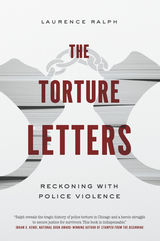
In The Torture Letters, Laurence Ralph chronicles the history of torture in Chicago, the burgeoning activist movement against police violence, and the American public’s complicity in perpetuating torture at home and abroad. Engaging with a long tradition of epistolary meditations on racism in the United States, from James Baldwin’s The Fire Next Time to Ta-Nehisi Coates’s Between the World and Me, Ralph offers in this book a collection of open letters written to protesters, victims, students, and others. Through these moving, questing, enraged letters, Ralph bears witness to police violence that began in Burge’s Area Two and follows the city’s networks of torture to the global War on Terror. From Vietnam to Geneva to Guantanamo Bay—Ralph’s story extends as far as the legacy of American imperialism. Combining insights from fourteen years of research on torture with testimonies of victims of police violence, retired officers, lawyers, and protesters, this is a powerful indictment of police violence and a fierce challenge to all Americans to demand an end to the systems that support it.
With compassion and careful skill, Ralph uncovers the tangled connections among law enforcement, the political machine, and the courts in Chicago, amplifying the voices of torture victims who are still with us—and lending a voice to those long deceased.
In The Torture Letters, Laurence Ralph chronicles the history of torture in Chicago, the burgeoning activist movement against police violence, and the American public’s complicity in perpetuating torture at home and abroad. Engaging with a long tradition of epistolary meditations on racism in the United States, from James Baldwin’s The Fire Next Time to Ta-Nehisi Coates’s Between the World and Me, Ralph offers in this book a collection of open letters written to protesters, victims, students, and others. Through these moving, questing, enraged letters, Ralph bears witness to police violence that began in Burge’s Area Two and follows the city’s networks of torture to the global War on Terror. From Vietnam to Geneva to Guantanamo Bay—Ralph’s story extends as far as the legacy of American imperialism. Combining insights from fourteen years of research on torture with testimonies of victims of police violence, retired officers, lawyers, and protesters, this is a powerful indictment of police violence and a fierce challenge to all Americans to demand an end to the systems that support it.
With compassion and careful skill, Ralph uncovers the tangled connections among law enforcement, the political machine, and the courts in Chicago, amplifying the voices of torture victims who are still with us—and lending a voice to those long deceased.
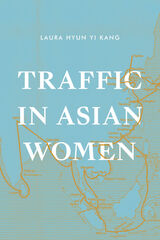

In Traumatic States, anthropologist Nia Parson explores the development of methods of care and recovery from domestic violence. She interviews and contextualizes the lives of numerous individuals who have confronted these acts, as victims, authorities, and activists. Ultimately, Traumatic States argues that facing the challenges of healing both body and mind, and addressing the fundamental inequalities that make those challenges even more formidable, are part of the same battle.
READERS
Browse our collection.
PUBLISHERS
See BiblioVault's publisher services.
STUDENT SERVICES
Files for college accessibility offices.
RECENTLY PUBLISHED



UChicago Accessibility Resources
home | accessibility | search | about | contact us
BiblioVault ® 2001 - 2026
The University of Chicago Press