
 A SCHOLARLY BOOK REPOSITORY
33 start with U start with U

As bad as they are, why aren't terrorists worse? With biological, chemical, and nuclear weapons at hand, they easily could be. And, as this chilling book suggests, they soon may well be. A former member of the National Security Council staff, Jessica Stern guides us expertly through a post-Cold War world in which the threat of all-out nuclear war, devastating but highly unlikely, is being replaced by the less costly but much more imminent threat of terrorist attacks with weapons of mass destruction.
According to SternThe Ultimate Terrorists depicts a not-very-distant future in which both independent and state-sponsored terrorism using weapons of mass destruction could actually occur. But Stern also holds out hope for new technologies that might combat this trend, and for legal and political remedies that would improve public safety without compromising basic constitutional rights.


Passengers get bumped from flights. Phone menus disconnect. Automated financial trades produce market collapse. Of all the challenges in modern life, some of the most vexing come from our relationships with automation: a large system does us wrong, and there’s nothing we can do about it.
The problem, economist Dan Davies shows, is accountability sinks: systems in which decisions are delegated to a complex rule book or set of standard procedures, making it impossible to identify the source of mistakes when they happen. In our increasingly unhuman world—lives dominated by algorithms, artificial intelligence, and large organizations—these accountability sinks produce more than just aggravation. They make life and economy unknowable—a black box for no reason.
In The Unaccountability Machine, Davies lays bare how markets, institutions, and even governments systematically generate outcomes that no one—not even those involved in making them—seems to want. Since the earliest days of the computer age, theorists have foreseen the dangers of complex systems without personal accountability. In response, British business scholar Stafford Beer developed an accountability-first approach to management called “cybernetics,” which might have taken off had his biggest client (the Chilean government) not fallen to a bloody coup in 1973.
With his signature blend of economic and journalistic rigor, Davies examines what’s gone wrong since Beer, including what might have been had the world embraced cybernetics when it had the chance. The Unaccountability Machine is a revelatory and resonant account of how modern life became predisposed to dysfunction.
Longlisted for the 2024 Financial Times Book of the Year. How life and the economy became a black box—a collection of systems no one understands, producing outcomes no one likes.
Passengers get bumped from flights. Phone menus disconnect. Automated financial trades produce market collapse. Of all the challenges in modern life, some of the most vexing come from our relationships with automation: a large system does us wrong, and there’s nothing we can do about it.
The problem, economist Dan Davies shows, is accountability sinks: systems in which decisions are delegated to a complex rule book or set of standard procedures, making it impossible to identify the source of mistakes when they happen. In our increasingly unhuman world—lives dominated by algorithms, artificial intelligence, and large organizations—these accountability sinks produce more than just aggravation. They make life and economy unknowable—a black box for no reason.
In The Unaccountability Machine, Davies lays bare how markets, institutions, and even governments systematically generate outcomes that no one—not even those involved in making them—seems to want. Since the earliest days of the computer age, theorists have foreseen the dangers of complex systems without personal accountability. In response, British business scholar Stafford Beer developed an accountability-first approach to management called “cybernetics,” which might have taken off had his biggest client (the Chilean government) not fallen to a bloody coup in 1973.
With his signature blend of economic and journalistic rigor, Davies examines what’s gone wrong since Beer, including what might have been had the world embraced cybernetics when it had the chance. The Unaccountability Machine is a revelatory and resonant account of how modern life became predisposed to dysfunction.

Undead Science examines the story of cold fusion, one of the most publicized scientific controversies of the late twentieth century. In 1989 two Utah-based “discoverers” claimed to have developed an electrochemical process that produced more energy than was required to initiate the process. Finding no other explanation, the researchers described their findings as some kind of nuclear reaction. If they were correct, an important new energy source would have been found. Objections surfaced quickly, and in the year that followed, hundreds of scientists worldwide attempted to reproduce these results. Most, though not all, failed, and the controversy became increasingly antagonistic. By 1990, general scientific opinion favored the skeptics and experimental work went into a steep decline. Nevertheless, many scientists continue to do research in what Bart Simon calls this “undead science.”
Simon argues that in spite of widespread skepticism in the scientific community, there has been a continued effort to make sense of the controversial phenomenon. Researchers in well-respected laboratories continue to produce new and rigorous work. In this manner, cold fusion research continues to exist long after the controversy has subsided, even though the existence of cold fusion is circumscribed by the widespread belief that the phenomenon is not real.
The survival of cold fusion signals the need for a more complex understanding of the social dynamics of scientific knowledge making, the boundaries between experts, intermediaries, and the lay public, and the conceptualization of failure in the history of science and technology.
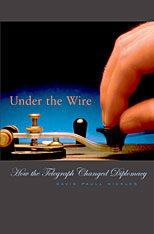
How did the telegraph, a new and revolutionary form of communication, affect diplomats, who tended to resist change? In a study based on impressive multinational research, David Paull Nickles examines the critical impact of the telegraph on the diplomacy of the nineteenth and early twentieth centuries.
Case studies in crisis diplomacy--the War of 1812, the Trent affair during the U.S. Civil War, and the famous 1917 Zimmermann telegram--introduce wide-ranging thematic discussions on the autonomy of diplomats; the effects of increased speed on decision making and public opinion; the neglected role of clerks in diplomacy; and the issues of expense, garbled text, espionage, and technophobia that initially made foreign ministries wary of telegraphy. Ultimately, the introduction of the telegraph contributed to the centralization of foreign ministries and the rising importance of signals intelligence. The faster pace of diplomatic disputes invited more emotional decisions by statesmen, while public opinion often exercised a belligerent influence on crises developing over a shorter time period.
Under the Wire offers a fascinating new perspective on the culture of diplomacy and the social history of technology.
Author Israel G. Solares examines how the twentieth century multinational firm established and articulated multinational corporate sovereignty in ways that reflect other multinational titans, like the East Asian Trade companies, and presages the digital giants and space corporations of the twenty-first century. Bridging the domineering practices used during the colonization of Southern Asia with the futuristic colonies on the Moon, Underground Leviathan documents the cost of a corporation’s unyielding desire to consume the secrets at the center of the Earth.




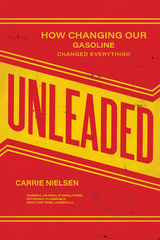
Unleaded tells the story of how crusading scientists and activists convinced the U.S. government to ban lead additives in gasoline. It also reveals how, for nearly fifty years, scientific experts paid by the oil and mining industries abused their authority to convince the public that leaded gasoline was perfectly harmless.
Combining environmental history, sociology, and neuroscience, Carrie Nielsen explores how lead exposure affects the developing brains of children and is linked to social problems including academic failure, teen pregnancies, and violent crime. She also shows how, even after the nationwide outrage over Flint’s polluted water, many poor and minority communities and communities of color across the United States still have dangerously high lead levels. Unleaded vividly depicts the importance of sound science and strong environmental regulations to protect our nation’s most vulnerable populations.
Who during the Renaissance could have dissented from the values of reason and restraint, patience and humility, rejection of the worldly and the physical? These widely articulated values were part of the inherited Christian tradition and were reinforced by key elements in the Renaissance, especially the revival of Stoicism and Platonism. This book is devoted to those who did dissent from them. Richard Strier reveals that many long-recognized major texts did question the most traditional values and belong to a Renaissance far more unconstrained and affirmative than much recent scholarship has allowed.
The Unrepentant Renaissance counters the prevalent view of the period as dominated by the regulation of bodies and passions; the book aims to reclaim the Renaissance as an era happily churning with surprising, worldly, and self-assertive energies. Reviving the perspective of Burckhardt and Nietzsche, Strier provides fresh and uninhibited readings of texts by Petrarch, Shakespeare (sonnets and plays), Loyola, Montaigne, Descartes, and Milton. Strier’s lively argument, expressed in lucid prose, is meant to stir debate throughout the field of Renaissance studies.
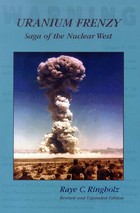
The uranium boom is only part of the larger story of atomic weapons testing and its impact in the western United States. Nuclear explosions at the Nevada Test Site not only spurred uranium mining, they also had a disastrous impact on many Americans: downwinders in the eastward path of radiation clouds, military observers and guinea pigs in exposed positions, and Navajo and other uranium mill workers all became victims, as deaths from cancer and other radiation-caused diseases reached much higher than normal rates among them. Tons of radioactive waste left by mines, mills, and the nuclear industry and how to dispose of them are other nagging legacies of the nuclear era. Recent decades have brought multiple attempts by victims to obtain compensation from the federal government and other legal battles over disposal of nuclear waste. When courts refused to grant relief to downwinders and others, Congress eventually interceded and legislated compensation for a limited number of victims able to meet strict criteria, but did not adequately fund the program. Recently, Congress attempted to fix this shortfall, but in the meantime many downwinders and others holding compensation IOUs had died. Congressional and other efforts to dispose of waste have lately focused on Nevada and Utah, two states all too familiar with nuclear issues and reluctant to take on further radioactive burdens.
The completely revised and updated third edition of the NACTO Urban Bikeway Design Guide sets a new standard for street design in North America. Developed for cities, by cities, the new guide is more than a permission slip for better street design--it's a prescription for safe, connected, equitable bike networks. It captures lessons learned and emerging practices to set a new bar for the design of city streets.
The NACTO Urban Bikeway Design Guide, Third Edition, will help city leaders and street designers meet the needs of our time. New topics address critical gaps in existing guidance for planning and project development. Contextual guidance for bikeway design encompasses the needs of a wider swath of potential riders, across genders, ages, races, ethnicities, incomes, and abilities. The guide offers substantive guidance for safe intersection design, with a focus on conflict reduction. It is a blueprint for implementing safe, connected, and equitable bike networks. Every transportation professional, from design to maintenance and from field staff to executives, needs a copy for their daily work.
Praise for the second edition
“NACTO's Urban Bikeway Design Guide gives American planners and designers the tools they need to make cycling accessible to more people.”
—Janette Sadik-Khan, former New York City Transportation Commissioner
“This is an extraordinary piece of work that's long overdue.”
—Ray LaHood, former United States Secretary of Transportation
“The guide will serve as an essential blueprint for safe, active, multi-modal streets.”
—Gabe Klein, former Chicago Transportation Commissioner
“A Must-read… Landscape architects, planners, and city officials should find this guide invaluable. Anyone who advocates for increasing bicycle infrastructure in our cities will find many useful tools for implementing best practice infrastructure.”
―ASLA's The Dirt

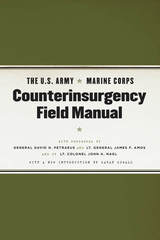
When the U.S. military invaded Iraq, it lacked a common understanding of the problems inherent in counterinsurgency campaigns. It had neither studied them, nor developed doctrine and tactics to deal with them. It is fair to say that in 2003, most Army officers knew more about the U.S. Civil War than they did about counterinsurgency.
The U.S. Army / Marine Corps Counterinsurgency Field Manual was written to fill that void. The result of unprecedented collaboration among top U.S. military experts, scholars, and practitioners in the field, the manual espouses an approach to combat that emphasizes constant adaptation and learning, the importance of decentralized decision-making, the need to understand local politics and customs, and the key role of intelligence in winning the support of the population. The manual also emphasizes the paradoxical and often counterintuitive nature of counterinsurgency operations: sometimes the more you protect your forces, the less secure you are; sometimes the more force you use, the less effective it is; sometimes doing nothing is the best reaction.
An new introduction by Sarah Sewall, director of the Carr Center for Human Rights Policy at Harvard’s Kennedy School of Government, places the manual in critical and historical perspective, explaining the significance and potential impact of this revolutionary challenge to conventional U.S. military doctrine.
An attempt by our military to redefine itself in the aftermath of 9/11 and the new world of international terrorism, The U.S. Army / Marine Corps Counterinsurgency Field Manual will play a vital role in American military campaigns for years to come.
The University of Chicago Press will donate a portion of the proceeds from this book to the Fisher House Foundation, a private-public partnership that supports the families of America’s injured servicemen. To learn more about the Fisher House Foundation, visit www.fisherhouse.org.
The volume provides insights on engineering education, practice, and careers that can inform educational institutions, funding agencies, and policy makers about the challenges facing the United States in developing its engineering workforce in the global economy.

How users experience and influence technological change—when so much of that change feels out of our control
Every day, we casually employ one of the most complex tools ever created, using it to read the news, plan our day, and connect with friends. In A User’s Guide to the Age of Tech, Grant Wythoff investigates the process by which now-ubiquitous technologies like our phones become integrated into our lives, showing how the “gadget” stage—before devices are widely adopted—opens the door for users to co-create these technologies and adapt them toward unexpected ends.
In this elegant, approachable work, Wythoff offers a view of how users make new technology their own, subverting dominant power structures and imagining uses never intended by their creators. Rooted in a detailed look into the history of technique (focusing on how we do things with tools rather than the tools themselves), A User’s Guide to the Age of Tech proceeds to complicate, and influence, discussion of subjects like the digital divide and AI.
Drawing on a range of sources, including novels, patents, and newspapers, Wythoff explores the vernacular philosophies that have emerged from users and their diverse, everyday practices, bringing down to earth the conversation about digital titans, away from the abstracted domains of server farms and algorithms. Lodging a passionate argument that we know ourselves better than the data brokers who appear to wield influence over our psyches, Wythoff invites readers (and tech users) to imagine their own digital technique, acknowledge their vast expertise, and see its immense value.
Retail e-book files for this title are screen-reader friendly with images accompanied by short alt text and/or extended descriptions.

READERS
Browse our collection.
PUBLISHERS
See BiblioVault's publisher services.
STUDENT SERVICES
Files for college accessibility offices.
RECENTLY PUBLISHED





UChicago Accessibility Resources
home | accessibility | search | about | contact us
BiblioVault ® 2001 - 2025
The University of Chicago Press