
 A SCHOLARLY BOOK REPOSITORY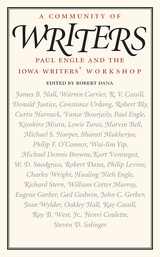
With these words, written long before his Iowa Writers' Workshop became world famous, much imitated, and academically rich, Paul Engle captured the spirit behind his beloved workshop. Now, in this collection of essays by and about those writers who shared the energetic early years, Robert Dana presents a dynamic, informative tribute to Engle and his world.
The book's three sections mingle myth and history with style and grace and no small amount of humor. The beginning essays are given over to memories of Paul Engle in his heyday. The second group focuses particularly on those teachers—Robert Lowell, John Berryman, Kurt Vonnegut, for example—who made the workshop hum on a day-to-day basis. Finally, the third section is devoted to storytelling: tall tales, vignettes, surprises, sober and not-so-sober moments. Engle's own essay, "The Writer and the Place," describes his "simple, and yet how reckless" conviction that "the creative imagination in all of the arts is as important, as congenial, and as necessary, as the historical study of all the arts."
Today, of course, there are hundreds of writers' workshops, many of them founded and directed by graduates of the original Iowa workshop. But when Paul Engle arrived in Iowa there were exactly two. His indomitable nature and great persuasive powers, combined with his distinguished reputation as a poet, loomed large behind the enhancement of the Iowa Writers' Workshop. This volume of fine and witty essays reveals the enthusiasm and drive and sheer pleasure that went into Iowa's renowned workshop.
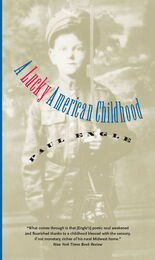
A Lucky American Childhood will appeal to people with memories of the small-town America that Paul Engle describes with such affectionate realism and to all those interested in the roots of this renowned man of letters.
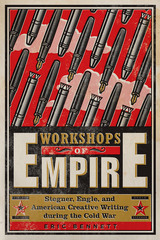
Creative writing emerged as a graduate discipline in the United States amid this astonishing swirl of grand conceptions. The early workshops were formed not only at the time of, but in the image of, and under the tremendous urgency of, the postwar imperatives for the humanities. Vivid renderings of personal experience would preserve the liberal democratic soul—a soul menaced by the gathering leftwing totalitarianism of the USSR and the memory of fascism in Italy and Germany.
Workshops of Empire explores this history via the careers of Paul Engle at the University of Iowa and Wallace Stegner at Stanford. In the story of these founding fathers of the discipline, Eric Bennett discovers the cultural, political, literary, intellectual, and institutional underpinnings of creative writing programs within the university. He shows how the model of literary technique championed by the first writing programs—a model that values the interior and private life of the individual, whose experiences are not determined by any community, ideology, or political system—was born out of this Cold War context and continues to influence the way creative writing is taught, studied, read, and written into the twenty-first century.
READERS
Browse our collection.
PUBLISHERS
See BiblioVault's publisher services.
STUDENT SERVICES
Files for college accessibility offices.
RECENTLY PUBLISHED




UChicago Accessibility Resources
home | accessibility | search | about | contact us
BiblioVault ® 2001 - 2026
The University of Chicago Press