
 A SCHOLARLY BOOK REPOSITORY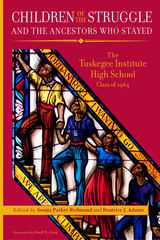
WINNER OF THE ANNE B. AND JAMES B. MCMILLAN PRIZE
A powerful collection of firsthand stories from the Tuskegee Institute High School Class of 1964—students who came of age in the crucible of the Civil Rights Movement. Their stories uncover the bold choices of their ancestors who chose to stay and help shape the South.
Children of the Struggle and the Ancestors Who Stayed, edited by Sonjia Parker Redmond and Beatrice J. Adams, brings together twenty-one deeply personal narratives from members of the Tuskegee Institute High School Class of 1964. These students grew up at the heart of the Civil Rights Movement, coming of age during landmark legal battles, community-led voter registration efforts, and the long shadow of Jim Crow.
Graduating in the year of the Civil Rights Act and Freedom Summer, these young people had already helped desegregate Alabama schools. They marched from Selma to Montgomery, mourned the assassination of classmate Sammy Younge Jr., and witnessed firsthand the violent resistance to change that defined the era.
Rather than join the Great Migration northward, many of them followed the lead of their ancestors and chose to stay—becoming educators, organizers, and civic leaders. Their lives reflect a powerful legacy of resistance and renewal, rooted in a deep sense of place and purpose. This collection preserves their voices and honors the generations of Black families who fought for justice not only through protest, but by staying, building, and believing in the promise of the South.
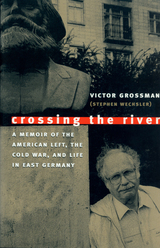
A child of the Depression, Grossman witnessed firsthand the dislocations wrought by the collapse of the U.S. economy during the 1930s. Widespread unemployment and poverty, CIO sit-down strikes, and the fight to save Republican Spain from fascism-all made an indelible impression as he grew up in an environment that nurtured a commitment to left-wing causes. He continued his involvement with communist activities as a student at Harvard in the late 1940s and after graduation, when he took jobs in two factories in Buffalo, New York, and tried to organize their workers.
Fleeing McCarthyite America and potential prosecution, Grossman worked in the GDR with other Western defectors and eventually became, as he notes, the "only person in the world to attend Harvard and Karl Marx universities." Later, he was able to establish himself as a freelance journalist, lecturer, and author. Traveling throughout East Germany, he evaluated the failures as well as the successes of the GDR's "socialist experiment." He also recorded his experiences, observations, and judgments of life in East Berlin after reunification, which failed to bring about the post-Communist paradise so many had expected.
Written with humor as well as candor, Crossing the River provides a rare look at the Cold War from the other side of the ideological divide.
Mark Solomon, a distinguished historian of the American left, provides a historical afterword that places Grossman's experiences in a larger Cold War context.

A former third-grade teacher in rural Tennessee, education researcher Mara Casey Tieken watched as her former students graduated high school. She was shocked at how few were heading to college—and none were going to elite four-year schools. These students were representative of a larger national phenomenon: In 2021, 31 percent of rural adults aged twenty-five and older held a postsecondary degree, compared to 45 percent of urban adults, and rural students are especially unlikely to pursue degrees from private, selective schools. Why, Tieken wondered? And what happens to the handful of rural students who do attend elite colleges, colleges that may feel worlds away from home?
Tieken addresses these questions in Educated Out—a study that shows how geography shapes rural, first-generation students’ access to college, their college experiences, and their postgraduation plans and opportunities. Tieken closely follows a group of nine students for their college years and beyond at an elite New England private school that she calls Hilltop. Interviews with these students reveal the critical moments in the students’ educational careers when their rural origins mattered most: when applying to college, she shows how students are hindered by limited college counseling resources. Once on campus, they learn that many of the school’s opportunities are not available to them: they cannot access spring break trips, job networks, or low-pay-but-important internships. These students discover that home and college are very different worlds with different academic, social, and political climates—and, over time, they start to question both. As they near graduation and navigate a job market in which the highest-paying and most prestigious opportunities are located in urban centers, they begin to feel the complicated burden of their schooling: they’ve been “educated out.” Their stories show the costs of college for rural students: If they do not pursue higher education, they lose the opportunity for social mobility; if they do, they face a more permanent departure. These costs are individual, but rural families and communities also suffer—they lose young people with talent and skills.
In addition to advocating for a higher education landscape that truly includes rural students, Tieken critiques a system that requires people to leave their rural homes in search of opportunities. Our current economy depends on inexpensive rural labor. Without meaningful change, some students will have to make the impossible decision to leave home—and far more will remain there, undereducated and overlooked.
Both engaging and accessible, Educated Out presents important and timely questions about rurality, identity, education, and inequality.
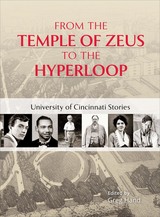
Former Ohio Governor Bob Taft remembers his law school days in a building named for his great-grandfather. Broadway star Faith Prince recalls her musical theater start at UC’s College-Conservatory of Music. More than thirty-five contributors provide their own unique perceptions of this extraordinary urban university. Some are well-known names like Taft and Prince, while others are current students and alumni whose education and futures were profoundly shaped by memorable experiences connected to UC. Clark Beck recounts the struggles he initially faced upon coming to UC and offers readers an inspiring story of perseverance and tenacity. Sid Thatham gives a captivating tale of his move from India and the home base he made in Cincinnati with UC graduate students. Other contributors celebrate the relationships, such as that between the strong-willed duo of Jack Rouse and Helen Laird, that give UC its storied past.
In From the Temple of Zeus to the Hyperloop, anyone can find a person, whether it be the trailblazing Lucy Braun or the celebrated Carl Blegen, or a place, be it the changing landscape of Ludlow Avenue or the new frontier for the DAAP College, to which he or she can relate. Such figures, places, and stories present a sampling of the UC experience. From the Temple of Zeus to the Hyperloop offers readers an inside look at the many lives that have influenced UC and the opportunity to envision how their own stories can be a part of its future.
Just as Hand titles his introduction, “a dedicated crew of bearcats assembled this book,” the University of Cincinnati and its story continue to be a community effort, deeply intertwined with the lives of the people who have made up the university and its two-hundred years.
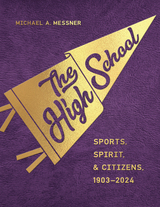
In The High School, acclaimed sociologist Michael A. Messner reads through 120 years of El Gabilan, the yearbook from his own alma mater, Salinas High School in California, where his father taught and coached. Treating the yearbooks as a historical archive, Messner makes surprising discoveries about the school he thought he knew so well. For example, over fifty years before Title IX, the earliest yearbooks gave equal spotlights to boys’ and girls’ athletics, while the cheerleaders were all boys.
Tracing American life and culture from 1903 to 2024, Messner illuminates shifts in social practices at his high school that reflect broader changes in American culture across the twentieth century. The High School spotlights how the meanings and iconography of certain activities have changed radically over the decades, even as the “sports spirit complex”—involving athletes, cheerleaders, band members, and community boosters—has remained a central part of the high school experience. By exploring evolving sports cultures, socioeconomic conditions, racial demographics, and gender norms, Messner offers a fresh perspective on a defining feature of American teenage life.
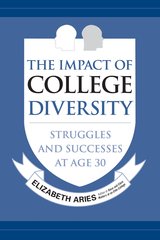
The Impact of College Diversity details how exposure to diversity in college helped shape Black and white graduates process issues of economic and racial privilege and inequality at age 30. She investigates how college diversity experiences also facilitate the attainment of upward social mobility in lower-income students and the role that mobility played in their relationships with family and friends in their home communities. Aries further examines how interactions with peers of another race and class influenced development of citizenship skills and civic engagement, as well as Black students’ ability to cope with the challenges they faced in the professional world.
Aries concludes her study with a discussion of why elite colleges have been beneficial in promoting upward mobility in lower-income students, and the importance of achieving equity and inclusion in making diversity initiatives successful.
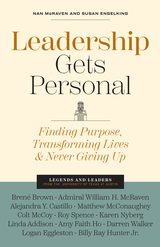
How the University of Texas shaped twelve people who changed the world.
College is a time for personal growth. But any Biology 101 student knows that growth (personal or otherwise) requires the right environment. Collecting the revealing and deeply personal stories of twelve UT alumni who became leaders in their fields, Leadership Gets Personal honors the transformative impact of the Forty Acres on those who learn and grow there.
Matthew McConaughey, Academy Award-winning actor and #1 New York Times best-selling author, was destined for law school, but with the encouragement of his UT community, he realized he was a born storyteller. Brené Brown, author of the #1 New York Times bestseller Dare to Lead, struggled for years before finding her purpose in the Social Work Department. Dr. Amy Ho knew she wanted to change the American health care system, and at UT she gained the confidence and skills to make a difference. Astronaut Karen Nyberg was a shy kid; her UT graduate studies propelled her to space. And Darren Walker would go on to become president of the Ford Foundation, taking inspiration from the financial aid counselors who made sure he got the education he yearned for. For these and other outstanding alumni profiled here, the road was often rocky. Through perseverance, humility, and collaboration, they learned not only to exercise leadership but to live it.
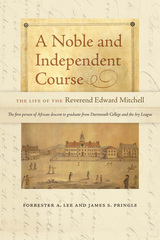
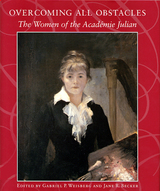
Overcoming All Obstacles: The Women of the Académie Julian is the first book to examine late nineteenth-century Paris's most famous training ground for the leading women artists of the period. The Académie Julian was founded in Paris in 1868, initially to prepare students for entry to the Ecole des Beaux-Arts, the nineteenth-century's preeminent art school. Because women could not study at the Ecole des Beaux-Arts until 1897, Julian itself became an international equivalent for many of the late nineteenth- and early twentieth-century's most important women artists.
Not only does Overcoming All Obstacles introduce the reader to many works by women artists-both famous and lesser known-but the essays offer a cultural and historical context in which to appreciate their art. Gabriel Weisberg's essay concentrates on the rigorous training methods enforced by Rodolphe Julian and the teachers at the Academy. Jane Becker explores the competitive environment of the Julian Academy as it affected the Ukrainian painter Marie Bashkirtseff and the Swiss painter Louise-Catherine Breslau. Essays by Catherine Fehrer, the leading scholar of the Académie Julian, and Tamar Garb, an art historian who focuses on the training of women artists, give us a richer understanding of the Académie Julian's place in the sphere of art education in late nineteenth-century Paris.
Generously illustrated with both color and black-and-white images, this volume includes documentary photographs and caricatures that have never before been reproduced. The core of the book draws on the large collection of the Académie Julian Del Debbio, the Académie Julian's successor institution in Paris. This publication accompanied an exhibition organized by the Dahesh Museum in New York that opened after its exhibition at the Sterling and Francine Clark Art Institute in Williamstown. The exhibition subsequently continued to the Dixon Gallery and Gardens, Memphis.
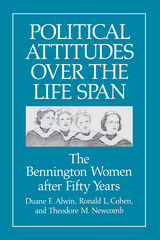
The culmination of one of the most famous long-term studies in American sociology, this examination of political attitudes among women who attended Bennington College in the 1930s and 1940s now spans five decades, from late adolescence to old age. Theodore Newcomb’s 1930s interviews at Bennington, where the faculty held progressive views that contrasted with those of the conservative families of the students, showed that political orientations are still quite malleable in early adulthood. The studies in 1959-60 and 1984 show the persistence of political attitudes over the adult life span: the Bennington women, raised in conservative homes, were liberalized in their college years and have remained politically involved and liberal in their views, even in their sixties and seventies.
Here the authors analyze the earlier studies and then introduce the 1984 data. Using data from National Election Studies for comparison, they show that the Bennington group is more liberal and hold its opinions more intensely than both older and younger Americans, with the exception of the generation that achieved political maturity in the 1960s. The authors point out that the majority of the Bennington women’s children are of this 1945–54 generation and suggest that this factor played an important role in the stability of the women’s political views. Within their own generation, the Bennington women also appear to hold stronger political views than other college-educated women.
Innovative in its methodology and extremely rich in its data, this work will contribute to developmental and social psychology, sociology, political science, women’s studies, and gerontology.
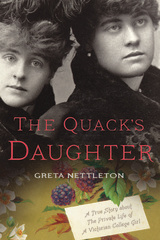
This lively, stereotype-shattering story might have been lost, had Cora’s great-granddaughter, Greta Nettleton, not decided to go through some old family trunks instead of discarding most of the contents unexamined. Inside she discovered a rich cache of Cora’s college memorabilia—essential complements to her 1885 diary, which Nettleton had already begun to read. The Quack’s Daughter details Cora’s youthful travails and adventures during a time of great social and economic transformation. From her working-class childhood to her gilded youth and her later married life, Cora experienced triumphs and disappointments as a gifted concert pianist that the reader will recognize as tied to the limited opportunities open to women at the turn of the twentieth century, as well as to the dangerous consequences for those who challenged social norms.
Set in an era of surging wealth torn by political controversy over inequality and women’s rights and widespread panic about domestic terrorists, The Quack’s Daughter is illustrated with over a hundred original images and photographs that illuminate the life of a spirited and charming heroine who ultimately faced a stark life-and-death crisis that would force her to re-examine her doubts about her mother’s medical integrity.
Here are some insights into the hot issues sparking debate over equal opportunity and American education. In these pages, through the use of a fictional character, author Jay Rochlin presents more than forty very real African American and Mexican American men and women who struggled to earn degrees at a large, nationally recognized university in the west. Their goals, their gains, and their disappointments echo the experiences of millions of others around the country during much of the twentieth century. Perhaps most important, their true stories will provide inspiration to the many young people who wonder whether pursuing the dream of a college education is possible for them.
Readers will warm to the words of Carlos Vélez-Ibáñez, learning as a toddler from his father that the university represented toda la sabiduría del mundo,"all the wisdom in the world." Their hearts will go out to young Laura Banks, barred as a black woman from a "whites only" pool and the swimming class required for her degree in physical education. In the face of open hostility and closed doors, these students and many others persevered. When they were shunned by Anglo social clubs, they created their own. When they were assigned "back of the room" seating because of discrimination, they rose above it. And when their ultimate goal--graduation--was threatened by racism, they fought it.
Looking back, many in the book remember coming from poor families who nonetheless considered themselves middle class and, as such, simply expected their children to go to college. This family support--bolstered by the students' own drive, ambition, and sense of responsibility--seemed to be pivotal to their success. Thus the book comes out strongly on the side of critical race theorists, who emphasize individual effort as a means of combating racism and personal narratives as a way of analyzing the complex issue.
These pages are filled with the voices of everyday men and women. Their language is straightforward and from the heart. Their message is timely, in the midst of current debates over race, class, and affirmative action. And their words--for American education and for the country as a whole--carry force and meaning guaranteed to reach far into the future.
Returning to the legendary Harvard Student Study of undergraduates from the 1960s and interviewing participants almost fifty years later, Kaufman shows that formative experiences in family, school, and community largely shape a future adult’s worldview and well-being by late adolescence, and that fundamental change in adulthood, when it occurs, is shaped by adult family experiences, not by ever-greater competitive success. Published research on general samples shows that these patterns, and the book’s findings generally, are broadly applicable to demographically varied populations in the United States.
Leveraging biography-length clinical interviews and quantitative evidence unmatched even by earlier landmark studies of human development, Redefining Success in America redefines the conversation about the nature and origins of happiness, and about how adults develop. This longitudinal study pioneers a new paradigm in happiness research, developmental science, and personality psychology that will appeal to scholars and students in the social sciences, psychotherapy professionals, and serious readers navigating the competitive journey.
READERS
Browse our collection.
PUBLISHERS
See BiblioVault's publisher services.
STUDENT SERVICES
Files for college accessibility offices.
RECENTLY PUBLISHED





UChicago Accessibility Resources
home | accessibility | search | about | contact us
BiblioVault ® 2001 - 2025
The University of Chicago Press