
 A SCHOLARLY BOOK REPOSITORY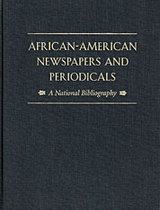
"We wish to plead our own cause. Too long have others spoken for us." These words are from the front page of Freedom's Journal, the first African-American newspaper published in the United States, in 1827, a milestone event in the history of an oppressed people. From then on a prodigious and hitherto almost unknown cascade of newspapers, magazines, letters, and other literary, historical, and popular writing poured from presses chronicling black life in America.
The authentic voice of African-American culture is captured in this first comprehensive guide to a treasure trove of writings by and for a people, as found in sources in the United States, Canada, and the Caribbean. This bibliography of over 6,000 entries is the indispensable guide to the stories of slavery, freedom, Jim Crow, segregation, liberation, struggle, and triumph.
Besides describing many new discoveries--from church documents to early civil rights ephemera, from school records to single-mother newsletters, from artists' journals to labor publications--this work informs researchers where and how to find them (for example, through online databases, microfilm, or traditional catalogs).
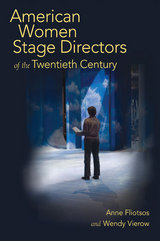
Presenting a historical overview of female stage directors in the United States, this valuable reference tool focuses on fifty women who have made significant contributions to professional directing during the twentieth century. Anne Fliotsos and Wendy Vierow collect biographical details and important directing data on each woman, including information on training and career path, notable productions, critical reception, directing style, major awards, and bibliographic materials. Insightful commentary from the directors themselves also provides rich details on the theatre business and working process. This collection recognizes the much overlooked contributions of women directors and is an essential introductory tool for students and researchers of American theatre.

The only book-length bibliography on the speech of the American South, this volume focuses on the pronunciation, vocabulary, grammar, naming practices, word play, and other aspects of language that have interested researchers and writers for two centuries. Compiled here are the works of linguists, historians, anthropologists, sociologists, and educators, as well as popular commentators.
With over 3,800 entries, this invaluable resource is a testament to the significance of Southern speech, long recognized as a distinguishing feature of the South, and the abiding interest of Southerners in their speech as a mark of their identity. The entries encompass Southern dialects in all their distinctive varieties—from Appalachian to African American, and sea islander to urbanite.


Authors, booksellers, librarians, instructors, and publishing professionals across the industry will find this an invaluable resource, featuring editorial programs and publishing details for all 140+ Association members and much more.
This volume carries on the tradition established by Zena Sutherland's two earlier collections covering the periods from 1966 to 1972 and 1973 to 1978. Her 1973 edition of The Best in Children's Books was cited by the American School Board Journal as one of the outstanding books of the year in education.
This is the first complete bibliography of the developing field of Republican-period Chinese literature. The bibliography lists all studies in Western European languages, including doctoral and masters’ theses, as well as all known translations into English of Chinese literary works of the period 1918–1942.
The era between imperial China and Communist China is one of uniqueness in Chinese history, and is a pivotal period in more ways than we can yet realize. The novels, plays, poetry, and essays of this era, apart from their intrinsic interest, furnish Westerners with an inside view of how it felt to be Chinese during this troubled time. By means of this bibliography it will now be possible for teachers systematically to develop literature-in-translation courses or supplementary reading lists to enable those who do not read Chinese to penetrate areas of Chinese life heretofore closed off.
Collectors, bibliographers, librarians, historians, and book dealers specializing in Americana will find the Graff Catalogue an interesting and essential tool. Detailed collations and binding descriptions are cited, and many of the more important works have been annotated by Mr. Graff and Mr. Storm. An extensive index of persons and subjects makes the book useful to the scholar as well as to the collector and dealer. The book is not a bibliography but rather a guide to rare or unique source materials now enriching The Newberry Library's outstanding holdings in American history.
Some of the books, such as those from the libraries of Philip the Good and Anne of Brittany, are beautifully illuminated. But the collection also includes an unusual array of "typical" medieval books, chosen not for their beauty but for their paleographical, codicological, and textual interest. Such codices include an eleventh-century Carthusian monk, and numerous books of hours adapted for feminine use. Paul Saenger has painstakingly identified the text, illumination, physical structure, and provenance for each of the more than 200 books in the collection to provide an exemplary guide to literate culture in the late Middle Ages.
This catalogue, carefully researched and handsomely illustrated, will be an invaluable resource for historians, art historians, paleographers, bibliographers, and collectors.
Endymion Wilkinson’s bestselling manual of Chinese history has long been an indispensable guide to all those interested in the civilization and history of China. In this latest edition, now in a bigger format, its scope has been dramatically enlarged by the addition of one million words of new text.
Twelve years in the making, the new manual introduces students to different types of transmitted, excavated, and artifactual sources from prehistory to the twentieth century. It also examines the context in which the sources were produced, preserved, and received, the problems of research and interpretation associated with them, and the best, most up-to-date secondary works. Because the writing of history has always played a central role in Chinese politics and culture, special attention is devoted to the strengths and weaknesses of Chinese historiography.
The new manual comprises fourteen book-length parts subdivided into a total of seventy-six chapters: Books 1–9 cover Language; People; Geography and the Environment; Governing and Educating; Ideas and Beliefs, Literature, and the Fine Arts; Agriculture, Food, and Drink; Technology and Science; Trade; and Historiography. Books 10–13 present primary and secondary sources chronologically by period. Book 14 is on historical bibliography. Electronic resources are covered throughout.
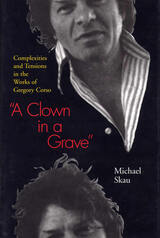
Using a number of critical approaches, Michael Skau examines Gregory Corso's complex imagination, his humor, and his poetic techniques in dealing with America, the Beat generation, and death.
Skau covers the complete works of Corso, one of the four major Beat Generation writers (with Jack Kerouac, Allen Ginsberg, and William S. Burroughs) who attempted to provide an alternative to what they saw as the academic forms of literature dominating American writing through the 1940s and 1950s. The Beat option focused on ordinary people, spurning the cultural pretensions of the intelligentsia and using common language as well as the rhythms of actual speech. Corso, abandoned as a child by his mother, subjected to a variety of foster homes, and imprisoned as an adolescent, became an authentic voice of America's neglected streetwise youth. He embodies much of the tension, confusion, and rebellion that emerged in America after World War II and eventually crested in the 1960s.
Corso emphasizes social issues, yet risks undermining this significance by using wit, wordplay, and humor. While conceding mortality, he is adamant in refusing to acknowledge death's power. Even as he rebels against conventional literature, he still is enchanted by classicism and romanticism, often borrowing their techniques and idioms. Skau examines these complexities and seeming contradictions throughout Corso's career, showing that Corso finds value in inconsistency and vacillation. For him, as illustrated in the poems "Hair" and "Marriage," contradiction and ambivalence suggest the foundations of freedom of imagination.
In spite of Corso's significance as an American poet, Skau's is the first extensive study of his work, including his fiction. Skau also provides the first complete bibliography of Corso's published work in more than thirty years.
This cumulative index to the thirty-seven volumes of The Collected Works of John Dewey, 1882–1953, is an invaluable guide to The Collected Works.
The Collected Works Contents incorporates all the tables of contents of Dewey’s individual volumes, providing a chronological, volume-by-volume overview of every item in The Early Works, The Middle Works, and The Later Works.
The Title Index lists alphabetically by shortened titles and by key words all items in The Collected Works. Articles republished in the collections listed above are also grouped under the titles of those books.
The Subject Index, which includes all information in the original volume indexes, expands that information by adding the authors of introductions to each volume, authors and titles of books Dewey reviewed or introduced, authors of appendix items, and relevant details from the source notes.


Volume Two of the Bibliography contains:
· ‘Section C: Bibliographic Descriptions, 1743-1755’
Also included in the volume are an introduction; lists of abbreviations; and a glossary of bibliographical terms.
Volume One of the Bibliography contains:
· ‘Section A: Swedenborg’s Literary Corpus, 1700-1771’ (an overview and summary listing of Swedenborg’s entire literary output)
· ‘Section B: Bibliographies of Swedenborg’s Works’ (details of all previous bibliographies of Swedenborg)
· ‘Section C: Bibliographical Descriptions, 1700-1742’ (each of Swedenborg’s works written or published during this time period is treated to an introduction concerning its compositional history, followed by detailed bibliographical entries for the manuscripts, first editions, and all subsequent editions and translations of the work known to have appeared, including extracts, accompanied by lists of libraries and institutions known to possess copies of the editions in question)
Also included in the volume are a general introduction; lists of abbreviations; and a glossary of bibliographical terms.
Critical interest in foreign novels, especially the Latin American and African novel, has burgeoned in the past two decades. The purpose of this reference bibliography is to provide easier access to the criticism produced from 1965 to 1975 on novels published in Africa, Latin America, Europe, Asia, Canada, Australia, and the middle East. A second volume will cover criticism between 1976 and 1985.
Throughout this work, the term “foreign novel” includes novels and other longer works of fiction produced in all countries other than the United States and the United Kingdom. Coverage ranges in time of writing from Apuleius’ Metamorphosis (first century, A.D.) and Murasaki’s Tale of Genji (11th century) to Garcia Marquez’s 100 Years of Solitude (1967) and Margaret Atwood’s Surfacing (1972). The 277 journals—chosen primarily because of their wide circulation—and 584 books indexed for relevant material contribute to the 13,000 bibliographic citations on 1,500 authors. This is a reference tool which is surely essential for any library or world literature scholar.
Documenting key feminists who ignited the second wave women's movement
Barbara J. Love’s Feminists Who Changed America, 1963-1975 will be the first comprehensive directory to document many of the founders and leaders (including both well-known and grassroots organizers) of the second wave women's movement. It tells the stories of more than two thousand individual women and a few notable men who together reignited the women's movement and made permanent changes to entrenched customs and laws.
The biographical entries on these pioneering feminists represent their many factions, all parts of the country, all races and ethnic groups, and all political ideologies. Nancy Cott's foreword discusses the movement in relation to the earlier first wave and presents a brief overview of the second wave in the context of other contemporaneous social movements.

In 1994, the late James E. Walsh reported that the Harvard collection of fifteenth-century printed books, the third largest in North America, “comprises 3,517 editions in 4,187 copies.” Ten years later the count has risen to 3,627 editions in 4,389 copies. Walsh’s pioneering catalogue was published in five volumes between 1991 and 1997. This supplement describes 202 new incunabula at Harvard: 67 complete or nearly complete copies and 135 single leaves or fragments, representing a total of 173 editions, including 110 not in Walsh’s original five volumes.
The initial section of the First Supplement consists of selected additions and corrections to the Walsh catalogue. The following section, “New Entries,” details single leaves and fragments which were previously given only highly selective coverage. The supplement concludes with cumulative references, indices, and concordances. The apparatus follows the Walsh model, and the book is designed to be used both on its own and in conjunction with the five original volumes.
Recent studies show that, either consciously or unconsciously, teachers are not practicing gender equity in the classroom. Boys are called on more in class than girls and are encouraged to pursue careers from which girls are excluded because they are thought to be less capable.
Serious questions arise for educators and counselors in this time of increasing awareness of the implications of gender bias, such as what comprises a gender-fair education and how can gender equity become part of the classroom curriculum? Guidance counselors and teachers share an important responsibility in seeking answers to these questions in order to avoid limiting students’ potential because of gender.
To achieve this end, Beverly A. Stitt has compiled an annotated bibliography of hundreds of books, articles, videos, classroom activities, and curriculum and workshop guides to help provide the tools needed for educators to become more gender conscious and to develop a gender–fair educational system.
The bibliography is divided into twenty-three categories under the headings of Agriculture and Industry, Business, Career Guidance, Communications, Computers, Discrimination, Displaced Homemakers/Reentry Women, Elementary Education, Family and Work Issues, Gender Role Stereotyping, History, Home Economics, In-service Training, Legislation, Male Focus, Math and Science, Nontraditional Careers, Pregnant and Parenting Teens, Recruitment, Special Needs, Teaching, Vocational Education, and Women’s Studies.
Each entry’s annotation provides a short description of the content, the age group to which the resource applies, and ordering information. The book concludes with an index in which entries are cross-referenced under various categories to further aid the reader’s research.
This reference work is an important resource for anyone looking into Swedenborg’s biblical commentaries, including scholars and students from clergy and laity alike. Popularly known as “Searle’s Index” after Arthur Hodson Searle, the editor of the first English edition, this third edition has been completely revised, expanded, and typeset with a more accessible page design, a preface by G. P. Dawson, and helpful tables of abbreviations.

This book provides a basic guide to the study of the printed matter which has been produced in the United States. No comprehensive attempt has been made to record the great bulk of research in this field. Recognizing the need for an up-to-date guide to such investigations, G. Thomas Tanselle has compiled a listing of the principal material dealing with printing and publishing in this country.
In his Introduction, Tanselle surveys the research which has attempted to trace the history of printing and publishing in America from its inception to the present and explains how this material can be utilized effectively.
In nine carefully arranged categories he covers bibliographies of imprints of particular localities; bibliographies of works in particular genres; listings of all editions and printings of works by individual writers; copyright records; catalogues of auction houses, book dealers, exhibitions, institutional libraries, and private collections; retrospective book-trade directories; studies of individual printers and publishers; general studies of printing and publishing; and checklists of secondary material.
From the mass of material, an appendix selects 250 titles. Although the work is arranged so that the reader may easily locate relevant sections, a comprehensive index provides further aid in finding individual items.
“A successful checklist,” writes the author, “is not merely a work to be consulted for information but also a nucleus around which additional information can be gathered in a meaningful way; it provides a framework into which the community of workers in a field can place further references in an organized fashion.”
Guide to the Study of United States Imprints is a reference tool designed to serve both as a guide to research and as a practical manual for use in identifying, cataloguing, and recording printed matter. It will be of enormous value to scholars in American literature, history, and bibliography, to librarians, typographers, and bibliophiles, and to antiquarian book dealers and book collectors.

"The one source that sets reference collections on Latin American studies apart from all other geographic areas of the world. . . . The Handbook has provided scholars interested in Latin America with a bibliographical source of a quality unavailable to scholars in most other branches of area studies." —Latin American Research Review
Beginning with Number 41 (1979), the University of Texas Press became the publisher of the most comprehensive annual bibliography in the field. Compiled by the Hispanic Division of the Library of Congress and annotated by a corps of more than 140 specialists in various disciplines, the Handbook alternates from year to year between social sciences and humanities.
The Handbook annotates works on Mexico, Central America, the Caribbean and the Guianas, Spanish South America, and Brazil, as well as materials covering Latin America as a whole. Most of the subsections are preceded by introductory essays that serve as biannual evaluations of the literature and research under way in specialized areas.
Beginning with Number 41 (1979), the University of Texas Press became the publisher of the most comprehensive annual bibliography in the field. Compiled by the Hispanic Division of the Library of Congress and annotated by a corps of more than 140 specialists in various disciplines, the Handbook alternates from year to year between social sciences and humanities.
The Handbook annotates works on Mexico, Central America, the Caribbean and the Guianas, Spanish South America, and Brazil, as well as materials covering Latin America as a whole. Most of the subsections are preceded by introductory essays that serve as biannual evaluations of the literature and research under way in specialized areas.
Beginning with Number 41 (1979), the University of Texas Press became the publisher of the Handbook of Latin American Studies, the most comprehensive annual bibliography in the field. Compiled by the Hispanic Division of the Library of Congress and annotated by a corps of specialists in various disciplines, the Handbook alternates from year to year between social sciences and humanities.
The Handbook annotates works on Mexico, Central America, the Caribbean and the Guianas, Spanish South America, and Brazil, as well as materials covering Latin America as a whole. Most of the subsections are preceded by introductory essays that serve as biannual evaluations of the literature and research underway in specialized areas.

The Handbook annotates works on Mexico, Central America, the Caribbean and the Guianas, Spanish South America, and Brazil, as well as materials covering Latin America as a whole. Most of the subsections are preceded by introductory essays that serve as biannual evaluations of the literature and research underway in specialized areas. Subject categories for the Social Sciences editions include anthropology; geography; government and politics; international relations; political economy; and sociology.
“His pursuit of learning gave force and unity to everything he did…in his books, as in his learning, he showed that scholarship could have an austere splendor of its own.”—Herschel Baker in his biographical sketch
Hyder Rollins’s publications, ranging from the Elizabethans to Keats, admirably exemplified his dedication to scholarship. This bibliography constitutes, in terms of quantity alone, a record of formidable achievement, and the ordering of this wealth of publication gives scholars the means of easy reference to a sequence of impeccable research.
Sponsored by the Department of English, Harvard University, this tribute to Hyder Rollins also includes a list of the more than one hundred doctoral dissertations directed by him over the course of three decades.
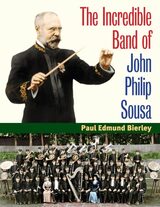
John Philip Sousa (1854-1932) is an American icon. Most famous for his military marches, the composer-bandmaster led a disciplined group of devoted musicians on numerous American tours and around the world, shaping a new cultural landscape. Paul E. Bierley documents every aspect of the "March King's" band: its history, its star performers, its appearances on recordings and radio, and the problems they faced on their 1911 trip around the world. Enhanced by more than 120 images and photographs, The Incredible Band of John Philip Sousa also contains six statistical appendixes detailing where the band played, a complete list of musicians, instrumentation of the band, program listings, and a discography
In this age of searchable text, the need for an index made with human input is sometimes questioned. But a good index can do what a plain search cannot: It gathers all the substantive terms and subjects of the work, sorts them alphabetically, provides cross-references to and from related terms, and includes specific page numbers or other locators or, for electronic formats, direct links to the text. This painstaking intellectual labor serves readers of any longer work, whether it is searchable or not. For searchable texts, an index provides insurance against fruitless queries and unintended results. In a word, a good index makes the text more accessible.
Most book indexes must be assembled swiftly between the time page proofs are issued and the time they are returned to the typesetter—usually about four weeks. An author preparing their own index will have to proofread as well as index the work in that short time span.
This insightful chapter-length booklet will guide both professionals and first-time indexers in assembling an index that will do justice to both the book and the reader.
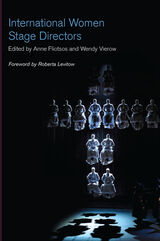
A fascinating study of women in the arts, International Women Stage Directors is a comprehensive examination of women directors in twenty-four diverse countries. Organized by country, chapters provide historical context and emphasize how social, political, religious, and economic factors have impacted women's rise in the theatre, particularly in terms of gender equity. Contributors tell the stories of their home country's pioneering women directors and profile the most influential women directors practicing today, examining their career paths, artistry, and major achievements.
Contributors are Ileana Azor, Dalia Basiouny, Kate Bredeson, Mirenka Cechová, Marié-Heleen Coetzee, May Farnsworth, Anne Fliotsos, Laura Ginters, Iris Hsin-chun Tuan, Maria Ignatieva, Adam J. Ledger, Roberta Levitow, Jiangyue Li, Lliane Loots, Diana Manole, Karin Maresh, Gordon McCall, Erin B. Mee, Ursula Neuerburg-Denzer, Claire Pamment, Magda Romanska, Avra Sidiropoulou, Margaretta Swigert-Gacheru, Alessandra Vannucci, Wendy Vierow, Vessela S. Warner, and Brenda Werth.
John Dryden was first published in 1950. Minnesota Archive Editions uses digital technology to make long-unavailable books once again accessible, and are published unaltered from the original University of Minnesota Press editions.
John Dryden was first published in 1976. Minnesota Archive Editions uses digital technology to make long-unavailable books once again accessible, and are published unaltered from the original University of Minnesota Press editions.
This annotated bibliography represents a comprehensive updating of Samuel Holt Monk's earlier work, also published by the University of Minnesota Press, John Dryden: A List of Critical Studies Published from 1895 to 1948 (out of print). Since the publication of that earlier bibliography, the number of studies devoted to Dryden has more than tripled, and thus this new bibliography is essential for scholars of Dryden or related aspects of seventeenth- and eighteenth-century English literature. This volume contains four times as many entries as the earlier volume, and there is an extensive introduction by Professor Latt which surveys the historical shifts in critical opinion of Dryden. The new volume incorporates all of the listings contained in the first one.
The entries include works that focus directly on Dryden, those that discuss Dryden's works in the context of other writers, and those that investigate material of general importance to Dryden studies. Dissertations from American, German, English, and French universities are included.
Complete bibliographic information is provided for virtually every entry. The listings are grouped in nine categories, and there is an additional section which covers festschriften and other collections of essays. Works of exceptional value and those which develop new points of view are so designated. The publishing history of each item is included along with the standard bibliographic information. The index includes topical as well as author entries.
Joseph Conrad at Mid-Century was first published in 1957. Minnesota Archive Editions uses digital technology to make long-unavailable books once again accessible, and are published unaltered from the original University of Minnesota Press editions.
Published in the centennial year of Joseph Conrad's birth, this is the first comprehensive bibliography of the writings by and about this important author. Though there is a current revival of interest in Conrad's work, criticism and scholarship devoted to this celebrated novelist and short story writer have lagged behind that of other major twentieth-century authors. This compendium of data about the growing body of Conrad literature should stimulate further interest by bringing together a vast amount of reference information that has been widely scattered until now.
The bibliography lists works by Conrad, including serializations, significant translations, and film adaptations, and writings about Conrad, including book and periodical material in western languages, appearing from 1895, the year of publication of Almayer's Folly, through 1955. There are a total of 1200 numbered entries containing approximately 3000 items.
In the first section, devoted to Conrad's works, the enumeration of English and American editions is followed by the listing of translations. Most of Conrad's essays and many of his novels were serialized before they appeared in book form, and these serializations are listed here also.
The second section lists the studies of Conrad's life and works, as published in books, pamphlets, periodical articles, and reviews. Data are included on bibliographies, commemorative issues of periodicals, criticism of individual works and of Conrad's work in general, and parodies and other miscellany.
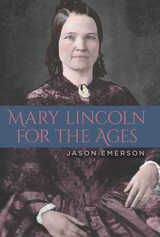
Mary Lincoln for the Ages first articulates how reliance on limited sources has greatly restricted our understanding of the subject, evaluating their flaws and benefits and pointing out the shallowness of using the same texts to study her life. Emerson then presents more than four hundred bibliographical entries of nonfiction books and pamphlets, scholarly and popular articles, journalism, literature, and juvenilia. More than just listings of titles and publication dates, each entry includes Emerson’s deft analysis of these additional works on Mary Lincoln that should be used—but rarely have been—to better understand who she was during her life and why we see her as we do. The volume also includes rarely used illustrations, including some that have never before appeared in print.
A roadmap for a firmer, more complete grasp of Mary Lincoln’s place in the historical record, this is the first and only extensive, analytical bibliography of the subject. In highlighting hundreds of overlooked sources, Emerson changes the paradigm of Mary Lincoln’s legacy.
Included for the first time in any language is an extensive account of Nietzsche's finances and his relationships with his publishers. Schaberg reveals a man who was obsessed with money, fought bitterly with his publishers, complained about his readers, and all the while continued to produce more and more books that went unread. He also reveals the influential role of Nietzsche's sister Elizabeth, who provoked disputes between Nietzsche and his publisher during her brother's lifetime and deliberately falsified information after his death.

This massive annotated bibliography of all known significant eyewitness accounts of nineteenth-century central overland travel fills a conspicuous gap in historical literature, and will greatly accelerate research, writing, and collecting.
Platte River Road Narratives includes not only all identifiable overland accounts, but also a number of those identifiable in manuscript form only. Over 2,000 entries identify the author, the form of the passage, overland trip, and give Matte's authoritative commentary and evaluation, as well as identification of the repository of the source material.
The annual Review of Biblical Literature presents a selection of reviews of the most recent books in biblical studies and related fields, including topical monographs, multi-author volumes, reference works, commentaries, and dictionaries. RBL reviews German, French, Italian, and English books and offers reviews in those languages.
Features:
- Reviews of new books written by top scholars
- Topical divisions make research easy
- Indexes of authors and editors, reviewers, and publishers
The annual Review of Biblical Literature presents a selection of reviews of the most recent books in biblical studies and related fields, including topical monographs, multi-author volumes, reference works, commentaries, and dictionaries. RBL reviews German, French, Italian, and English books and offers reviews in those languages.
Since the collected poems of eleventh- and twelfth-century Persian philosopher Omar Khayyám were first translated into English in 1859 by Patrick Fitzgerald, the Rubáiyát has become one of the most popular books of verse in the world. In addition to English, it has been translated into Arabic, Chinese, Dutch, French, German, Hebrew, Hindi, Russian, Urdu, and many other languages. It has been published in numerous editions: precious volumes with bejeweled bindings, artist’s books, scholarly and critical editions, forgeries and fake editions, making it a perfect object for both book collectors and lovers of poetry. This comprehensive volume is the first bibliography of Khayyám’s classic work since the first Rubáiyát bibliography by A. G. Potter, which was published in 1929
This revised and enlarged edition of A Selected List of Books and Articles on Japan in English, French, and German, first published in 1940, contains more than seventeen hundred titles which have been carefully chosen to guide the general reader and to aid the serious student of Japanese civilization in his research. Certain items included in the first edition have been eliminated, and hundreds of new entries, including material published during and after World War II, have been added. The list is divided into section which deal with bibliography, geography, history, political and social sciences, religion and philosophy, language, literature, art, et cetera. Subdivision of these sections facilitates the search for books and articles on a particular subject. The entries are arranged alphabetically by author and are individually numbered. An author, title, and subject index also contributes to the usefulness of the book.
There is no other convenient selected list of this sort on Japan. Scholars, journalists, government personnel, and other who wish to obtain information concerning books and articles on Japan will find this book an invaluable guide.
Beginning with an introduction to various philosophies and perspectives, the Sourcebook examines major elements of the environment and selected case studies of human alteration of our surroundings. The essential references in each field are carefully presented, and directions are given for examining more advanced and specialized works. Appendixes on selected periodicals, the latest relevant federal legislation, and environmental organizations point to further areas of investigation. To maintain its value in this volatile area, this indispensable work will be periodically revised and updated.
This information is organized in accord with indigenous South Asian concepts and categories within the threefold dimensions of time, space, and topic. These units and their interrelationships are first laid out in an outline of headings that constitutes, in the aggregate, a self-contained reference outline of Indic civilization. Each unit and its subdivisions are then presented as the headings for the bibliographic sections that form the main body of the book. This conceptual structure, in combination with the author and subject indexes, offers the reader several means of access to the entries themselves, making South Asian Civilizations a work that will be of great use to a wide audience.




The Concordance is a “must have” for scholars of Swedenborg, providing a much-needed shortcut for anyone researching themes and ideas across Swedenborg’s works.
The six volumes are arranged as follows:
• Volume I, letters A-C + Introduction
• Volume II, letters D-F
• Volume III, letters G-J
• Volume IV, letters K-N
• Volume V, letters O-Sq
• Volume VI, letters St-Z + Appendix, Latin-English Vocabulary, Errata & Corrigenda
Starting with the de Soto map of 1544, the earliest document that purports to describe anything about the Great Smoky Mountains, and continuing through 1934 with the establishment of the Great Smoky Mountains National Park—today the most visited national park in the United States—this volume catalogs books, periodical and journal articles, selected newspaper reports, government publications, dissertations, and theses published during that period.
This bibliography treats the Great Smoky Mountain Region in western North Carolina and east Tennessee systematically and extensively in its full historic and social context. Prefatory material includes a timeline of the Great Smoky Mountains and a list of suggested readings on the era covered. The book is divided into thirteen thematic chapters, each featuring an introductory essay that discusses the nature and value of the materials in that section. Following each overview is an annotated bibliography that includes full citation information and a bibliographic description of each entry.
Chapters cover the history of the area; the Cherokee in the Great Smoky Mountains; the national forest movement and the formation of the national park; life in the locality; Horace Kephart, perhaps the most important chronicler to document the mountains and their inhabitants; natural resources; early travel; music; literature; early exploration and science; maps; and recreation and tourism. Sure to become a standard resource on this rich and vital region, Terra Incognita is an essential acquisition for all academic and public libraries and a boundless resource for researchers and students of the region.
Tony Hillerman is beloved for his novels of intrigue in the American Southwest. In Tony Hillerman’s Navajoland, Laurance Linford takes readers on a journey through the Four Corners region to the haunts of Hillerman’s characters. Offered in encyclopedic form, each entry gives the common name of a particular location, the Navajo name and history, and a description of the location’s significance in various Hillerman novels. An understanding of the Navajo names and their relations to the landscape will lend a new dimension to the characters and events Tony Hillerman created.

As interest in environmental issues grows, many writers of fiction have embraced themes that explore the connections between humans and the natural world. Ecologically themed fiction ranges from profound philosophical meditations to action-packed entertainments. Where the Wild Books Are offers an overview of nearly 2,000 works of nature-oriented fiction. The author includes a discussion of the precursors and history of the genre, and of its expansion since the 1970s. He also considers its forms and themes, as well as the subgenres into which it has evolved, such as speculative fiction, ecodefense, animal stories, mysteries, ecofeminist novels, cautionary tales, and others. A brief summary and critical commentary of each title is included. Dwyer’s scope is broad and covers fiction by Native American writers as well as ecofiction from writers around the world. Far more than a mere listing of books, Where the Wild Books Are is a lively introduction to a vast universe of engaging, provocative writing. It can be used to develop book collections or curricula. It also serves as an introduction to one of the most fertile areas of contemporary fiction, presenting books that will offer enjoyable reading and new insights into the vexing environmental questions of our time.
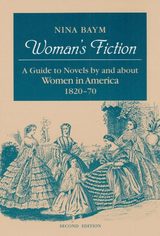
This reissue of the pioneering and standard book on antebellum women's domestic novels contains a new introduction situating the book in the context of important recent developments in the study of women's writing. Nina Baym considers 130 novels by 48 women, focusing on the works of a dozen especially productive and successful writers.
Woman's Fiction is a major-work in nineteenth-century literature, reexamining changes in the literary canon and the meaning of sentimentalism, while responding to current critical discussions of 'the body' in literary texts.
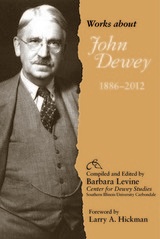
Works of John Dewey, 1886–2012 is an invaluable and meticulously compiled resource for the growing number of scholars and researchers seeking a deeper understanding of the work of the prominent American philosopher, psychologist, and educational reformer.
Dewey (1859–1952), an influential philosopher credited with the founding of pragmatism and also recognized as a pioneer in functional psychology and the progressive moment in education, was hailed by Life magazine in 1990 as one of the one hundred most important Americans of the twentieth century. This rich and continually expanding compendium of historical and more recent essays, research, and references is a testament to the growing interest in Dewey’s intellectual work and his measurable impact in the United States and throughout the world.
In Works of John Dewey, 1886–2012, some four thousand new entries are presented in ebook format, in addition to those from earlier print and electronic editions dating back to 1995. Copies of most of the works have been obtained and are stored at the Center for Dewey Studies. For the first time, users can access all items from all editions in one user-friendly format. Jump links to alphabetical sections facilitate movement through the vast collection of entries. Users can search by keyword and author.
READERS
Browse our collection.
PUBLISHERS
See BiblioVault's publisher services.
STUDENT SERVICES
Files for college accessibility offices.
RECENTLY PUBLISHED


UChicago Accessibility Resources
home | accessibility | search | about | contact us
BiblioVault ® 2001 - 2024
The University of Chicago Press