
 A SCHOLARLY BOOK REPOSITORY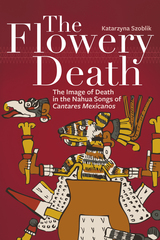
The Flowery Death is a groundbreaking exploration of xochimiquiztli, or “flowery death,” a central concept in the pre-Hispanic Nahua worldview. In the highly militarized societies of the Valley of Mexico, dying in honor of the gods—on the battlefield, in ritual sacrifice, or in childbirth—was not only a social expectation but also a path to spiritual glory. While this idea appears throughout colonial sources, previous studies have relied largely on the writings of Bernardino de Sahagún and other European chroniclers, whose perspectives often simplify or distort Indigenous understandings.
Drawing on the rich oral tradition preserved in the sixteenth-century manuscript Cantares Mexicanos, this book provides one of the first English translations of these songs since John Bierhorst’s 1985 translation. It combines paleographic fidelity, literal English translation, and detailed interpretation, revealing the metaphor- and symbol-rich meanings behind the songs. The book is divided into two interrelated parts: The first reconstructs the Nahua worldview, contextualizing war, death, and sacrifice through myths, chronicles, and visual sources; the second presents selected songs, offering readers the tools to understand their metaphors, historical references, and symbolic language, making the work both a scholarly reference and an accessible guide for students and enthusiasts.
By examining the cultural, religious, and social significance of xochimiquiztli, The Flowery Death provides fresh insights into Nahua ideology, gender roles, and collective memory. It is essential reading for anyone interested in Mesoamerican culture, early colonial history, and the power of Indigenous oral traditions.
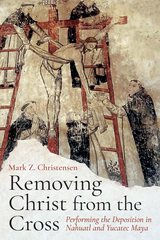
Employed on Good Friday, the texts provided mute actors with roles and props with which to reenact the removal of Christ from his cross, his placement into the arms of his grieving mother, and his burial—his Deposition. Through rare translations, vivid historical accounts, and rich cultural insight, the book uncovers how these ceremonies moved audiences to tears, shaped local Catholicisms, and still have the power to stir hearts today.
Such theatrical reenactments were common among Nahuas and Mayas during the colonial period only to become largely overlooked by the scholarly literature on religion. The texts examined here provide not only examples of performances but also insight into how translation altered their content and meaning. More than simply plays or sermons, these performative sermons merged European tradition with Nahua and Maya storytelling, creating unforgettable moments of faith, grief, and beauty. Familiarized through local worldviews, concerns, preferences, and language, these texts provide additional and important insights into myriad issues including those of gender, agency, and how Christianity adopted its message of the Deposition to accommodate Indigenous audiences of different cultures. Christensen also mines the deep well of existing European literature on the subject to clearly illustrate the aspects derived from the Old World and those from the New.
The first book examining how the Aztec and Maya were taught about and engaged in the Deposition, Removing Christ from the Cross exposes the colonial origins of modern Latin American commemorations, showing the past clearly reflected in the present and making a significant contribution to the larger literature on the evangelization of New Spain. This is more than history—it is the rediscovery of performances that connected worlds.
READERS
Browse our collection.
PUBLISHERS
See BiblioVault's publisher services.
STUDENT SERVICES
Files for college accessibility offices.
RECENTLY PUBLISHED


UChicago Accessibility Resources
home | accessibility | search | about | contact us
BiblioVault ® 2001 - 2026
The University of Chicago Press