
 A SCHOLARLY BOOK REPOSITORY
12 start with A start with A

The university today is under attack from all sides. Parents and students resent the escalating costs of education and wonder where the money is being spent. Aspiring scholars feel betrayed by an institution that prepares them for nonexistent jobs. Critics on the right condemn the teachers who neglect "the canon" while critics on the left condemn the creeping corporatism on campus. Politicians seek greater control over the conduct of research and add new conditions to the use of government funds. Worst of all, the academics are increasingly uneasy in an environment that fosters competition, discourages cooperation, and has made "publish or perish" a condition of survival.
Donald Kennedy, the former president of Stanford University and currently a member of its faculty, has been at the front lines of the issues confounding the academy today. In this important new book, he brings his experience and concern to bear on the present state of the university. He examines teaching, graduate training, research, and their ethical context in the research university. Aware of the numerous pressures that academics face, from the pursuit of open inquiry in the midst of culture wars, to confusion and controversy over the ownership of ideas, to the scramble for declining research funds and facilities, he explores the whys and wherefores of academic misconduct, be it scholarly, financial, or personal.
Kennedy suggests that meaningful reform cannot take place until more rigorous standards of academic responsibility--to students, the university, and the public--are embraced by both faculty and the administration. With vision and compassion, he offers an important antidote to recent attacks from without that decry the university and the professoriate, and calls upon the college community to counter those attacks by looking within and fulfilling its duties.
Donald E. Hall offers a self-help book designed for academics, from graduate students to tenured faculty. He helps readers engage in an active process of career management, goal setting, prioritization, and reflection on the norms that constitute what he calls “academic selfhood.” Drawing broadly on the insights of Anthony Giddens’ notions of reflexivity and self-identity, Hall encourages new and seasoned scholars to “own up to” the behaviors, attitudes, and complicities that compromise their professional identities. This book couples all its exhortations with clear, concrete, and practical strategies for responding productively to the many uncertainties of academic life.
Separate chapters of the book examine the textuality of the academic self, profession, academic processes and collegiality. Among the topics candidly discussed are careerism, burnout, procrastination, and insecurity. Throughout the book readers will find anecdotes, real-life examples, and concrete tips for constructing and maintaining a successful career defined on their own terms.
The Academic Self: An Owner’s Manual opens up a new and frank discussion on academic life and academics’ basic responsibility for their own actions and attitudes.

Faculty members, administrators, and professionals with experience at all levels of higher education offer candid, practical advice to help beginning academics understand matters including:
— The different kinds of institutions of higher learning and expectations of faculty at each.
— The advantages and disadvantages of teaching at four-year colleges instead of research universities.
— The ins and outs of the job market.
— Alternatives to tenure-track, research-oriented positions.
— Salary and benefits.
— The tenure system.
— Pedagogy in both large lecture courses and small, discussion-based seminars.
— The difficulties facing women and minorities within academia.
— Corporations, foundations, and the federal government as potential sources of research funds.
— The challenges of faculty mentoring.
— The impact of technology on contemporary teaching and learning.
— Different types of publishers and the publishing process at university presses.
— The modern research library.
— The structure of university governance.
— The role of departments within the university.
With the inclusion of eight new chapters, this edition of The Academic’s Handbook is designed to ease the transition from graduate school to a well-rounded and rewarding career.
Contributors. Judith K. Argon, Louis J. Budd, Ronald R. Butters, Norman L. Christensen, Joel Colton, Paul L. Conway, John G. Cross, Fred E. Crossland, Cathy N. Davidson, A. Leigh DeNeef, Beth A. Eastlick, Matthew W. Finkin, Jerry G. Gaff, Edie N. Goldenberg, Craufurd D. Goodwin, Stanley M. Hauerwas, Deborah L. Jakubs, L. Gregory Jones, Nellie Y. McKay, Patrick M. Murphy, Elizabeth Studley Nathans, A. Kenneth Pye, Zachary B. Robbins, Anne Firor Scott, Sudhir Shetty, Samuel Schuman, Philip Stewart, Boyd R. Strain, Emily Toth, P. Aarne Vesilind, Judith S. White, Henry M. Wilbur, Ken Wissoker
Contributors. Luis Alvarez, Steven Alvarez, Eladio Bobadilla, Genevieve Carpio, Marcia Chatelain, Ernesto Chávez, Miroslava Chávez-García, Nathan D. B. Connolly, Jeremy V. Cruz, Cathy N. Davidson, Sarah Deutsch, Brenda Elsey, Sylvanna M. Falcón, Michelle Falkoff, Kelly Fayard, Matthew W. Finkin, Lori A. Flores, Kathryn J. Fox, Frederico Freitas, Neil Garg, Nanibaa’ A. Garrison, Joy Gaston Gayles, Tiffany Jasmin González, Cynthia R. Greenlee, Romeo Guzmán, Lauren Hall-Lew, David Hansen, Heidi Harley, Laura M. Harrison, Sonia Hernández, Sharon P. Holland, Elizabeth Q. Hutchison, Deborah Jakubs, Bridget Turner Kelly, Karen Kelsky, Stephen Kuusisto, Magdalena Maczynska, Sheila McManus, Cary Nelson, Jocelyn H. Olcott, Rosanna Olsen, Natalia Mehlman Petrzela, Charles Piot, Bryan Pitts, Sarah Portnoy, Laura Portwood-Stacer, Yuridia Ramirez, Meghan K. Roberts, John Elder Robison, David Schultz, Lynn Stephen, James E. Sutton, Antar A. Tichavakunda, Keri Watson, Ken Wissoker, Karin Wulf
He employs an array of forms and voices, whether penning a break-up letter to America or a literary rock-n-roll road song dedicated to prairie scientists, or giving pregame pep talks to his son’s losing football team. Here, too, are moving portrayals of his father’s last effort as a small-town lawyer to defend the rights of abused women, and his own efforts as a writing teacher to honor the personal stories of his students.
From his Iowa backyard to the edge of the Arctic Circle, from the forgotten recesses of the body to the far reaches of the solar system, this book demonstrates the ways imagination and informed compassion can, as Price describes it, expand thousandfold the boundaries of what we might “have naïvely considered an individual self.”
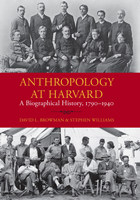
Anthropology at Harvard recounts the rich and complex history of anthropology at America’s oldest university, beginning with the earliest precursors of the discipline within the study of natural history. The story unfolds through fascinating vignettes about the many individuals—famous and obscure alike—who helped shape the discipline at Harvard College and the Peabody Museum. Lively anecdotes provide in-depth portraits of dozens of key individuals, including Louis and Alexander Agassiz, Frederic Ward Putnam, Mary Hemenway, Alice Cunningham Fletcher, Sylvanus Morley, A. V. Kidder, and Antonio Apache. The text also throws new light on longstanding puzzles and debates, such as Franz Boas’s censure by the American Anthropological Association and the involvement of Harvard archaeologists in espionage work for the U.S. government during World War I.
The authors take a “cohort” perspective, looking beyond the big names to the larger network of colleagues that formed the dynamic backdrop to the development of ideas. The significant contributions of amateurs and private funders to the early growth of the field are highlighted, as is the active participation of women and of students and scholars of diverse ethnic backgrounds. A monumental achievement, Anthropology at Harvard makes an important contribution to the history of Americanist anthropology.
From film to film, Jeffrey DeShell follows a forty-something failed film studies academic—The Professor. While The Professor is reinvented with each new chapter (or film), what remains is DeShell’s inventive deconstruction and representation of modern cinema. At times borrowing imagery, plot, or character elements, and at times rendering lighting, rhythm, costuming, or shot sequences into fictional language, The Professor’s journey sends him from the Southwestern town of Pueblo, Colorado, into the role of rescuer as he aids an attempted-rape victim, and finally to Italy. Ultimately though, The Professor is left alone, struggling to reconcile the real world with his life in cinema.
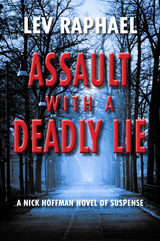
A novel of suspense set in the academic world, Assault with a Deadly Lie probes the disturbing psychological impact of slander, harassment, stalking, police brutality, and the loss of personal safety. What will Nick do when his world threatens to collapse? How can he reestablish order in a suddenly chaotic life?
Assault with a Deadly Lie, the eighth installment of Lev Raphael's Nick Hoffman Mysteries, propels the series to a new level of danger and intrigue as Nick and Stefan are catapulted out of their tranquil existence by shocking accusations.
Finalist, Midwest Book Award for Mystery/Thriller Fiction, Midwest Independent Publishers Association
“A riveting great read for mystery/suspense fans, author Lev Raphael once again documents his impressive gifts as a storyteller, holding the reader’s rapt attention from beginning to end with unexpected plot twists and surprise twists.”—Jack Mason, Midwest Book Review
“Raphael portrays with frightening power the wrenching experience of victimization by the corporatized, PR-prioritized groves of academia, where both men teach, and by local authorities militarized into SWAT teams practicing police brutality. . . . The compelling core of this unusual novel is Raphael’s depiction of the agonizing reality of victims’ shame, in which someone ‘feels doubly exposed talking about the violation’ and so says nothing.”—Booklist
“Professor Nick Hoffman learns that even tenure can’t guarantee real security.”—Kirkus Reviews
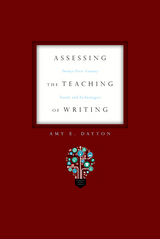
Although fraught with politics and other perils, teacher evaluation can contribute in important, positive ways to faculty development at both the individual and the departmental levels. Yet the logistics of creating a valid assessment are complicated. Inconsistent methods, rater bias, and overreliance on student evaluation forms have proven problematic. The essays in Assessing the Teaching of Writing demonstrate constructive ways of evaluating teacher performance, taking into consideration the immense number of variables involved.
Contributors to the volume examine a range of fundamental issues, including the political context of declining state funds in education; growing public critique of the professoriate and demands for accountability resulting from federal policy initiatives like No Child Left Behind; the increasing sophistication of assessment methods and technologies; and the continuing interest in the scholarship of teaching. The first section addresses concerns and advances in assessment methodologies, and the second takes a closer look at unique individual sites and models of assessment. Chapters collectively argue for viewing teacher assessment as a rhetorical practice.
Fostering new ways of thinking about teacher evaluation, Assessing the Teaching of Writing will be of great interest not only to writing program administrators but also to those concerned with faculty development and teacher assessment outside the writing program.
READERS
Browse our collection.
PUBLISHERS
See BiblioVault's publisher services.
STUDENT SERVICES
Files for college accessibility offices.
RECENTLY PUBLISHED



UChicago Accessibility Resources
home | accessibility | search | about | contact us
BiblioVault ® 2001 - 2024
The University of Chicago Press