
 A SCHOLARLY BOOK REPOSITORY
23 start with B start with B
Ed White explores the backcountry-city divide as well as the dynamics of indigenous peoples, bringing together two distinct bodies of scholarship: one stressing the political culture of the Revolutionary era, the other taking an ethnohistorical view of white–Native American contact. White concentrates his study in Pennsylvania, a state in which the majority of the population was rural, and in Philadelphia, a city that was a center of publishing and politics and the national capital for a decade. Against this backdrop, White reads classic political texts such as Crèvecoeur’s Letters from an American Farmer, Franklin’s Autobiography, and Paine’s “Agrarian Justice,” alongside missionary and captivity narratives, farmers’ petitions, and Native American treaties. Using historical and ethnographic sources to enrich familiar texts, White demonstrates the importance of rural areas in the study of U.S. nation formation and finds unexpected continuities between the early colonial period and the federal ascendancy of the 1790s.
Ed White is associate professor of English at the University of Florida.
Eighteenth-century antislavery writers attacked the slave trade as "barbaric traffic"--a practice that would corrupt the mien and manners of Anglo-American culture to its core. Less concerned with slavery than with the slave trade in and of itself, these writings expressed a moral uncertainty about the nature of commercial capitalism. This is the argument Philip Gould advances in Barbaric Traffic. A major work of cultural criticism, the book constitutes a rethinking of the fundamental agenda of antislavery writing from pre-revolutionary America to the end of the British and American slave trades in 1808.
Studying the rhetoric of various antislavery genres--from pamphlets, poetry, and novels to slave narratives and the literature of disease--Gould exposes the close relation between antislavery writings and commercial capitalism. By distinguishing between good commerce, or the importing of commodities that refined manners, and bad commerce, like the slave trade, the literature offered both a critique and an outline of acceptable forms of commercial capitalism. A challenge to the premise that objections to the slave trade were rooted in modern laissez-faire capitalism, Gould's work revises--and expands--our understanding of antislavery literature as a form of cultural criticism in its own right.
Winner of the John G. Cawelti Award, Popular Culture Association and American Culture Association
“We must congratulate Butler for [bringing] under control [a] profusion of scholarship and [making] sense of it in fewer than 250 pages. His book is a tour de force…Compelling and readable.”—Gordon S. Wood, New Republic
“Americans today think of the colonial period, if at all, as a time remote from modern America, in which society was unimaginably different from ours. Butler argues persuasively that America during the late colonial period…displayed distinctive traits of modern America, among them vigorous religious pluralism, bewildering ethnic diversity, tremendous inequalities of wealth, and a materialistic society with pervasively commercial values.”—Kirkus Reviews
Multinational, profit-driven, materialistic, power-hungry, religiously plural: America today—and three hundred years ago. Jon Butler’s panoramic view of the mainland American colonies after 1680 transforms our customary picture of pre-Revolutionary America; it reveals a strikingly “modern“ character that belies the eighteenth-century quaintness fixed in history. Stressing the middle and late decades (the hitherto “dark ages”) of the American colonial experience, Butler shows us vast revolutionary changes in a society that, for ninety years before 1776, was already becoming America.
America began, we are often told, with the Founding Fathers, the men who waged a revolution and created a unique place called the United States. We may acknowledge the early Jamestown and Puritan colonists and mourn the dispossession of Native Americans, but we rarely grapple with the complexity of the nation’s pre-revolutionary past. In this pathbreaking revision, Daniel Richter shows that the United States has a much deeper history than is apparent—that far from beginning with a clean slate, it is a nation with multiple pasts that stretch back as far as the Middle Ages, pasts whose legacies continue to shape the present.
Exploring a vast range of original sources, Before the Revolution spans more than seven centuries and ranges across North America, Europe, and Africa. Richter recovers the lives of a stunning array of peoples—Indians, Spaniards, French, Dutch, Africans, English—as they struggled with one another and with their own people for control of land and resources. Their struggles occurred in a global context and built upon the remains of what came before. Gradually and unpredictably, distinctive patterns of North American culture took shape on a continent where no one yet imagined there would be nations called the United States, Canada, or Mexico.
By seeing these trajectories on their own dynamic terms, rather than merely as a prelude to independence, Richter’s epic vision reveals the deepest origins of American history.
The essays are divided into two parts—the first focusing on the establishment and geopolitical complexities of seventeenth- and early-eighteenth-century life in and around the Tennessee River, and the second exploring the effects of the American Revolution in this geopolitical space. Topics in Part One include Indian life in the late Mississippian era, how contact with Europeans forced a process of migration and change, European understanding of Cherokee strength, and the importance of the Creeks, Cherokees, and Shawnees to early Tennessee history. Part Two offers articles about the confusing milieu into which the region was thrown during the Revolution, the central role of kinship networks for both Indians and whites, and the difficulties of identity formation as Euro-Americans expanded their presence on the Tennessee frontier. The work concludes by addressing the issue of myth and memory and how early Tennessee history was overtaken by nineteenth-century historical narratives that continue to serve as the foundation for understanding the state.
Taken together, these essays provide a gateway through which to reimagine early Tennessee history—a reimagining that demonstrates the significance of the Volunteer State within broader trends in early modern, southern, trans-Appalachian, and Atlantic World history.

British colonial relations with the native peoples of eastern North America
This is an annotated edition of the treaties between the British colonies and Indian nations, originally printed and sold by Benjamin Franklin. Last published in 1938, Benjamin Franklin, Pennsylvania, and the First Nations makes these important treaties available once again, featuring a simpler, easier-to-read format, extensive explanatory notes, and maps. A detailed introduction by Susan Kalter puts the treaties in their proper historical and cultural context.
This carefully researched edition shows these treaties to be complex intercultural documents, and provides significant insight into the British colonists’ relationship with native peoples of North America. They also reveal the complexity of Benjamin Franklin’s perceptions of Native Americans, showing him in some negotiations as a promoter of the Indian word against the colonial one. Finally, the treaties offer an enormous wealth of linguistic, aesthetic, and cultural information about the Iroquois, the Delawares, and their allies and neighbors.

Emma Anderson uses one man's compelling story to explore the collision of Christianity with traditional Native religion in colonial North America.
Pierre-Anthoine Pastedechouan was born into a nomadic indigenous community of Innu living along the St. Lawrence River in present-day Quebec. At age eleven, he was sent to France by Catholic missionaries to be educated for five years, and then brought back to help Christianize his people.
Pastedechouan's youthful encounter with French Catholicism engendered in him a fatal religious ambivalence. Robbed of both his traditional religious identity and critical survival skills, he had difficulty winning the acceptance of his community upon his return. At the same time, his attempts to prove himself to his people led the Jesuits to regard him with increasing suspicion. Suspended between two worlds, Pastedechouan ultimately became estranged--with tragic results--from both his native community and his missionary mentors.
An engaging narrative of cultural negotiation and religious coercion, Betrayal of Faith documents the multiple betrayals of identity and culture caused by one young man's experiences with an inflexible French Catholicism. Pastedechouan's story illuminates key struggles to retain and impose religious identity on both sides of the seventeenth-century Atlantic, even as it has a startling relevance to the contemporary encounter between native and non-native peoples.
On June 2, 1763, the Ojibwe captured Michigan’s Fort Michilimackinac from the British. Ojibwe warriors from villages on Mackinac Island and along the Cheboygan River had surprised the unsuspecting garrison while playing a game of baggatiway. On the heels of the capture, Odawa from nearby L’Arbre Croche arrived to rescue British prisoners, setting into motion a complicated series of negotiations among Ojibwe, Odawa, and Menominee and other Indians from Wisconsin. Because nearly all Native people in the Michilimackinac borderland had allied themselves with the British before the attack, they refused to join the Michilimackinac Ojibwe in their effort to oust the British from the upper country; the turmoil effectively halted the fur trade. Beyond Pontiac’s Shadow examines the circumstances leading up to the attack and the course of events in the aftermath that resulted in the regarrisoning of the fort and the restoration of the fur trade. At the heart of this discussion is an analysis of French-Canadian and Indian communities at the Straits of Mackinac and throughout the pays d’en haut. An accessible guide to this important period in Michigan, American, and Canadian history, Beyond Pontiac’s Shadow sheds invaluable light on a political and cultural crisis.
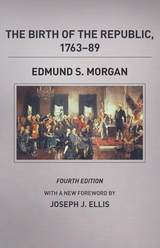
In The Birth of the Republic, 1763–89, Edmund S. Morgan shows how the challenge of British taxation started Americans on a search for constitutional principles to protect their freedom, and eventually led to the Revolution. By demonstrating that the founding fathers’ political philosophy was not grounded in theory, but rather grew out of their own immediate needs, Morgan paints a vivid portrait of how the founders’ own experiences shaped their passionate convictions, and these in turn were incorporated into the Constitution and other governmental documents. The Birth of the Republic is the classic account of the beginnings of the American government, and in this fourth edition the original text is supplemented with a new foreword by Joseph J. Ellis and a historiographic essay by Rosemarie Zagarri.
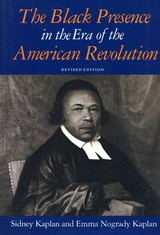
The book is a revised and expanded edition of the authors' classic catalog that accompanied a pioneering exhibition mounted in 1973 by the National Portrait Gallery.
On the face of it, the master class called the tunes and slaves danced the beat. Blacks who were taken into New England's bondage were clearly engulfed in a pervasive, narrow-minded Euro-American society that had no interest in fostering Afro-American autonomy. The New England experience was often cruel, and the numbers alone suggest it was among the most unequal of black/white cultural contacts in the New World. Nonetheless, despite the strictures of bondage, the black Yankees of eighteenth-century New England created a sustaining folk culture of their own.
In 1760, no one could imagine the American colonies revolting against Great Britain. The colonists were not hungry peasants groaning under the whip of a brute. They lived well. Land was cheap, wages were good, opportunities abounded. While many colonists had been in the New World for generations, they identified with Britain, and England was still “home.” Yet in the space of just fifteen years these sturdy bonds snapped. Boston—a town of just 16,000—lit the fire for American Independence. Brian Deming explains how and why in his lucid, lively, and deeply researched Boston and the Dawn of American Independence.
To dodge British taxes, Boston merchants for as long as anyone could remember had routinely smuggled in molasses from French and Spanish possessions in the Caribbean. Boston distillers transformed this sweet cargo into rum, the liquid gold traded around the world. But British authorities cracked down on smuggling and imposed the Sugar Act to help pay for the debts incurred during their wars against France. Then came the hated Stamp Act, a tax on documents, newspapers, and printed materials of all kinds. In courtrooms, in the press, and in the streets, Bostonians rallied in protest against taxation without representation. As anger swept America, Boston was at the center of the storm, which burst forth with the infamous massacre and the Boston Tea Party. By 1775, open warfare erupted at Lexington, Concord, and Bunker Hill. Boston and the Dawn of American Independence ties these scenes together with the people of the time, including John and Sam Adams, John Hancock, and Paul Revere, as well as Thomas Hutchinson, the beleaguered Massachusetts royal governor, and James Otis, the bombastic, unstable early patriot. Readers hear their voices, but also those of many amazing, colorful, and memorable personalities— feisty mob leaders, defiant Tories, terrified townspeople. Deming illuminates this epic story with views of everyday life inside taverns, outside newspaper offices, and along the wharves, and the political dramas in London and Philadelphia that shaped the destiny of an empire and gave rise to the world’s first modern democracy.
George Washington Prize Finalist
Winner of the Society of the Cincinnati Prize
“Fascinating… Hinderaker’s meticulous research shows that the Boston Massacre was contested from the beginning… [Its] meanings have plenty to tell us about America’s identity, past and present.”
—Wall Street Journal
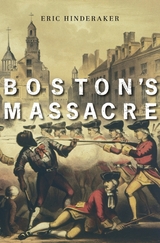
On the night of March 5, 1770, British soldiers fired into a crowd gathered in front of Boston’s Custom House, killing five people. Denounced as an act of unprovoked violence and villainy, the event that came to be known as the Boston Massacre is one of the most famous and least understood incidents in American history. Eric Hinderaker revisits this dramatic confrontation, examining in forensic detail the facts of that fateful night, the competing narratives that molded public perceptions at the time, and the long campaign to transform the tragedy into a touchstone of American identity.
“Hinderaker brilliantly unpacks the creation of competing narratives around a traumatic and confusing episode of violence. With deft insight, careful research, and lucid writing, he shows how the bloodshed in one Boston street became pivotal to making and remembering a revolution that created a nation.”
—Alan Taylor, author of American Revolutions
“Seldom does a book appear that compels its readers to rethink a signal event in American history. It’s even rarer…to accomplish so formidable a feat in prose of sparkling clarity and grace. Boston’s Massacre is a gem.”
—Fred Anderson, author of Crucible of War

As Boston approaches its four-hundredth anniversary, it is remarkable that it still maintains its historic character despite constant development. The fifty buildings featured in this book all pre-date 1800 and illustrate Boston’s early history. This is the first book to survey Boston’s fifty oldest buildings and does so through an approachable narrative which will appeal to nonarchitects and those new to historic preservation. Beginning with a map of the buildings’ locations and an overview of the historic preservation movement in Boston, the book looks at the fifty buildings in order from oldest to most recent. Geographically, the majority of the buildings are located within the downtown area of Boston along the Freedom Trail and within easy walking distance from the core of the city. This makes the book an ideal guide for tourists, and residents of the city will also find it interesting as it includes numerous properties in the surrounding neighborhoods. The buildings span multiple uses from homes to churches and warehouses to restaurants. Each chapter features a building, a narrative focusing on its historical significance, and the efforts made to preserve it over time. Full color photos and historical drawings illustrate each building and area. Boston’s Oldest Buildings and Where to Find Them presents the ideals of historic preservation in an approachable and easy-to-read manner appropriate for the broadest audience. Perfect for history lovers, architectural enthusiasts, and tourists alike.
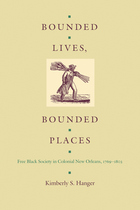
Drawing on rare archives in Louisiana and Spain, Hanger reconstructs the world of late-eighteenth-century New Orleans from the perspective of its free black residents, and documents the common experiences and enterprises that helped solidify libres’ sense of group identity. Over the course of three and a half decades of Spanish rule, free people of African descent in New Orleans made their greatest advances in terms of legal rights and privileges, demographic expansion, vocational responsibilities, and social standing. Although not all blacks in Spanish New Orleans yearned for expanded opportunity, Hanger shows that those who did were more likely to succeed under Spain’s dominion than under the governance of France, Great Britain, or the United States.
The advent of U.S. rule brought restrictions to both manumission and free black activities in New Orleans. Nonetheless, the colonial libre population became the foundation for the city’s prosperous and much acclaimed Creoles of Color during the antebellum era.
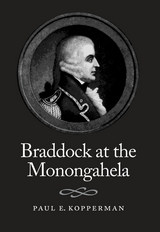
On July 9, 1755, an army of British and American soldiers commanded by Major General Edward Braddock marched toward a major western outpost held by the French, confident of an easy victory. Suddenly, they were attacked by a much smaller force of French and Indian fighters-Braddock's army was destroyed, its commander fatally wounded, and supplies and secret papers were lost to the enemy. Paul E. Kopperman has used all of the known eyewitness reports of Braddock's defeat-some never before printed-to present an exciting critical account of this definitive battle in the French and Indian War. Braddock at the Monongahela is a synthesis of in-depth analysis of primary source materials, thoughtful evaluation of previous studies on the subject, and Kopperman's own persuasive interpretation.
Winner of the 2011 New York Society of Colonial Wars Distinguished Book Award
"Before we parted, the General told me he should never see me more; for he was going with a handful of men to conquer whole nations; and to do this they must cut their way through unknown woods. He produced a map of the country, saying at the same time, ‘Dear Pop, we are sent like sacrifices to the altar.’”—George Anne Bellamy on General Edward Braddock’s departure
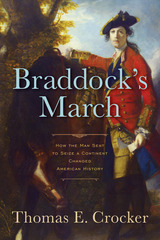
In January 1755, Major General Edward Braddock was sent by Great Britain on a mission to drive France once and for all from the New World. Accompanied by the largest armed expeditionary force ever sent to North America, Braddock’s primary target was the Forks of the Ohio, where he planned to seize Fort Duquesne (at present-day Pittsburgh, Pennsylvania), and then march north into Canada. After landing in Alexandria, Virginia, and organizing his troops and supply chain, Braddock and his expedition began its nearly 250-mile trek, heroically cutting through uncharted wilderness, fording rivers, and scaling the Appalachian mountains, all while hauling baggage and heavy artillery. Braddock was joined on this epic mission by a young Virginia colonel, George Washington, and others who would later play major roles in the American Revolution, including Horatio Gates, Thomas Gage, and Charles Lee; among those driving the expedition’s wagons were Daniel Boone and Daniel Morgan. Having withstood the harsh frontier and finally marching upon Fort Duquesne on a hot July morning, Braddock’s exhausted column was ambushed by a combined French and Indian force. Over two-thirds of Braddock’s British and colonial troops were killed or wounded, including Braddock himself, struck by a bullet in the chest while attempting to rally his disoriented troops. George Washington miraculously escaped harm despite four bullet holes through his clothing. With this battle, North America became the greatest stake in the global war between France and Great Britain.
In Braddock’s March: How the Man Sent to Seize a Continent Changed American History, Thomas E. Crocker tells the riveting story of one of the most important events in colonial America. Not only did Braddock’s expedition have a profound impact on American political and military developments, this fateful march laid the foundation for the “National Pike,” the major road for westward expansion, launched the career of George Washington, and sowed the seeds of dissent between England and its colonies that would ultimately lead to the American Revolution.
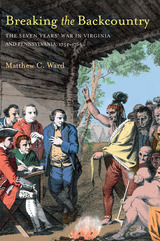
Previous wars in North America had been fought largely on the New England and New York frontiers. But on May 28, 1754, when a young George Washington commanded the first shot fired in western Pennsylvania, fighting spread for the first time to Virginia and Pennsylvania. Ward's original research reveals that on the eve of the Seven Years' War the communities of these colonies were isolated, economically weak, and culturally diverse. He shows in riveting detail how, despite the British empire's triumph, the war brought social chaos, sickness, hunger, punishment, and violence, to the backcountry, much of it at the hands of Indian warriors.
Ward's fresh analysis reveals that Indian raids were not random skirmishes, but part of an organized strategy that included psychological warfare designed to make settlers flee Indian territories. It was the awesome effectiveness of this “guerilla” warfare, Ward argues, that led to the most enduring legacies of the war: Indian-hating and an armed population of colonial settlers, distrustful of the British empire that couldn't protect them. Understanding the horrors of the Seven Years' War as experienced in the backwoods thus provides unique insights into the origins of the American republic.
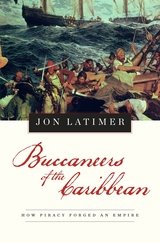
During the seventeenth century, sea raiders known as buccaneers controlled the Caribbean. Buccaneers were not pirates but privateers, licensed to attack the Spanish by the governments of England, France, and Holland. Jon Latimer charts the exploits of these men who followed few rules as they forged new empires.
Lacking effective naval power, the English, French, and Dutch developed privateering as the means of protecting their young New World colonies. They developed a form of semi-legal private warfare, often carried out regardless of political developments on the other side of the Atlantic, but usually with tacit approval from London, Paris, and Amsterdam. Drawing on letters, diaries, and memoirs of such figures as William Dampier, Sieur Raveneau de Lussan, Alexander Oliver Exquemelin, and Basil Ringrose, Jon Latimer portrays a world of madcap adventurers, daredevil seafarers, and dangerous rogues.
Piet Hein of the Dutch West India Company captured, off the coast of Cuba, the Spanish treasure fleet, laden with American silver, and funded the Dutch for eight months in their fight against Spain. The switch from tobacco to sugar transformed the Caribbean, and everyone scrambled for a quick profit in the slave trade. Oliver Cromwell’s ludicrous Western Design—a grand scheme to conquer Central America—fizzled spectacularly, while the surprising prosperity of Jamaica set England solidly on the road to empire. The infamous Henry Morgan conducted a dramatic raid through the tropical jungle of Panama that ended in the burning of Panama City.
From the crash of gunfire to the billowing sail on the horizon, Latimer brilliantly evokes the dramatic age of the buccaneers.
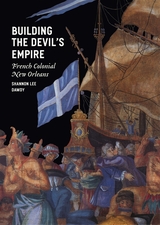
Building the Devil’s Empire is the first comprehensive history of New Orleans’s early years, tracing the town’s development from its origins in 1718 to its revolt against Spanish rule in 1768. Shannon Lee Dawdy’s picaresque account of New Orleans’s wild youth features a cast of strong-willed captives, thin-skinned nobles, sharp-tongued women, and carousing travelers. But she also widens her lens to reveal the port city’s global significance, examining its role in the French Empire and the Caribbean, and she concludes that by exemplifying a kind of rogue colonialism—where governments, outlaws, and capitalism become entwined—New Orleans should prompt us to reconsider our notions of how colonialism works.
"[A] penetrating study of the colony's founding."—Nation
“A brilliant and spirited reinterpretation of the emergence of French New Orleans. Dawdy leads us deep into the daily life of the city, and along the many paths that connected it to France, the North American interior, and the Greater Caribbean. A major contribution to our understanding of the history of the Americas and of the French Atlantic, the work is also a model of interdisciplinary research and analysis, skillfully bringing together archival research, archaeology, and literary analysis.”—Laurent Dubois, Duke University
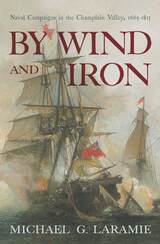
For more than 150 years, the natural invasion route along the waterways of the Champlain and Richelieu valleys into northeastern North America was among the most fiercely contested in the history of the continent. Whether the French and their Indian allies attacking British forts and settlements during the Seven Years’ War, the American Continentals striking north into Canada during the American Revolution, or the British battling French and later American forces in these wars and the War of 1812, it was clear to policy makers in Quebec, London, Paris, Philadelphia, and Washington that whoever controlled this corridor and its lakes and rivers, controlled the heart of the continent. In By Wind and Iron: Naval Campaigns in the Champlain Valley, 1665–1815, Michael G. Laramie details the maritime history of this region from the first French fortifications along the Richelieu River in the late seventeenth century through the tremendous American victory over the British at the Battle of Plattsburgh on Lake Champlain in 1814. Using period letters, journals, and other primary source materials, the author examines the northeastern waterways and their tributaries within the framework of the soldiers and sailors who faced the perils of the campaigns, while at the same time clarifying the key role played by this region in the greater struggle for North America and American independence.
In support of the narrative, the book also contains appendices that include after action reports from various fleet commanders, tables of fleet strengths, additional battle maps, a glossary, and a dictionary of lake warships with notes on vessel types, typical armament, construction, deployment, and fates.
READERS
Browse our collection.
PUBLISHERS
See BiblioVault's publisher services.
STUDENT SERVICES
Files for college accessibility offices.
RECENTLY PUBLISHED




UChicago Accessibility Resources
home | accessibility | search | about | contact us
BiblioVault ® 2001 - 2024
The University of Chicago Press