
 A SCHOLARLY BOOK REPOSITORY
More than we ever anticipated, alliances among firms are changing the way business is conducted, particularly in the global, high-technology sector. The reasons are clear: companies must increasingly pool their capabilities to succeed in ever more complex and rapidly changing businesses. But the consequences for managers and for the economy have so far been underestimated. In this new book, Benjamin Gomes-Casseres presents the first in-depth account of the new world of business alliances and shows how collaboration has become part of the very fabric of modern competition.
Alliances, he argues, create new units of competition that do battle with one another and with traditional single firms. The flexible capabilities of these multi-firm constellations give them advantages over single firms in certain contexts, offsetting the advantage of a single firm's unified control. When managed effectively, alliances can strengthen a firm's competitive advantage and narrow the gap between leading firms and second-tier players. This often results in intensified rivalry, and the competition within an industry is transformed. Alliances often spread swiftly through an industry as firms jockey for advantage. Yet the very spread of alliances increases their costs and poses new limits on their use. Gomes-Casseres concludes that firms need to manage their constellations to enhance collaboration within their groups, while raising what he calls "barriers to collaboration" for rivals.
These ideas are developed and illustrated through original case studies of alliances among U.S., Japanese, and European firms in electronics and computers, including Xerox, IBM, and Fujitsu as well as other small and large companies. The book should be of interest to business academics, managers, and general readers concerned with contemporary capitalism.
In Ambition, Competition, and Electoral Reform, Jamie L. Carson and Jason M. Roberts present an original study of U.S. congressional elections and electoral institutions for 1872-1944 from a contemporary political science perspective. Using data on late nineteenth and early twentieth century congressional elections, the authors test the applicability in a historical context of modern political science theories, assess the effects of institutional reforms, and identify the factors that shape the competitiveness of elections. They present several key findings: the strategic politicians theory is applicable in an era without candidate-centered campaigns; there was an incumbency advantage prior to the full development of candidate-centered campaigns; institutional reforms have had a significant effect on elections; and the degree of electoral competition frequently correlates with elected officials' responsiveness to citizens.

After thirty years, the debate over antitrust's ideology has quieted. Most now agree that the protection of consumer welfare should be the only goal of antitrust laws. Execution, however, is another matter. The rules of antitrust remain unfocused, insufficiently precise, and excessively complex. The problem of poorly designed rules is severe, because in the short run rules weigh much more heavily than principles. At bottom, antitrust is a defensible enterprise only if it can make the microeconomy work better, after accounting for the considerable costs of operating the system.
The Antitrust Enterprise is the first authoritative and compact exposition of antitrust law since Robert Bork's classic The Antitrust Paradox was published more than thirty years ago. It confronts not only the problems of poorly designed, overly complex, and inconsistent antitrust rules but also the current disarray of antitrust's rule of reason, offering a coherent and workable set of solutions. The result is an antitrust policy that is faithful to the consumer welfare principle but that is also more readily manageable by the federal courts and other antitrust tribunals.

A new and urgently needed guide to making the American economy more competitive at a time when tech giants have amassed vast market power.
The U.S. economy is growing less competitive. Large businesses increasingly profit by taking advantage of their customers and suppliers. These firms can also use sophisticated pricing algorithms and customer data to secure substantial and persistent advantages over smaller players. In our new Gilded Age, the likes of Google and Amazon fill the roles of Standard Oil and U.S. Steel.
Jonathan Baker shows how business practices harming competition manage to go unchecked. The law has fallen behind technology, but that is not the only problem. Inspired by Robert Bork, Richard Posner, and the “Chicago school,” the Supreme Court has, since the Reagan years, steadily eroded the protections of antitrust. The Antitrust Paradigm demonstrates that Chicago-style reforms intended to unleash competitive enterprise have instead inflated market power, harming the welfare of workers and consumers, squelching innovation, and reducing overall economic growth. Baker identifies the errors in economic arguments for staying the course and advocates for a middle path between laissez-faire and forced deconcentration: the revival of pro-competitive economic regulation, of which antitrust has long been the backbone.
Drawing on the latest in empirical and theoretical economics to defend the benefits of antitrust, Baker shows how enforcement and jurisprudence can be updated for the high-tech economy. His prescription is straightforward. The sooner courts and the antitrust enforcement agencies stop listening to the Chicago school and start paying attention to modern economics, the sooner Americans will reap the benefits of competition.


Kirzner's book establishes a theory of the market and the price system which differs from orthodox price theory. He sees orthodox price theory as explaining the configuration of prices and quantities that satisfied the conditions for equilibrium. Mr. Kirzner argues that "it is more useful to look to price theory to help understand how the decisions of individual participants in the market interact to generate the market forces which compel changes in prices, outputs, and methods of production and in the allocation of resources."
Although Competition and Entrepreneurship is primarily concerned with the operation of the market economy, Kirzner's insights can be applied to crucial aspects of centrally planned economic systems as well. In the analysis of these processes, Kirzner clearly shows that the rediscovery of the entrepreneur must emerge as a step of major importance.
With the nations of the world becoming more interdependent, it is imperative to take international influences into account in understanding the organization of industry within a country. This book extends the structure/conduct/performance framework of analysis to present a fully specified simultaneous equation model of an open economy—Canada.
By estimating a system of equations of all the major variables, the authors can identify which variables are dependent and which are independent. They are thus able to assess the relative importance of such factors as seller concentration, import competition, retailing structure, advertising expenditure, research and development spending, and technical and allocative efficiency in shaping the organization of industry in Canada. In addition, using both industry-level and firm-level data, the authors develop methods for assessing the effect of structural variables on diversification strategies and the consequences for market performance. They also study the effects of such variables on firms’ access to capital markets. The book concludes with a discussion of the implications of the findings for government policy.

“Competition in health care has developed to a greater degree than most economists predicted ten years ago. That is the conclusion of Warren Greenberg in his introduction to Competition in the Health Care Sector: Ten Years Later, a retrospective of a 1977 Federal Trade Commission conference, which produced the landmark treatise Competition in the Health Care Sector: Past, Present, and Future. Seven of the ten original papers are reexamined; a chapter on the nursing home industry has been added.
“As with the original volume, Greenberg predicts that the retrospective will become a critical element in the health care economic literature.”—Hospitals
Investment banks play a critically important role in channeling capital from investors to corporations. Not only do they float and distribute new corporate securities, they also assist companies in the private placement of securities, arrange mergers and acquisitions, devise specialized financing, and provide other corporate financial services.
After sketching the history and evolution of investment banking, the authors describe the structure of the industry, focusing on the competitive forces at work within it today. They explore patterns of concentration and analyze the strategic and economic factors that underlie those patterns. The authors directly examine the pairing up of investment banks with their corporate clients. They show that the market is sharply segmented, with banks and corporate clients being matched in roughly rank order, the most prestigious banks with the largest, most powerful clients, and so on. Vigorous competition occurs within each segment, but much less between them.
With the industry now confronting a changing regulatory environment, a growing tendency of clients to arrange their own financing, and increasing competition both from within and from commercial banks and foreign institutions, Competition in the Investment Banking Industry is essential reading for anyone interested in the future of investment banking.
In this vigorous and well-documented "current view" of competition in the mid-western coal industry, Reed Moyer has set himself two tasks: to bring up to date existing economic analyses and to correct a "distortion which arises from generalizing about an industry composed of several diverse parts."
Most previous economic analyses have become obsolete, partly because of the shifting picture within the industry. Moyer’s detailed study of the economic behavior of the midwestern coal industry focuses on the transformation in the mining operation. Contrary to popular opinion, the bituminous coal industry in the Midwest is not "chronically depressed"; instead, it is successfully surmounting years of stagnation dating back to the 1920s, the effects of strikes, and the stiff competition offered coal by other fuels in the recent past. Concerned primarily with the coal producing regions of Illinois, Indiana, and western Kentucky, the author considers not only the economic factors touching the industry, but the geologic and geographic as well. In a framework of market structure, conduct, and performance Moyer analyzes in detail the "geographically isolated position of the midwestern coal industry," which "limits interdistrict competition."
Ample discussion is devoted to factors which influence the structural characteristics and the economic behavior of the industry: seller concentration, the importance of freight rates in determining delivery costs, price competition, entry barriers, and the effect of mining techniques on resource conservation, to name a few. The book includes an extensive treatment of the mining methods, strip and underground, common to the region, and their influence on its economic picture. This crisply written technical study searches thoroughly into the many facets of a leading component of a still lively major industry. The author has drawn on a supply of unpublished material as well as on information from confidential sources.
Competitive Interests does more than simply challenge the long-held belief that a small set of interests control large domains of the public policy making landscape. It shows how the explosion in the sheer number of new groups, and the broad range of ideological demands they advocate, have created a form of group politics emphasizing compromise as much as conflict. Thomas T. Holyoke offers a model of strategic lobbying that shows why some group lobbyists feel compelled to fight stronger, wealthier groups even when they know they will lose.
Holyoke interviewed 83 lobbyists who have been advocates on several contentious issues, including Arctic oil drilling, environmental conservation, regulating genetically modified foods, money laundering, and bankruptcy reform. He offers answers about what kinds of policies are more likely to lead to intense competition and what kinds of interest groups have an advantage in protracted conflicts. He also discusses the negative consequences of group competition, such as legislative gridlock, and discusses what lawmakers can do to steer interest groups toward compromise. The book concludes with an exploration of greater group competition, conflict, and compromise and what consequences this could have for policymaking in a representation-based political system.
This collection of essays reveals the Ming court as an arena of competition and negotiation, where a large cast of actors pursued individual and corporate ends, personal agency shaped protocol and style, and diverse people, goods, and tastes converged. Rather than observing an immutable set of traditions, court culture underwent frequent reinterpretation and rearticulation, processes driven by immediate personal imperatives, mediated through social, political, and cultural interaction.
The essays address several common themes. First, they rethink previous notions of imperial isolation, instead stressing the court’s myriad ties both to local Beijing society and to the empire as a whole. Second, the court was far from monolithic or static. Palace women, monks, craftsmen, educators, moralists, warriors, eunuchs, foreign envoys, and others strove to advance their interests and forge advantageous relations with the emperor and one another. Finally, these case studies illustrate the importance of individual agency. The founder’s legacy may have formed the warp of court practices and tastes, but the weft varied considerably. Reflecting the complexity of the court, the essays represent a variety of perspectives and disciplines—from intellectual, cultural, military, and political to art history and musicology.

Troubles in the transportation industries show the need for revising public policies and bringing them up to date. Neither regulatory nor managerial thinking has kept pace with technological changes that destroy many of the monopoly situations that once characterized transportation markets. The authors here assemble information concerning costs, market structures, and demand conditions for the rail, highway, pipeline, water, and air transportation industries. They take into account not only the cost of actual operations but related construction, capital, maintenance, retailing, and storage costs.
The approach is analytical rather than institutional or legalistic. In the view of the authors, the regulatory system should mainly, though not solely, seek to produce conditions ordinarily produced by competition, and should be maintained only as long as it will serve this purpose. The existing regulatory structure is often continued with no regard for its usefulness is a particular situation. Regulation has also been used as a means of perpetuating certain services that are unable to pay their costs but are considered socially desirable. In many cases, discontinuing uneconomic transportation services would unquestionably work undue hardships on innocent individuals. Yet continuance of these services under private enterprise requires higher charges on other transportation services. The question therefore arises of whether the harm done by these increased charges is greater than that which would result from abandoning the uneconomic services; the authors suspect that in a very large number of cases it is.
Insisting that transportation carriers continue to provide socially needed but uneconomic services imposes a standard that clearly conflicts with the cost minimization and efficiency criteria that are generally accepted as the proper managerial goals in a free enterprise economy. Even worse, regulation aimed at maintaining a given service often prevents the introduction of cheaper and better ways of performing certain transportation functions. The result is a net loss to both consumer and producer. The authors comment on the Motor Carrier Act of 1936, the Transportation Act of 1940 and the Weeks' Committee Report, and on the roles of the ICC and the CAB.


John Roemer points out that there are two views of equality of opportunity that are widely held today. The first, which he calls the nondiscrimination principle, states that in the competition for positions in society, individuals should be judged only on attributes relevant to the performance of the duties of the position in question. Attributes such as race or sex should not be taken into account. The second states that society should do what it can to level the playing field among persons who compete for positions, especially during their formative years, so that all those who have the relevant potential attributes can be considered.
Common to both positions is that at some point the principle of equal opportunity holds individuals accountable for achievements of particular objectives, whether they be education, employment, health, or income. Roemer argues that there is consequently a "before" and an "after" in the notion of equality of opportunity: before the competition starts, opportunities must be equalized, by social intervention if need be; but after it begins, individuals are on their own. The different views of equal opportunity should be judged according to where they place the starting gate which separates "before" from "after." Roemer works out in a precise way how to determine the location of the starting gate in the different views.
For all the turmoil that roiled financial markets during the Great Recession and its aftermath, Wall Street forecasts once again turned bullish and corporate profitability soared to unprecedented heights. How does capitalism consistently generate profits despite its vulnerability to destabilizing events that can plunge the global economy into chaos? The Great Levelerelucidates the crucial but underappreciated role of the law in regulating capitalism’s rhythms of accumulation and growth.
Brett Christophers argues that capitalism requires a delicate balance between competition and monopoly. When monopolistic forces become dominant, antitrust law steps in to discourage the growth of giant corporations and restore competitiveness. When competitive forces become dominant, intellectual property law steps in to protect corporate assets and encourage investment. These two sets of laws—antitrust and intellectual property—have a pincer effect on corporate profitability, ensuring that markets become neither monopolistic, which would lead to rent-seeking and stagnation, nor overly competitive, which would drive down profits.
Christophers pursues these ideas through a close study of the historical development of American and British capitalist economies from the late nineteenth century to the present, tracing the relationship between monopoly and competition in each country and the evolution of legal mechanisms for keeping these forces in check. More than an illuminating study of the economic role of law, The Great Leveler is a bold and fresh dissection of the anatomy of modern capitalism.
A Financial Times Book of the Year
A ProMarket Book of the Year
“Superbly argued and important…Donald Trump is in so many ways a product of the defective capitalism described in The Great Reversal. What the U.S. needs, instead, is another Teddy Roosevelt and his energetic trust-busting. Is that still imaginable? All believers in the virtues of competitive capitalism must hope so.”
—Martin Wolf, Financial Times
“In one industry after another…a few companies have grown so large that they have the power to keep prices high and wages low. It’s great for those corporations—and bad for almost everyone else.”
—David Leonhardt, New York Times
“Argues that the United States has much to gain by reforming how domestic markets work but also much to regain—a vitality that has been lost since the Reagan years…His analysis points to one way of making America great again: restoring our free-market competitiveness.”
—Arthur Herman, Wall Street Journal
Why are cell-phone plans so much more expensive in the United States than in Europe? It seems a simple question, but the search for an answer took one of the world’s leading economists on an unexpected journey through some of the most hotly debated issues in his field. He reached a surprising conclusion: American markets, once a model for the world, are giving up on healthy competition.
In the age of Silicon Valley start-ups and millennial millionaires, he hardly expected this. But the data from his cutting-edge research proved undeniable. In this compelling tale of economic detective work, we follow Thomas Philippon as he works out the facts and consequences of industry concentration, shows how lobbying and campaign contributions have defanged antitrust regulators, and considers what all this means. Philippon argues that many key problems of the American economy are due not to the flaws of capitalism or globalization but to the concentration of corporate power. By lobbying against competition, the biggest firms drive profits higher while depressing wages and limiting opportunities for investment, innovation, and growth. For the sake of ordinary Americans, he concludes, government needs to get back to what it once did best: keeping the playing field level for competition. It’s time to make American markets great—and free—again.

In August 2004, South Africa officially sought to legally recognize the practice of traditional healers. Largely in response to the HIV/AIDS pandemic, and limited both by the number of practitioners and by patients’ access to treatment, biomedical practitioners looked toward the country’s traditional healers as important agents in the development of medical education and treatment. This collaboration has not been easy. The two medical cultures embrace different ideas about the body and the origin of illness, but they do share a history of commercial and ideological competition and different relations to state power. Healing Traditions: African Medicine, Cultural Exchange, and Competition in South Africa, 1820–1948 provides a long-overdue historical perspective to these interactions and an understanding that is vital for the development of medical strategies to effectively deal with South Africa’s healthcare challenges.
Between 1820 and 1948 traditional healers in Natal, South Africa, transformed themselves from politically powerful men and women who challenged colonial rule and law into successful entrepreneurs who competed for turf and patients with white biomedical doctors and pharmacists. To understand what is “traditional” about traditional medicine, Flint argues that we must consider the cultural actors and processes not commonly associated with African therapeutics: white biomedical practitioners, Indian healers, and the implementing of white rule.
Carefully crafted, well written, and powerfully argued, Flint’s analysis of the ways that indigenous medical knowledge and therapeutic practices were forged, contested, and transformed over two centuries is highly illuminating, as is her demonstration that many “traditional” practices changed over time. Her discussion of African and Indian medical encounters opens up a whole new way of thinking about the social basis of health and healing in South Africa. This important book will be core reading for classes and future scholarship on health and healing in Africa.
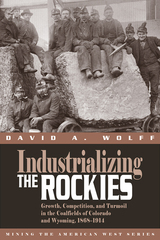
In Industrializing the Rockies, David A. Wolff places these deadly conflicts and strikes in the context of the Western coal industry from its inception in 1868 to the age of maturity in the early twentieth century. The result is the first book-length study of the emergence of coalfield labor relations and a general overview of the role of coal mining in the American West.
Wolff examines the coal companies and the owners' initial motivations for investment and how these motivations changed over time. He documents the move from speculation to stability in the commodities market, and how this was reflected in the development of companies and company towns.
Industrializing the Rockies also examines the workers and their workplaces: how the miners and laborers struggled to maintain mining as a craft and how the workforce changed, ethnically and racially, eventually leading to the emergence of a strong national union. Wolff shines light on the business of coal mining detailing the market and economic forces that influenced companies and deeply affected the lives of the workers.

Largely a victory for OECD countries, the present state of intellectual property rights has important implications for developing countries. The incorporation of intellectual property rights into the WTO system will eventually change the relationship of trade, competition, and intellectual property. It will equally have to assist in providing equitable sharing of benefits in the use of plant genetic resources. All of these issues are essential for the revision of exclusions from patenting in TRIPs. This volume offers insights into how this difficult task could and should be approached in a balanced manner and will be essential reading for economists and trade and intellectual property lawyers interested in the subject. Moreover, the volume will be relevant to agricultural economists as it addresses complex problems in the interstices of trade, intellectual property, plant genetic resources, and sustainable development.
Thomas Cottier is Professor of European and International Economic Law, University of Bern, and Managing Director, World Trade Institute, University of Bern.
Petros C. Mavroidis is Professor of Law, University of Neuchâtel. He formerly worked in the Legal Affairs Division of the World Trade Organization.
Marion Panizzon is Research Fellow, University of Bern.
Simon Lacey is Research Fellow, University of Bern.
The interest in the performance of ancient Greek poetry has grown dramatically in recent years. But the competitive dimension of Greek poetic performances, while usually assumed, has rarely been directly addressed. This study provides for the first time an in-depth examination of a central mode of Greek poetic competition—capping, which occurs when speakers or singers respond to one another in small numbers of verses, single verses, or between verse units themselves. With a wealth of descriptive and technical detail, Collins surveys the wide range of genres that incorporated capping, including tragic and comic stichomythia, lament, forms of Platonic dialectic and dialogue, the sympotic performance of elegy, skolia, and related verse games, Hellenistic bucolic, as well as the rhapsodic performance of epic. Further, he examines historical evidence for actual performances as well as literary representations of live performances to explore how the features of improvisation, riddling, and punning through verse were developed and refined in different competitive contexts.
Anyone concerned with the performance of archaic and classical Greek poetry, or with the agonistic social, cultural, and poetic gamesmanship that prompted one performer to achieve "mastery" over another, will find this authoritative volume indispensable.

Metropolitan Governance is the first book to bring together competing perspectives on the question and consequences of centralized vs. decentralized regional government. Presenting original contributions by some of the most notable names in the field of urban politics, this volume examines the organization of governments in metropolitan areas, and how that has an effect on both politics and policy.
Existing work on metropolitan governments debates the consequences of interjurisdictional competition, but neglects the role of cooperation in a decentralized system. Feiock and his contributors provide evidence that local governments successfully cooperate through a web of voluntary agreements and associations, and through collective choices of citizens. This kind of "institutional collective action" is the glue that holds institutionally fragmented communities together.
The theory of institutional collective action developed here illustrates the dynamics of decentralized governance and identifies the various ways governments cooperate and compete. Metropolitan Governance provides insight into the central role that municipal governments play in the governance of metropolitan areas. It explores the theory of institutional collective action through empirical studies of land use decisions, economic development, regional partnerships, school choice, morality issues, and boundary change—among other issues.
A one-of-a-kind, comprehensive analytical inquiry invaluable for students of political science, urban and regional planning, and public administration—as well as for scholars of urban affairs and urban politics and policymakers—Metropolitan Governance blazes new territory in the urban landscape.
Why is America losing its competitive edge in basic industries ranging from automobile manufacture to consumer electronics? The reason, Michael Best shows, is the rigid command and control structures that are typical of big business in America. America firms lack the organizational flexibility of the "new competition" practiced by companies in Italy, West Germany, and Japan. The secret to the success of these foreign firms is that they are organized from top to bottom to pursue continuous improvements in methods, products, and processes. They seek competitive advantage not through lowest-cost production but through superior product design. This requires an unusual degree of organizational flexibility, which in turn demands organizational commitments to problem solving, constant attention to detail, and an integration of thought and action in the work place.
The New Competition posits a strategic tension between market competition and cooperation in successful industrial societies. Instead of bargaining with suppliers and customers at arm's length, firms can forge consultative relations with them, facilitating the flow of valuable advice, suggestions, and information and crucially modifying a key processor design. Instead of engaging in price rivalry, companies can pursue product-related rivalries that increase their international competitiveness. Best envisions a new role for national industrial policy—one not of bailing out sick firms in dying industries but of shaping industrial sectors and markets. It would encourage firms to cooperate in terms of the form that competition takes, one that involves products instead of prices.
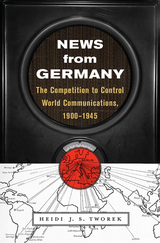
Winner of the Barclay Book Prize, German Studies Association
Winner of the Gomory Prize in Business History, American Historical Association and the Alfred P. Sloan Foundation
Winner of the Fraenkel Prize, Wiener Library for the Study of Holocaust and Genocide
Honorable Mention, European Studies Book Award, Council for European Studies
To control information is to control the world. This innovative history reveals how, across two devastating wars, Germany attempted to build a powerful communication empire—and how the Nazis manipulated the news to rise to dominance in Europe and further their global agenda.
Information warfare may seem like a new feature of our contemporary digital world. But it was just as crucial a century ago, when the great powers competed to control and expand their empires. In News from Germany, Heidi Tworek uncovers how Germans fought to regulate information at home and used the innovation of wireless technology to magnify their power abroad.
Tworek reveals how for nearly fifty years, across three different political regimes, Germany tried to control world communications—and nearly succeeded. From the turn of the twentieth century, German political and business elites worried that their British and French rivals dominated global news networks. Many Germans even blamed foreign media for Germany’s defeat in World War I. The key to the British and French advantage was their news agencies—companies whose power over the content and distribution of news was arguably greater than that wielded by Google or Facebook today. Communications networks became a crucial battleground for interwar domestic democracy and international influence everywhere from Latin America to East Asia. Imperial leaders, and their Weimar and Nazi successors, nurtured wireless technology to make news from Germany a major source of information across the globe. The Nazi mastery of global propaganda by the 1930s was built on decades of Germany’s obsession with the news.
News from Germany is not a story about Germany alone. It reveals how news became a form of international power and how communications changed the course of history.



Traditionally protected as monopolies, electric utilities are now being caught in the fervor for deregulation that is sweeping the country. Nearly forty states have enacted or are considering laws and regulations that will profoundly alter the way the electric utility industry is governed. Concerned citizens are beginning to ponder the environmental implications of such a change, and while many fear that the pressure of competition will exacerbate environmental problems, others argue that deregulation provides a tremendous opportunity for citizens to work toward promoting cleaner energy and a more sustainable way of life.
In Reinventing Electric Utilities, Ed Smeloff and Peter Asmus consider the challenges for citizens and the utility industry in this new era of competition. Through an in-depth case study of the Sacramento Municipal Utility District (SMUD), a once-troubled utility that is now widely regarded as a model for energy efficiency and renewable energy development, they explore the changes that have occurred in the utility industry, and the implications of those changes for the future. The SMUD portrait is complemented by regional case studies of Portland General Electric and the Washington Public Power Supply System, the New England Electric Service, Northern States Power, the Electricity Reliability Council of Texas, and others that highlight the efforts of citizen groups and utilities to eliminate unproductive and environmentally damaging sources of power and to promote the use of new, cleaner energy technologies.
The authors present and explain some of the fundamental principles that govern restructuring, while acknowledging that solutions will depend upon the unique resource needs, culture, and utility structure of each particular region. Smeloff and Asmus argue that any politically sustainable restructuring of the electric services industry must address the industry's high capital cost commitments and environmental burdens.
Throughout, they make the case that with creative leadership, open and competitive markets, and the active participation of citizens, this upheaval offers a unique opportunity for electric utilities to lessen the burden of electricity production on the environment and reduce the cost of electric services through the use of more competitive, cleaner power sources.
While neither technological innovation nor the magic of the market will in and of itself reinvent the electric utility industry, the influence of those dynamic forces must be understood. Reinventing Electric Utilities is an important work for policymakers, energy professionals, and anyone concerned about the future of the electric services industry.



A Financial Times Book of the Year
“The strongest documentation I have seen for the many ways in which inequality is harmful to economic growth.”
—Jason Furman
“A timely and very useful guide…Boushey assimilates a great deal of recent economic research and argues that it amounts to a paradigm shift.”
—New Yorker
Do we have to choose between equality and prosperity? Decisions made over the past fifty years have created underlying fragilities in our society that make our economy less effective in good times and less resilient to shocks, such as today’s coronavirus pandemic. Many think tackling inequality would require such heavy-handed interference that it would stifle economic growth. But a careful look at the data suggests nothing could be further from the truth—and that reducing inequality is in fact key to delivering future prosperity.
Presenting cutting-edge economics with verve, Heather Boushey shows how rising inequality is a drain on talent, ideas, and innovation, leading to a concentration of capital and a damaging under-investment in schools, infrastructure, and other public goods. We know inequality is fueling social unrest. Boushey shows persuasively that it is also a serious drag on growth.
“In this outstanding book, Heather Boushey…shows that, beyond a point, inequality damages the economy by limiting the quantity and quality of human capital and skills, blocking access to opportunity, underfunding public services, facilitating predatory rent-seeking, weakening aggregate demand, and increasing reliance on unsustainable credit.”
—Martin Wolf, Financial Times
“Think rising levels of inequality are just an inevitable outcome of our market-driven economy? Then you should read Boushey’s well-argued, well-documented explanation of why you’re wrong.”
—David Rotman, MIT Technology Review
One of the most-followed antitrust cases of recent times—United States v. Apple—reveals an often-missed truth: what Americans most fear is competition itself.
In 2012 the Department of Justice accused Apple and five book publishers of conspiring to fix ebook prices. The evidence overwhelmingly showed an unadorned price-fixing conspiracy that cost consumers hundreds of millions of dollars. Yet before, during, and after the trial millions of Americans sided with the defendants. Pundits on the left and right condemned the government for its decision to sue, decrying Amazon’s market share, railing against a new high-tech economy, and rallying to defend beloved authors and publishers. For many, Amazon was the one that should have been put on trial. But why? One fact went unrecognized and unreckoned with: in practice, Americans have long been ambivalent about competition.
Chris Sagers, a renowned antitrust expert, meticulously pulls apart the misunderstandings and exaggerations that industries as diverse as mom-and-pop grocers and producers of cast-iron sewer pipes have cited to justify colluding to forestall competition. In each of these cases, antitrust law, a time-honored vehicle to promote competition, is put on the defensive. Herein lies the real insight of United States v. Apple. If we desire competition as a policy, we must make peace with its sometimes rough consequences. As bruising as markets in their ordinary operation often seem, letting market forces play out has almost always benefited the consumer. United States v. Apple shows why supporting cases that protect price competition, even when doing so hurts some of us, is crucial if antitrust law is to protect and maintain markets.
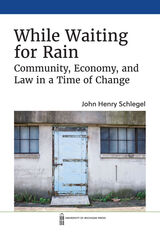
What might a sensible community choose to do if its economy has fallen apart and becoming a ghost town is not an acceptable option? Unfortunately, answers to this question have long been measured against an implicit standard: the postwar economy of the 1950s. After showing why that economy provides an implausible standard—made possible by the lack of economic competition from the European and Asian countries, winners or losers, touched by the war—John Henry Schlegel attempts to answer the question of what to do.
While Waiting for Rain first examines the economic history of the United States as well as that of Buffalo, New York: an appropriate stand-in for any city that may have seen its economy start to fall apart in the 1960s, 70s, and 80s. It makes clear that neither Buffalo nor the United States as a whole has had an economy in the sense of “a persistent market structure that is the fusion of an understanding of economic life with the patterns of behavior within the economic, political, and social institutions that enact that understanding” since both economies collapsed. Next, this book builds a plausible theory of how economic growth might take place by examining the work of the famous urbanist, Jane Jacobs, especially her book Cities and the Wealth of Nations. Her work, like that of many others, emphasizes the importance of innovation for economic growth, but is singular in its insistence that such innovation has to come from local resources. It can neither be bought nor given, even by well-intentioned political actors. As a result Americans generally, as well as locally, are like farmers in the midst of a drought, left to review their resources and wait. Finally, it returns to both the local Buffalo and the national economies to consider what these political units might plausibly do while waiting for an economy to emerge.
READERS
Browse our collection.
PUBLISHERS
See BiblioVault's publisher services.
STUDENT SERVICES
Files for college accessibility offices.
RECENTLY PUBLISHED







UChicago Accessibility Resources
home | accessibility | search | about | contact us
BiblioVault ® 2001 - 2024
The University of Chicago Press