
 A SCHOLARLY BOOK REPOSITORY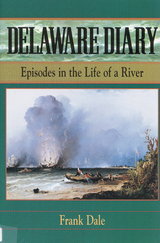
Frank Dale, who has lived near the Delaware all of his life, has burrowed into old newspaper files and archives and traced down eyewitnesses o the life of the Delaware. Rivers were the highways of choice in early America, and the Delaware presented much greater challenges than the nearby Hudson. Filled with rapid, falls, and inconvenient rocks, the river refused to accommodate itself easily to the needs of commerce. The rivermen who ventured down the Delaware on massive timber rafts or Durham boats filled with iron ore earned a deserved reputation for pure ornery courage. Later entrepreneurs tried steamboats, canals, and bridges to attempt to harness and exploit this most unexploitable river, with decidedly mixed results. In recent times, the Tocks Island Dam was defeated by a community that had come to admire the river's stubborn resistance to being conquered and harnesses to human ends. Canoeists and waterside strollers can now appreciate its unspoiled beauties.
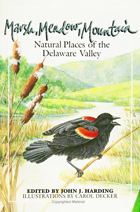
Stretching from the craggy reaches of the Pocono Mountains to the rolling farmlands of Lancaster County, Pennsylvania, sprawling east across the Delaware River basin and New Jersey’s coastal plain Atlantic beaches—here is a land of rich historical, cultural, and environmental diversity. Few other locales in the United States have as many varied habitats, each with its own distinctive vegetation and wildlife. The nature lover in the Delaware Valley can travel from ocean, across barrier-beaches, salt-water and fresh-water marshes, pine barrens, deciduous woodlands and fields, to mountains, all in a few hours.
Marsh, Meadow, Mountain, a combination tour guide and ecological primer, is written for the thousands of people in the area with an interest in natural history or for those seeking alternative recreational activities. Each chapter, written by an experienced naturalist intimately familiar with one of the seven major ecosystems, introduces the reader to the dynamic interrelationships in nature, the interactions between a particular habitat and its inhabitants, and its plants and wildlife. Over 135 locations are described including the Pocono Mountains, the Pine Barrens, Stone Harbor, Delaware Water Gap National Recreation Area, Ridley Creek State Park, Tyler Arboretum, and Tinicum National Environmental Center, which in any season can provide fascinating viewing opportunities depending upon your interests. Each site also includes addresses, directions, trail maps, artistic drawings, and a suggested reading list.
Marsh, Meadow, Mountain conveys both a sense of fun and learning and, ultimately, will instill in the reader a special intimacy with the Delaware Valley’s precious wild places.

READERS
Browse our collection.
PUBLISHERS
See BiblioVault's publisher services.
STUDENT SERVICES
Files for college accessibility offices.
RECENTLY PUBLISHED







UChicago Accessibility Resources
home | accessibility | search | about | contact us
BiblioVault ® 2001 - 2026
The University of Chicago Press