
 A SCHOLARLY BOOK REPOSITORY
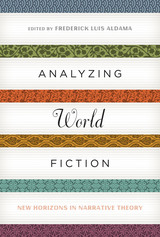
Why are many readers drawn to stories that texture ethnic experiences and identities other than their own? How do authors such as Salman Rushdie and Maxine Hong Kingston, or filmmakers in Bollywood or Mexico City produce complex fiction that satisfies audiences worldwide? In Analyzing World Fiction, fifteen renowned luminaries use tools of narratology and insights from cognitive science and neurobiology to provide answers to these questions and more.
With essays ranging from James Phelan's "Voice, Politics, and Judgments in Their Eyes Were Watching God" and Hilary Dannenberg's "Narrating Multiculturalism in British Media: Voice and Cultural Identity in Television" to Ellen McCracken's exploration of paratextual strategies in Chicana literature, this expansive collection turns the tide on approaches to postcolonial and multicultural phenomena that tend to compress author and narrator, text and real life. Striving to celebrate the art of fiction, the voices in this anthology explore the "ingredients" that make for powerful, universally intriguing, deeply human story-weaving.
Systematically synthesizing the tools of narrative theory along with findings from the brain sciences to analyze multicultural and postcolonial film, literature, and television, the contributors pioneer new techniques for appreciating all facets of the wonder of storytelling.
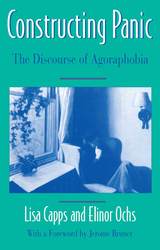
Meg Logan has not been farther than two miles from home in six years. She has agoraphobia, a debilitating anxiety disorder that entraps its sufferers in the fear of leaving safe havens such as home. Paradoxically, while at this safe haven, agoraphobics spend much of their time ruminating over past panic experiences and imagining similar hypothetical situations. In doing so, they create a narrative that both describes their experience and locks them into it.
Constructing Panic offers an unprecedented analysis of one patient's experience of agoraphobia. In this novel interdisciplinary collaboration between a clinical psychologist and a linguist, the authors probe Meg's stories for constructions of emotions, actions, and events. They illustrate how Meg uses grammar and narrative structure to create and recreate emotional experiences that maintain her agoraphobic identity.
In this work Capps and Ochs propose a startling new view of agoraphobia as a communicative disorder. Constructing Panic opens up the largely overlooked potential for linguistic and narrative analysis by revealing the roots of panic and by offering a unique framework for therapeutic intervention. Readers will find in these pages hope for managing panic through careful attention to how we tell the story of our lives.

Examining Ali Smith’s The Accidental and Hotel World, Barbara Kingsolver’s The Poisonwood Bible, Toni Morrison’s Beloved, Kate Atkinson’s A God in Ruins and Life After Life, and Ruth Ozeki’s A Tale for the Time Being, Weese demonstrates how various narratological theories inform rather than compete with one another. Through an expanded rhetorical poetics, including a refined version of James Phelan’s MTS (mimetic, thematic, synthetic) model, she reframes post-postmodern theorists’ concerns with communicative function through a narratological lens to make the case that exploring the rhetorical function of unnatural devices challenges and extends the claims of narrow metamodern readings.
The essays included in this collection seek to take the pulse of recent developments in narratological research in the French-speaking countries. Theorists in these countries heavily participated in and shaped narratology, an outgrowth of the structuralist movement during the 1960s and 1970s. While US, German, and Scandinavian theorists took the forefront in the 1990s, narratology in France faded into the background. It was not until the turn of the century that a new interest in narratological issues among French researchers emerged. Activity in the field has since intensified, spurred on, in part, by the realization that narratology cannot be summed up by its formalist and structuralist origins.
Well-versed in French narrative theory, both classical and more recent, the authors in this collection also draw on scholarship coming from other research traditions. The result is that these contributions offer a number of syntheses and perspectives representative of recent French-language scholarship in the field that readers may not be familiar with or that provide them with further insight into subjects they may have encountered in other contexts. This volume will leave readers with a greater awareness of the directions taken by present-day French-language narratology as well as new and developing themes in narrative theory generally.
Contributors
Raphaël Baroni, Denis Bertrand, Olivier Caïra, Claude Calame, Benoît Hennaut, Françoise Lavocat, Sylvie Patron, John Pier, Françoise Revaz, and Richard Saint-Gelais

Critical Practices in Post-Franco Spain was first published in 1994. Minnesota Archive Editions uses digital technology to make long-unavailable books once again accessible, and are published unaltered from the original University of Minnesota Press editions.
This volume offers a sample of Spanish critical work in literary theory and cultural studies. Like all critical histories, Spain's is political: Philology dominated the critical scene during the Franco years, and after Franco, this hegemony has been contested by semiotics, poststructuralism, psychoanalysis, and feminisms. Without trying to represent all the theoretical projects presently underway in Spanish criticism, this book opens a window on the vast field of new critical practices in Spain and provides a general picture of influential theoretical currents.
The essays collected here range widely in topic and style, and they reflect a new generation's preoccupation with critical problems that go beyond the field of literary studies. The authors focus on new discourse in various print and electronic media, on the discursive construction of the museum space, and on literary theory as it confronts issues of translation, subjectivity, writing, and narratology.Silvia López is assistant professor of Spanish at Carlton Collegea doctoral candidate in the departments of cultural studies and comparative literature at the University of Minnesota. Jenaro Talens is professor of Hispanic literature and comparative literature at the University of Geneva. He is the author of The Branded Eye: Buñuel's Un Chien Andalou, (Minnesota 1993). Darío Villanueva is professor of theory of literature at the University of Santiago de Compostela, Spain.

What we don't know about learning could fill a book--and it might be a schoolbook. In a masterly commentary on the possibilities of education, the eminent psychologist Jerome Bruner reveals how education can usher children into their culture, though it often fails to do so. Applying the newly emerging "cultural psychology" to education, Bruner proposes that the mind reaches its full potential only through participation in the culture--not just its more formal arts and sciences, but its ways of perceiving, thinking, feeling, and carrying out discourse. By examining both educational practice and educational theory, Bruner explores new and rich ways of approaching many of the classical problems that perplex educators.
Education, Bruner reminds us, cannot be reduced to mere information processing, sorting knowledge into categories. Its objective is to help learners construct meanings, not simply to manage information. Meaning making requires an understanding of the ways of one's culture--whether the subject in question is social studies, literature, or science. The Culture of Education makes a forceful case for the importance of narrative as an instrument of meaning making. An embodiment of culture, narrative permits us to understand the present, the past, and the humanly possible in a uniquely human way.
Going well beyond his earlier acclaimed books on education, Bruner looks past the issue of achieving individual competence to the question of how education equips individuals to participate in the culture on which life and livelihood depend. Educators, psychologists, and students of mind and culture will find in this volume an unsettling criticism that challenges our current conventional practices--as well as a wise vision that charts a direction for the future.
Clark and Phelan’s deep dive into the synthetic, mimetic, and thematic leads them to explore many other aspects of narrative and narrative theory: style, audiences, the mimetic illusion, fictionality, and more. Their investigation also leads them into questions about rhetorical narratology’s relation to other projects in narrative theory, especially unnatural narratology, and, indeed, about how to assess the explanatory power of competing theories. Ultimately, their debate is compelling testimony about the power of both narrative theory and narrative itself.
Impasse of the Angels explores what it means to be a subject in the historical and poetic imagination of a southern Moroccan society. Passionate and lyrical, ironic and tragic, the book listens to dissonant, often idiosyncratic voices—poetic texts, legends, social spaces, folktales, conversations—which elaborate in their own ways the fractures, wounds, and contradictions of the Maghribî postcolonial present. Moving from concrete details in a traditional ethnographic sense to a creative, experiential literary style, Impasse of the Angels is a tale of life and death compellingly addressing readers from anthropology, literature, philosophy, postcolonial criticism, and Middle Eastern studies.
Ellen Basso's new study of these stories considers their relationship to other kinds of Kalapalo activities involving deception and features a unique collection of South American Indian narratives translated directly from performances by master storytellers in their original Carib language. Combining an ethnopoetic, performance-focused approach to storytelling with an action-oriented psychology, Basso arrives at an ethnographic understanding of Kalapalo trickster myths and Kalapalo ideas about deception.
The commentary on the translations considers matters of theme, discourse, narrative progression, and performance context. The dialogical, interactive nature of Kalapalo storytelling, the development of characters through their conversations with one another, and the many ways storytelling and ordinary life enrich one another are examined to reveal the complex psychology of trickster myths and the special tricksterish quality of day-to-day Kalapalo behavior.
An especially comprehensive study of Brazilian Amazonian Indian history, The Last Cannibals is the first attempt to understand, through indigenous discourse, the emergence of Upper Xingú society. Drawing on oral documents recorded directly from the native language, Ellen Basso transcribes and analyzes nine traditional Kalapalo stories to offer important insights into Kalapalo historical knowledge and the performance of historical narratives within their nonliterate society.
This engaging book challenges the familiar view of biography as a strictly Western literary form. Of special interest are biographies of powerful warriors whose actions led to the emergence of a more recent social order based on restrained behaviors from an earlier time when people were said to be fierce and violent.
From these stories, Basso explores how the Kalapalo remember and understand their past and what specific linguistic, psychological, and ideological materials they employ to construct their historical consciousness. Her book will be important reading in anthropology, folklore, linguistics, and South American studies.
Stories accompany us through life from birth to death. But they do not merely entertain, inform, or distress us—they show us what counts as right or wrong and teach us who we are and who we can imagine being. Stories connect people, but they can also disconnect, creating boundaries between people and justifying violence. In Letting Stories Breathe, Arthur W. Frank grapples with this fundamental aspect of our lives, offering both a theory of how stories shape us and a useful method for analyzing them. Along the way he also tells stories: from folktales to research interviews to remembrances.
Frank’s unique approach uses literary concepts to ask social scientific questions: how do stories make life good and when do they endanger it? Going beyond theory, he presents a thorough introduction to dialogical narrative analysis, analyzing modes of interpretation, providing specific questions to start analysis, and describing different forms analysis can take. Building on his renowned work exploring the relationship between narrative and illness, Letting Stories Breathe expands Frank’s horizons further, offering a compelling perspective on how stories affect human lives.
This pathbreaking book looks at everyday storytelling as a twofold phenomenon—a response to our desire for coherence, but also to our need to probe and acknowledge the enigmatic aspects of experience. Letting us listen in on dinner-table conversation, prayer, and gossip, Elinor Ochs and Lisa Capps develop a way of understanding the seemingly contradictory nature of everyday narrative—as a genre that is not necessarily homogeneous and as an activity that is not always consistent but consistently serves our need to create selves and communities.
Focusing on the ways in which narrative is co-constructed, and on the variety of moral stances embodied in conversation, the authors draw out the instructive inconsistencies of these collaborative narratives, whose contents and ordering are subject to dispute, flux, and discovery. In an eloquent last chapter, written as Capps was waging her final battle with cancer, they turn to “unfinished narratives,” those stories that will never have a comprehensible end. With a hybrid perspective—part humanities, part social science—their book captures these complexities and fathoms the intricate and potent narratives that live within and among us.
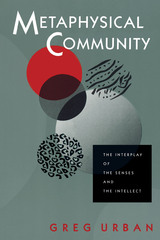
Winner, Senior Book Prize, American Ethnological Society
Starting with the post-structuralist idea that truth systems are lodged in discourse, and that discourse varies from society to society, Greg Urban seeks to discover the nature and extent of that variation. His journey to an Amerindian society in which dreams are more prominent than everyday aspects of the sensible world leads him to radically reformulate one of the main problematics of Western thought: the relationship between our sensations of the world and the understandings we form of them.
Metaphysical Community proposes that this dichotomy comes from the interplay between two sides of discourse-its intelligible side as a carrier of meanings, and its sensible side as thing-in-the-world that must be replicated. This insight leads to the heart of the book-the exploration of the uneasy tension that binds experience and understanding, phenomena and noumena.
Urban challenges basic assumptions that underlie social and cultural anthropology and much of the social sciences and humanities. His provocative insights will be of interest to all those concerned with anthropology, cultural studies, literary criticism, the sociology and politics of culture, and philosophy.
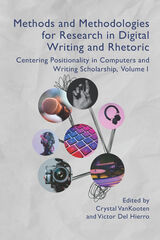
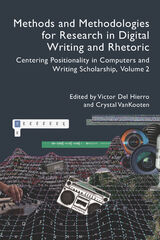
Methods and Methodologies explores how researchers theorize, design, enact, reflect on, and revise digital writing research. The contributors to the two volumes of this edited collection explore how digital technologies can be used to solve problems, challenge the status quo, and address inequities. In some cases, they do so by using familiar digital technologies in novel ways. In other cases, they explain the use of relatively new or less familiar technologies such as digital mapping apps, Twitter bots, audio-visual captions, and computer programming code. By reflecting on the lessons that emerged from their work—and in particular on their own positionality—the authors provide methodological narratives that are personal, professional, and individual yet foundational. By combining attention to human positionality and digital technology, Methods and Methodologies addresses important social issues and questions related to writing and rhetoric.
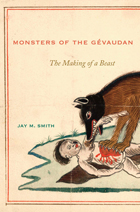
In a brilliant, original rendition, Monsters of the Gévaudan revisits a spellbinding French tale that has captivated imaginations for over two hundred years, and offers the definitive explanation of the strange events that underlie this timeless story.
In 1764 a peasant girl was killed and partially eaten while tending a flock of sheep. Eventually, over a hundred victims fell prey to a mysterious creature, or creatures, whose cunning and deadly efficiency terrorized the region and mesmerized Europe. The fearsome aggressor quickly took on mythic status, and the beast of the Gévaudan passed into French folklore.
What species was this killer, why did it decapitate so many of its victims, and why did it prefer the flesh of women and children? Why did contemporaries assume that the beast was anything but a wolf, or a pack of wolves, as authorities eventually claimed, and why is the tale so often ignored in histories of the ancien régime? Smith finds the answer to these last two questions in an accident of timing. The beast was bound to be perceived as strange and anomalous because its ravages coincided with the emergence of modernity itself.
Expertly situated within the social, intellectual, cultural, and political currents of French life in the 1760s, Monsters of the Gévaudan will engage a wide range of readers with both its recasting of the beast narrative and its compelling insights into the allure of the monstrous in historical memory.
Narrative as Communication is the first major treatise on narrative and narrative theory to make use of all the analytic tools developed in the twenty years. Intended as an up-to-date introduction, it carefully defines narrative discourse, distinguishing it from other discourses, and analyzes what it entails by referring to numerous examples spanning a wide range of media and literary works. At the same time, it orients narrative theory in the current debates surrounding the “New Historicism” and postmodern ideology, showing that theories of narrative are necessarily central to any understanding of history.
Not restricted to any single genre, Coste’s text emphasizes the production of narrative meaning in diverse contexts: The Epic of Gilgamesh, a John Ford film classic, French American, and Spanish new fiction, Dante, Shakespeare, the pastoral, the fairy tale, The Communist Manifesto, Prescott’s History of the Conquest of Peru, a painting by Gustave Moreau. Coste thoroughly and critically examines the usual concepts of voice, character, point of view and narrative syntax, and he develops radical revisions in the notion of fictionality, character, narrative economy and the function of narrative meaning itself. The book is a remarkable synthesis that will likely become a reference for future studies in narratology.
Assuming no prior knowledge of literary theory, Roe introduces the theoretical concepts and terminology from literary analysis through an examination of the budget crises of national governments. With a focus on several particularly intractable issues in the areas of the environment, science, and technology, he then develops the methodology of narrative policy analysis by showing how conflicting policy "stories" often tell a more policy-relevant meta-narrative. He shows the advantage of this approach to reading and analyzing stories by examining the ways in which the views of participants unfold and are told in representative case studies involving the California Medfly crisis, toxic irrigation in the San Joaquin Valley, global warming, animal rights, the controversy over the burial remains of Native Americans, and Third World development strategies.
Presenting a bold innovation in the interdisciplinary methodology of the policy sciences, Narrative Policy Analysis brings the social sciences and humanities together to better address real-world problems of public policy—particularly those issues characterized by extreme uncertainty, complexity, and polarization—which, if not more effectively managed now, will plague us well into the next century.
This volume, edited by Raphaël Baroni and Françoise Revaz, includes contributions from some of the most influential scholars in narrative studies: Alain Boillat, Peter Hühn, Emma Kafalenos, Franco Passalacqua, James Phelan, Federico Pianzola, John Pier, Gerald Prince, Brian Richardson, Marie-Laure Ryan, Eyal Segal, and Michael Toolan. Essays range in focus from musical narrativity and rhetorical narrative theory to comic strips and re-examinations of classical and postclassical narratology. All of the essays contribute fresh understandings of foundational concepts in the field of narratology.
Through twenty-one essays prefaced by a cogent history of the field, Narrative Theory Unbound offers new perspectives on narrative discourse and its constituent elements; on intersectional approaches that recognize race, religion, and national culture as integral to understanding sexuality and gender; on queer temporalities; on cognitive research; and on lifewriting in graphic, print, and digital constellations. Exploring genres ranging from reality TV to fairy tales to classical fiction, contributors explore the thorny, contested relationships between feminist and queer theory, on the one hand, and between feminist/queer theory and contemporary narratologies, on the other. Rather than aiming for cohesiveness or conclusiveness, the collection stages open-ended debates designed to unbind the assumptions that have kept gender and sexuality on the periphery of narrative theory.


The two case studies included in this book (dealing with the Football World Cups of 1994 and 2002, and the general elections of 1996 and 2000) examine competing discourses of Spain, Catalonia and their national identities, as constructed in the Spanish press. The conservative discourse offers traditional and unified images of Spain close to the stereotype, whereas more liberal visions of the country regard 'Europeanism' and 'reason' (not 'passive') as the values Spain should aspire to. From a peripheral perspective, Catalan self-definition is of a people that is hardworking, thoughtful, truly European, and different from the rest of the Spaniards.
However, these differences between the discourses are not always so clear-cut. Central to Negotiating Spain and Catalonia is the idea of the constant renegotiation of Spanish and Catalan identities in order to adapt them to the political circumstance: both case studies show how radically different narratives of Spanishness and Catalanicity offered in the turbulent political past tend to merge into the more tranquil present.



Shifting Stories explores the tale literature of eighth- and ninth-century China to show how the written tales we have today grew out of a fluid culture of hearsay that circulated within elite society. Sarah M. Allen focuses on two main types of tales, those based in gossip about recognizable public figures and those developed out of lore concerning the occult. She demonstrates how writers borrowed and adapted stories and plots already in circulation and how they transformed them—in some instances into unique and artfully wrought tales.
For most readers of that era, tales remained open texts, subject to revision by many hands over the course of transmission, unconstrained by considerations of textual integrity or authorship. Only in the mid- to late-ninth century did some readers and editors come to see the particular wording and authorship of a tale as important, a shift that ultimately led to the formation of the Tang tale canon as it is envisioned today.
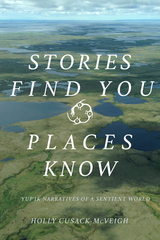
For the Yup’ik people, places are also social actors that react to human actions and emotions. Stories tell how people learn about each other through encounters on the land, and thereby places also learn about people. Places comment on human behavior through the land's responses to specific actions. Stories variously reveal ideas about human associations and relationships between humans and nonhuman beings. Pointing to a systematic correlation between places and narrative elements that has not been previously explored, this volume makes a unique contribution to the literature on place.
Winner of the Brian McConnell Book Award from the International Society for Contemporary Legend Research.
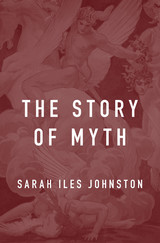
Greek myths have long been admired as beautiful, thrilling stories but dismissed as serious objects of belief. For centuries scholars have held that Greek epics, tragedies, and the other compelling works handed down to us obscure the “real” myths that supposedly inspired them. Instead of joining in this pursuit of hidden meanings, Sarah Iles Johnston argues that the very nature of myths as stories—as gripping tales starring vivid characters—enabled them to do their most important work: to create and sustain belief in the gods and heroes who formed the basis of Greek religion.
By drawing on work in narratology, sociology, and folklore studies, and by comparing Greek myths not only to the myths of other cultures but also to fairy tales, ghost stories, fantasy works, modern novels, and television series, The Story of Myth reveals the subtle yet powerful ways in which these ancient Greek tales forged enduring bonds between their characters and their audiences, created coherent story-worlds, and made it possible to believe in extraordinary gods. Johnston captures what makes Greek myths distinctively Greek, but simultaneously brings these myths into a broader conversation about how the stories told by all cultures affect our shared view of the cosmos and the creatures who inhabit it.
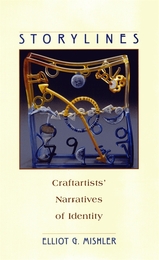
What do we mean when we refer to our “identity,” and how do we represent it in the stories we tell about our lives? Is “identity” a sustained private core, or does it change as circumstances and relationships shift? In this thoughtful and learned book, a recognized master of research interviewing explores these questions through analyses of in-depth interviews with five craftartists, who reflect on their lives and their efforts to sustain their form of work as committed artists in a world of mass production and standardization.
The artists describe their families of origin and the families they have created, and the conscious decisions, chance events, and life experiences that entered into the ways they achieved their adult artistic identities. Exploring these continuities, discontinuities, and unresolvable tensions in an analysis that brings new sophistication to a much-used term, Elliot Mishler suggests that “identity” is always dialogic and relational, a complex of partial subidentities rather than a unitary monad. More a verb than a noun, it reflects an individual’s modes of adaptation, appropriation, and resistance to sociocultural plots and roles.
With its critical review of narrative research methods, model of analysis for the systematic study of life stories and identity, and vision of how narrative studies may contribute to theory and research in the social sciences, Storylines is an eloquent and important book for narrative psychology and lifespan development.
Narratives are fundamental to our lives: we dream, plan, complain, endorse, entertain, teach, learn, and reminisce through telling stories. They provide hopes, enhance or mitigate disappointments, challenge or support moral order and test out theories of the world at both personal and communal levels. It is because of this deep embedding of narrative in everyday life that its study has become a wide research field including disciplines as diverse as linguistics, literary theory, folklore, clinical psychology, cognitive and developmental psychology, anthropology, sociology, and history.
In Telling Stories leading scholars illustrate how narratives build bridges among language, identity, interaction, society, and culture; and they investigate various settings such as therapeutic and medical encounters, educational environments, politics, media, marketing, and public relations. They analyze a variety of topics from the narrative construction of self and identity to the telling of stories in different media and the roles that small and big life stories play in everyday social interactions and institutions. These new reflections on the theory and analysis of narrative offer the latest tools to researchers in the fields of discourse analysis and sociolinguistics.
In this pathfinding study, Suzanne Fleischman brings together theory and methodology from various quarters to shed important new light on the linguistic structure of narrative, a primary and universal device for translating our experiences into language.
Fleischman sees linguistics as laying the foundation for all narratological study, since it offers insight into how narratives are constructed in their most primary context: everyday speech. She uses a linguistic model designed for "natural" narrative to explicate the organizational structure of "artificial" narrative texts, primarily from the Middle Ages and the postmodern period, whose seemingly idiosyncratic use of tenses has long perplexed those who study them. Fleischman develops a functional theory of tense and aspect in narrative that accounts for the wide variety of functions—pragmatic as well as grammatical—that these two categories of grammar are called upon to perform in the linguistic economy of a narration.
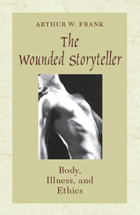
Ill people are more than victims of disease or patients of medicine; they are wounded storytellers. People tell stories to make sense of their suffering; when they turn their diseases into stories, they find healing.
Drawing on the work of authors such as Oliver Sacks, Anatole Broyard, Norman Cousins, and Audre Lorde, as well as from people he met during the years he spent among different illness groups, Frank recounts a stirring collection of illness stories, ranging from the well-known—Gilda Radner's battle with ovarian cancer—to the private testimonials of people with cancer, chronic fatigue syndrome, and disabilties. Their stories are more than accounts of personal suffering: they abound with moral choices and point to a social ethic.
Frank identifies three basic narratives of illness in restitution, chaos, and quest. Restitution narratives anticipate getting well again and give prominence to the technology of cure. In chaos narratives, illness seems to stretch on forever, with no respite or redeeming insights. Quest narratives are about finding that insight as illness is transformed into a means for the ill person to become someone new.
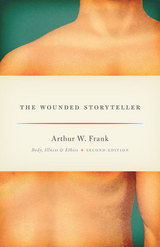
Drawing on the work of authors such as Oliver Sacks, Anatole Broyard, Norman Cousins, and Audre Lorde, as well as from people he met during the years he spent among different illness groups, Frank recounts a stirring collection of illness stories, ranging from the well-known—Gilda Radner's battle with ovarian cancer—to the private testimonials of people with cancer, chronic fatigue syndrome, and disabilities. Their stories are more than accounts of personal suffering: they abound with moral choices and point to a social ethic.
In this new edition Frank adds a preface describing the personal and cultural times when the first edition was written. His new afterword extends the book’s argument significantly, writing about storytelling and experience, other modes of illness narration, and a version of hope that is both realistic and aspirational. Reflecting on both his own life during the creation of the first edition and the conclusions of the book itself, Frank reminds us of the power of storytelling as way to understanding our own suffering.
READERS
Browse our collection.
PUBLISHERS
See BiblioVault's publisher services.
STUDENT SERVICES
Files for college accessibility offices.
RECENTLY PUBLISHED




UChicago Accessibility Resources
home | accessibility | search | about | contact us
BiblioVault ® 2001 - 2025
The University of Chicago Press