
 A SCHOLARLY BOOK REPOSITORY
7 start with A start with A

These are the questions that drive Wendy Simonds' Abortion at Work. Simonds documents the ways in which workers at a feminist clinic construct compelling feminist visions, and also watch their ideals fall short in practice. Simonds interprets these women's narratives to get at how abortion works on feminism, and to show what feminism can gain by rethinking abortion utilizing these activists' terms. In thoroughly engaging prose, Simonds frames her analysis with a moving account of her own personal understanding of the issues.
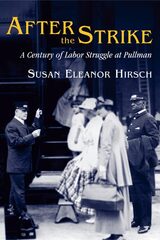
The 1894 Pullman strike and the rise of the Brotherhood of Sleeping Car Porters played major roles in the century-long development of union organizing and labor-management relations in the Pullman Company. Susan Eleanor Hirsch connects the stories of Pullman car builders and porters to answer critical questions like: what created job segregation by race and gender? What role did such segregation play in shaping the labor movement?
Hirsch illuminates the relationship between labor organizing and the racial and sexual discrimination practiced by both employers and unions. Because the Pullman Company ran the sleeping-car service for American railroads and was a major manufacturer of railcars, its workers were involved in virtually every wave of union organizing from the 1890s to the 1940s.
In exploring the years of struggle by the men and women of the Pullman Company, After the Strike reveals the factors that determined the limited success and narrow vision of most American unions.
Robert W. Kaps examines air transport labor law in the United States as well as the underlying legislative and policy directives established by the federal government. The body of legislation governing labor relations in the private sector of the U.S. economy consists of two separate and distinct acts: the Railway Labor Act (RLA), which governs labor relations in the railroad and airline industries, and the National Labor Relations Act (NLRA), which governs labor relations in all other industrial sectors.
Although the NLRA closely follows the pattern established by the RLA, Kaps notes that the two laws are distinguishable in several important areas. Labor contracts negotiated under the RLA continue in perpetuity, for example, whereas all other labor contracts expire at a specified date. Other important areas of difference relate to the collective bargaining process itself, the procedures for the arbitration of disputes and grievances, and the spheres of authority and jurisdiction to consider such matters as unfair labor practices.
Congress established a special labor law for railroad and airline workers for several reasons. Because of transportation’s critical importance to the economy, an essential goal of public policy has been to ensure that both passenger and freight transportation services continue without interruption. Production can cease—at least temporarily—in most other industries without causing significant harm to the economy. When transportation stops, however, production stops. Thus Congress saw fit to enact a statute that contained provisions to ensure that labor strife would not halt rail services. Primarily because of the importance of air mail transportation, the Railway Labor Act of 1926 was extended to the airline industry in 1936.
The first section of this book introduces labor policy and presents a history of the labor movement in the United States. Discussing early labor legislation, Kaps focuses on unfair labor practices and subsequent major labor statutes.
The second section provides readers with a comparison of labor provisions that apply to the railroad and airline industries as well as to the remainder of the economy.
The final section centers on the evolution of labor in the airline industry. The author pays particular attention to recent events affecting labor in commercial aviation, particularly the effect of airline deregulation on airline labor.

The spread of empires in the nineteenth century brought more than new territories and populations under Western sway. Animals were also swept up in the net of imperialism, as jungles and veldts became colonial ranches and plantations. A booming trade in animals turned many strange and dangerous species into prized commodities. Tigers from India, pythons from Malaya, and gorillas from the Congo found their way—sometimes by shady means—to the zoos of major U.S. cities, where they created a sensation.
Zoos were among the most popular attractions in the United States for much of the twentieth century. Stoking the public’s fascination, savvy zookeepers, animal traders, and zoo directors regaled visitors with stories of the fierce behavior of these creatures in their native habitats, as well as daring tales of their capture. Yet as tropical animals became increasingly familiar to the American public, they became ever more rare in the wild. Tracing the history of U.S. zoos and the global trade and trafficking in animals that supplied them, Daniel Bender examines how Americans learned to view faraway places and peoples through the lens of the exotic creatures on display.
Over time, as the zoo’s mission shifted from offering entertainment to providing a refuge for endangered species, conservation parks replaced pens and cages. The Animal Game recounts Americans’ ongoing, often conflicted relationship with zoos, decried as anachronistic prisons by animal rights activists even as they remain popular centers of education and preservation.

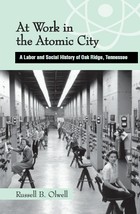
At Work in the Atomic City explores the world of those workers and their efforts to form unions, create a community, and gain political rights over their city. It follows them from their arrival at Oak Ridge, to the places where they lived, and to their experiences in a dangerous and secretive workplace. Lured by promises of housing, plentiful work, and schooling for their children, they were often exposed to dangerous levels of radioactivity, harmful chemicals, and other hazards. Although scientists and doctors intended to protect workers, the pressure to produce materials for the bomb often overrode safety considerations. After the war, as the military sought to reduce services and jobs in Oak Ridge, workers organized unions at two plants to demand higher wages and job security. However, the new Taft-Hartley Act limited defense workers’ ability to strike and thus curbed union influence.
The book examines the ongoing debates over workers’ rights at Oak Ridge—notably the controversy surrounding the new federal program intended to compensate workers and their families for injuries sustained on the job. Because of faulty record keeping at the facilities and confusion over exposure levels, many have been denied payment to this day.
Drawing on extensive research into oral history collections, transcripts of government proceedings, and other primary sources, At Work in the Atomic City is the first detailed account of the workers who built and labored in the facilities that helped ensure the success of the Manhattan Project—a story known, heretofore, only in broad outline.
Russell Olwell, an assistant professor of history at Eastern Michigan University, has published articles in ISIS, Tennessee Historical Quarterly, and Technology and Culture.
READERS
Browse our collection.
PUBLISHERS
See BiblioVault's publisher services.
STUDENT SERVICES
Files for college accessibility offices.
RECENTLY PUBLISHED





UChicago Accessibility Resources
home | accessibility | search | about | contact us
BiblioVault ® 2001 - 2024
The University of Chicago Press