
 A SCHOLARLY BOOK REPOSITORY
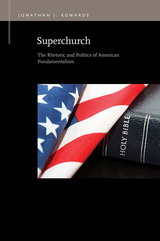
Luke Winslow introduces the rhetorical homology as a critical tool useful for understanding how catastrophic appeals unite Americans across disparate religious, ecological, cultural, and political spheres. More specifically, the four case study chapters examining Christian fundamentalism, anti-environmentalism, gun rights messaging, and the administration of Donald Trump reveal a consistent formal pattern oriented toward catastrophe. In teasing out this orientation toward catastrophe, Winslow offers a fresh, provocative, and insightful contribution to our most pressing social challenges.
American evangelicalism often appears as a politically monolithic, textbook red-state fundamentalism that elected George W. Bush, opposes gay marriage, abortion, and evolution, and promotes apathy about global warming. Prominent public figures hold forth on these topics, speaking with great authority for millions of followers. Authors Stephens and Giberson, with roots in the evangelical tradition, argue that this popular impression understates the diversity within evangelicalism—an often insular world where serious disagreements are invisible to secular and religiously liberal media consumers. Yet, in the face of this diversity, why do so many people follow leaders with dubious credentials when they have other options? Why do tens of millions of Americans prefer to get their science from Ken Ham, founder of the creationist Answers in Genesis, who has no scientific expertise, rather than from his fellow evangelical Francis Collins, current Director of the National Institutes of Health?
Exploring intellectual authority within evangelicalism, the authors reveal how America’s populist ideals, anti-intellectualism, and religious free market, along with the concept of anointing—being chosen by God to speak for him like the biblical prophets—established a conservative evangelical leadership isolated from the world of secular arts and sciences.
Today, charismatic and media-savvy creationists, historians, psychologists, and biblical exegetes continue to receive more funding and airtime than their more qualified counterparts. Though a growing minority of evangelicals engage with contemporary scholarship, the community’s authority structure still encourages the “anointed” to assume positions of leadership.
"A penetrating analysis of the Christian Right's antigay agenda and of how that agenda is derived from the Christian Right's peculiar vision of American history and the Christian faith."—Rev. Peter J. Gomes, Boston Book Review
"Public intellectualism at its best. . . . A comprehensive summary of the conservative Protestant worldview."—Michael Joseph Gross, Boston Phoenix Literary Section
"Presents considerable information not previously part of the nation's political discourse. . . . [Herman] dissects the Christian Right's antigay stance dispassionately giving, as it were, the devil his due. For anyone on either side of this passionate and important conflict, that is an impressive accomplishment."—Hastings Wyman, Jr., Washington Post Book World

Since 1979 Southern Baptists have been noisily struggling to agree on symbols, beliefs, and practices as they attempt to make sense of their changing social world. Nancy Ammerman has carefully documented their struggle. She tells the story of the Baptist reversal from a moderate to a fundamentalist outlook and speculates on the future of the denomination.
Ammerman places change among the Southern Baptists in the context of the cultural and economic changes that have transformed the South from its rural past into an urbanizing, culturally diverse region. Not only did the South change; Southern Baptists did as well. Reflecting this diversity, the Southern Baptist bureaucracy was relatively progressive. During the 1960s and 1970s, moderate sentiments prevailed, while fundamentalists remained on the margins. These two were, however, becoming increasingly divergent in what they considered important about being a Baptist, in their views about the Bible, in their attitudes on the origination of women, on Christian morals, and on national politics.
Late in the 1970s, a fundamentalist coalition emerged, followed by unsuccessful efforts by moderates to oppose it. The battles escalated until 1985, when 45,000 Baptists gathered in Dallas to decide between contending presidential candidates. That dramatic event illustrated the extent to which organized political resources were determining the course of the conflict. Ammerman studies these strategies and resources as well.
Examining how this tension affected Baptists, Ammerman begins with case studies of the change it is producing in Baptist agencies. But she also brings us back to the local churches and individual believers who are renegotiating their relationships within their denomination. She asks whether the denomination’s polity can accommodate an increasingly diverse group of Baptists, of whether the only way dissidents can have a voice is through schism.
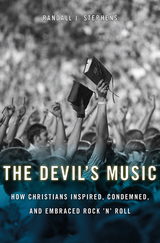
When rock ’n’ roll emerged in the 1950s, ministers denounced it from their pulpits and Sunday school teachers warned of the music’s demonic origins. The big beat, said Billy Graham, was “ever working in the world for evil.” Yet by the early 2000s Christian rock had become a billion-dollar industry. The Devil’s Music tells the story of this transformation.
Rock’s origins lie in part with the energetic Southern Pentecostal churches where Elvis, Little Richard, James Brown, and other pioneers of the genre worshipped as children. Randall J. Stephens shows that the music, styles, and ideas of tongue-speaking churches powerfully influenced these early performers. As rock ’n’ roll’s popularity grew, white preachers tried to distance their flock from this “blasphemous jungle music,” with little success. By the 1960s, Christian leaders feared the Beatles really were more popular than Jesus, as John Lennon claimed.
Stephens argues that in the early days of rock ’n’ roll, faith served as a vehicle for whites’ racial fears. A decade later, evangelical Christians were at odds with the counterculture and the antiwar movement. By associating the music of blacks and hippies with godlessness, believers used their faith to justify racism and conservative politics. But in a reversal of strategy in the early 1970s, the same evangelicals embraced Christian rock as a way to express Jesus’s message within their own religious community and project it into a secular world. In Stephens’s compelling narrative, the result was a powerful fusion of conservatism and popular culture whose effects are still felt today.
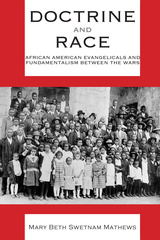
By presenting African American Protestantism in the context of white Protestant fundamentalism, Doctrine and Race: African American Evangelicals and Fundamentalism between the Wars demonstrates that African American Protestants were acutely aware of the manner in which white Christianity operated and how they could use that knowledge to justify social change. Mary Beth Swetnam Mathews’s study scrutinizes how white fundamentalists wrote blacks out of their definition of fundamentalism and how blacks constructed a definition of Christianity that had, at its core, an intrinsic belief in racial equality. In doing so, this volume challenges the prevailing scholarly argument that fundamentalism was either a doctrinal debate or an antimodernist force. Instead, it was a constantly shifting set of priorities for different groups at different times.
A number of African American theologians and clergy identified with many of the doctrinal tenets of the fundamentalism of their white counterparts, but African Americans were excluded from full fellowship with the fundamentalists because of their race. Moreover, these scholars and pastors did not limit themselves to traditional evangelical doctrine but embraced progressive theological concepts, such as the Social Gospel, to help them achieve racial equality. Nonetheless, they identified other forward-looking theological views, such as modernism, as threats to “true” Christianity.
Mathews demonstrates that, although traditional portraits of “the black church” have provided the illusion of a singular unified organization, black evangelical leaders debated passionately among themselves as they sought to preserve select aspects of the culture around them while rejecting others. The picture that emerges from this research creates a richer, more profound understanding of African American denominations as they struggled to contend with a white American society that saw them as inferior.
Doctrine and Race melds American religious history and race studies in innovative and compelling ways, highlighting the remarkable and rich complexity that attended to the development of African American Protestant movements.
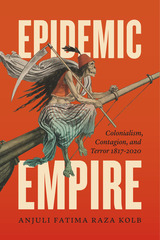
Terrorism is a cancer, an infection, an epidemic, a plague. For more than a century, this metaphor has figured insurgent violence as contagion in order to contain its political energies. In Epidemic Empire, Anjuli Fatima Raza Kolb shows that this trope began in responses to the Indian Mutiny of 1857 and tracks its tenacious hold through 9/11 and beyond. The result is the first book-length study to approach the global War on Terror from a postcolonial literary perspective.
Raza Kolb assembles a diverse archive from colonial India, imperial Britain, French and independent Algeria, the postcolonial Islamic diaspora, and the neoimperial United States. Anchoring her book are studies of four major writers in the colonial-postcolonial canon: Rudyard Kipling, Bram Stoker, Albert Camus, and Salman Rushdie. Across these sources, she reveals the tendency to imagine anticolonial rebellion, and Muslim insurgency specifically, as a virulent form of social contagion. Exposing the long history of this broken but persistent narrative, Epidemic Empire is a major contribution to the rhetorical history of our present moment.
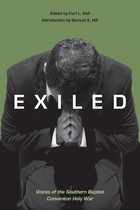
tactics to gain top positions and then used their power to purge Baptist seminary presidents and professors, church pastors, lay leaders, and women from positions of responsibility. America's largest Christian, non-Catholic denomination is firmly locked in a “holy war” to secure its churches and membership for a never-ending struggle against a liberal culture.
Exiled: Voices of the Southern Baptist Convention Holy War is a compilation of first-person narratives by conservative and moderate ministers and lay leaders who were stripped of their positions and essentially became pariahs in the churches to which they had devoted their lives.
While other books have described the takeover in historical, political, and theological terms, Exiled is different. Individual people tell their personal stories, revealing the struggle and heartache that resulted from being vilified, dispossessed, and exiled. Kell includes a variety of perspectives-from lay preachers and church members to prominent former SBC leaders such as James Dunn and Carolyn Crumpler.
The emotion captured on the pages-sadness, shock, disbelief, resignation,
and anger-will make Exiled moving even to readers who know little about the Southern Baptist movement. Exiled will also be of particular interest to historians, sociologists, philosophers of religion, and rhetorical historians.
The book’s main focus is contemporary Christian End-Time performances and how they theatrically construct encounters with future time—not just images or ideas of a future, but viscerally and immediately real experiences of future time. Author Jill Stevenson’s examples are Hell Houses and Judgement Houses; Rapture House, a similarly styled “walk through drama” in North Carolina; Hell’s Gates, an “outdoor reality drama” in Dawsonville, Georgia; Ark Encounter, a full-size recreation of Noah’s Ark; and Tribulation Trail, an immersive thirteen-scene drama ministry based on the Book of Revelation. The book’s coda considers similarities between these Christian performances and secular survivalist prepper events, especially with respect to constructions of and language about time. In doing so, the author situates these performances within a larger tradition that challenges traditional secular/sacred distinctions and illuminates how the End Times has been employed in our current social and political moment.
this model evolved from a Christian practice of slavery to one that expounded on slavery as morally right.
Elites who began the Baptist church in late-1600s Charleston closely valued hierarchy. It is not surprising, then, that from its formation the church advanced a Christian model of slavery. The American Revolution spurred the associational growth of the denomination, reinforcing the rigid order of the authoritative master and subservient enslaved person, given that the theme of liberty for all threatened slaveholders’ way of life. In lowcountry South Carolina in the 1790s, where a White minority population lived in constant anxiety over control of the bodies of enslaved men and women, news of revolt in St. Domingue (Haiti) led to heightened fears of Black violence. Fearful of being associated with antislavery evangelicals and, in turn, of being labeled as an enemy of the planter and urban elite, White ministers orchestrated a major transformation in the Baptist construction of paternalism.
Forging a Christian Order provides a comprehensive examination of the Baptist movement in South Carolina from its founding to the eve of the Civil War and reveals that the growth of the Baptist church in South Carolina paralleled the growth and institutionalization of the American system of slavery—accommodating rather than challenging the prevailing social order of the economically stratified Lowcountry.
Edited by Martin E. Marty and R. Scott Appleby
Around the world, fundamentalist movements are profoundly
affecting the way we live. Misinformation and misperception
about fundamentalism exacerbate conflicts at home and abroad.
Yet policymakers, journalists, students, and others have
lacked any comprehensive resource on the explosive phenomenon
of fundamentalism. Now the Fundamentalism Project has
assembled an international team of scholars for a multivolume
assessment of the history, scope, sources, character, and
impact of fundamentalist movements within the world's major
religious traditions.
Fundamentalisms and Society shows how fundamentalist
movements have influenced human relations, education, women's
rights, and scientific research in over a dozen nations and
within the traditions of Islam, Judaism, Christianity,
Buddhism, and Hinduism. Drawn from the fields of
anthropology, sociology, history of religion, and history of
science, the contributors cover topics such as the
educational structures of Hindu revivalism, women in
fundamentalist Iran and Pakistan, and the creationist cosmos
of Protestant fundamentalism. In a concluding essay, William
H. McNeill situates contemporary fundamentalisms within a
world historical context.
The Fundamentalism Project, Volume 2
Martin E. Marty and R. Scott Appleby direct the
Fundamentalism Project. Marty, the Fairfax M. Cone
Distinguished Service Professor of the History of Modern
Christianity at the University of Chicago, is the senior
editor of the Christian Century and the author of
numerous books, including the multivolume Modern American
Religion, also published by the University of
Chicago Press. Appleby, a research associate at the
University of Chicago, is the author of “Church and
Age Unite!” The Modernist Impulse in American
Catholicism.

Fundamentalist women are often depicted as dedicated to furthering the goals and ideas of fundamentalist men and thus of ancillary importance to the movement as a whole. Godly Women, Brenda Brasher's groundbreaking ethnographic study, reveals the paradox that fundamentalist women can be powerful people in a religious cosmos generally understood to be organized around their disempowerment. Brasher spent six months as an active participant in two Christian fundamentalist congregations to study firsthand the power of fundamentalist women. In addition to the narrow set of religious beliefs that constitute each congregation, she discovered that gender functions as a sacred partition which literally divides the congregation in two, establishing parallel religious worlds. The first of these worlds is led by men and encompasses overall congregational life; the second is a world composed of and led solely by women. Brasher explores how and why women become involved in this highly gendered religious world by examining women's ministries, Bible study groups, and conversion narratives. She discovers that women-only activities create and sustain a parallel symbolic world within and among congregations, which improves women's ability to direct the course of their lives and empowers them in their relationships with others. The women develop intimate social networks that act as a resource for those in distress and provide the basis for political coalition when women wish to alter the patterns of congregational life. Brasher's study sheds new light on the ideas and faith experiences of fundamentalist women, revealing that the religiosity they develop is not as disempowering as one might think. Brenda Brasher is an assistant professor of religion at Mount Union College.

In God's Choice, Alan Peshkin offers readers the opportunity to consider this question in depth. Given the outsider's rare chance to observe such a school firsthand, Peshkin spent eighteen months studying Bethany's high school—interviewing students, parents, and educators, living in the home of Bethany Baptist Church members, and participating fully in the church's activities. From this intimate research he has fashioned a rich account of Christian schooling and an informed analysis of a clear alternative to public education.
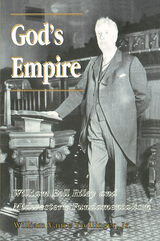
More than any other individual, William Bell Riley, pastor of the First Baptist Church of Minneapolis, inspired the resurgence of Protestant fundamentalism in 1930s America. Trollinger explores the development of Riley’s theology and social thought, examining in detail the rise of the Northwestern Bible and Missionary Training School and other similar institutions. He sheds light upon the nature, successes, and failures of fundamentalist crusades and makes it clear that, to understand fundamentalist religion in America, one must focus upon its regional and local roots.
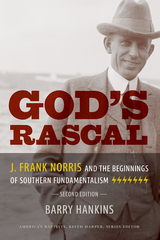
Loathed by mainstream Southern Baptists, J. Frank Norris (1877–1952) was in many ways the Southern Baptist Convention’s first fundamentalist. Twenty-five years after its first publication, this second edition of Barry Hankins’s field-defining work God’s Rascal: J. Frank Norris and the Beginnings of Southern Fundamentalism engages new scholar- ship on American fundamentalism to reassess one of the most controversial figures in the history of American Christianity. In this completely revised edition, Hankins pens an entirely new chapter on J. Frank Norris’s murder trial, examines newly uncovered details regarding his recurrent sexual improprieties, and reconsiders his views on race in order to place J. Frank Norris, a man both despicable and captivating, among the most significant Southern fundamentalists of the twentieth century.
Norris merged a southern populist tradition with militant fundamentalism, carving out a distinctly take-no-prisoners political niche within the Baptist church that often offended his allies as much as his enemies. Indeed, Norris was about as bad as a fundamentalist could be. He resided in a world of swirling conspiracies of leftists who, he argued, intended to subvert both evangelical religion and American culture. There are times when Norris’s ego looms so large in his story that he seemed less interested in the threat these alleged conspiracies posed than in their power to keep him in the limelight. Finally, his tactics foreshadowed those employed in the fundamentalists’ tenacious takeover of the Southern Baptist Convention that would occur more than twenty years after Norris’s death.
Holy Terrors begins with a gripping dissection of the instruction manual given to each of the 9/11 hijackers. In their evocation of passages from the Quran, we learn how the terrorists justified acts of destruction and mass murder “in the name of God, the most merciful, the most compassionate.” Lincoln then offers a provocative comparison of President Bush’s October 7, 2001 speech announcing U.S. military action in Afghanistan alongside the videotaped speech released by Osama bin Laden just a few hours later. As Lincoln authoritatively demonstrates, a close analysis of the rhetoric used by leaders as different as George W. Bush and Osama bin Laden—as well as Mohamed Atta and even Jerry Falwell—betrays startling similarities. These commonalities have considerable implications for our understanding of religion and its interrelationships with politics and culture in a postcolonial world, implications that Lincoln draws out with skill and sensitivity.
With a chapter new to this edition, “Theses on Religion and Violence,” Holy Terrors remains one of the essential books on September 11 and a classic study on the character of religion.
“From time to time there appears a work . . . that serves to focus the wide-ranging, often contentious discussion of religion’s significance within broader cultural dynamics. Bruce Lincoln’s Holy Terrors is one such text. . . . Anyone still struggling toward a more nuanced comprehension of 9/11 would do well to spend time with this book.”—Theodore Pulcini, Middle East Journal
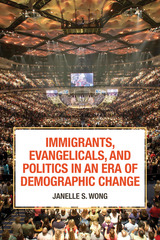
Asian Americans and Latinos currently constitute 13 percent of evangelicals, and their churches are among the largest, fastest growing organizations in their communities. While evangelical identity is associated with conservative politics, Wong draws from national surveys and interviews to show that non-white evangelicals express political attitudes that are significantly less conservative than those of their white counterparts. Black, Asian American, and Latino evangelicals are much more likely to support policies such as expanded immigration rights, increased taxation of the wealthy, and government interventions to slow climate change. As Wong argues, non-white evangelicals’ experiences as members of racial or ethnic minority groups often lead them to adopt more progressive political views compared to their white counterparts.
However, despite their growth in numbers, non-white evangelicals—particularly Asian Americans and Latinos—are concentrated outside of swing states, have lower levels of political participation than white evangelicals, and are less likely to be targeted by political campaigns. As a result, white evangelicals dominate the evangelical policy agenda and are overrepresented at the polls. Also, many white evangelicals have adopted even more conservative political views in response to rapid demographic change, perceiving, for example, that discrimination against Christians now rivals discrimination against racial and ethnic minorities.
Wong demonstrates that immigrant evangelicals are neither “natural” Republicans nor “natural” Democrats. By examining the changing demographics of the evangelical movement, Immigrants, Evangelicals, and Politics in an Era of Demographic Change sheds light on an understudied constituency that has yet to find its political home.

An ambitious comparative historical analysis of ideological production in the Islamic world from the mid-1800s to the present, Mansoor Moaddel's Islamic Modernism, Nationalism, and Fundamentalism provides a unique perspective for understanding the social conditions of these discourses. Moaddel characterizes these movements in terms of a sequence of cultural episodes characterized by ideological debates and religious disputations, each ending with a revolution or military coup. Understanding how the leaders of these movements formulated their discourses is, for Moaddel, the key to understanding Middle Eastern history. This premise allows him to unlock for readers the historical process that started with Islamic modernism and ended with fundamentalism.
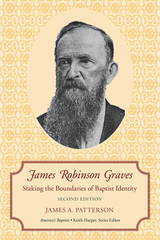
James A. Patterson’s groundbreaking study of the life and mind of James Robinson Graves explores the history of Landmarkism in the nineteenth century. Under this doctrine, Graves proposed that “true” Baptists should be able to trace their lineage directly to the early church, rather than through the strands of Protestantism. Controversial in its day, and often poorly understood now, Landmarkism, in Patterson’s nuanced interpretation, is important for understanding an essential feature of Baptist life to the present day: how do Baptists stake out their identities in reference to other Baptists and to members of competing denominations? While Graves has been widely dismissed by recent historians, in Patterson’s skillful revision, this figure draws much nearer to central concerns of Baptist thinking since the First Great Awakening.
This addition to the America’s Baptists series blends biographical insight with a thematic approach that focuses primarily on Graves’s controversial beliefs about ecclesiology, Baptist history, and eschatology. Patterson divides this work into seven chapters that progress chronologically, and this updated edition includes an expanded discussion of Christian republicanism, elaborates on the question of Graves and race, and features a longer epilogue to account for recent scholarship on Graves and Landmarkism.
James Robinson Graves is an accessible introduction to the significant albeit disputed role that the Landmark tradition played in the shaping of Southern Baptist life and thought. Seminary students and scholars of nineteenth-century Southern Baptist history will find a rich new interpretation of this misunderstood figure.
JAMES A. PATTERSON holds a PhD in American church history from Princeton Theological Seminary. He is emeritus university professor of theological studies at Union University. He is the author of Shining Lights: A History of the Council for Christian Colleges & Universities and To All the World: A History of Mid-America Baptist Theological Seminary, 1972–1997.
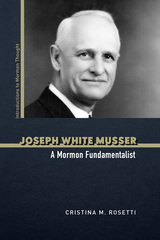
Musser’s devotion to Joseph Smith’s vision and the faith’s foundational texts reflected a widespread uneasiness with, and reaction against, changes taking place across society. Rosetti analyzes how Musser’s writing and thought knit a disparate group of outcast LDS believers into a movement. She also places Musser’s eventful life against the backdrop of a difficult period in LDS history, when the Church strained to disentangle itself from plural marriage and leaders like Musser emerged to help dissident members make sense of their lives outside the mainstream.
The first book-length account of the Mormon thinker, Joseph White Musser reveals the figure whose teachings helped mold a movement.
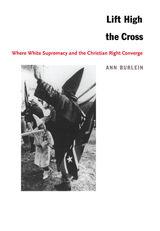
Arguing that today’s right engenders its popularity not by overt bigotry or hatred but by focusing on people’s hopes for their children, Burlein finds a politics of grief at the heart of such rhetoric. While demonstrating how religious symbols, rituals, texts, and practices shape people’s memories and their investment in society, she shows how Peters and Dobson each construct countermemories for their followers that reframe their histories and identities—as well as their worlds—by reversing mainstream perspectives in ways that counter existing power relations. By employing the techniques of niche marketing, the politics of scandal, and the transformation of political issues into “gut issues” and by remasculinizing the body politic, Burlein shows, such groups are able to move people into their realm of influence without requiring them to agree with all their philosophical, doctrinal, or political positions.
Lift High the Cross will appeal to students and scholars of religion, American cultural studies, women’s studies, sociology, and gay and lesbian studies, as well as to non-specialists interested in American politics and, specifically, the right.
In Mainstreaming Fundamentalism: John R. Rice and Fundamentalism’s Public Reemergence, Keith Bates embarks on a thematic and chronological exploration of twentieth-century Baptist fundamentalism in postwar America, sharing the story of a man whose career intersected with many other leading fundamentalists of the twentieth century, such as J. Frank Norris, Bob Jones Sr., Bob Jones Jr., and Jerry Falwell.
Unique among histories of American fundamentalism, this book explores the theme of Southern fundamentalism’s reemergence through a biographical lens. John R. Rice’s mission to inspire a broad cultural activism within fundamentalism—particularly by opposing those who fostered an isolationist climate—would give direction and impetus to the movement for the rest of the twentieth century. To support this claim, Bates presents chapters on Rice’s background and education, personal and ecclesiastical separatism, and fundamentalism and political action, tracing his rise to leadership during a critical phase of fundamentalism’s development until his death in 1980.
Bates draws heavily upon primary source texts that include writings from Rice’s fundamentalist contemporaries, his own The Sword of the Lord articles, and his private papers—particularly correspondence with many nationally known preachers, local pastors, and laypeople over more than fifty years of Rice’s ministry. The incorporation of these writings, combined with Bates’s own conversations with Rice’s family, facilitate a deeply detailed, engaging examination that fills a significant gap in fundamentalist history studies.
Mainstreaming Fundamentalism: John R. Rice and Fundamentalism’s Public Reemergence provides a nuanced and insightful study that will serve as a helpful resource to scholars and students of postwar American fundamentalism, Southern fundamentalism, and Rice’s contemporaries.
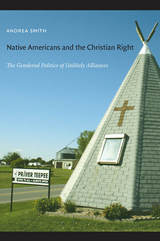
Smith draws on archival research, interviews, and her own participation in Native struggles and Christian Right conferences and events. She considers American Indian activism within the Promise Keepers and new Charismatic movements. She also explores specific opportunities for building unlikely alliances. For instance, while evangelicals’ understanding of the relationship between the Bible and the state may lead to reactionary positions on issues including homosexuality, civil rights, and abortion, it also supports a relatively progressive position on prison reform. In terms of evangelical and Native American feminisms, she reveals antiviolence organizing to be a galvanizing force within both communities, discusses theories of coalition politics among both evangelical and indigenous women, and considers Native women’s visions of sovereignty and nationhood. Smith concludes with a reflection on the implications of her research for the field of Native American studies.
Examines the conflict between modern-day Southern Baptists and “liberal” Southern Baptists over control of the Southern Baptist Convention
David Morgan captures the essence of the conflict between some modern-day Southern Baptists, who saw themselves as crusaders for truth, as they sought to redeem a new holy land--the Southern Baptist Convention-- from the control of other Southern Baptists they viewed as "liberals." To the so-called liberals, the crusaders were "fundamentalists" on a mission, not to reclaim the SBC in the name of theological truth but to gain control and redirect its activities according to their narrow political, social, and theological perspectives. The New Crusades provides a comprehensive history of the conflict, taking the reader through the bitter and divisive struggles of the late 1980s, that culminated in the 1991 emergence of a moderate faction within the SBC. The fundamentalists had won.
In The Power of Mammon, Curtis D. Johnson describes how the market economy and market-related forces, such as the media, politics, individualism, and consumerism, radically changed the nature of Baptist congregational life in New York State during three centuries. Collectively, these forces emphasized the importance of material wealth over everything else, and these values penetrated the thinking of Baptist ministers and laypeople alike. Beginning in the 1820s, the pastorate turned into a profession, the laity’s influence diminished, closeknit religious fellowships evolved into voluntary associations, and evangelism became far less effective. Men, being the most engaged in the market, secularized the more quickly and became less involved in church affairs. By the 1870s, male disengagement opened the door to increased female participation in church governance. While scientific advances and religious pluralism also played a role, the market and its related distractions were the primary forces behind the secularization of Baptist life.
The Power of Mammon is history from the ground up. Unlike many denominational histories, this book emphasizes congregational life and the importance of the laity. This focus allows the reader to hear the voices of ordinary Baptists who argued over a host of issues. Johnson deftly connects large social trends with exhaustive attention to archival material, including numerous well-chosen records preserved by forty-two New York churches. These records include details related to membership, discipline, finance, and institutional history. Utilizing statistical analysis to achieve even greater clarity, Johnson effectively bridges the gap between the particularity of church records and the broader history of New York’s Baptist churches.
Johnson’s narrative of Baptist history in New York will serve as a model for other regional studies and adds to our understanding of secularization and its impact on American religion.

In the wake of the Clinton-Lewinsky scandal, the Christian Right expected major victories in the 1998 elections. Instead, many of its allies lost close contests, and the movement was seen as a liability in some high-profile campaigns. In the only in-depth study of the Christian Right's role in these races, leading scholars analyze the role of the movement in fourteen key states, from Maine to California, and address speculations that the movement is fading from the American political scene.
The book focuses on elections on the state and local levels, where the Christian Right is most influential, and it describes the movement's niche in some detail. Although each campaign described in the book had its unique characteristics, the editors have drawn some broad conclusions about the 1998 elections. While the movement was weak in the areas of candidate recruitment and fundraising, they say, the outcome may have also been related to external factors including a broader turnout of typically Democratic constituencies and the country's boredom with the scandal that conservatives had made the centerpiece of their campaign. Despite the setbacks of 1998, the contributors argue, the Christian Right continues to have an enormous influence on the political dialogue of the country.
Written from an unbiased, nonpartisan perspective, this volume sheds light on a topic that is too frequently mired in controversy.
In Religion, Fundamentalism, and Violence, Andrew Gluck brings together distinguished scholars to address a fiercely debated topic: the intersection of religion and violence. Among the contributions is an anthropological analysis of the violence associated with the Abrahamic monotheistic religions of the Middle East, a compelling essay accounting for the violence in Hindu religious traditions, an informative look at the Israeli-Palestinian tensions of more recent times, and an essay on the Catholic just war theory. Each chapter is followed by a commentary and reply, making this volume indispensable for students and scholars of the history of religions.
The sweeping success of the conservative takeover—based on enforcing doctrinal fidelity, especially on issues like biblical inerrancy and so-called complementarianism, a rejection of modern, secular values, and advanced international missionary work—veiled a weakness at its very heart. By the turn of the twenty-first century, the conservative resurgence failed to attract new members and, even worse, the younger generation who had grown up in the SBC were fleeing the denomination—nearly half of them are leaving the church as adults and never coming back. The contributors to this volume all offer insights into the question of why. While conservatives dominate the SBC’s governance, they have failed to resolve issues that preoccupy its members and the larger society, including those related to gender, homosexuality, race, and abuse.
The essays are grouped under four broad categories: Truth and Freedom: Baptist Institutions and Contentious Issues; Defining and Defending Biblical Truth: Staking the Boundaries; Apologies, Reconciliation, and Continuing Reality; and the View from Outside. With an introduction by editor Keith Harper contextualizing the history of the movement and the issues it faces today, this collection is sure to add new insight into this influential denomination.
Public ideology and institutional tendencies clash, the author argues, in the restructuring of the welfare state, the financing of the electoral system, and the backlash against women and minorities. These frictions are nowhere more apparent than on Christian right radio. Reinvigorating the intellectual tradition of the Frankfurt School, Apostolidis shows how ideas derived from early critical theory—in particular that of Theodor W. Adorno—can illuminate the political and social dynamics of this aspect of contemporary American culture. He uses and reworks Adorno’s theories to interpret the nationally broadcast Focus on the Family, revealing how the cultural discourse of the Christian right resonates with recent structural transformations in the American political economy. Apostolidis shows that the antidote to the Christian right’s marriage of religious and market fundamentalism lies not in a reinvocation of liberal fundamentals, but rather depends on a patient cultivation of the affinities between religion’s utopian impulses and radical, democratic challenges to the present political-economic order.
Mixing critical theory with detailed analysis, Stations of the Cross provides a needed contribution to sociopolitical studies of mass movements and will attract readers in sociology, political science, philosophy, and history.
To answer questions like these, Strong Religion draws on the results of the Fundamentalism Project, a decade-long interdisciplinary study of antimodernist, antisecular militant religious movements on five continents and within seven world religious traditions. The authors of this study analyze the various social structures, cultural contexts, and political environments in which fundamentalist movements have emerged around the world, from the Islamic Hamas and Hizbullah to the Catholic and Protestant paramilitaries of Northern Ireland, and from the Moral Majority and Christian Coalition of the United States to the Sikh radicals and Hindu nationalists of India. Offering a vividly detailed portrait of the cultures that nourish such movements, Strong Religion opens a much-needed window onto different modes of fundamentalism and identifies the kind of historical events that can trigger them.
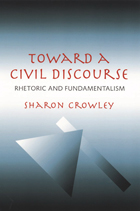
Toward a Civil Discourse examines how, in the current political climate, Americans find it difficult to discuss civic issues frankly and openly with one another. Because America is dominated by two powerful discourses--liberalism and Christian fundamentalism, each of which paints a very different picture of America and its citizens' responsibilities toward their country-there is little common ground, and hence Americans avoid disagreement for fear of giving offence.
Sharon Crowley considers the ancient art of rhetoric as a solution to the problems of repetition and condemnation that pervade American public discourse. Crowley recalls the historic rhetorical concept of stasis--where advocates in a debate agree upon the point on which they disagree, thereby recognizing their opponent as a person with a viable position or belief. Most contemporary arguments do not reach stasis, and without it, Crowley states, a nonviolent resolution cannot occur.
Toward a Civil Discourse investigates the cultural factors that lead to the formation of beliefs, and how beliefs can develop into densely articulated systems and political activism. Crowley asserts that rhetorical invention (which includes appeals to values and the passions) is superior in some cases to liberal argument (which often limits its appeals to empirical fact and reasoning) in mediating disagreements where participants are primarily motivated by a moral or passionate commitment to beliefs.
Sharon Crowley examines numerous current issues and opposing views, and discusses the consequences to society when, more often than not, argumentative exchange does not occur. She underscores the urgency of developing a civil discourse, and through a review of historic rhetoric and its modern application, provides a foundation for such a discourse-whose ultimate goal, in the tradition of the ancients, is democratic discussion of civic issues.
The Transformation of the Christian Right chronicles and analyzes the remarkable changes that have occurred in the Christian Right from its emergence in the late 1970s to the present. It documents the rapid turnover of Christian-Right organizations and explains the forces driving that kaleidoscopic change. Moen also traces the strategic shift of the movement’s leaders, away from lobbying the Congress and toward mobilizing conservative activists in the grass roots; he demonstrates the substitution of liberal language (with its emphasis on “equality, rights, and freedom”) for moralistic language (with its focus on “right and wrong”). Much has been written about the Christian Right’s impact on politics but little about how years of political activism have shaped and influenced the Christian Right. Moen addresses that neglected side of the issue.
READERS
Browse our collection.
PUBLISHERS
See BiblioVault's publisher services.
STUDENT SERVICES
Files for college accessibility offices.
RECENTLY PUBLISHED





UChicago Accessibility Resources
home | accessibility | search | about | contact us
BiblioVault ® 2001 - 2024
The University of Chicago Press