
 A SCHOLARLY BOOK REPOSITORY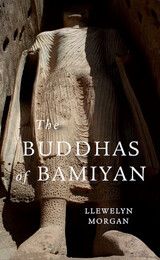
For 1,400 years, two colossal figures of the Buddha overlooked the fertile Bamiyan Valley on the Silk Road in Afghanistan. Witness to a melting pot of passing monks, merchants, and armies, the Buddhas embodied the intersection of East and West, and their destruction by the Taliban in 2001 provoked international outrage. Llewelyn Morgan excavates the layers of meaning these vanished wonders hold for a fractured Afghanistan.
Carved in the sixth and seventh centuries, the Buddhas represented a confluence of religious and artistic traditions from India, China, Central Asia, and Iran, and even an echo of Greek influence brought by Alexander the Great’s armies. By the time Genghis Khan destroyed the town of Bamiyan six centuries later, Islam had replaced Buddhism as the local religion, and the Buddhas were celebrated as wonders of the Islamic world. Not until the nineteenth century did these figures come to the attention of Westerners. That is also the historical moment when the ground was laid for many of Afghanistan’s current problems, including the rise of the Taliban and the oppression of the Hazara people of Bamiyan. In a strange twist, the Hazaras—descendants of the conquering Mongol hordes who stormed Bamiyan in the thirteenth century—had come to venerate the Buddhas that once dominated their valley as symbols of their very different religious identity.
Incorporating the voices of the holy men, adventurers, and hostages throughout history who set eyes on the Bamiyan Buddhas, Morgan tells the history of this region of paradox and heartache.

The Buddha as man, animal, and god on the path to enlightenment.
According to ancient traditions, it takes countless lifetimes to become a Buddha. The Buddha’s own path to complete awakening was chronicled in five hundred and forty-seven stories known as the jātakas, which underwent numerous adaptations in the centuries after the Buddha’s lifetime. In the fifth or sixth century CE, in the region known as present-day Sri Lanka, an anonymous author wrote an introduction to these, recounting the history of a vow that prompted this great quest. This narrative, titled Jātakanidāna in Pali, preserves the oral traditions about the Bodhisatta, the one destined to become a Buddha in his final life. The text also functioned for centuries as a gateway to other early Buddhist teachings, offering valuable insights into the Buddha's journey toward enlightenment.
The story begins when, in one of his lives as an ascetic named Sumedha, the Buddha vows to delay his own awakening until he can guide others toward their release from the cycle of rebirth. This vow sets him on a long series of lives—as man, animal, and god. At the culmination of his spiritual journey, he recalls his past lives, his teachings, and the establishment of the monastic community that would preserve and spread these teachings.
The Buddha’s Path to Awakening has become one of the most significant biographical works in the Buddhist tradition. This volume presents a new, authoritative translation, accompanied by the original Pali text.
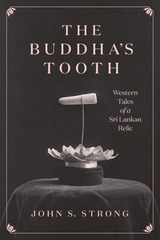
Bodily relics such as hairs, teeth, fingernails, pieces of bone—supposedly from the Buddha himself—have long served as objects of veneration for many Buddhists. Unsurprisingly, when Western colonial powers subjugated populations in South Asia, they used, manipulated, redefined, and even destroyed these objects to exert control.
In The Buddha’s Tooth, John S. Strong examines Western stories, from the sixteenth to the twentieth century, surrounding two significant Sri Lankan sacred objects to illuminate and concretize colonial attitudes toward Asian religions. First, he analyzes a tale about the Portuguese capture and public destruction, in the mid-sixteenth century, of a tooth later identified as a relic of the Buddha. Second, he switches gears to look at the nineteenth-century saga of British dealings with another tooth relic of the Buddha—the famous Daḷadā enshrined in a temple in Kandy—from 1815, when it was taken over by English forces, to 1954, when it was visited by Queen Elizabeth II. As Strong reveals, the stories of both the Portuguese tooth and the Kandyan tooth reflect nascent and developing Western understandings of Buddhism, realizations of the cosmopolitan nature of the tooth, and tensions between secular and religious interests.
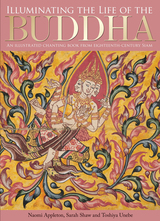
Affording readers immense insight into a spectacular eighteenth-century manuscript, and Thai Buddhist manuscripts and temple culture as a whole, this book will be of great interest to art historians and scholars of Buddhism and Southeast Asia.

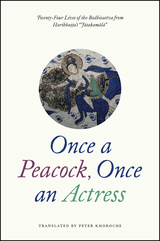
Haribhatta’s Jåtakamålå is a sophisticated and personal adaptation of popular stories, mostly non-Buddhist in origin, all illustrating the future Buddha’s single-minded devotion to the good of all creatures, and his desire, no matter what his incarnation—man, woman, peacock, elephant, merchant, or king—to assist others on the path to nirvana. Haribhatta’s insight into human and animal behavior, his astonishing eye for the details of landscape, and his fine descriptive powers together make this a unique record of everyday life in ancient India as well as a powerful statement of Buddhist ethics. This translation will be a landmark in the study of Buddhism and of the culture of ancient India.
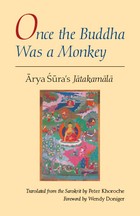
Written most probably in the fourth century A.D., the Jatakamala is generally considered the masterpiece of Buddhist literature in Sanskrit. In elegant, courtly style, Arya Sura retells thirty-four traditional stories about the Buddha in his previous incarnations, human and animal. Whether as a king, a brahmin, a monkey, or a hare, the Great One is shown in assiduous pursuit of virtue and compassion. Though primarily intended as exemplary tales illustrating the Buddhist virtues, these stories also provide a vivid picture of life at a high point in ancient Indian culture—city life in ordinary households or at the royal court, and country life against a backdrop of mountain, desert, and jungle.
Fresh study of the Sanskrit manuscripts, now scattered in libraries all over the world, has enabled Peter Khoroche to make this new translation faithful to the original in both style and content. His explanatory notes will assist student and general reader alike in appreciating this classic from an ancient and exotic civilization.
“One would be a fool not to welcome the chance to read this book.”—Richard Gombrich, Journal of the Royal Asiatic Society
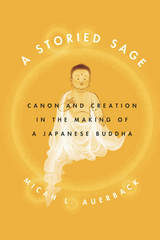
Micah L. Auerback follows the changing fortune of the Buddha through the novel uses for the Buddha’s story in high and low culture alike, often outside of the confines of the Buddhist establishment. Auerback argues for the Buddha’s continuing relevance during Japan’s early modern period and links the later Buddhist tradition in Japan to its roots on the Asian continent. Additionally, he examines the afterlife of the Buddha in hagiographic literature, demonstrating that the late Japanese Buddha, far from fading into a ghost of his former self, instead underwent an important reincarnation. Challenging many established assumptions about Buddhism and its evolution in Japan, A Storied Sage is a vital contribution to the larger discussion of religion and secularization in modernity.
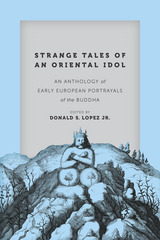
Featuring writings by soldiers, adventurers, merchants, missionaries, theologians, and colonial officers, this volume contains a wide range of portraits of the Buddha. The descriptions are rarely flattering, as all manner of reports—some accurate, some inaccurate, and some garbled—came to circulate among European savants and eccentrics, many of whom were famous in their day but are long forgotten in ours. Taken together, these accounts present a fascinating picture, not only of the Buddha as he was understood and misunderstood for centuries, but also of his portrayers.
READERS
Browse our collection.
PUBLISHERS
See BiblioVault's publisher services.
STUDENT SERVICES
Files for college accessibility offices.
RECENTLY PUBLISHED





UChicago Accessibility Resources
home | accessibility | search | about | contact us
BiblioVault ® 2001 - 2025
The University of Chicago Press