
 A SCHOLARLY BOOK REPOSITORY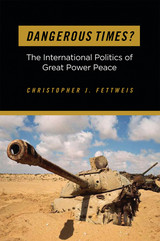
What horrors will the twenty-first century bring? For many people, a clash of civilizations and a perilous return to great power rivalries are the dominant visions of things to come. Fueled by daily headlines, overwhelming majorities of people from all walks of life consider the world to be a far more chaotic, frightening, and ultimately more dangerous place than ever before. Christopher J. Fettweis argues that these impressions, however widespread, are wrong.
Dangerous Times? is an examination of international politics that reveals both theoretical logic and empirical data that support the vision of a future where wars between great powers are unlikely and transnational threats can be contained. Despite popular perception, today a far greater percentage of the world’s population lives in peace than at any time in history, and the number and intensity of all types of warfare have dropped steadily since the early 1990s. Terrorism, though reprehensible, can be combated and can actually increase international cooperation among states fighting a common threat. World wars like those of the twentieth century—the true clash of civilizations—are unlikely to be repeated in the close-knit world of the twenty-first century.
In this sharp and insightful book, Fettweis discusses this revolution in human history and its ramifications for international relations theory. He suggests a new vision for a more restrained U.S. grand strategy and foreign policy and reveals how, despite pessimistic perceptions to the contrary, the world is more likely entering a golden age of peace and security.
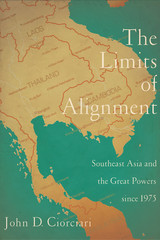
The Limits of Alignment is an engaging and accessible study that explores how small states and middle powers of Southeast Asia ensure their security in a world where they are overshadowed by greater powers. John D. Ciorciari challenges a central concept in international relations theory—that states respond to insecurity by either balancing against their principal foes, “bandwagoning” with them, or declaring themselves neutral. Instead, he shows that developing countries prefer limited alignments that steer between strict neutrality and formal alliances to obtain the fruits of security cooperation without the perils of undue dependency.
Ciorciari also shows how structural and normative shifts following the end of the Cold War and the advent of U.S. primacy have increased the prevalence of limited alignments in the developing world and that these can often place constraints on U.S. foreign policy. Finally, he discusses how limited alignments in the developing world may affect the future course of international security as China and other rising powers gather influence on the world stage.

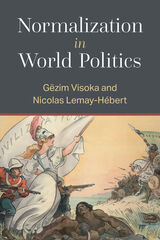
This book traces main discourses and practices associated with normalcy in world politics. Visoka and Lemay-Hébert mostly focus on how dominant states and international organizations try to manage global affairs through imposing normalcy over fragile states, restoring normalcy over disaster-affected states, and accepting normalcy over suppressive states. They show how discourses and practices come together in constituting normalization interventions and how in turn they play in shaping the dynamics of continuity and change in world politics.
—Robert O. Keohane, Princeton University
"An invaluable contribution to the growing body of constructivist literature in international relations and should be read by anyone interested in the use of force in contemporary global politics . . . Goes a long way toward explaining America's War on Terror against al Qaeda and the Taliban and the widespread global support for this policy, as well as the highly negative global reaction to America's own intervention in Iraq and its norm-threatening doctrine of preemption."
—Richard W. Mansbach, Iowa State University
—Rodney Bruce Hall, Oxford University
"Rejecting preventive war for moral consistency and just conduct, a fascinating discussion of pirates, terrorists, and revenge."
—Jon Mercer, University of Washington
Oded Löwenheim is Lecturer in the Department of International Relations at the Hebrew University of Jerusalem.
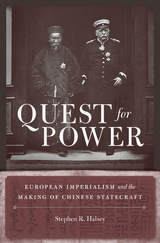
China’s history in the nineteenth and early twentieth centuries has often been framed as a long coda of imperial decline, played out during its last dynasty, the Qing. Quest for Power presents a sweeping reappraisal of this narrative. Stephen Halsey traces the origins of China’s great-power status in the twentieth century to this era of supposed decadence and decay. Threats from European and Japanese imperialism and the growing prospect of war triggered China’s most innovative state-building efforts since the Qing dynasty’s founding in the mid-1600s.
Through a combination of imitation and experimentation, a new form of political organization took root in China between 1850 and 1949 that shared features with modern European governments. Like them, China created a military-fiscal state to ensure security in a hostile international arena. The Qing Empire extended its administrative reach by expanding the bureaucracy and creating a modern police force. It poured funds into the military, commissioning ironclad warships, reorganizing the army, and promoting the development of an armaments industry. State-built telegraph and steamship networks transformed China’s communication and transportation infrastructure. Increasingly, Qing officials described their reformist policies through a new vocabulary of sovereignty—a Western concept that has been a cornerstone of Chinese statecraft ever since. As Halsey shows, the success of the Chinese military-fiscal state after 1850 enabled China to avoid wholesale colonization at the hands of Europe and Japan and laid the foundation for its emergence as a global power in the twentieth century.
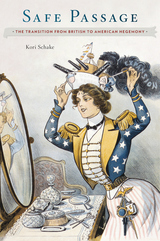
History records only one peaceful transition of hegemonic power: the passage from British to American dominance of the international order. What made that transition uniquely cooperative and nonviolent? Does it offer lessons to guide policy as the United States faces its own challengers to the order it has enforced since the 1940s? To answer these questions, Kori Schake explores nine points of crisis or tension between Britain and the United States, from the Monroe Doctrine in 1823 to the establishment of the unequal “special relationship” during World War II.
Over this period, Safe Passage shows, the United States gradually changed the rules that Britain had established at its imperial height. It was able to do so peacefully because, during the crucial years, Britain and the United States came to look alike to each other and different from other nations. Britain followed America’s lead in becoming more democratic, while the United States, because of its conquest of the American West, developed an imperial cast of mind. Until the end of World War II, both countries paid more attention to their cumulative power relative to other states in the order than to their individual power relative to each other.
The factors that made the Anglo-American transition peaceful, notably the convergence in their domestic ideologies, are unlikely to apply in future transitions, Schake concludes. We are much more likely to see high-stake standoffs among competing powers attempting to shape the international order to reflect the starkly different ideologies that prevail at home.
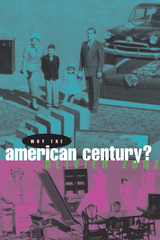
"It should certainly be the task of historians to explain the nation's triumphs as effectively as they have explained its failures, and Zunz in this intelligent, learned and ambitious book suggests a valuable new model for doing so."—Alan Brinkley, Times Literary Supplement
"Zunz is evenhanded in his judgments. . . . His thesis is both imaginative and well grounded in the appropriate sources."—David M. Oshinsky, New York Times Book Review
"Zunz is an innovative and perceptive social critic. He crosses disciplinary boundaries with ease and felicity, and is particularly adept at illustrating large themes with unusual but telling details."—Kent Blaser, American Studies
"An eye-opening introduction to the shaping of modern America."—Foreign Affairs
READERS
Browse our collection.
PUBLISHERS
See BiblioVault's publisher services.
STUDENT SERVICES
Files for college accessibility offices.
RECENTLY PUBLISHED



UChicago Accessibility Resources
home | accessibility | search | about | contact us
BiblioVault ® 2001 - 2025
The University of Chicago Press