
 A SCHOLARLY BOOK REPOSITORY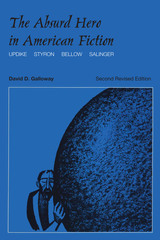
When The Absurd Hero in American Fiction was first released in 1966, Granville Hicks praised it in a lead article for the Saturday Review as a sensitive and definitive study of a new trend in postwar American literature. In the years that followed, David Galloway’s analysis of the writings of John Updike, William Styron, Saul Bellow, and J. D. Salinger became a standard critical work, an indispensable tool for readers concerned with contemporary American literature. The New York Times described the book as “a seminal study of the modern literary imagination."
David Galloway, himself an established novelist, later extensively revised The Absurd Hero to include authoritative discussions of more than a dozen novels which had appeared since the first revised edition was released in 1970. Among them are John Updike’s Couples, Rabbit Redux, and The Coup; William Styron’s The Confessions of Nat Turner and Sophie’s Choice; and Saul Bellow’s Mr. Sammler’s Planet and Humboldt’s Gift. Through detailed analyses of these works, Galloway demonstrates the continuing relevance of his own provocative concept of the absurd hero and provides important insights into the literary achievements of four of America’s most influential postwar novelists.
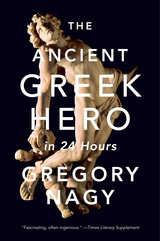
What does it mean to be a hero? The ancient Greeks who gave us Achilles and Odysseus had a very different understanding of the term than we do today. Based on the legendary Harvard course that Gregory Nagy has taught for well over thirty years, The Ancient Greek Hero in 24 Hours explores the roots of Western civilization and offers a masterclass in classical Greek literature. We meet the epic heroes of Homer’s Iliad and Odyssey, but Nagy also considers the tragedies of Aeschylus, Sophocles, and Euripides, the songs of Sappho and Pindar, and the dialogues of Plato. Herodotus once said that to read Homer was to be a civilized person. To discover Nagy’s Homer is to be twice civilized.
“Fascinating, often ingenious… A valuable synthesis of research finessed over thirty years.”
—Times Literary Supplement
“Nagy exuberantly reminds his readers that heroes—mortal strivers against fate, against monsters, and…against death itself—form the heart of Greek literature… [He brings] in every variation on the Greek hero, from the wily Theseus to the brawny Hercules to the ‘monolithic’ Achilles to the valiantly conflicted Oedipus.”
—Steve Donoghue, Open Letters Monthly
The ancient Greeks’ concept of “the hero” was very different from what we understand by the term today, Gregory Nagy argues—and it is only through analyzing their historical contexts that we can truly understand Achilles, Odysseus, Oedipus, and Herakles.
In Greek tradition, a hero was a human, male or female, of the remote past, who was endowed with superhuman abilities by virtue of being descended from an immortal god. Despite their mortality, heroes, like the gods, were objects of cult worship. Nagy examines this distinctively religious notion of the hero in its many dimensions, in texts spanning the eighth to fourth centuries bce: the Homeric Iliad and Odyssey; tragedies of Aeschylus, Sophocles, and Euripides; songs of Sappho and Pindar; and dialogues of Plato. All works are presented in English translation, with attention to the subtleties of the original Greek, and are often further illuminated by illustrations taken from Athenian vase paintings.
The fifth-century bce historian Herodotus said that to read Homer is to be a civilized person. In twenty-four installments, based on the Harvard University course Nagy has taught and refined since the late 1970s, The Ancient Greek Hero in 24 Hours offers an exploration of civilization’s roots in the Homeric epics and other Classical literature, a lineage that continues to challenge and inspire us today.

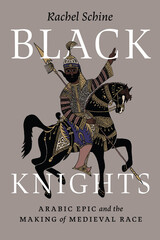
In Black Knights, Rachel Schine reveals how the Arabic-speaking world developed a different form of racial knowledge than their European neighbors during the Middle Ages. Unlike in European vernaculars, Arabic-language ideas about ethnic difference emerged from conversations extending beyond the Mediterranean, from the Sahara to the Indian Ocean. In these discourses, Schine argues, Blackness became central to ideas about a global, ethnically inclusive Muslim world.
Schine traces the emergence of these new racial logics through popular Islamic epics, drawing on legal, medical, and religious literatures from the period to excavate a diverse and ever-changing conception of Blackness and race. The result is a theoretically nuanced case for the existence and malleability of racial logics in premodern Islamic contexts across a variety of social and literary formations.

Winner of the 2014 Latina/o Studies Section - LASA Outstanding Book Award
In Borderlands Saints, Desirée A. Martín examines the rise and fall of popular saints and saint-like figures in the borderlands of the United States and Mexico. Focusing specifically on Teresa Urrea (La Santa de Cabora), Pancho Villa, César Chávez, Subcomandante Marcos, and Santa Muerte, she traces the intersections of these figures, their devotees, artistic representations, and dominant institutions with an eye for the ways in which such unofficial saints mirror traditional spiritual practices and serve specific cultural needs.
Popular spirituality of this kind engages the use and exchange of relics, faith healing, pilgrimages, and spirit possession, exemplifying the contradictions between high and popular culture, human and divine, and secular and sacred. Martín focuses upon a wide range of Mexican and Chicano/a cultural works drawn from the nineteenth century to the present, covering such diverse genres as the novel, the communiqué, drama, the essay or crónica, film, and contemporary digital media. She argues that spiritual practice is often represented as narrative, while narrative—whether literary, historical, visual, or oral—may modify or even function as devotional practice.
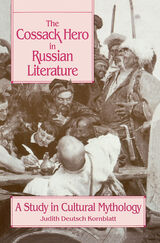
This is the first book to study the development of the Cossack hero and to identify him as part of Russian cultural mythology. Kornblatt explores the power of the myth as a literary image, providing new and challenging readings of Pushkin, Gogol, Tolstoi, and a host of other writers.
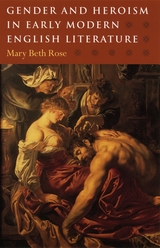
Interweaving discourses of gender, Rose explores ways in which this heroics of endurance became the dominant model. She examines the glamorous, failed destinies of heroes in plays by Shakespeare, Jonson, and Marlowe; Elizabeth I's creation of a heroic identity in her public speeches; the autobiographies of four ordinary women thrust into the public sphere by civil war; and the seduction of heroes into slavery in works by Milton, Aphra Behn, and Mary Astell. Ultimately, her study demonstrates the importance of the female in the creation of modern heroism, while offering a critique of both idealized action and suffering.
Joseph P. Wilson is Professor of Foreign Languages at the University of Scranton.

The present study of American, Australian, and Canadian detective fiction concerns literature which speaks in the ways of heroes and humanities about the human condition. All authors studied here, to one degree or another, demonstrate their concern with human society, some more strongly than others, but all with their eyes on the human situation and human existence. At times these studies lean toward the tragic in their outlook and development. In all instances they center on the humanistic.
Lermontov's explorations of the virtues and limitations of heroic, self-reliant conduct have subsequently become obscured or misread. This new book focuses upon the peculiar, disturbing, and arguably most central feature of Russian culture: its suspicion of and hostility toward individual achievement and self-assertion. The analysis and interpretation of Lermontov's texts enables Golstein to address broader cultural issues by exploring the reasons behind the persistent misreading of Lermontov's major works and by investigating the cultural attitudes that shaped Russia's reaction to the challenges of modernity.
African American writers have incorporated Martin Luther King Jr. into their work since he rose to prominence in the mid-1950s. Martin Luther King Jr., Heroism, and African American Literature is a study by award-winning author Trudier Harris of King’s character and persona as captured and reflected in works of African American literature continue to evolve.
One of the most revered figures in American history, King stands above most as a hero. His heroism, argues Harris, is informed by African American folk cultural perceptions of heroes. Brer Rabbit, John the Slave, Stackolee, and Railroad Bill—folk heroes all—provide a folk lens through which to view King in contemporary literature. Ambiguities and issues of morality that surround trickster figures also surround King. Nonconformist traits that define Stackolee and Railroad Bill also inform King’s life and literary portraits. Defiance of the law, uses of indirection, moral lapses, and bad habits are as much a part of the folk-transmitted biography of King as they are a part of writers’ depictions of him in literary texts.
Harris first demonstrates that during the Black Arts Movement of the 1960s, when writers such as Nikki Giovanni, Sonia Sanchez, and LeRoi Jones (Amiri Baraka) were rising stars in African American poetry, King’s philosophy of nonviolence was out of step with prevailing notions of militancy (Black Power), and their literature reflected that division.
In the quieter times of the 1970s and 1980s and into the twenty-first century, however, treatments of King and his philosophy in African American literature changed. Writers who initially rejected him and nonviolence became ardent admirers and boosters, particularly in the years following his assassination. By the 1980s, many writers skeptical about King had reevaluated him and began to address him as a fallen hero. To the most recent generation of writers, such as Katori Hall, King is fair game for literary creation, no matter what those portrayals may reveal, to a point where King has become simply another source of reference for creativity.
Collectively these writers, among many others, illustrate that Martin Luther King Jr. provides one of the strongest influences upon the creative worlds of multiple generations of African American writers of varying political and social persuasions.
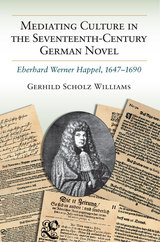
Happel primarily lived and worked in the vigorous port city of Hamburg, which was a “media center” in terms of the access it offered to a wide library of books in public and private collections. Hamburg’s port status meant it buzzed with news and information, and Happel drew on this flow of data in his novels. His books deal with many topics of current interest—national identity formation, gender and sexualities, Western European encounters with neighbors to the East, confrontations with non-European and non-Western powers and cultures—and they feature multiple media, including news reports, news collections, and travel writings. As a result, Happel’s use of contemporary source material in his novels feeds our current interest in the impact of the production of knowledge on seventeenth-century narrative. Mediating Culture in the Seventeenth-Century German Novel explores the narrative wealth and multiversity of Happel’s work, examines Happel’s novels as illustrative of seventeenth-century novel writing in Germany, and investigates the synergistic relationship in Happel’s writings between the booming print media industry and the evolution of the German novel.
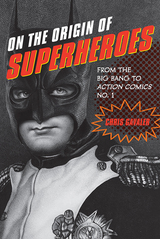
From the creation of the universe, through mythological heroes and gods, to folklore, ancient philosophy, revolutionary manifestos, discarded scientific theories, and gothic monsters, the sweep and scale of the superhero’s origin story is truly epic. We will travel from Jane Austen’s Bath to Edgar Rice Burroughs’s Mars to Owen Wister’s Wyoming, with some surprising stops along the way. We’ll meet mad scientists, Napoleonic dictators, costumed murderers, diabolical madmen, blackmailers, pirates, Wild West outlaws, eugenicists, the KKK, Victorian do-gooders, detectives, aliens, vampires, and pulp vigilantes (to name just a few). Chris Gavaler is your tour guide through this fascinating, sometimes dark, often funny, but always surprising prehistory of the most popular figure in pop culture today. In a way, superheroes have always been with us: they are a fossil record of our greatest aspirations and our worst fears and failings.
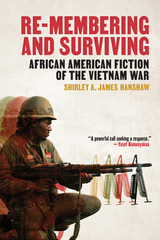
Achilles—warrior and hero—by the protocols of Western culture, should never cry. And yet Homeric epic is full of his tears and those of his companions at Troy. This path-blazing study by Hélène Monsacré shows how later ideals of stoically inexpressive manhood run contrary to the poetic vision presented in the Iliad and Odyssey. The epic protagonists, as larger-than-life figures who transcend gender categories, are precisely the men most likely to weep.
Monsacré pursues the paradox of the tearful fighter through a series of lucid and detailed close readings, and examines all aspects of the interactions between men and women in the Homeric poems. Her illuminating analysis, first published in French in 1984, remains bold, fresh, and compelling for anyone touched—like Achilles—by a world of grief.

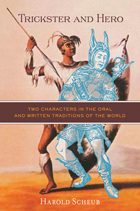
Scheub delves into the importance of trickster mythologies and the shifting relationships between tricksters and heroes. He examines protagonists that figure centrally in a wide range of oral narrative traditions, showing that the true hero is always to some extent a trickster as well. The trickster and hero, Scheub contends, are at the core of storytelling, and all the possibilities of life are there: we are taken apart and rebuilt, dismembered and reborn, defeated and renewed.
READERS
Browse our collection.
PUBLISHERS
See BiblioVault's publisher services.
STUDENT SERVICES
Files for college accessibility offices.
RECENTLY PUBLISHED





UChicago Accessibility Resources
home | accessibility | search | about | contact us
BiblioVault ® 2001 - 2024
The University of Chicago Press