
 A SCHOLARLY BOOK REPOSITORY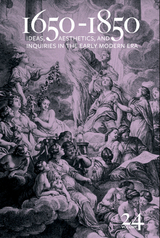
About the annual journal 1650-1850
1650-1850 publishes essays and reviews from and about a wide range of academic disciplines—literature (both in English and other languages), philosophy, art history, history, religion, and science. Interdisciplinary in scope and approach, 1650-1850 emphasizes aesthetic manifestations and applications of ideas, and encourages studies that move between the arts and the sciences—between the “hard” and the “humane” disciplines. The editors encourage proposals for “special features” that bring together five to seven essays on focused themes within its historical range, from the Interregnum to the end of the first generation of Romantic writers. While also being open to more specialized or particular studies that match up with the general themes and goals of the journal, 1650-1850 is in the first instance a journal about the artful presentation of ideas that welcomes good writing from its contributors.
First published in 1994, 1650-1850 is currently in its 24th volume.
ISSN 1065-3112.
About the annual journal 1650-1850
1650-1850 publishes essays and reviews from and about a wide range of academic disciplines—literature (both in English and other languages), philosophy, art history, history, religion, and science. Interdisciplinary in scope and approach, 1650-1850 emphasizes aesthetic manifestations and applications of ideas, and encourages studies that move between the arts and the sciences—between the “hard” and the “humane” disciplines. The editors encourage proposals for “special features” that bring together five to seven essays on focused themes within its historical range, from the Interregnum to the end of the first generation of Romantic writers. While also being open to more specialized or particular studies that match up with the general themes and goals of the journal, 1650-1850 is in the first instance a journal about the artful presentation of ideas that welcomes good writing from its contributors.
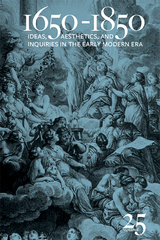
First published in 1994, 1650-1850 is currently in its 25th volume.
ISSN 1065-3112.
Published by Bucknell University Press. Distributed worldwide by Rutgers University Press.
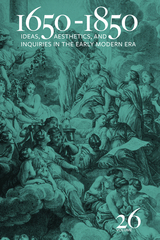
Volume 26 of 1650–1850: Ideas, Aesthetics, and Inquiries in the Early Modern Era travels beyond the usual discussions of power, identity, and cultural production to visit the purlieus and provinces of Britain’s literary empire. Bulging at its bindings are essays investigating out-of-the-way but influential ensembles, whether female religious enthusiasts, annotators of Maria Edgeworth’s underappreciated works, or modern video-based Islamic super-heroines energized by Mary Wollstonecraft’s irreverance. The global impact of the local is celebrated in studies of the personal pronoun in Samuel Johnson’s political writings and of the outsize role of a difficult old codger in catalyzing the literary career of Charlotte Smith. Headlining a volume that peers into minute details in order to see the outer limits of Enlightenment culture is a special feature on metaphor in long-eighteenth-century poetry and criticism. Five interdisciplinary essays investigate the deep Enlightenment origins of a trope usually associated with the rise of Romanticism. Volume 26 culminates in a rich review section containing fourteen responses to current books on Enlightenment religion, science, literature, philosophy, political science, music, history, and art.
About the annual journal 1650-1850
1650-1850 publishes essays and reviews from and about a wide range of academic disciplines: literature (both in English and other languages), philosophy, art history, history, religion, and science. Interdisciplinary in scope and approach, 1650-1850 emphasizes aesthetic manifestations and applications of ideas, and encourages studies that move between the arts and the sciences—between the “hard” and the “humane” disciplines. The editors encourage proposals for special features that bring together five to seven essays on focused themes within its historical range, from the Interregnum to the end of the first generation of Romantic writers. While also being open to more specialized or particular studies that match up with the general themes and goals of the journal, 1650-1850 is in the first instance a journal about the artful presentation of ideas that welcomes good writing from its contributors.
ISSN 1065-3112.
Published by Bucknell University Press. Distributed worldwide by Rutgers University Press.
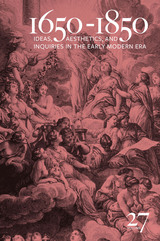
ISSN: 1065-3112
Published by Bucknell University Press, distributed worldwide by Rutgers University Press.
Published by Bucknell University Press, distributed worldwide by Rutgers University Press.

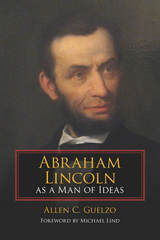
Despite the most meager of formal educations, Lincoln had a tremendous intellectual curiosity that drove him into the circle of Enlightenment philosophy and democratic political ideology. And from these, Lincoln developed a set of political convictions that guided him throughout his life and his presidency. This compilation of ten essays from Lincoln scholar Allen C. Guelzo uncovers the hidden sources of Lincoln’s ideas and examines the beliefs that directed his career and brought an end to slavery and the Civil War.
Martin Geck opens the book with an enthralling series of cultural, political, and musical motifs that run throughout the symphonies. A leading theme is Beethoven’s intense intellectual and emotional engagement with the figure of Napoleon, an engagement that survived even Beethoven’s disappointment with Napoleon’s decision to be crowned emperor in 1804. Geck also delves into the unique ways in which Beethoven approached beginnings and finales in his symphonies, as well as his innovative use of particular instruments. He then turns to the individual symphonies, tracing elements—a pitch, a chord, a musical theme—that offer a new way of thinking about each work and will make even the most devoted fans of Beethoven admire the symphonies anew.
Offering refreshingly inventive readings of the work of one of history’s greatest composers, this book shapes a fascinating picture of the symphonies as a cohesive oeuvre and of Beethoven as a master symphonist.

"Center" is a commonly used term with a variety of meanings. According to editors Liah Greenfeld and Michel Martin, "center" carries a twofold meaning when used as a concept. In its first sense, it is a synonym for "central value system," referring to irreducible values and beliefs that establish the identity of individuals and bind them into a common universe. In its second sense, "center" refers to "central institutional system," the authoritative institutions and persons who often express or embody the central value system. Both meanings imply a corresponding idea of "periphery," referring both to the elements of society that need to be integrated and to institutions and persons who lack authority.
The original essays compiled in this volume examine and apply the concept of the center in different contexts. The contributors come from a broad range of disciplines—classics, religion, philosophy, history, literary criticism, anthropology, political science, and sociology—which serves to underscore the far-reaching significance of the Shilsean theory of society. The interrelated subsets of the "center-periphery" theme addressed here include: symbolic systems, intellectuals, the expansion of the center into the periphery, parallel concepts in the work of other scholars besides Shils, and the paths of research inspired by these concepts. The volume features an introspective essay by Shils himself, in which he reexamines his central ideas in the light of new experiences and the ideas of others, some of them contained in this volume.
By drawing together such diverse scholars around a unified idea, this collection achieves a cohesion that makes it an exciting contribution to the comparative analysis of social and cultural systems. A collective effort in social theory, Center: Ideas and Institutions is a testimony to the breadth and complexity of one of man's ideas.
These incisive writings link the fate of the labor movement to the transformations in the shape of world capitalism, to the rise of the civil rights movement, and to the activists and intellectuals who have played such important roles. Tracing broad patterns of political thought, Lichtenstein offers important perspectives on the relationship of labor and the state, the tensions that sometimes exist between a culture of rights and the idea of solidarity, and the rise of conservatism in politics, law, and intellectual life. The volume closes with portraits of five activist intellectuals whose work has been vital to the conflicts that engage the labor movement, public policy, and political culture.


Exchange of Ideas launches a breathtakingly ambitious new economic history of American higher education. In this volume, Adam R. Nelson focuses on the early republic, explaining how knowledge itself became a commodity, as useful ideas became salable goods and American colleges were drawn into transatlantic commercial relations. American scholars might once have imagined that higher education could sit beyond the sphere of market activity—that intellectual exchange could transcend vulgar consumerism—but already by the end of the eighteenth century, they saw how ideas could be factored into the nation’s balance of trade. Moreover, they concluded that it was the function of colleges to oversee the complex process whereby knowledge could be priced and purchased. The history of capitalism and the history of higher education, Nelson reveals, are intimately intertwined—which raises a host of important and strikingly urgent questions. How do we understand knowledge and education as commercial goods? Who should pay for them? And, fundamentally, what is the optimal system of higher education in a capitalist democracy?
In the era of #MeToo, Trump, and online harassment, innovative progressive feminist voices are more essential than ever. With her latest book, Deborah Cameron considers feminism from all sides—as an idea, as a theoretical approach, and as a political movement. Written in the succinct, sharp style that has made Cameron’s feminist linguistics blog so popular, this short book lays out past and present debates on seven key topics: domination, rights, work, femininity, sex, culture, and the future. Feminism emphasizes the diversity of feminist thought, including queer, women-of-color, and trans perspectives. Cameron’s clear and incisive account untangles the often confusing strands of one of history’s most important intellectual and political movements.
Broad in scope but refreshingly concise, this book is perfect for anyone who needs a straightforward primer on the complex history of feminism, a nuanced explanation of key issues and debates, or strategic thinking about the questions facing activists today.
Great Gatsby was created--and challenges accepted interpretations of
Fitzgerald's greatest novel.
"The Great Gatsby" and Fitzgerald's World of Ideas
focuses on F. Scott Fitzgerald and the prevailing ideas and values
that permeated American society in the late teens and early twenties, providing
a vivid portrait of the intellectual and cultural milieu in which The
Great Gatsby was produced.
This new and original reading of Gatsby discloses
Fitzgerald's remarkable awareness of the issues of his time and his debt
to such philosophers and critics as William James, Josiah Royce, George
Santayana, John Dewey, Walter Lippman, H. L. Mencken, and Edmund Wilson.
Ronald Berman's fresh approach considers the meaning of various ideas important
to the novel: for example, those moral qualities governing both social
and individual life. Berman's reading of the text reveals extraordinary
emphases on matters that could productively be described as philosophical
-- the nature of friendship, love, and the good life. But the text of the
novel has many echoes, and the same concern with moral issues -- especially
those issues affecting democratic life - can be found in a number of other
texts of the first quarter of the century. Vigorously debated throughout
Fitzgerald's own lifetime, these texts shed a completely new light on the
idealism of The Great Gatsby and on the penetrating view it has
of life in a new form of American democracy.
A noted Fitzgerald scholar, Berman makes it clear that
accepted interpretations of The Great Gatsby and of Fitzgerald's
work in general must be changed. Berman demonstrates that Fitzgerald wrote
within a vast dialectic, relating the ideas of the twenties to those of
the "old America" described in so many of his works. Gatsby, Nick Carraway,
and the other characters of Fitzgerald's greatest novel all have to consider
not only their relationship to the present but also their distance from
what was once a highly meaningful past.
Hörber looks at the two central works that would alter the course of economic thought: Keynes’s The General Theory of Employment, Interest, and Money and Hayek’s The Road to Serfdom. Placing them within the context of the devastation that followed World War I, he explains how the historical conditions in which these books were written help us better understand how their lessons can illuminate the economic and political phenomena of our own era, such as the recent financial crisis, globalization, and European integration. He shows how Keynes’s emphasis on government regulation through monetary and fiscal policy and Hayek’s great cautions against the tyrannies that can so easily arise from central planning have led to competing schools of economic thought. Making accessible classic economic theory and employing a qualitative method of economics, he offers an articulated account of how history has led to our current economic environment.
With a broad perspective and incisive but clear examinations of important economic theories, this book places the two great economists of the twentieth-century within their historical context, illuminating how much we have learned—and can still learn—from them both.
This book reflects Krieger's conviction that the value of intellectual history is as a source of orientation in a world of information overload. In Krieger's hands, intellectual history has stressed "thinking-through" the relations between ideas and events rather than the compilation and recapitulation of mere facts and historical categories.
The essays in this collection cover a range of topics, including history of ideas, intellectual history, early modern political history, German political history, Hegel, Marx, and more. Many of these essays are already classics of historical scholarship. With the demise of the Soviet Union and state-sponsored Marxism, and with the reunification of Germany, Krieger's history takes on new relevance and a renewed importance.
With a splendid introduction by Michael Ermath, and an extensive bibliography of Krieger's most important books and essays, this is a "must read" for every serious student of modern history.
Leonard Krieger was University Professor Emeritus in the Department of History at the University of Chicago until his death in 1990.
While the Victorian novel famously describes, catalogs, and inundates the reader with things, the protocols for reading it have long enjoined readers not to interpret most of what crowds its pages. The Ideas in Things explores apparently inconsequential objects in popular Victorian texts to make contact with their fugitive meanings. Developing an innovative approach to analyzing nineteenth-century fiction, Elaine Freedgood here reconnects the things readers unwittingly ignore to the stories they tell.
Building her case around objects from three well-known Victorian novels—the mahogany furniture in Charlotte Brontë’s Jane Eyre, the calico curtains in Elizabeth Gaskell’s Mary Barton, and “Negro head” tobacco in Charles Dickens’s Great Expectations—Freedgood argues that these things are connected to histories that the novels barely acknowledge, generating darker meanings outside the novels’ symbolic systems. A valuable contribution to the new field of object studies in the humanities, The Ideas in Things pushes readers’ thinking about things beyond established concepts of commodity and fetish.
The volume centers on the themes of slavery and sexuality; abolitionism; Black internationalism; Black protest, politics, and power; and the intersections of the digital humanities and Black intellectual history. The essays draw from diverse methodologies and fields to examine the ideas and actions of Black thinkers from the eighteenth century to the present, offering fresh insights while creating space for even more creative approaches within the field.
Timely and incisive, Ideas in Unexpected Places encourages scholars to ask new questions through innovative interpretive lenses—and invites students, scholars, and other practitioners to push the boundaries of Black intellectual history even further.

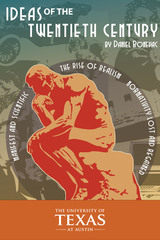
The twentieth century ushered in significant progress, as philosophers, scientists, artists, and poets across the world improved the way we lived. Yet the last century also brought increased levels of war, tyranny, and genocide, and people lost faith in values. Now, thinkers and leaders are reconstructing theories of value and creating institutions to embody them. In this thought-provoking, broad-sweeping course, you will learn how philosophy, art, literature, and history shaped the past century and continue to impact our world today.


Inventing Africa is a critical account of narratives which have selectively interpreted and misinterpreted the continent's deep past.
Writers have created alluring images of lost cities, vast prehistoric migrations and golden ages of past civilisations. Debates continue on the African origins of humankind, the contributions of ancient Egypt to the world and Africa's importance to global history.
Images of 'Africa', simplifying a complex and diverse continent, have existed from ancient Mediterranean worlds, slave trading nations and colonial powers to today's political elites, ecotourists and aid-givers. Robin Derricourt draws on his background as publisher and practitioner in archaeology and history to explore the limits and the dangers of simplifications, arguing - as with Said's concept of 'Orientalism' - that ambitious ideas can delude or oppress as well as inform.
Defending Africa against some of the grand narratives that have been imposed upon its peoples, Inventing Africa will spark new debates in the history of Africa and of archaeology.
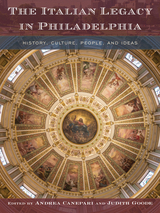
Italian arts and culture have been a significant influence on Philadelphia dating back to Thomas Jefferson and colonial times. Throughout the ensuing decades, Italian art and architecture styles flourished, and wealthy Philadelphians traveled to Italy and brought back objects to display in emerging institutions of art and culture. New immigration formed neighborhoods—such as South Philly, home to the Italian Market—and Italian business leaders, politicians, artists, musicians and sports figures came to prominence and became part of the social fabric of the city.
This glorious volume, The Italian Legacy in Philadelphia, celebrates the history, impact, and legacy of this vibrant community, tracing four periods of key transformation in the city’s political, economic, and social structures. The editors and contributors chronicle the changing dynamics of the city as Italian immigrants established themselves and as they continue to have lively interactions with people and institutions in Italy.
Interdisciplinary essays, along with nearly 250 gorgeous images, explore the changing perspectives and styles of those who contributed Italian influences. As settlers and their descendants brought everyday cultural practices, memories, and traditions, they created different Italian-American experiences that became important parts of American culture, a legacy that is thriving in contemporary, globalized Philadelphia.
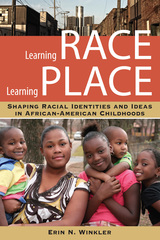
In an American society both increasingly diverse and increasingly segregated, the signals children receive about race are more confusing than ever. In this context, how do children negotiate and make meaning of multiple and conflicting messages to develop their own ideas about race? Learning Race, Learning Place engages this question using in-depth interviews with an economically diverse group of African American children and their mothers.
Through these rich narratives, Erin N. Winkler seeks to reorient the way we look at how children develop their ideas about race through the introduction of a new framework—comprehensive racial learning—that shows the importance of considering this process from children’s points of view and listening to their interpretations of their experiences, which are often quite different from what the adults around them expect or intend. At the children’s prompting, Winkler examines the roles of multiple actors and influences, including gender, skin tone, colorblind rhetoric, peers, family, media, school, and, especially, place. She brings to the fore the complex and understudied power of place, positing that while children’s racial identities and experiences are shaped by a national construction of race, they are also specific to a particular place that exerts both direct and indirect influence on their racial identities and ideas.
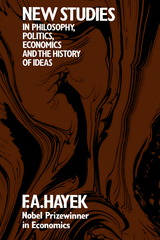
Following on F. A. Hayek's previous work Studies in Philosophy, Politics, and Economics (1967), New Studies in Philosophy, Politics, Economics and the History of Ideas collects some of Hayek's most notable essays and lectures dealing with problems of philosophy, politics and economics, with many of the essays falling into more than one of these categories. Expanding upon the previous volume the present work also includes a fourth part collecting a series of Hayek's writings under the heading 'History of Ideas.'
Of the articles contained in this volume the lectures on 'The Errors of Constructivism' (chapter 1) and 'Competition as a Discovery Procedure' (chapter 12) have been published before only in German, while the article on 'Liberalism' (chapter 9) was written in English to be published in an Italian translation in the Enciclopedia del Novicento by the Istituto della Enciclopedia Italiana at Rome.

American state and Canadian provincial governments have dealt with rapidly rising auto insurance rates in different ways over the last two decades, a difference many attribute to variances in political pressure exerted by interest groups such as trial attorneys and insurance companies. Edward L. Lascher, Jr., argues that we must consider two additional factors: the importance of politicians’ beliefs about the potential success of various solutions and the role of governmental institutions.
Using case studies from both sides of the border, Lascher shows how different explanations of the problem and different political structures affect insurance reform. In his conclusion, Lascher moves beyond auto insurance to draw implications for regulation and policymaking in other areas.
This book explores how policy ideas are spread—or diffused—in an age in which policymaking has become increasingly complex and specialized. Using the concept of enterprise zones as a case study in policy diffusion, Karen Mossberger compares the process of their adoption in Virginia, Indiana, Michigan, New York, and Massachusetts over a twelve-year period.
Enterprise zones were first proposed by the Reagan administration as a supply-side effort to reenergize inner cities, and they were eventually embraced by liberals and conservatives alike. They are a compelling example of a policy idea that spread and evolved rapidly. Mossberger describes the information networks and decisionmaking processes in the five states, assessing whether enterprise zones spread opportunistically, as a mere fad, or whether well-informed deliberation preceded their adoption.

Hunan province has long interested students of modern China. A citadel of orthodoxy in the nineteenth century and a mainspring of revolution in the twentieth, it is an ideal focus for a study of the great transformation that occurred during the last two decades of the Ch'ing dynasty.
Hunan's experience illuminates key questions. How did foreign imperialism affect Chinese society? What ties bound the provinces to the central government, and how were these ties loosened to permit the secession movement of 1911? Why did nationalism emerge so abruptly and strongly after 1895? How did it differ from the antiforeignism that preceded it, and what did it contribute to the movement against the dynasty? As nationalism became strong, why did social revolution remain weak?
Since Hunanese leadership, moving from orthodoxy through revolution, constitutes one of the great continuities in China's modern history, the answers that a study of Hunan gives to these questions are relevant to larger patterns of change in China as a whole. Charlton Lewis has written a valuable handbook of national as well as provincial events during the turbulent period around the turn of the century.
There exists today a tragic rift between Americans and the world’s Muslims. Yet in the immediate aftermath of 9/11, there was widespread sympathy for the U.S. throughout the Muslim world. This book explores what happened. It examines the disconnect that leads Americans and Muslims to view the same words and images in fundamentally different ways. Partly a result of a centuries-old 'us' against 'them' dichotomy, the problem is exacerbated by an increasingly polarised media and by leaders on both sides who either don't understand or don't care what impact their words and policies have in the world at large.
Journalist-scholar Lawrence Pintak, a former CBS News Middle East correspondent, argues that the Arab media revolution and the rise of 'patriot-journalists' in the US marginalized voices of moderation, distorting perceptions on both sides of the divide with potentially disastrous results.
Built on the author's extensive journalistic experience, the book will appeal to policymakers, students of media studies, Middle East studies and Islamic studies, and general current affairs readers.
During the 1980s and early 1990s, Australia and New Zealand extensively deregulated their economies to create two of the most open markets in the industrialized world. Drawing on interviews with more than 180 leading policymakers in Australia and New Zealand—including former prime ministers, ministers of finance, treasurers, and public servants—Shaun Goldfinch analyzes the factors that made the deregulation process different in each country.
Describing specific policies—including liberalization of financial and capital markets, lowering of trade barriers, the floating of the exchange rate, and privatization—he compares the "crash-through" approach that characterized reform in New Zealand with the "bargained consensus" that underpinned change in Australia. In Australia, influences on policy were relatively diffuse and implementations open and decentralized. New Zealand’s more centralized government structure resulted in a concentration of influence and less deliberation. He contrasts rapid and gradual change, arguing that the latter may yield better policy results and prevent political instability.
Shedding new light on the economic policymaking process, including the role of economic ideas, institutions, and policy elites, this book will appeal to both students and professionals in interested in public policy, comparative politics, and economics.
In addition to revising our view of the interwar period and the building of European democracies, this book cuts against the grain of most current theorizing in political science by explicitly discussing when and how ideas influence political behavior. Even though German and Swedish Social Democrats belonged to the same transnational political movement and faced similar political and social conditions in their respective countries before and after World War I, they responded very differently to the challenges of democratization and the Great Depression--with crucial consequences for the fates of their countries and the world at large.
Explaining why these two social democratic parties acted so differently is the primary task of this book. Berman's answer is that they had very different ideas about politics and economics--what she calls their programmatic beliefs. The Swedish Social Democrats placed themselves at the forefront of the drive for democratization; a decade later they responded to the Depression with a bold new economic program and used it to build a long period of political hegemony. The German Social Democrats, on the other hand, had democracy thrust upon them and then dithered when faced with economic crisis; their haplessness cleared the way for a bolder and more skillful political actor--Adolf Hitler.
This provocative book will be of interest to anyone concerned with twentieth-century European history, the transition to democracy problem, or the role of ideas in politics.
Sounds of the Modern Nation explores the development of modernist and avant-garde art music styles and aesthetics in Mexico in relation to the social and cultural changes that affected the country after the 1910-1920 revolution. Alejandro Madrid argues that these modernist works provide insight into the construction of individual and collective identities based on new ideas about modernity and nationality. Instead of depicting a dichotomy between modernity and nationalism, Madrid reflects on the multiple intersections between these two ideas and the dialogic ways through which these notions acquired meaning.
Madrid challenges the view that Latin American modernist music and other art were mere imitations of European trends, advancing instead the argument that Latin American artists resignified European ideas according to their specific historical and cultural circumstances. His work shows how microtonal and futurist music, modernist and avant-garde aesthetics, as well as indigenist and indianist ideas, entered a process of negotiation that ultimately shaped the ideological framework of twentieth-century Mexico.
Including essays by leading surrealists and other major writers on the movement, the volume addresses the key themes of identity, otherness, freedom and morality, and poetry. The texts uncover, among other things, the significance of surrealism for the antifascist and anticolonialist movements and the various manifestations of surrealism in the years after World War II. Giving space to the many different voices that made up the movement, and placing them for the first time within a clear and coherent historical framework, The Surrealism Reader radically revises the popular understanding of what, and when, surrealism was—making this book an essential reference for students, scholars, and all those interested in the central place of surrealism within twentieth-century thought and culture.
This book is a collection of essays, stories, lists, examples, dialogues, and ideas, all offered with the aim of helping artists create and implement effective teaching based on their own expertise and strengths. The Handbook addresses three core questions: “What will I teach?” “How will I teach it?” and “How will I know if my teaching is working?” It also recognizes that teaching is a dynamic process that requires critical reflection and thoughtful adjustment in order to foster a supportive artistic environment.
Instead of offering rigid formulas, this book is centered on practice—the actual doing and making of teaching artist work. Experience-based and full of heart, the Teaching Artist Handbook will encourage artists of every experience level to create an original and innovative practice that inspires students and the artist.
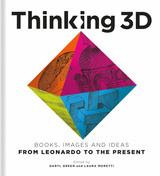
Through essays on some of the world’s greatest artists and thinkers—such as Leonardo da Vinci, Luca Pacioli, Andreas Vesalius, Johann Kepler, Galileo Galilei, William Hunter, and many more—this book tells the story of how of we learned to communicate three-dimensional forms on the two-dimensional page. It features some of Leonardo da Vinci’s ground-breaking drawings now in the Royal Collections and British Library as well as extraordinary anatomical illustrations, early paper engineering such as volvelles and flaps, beautiful architectural plans, and even views of the moon. With in-depth analysis of more than forty manuscripts and books, Thinking 3D also reveals the impact that developing techniques had on artists and draftsmen throughout time and across space, culminating in the latest innovations in computer software and 3D printing.
Not quite a history of geology, Thinking about the Earth is a history of the geological tradition of Western science. Beginning with a discussion of "organic" views of the earth in ancient cultures, David Oldroyd traverses such topics as "mechanical" and "historicist" views of the earth, map-work, chemical analyses of rocks and minerals, geomorphology, experimental petrology, seismology, theories of mountain building, and geochemistry. He brings us back to the idea that the earth may, in a sense, be regarded as a living entity, or at least that life is an essential feature of its behavior.
Oldroyd offers a broad-brush contribution to the history of ideas and theories about the earth, providing a general synthesis of what science-historians have written about the history of the earth sciences. He shows us that ideas about the earth have been changing constantly since the beginnings of geological science in the seventeenth and eighteenth centuries, and indeed that ideas changed much more rapidly after the establishment of this science than in preceding centuries.
Thinking about the Earth does not assume previous knowledge of earth science. What it does require is an openness to the notion that an understanding of what geologists have to tell us today about the earth can be achieved by examining the evolving history of ideas in geology. This book will be of considerable interest to historians of science, historians of ideas, geologists, students of earth science, and general readers as well.
Alex Kozulin, translator of Vygotsky's work and distinguished Russian-American psychologist, has written the first major intellectual biography about Vygotsky's theories and their relationship to twentieth-century Russian and Western intellectual culture. He traces Vygotsky's ideas to their origins in his early essays on literary criticism, Jewish culture, and the psychology of art, and he explicates brilliantly his psychological theory of language, thought, and development.
Kozulin's biography of Vygotsky also reflects many of the conflicts of twentieth-century psychology--from the early battles between introspectionists and reflexologists to the current argument concerning the cultural and social, rather than natural, construction of the human mind.
Vygotsky was a contemporary of Freud and Piaget, and his tragically early death and the Stalinist suppression of his work ensured that his ideas did not have an immediate effect on Western psychology. But the last two decades have seen his psychology become highly influential while that of other theoretical giants has faded.
The women’s movement is perhaps the most baffling of the recent social reforms to sweep the United States. It is composed of numerous distinct groups, each with specific interests and goals, each with individual leaders and literature. What are the philosophies behind these groups? Who are their leaders and how have their ideas evolved? Do they have a vital connection with the women’s movement of the past? And where are feminist groups headed? In this study that brilliantly illuminates the literature and purposes of feminists, What Women Want: The Ideas of the Movement, Gayle Graham Yates has produced the first comprehensive history of feminist women’s groups.
Concentrating chiefly on the movement from 1959 to 1973, when it erupted in such activist groups as the National Organization for Women (NOW), the Women’s Equity Action League (WEAL), and the National Women’s Political Caucus (NWPC), the author analyzes in detail their literature, factions, and issues. Her survey encompasses virtually every major expression of the movement’s multiple facets, from The Feminine Mystique, Born Female, and Sexual Politics, to Sex and the Single Girl and Memoirs of an Ex-Prom Queen. In a significant breakthrough, the author discerns the pattern underlying this diversity, which should contribute to a fuller understanding of future developments in the women’s struggle. She accomplishes this by identifying three key attitudes informing the movement: the feminist, the women’s liberationist, and the androgynous or cooperative male–female relationship.
The author provides a sensitive, yet critical analysis of the chief spokeswomen in contemporary America, activists like Gloria Steinem, Shulamith Firestone, and Ti-Grace Atkinson. She treats each of the feminist ideologies with balance and respect, yet is refreshingly unafraid to criticize new developments. She bolsters her own conclusions in support of an androgynous or “equal sexual society” with a judicious spirit. Scholars and the general public alike will find Yates’s book not only an indispensable contribution to women’s studies, but also a strong and timely addition to contemporary American life and thought.
READERS
Browse our collection.
PUBLISHERS
See BiblioVault's publisher services.
STUDENT SERVICES
Files for college accessibility offices.
RECENTLY PUBLISHED





UChicago Accessibility Resources
home | accessibility | search | about | contact us
BiblioVault ® 2001 - 2024
The University of Chicago Press