
 A SCHOLARLY BOOK REPOSITORY
This profile of the work of the Cambridge University Moving Image Studio (CUMIS), presents a strong argument that new developments in digital media are absolutely dependent on an understanding of traditional excellence. The book stands alone in placing equal emphasis on theoretical and practical aspects of its subject matter and avoids jargon so as to be easily understood by the general reader as well as the specialist.
Chapters discuss:
• animation • navigable architectural environments • moving image narrativity
• questions of truth and representation • virtuality/reality • synthetic imaging
• interactivity
This broad analysis of current research, teaching and media production contains essential information for all those working or studying in the areas of multimedia, architecture, film and television.
The book is designed as a core text for the Cambridge University 1 year MPhil Degree in Architecture and the Moving Image.

Analyzing van Hoogstraten's painting treatise, illusionistic pictures, ingenious perspective boxes, and witty trompe-l'oeil images, Brusati reveals the crucial role these endeavors played in the forging of van Hoogstraten's professional and social identity. Brusati looks at the historical circumstances of van Hoogstraten's career, which he fashioned from a convergence of Dutch cultural practices, family genealogy, and his considerable entrepreneurial acumen. She shows how Van Hoogstraten exploited the court patronage system to secure the worth of his work in the newer market culture of the Dutch Republic.
Brusati explores Van Hoogstraten's use of illusionistic artifice in his art and writing to shed new light on the much-disputed nature of Dutch "realism", and she discusses how a notion of "experimental artistry", which linked representational craft to the production of knowledge, informed Van Hoogstraten's many projects and framed the terms within which he and his colleagues understood artistic achievement during this period.

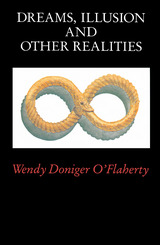
"Dazzling analysis. . . . The book is firm and convincing once you appreciate its central point, which is that in traditional Hindu thought the dream isn't an accident or byway of experience, but rather the locus of epistemology. In its willful confusion of categories, its teasing readiness to blur the line between the imagined and the real, the dream actually embodies the whole problem of knowledge. . . . [O'Flaherty] wants to make your mental flesh creep, and she succeeds."—Mark Caldwell, Village Voice
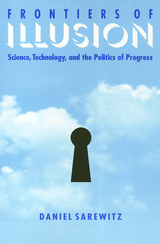
For the past fifty years, science and technology—supported with billions of dollars from the U.S. government—have advanced at a rate that would once have seemed miraculous, while society's problems have grown more intractable, complex, and diverse. Yet scientists and politicians alike continue to prescribe more science and more technology to cure such afflictions as global climate change, natural resource depletion, overpopulation, inadequate health care, weapons proliferation, and economic inequality.
Daniel Sarewitz scrutinizes the fundamental myths that have guided the formulation of science policy for half a century—myths that serve the professional and political interests of the scientific community, but often fail to advance the interests of society as a whole. His analysis ultimately demonstrates that stronger linkages between progress in science and progress in society will require research agendas that emerge not from the intellectual momentum of science, but from the needs and goals of society.

The Future of an Illusion was first published in 1989. Minnesota Archive Editions uses digital technology to make long-unavailable books once again accessible, and are published unaltered from the original University of Minnesota Press editions.
The Future of an Illusion documents the pivotal role Constance Penley has played in the development of feminist film theory. Penley analyzes the primary movements that have shaped the field: the conjunction of feminism, film theory, and psychoanalysis, and the inherent debates surrounding the politics of women and representation. These debates center on the position of women in the classical Hollywood narrative, the construction of the spectator's desire in pornography and eroticism, and the implicitly male bias in psychoanalytically oriented film theory. Essential to anyone studying the sexual policies of representation, The Future of an Illusion ranges from avant-garde films to video, popular cinema, television, literature, and critical and cultural theory.
Constance Penley is associate professor of English and film studies at the University of Rochester. A co-editor of the journal Camera Obscura,she is the editor of Feminism and Film Theory.
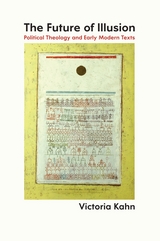
Kahn draws on theorists such as Carl Schmitt, Leo Strauss, Walter Benjamin, and Hannah Arendt and their readings of Shakespeare, Hobbes, Machiavelli, and Spinoza to illustrate that the dialogue between these modern and early modern figures can help us rethink the contemporary problem of political theology. Twentieth-century critics, she shows, saw the early modern period as a break from the older form of political theology that entailed the theological legitimization of the state. Rather, the period signaled a new emphasis on a secular notion of human agency and a new preoccupation with the ways art and fiction intersected the terrain of religion.

Illusion and Disillusionment: Travel Writing in the Modern Age seeks to understand, expand, and challenge the boundaries of the modern travelogue across several literary traditions. Through an engaging cast of characters—China-bound missionaries, an Indo-Persian diplomat, a Turkish exile in India, a French schoolteacher touring America, Arab students in Moscow, a Japanese woman writer in Europe—this volume extends the study of travel writing beyond the frameworks of colonialism, imperialism, and Orientalism, focusing on the experience of travel itself.
Ranging from the eighteenth to the twentieth centuries, its eight essays analyze travelers from varied nationalities and social backgrounds, who followed different itineraries, used different means of transportation, and wrote for different audiences. The authors place the East and South Asian, Middle Eastern, and European texts and travelers in their socio-historical contexts. Exploring recurrent themes and structures in a set of travel narratives, these essays contribute to broader comparative and cross-cultural studies of travel, self-writing, and transnational lives.
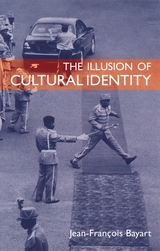
In this highly sophisticated book, Bayart shows that the very idea of cultural identity prevents us from grasping the cultural dimensions of political action and economic development. Identities, he argues, are fluid, never homogeneous, and sometimes invented. Political repertoires are instead created through imagined, highly ambiguous aspects of culture—what he calls "imaginaires." For instance, the long beards worn by men in some fundamentalist groups are thought to be key to their core identities and thus assumed to be in conflict with modern values. These beards, however, do not stand in the way of the men's use of technology or their embrace of capitalism—an example Bayart uses to demonstrate the equivocality of cultural identity. The theoretical implications of Bayart's analysis emerge from a fascinating collection of historical examples that often surprise and always instruct.
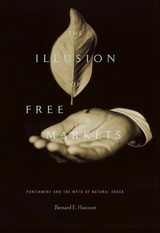
It is widely believed today that the free market is the best mechanism ever invented to efficiently allocate resources in society. Just as fundamental as faith in the free market is the belief that government has a legitimate and competent role in policing and the punishment arena. This curious incendiary combination of free market efficiency and the Big Brother state has become seemingly obvious, but it hinges on the illusion of a supposedly natural order in the economic realm. The Illusion of Free Markets argues that our faith in “free markets” has severely distorted American politics and punishment practices.
Bernard Harcourt traces the birth of the idea of natural order to eighteenth-century economic thought and reveals its gradual evolution through the Chicago School of economics and ultimately into today’s myth of the free market. The modern category of “liberty” emerged in reaction to an earlier, integrated vision of punishment and public economy, known in the eighteenth century as “police.” This development shaped the dominant belief today that competitive markets are inherently efficient and should be sharply demarcated from a government-run penal sphere.
This modern vision rests on a simple but devastating illusion. Superimposing the political categories of “freedom” or “discipline” on forms of market organization has the unfortunate effect of obscuring rather than enlightening. It obscures by making both the free market and the prison system seem natural and necessary. In the process, it facilitated the birth of the penitentiary system in the nineteenth century and its ultimate culmination into mass incarceration today.
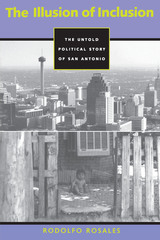
To many observers, the 1981 election of Henry Cisneros as mayor of San Antonio, Texas, represented the culminating victory in the Chicano community's decades-long struggle for inclusion in the city's political life. Yet, nearly twenty years later, inclusion is still largely an illusion for many working-class and poor Chicanas and Chicanos, since business interests continue to set the city's political and economic priorities.
In this book, Rodolfo Rosales offers the first in-depth history of the Chicano community's struggle for inclusion in the political life of San Antonio during the years 1951 to 1991, drawn from interviews with key participants as well as archival research. He focuses on the political and organizational activities of the Chicano middle class in the context of post-World War II municipal reform and how it led ultimately to independent political representation for the Chicano community. Of special interest is his extended discussion of the role of Chicana middle-class women as they gained greater political visibility in the 1980s.

This is the first book to challenge the "broken-windows" theory of crime, which argues that permitting minor misdemeanors, such as loitering and vagrancy, to go unpunished only encourages more serious crime. The theory has revolutionized policing in the United States and abroad, with its emphasis on policies that crack down on disorderly conduct and aggressively enforce misdemeanor laws.
The problem, argues Bernard Harcourt, is that although the broken-windows theory has been around for nearly thirty years, it has never been empirically verified. Indeed, existing data suggest that it is false. Conceptually, it rests on unexamined categories of "law abiders" and "disorderly people" and of "order" and "disorder," which have no intrinsic reality, independent of the techniques of punishment that we implement in our society.
How did the new order-maintenance approach to criminal justice--a theory without solid empirical support, a theory that is conceptually flawed and results in aggressive detentions of tens of thousands of our fellow citizens--come to be one of the leading criminal justice theories embraced by progressive reformers, policymakers, and academics throughout the world? This book explores the reasons why. It also presents a new, more thoughtful vision of criminal justice.
In a dry Kansas riverbed, a troop of young girls finds a human hand. This discovery leads Billy Spire, the tough and broken sheriff of Ewing County, to investigate and confront the depths of his community and of himself: the racism, the dying economy, the lies and truths of friendship, grievances of the past and present, and even his own injured marriage.
But like any town where people still breathe, there is also love and hope and the possibility of redemption. To flyover folks, Ewing County appears nothing more than a handful of empty streets amid crop circles and the meandering, depleted Arkansas River. But the truth of this place—the interwoven lives and stories—is anything but simple.

Will Saudi Arabia join the democratic wave in the Middle East? The uprisings and revolutions of 2011 do not, yet, seem to have affected the stability of the House of Saud, which remains secretive, highly repressive and propped up by the West.
The Islamic Utopia uses a range of sources including first-hand reporting and recently released WikiLeaks documents to examine Saudi Arabia in the decade after the 9/11 attacks, when King Abdullah’s 'reform' agenda took centre stage in public debate. It considers Saudi claims of 'exemption' from the democratic demands of the Arab Spring.
Andrew Hammond argues that for too long Western media and governments have accepted Saudi leaders' claims to be a buttress against jihadist Islam and that a new policy is needed towards the House of Saud.

As much a portrait of his time as a biography of the man, Karl Marx: Greatness and Illusion returns the author of Das Kapital to his nineteenth-century world, before twentieth-century inventions transformed him into Communism’s patriarch and fierce lawgiver. Gareth Stedman Jones depicts an era dominated by extraordinary challenges and new notions about God, human capacities, empires, and political systems—and, above all, the shape of the future.
In the aftermath of the Battle of Waterloo, a Europe-wide argument began about the industrial transformation of England, the Revolution in France, and the hopes and fears generated by these occurrences. Would the coming age belong to those enthralled by the revolutionary events and ideas that had brought this world into being, or would its inheritors be those who feared and loathed it? Stedman Jones gives weight not only to Marx’s views but to the views of those with whom he contended. He shows that Marx was as buffeted as anyone else living through a period that both confirmed and confounded his interpretations—and that ultimately left him with terrible intimations of failure.
Karl Marx allows the reader to understand Marx’s milieu and development, and makes sense of the devastating impact of new ways of seeing the world conjured up by Kant, Hegel, Feuerbach, Ricardo, Saint-Simon, and others. We come to understand how Marx transformed and adapted their philosophies into ideas that would have—through twists and turns inconceivable to him—an overwhelming impact across the globe in the twentieth century.
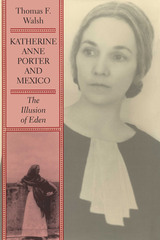
In 1920, an unknown journalist named Katherine Anne Porter first sojourned in Mexico. When she left her "familiar country" for the last time in 1931, she was the celebrated author of Flowering Judas and Other Stories and had accumulated a wealth of experiences and impressions that would inspire numerous short stories, essays, and reviews, as well as the opening section of her only novel, Ship of Fools.
In this perceptive study of Porter's Mexican experiences, Thomas Walsh traces the important connections between those events and her literary works. Separating fact from the fictions that Porter constantly created about her life, he follows the active role that she played in Mexican political and intellectual life—even to the discovery of a plot to overthrow the Mexican government, which eventually figured in Flowering Judas.
Most important, Walsh discerns how the great swings between depression and elation that characterized Porter's emotional life influenced her alternating visions of Mexico. In such works as "Xochimilco," Porter saw Mexico as an earthly Eden where hopes for a better society could be realized, but in other stories, including "The Fiesta of Guadalupe," she depicts Mexico as a place of hopeless oppression for the native peoples.
Mexico, Porter once said, gave her back her Texas past. Given the unhappiness of that past, her feelings toward Mexico would always be ambivalent, but her Mexican experiences influenced all her subsequent works to some degree, even those pieces not specifically Mexican in setting. Walsh's study, then, is an essential key for anyone seeking greater understanding of the life or works of Katherine Anne Porter.
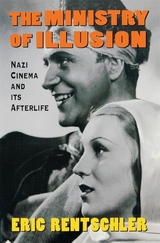
German cinema of the Third Reich, even a half-century after Hitler's demise, still provokes extreme reactions. "Never before and in no other country," observes director Wim Wenders, "have images and language been abused so unscrupulously as here, never before and nowhere else have they been debased so deeply as vehicles to transmit lies." More than a thousand German feature films that premiered during the reign of National Socialism survive as mementoes of what many regard as film history's darkest hour.
As Eric Rentschler argues, however, cinema in the Third Reich emanated from a Ministry of Illusion and not from a Ministry of Fear. Party vehicles such as Hitler Youth Quex and anti-Semitic hate films such as Jew Süss may warrant the epithet "Nazi propaganda," but they amount to a mere fraction of the productions from this era. The vast majority of the epoch's films seemed to be "unpolitical"--melodramas, biopix, and frothy entertainments set in cozy urbane surroundings, places where one rarely sees a swastika or hears a "Sieg Heil."
Minister of propaganda Joseph Goebbels, Rentschler shows, endeavored to maximize film's seductive potential, to cloak party priorities in alluring cinematic shapes. Hitler and Goebbels were master showmen enamored of their media images, the Third Reich was a grand production, the Second World War a continuing movie of the week. The Nazis were movie mad, and the Third Reich was movie made. Rentschler's analysis of the sophisticated media culture of this period demonstrates in an unprecedented way the potent and destructive powers of fascination and fantasy. Nazi feature films--both as entities that unreeled in moviehouses during the regime and as productions that continue to enjoy wide attention today--show that entertainment is often much more than innocent pleasure.
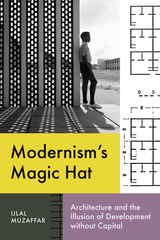
Examines the role of architecture in the history of global development and decolonization.
In Modernism’s Magic Hat, Ijlal Muzaffar examines how modern architects and planners help resolve one of the central dilemmas of the mid-twentieth-century world order: how to make decolonization plausible without accounting for centuries of capital drain under colonial rule. In the years after World War II, architects and planners found extensive opportunities in new international institutions—such as the World Bank, the UN, and the Ford Foundation—and helped shape new models of global intervention that displaced the burden of change onto the inhabitants. Muzaffar argues that architecture in this domain didn’t just symbolically represent power, but formed the material domain through which new modes of power acquired sense. Looking at a series of architectural projects across the world, from housing in Ghana to village planning in Nigeria and urban planning in Venezuela and Pakistan, Muzaffar explores how architects and planners shaped new ideas of time, land, climate, and the decolonizing body, making them appear as sources of untapped value. What resulted, Muzaffar argues, is a widespread belief in spontaneous Third World “development” without capital, which continues to foreclose any global discussion of colonial theft.

"This may well be the most illuminating study ever devoted to the question of appeal exerted not only by Communism but also by the Nazi and other fascist varieties of totalitarianism in this century."—Hilton Kramer, New Criterion
"A subtle, nuanced but gripping study of the most pervasive and destructive illusion in the 20th century." —Kirkus Reviews, starred review
"The Passing of an Illusion . . . is both a profound work of intellectual history that takes its place alongside other great studies of the leftist heresy . . . and a relentless diagnosis of the self-subversive risks that are inherent in democratic regimes. "—Roger Kaplan, Washington Times
" A remarkable book. . . . Stimulating and challenging. . . . A man widely read in several languages, Furet clearly knew his way around 20th-century Europe, even unto the dark alleys that figure on no existing map. "—Mark Falcoff, Commentary
"A history of ideas, this work is not for the faint of heart, yet those who challenge it will discover a signal contribution to the literature of Communism."—Booklist
"Imperious and stunningly confident, grand in conception and expansive in manner, packed with fascinating detail and often incisive judgements."—John Dunn, Times Higher Education Supplement
"The Passing of an Illusion is brilliant, and one would be hard pressed to find better writing of history than the first chapter, which traces the roots of modern political thinking back to the nineteenth century."—J. Arch Getty, Atlantic Monthly
"A brilliant and important book. . . . The publication of the American edition makes accessible to the general reader the most thought-provoking historical assessment of communism in Europe to appear since its collapse."—Jeffrey Herf, Wall Street Journal
François Furet (1927-1997), educator and author, was a Chevalier of the Legion of Honor and was elected, in 1997, to become one of the "Forty Immortals" of the Académie Française, the highest intellectual honor in France. His many books include Interpreting the French Revolution, Marx and the French Revolution, and Revolutionary France. Deborah Furet, his widow, collaborated with him on many projects.
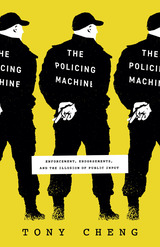
The past few years have seen Americans express passionate demands for police transformation. But even as discussion of no-knock warrants, chokeholds, and body cameras has exploded, any changes to police procedures have only led to the same outcomes. Despite calls for increased accountability, police departments have successfully stonewalled change.
In The Policing Machine, Tony Cheng reveals the stages of that resistance, offering a close look at the deep engagement strategies that NYPD precincts have developed with only subsets of the community in order to counter any truly meaningful, democratic oversight. Cheng spent nearly two years in an unprecedented effort to understand the who and how of police-community relationship building in New York City, documenting the many ways the police strategically distributed power and privilege within the community to increase their own public legitimacy without sacrificing their organizational independence. By setting up community councils that are conveniently run by police allies, handing out favors to local churches that will promote the police to their parishioners, and offering additional support to institutions friendly to the police, the NYPD, like police departments all over the country, cultivates political capital through a strategic politics that involves distributing public resources, offering regulatory leniency, and deploying coercive force. The fundamental challenge with police-community relationships, Cheng shows, is not to build them. It is that they already exist and are motivated by a machinery designed to stymie reform.
A revelatory look at how the NYPD has resisted change through strategic and selective community engagement.
The past few years have seen Americans express passionate demands for police transformation. But even as discussion of no-knock warrants, chokeholds, and body cameras has exploded, any changes to police procedures have only led to the same outcomes. Despite calls for increased accountability, police departments have successfully stonewalled change.
In The Policing Machine, Tony Cheng reveals the stages of that resistance, offering a close look at the deep engagement strategies that NYPD precincts have developed with only subsets of the community in order to counter any truly meaningful, democratic oversight. Cheng spent nearly two years in an unprecedented effort to understand the who and how of police-community relationship building in New York City, documenting the many ways the police strategically distributed power and privilege within the community to increase their own public legitimacy without sacrificing their organizational independence. By setting up community councils that are conveniently run by police allies, handing out favors to local churches that will promote the police to their parishioners, and offering additional support to institutions friendly to the police, the NYPD, like police departments all over the country, cultivates political capital through a strategic politics that involves distributing public resources, offering regulatory leniency, and deploying coercive force. The fundamental challenge with police-community relationships, Cheng shows, is not to build them. It is that they already exist and are motivated by a machinery designed to stymie reform.

Anderson investigates how viewers, with their mental capacities designed for survival, respond to particular aspects of filmic structure—continuity, diegesis, character development, and narrative—and examines the ways in which rules of visual and aural processing are recognized and exploited by filmmakers. He uses Orson Welles’s Citizen Kane to disassemble and redefine the contemporary concept of character identification; he addresses continuity in a shot-by-shot analysis of images from Casablanca; and he uses a wide range of research studies, such as Harry F. Harlow’s work with infant rhesus monkeys, to describe how motion pictures become a substitute or surrogate reality for an audience. By examining the human capacity for play and the inherent potential for illusion, Anderson considers the reasons viewers find movies so enthralling, so emotionally powerful, and so remarkably real.

In this groundbreaking study, Joyce Hoffmann examines a critical twenty-five-year period in the work of one of the most influential journalists of the twentieth century. Theodore H. White was already a celebrated reporter when Jacqueline Kennedy summoned him for an exclusive interview in the aftermath of her husband's assassination. With her help, White would preserve what the First Lady claimed had been John F. Kennedy's vision of the New Frontier as an incarnation of that wistful, romantic kingdom--Camelot. Over the years, friends and advisers to Kennedy declared that they had never heard the president speak of Camelot. But White's article, which ran in Life magazine, created a myth that still endures in the popular consciousness.
That story was just one of many by Theodore White that had a lasting impact on the nation. As a correspondent for several of the country's most popular magazines, he covered the crucial events of the 1940s, '50s, and '60s. His best-selling book The Making of the President 1960 changed political reporting forever.
A gifted and likable man with a remarkable skill for ingratiating himself with others, White earned the confidence of key political, military, and diplomatic leaders. First in the Far East, later in Europe, and finally in Washington, D.C., he became a confidant and adviser rather than an adversary to the figures he covered for the news, following a pattern set by elite journalists. Even as he played the impartial reporter, White kept secrets in order to maintain access to his important sources, and he occasionally allowed his subjects, including John F. Kennedy and Nelson Rockefeller, to make changes in his work before publication.
Clinging to the illusion of objectivity, White--like other leading journalists in the postwar years--wrote about the world not as it was but as he believed it ought to be. Hoffmann relates the little-known episode in White's career when he intentionally obscured the truth about Chiang Kai-shek's corrupt and inept Nationalist government because he believed that undermining China's cause would be "a disservice to democracy."
No other book so thoroughly documents how a first-rank journalist can become a political insider and distort the news without losing the gloss of impartiality that is supposed to accompany the profession. Impressively researched, skillfully written, Theodore H. White and Journalism as Illusion is an unflinching look at a key figure in the history of American journalism and at the profession itself.
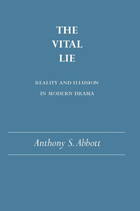
The Vital Lie is the first book to examine the reality-illusion conflict in modern drama from Ibsen to present-day playwrights. The book questions why vital lies, lies necessary for life itself, are such an obsessive concern for playwrights of the last hundred years. Using the work of fifteen playwrights, Abbott seeks to discover if modern playwrights treat illusions as helpful or necessary to life, or as signals of sicknesses from which human beings need to be cured. What happens to characters when they are forced to face the truth about themselves and their worlds without the protection of their illusions? The author develops a three-part historical analysis of the use of the reality-illusion theme, from its origins as a metaphysical search to its current elaborations as a theatrical game.
READERS
Browse our collection.
PUBLISHERS
See BiblioVault's publisher services.
STUDENT SERVICES
Files for college accessibility offices.
RECENTLY PUBLISHED



UChicago Accessibility Resources
home | accessibility | search | about | contact us
BiblioVault ® 2001 - 2025
The University of Chicago Press