
 A SCHOLARLY BOOK REPOSITORY
- Analyzes key societal trends, such as longer lifespans and improved population health, and their implications for libraries' work with this demographic
- Profiles Leading-Edge States and Beacon Libraries from across the nation at the forefront of institutional change
- Discusses issues such as creativity, health, financial literacy, life planning, and intergenerational activities from the 50+ perspective, while showing how libraries can position themselves as essential centers for learning, encore careers, and community engagement
- Spotlights best practices that can be adapted for any setting, including samples of hundreds of projects and proposals that illustrate new approaches to 50+ policies, staffing, programs, services, partnerships, and communications
The wisdom and insight contained in this book can help make the library a center for positive aging.

For all their advantages, small firms also face significant challenges in access to capital and customers. To overcome such problems, they can form alliances either with each other or with larger companies. Hasik traces the trade-offs of such alliances and provides crucial insight into their promises and pitfalls.
This ground-breaking study is a significant contribution to understanding both entrepreneurship and alliances, two crucial factors in business generally. It will be of interest to readers in the defense sector as well as the wider business community.

David Whiteis delves into how the current and upcoming Chicago blues generations carry on this legacy. Drawing on in-person interviews, Whiteis places the artists within the ongoing social and cultural reality their work reflects and helps create. Beginning with James Cotton, Eddie Shaw, and other bequeathers, he moves through an all-star council of elders like Otis Rush and Buddy Guy and on to inheritors and today's heirs apparent like Ronnie Baker Brooks, Shemekia Copeland, and Nellie "Tiger" Travis.
Insightful and wide-ranging, Blues Legacy reveals a constantly adapting art form that, whatever the challenges, maintains its links to a rich musical past.
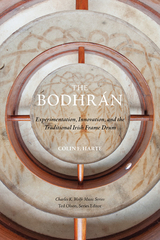
In the past fifty years, the bodhrán, or traditional Irish circular frame drum, has undergone a rapid evolution in development. Traditionally, it is a shallow drum ranging from ten to twenty-six inches in diameter, covered in goatskin on the top (or drum) side and open on the other. Unlike any other instrument associated with Irish traditional music, the bodhrán has been dramatically altered by its confrontation with modern instrument design, performance techniques, and musical practice. Colin Harte’s The Bodhrán: Experimentation, Innovation, and the Traditional Irish Frame Drum presents a definitive history of the bodhrán from its early origins to its present-day resurgence in Irish American folk music.
The bodhrán has global roots and bears many characteristics of older drums from northern Africa and the Middle East. Harte picks up on these basic similarities and embarks on an engaging tour of the instrument’s historical and organological development, gradual evolution in playing styles, and more recent history of performative practice. Drawing from a host of interviews over a multi-year period with participants primarily located in Europe and North America, this work provides a platform for multiple perspectives regarding the bodhrán. Participants include bodhrán makers, professional performers, educators, amateur musicians, historians, and enthusiasts. Growing out of rich ethnographic interviews, this book serves as the definitive reference for understanding and navigating the developments in the bodhrán’s history, organology, performance practices, and repertoire.
This book identifies and explains the role of citizen science within innovation in science and society, and as a vibrant and productive science-policy interface. The scope of this volume is global, geared towards identifying solutions and lessons to be applied across science, practice and policy. The chapters consider the role of citizen science in the context of the wider agenda of open science and open innovation and discuss progress towards responsible research and innovation, two of the most critical aspects of science today.

“A brilliant travel guide to the coming world of AI.”
—Jeanette Winterson
What does it mean to be creative? Can creativity be trained? Is it uniquely human, or could AI be considered creative?
Mathematical genius and exuberant polymath Marcus du Sautoy plunges us into the world of artificial intelligence and algorithmic learning in this essential guide to the future of creativity. He considers the role of pattern and imitation in the creative process and sets out to investigate the programs and programmers—from Deep Mind and the Flow Machine to Botnik and WHIM—who are seeking to rival or surpass human innovation in gaming, music, art, and language. A thrilling tour of the landscape of invention, The Creativity Code explores the new face of creativity and the mysteries of the human code.
“As machines outsmart us in ever more domains, we can at least comfort ourselves that one area will remain sacrosanct and uncomputable: human creativity. Or can we?…In his fascinating exploration of the nature of creativity, Marcus du Sautoy questions many of those assumptions.”
—Financial Times
“Fascinating…If all the experiences, hopes, dreams, visions, lusts, loves, and hatreds that shape the human imagination amount to nothing more than a ‘code,’ then sooner or later a machine will crack it. Indeed, du Sautoy assembles an eclectic array of evidence to show how that’s happening even now.”
—The Times
In Creativity on Demand, cultural anthropologist Eitan Wilf seeks to answer these questions by returning to the fundamental and pervasive expectation of continual innovation. Wilf focuses a keen eye on how our obsession with ceaseless innovation stems from the long-standing value of acceleration in capitalist society. Based on ethnographic work with innovation consultants in the United States, he reveals, among other surprises, how routine the culture of innovation actually is. Procedures and strategies are repeated in a formulaic way, and imagination is harnessed as a new professional ethos, not always to generate genuinely new thinking, but to produce predictable signs of continual change. A masterful look at the contradictions of our capitalist age, Creativity on Demand is a model for the anthropological study of our cultures of work.

This book explores the Daoist encounter with modernity through the activities of Chen Yingning (1880–1969), a famous lay Daoist master, and his group in early twentieth-century Shanghai. In contrast to the usual narrative of Daoist decay, with its focus on monastic decline, clerical corruption, and popular superstitions, this study tells a story of Daoist resilience, reinvigoration, and revival.
Between the 1920s and 1940s, Chen led a group of urban lay followers in pursuing Daoist self-cultivation techniques as a way of ensuring health, promoting spirituality, forging cultural self-identity, building community, and strengthening the nation. In their efforts to renew and reform Daoism, Chen and his followers became deeply engaged with nationalism, science, the religious reform movements, the new urban print culture, and other forces of modernity.
Since Chen and his fellow practitioners conceived of the Daoist self-cultivation tradition as a public resource, they also transformed it from an “esoteric” pursuit into a public practice, offering a modernizing society a means of managing the body and the mind and of forging a new cultural, spiritual, and religious identity.

The essays take up a variety of episodes from modern European and American history and explore, from various angles, three interrelated themes: 'public religion', and the role of Catholicism as a determined critic of modernity; religion as an impetus for innovation; and the tendency to reduce religion to culture.


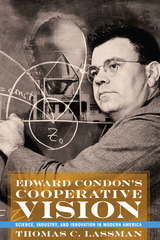
Edward Condon’s Cooperative Vision explores the life cycle of that vision during the Great Depression, the Second World War, and the early Cold War. Condon’s cooperative model of research and development evolved over time and by consequence laid bare sharp disagreements among academic, corporate, and government stakeholders about the practical value of new knowledge, where and how it should be produced, and ultimately, on whose behalf it ought to be put to use.
Electronic Literature as a Model of Creativity and Innovation in Practice maps electronic literature in Europe and is an essential read for scholars and students in the field. ELMCIP is a three-year (2013) collaborative research project funded by Humanities in the European Research Area (HERA) JRP for Creativity and Innovation.
ELMCIP involved seven European partners investigating how creative communities of practitioners form within a transnational and transcultural context in a globalized and distributed communication environment. Focusing on the electronic literature community in Europe as a model of networked creativity and innovation in practice, ELMCIP studies the formation and interactions of that community and furthers electronic literature research and practice in Europe.
This book includes reflective reports by all of the principal investigators of the project. It details the development of a major digital humanities research database and the publication of the first trans-European anthology of electronic literature, and includes a report on electronic literature publishing venues across Europe and consideration of different forms of creative communities develop around genres of digital practice.

Of all military aircraft, fighter planes hold a mystique all their own. Perhaps it is because fighters can afford the least compromise: when the goal is to seize and maintain control of the air, the confrontation is direct. During World War I, the concept of air superiority took hold and in the ensuing decades the development of fighter aircraft became an ongoing back-and-forth battle, with adversaries trying to gain an upper hand through innovations in aerodynamics, powerplants, and armament. Fighter Aircraft Combat Debuts, 1915–1945: Innovation in Air Warfare Before the Jet Age by prominent aviation expert Jon Guttman explores the first combats for a variety of fighters of World War I, the conflicts of the so-called "interwar years," and World War II—a thirty-year period that saw the birth of the fighter concept and its maturity on the threshold of the Jet Age. Most of the aircraft described are fairly well known to aviation historians and a few names, such as Sopwith Camel, Fokker Triplane, Messerschmitt Me-109, Mitsubishi Zero, North American Mustang, and Supermarine Spitfire, are familiar even to the most nonaviation- minded persons. Not so well-known are the circumstances of their combat debuts, in which some, such as the Zero, made their mark almost from the outset, but in which others, like the British Bristol F.2A, showed rather less promise than they would ultimately realize. While a certain amount of space must be devoted to the technical development of these famous fighters, these studies of first combats serve as a reminder that it is the human factor, with all its special quirks, that inevitably came into play when these deadly flying machines first fired their guns. Profusely illustrated, Fighter Aircraft Combat Debuts is an authoritative history of one of the most enduring subjects in military aviation.
Such a view is far too simple, ignoring the diverse ways in which the era’s countercultures expressed enthusiasm for and involved themselves in science—of a certain type. Rejecting hulking, militarized technical projects like Cold War missiles and mainframes, Boomers and hippies sought a science that was both small-scale and big-picture, as exemplified by the annual workshops on quantum physics at the Esalen Institute in Big Sur, or Timothy Leary’s championing of space exploration as the ultimate “high.” Groovy Science explores the experimentation and eclecticism that marked countercultural science and technology during one of the most colorful periods of American history.
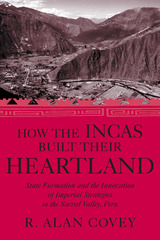
In How the Incas Built Their Heartland R. Alan Covey supplements an archaeological approach with the tools of a historian, forming an interdisciplinary study of how the Incas became sufficiently powerful to embark on an unprecedented campaign of territorial expansion and how such developments related to earlier patterns of Andean statecraft. In roughly a hundred years of military campaigns, Inca dominion spread like wildfire across the Andes, a process traditionally thought to have been set in motion by a single charismatic ruler, Pachacuti Inca Yupanqui. Taking nearly a century of archaeological research in the region around the Inca capital as his point of departure, Covey offers an alternative description of Inca society in the centuries leading up to imperial expansion. To do so, Covey proposes a new reading of the Spanish chronicles, one that focuses on processes, rather than singular events, occurring throughout the region surrounding Cusco, the Inca capital. His focus on long-term regional changes, rather than heroic actions of Inca kings, allows the historical and archaeological evidence to be placed on equal interpretive footing. The result is a narrative of Inca political origins linking Inca statecraft to traditions of Andean power structures, long-term ecological changes, and internal social transformations. By reading the Inca histories in a compatible way, Covey shows that it is possible to construct a unified theory of how the Inca heartland was transformed after AD 1000.
R. Alan Covey is Assistant Professor of Anthropology at Southern Methodist University.

The idea of voting is simple, but the administration of elections in ways that ensure access and integrity is complex.
In How We Vote, Kathleen Hale and Mitchell Brown explore what is at the heart of our democracy: how elections are run. Election administration determines how ballots are cast and counted, and how jurisdictions try to innovate while also protecting the security of the voting process, as well as how election officials work.
Election officials must work in a difficult intergovernmental environment of constant change and intense partisanship. Voting practices and funding vary from state to state, and multiple government agencies, the judicial system, voting equipment vendors, nonprofit groups, and citizen activists also influence practices and limit change. Despite real challenges and pessimistic media assessments, Hale and Brown demonstrate that election officials are largely successful in their work to facilitate, protect, and evolve the voting process.
Using original data gathered from state and local election officials and policymakers across the United States, Hale and Brown analyze innovations in voter registration, voting options, voter convenience, support for voting in languages other than English, the integrity of the voting process, and voting system technology. The result is a fascinating picture of how we vote now and will vote in the future.

Gyger focuses on three interrelated themes: the circumstances that made Peru a fertile site for innovation in low-cost housing under a succession of very different political regimes; the influences on, and movements within, architectural culture that prompted architects to consider self-help housing as an alternative mode of practice; and the context in which international development agencies came to embrace these projects as part of their larger goals during the Cold War and beyond.
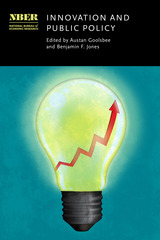
In advanced economies like the United States, innovation has long been recognized as a central force for increasing economic prosperity and human welfare. Today, the US government promotes innovation through various mechanisms, including tax credits for private-sector research, grant support for basic and applied research, and institutions like the Small Business Innovation Research Program of the National Science Foundation. Drawing on the latest empirical and conceptual research, Innovation and Public Policy surveys the key components of innovation policy and the social returns to innovation investment. It examines mechanisms that can advance the pace of invention and innovative activity, including expanding the research workforce through schooling and immigration policy and funding basic research. It also considers scientific grant systems for funding basic research, including those at institutions like the National Institutes of Health and the National Science Foundation, and investigates the role of entrepreneurship policy and of other institutions that promote an environment conducive to scientific breakthroughs.

Loizos begins by reviewing works of John Marshall and Timothy Asch in the 1950s and moves through those of Jean Rouch, Robert Gardner, and many more recent filmmakers. He reveals a steady course of innovations along four dimensions: production technology, subject matter, strategies of argument, and ethnographic authentication. His analyses of individual films address questions of realism, authenticity, genre, authorial and subjective voice, and representation of the films' creators as well as their subjects.
Innovation in Ethnographic Film, as a systematic and iluminating review of developments in ethnographic film, will be an important resource for the growing number of anthropologists and other scholars who use such films as tools for research and teaching.
Published by University of Delaware Press. Distributed worldwide by Rutgers University Press.

Wayang, the traditional puppet theater form of Java, fascinates and endures thanks to the many ways it works as a medium—bearing the weight of Javanese culture and tradition as a key component of rites of passage, as a medium of ritual and spiritual practice, as public spectacle, and as entertainment of the broadest sort, performed live, broadcast, or streamed. Over the past forty years, the form has been subject to a great deal of experimentation and innovation, pulled in many directions within an ever-changing media landscape. In this book, Kathryn Anne Emerson outlines both significant contributions by a number of key figures and the social and political influences propelling such innovations. She also describes deeper and more lasting changes in wayang, based on what the art form's most accomplished practitioners have to say about it. At the core of the book is one pivotal figure, Purbo Asmoro of the Indonesian Institute of the Arts in Surakarta, who, Emerson argues, has taken the individual and singular innovations of the era and integrated them into a new system of performance practice, one that has shaped the key Surakarta school of performance. Grounded in an unprecedented, decades-long participatory research project involving hundreds of interlocutors, the book is beautifully illustrated and will be of considerable interest in Indonesian studies.
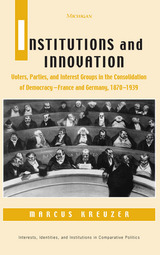
Institutions and Innovations analyzes the troubled history of French and German parties between 1870 and 1939 to develop a general explanation of how the development of responsive parties constitutes a key element for the consolidation of democracies, past and present. It explains why French parties responded more swiftly than German ones to very similar changes in their economic and political environments. The book demonstrates that the national differences in party responsiveness played a key role in the collapse of the German Weimar Republic (1918ñ1933) and in the survival of the French Third Republic (1870ñ1939). It addresses the general fates of French and German democracy by asking three specific questions: Why did German socialists reject Keynesianism while their French counterparts swiftly embraced it? Why did German liberals, compared to French ones, fail to modernize their logistical infrastructure and electioneering methods? Why were German conservatives less effective than French ones in fending off the challenge posed by fascist and peasant insurgent movements that arose in the 1920s and 1930s?
In answering these questions, the book engages new institutional theories and longstanding party literature to demonstrate that the electoral conduct of parties is structured in equal parts by socioeconomic and institutional constraints. The book's interdisciplinary focus sheds a critical light on the exceptionalism of purely historical accounts and reductionist and universal claims of ahistorical political science theories.
Marcus Kreuzer is Assistant Professor of Political Science, Villanova University.
Initiatives described in this collection range from the implementation of on-demand interpreting using iPad technology to create personalized, small-group, multidimensional models suited to digital media for 160 languages; introducing students to interpreting in a 3D world through an IVY virtual environment; applying gaming principles to interpreter education; assessing the amenability of the digital pen in the hybrid mode of interpreting; developing multimedia content for both open access and structured interpreter education environments; to preparing interpreting students for interactions in social media forums, and more. Interpreter Education in the Digital Age provides a context for the application of technologies in interpreter education from an international viewpoint across languages and modalities.

The necessity for library leaders to demonstrate that libraries are innovative, collaborative, and can provide eye-catching, transformational services and programs to their communities cannot be understated. But libraries do not suffer from a lack of big ideas. What library workers really need is a roadmap for making those impactful ideas become reality. Based in part on her extensive experience coordinating large-scale initiatives, this guide from ASCLA Leadership and Professional Achievement Award-winning consultant Horton will walk you through formulating and shaping your ideas into sellable, actionable projects. You’ll learn
- techniques drawn from project management experts and researchers from many fields;
- why Big Hairy Audacious Goals (BHAG) are worth your time and effort;
- guidance on upscaling your idea into a project or service that can be launched at a statewide, community wide, or library consortium level;
- several case studies of large-scale library projects, with analysis of why they were successful;
- how to successfully combine foundational principles of innovation with practical methods for collaboration;
- methods for extending your reach beyond your usual sphere to partner with other libraries and organizations;
- how to sharpen your skills of persuasion;
- no-nonsense advice on leading teams of disparate individuals; and
- evaluative tips for affirming the project is on the right track and then correcting course as needed.
Across the United States, diverse groups are turning away from confrontation and toward collaboration in an attempt to tackle some of our nation's most intractable environmental problems. Government agencies, community groups, businesses, and private individuals have begun working together to solve common problems, resolve conflicts, and develop forward-thinking strategies for moving in a more sustainable direction.
Making Collaboration Work examines those promising efforts. With a decade of research behind them, the authors offer an invaluable set of lessons on the role of collaboration in natural resource management and how to make it work. The book:
- explains why collaboration is an essential component of resource management
- describes barriers that must be understood and overcome
- presents eight themes that characterize successful efforts
- details the specific ways that groups can use those themes to achieve success
- provides advice on how to ensure accountability
Making Collaboration Work will be an invaluable source of ideas and inspiration for policy makers, managers and staff of government agencies and nongovernmental organizations, and community groups searching for more productive modes of interaction.

This unique anthology presents a wide variety of approaches to an ethnomusicology of Inuit and Native North American musical expression. Contributors include Native and non-Native scholars who provide erudite and illuminating perspectives on aboriginal culture, incorporating both traditional practices and contemporary musical influences. Gathering scholarship on a realm of intense interest but little previous publication, this collection promises to revitalize the study of Native music in North America, an area of ethnomusicology that stands to benefit greatly from these scholars' cooperative, community-oriented methods.
Contributors are T. Christopher Aplin, Tara Browner, Paula Conlon, David E. Draper, Elaine Keillor, Lucy Lafferty, Franziska von Rosen, David Samuels, Laurel Sercombe, and Judith Vander.
Boyd's thoughtful approach to imitation in Latin poetry brings into prominence the formative role played by Virgil in shaping Ovid's "poetic memory," even in the Amores. The detailed examination of Ovidian extended similes shows how the poet exploits the literary past precisely in order to free himself from generic restraint and to expand the narrow horizons of elegy. Boyd argues that this paradox is the essence of Ovidian poetics.
Ovid's Literary Loves is an imaginative approach to imitation in Latin poetry and makes a significant contribution to current discussions of the subject. This is one of the first contemporary scholarly monographs on the Amores, and it will find a large and welcoming audience of Latinists at all levels of study.
Barbara Weiden Boyd is Associate Professor of Classics, Bowdoin College, Brunswick, Maine.
The Politics of State Feminism addresses essential questions of women's movement activism and political change in western democracies. The authors—top gender and politics scholars—provide a comparative analysis of the effectiveness of government agencies and women's movements regarding women’s policy issues—if, how, and why they form a kind of state feminism.
The central research questions are examined across five issue areas in thirteen postindustrial democracies in Europe and North America from the 1960s through the early 2000s. The authors explore a range of topics drawn from contemporary theory, interactions between descriptive and substantive representation, and the place of institutions in democratic change.
Using the innovative qualitative and quantitative methods employed by the Research Network on Gender Politics and the State, the authors have developed a new body of theories about the role of state feminism and how it can help further women’s rights.
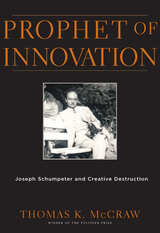
Pan Am, Gimbel’s, Pullman, Douglas Aircraft, Digital Equipment Corporation, British Leyland—all once as strong as dinosaurs, all now just as extinct. Destruction of businesses, fortunes, products, and careers is the price of progress toward a better material life. No one understood this bedrock economic principle better than Joseph A. Schumpeter. “Creative destruction,” he said, is the driving force of capitalism.
Described by John Kenneth Galbraith as “the most sophisticated conservative” of the twentieth century, Schumpeter made his mark as the prophet of incessant change. His vision was stark: Nearly all businesses fail, victims of innovation by their competitors. Businesspeople ignore this lesson at their peril—to survive, they must be entrepreneurial and think strategically. Yet in Schumpeter’s view, the general prosperity produced by the “capitalist engine” far outweighs the wreckage it leaves behind.
During a tumultuous life spanning two world wars, the Great Depression, and the early Cold War, Schumpeter reinvented himself many times. From boy wonder in turn-of-the-century Vienna to captivating Harvard professor, he was stalked by tragedy and haunted by the specter of his rival, John Maynard Keynes. By 1983—the centennial of the birth of both men—Forbes christened Schumpeter, not Keynes, the best navigator through the turbulent seas of globalization. Time has proved that assessment accurate.
Prophet of Innovation is also the private story of a man rescued repeatedly by women who loved him and put his well-being above their own. Without them, he would likely have perished, so fierce were the conflicts between his reason and his emotions. Drawing on all of Schumpeter’s writings, including many intimate diaries and letters never before used, this biography paints the full portrait of a magnetic figure who aspired to become the world’s greatest economist, lover, and horseman—and admitted to failure only with the horses.
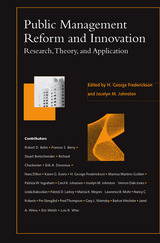
Leading scholars present the most complete, as well as the most advanced, treatment of public management reform and innovation available
The subject of reform in the public sector is not new; indeed, its latest rubric, reinventing government, has become good politics. Still, as the contributors ask in this volume, is good politics necessarily good government?Given the growing desire to reinvent government, there are hard questions to be asked: Is the private sector market model suitable and effective when applied to reforming public and governmental organizations? What are the major political forces affecting reform efforts in public management? How is public management reform accomplished in a constitutional democratic government? How do the values of responsiveness, professionalism, and managerial excellence shape current public management reforms? In this volume, editors H. George Frederickson and Jocelyn M. Johnston bring together scholars with a shared interest in empirical research to confront head-on the toughest questions public managers face in their efforts to meet the demands of reform and innovation.
Throughout the book, the authors consider the bureaucratic resistance that results when downsizing and reinvention are undertaken simultaneously, the dilemma public managers face when elected executives set a reform agenda that runs counter to the law, and the mistaken belief that improved management can remedy flawed policy.
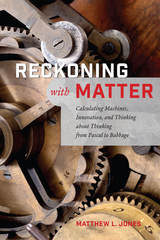
In Reckoning with Matter, Matthew L. Jones draws on the remarkably extensive and well-preserved records of the quest to explore the concrete processes involved in imagining, elaborating, testing, and building calculating machines. He explores the writings of philosophers, engineers, and craftspeople, showing how they thought about technical novelty, their distinctive areas of expertise, and ways they could coordinate their efforts. In doing so, Jones argues that the conceptions of creativity and making they exhibited are often more incisive—and more honest—than those that dominate our current legal, political, and aesthetic culture.


Shaul Oreg and Jacob Goldenberg bring the insights of marketing and organizational behavior to bear on the attitudes and behaviors of the remaining 80 percent who resist innovation. The authors identify two competing definitions of resistance: In marketing, resistance denotes a reluctance to adopt a worthy new product, or one that offers a clear benefit and carries little or no risk. In the field of organizational behavior, employees are defined as resistant if they are unwilling to implement changes regardless of the reasons behind their reluctance. Seeking to clarify the act of rejecting a new product from the reasons—rational or not—consumers may have for doing so, Oreg and Goldenberg propose a more coherent definition of resistance less encumbered by subjective, context-specific factors and personality traits. The application of this tighter definition makes it possible to disentangle resistance from its sources and ultimately offers a richer understanding of consumers’ underlying motivations. This important research is made clear through the use of many real-life examples.
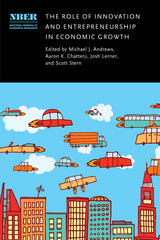
We live in an era in which innovation and entrepreneurship seem ubiquitous, particularly in regions like Silicon Valley, Boston, and the Research Triangle Park. But many metrics of economic growth, such as productivity growth and business dynamism, have been at best modest in recent years. The resolution of this apparent paradox is dramatic heterogeneity across sectors, with some industries seeing robust innovation and entrepreneurship and others seeing stagnation. By construction, the impact of innovation and entrepreneurship on overall economic performance is the cumulative impact of their effects on individual sectors. Understanding the potential for growth in the aggregate economy depends, therefore, on understanding the sector-by-sector potential for growth. This insight motivates the twelve studies of different sectors that are presented in this volume. Each study identifies specific productivity improvements enabled by innovation and entrepreneurship, for example as a result of new production technologies, increased competition, or new organizational forms. These twelve studies, along with three synthetic chapters, provide new insights on the sectoral patterns and concentration of the contributions of innovation and entrepreneurship to economic growth.

Focusing on the royal throne as a potent metaphor in Santería belief and practice, Brown shows how negotiation among ideologically competing interests have shaped the religion's symbols, rituals, and institutions from the nineteenth century to the present. Rich case studies of change in Cuba and the United States, including a New Jersey temple and South Carolina's Oyotunji Village, reveal patterns of innovation similar to those found among rival Yoruba kingdoms in Nigeria. Throughout, Brown argues for a theoretical perspective on culture as a field of potential strategies and "usable pasts" that actors draw upon to craft new forms and identities—a perspective that will be invaluable to all students of the African Diaspora.
American Acemy of Religion Award for Excellence in the Study of Religion (Analytical-Descriptive Category)

How satellites ever came to be is, in itself, a remarkable story. Telling an astonishing history of engineering experimentation and ingenuity, Millard shows how the Cold War space race made the earliest satellites—ones like Sputnik, Telstar, and Early Bird—household names. He describes how they evolved into cultural signifiers that represented not only our scientific capabilities but our capacity for imagination, our ability to broaden the scope of our vision to the farthest reaches. From there he follows the proliferation of satellites in the second half of the twentieth century, examining their many different forms, how they evolved, all the things they do, what they have enabled, and how they have influenced our popular culture. Ultimately, Millard asks what we can still expect, what sort of space age the satellite has initiated that is yet to be fully realized.
Published in association with the Science Museum, London, this beautifully illustrated book will appeal to any fan of space exploration and technology.

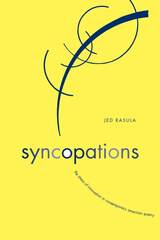
Syncopations is an analysis of the sustaining vitality behind contemporary American poetry from 1975 to the present day by one of the most astute observers and critics in the field. The 12 essays reflect Jed Rasula’s nearly 30 years of advocacy on behalf of “opening the field” of American poetry.
From the Beats and the Black Mountain poets in the 1950s and 1960s to the impact of language poetry, the specter of an avant-garde has haunted the administrative centers of poetic conservatism. But the very concept of avant-garde is misleading, implying organized assault. Incentives for change can be traced to other factors, including the increased participation of women, critical theory’s self-reflection, and a growing interest in the book as a unit of composition. Syncopations addresses these and other issues evident in the work of such poets and critics as Clayton Eshleman, Marjorie Perloff, Ronald Johnson, Clark Coolidge, Nathaniel Mackey, and Robin Blaser. Its chapters range in modes and include close readings, sociological analysis, philosophical-aesthetic meditations, and career appraisals.
By examining both exemplary innovators and the social context in which innovation is either resisted, acclaimed, or taken for granted, Rasula delivers an important conceptual chronicle of the promise of American poetry.
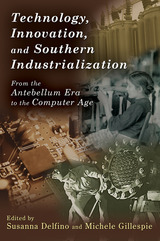
Because of its strong agrarian roots, the South has typically been viewed as a region not favorably disposed to innovation and technology. Yet innovation was never absent from industrialization in this part of the United States. From the early nineteenth century onward, southerners were as eager as other Americans to embrace technology as a path to modernity.
This volume features seven essays that range widely across the region and its history, from the antebellum era to the present, to assess the role of innovations presumed lacking by most historians. Offering a challenging interpretation of industrialization in the South, these writings show that the benefits of innovations had to be carefully weighed against the costs to both industry and society.
The essays consider a wide range of innovative technologies. Some examine specific industries in subregions: steamboats in the lower Mississippi valley, textile manufacturing in Georgia and Arkansas, coal mining in Virginia, and sugar planting and processing in Louisiana. Others consider the role of technology in South Carolina textile mills around the turn of the twentieth century, the electrification of the Tennessee valley, and telemedicine in contemporary Arizona—marking the expansion of the region into the southwestern Sunbelt.
Together, these articles show that southerners set significant limitations on what technological innovations they were willing to adopt, particularly in a milieu where slaveholding agriculture had shaped the allocation of resources. They also reveal how scarcity of capital and continued reliance on agriculture influenced that allocation into the twentieth century, relieved eventually by federal spending during the Depression and its aftermath that sparked the Sunbelt South’s economic boom.
Technology, Innovation, and Southern Industrialization clearly demonstrates that the South’s embrace of technological innovation in the modern era doesn’t mark a radical change from the past but rather signals that such pursuits were always part of the region’s economy. It deflates the myth of southern agrarianism while expanding the scope of antebellum American industrialization beyond the Northeast and offers new insights into the relationship of southern economic history to the region’s society and politics.

Explore the opportunities and challenges of Septuagint studies
Recent research into the Septuagint has revealed numerous examples of modifications of the meaning of the Hebrew text in the course of its translation into Greek. This collection of essays by one of the leading scholars on the Septuagint shows how complex the translation of individual books was, provides reasons for differences between the Hebrew and Greek Bibles, and paves the way for a theology of the Septuagint. Articles introduce the field of Septuagint studies, the problem of the Letter of Aristeas, and the Hellenistic environment and the hermeneutics of Hellenistic Judaism.
Features:
- A methodological discussion of whether and how a theology of the Septuagint can be written
- Essays introducing the field of Septuagint studies and its Hellenistic environment and the hermeneutics of Hellenistic Judaism
- Fifteen English and German essays covering twenty-five years of Septuagint research

This book celebrates all that the professional community known as the U-M School of Dentistry has accomplished. Through good times and times of change, it has always been about the people—the drivers, the visionaries, and the innovators—who persisted regardless of the usual obstacles and inertia that often stand in the path of progress in higher education. They elevated the school to a world-class prominence that most definitely exemplifies the university’s history as home to the “leaders and best.”
READERS
Browse our collection.
PUBLISHERS
See BiblioVault's publisher services.
STUDENT SERVICES
Files for college accessibility offices.
RECENTLY PUBLISHED






UChicago Accessibility Resources
home | accessibility | search | about | contact us
BiblioVault ® 2001 - 2024
The University of Chicago Press