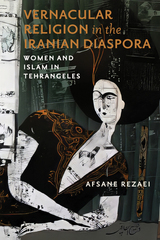
With nearly half a million Iranian Americans living in and around Los Angeles, Southern California is home to more Iranians than anywhere outside Iran itself. Although many community members identify as secular, stereotypes characterize Iranian Americans, like other populations from Muslim-majority countries, as pejoratively religious and culturally suspect. For Iranian American women who do practice Islam, navigating their religious, ethnic, and political identities, on both personal and communal levels, is complex and fraught, influenced not only by racialized discourses but also by intra-community narratives that equate Islamic practice with the authoritarian state in Iran.
Folklorist Afsane Rezaei applies theories of vernacular religion to explore how these women shape their religious identities in this particularly delicate diasporic context, how they engage with external imaginaries in their practices and narratives, and how they develop a sense of agency over their religious identification. For many, Islamic religiosity in the diaspora is an integrated and embodied aspect of folklife, closely tied to the sense of self, social networks, and communal identity, and is negotiated and reimagined in everyday, improvised, and sometimes contradictory ways. Rezaei’s detailed, respectful ethnography reaches beyond the binary of piety and resistance and offers new and nuanced understandings of Iranian American lived religion.