
 A SCHOLARLY BOOK REPOSITORY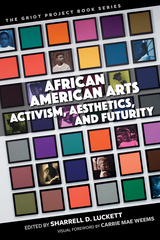
Contributors: Carrie Mae Weems, Carmen Gillespie, Rikki Byrd, Amber Lauren Johnson, Doria E. Charlson, Florencia V. Cornet, Daniel McNeil, Lucy Caplan, Genevieve Hyacinthe, Sammantha McCalla, Nettrice R. Gaskins, Abby Dobson, J. Michael Kinsey, Shondrika Moss-Bouldin, Julie B. Johnson, Sharrell D. Luckett, Jasmine Eileen Coles, Tawnya Pettiford-Wates, Rickerby Hinds.
Published by Bucknell University Press. Distributed worldwide by Rutgers University Press.
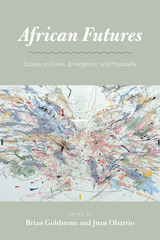
The experts in this book address Africa’s future as it is embedded within various social and cultural forms emerging on the continent today: the reconfiguration of the urban, the efflorescence of signs and wonders and gospels of prosperity, the assorted techniques of legality and illegality, lotteries and Ponzi schemes, apocalyptic visions, a yearning for exile, and many other phenomena. Bringing together social, political, religious, and economic viewpoints, the book reveals not one but multiple prospects for the future of Africa. In doing so, it offers a pathbreaking model of pluralistic and open-ended thinking and a powerful tool for addressing the vexing uncertainties that underlie so many futures around the world.

The classic institutions for the mediation of film - cinema and television - are revealed to be no more than interludes in the broader history of the audiovisual media. This book interprets these changes not simply as a cultural loss but also as a challenge: the new audiovisions have to be confronted squarely to make strategic intervention possible.
Audiovisions provides a historical underpinning for this active approach. Spanning 100 years, from the end of the 19th to the end of the 20th century, it reconstructs the complex genesis of cinema and television as historically relative - and thus finite - cultural forms, focussing on the dynamics and tension in the interaction between the apparatus and its uses. The book is also a plea for "staying power" in studies of cultural technology and technological culture of film.
Essayistic in style, it dispenses with complicated cross references and, instead, is structured around distinct historical phases. Montages of images and text provide supplemental information, contrast, and comment.

Automating technologies threaten to usher in a workless future. But this can be a good thing—if we play our cards right.
Human obsolescence is imminent. The factories of the future will be dark, staffed by armies of tireless robots. The hospitals of the future will have fewer doctors, depending instead on cloud-based AI to diagnose patients and recommend treatments. The homes of the future will anticipate our wants and needs and provide all the entertainment, food, and distraction we could ever desire.
To many, this is a depressing prognosis, an image of civilization replaced by its machines. But what if an automated future is something to be welcomed rather than feared? Work is a source of misery and oppression for most people, so shouldn’t we do what we can to hasten its demise? Automation and Utopia makes the case for a world in which, free from need or want, we can spend our time inventing and playing games and exploring virtual realities that are more deeply engaging and absorbing than any we have experienced before, allowing us to achieve idealized forms of human flourishing.
The idea that we should “give up” and retreat to the virtual may seem shocking, even distasteful. But John Danaher urges us to embrace the possibilities of this new existence. The rise of automating technologies presents a utopian moment for humankind, providing both the motive and the means to build a better future.
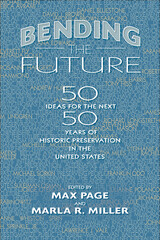
The commentators include leading preservation professionals, historians, writers, activists, journalists, architects, and urbanists. The essays offer a distinct vision for the future and address related questions, including, Who is a preservationist? What should be preserved? Why? How? What stories do we tell in preservation? How does preservation contribute to the financial, environmental, social, and cultural well-being of communities? And if the "arc of the moral universe . . . bends towards justice," how can preservation be a tool for achieving a more just society and world?
With characteristic insight, Zarnowitz examines theories of the business cycle, including Keynesian and monetary theories and more recent rational expectation and real business cycle theories. He also measures trends and cycles in economic activity; evaluates the performance of leading indicators and their composite measures; surveys forecasting tools and performance of business and academic economists; discusses historical changes in the nature and sources of business cycles; and analyzes how successfully forecasting firms and economists predict such key economic variables as interest rates and inflation.
“Cuts through the cacophony of information, misinformation, and nonsense on China that circulates in our modern world to give us reliable answers to crucial questions… Should be on the shelf of anyone seeking to understand this fast-rising superpower.”
—Ian Johnson, author of The Souls of China
After years of isolation, China is now center stage as an economic and global power, but its rise has triggered wildly divergent views. Is it a model of business efficiency or a threat to American prosperity and security? Thirty-six of the world’s leading China experts from Harvard University’s renowned Fairbank Center for Chinese Studies answer key questions about this new superpower, distilling a lifetime of scholarship into short and accessible essays about Chinese politics, culture, history, economy, approach to the environment, and foreign policy. Their contributions provide essential insight into the challenges China faces, the aspirations of its people and leaders, its business climate, and the consequences of its meteoric ascent. Many books offer information about China, but few make sense of what is truly at stake.
“Impressive… A highly informative, readable collection for scholars and nonscholars alike.”
—Publishers Weekly
“Provides a more nuanced and accessible perspective on the issues China is facing.”
—South China Morning Post
“Erudite yet accessible… The topical reach is impressive.”
—Jeffrey Wasserstrom, author of China in the 21st Century
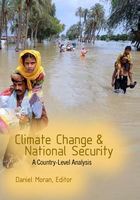
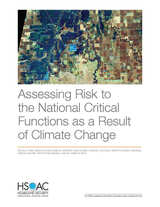
In this unique and innovative contribution to environmental security, an international team of scholars explore and estimate the intermediate-term security risks that climate change may pose for the United States, its allies and partners, and for regional and global order through the year 2030. In profiles of forty-two key countries and regions, each contributor considers the problems that climate change will pose for existing institutions and practices. By focusing on the conduct of individual states or groups of nations, the results add new precision to our understanding of the way environmental stress may be translated into political, social, economic, and military challenges in the future.
Countries and regions covered in the book include China, Vietnam, The Philippines, Indonesia, India, Pakistan, Bangladesh, Central Asia, the European Union, the Persian Gulf, Egypt, Turkey, the Maghreb, West Africa, Southern Africa, the Northern Andes, and Brazil.

John G. Cragg and Burton G. Malkiel collected detailed forecasts of professional investors concerning the growth of 175 companies and use this information to examine the impact of such forecasts on the market evaluations of the companies and to test and extend traditional models of how stock market values are determined.
Will the future be one of economic expansion, greater tolerance, liberating inventions, and longer, happier lives? Or do we face economic stagnation, declining quality of life, and a technologically enhanced totalitarianism worse than any yet seen? The Fabulous Future? America and the World in 2040 draws its inspiration from a more optimistic time, and tome, The Fabulous Future: America in 1980, in which Fortune magazine celebrated its twenty-fifth anniversary by publishing the predictions of thought leaders of its time.
In the present volume, the world’s leading specialists from diverse fields project developments in their areas of expertise, from religion and the media to the environment and nanotechnology. Will we be happier, and what exactly does happiness have to do with our economic future? Where is higher education heading and how should it develop? And what is the future of prediction itself? These exciting essays provoke sharper questions, reflect unexpectedly on one another, and testify to our present anxieties about the surprising world to come.
Here, in a new edition, is Nelson Goodman’s provocative philosophical classic—a book that, according to Science, “raised a storm of controversy” when it was first published in 1954, and one that remains on the front lines of philosophical debate.
How is it that we feel confident in generalizing from experience in some ways but not in others? How are generalizations that are warranted to be distinguished from those that are not? Goodman shows that these questions resist formal solution and his demonstration has been taken by nativists like Chomsky and Fodor as proof that neither scientific induction nor ordinary learning can proceed without an a priori, or innate, ordering of hypotheses.
In his new foreword to this edition, Hilary Putnam forcefully rejects these nativist claims. The controversy surrounding these unsolved problems is as relevant to the psychology of cognitive development as it is to the philosophy of science. No serious student of either discipline can afford to misunderstand Goodman’s classic argument.
After an interview in Newsweek about his book Spirituality in Patient Care and his research in religion and health, Dr. Harold Koenig became the international voice on spirituality, health, and aging. In this book, Faith in the Future, he is joined by two other experts on aging and human development. They present a compelling look at one of the most severe issues in today’s society: health care in America.
How will we provide quality healthcare to older adults needing it during the next thirty to fifty years? Who will provide this care? How will it be funded? How can we establish systems of care now to be in place as demographic and health-related economic pressures mount?
Alongside the sobering reality of our country’s challenges, there are reasons for optimism. Innovative programs created and maintained by volunteers and religious congregations are emerging as pivotal factors in meeting healthcare needs. Summarizing decades of scientific research and providing numerous inspirational examples and role models, the authors present practical steps that individuals and institutions may emulate for putting faith into action.
<
The future is not a fixed idea but a highly variable one that reflects the values of those who are imagining it. By studying the ways that visionaries imagined the future—particularly that of America—in the past century, much can be learned about the cultural dynamics of the time.
In this social history, Lawrence R. Samuel examines the future visions of intellectuals, artists, scientists, businesspeople, and others to tell a chronological story about the history of the future in the past century. He defines six separate eras of future narratives from 1920 to the present day, and argues that the milestones reached during these years—especially related to air and space travel, atomic and nuclear weapons, the women's and civil rights movements, and the advent of biological and genetic engineering—sparked the possibilities of tomorrow in the public's imagination, and helped make the twentieth century the first century to be significantly more about the future than the past.
The idea of the future grew both in volume and importance as it rode the technological wave into the new millennium, and the author tracks the process by which most people, to some degree, have now become futurists as the need to anticipate tomorrow accelerates.
Contributors. Lindon Barrett, Nancy Bentley, Gillian Brown, Russ Castronovo, Eric Cheyfitz, Michael Denning, Winfried Fluck, Carl Gutierrez-Jones, Dana Heller, Amy Kaplan, Paul Lauter, Günter H. Lenz, George Lipsitz, Lisa Lowe, Walter Benn Michaels, José Estaban Muñoz, Dana D. Nelson, Ricardo L. Ortiz, Janice Radway, John Carlos Rowe, William V. Spanos

The optimism that arrived at the end of the cold war and marked the turn of the Millennium was shattered by September 11. In the aftermath of that event it is not unwarranted pessimism that lines the pages of Grave New World, it is unavoidable reality. Terrorism is but one aspect of many other wider concerns for national and international security, and the contributors to this volume not only warn us, but reward us as well with the clarity of their views into—and possible solutions for—a difficult, complicated future. They speak convincingly of the numerous military and non-military challenges that create security problems—whether those are interstate, intrastate, or transnational—many of which are being dangerously overlooked in public policy debates.
The challenges and complexities might seem insurmountable but the first step in solving problems is recognizing that they exist. Grave New World provides an eye-opening assessment of the prospects for peace and security in the 21st century.
Michael E. Brown frames these issues in his Introduction, "Security Challenges in the 21st Century;" and in his summation, "Security Problems and Security Policy in a Grave New World."

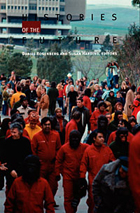
In tightly linked studies, the contributors excavate forgotten and emergent futures of art, religion, technology, economics, and politics. They trace hidden histories of science fiction, futurism, and millennialism and break down barriers between far-flung cultural spheres. From the boardrooms of Silicon Valley to the forests of Java and from the literary salons of Tokyo to the roadside cafés of the Nevada desert, the authors stitch together the disparate images and stories of futures past and present. Histories of the Future is further punctuated by three interludes: a thought-provoking game that invites players to fashion future narratives of their own, a metafiction by renowned novelist Jonathan Lethem, and a remarkable graphic research tool: a timeline of timelines.
Contributors. Sasha Archibald, Susan Harding, Jamer Hunt, Pamela Jackson, Susan Lepselter, Jonathan Lethem, Joseph Masco, Christopher Newfield, Elizabeth Pollman, Vicente Rafael, Daniel Rosenberg, Miryam Sas, Kathleen Stewart, Anna Tsing
This book is a full-scale exposition of Charles Manski's new methodology for analyzing empirical questions in the social sciences. He recommends that researchers first ask what can be learned from data alone, and then ask what can be learned when data are combined with credible weak assumptions. Inferences predicated on weak assumptions, he argues, can achieve wide consensus, while ones that require strong assumptions almost inevitably are subject to sharp disagreements.
Building on the foundation laid in the author's Identification Problems in the Social Sciences (Harvard, 1995), the book's fifteen chapters are organized in three parts. Part I studies prediction with missing or otherwise incomplete data. Part II concerns the analysis of treatment response, which aims to predict outcomes when alternative treatment rules are applied to a population. Part III studies prediction of choice behavior.
Each chapter juxtaposes developments of methodology with empirical or numerical illustrations. The book employs a simple notation and mathematical apparatus, using only basic elements of probability theory.

Richard Barbrook argues that at the height of the Cold War the Americans invented the only working model of communism in human history, the Internet. Yet, for all of its libertarian potential, the goal of this high-tech project was geopolitical dominance. The ownership of time was control over the destiny of humanity. The potentially subversive theory of cybernetics was transformed into the military-friendly project of "artificial intelligence." Capitalist growth became the fastest route to the "information society." The rest of the world was expected to follow America's path into the networked future.
Today, we're still being told that the Net is creating the information society---and that America today is everywhere else tomorrow. Barbrook shows how this idea serves a specific geopolitical purpose. Thankfully, at the beginning of the twenty-first century, the DIY ethic of the Net shows that people can resist these authoritarian prophecies by shaping information technologies in their own interest. Ultimately, if we don't want the future to be what it used to be, we must invent our own improved and truly revolutionary future.
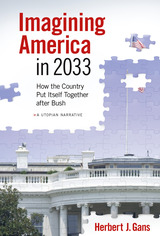
At the heart of Herbert J. Gans's utopian narrative is the vision of progress with fairness on which the best of American idealism has been built. Part utopia, part realism, Imagining America in 2033 is also a liberal's dream of life after Bush and a set of progressive yet practical guidelines for restoring sanity and intelligence to nearly every aspect of public and political life post-Bush.
Herbert J. Gans, one of the most influential and prolific sociologists and social commentators of our time, achieves a realistic utopia set mostly in the second and third decades of the century. In Gans's imagined future, elected officials, policymakers, activists, and citizens have transformed America into a much more humane and effective democracy. The book features three Democratic presidents; the major new domestic, foreign, and social policies their administrations pursue; and the political battles they fight.
Gans provides chapters on an exhaustive list of social, political, and economic policy issues: jobs; war; tax reform; global warming; economic, racial, gender, and religious equality; family policies; the creation of affordable housing and energy saving communities; education reform; and more. While hopeful and idealistic, many of Gans's proposals---such as the concept of the nurse-doctor, in which nurses increasingly take on tasks previously handled only by medical doctors within a framework of national health care---are ideas innovative enough that they should be taken seriously by actual policymakers.
Imagining America in 2033 is lively and accessible, with an appeal for general readers, policy hounds, and the politically savvy alike.
Herbert J. Gans is Robert S. Lynd Professor Emeritus of Sociology at Columbia University.
After a half-century of glacial creep, television technology has begun to change at the same dizzying pace as computer software. What this will mean--for television, for computers, and for the popular culture where these video media reign supreme--is the subject of this timely book. A noted communications economist, Bruce Owen supplies the essential background: a grasp of the economic history of the television industry and of the effects of technology and government regulation on its organization. He also explores recent developments associated with the growth of the Internet. With this history as a basis, his book allows readers to peer into the future--at the likely effects of television and the Internet on each other, for instance, and at the possibility of a convergence of the TV set, computer, and telephone.
The digital world that Owen shows us is one in which communication titans jockey to survive what Joseph Schumpeter called the "gales of creative destruction." While the rest of us simply struggle to follow the new moves, believing that technology will settle the outcome, Owen warns us that this is a game in which Washington regulators and media hyperbole figure as broadly as innovation and investment. His book explains the game as one involving interactions among all the players, including consumers and advertisers, each with a particular goal. And he discusses the economic principles that govern this game and that can serve as powerful predictive tools.
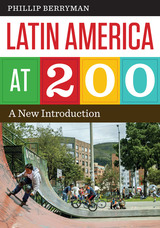
Between 2010 and 2025, most of the countries of Latin America will commemorate two centuries of independence, and Latin Americans have much to celebrate at this milestone. Most countries have enjoyed periods of sustained growth, while inequality is showing modest declines and the middle class is expanding. Dictatorships have been left behind, and all major political actors seem to have accepted the democratic process and the rule of law. Latin Americans have entered the digital world, routinely using the Internet and social media.
These new realities in Latin America call for a new introduction to its history and culture, which Latin America at 200 amply provides. Taking a reader-friendly approach that focuses on the big picture and uses concrete examples, Phillip Berryman highlights what Latin Americans are doing to overcome extreme poverty and underdevelopment. He starts with issues facing cities, then considers agriculture and farming, business, the environment, inequality and class, race and ethnicity, gender, and religion. His survey of Latin American history leads into current issues in economics, politics and governance, and globalization. Berryman also acknowledges the ongoing challenges facing Latin Americans, especially crime and corruption, and the efforts being made to combat them. Based on decades of experience, research, and travel, as well as recent studies from the World Bank and other agencies, Latin America at 200 will be essential both as a classroom text and as an introduction for general readers.

With textbook readers and digital downloads proliferating, it is easy to imagine a time when printed books will vanish. Such forecasts miss the mark, argue Jeffrey Schnapp and Matthew Battles. Future bookshelves will not be wholly virtual, and libraries will thrive—although in a variety of new social, cultural, and architectural forms. Schnapp and Battles combine deep study of the library’s history with a record of institutional and technical innovation at metaLAB, a research group at the forefront of the digital humanities. They gather these currents in The Library Beyond the Book, exploring what libraries have been in the past to speculate on what they will become: hybrid places that intermingle books and ebooks, analog and digital formats, paper and pixels.
Libraries have always been mix-and-match spaces, and remix is their most plausible future scenario. Speculative and provocative, The Library Beyond the Book explains book culture for a world where the physical and the virtual blend with ever increasing intimacy.
Pietruska argues that this late nineteenth-century quest for future certainty had an especially ironic consequence: it led Americans to accept uncertainty as an inescapable part of both forecasting and twentieth-century economic and cultural life. Drawing together histories of science, technology, capitalism, environment, and culture, Looking Forward explores how forecasts functioned as new forms of knowledge and risk management tools that sometimes mitigated, but at other times exacerbated, the very uncertainties they were designed to conquer. Ultimately Pietruska shows how Americans came to understand the future itself as predictable, yet still uncertain.
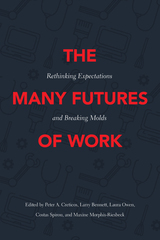
What will work eventually look like? This is the question at the heart of this timely collection. The editors and contributors—a mix of policy experts, academics, and advocates—seek to reframe the typical projections of the “future” of work. They examine the impact of structural racism on work, the loss of family‑sustaining jobs, the new role of gig work, growing economic inequality, barriers to rewarding employment such as age, gender, disability, and immigration status, and the business policies driving these ongoing challenges.
Together the essays present varied and practical insights into both U.S. and global trends, discuss the role of labor activism in furthering economic justice, and examine progressive strategies to improve the experience of work, wages, and the lives of workers. The Many Futures of Work offers a range of viable policies and practices that can promote rewarding employment and steer our course away from low-wage, unstable jobs toward jobs that lead to equitable prosperity and economic inclusion.
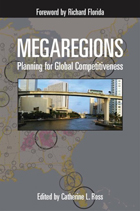
The concept of “the city” —as well as “the state” and “the nation state” —is passé, agree contributors to this insightful book. The new scale for considering economic strength and growth opportunities is “the megaregion,” a network of metropolitan centers and their surrounding areas that are spatially and functionally linked through environmental, economic, and infrastructure interactions.
Recently a great deal of attention has been focused on the emergence of the European Union and on European spatial planning, which has boosted the region’s competitiveness. Megaregions applies these emerging concepts in an American context. It addresses critical questions for our future: What are the spatial implications of local, regional, national, and global trends within the context of sustainability, economic competitiveness, and social equity? How can we address housing, transportation, and infrastructure needs in growing megaregions? How can we develop and implement the policy changes necessary to make viable, livable megaregions?
By the year 2050, megaregions will contain two-thirds of the U.S. population. Given the projected growth of the U.S. population and the accompanying geographic changes, this forward-looking book argues that U.S. planners and policymakers must examine and implement the megaregion as a new and appropriate framework.
Contributors, all of whom are leaders in their academic and professional specialties, address the most critical issues confronting the U.S. over the next fifty years. At the same time, they examine ways in which the idea of megaregions might help address our concerns about equity, the economy, and the environment. Together, these essays define the theoretical, analytical, and operational underpinnings of a new structure that could respond to the anticipated upheavals in U.S. population and living patterns.
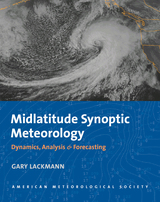
The past decade has been characterized by remarkable advances in meteorological observation, computing techniques, and data-visualization technology. However, the benefit of these advances can only be fully realized with the introduction of a systematic, applied approach to meteorological education that allows well-established theoretical concepts to be applied to modernized observational and numerical datasets.
Historical landmarks, such as wars, coups, and revolutions, seem to arise under unique conditions. Indeed, what seems to distinguish history from the natural and social sciences is its inability to be dissected or generalized in any meaningful way. Yet even complex and large-scale events like the American Revolutionary War and the French Revolution can be broken down into their component parts, and, as Bertrand Roehner and Tony Syme show, these smaller modules are rarely unique to the events they collectively compose.
The aim of this book is to analyze clusters of similar "elementary" occurrences that serve as the building blocks of more global events. Making connections between seemingly unrelated case studies, Roehner and Syme apply scientific methodology to the analysis of history. Their book identifies the recurring patterns of behavior that shape the histories of different countries separated by vast stretches of time and space. Taking advantage of a broad wealth of historical evidence, the authors decipher what may be seen as a kind of genetic code of history.
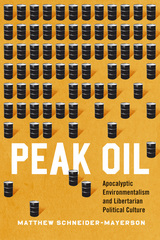
In Peak Oil, Matthew Schneider-Mayerson takes readers deep inside the world of “peakists,” showing how their hopes and fears about the postcarbon future led them to prepare for the social breakdown they foresee—all of which are fervently discussed and debated via websites, online forums, videos, and novels. By exploring the worldview of peakists, and the unexpected way that the fear of peak oil and climate change transformed many members of this left-leaning group into survivalists, Schneider-Mayerson builds a larger analysis of the rise of libertarianism, the role of oil in modern life, the political impact of digital technologies, the racial and gender dynamics of post-apocalyptic fantasies, and the social organization of environmental denial.
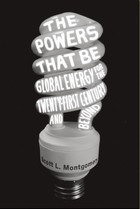
Thirty years ago, our global energy landscape did not look remarkably different from what it does today. Three or four decades from now, it certainly will: dwindling oil reserves will clash with skyrocketing demand, as developing nations around the world lead their citizens into the modern energy economy, and all the while, the grave threat of catastrophic climate change looms ever larger. Energy worries are at an all-time high—just how will we power our future?
With The Powers That Be, Scott L. Montgomery cuts through the hype, alarmism, and confusion to give us a straightforward, informed account of where we are now, and a map of where we’re going. Starting with the inescapable fact of our current dependence on fossil fuels—which supply 80% of all our energy needs today—Montgomery clearly and carefully lays out the many alternative energy options available, ranging from the familiar, like water and solar, to such nascent but promising sources as hydrogen and geothermal power. What is crucial, Montgomery explains, is understanding that our future will depend not on some single, wondrous breakthrough; instead, we should focus on developing a more diverse, adaptable energy future, one that draws on a variety of sources—and is thus less vulnerable to disruption or failure.
An admirably evenhanded and always realistic guide, Montgomery enables readers to understand the implications of energy funding, research, and politics at a global scale. At the same time, he doesn’t neglect the ultimate connection between those decisions and the average citizen flipping a light switch or sliding behind the wheel of a car, making The Powers That Be indispensible for our ever-more energy conscious age.
The idea that predictive science can simplify the decision-making process by creating a clearer picture of the future is deeply appealing in principle, but deeply problematic in practice.
Prediction offers a fascinating and wide-ranging look at the interdependent scientific, political, and social factors involved in using science-based predictions to guide policy making. Through ten detailed case studies, it explores society's efforts to generate reliable scientific information about complex natural systems and to use that information in making sound policy decisions. The book:
- provides an overview of predictive science from historical, scientific, political, and behavioral perspectives offers case studies of the use and misuse of scientific predictions on subjects ranging from asteroids to nuclear waste disposal
- proposes a practical analytical framework for the use of predictive science in setting policy
- recommends actions and policies that can increase the likelihood of effective decisions
Prediction is the first book to look at the numerous and varied scientific, social, and political factors involved in making and using predictions relevant to a wide range of current environmental controversies and challenges. It provides much-needed context for understanding predictions and scientific pronouncements, and is an important work for anyone concerned with interactions between science and policy making.

The essays in this collection, written by some of the leading scholars in Popular Culture Studies, turn the page on the new millennium to see what are the directions of approach and the opportunities to be gained in recognition of the compelling need for studies in everyday cultures.
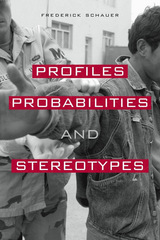
This book employs a careful, rigorous, yet lively approach to the timely question of whether we can justly generalize about members of a group on the basis of statistical tendencies of that group. For instance, should a military academy exclude women because, on average, women are more sensitive to hazing than men? Should airlines force all pilots to retire at age sixty, even though most pilots at that age have excellent vision? Can all pit bulls be banned because of the aggressive characteristics of the breed? And, most controversially, should government and law enforcement use racial and ethnic profiling as a tool to fight crime and terrorism?
Frederick Schauer strives to analyze and resolve these prickly questions. When the law “thinks like an actuary”—makes decisions about groups based on averages—the public benefit can be enormous. On the other hand, profiling and stereotyping may lead to injustice. And many stereotypes are self-fulfilling, while others are simply spurious. How, then, can we decide which stereotypes are accurate, which are distortions, which can be applied fairly, and which will result in unfair stigmatization?
These decisions must rely not only on statistical and empirical accuracy, but also on morality. Even statistically sound generalizations may sometimes have to yield to the demands of justice. But broad judgments are not always or even usually immoral, and we should not always dismiss them because of an instinctive aversion to stereotypes. As Schauer argues, there is good profiling and bad profiling. If we can effectively determine which is which, we stand to gain, not lose, a measure of justice.
How can we live in such a way that we die only once? How can we organize a society that gives us a better chance to be fully alive? How can we reinvent religion so that it liberates us instead of consoling us?
These questions stand at the center of Roberto Mangabeira Unger’s The Religion of the Future. Both a book about religion and a religious work in its own right, it proposes the content of a religion that can survive faith in a transcendent God and in life after death. According to this religion—the religion of the future—human beings can be more human by becoming more godlike, not just later, in another life or another time, but right now, on Earth and in their own lives.
Unger begins by facing the irreparable flaws in the human condition: our mortality, groundlessness, and insatiability. He goes on to discuss the conflicting approaches to existence that have dominated the last 2,500 years of the history of religion. Turning next to the religious revolution that we now require, he explores the political ideal of this revolution, an idea of deep freedom. And he develops its moral vision, focused on a refusal to squander life.
The Religion of the Future advances Unger’s philosophical program: a philosophy for which history is open, the new can happen, and belittlement need not be our fate.
2016 CCCC Best Book Award in Technical and Scientific Communication
In the past ten years, we have seen great changes in the ways government organizations and media respond to and report on emerging global epidemics. The first outbreak to garner such attention was SARS (severe acute respiratory syndrome). In Rhetoric of a Global Epidemic, Huiling Ding uses SARS to explore how various cultures and communities made sense of the epidemic and communicated about it. She also investigates the way knowledge production and legitimation operate in global epidemics, the roles that professionals and professional communicators, as well as individual citizens, play in the communication process, points of contention within these processes, and possible entry points for ethical and civic intervention.
Focusing on the rhetorical interactions among the World Health Organization, the United States, China, and Canada, Rhetoric of a Global Epidemic investigates official communication and community grassroots risk tactics employed during the SARS outbreak. It consists of four historical cases, which examine the transcultural risk communication about SARS in different geopolitical regions at different stages. The first two cases deal with risk communication practices at the early stage of the SARS epidemic when it originated in southern China. The last two cases move to transcultural rhetorical networks surrounding SARS.
With such threats as SARS, avian flu, and swine flu capturing the public imagination and prompting transnational public health preparedness efforts, the need for a rhetoric of global epidemics has never been greater. Government leaders, public health officials, health care professionals, journalists, and activists can learn how to more effectively craft and manage transcultural risk communication from Ding’s examination of the complex and varied modes of communication around SARS. In addition to offering a detailed case study, Rhetoric of a Global Epidemic provides a critical methodology that professional communicators can use in their investigations of epidemics and details approaches to facilitating more open, participatory risk communication at all levels.

Contributions include Sally Gregory Kohlstedt, "Parlors, Primers, and Public Schooling: Education for Science in Nineteenth-Century America;" Margaret Rossiter, "'Women's Work' in Science, 1880-1910;" Philip J. Pauly, "The Development of High School Biology: New York City, 1900-1925;" Susan E. Lederer, "Political Animals: The Shaping of Biomedical Research Literature in Twentieth-Century America;" Stanley Goldberg, "Inventing a Climate of Opinion: Vannevar Bush and the Decision to Build the Bomb;" Daniel J. Kevles, "The National Science Foundation and the Debate over Postwar Research Policy, 1942-1945: A Political Interpretation of Science: The Endless Frontier;" David A. Hollinger, "Science as a Weapon in Kulturkämpfe in the United States During and After World War II;" and others.
These essays originally were published in Isis, a publication of the History of Science Society.


The determination of ordinary people to end regional and global conflicts is powerful despite the forces opposing them. The Struggle for Peace explores how average citizens on both sides of the Israeli-Palestinian conflict worked for peace in the late twentieth century. Essays by noted scholars are juxtaposed with profiles of individual Israelis and Palestinians involved in peace activism. What emerges is a unique perspective on the prospects for peace in this troubled area.
Coordinated with a documentary film of the same name, the book is designed as a tool for the study of conflict resolution generally and the Israeli-Palestinian conflict in particular. The twelve original essays deal with the issues from different disciplinary perspectives: political science (Yehoshafat Harkabi, A. R. Norton, Muhammad Muslih, and Robert Vitalis); history (Avraham Zilkha and Joel Beinin); anthropology (Robert Rubinstein); sociology (Salim Tamari); film (Steven Talley); law (Edward Sherman); and international peacekeeping (Christian Harleman). The human side of the struggle is presented through brief biographies and portraits of twenty-five ordinary Israelis and Palestinians involved in peace activities in Israel and the West Bank.
The dream scenario could bring huge public and private benefits, including more transportation choices, greater affordability and accessibility, and healthier, more livable cities, along with reduced greenhouse gas emissions. The nightmare scenario could bring more urban sprawl, energy use, greenhouse gas emissions, and unhealthy cities and individuals.
In Three Revolutions, transportation expert Dan Sperling, along with seven other leaders in the field, share research–based insights on potential public benefits and impacts of the three transportation revolutions. They describe innovative ideas and partnerships, and explore the role government policy can play in steering the new transportation paradigm toward the public interest—toward our dream scenario of social equity, environmental sustainability, and urban livability.
Many factors will influence these revolutions—including the willingness of travelers to share rides and eschew car ownership; continuing reductions in battery, fuel cell, and automation costs; and the adaptiveness of companies. But one of the most important factors is policy.
Three Revolutions offers policy recommendations and provides insight and knowledge that could lead to wiser choices by all. With this book, Sperling and his collaborators hope to steer these revolutions toward the public interest and a better quality of life for everyone.
Even people who still refuse to accept the reality of human-induced climate change would have to agree that the topic has become inescapable in the United States in recent decades. But as Joseph Giacomelli shows in Uncertain Climes, this is actually nothing new: as far back as Gilded Age America, climate uncertainty has infused major debates on economic growth and national development.
In this ambitious examination of late-nineteenth-century understandings of climate, Giacomelli draws on the work of scientists, foresters, surveyors, and settlers to demonstrate how central the subject was to the emergence of American modernity. Amid constant concerns about volatile weather patterns and the use of natural resources, nineteenth-century Americans developed a multilayered discourse on climate and what it might mean for the nation’s future. Although climate science was still in its nascent stages during the Gilded Age, fears and hopes about climate change animated the overarching political struggles of the time, including expansion into the American West. Giacomelli makes clear that uncertainty was the common theme linking concerns about human-induced climate change with cultural worries about the sustainability of capitalist expansionism in an era remarkably similar to the United States’ unsettled present.
Robert Glennon captures the irony—and tragedy—of America’s water crisis in a book that is both frightening and wickedly comical. From manufactured snow for tourists in Atlanta to trillions of gallons of water flushed down the toilet each year, Unquenchable reveals the heady extravagances and everyday inefficiencies that are sucking the nation dry.
The looming catastrophe remains hidden as government diverts supplies from one area to another to keep water flowing from the tap. But sooner rather than later, the shell game has to end. And when it does, shortages will threaten not only the environment, but every aspect of American life: we face shuttered power plants and jobless workers, decimated fi sheries and contaminated drinking water.
We can’t engineer our way out of the problem, either with traditional fixes or zany schemes to tow icebergs from Alaska. In fact, new demands for water, particularly the enormous supply needed for ethanol and energy production, will only worsen the crisis. America must make hard choices—and Glennon’s answers are fittingly provocative. He proposes market-based solutions that value water as both a commodity and a fundamental human right.
One truth runs throughout Unquenchable: only when we recognize water’s worth will we begin to conserve it.

"Essential for all those who are interested in the study of risk assessment of violence. It is particularly important for the researcher in this area. . . . For the clinician who must make violence assessments it is important reading as well."—Stewart Levine, Bulletin of the American Academy of Psychiatry and the Law
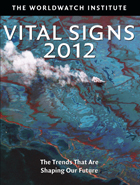
By taking stock of global consumption, Vital Signs 2012 offers the facts that need to guide our stewardship of the Earth's resources-and some of these facts are shocking. The report covers topics from obesity to ecosystem services, from grain production to nuclear power. Taken as a whole, it paints a picture of skyrocketing population, disappearing forests, and increasing consumption peppered with bright spots like growing investment in high-speed trains and other efficient transportation systems.
Vital Signs 2012 is based on Worldwatch's online project of the same name, which provides up-to-date figures on important global concerns, as well as the Institute's own additional research. The book compiles the most important of these into an accessible, informative resource for policymakers and anyone who wants a realistic look at the state of our planet.
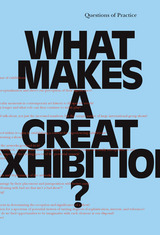
For better or worse, museums are changing from forbidding bastions of rare art into audience-friendly institutions that often specialize in “blockbuster” exhibitions designed to draw crowds. But in the midst of this sea change, one largely unanswered question stands out: “What makes a great exhibition?” Some of the world’s leading curators and art historians try to answer this question here, as they examine the elements of a museum exhibition from every angle.
What Makes a Great Exhibition? investigates the challenges facing American and European contemporary art in particular, exploring such issues as group exhibitions, video and craft, and the ways that architecture influences the nature of the exhibitions under its roof. The distinguished contributors address diverse topics, including Studio Museum in Harlem director Thelma Golden’s examination of ethnically-focused exhibitions; and Robert Storr, director of the 2007 Venice Biennale and formerly of the Museum of Modern Art, on the meaning of “exhibition and “exhibitionmaker.”
A thought-provoking volume on the practice of curatorial work and the mission of modern museums, What Makes A Great Exhibition? will be indispensable reading for all art professionals and scholars working today.
READERS
Browse our collection.
PUBLISHERS
See BiblioVault's publisher services.
STUDENT SERVICES
Files for college accessibility offices.
RECENTLY PUBLISHED






UChicago Accessibility Resources
home | accessibility | search | about | contact us
BiblioVault ® 2001 - 2024
The University of Chicago Press