
 A SCHOLARLY BOOK REPOSITORY
Results by Title
9 books about Islamic law
9 books about Islamic law
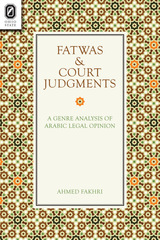
Fatwas and Court Judgments
A Genre Analysis of Arabic Legal Opinion
Ahmed Fakhri
The Ohio State University Press, 2014
Fatwas and Court Judgments: A Genre Analysis of Arabic Legal Opinion uses a genre analysis approach to investigate how Arabic legal opinion is linguistically and rhetorically constructed in two culturally significant types of texts: secular court judgments and fatwas, the Islamic edicts based on sharii’a law. Ahmed Fakhri’s analysis shows that the court judgments exhibit several Western-inspired features, particularly the complexity of syntax and the rhetorical moves utilized to construct arguments. But the fatwas maintain conventional Arabic patterns of persuasion, such as citing religious texts, relying on affective appeal, and offering moral advice. Showing how these two radically different rhetorical traditions coexist, Fatwas and Court Judgments totally re-conceptualizes Arabic legal argumentation by highlighting its diverse sources and hybridity.
The differences between the two genres stem from elements of their socio-cultural context, such as the role relations of the participants and the characteristics of the institutions to which the genres belong. Moving beyond these contexts, Fatwas and Court Judgments reveals generic practices that have broad implications for understanding various aspects of wider Arab culture, including the tension between modern secular ideologies and traditional religious beliefs, the male-dominated access to discourse, and the prevalence of utilitarian attitudes exhibited in “fatwa shopping.”
The differences between the two genres stem from elements of their socio-cultural context, such as the role relations of the participants and the characteristics of the institutions to which the genres belong. Moving beyond these contexts, Fatwas and Court Judgments reveals generic practices that have broad implications for understanding various aspects of wider Arab culture, including the tension between modern secular ideologies and traditional religious beliefs, the male-dominated access to discourse, and the prevalence of utilitarian attitudes exhibited in “fatwa shopping.”
[more]
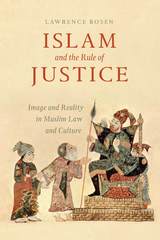
Islam and the Rule of Justice
Image and Reality in Muslim Law and Culture
Lawrence Rosen
University of Chicago Press, 2018
In the West, we tend to think of Islamic law as an arcane and rigid legal system, bound by formulaic texts yet suffused by unfettered discretion. While judges may indeed refer to passages in the classical texts or have recourse to their own orientations, images of binding doctrine and unbounded choice do not reflect the full reality of the Islamic law in its everyday practice. Whether in the Arabic-speaking world, the Muslim portions of South and Southeast Asia, or the countries to which many Muslims have migrated, Islamic law works is readily misunderstood if the local cultures in which it is embedded are not taken into account.
With Islam and the Rule of Justice, Lawrence Rosen analyzes a number of these misperceptions. Drawing on specific cases, he explores the application of Islamic law to the treatment of women (who win most of their cases), the relations between Muslims and Jews (which frequently involve close personal and financial ties), and the structure of widespread corruption (which played a key role in prompting the Arab Spring). From these case studie the role of informal mechanisms in the resolution of local disputes. The author also provides a close reading of the trial of Zacarias Moussaoui, who was charged in an American court with helping to carry out the 9/11 attacks, using insights into how Islamic justice works to explain the defendant’s actions during the trial. The book closes with an examination of how Islamic cultural concepts may come to bear on the constitutional structure and legal reforms many Muslim countries have been undertaking.
With Islam and the Rule of Justice, Lawrence Rosen analyzes a number of these misperceptions. Drawing on specific cases, he explores the application of Islamic law to the treatment of women (who win most of their cases), the relations between Muslims and Jews (which frequently involve close personal and financial ties), and the structure of widespread corruption (which played a key role in prompting the Arab Spring). From these case studie the role of informal mechanisms in the resolution of local disputes. The author also provides a close reading of the trial of Zacarias Moussaoui, who was charged in an American court with helping to carry out the 9/11 attacks, using insights into how Islamic justice works to explain the defendant’s actions during the trial. The book closes with an examination of how Islamic cultural concepts may come to bear on the constitutional structure and legal reforms many Muslim countries have been undertaking.
[more]
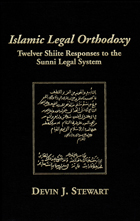
Islamic Legal Orthodoxy
Devin J Stewart
University of Utah Press, 2007
Stewart points to an underlying tension in Shi'ite intellectual history between assimilationist and nativist impulses in the debate over consensus, dissimulation, and in the lives of certain Shi'ite scholars who lived and studied among Sunnis.
One of the most far-reaching developments in the history of Islam was the rise of the four classic Sunni schools of law between the ninth and eleventh centuries CE. Consolidation of these schools went hand in hand with the establishment of jurists’ dominance over religious discourse and social institutions. Orthodoxy came to be defined as the consensus (ijma’) of the Sunni jurists. Devin Stewart argues that it is to the margins of the emerging system that investigators must look to understand its historical dynamics. The development of Twelve Shi’ite jurisprudence in relation and reaction to the Sunni schools is particularly informative.
In Islamic Legal Orthodoxy, Stewart explores the process by which Shi’ite jurists participated in the mainstream of Islamic jurisprudence and were influenced by Sunni legal doctrines. He identifies three main reactions to Sunni legal definitions of othodoxy and the concept of consensus on which it was based. The Akhbaris rejected Sunni legal consensus and juristic authority for a scripture-based system; many Shi’ite outwardly accepted the ground rules of Sunni legal consensus and joined the Shafi’i school of jurisprudence; a third option was to adopt the concept of consensus to create a “fifth,” Shi’ite, legal system.
The development of the Sunni legal system effectively set the ground rules for the marginal sect’s negotiation of their identity with respect to Islamic legal orthodoxy. Accordingly, Shi’ite jurists developed a legal institution that is structurally similar to the four Sunni madhhabs and even today serves as means to position themselves in the Muslim world. Stewart points to an underlying tension in Shi’ite intellectual history between assimilationist and nativist impulses in the debate over consensus, dissmulation (taqiyyah) and the lives of certain Shi’ite scholars who lived and studies among Sunnis.
One of the most far-reaching developments in the history of Islam was the rise of the four classic Sunni schools of law between the ninth and eleventh centuries CE. Consolidation of these schools went hand in hand with the establishment of jurists’ dominance over religious discourse and social institutions. Orthodoxy came to be defined as the consensus (ijma’) of the Sunni jurists. Devin Stewart argues that it is to the margins of the emerging system that investigators must look to understand its historical dynamics. The development of Twelve Shi’ite jurisprudence in relation and reaction to the Sunni schools is particularly informative.
In Islamic Legal Orthodoxy, Stewart explores the process by which Shi’ite jurists participated in the mainstream of Islamic jurisprudence and were influenced by Sunni legal doctrines. He identifies three main reactions to Sunni legal definitions of othodoxy and the concept of consensus on which it was based. The Akhbaris rejected Sunni legal consensus and juristic authority for a scripture-based system; many Shi’ite outwardly accepted the ground rules of Sunni legal consensus and joined the Shafi’i school of jurisprudence; a third option was to adopt the concept of consensus to create a “fifth,” Shi’ite, legal system.
The development of the Sunni legal system effectively set the ground rules for the marginal sect’s negotiation of their identity with respect to Islamic legal orthodoxy. Accordingly, Shi’ite jurists developed a legal institution that is structurally similar to the four Sunni madhhabs and even today serves as means to position themselves in the Muslim world. Stewart points to an underlying tension in Shi’ite intellectual history between assimilationist and nativist impulses in the debate over consensus, dissmulation (taqiyyah) and the lives of certain Shi’ite scholars who lived and studies among Sunnis.
[more]
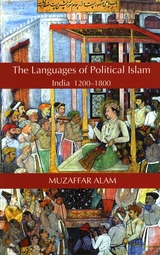
The Languages of Political Islam
India 1200-1800
Muzaffar Alam
University of Chicago Press, 2004
The Languages of Political Islam illuminates the diverse ways in which Islam, from the time of its arrival in India in the twelfth century through its height as the ruling theology to its decline, adapted to its new cultural context to become "Indianized."
Muzaffar Alam shows that the adoption of Arabo-Persian Islam in India changed the manner in which Islamic rule and governance were conducted. Islamic regulation and statecraft in a predominately Hindu country required strategic shifts from the original Islamic injunctions. Islamic principles could not regulate beliefs in a vast country without accepting cultural limitations and limits on the exercise of power. As a result of cultural adaptation, Islam was in the end forced to reinvent its principles for religious rule. Acculturation also forced key Islamic terms to change so fundamentally that Indian Islam could be said to have acquired a character substantially different from the Islam practiced outside of India.
Muzaffar Alam shows that the adoption of Arabo-Persian Islam in India changed the manner in which Islamic rule and governance were conducted. Islamic regulation and statecraft in a predominately Hindu country required strategic shifts from the original Islamic injunctions. Islamic principles could not regulate beliefs in a vast country without accepting cultural limitations and limits on the exercise of power. As a result of cultural adaptation, Islam was in the end forced to reinvent its principles for religious rule. Acculturation also forced key Islamic terms to change so fundamentally that Indian Islam could be said to have acquired a character substantially different from the Islam practiced outside of India.
[more]
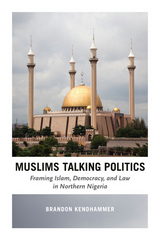
Muslims Talking Politics
Framing Islam, Democracy, and Law in Northern Nigeria
Brandon Kendhammer
University of Chicago Press, 2016
For generations Islamic and Western intellectuals and policymakers have debated Islam’s compatibility with democratic government, usually with few solid conclusions. But where—Brandon Kendhammer asks in this book—have the voices of ordinary, working-class Muslims been in this conversation? Doesn’t the fate of democracy rest in their hands? Visiting with community members in northern Nigeria, he tells the complex story of the stunning return of democracy to a country that has also embraced Shariah law and endured the radical religious terrorism of Boko Haram.
Kendhammer argues that despite Nigeria’s struggles with jihadist insurgency, its recent history is really one of tenuous and fragile reconciliation between mass democratic aspirations and concerted popular efforts to preserve Islamic values in government and law. Combining an innovative analysis of Nigeria’s Islamic and political history with visits to the living rooms of working families, he sketches how this reconciliation has been constructed in the conversations, debates, and everyday experiences of Nigerian Muslims. In doing so, he uncovers valuable new lessons—ones rooted in the real politics of ordinary life—for how democracy might work alongside the legal recognition of Islamic values, a question that extends far beyond Nigeria and into the Muslim world at large.
Kendhammer argues that despite Nigeria’s struggles with jihadist insurgency, its recent history is really one of tenuous and fragile reconciliation between mass democratic aspirations and concerted popular efforts to preserve Islamic values in government and law. Combining an innovative analysis of Nigeria’s Islamic and political history with visits to the living rooms of working families, he sketches how this reconciliation has been constructed in the conversations, debates, and everyday experiences of Nigerian Muslims. In doing so, he uncovers valuable new lessons—ones rooted in the real politics of ordinary life—for how democracy might work alongside the legal recognition of Islamic values, a question that extends far beyond Nigeria and into the Muslim world at large.
[more]
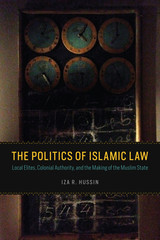
The Politics of Islamic Law
Local Elites, Colonial Authority, and the Making of the Muslim State
Iza R. Hussin
University of Chicago Press, 2016
In The Politics of Islamic Law, Iza Hussin compares India, Malaya, and Egypt during the British colonial period in order to trace the making and transformation of the contemporary category of ‘Islamic law.’ She demonstrates that not only is Islamic law not the shari’ah, its present institutional forms, substantive content, symbolic vocabulary, and relationship to state and society—in short, its politics—are built upon foundations laid during the colonial encounter.
Drawing on extensive archival work in English, Arabic, and Malay—from court records to colonial and local papers to private letters and visual material—Hussin offers a view of politics in the colonial period as an iterative series of negotiations between local and colonial powers in multiple locations. She shows how this resulted in a paradox, centralizing Islamic law at the same time that it limited its reach to family and ritual matters, and produced a transformation in the Muslim state, providing the frame within which Islam is articulated today, setting the agenda for ongoing legislation and policy, and defining the limits of change. Combining a genealogy of law with a political analysis of its institutional dynamics, this book offers an up-close look at the ways in which global transformations are realized at the local level.
Drawing on extensive archival work in English, Arabic, and Malay—from court records to colonial and local papers to private letters and visual material—Hussin offers a view of politics in the colonial period as an iterative series of negotiations between local and colonial powers in multiple locations. She shows how this resulted in a paradox, centralizing Islamic law at the same time that it limited its reach to family and ritual matters, and produced a transformation in the Muslim state, providing the frame within which Islam is articulated today, setting the agenda for ongoing legislation and policy, and defining the limits of change. Combining a genealogy of law with a political analysis of its institutional dynamics, this book offers an up-close look at the ways in which global transformations are realized at the local level.
[more]
Questioning Secularism
Islam, Sovereignty, and the Rule of Law in Modern Egypt
Hussein Ali Agrama
University of Chicago Press, 2012
The central question of the Arab Spring—what democracies should look like in the deeply religious countries of the Middle East—has developed into a vigorous debate over these nations’ secular identities. But what, exactly, is secularism? What has the West’s long familiarity with it inevitably obscured? In Questioning Secularism, Hussein Ali Agrama tackles these questions. Focusing on the fatwa councils and family law courts of Egypt just prior to the revolution, he delves deeply into the meaning of secularism itself and the ambiguities that lie at its heart.
Drawing on a precedent-setting case arising from the family law courts —the last courts in Egypt to use Shari‘a law—Agrama shows that secularism is a historical phenomenon that works through a series of paradoxes that it creates. Digging beneath the perceived differences between the West and Middle East, he highlights secularism’s dependence on the law and the problems that arise from it: the necessary involvement of state sovereign power in managing the private spiritual lives of citizens and the irreducible set of legal ambiguities such a relationship creates. Navigating a complex landscape between private and public domains, Questioning Secularism lays important groundwork for understanding the real meaning of secularism as it affects the real freedoms of a citizenry, an understanding of the utmost importance for so many countries that are now urgently facing new political possibilities.
[more]
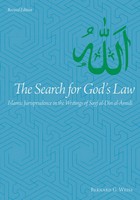
The Search for God's Law
Islamic Jurisprudence in the Writings of Sayf al-Din al-Amidi
Bernard G Weiss
University of Utah Press, 2011
Scholars praised the 1992 edition of The Search for God’s Law as a groundbreaking intellectual treatment of Islamic jurisprudence. Bernard Weiss’s revised edition brings to life Sayf al-Din al Amidi’s classic exposition of the methodologies through which Muslim scholars have constructed their understandings of the divine law.
Weiss’s new introduction provides an overview of Amidi’s jurisprudence that facilitates deeper comprehension of the challenging dialectic of the text. This edition includes an in-depth analysis of the nature of language and the ways in which it mediates the law, while shaping it at the same time. An updated index has been added.
[more]
The search for God's law
Islamic jurisprudence in the writings of Sayf al-Din al-Amidi
Bernard G Weiss
University of Utah Press, 1992
READERS
Browse our collection.
PUBLISHERS
See BiblioVault's publisher services.
STUDENT SERVICES
Files for college accessibility offices.
RECENTLY PUBLISHED






UChicago Accessibility Resources
home | accessibility | search | about | contact us
BiblioVault ® 2001 - 2026
The University of Chicago Press