
 A SCHOLARLY BOOK REPOSITORY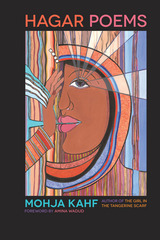
“Mohja Kahf ’s Hagar Poems is brilliantly original in its conception, thrillingly artful in its execution. Its range is immense, its spiritual depth is profound, it negotiates its shifts between archaic and the contemporary with utmost skill. There’s lyricism, there’s satire, there’s comedy, there’s theology of a high order in this book.”
—Alicia Ostriker, author of For the Love of God: The Bible as an Open Book
“Hagar/ Hajar the immigrant/exile/outcast/refugee mother of a people is given multiple voices and significance in Mohja Kahf’s new book of dramatic monologues, which also reinvents Pharaoh’s daughter, Zuleika, Aïsha, and Mary in poems that are at once lively and learned, agnostic and devout. The sequence on an American mosque, and the poet’s ambivalent love for what it represents, is unique in American poetry.”
—Marilyn Hacker, author of A Stranger’s Mirror
“‘Where have all the goddesses gone,’ writes Mohja Kahf, ‘I tracked down Isis / incognito on Cyprus. /She told me Ishtar / lived under the radar / in southern Iraq. . . .’ In Hagar Poems, Mohja Kahf’s hallmark qualities—irreverence, imagination, wit, poignancy—are all exuberantly in evidence. A wonderful read.”
—Leila Ahmed, author of A Quiet Revolution: The Veil’s Resurgence, from the Middle East to America
“This brilliant collection captures all the ‘patient threading of relationship’ between Hagar and Sarah as between women, and then between women and men, between human and God. . . . At every turn of the page [Kahf] refuses complacency and circumstance but opts instead for exposing the tenuousness of threads that tie and bind and then come loose before our eyes.”
—From the foreword by Amina Wadud
The central matter of this daring new collection is the story of Hagar, Abraham, and Sarah—the ancestral feuding family of Judaism, Christianity, and Islam.
These poems delve into the Hajar story in Islam. They explore other figures from the Near Eastern heritage, such as Mary and Moses, and touch on figures from early Islam, such as Fatima and Aisha. Throughout, there is artful reconfiguring. Readers will find sequels and prequels to the traditional narratives, along with modernized figures claimed for contemporary conflicts.
Hagar Poems is a compelling shakeup of not only Hagar’s story but also of current roles of all kinds of women in all kinds of relationships.
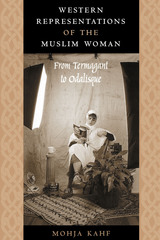
Veiled, secluded, submissive, oppressed—the "odalisque" image has held sway over Western representations of Muslim women since the Enlightenment of the eighteenth century. Yet during medieval and Renaissance times, European writers portrayed Muslim women in exactly the opposite way, as forceful queens of wanton and intimidating sexuality.
In this illuminating study, Mohja Kahf traces the process through which the "termagant" became an "odalisque" in Western representations of Muslim women. Drawing examples from medieval chanson de geste and romance, Renaissance drama, Enlightenment prose, and Romantic poetry, she links the changing images of Muslim women to changes in European relations with the Islamic world, as well as to changing gender dynamics within Western societies.
READERS
Browse our collection.
PUBLISHERS
See BiblioVault's publisher services.
STUDENT SERVICES
Files for college accessibility offices.
RECENTLY PUBLISHED




UChicago Accessibility Resources
home | accessibility | search | about | contact us
BiblioVault ® 2001 - 2025
The University of Chicago Press