
 A SCHOLARLY BOOK REPOSITORY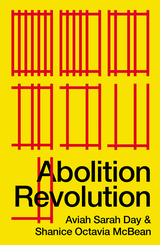
George Floyd's murder in Minneapolis triggered abolitionist shockwaves. Calls to defund the police found receptive ears around the world. Shortly after, Sarah Everard's murder by a serving police officer sparked a national abolitionist movement in Britain. But to abolish the police, prisons and borders, we must confront the legacy of Empire.
Abolition Revolution is a guide to abolitionist politics in Britain, drawing out rich histories of resistance from rebellion in the colonies to grassroots responses to carceral systems today. The authors argue that abolition is key to reconceptualising revolution for our times - linking it with materialist feminisms, anti-capitalist class struggle, internationalist solidarity and anti-colonialism.
Perfect for reading groups and activist meetings, this is an invaluable book for those new to abolitionist politics - whilst simultaneously telling a passionate and authoritative story about the need for abolition and revolution in Britain and globally.
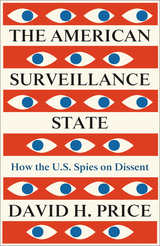
New evidence has come to light proving how far the FBI monitored its citizens throughout the Cold War and beyond
When the possibility of wiretapping first became known to Americans they were outraged. Now, in our post-9/11 world, it’s accepted that corporations are vested with human rights, and government agencies and corporations use computers to monitor our private lives. David H. Price pulls back the curtain to reveal how the FBI and other government agencies have always functioned as the secret police of American capitalism up to today, where they luxuriate in a near-limitless NSA surveillance of all.
Price looks through a roster of campaigns by law enforcement, intelligence agencies, and corporations to understand how we got here. Starting with J. Edgar Hoover and the early FBI’s alignment with business, his access to 15,000 pages of never-before-seen FBI files shines a light on the surveillance of Edward Said, Andre Gunder Frank and Alexander Cockburn, Native American communists, and progressive factory owners.
Price uncovers patterns of FBI monitoring and harassing of activists and public figures, providing the vital means for us to understand how these new frightening surveillance operations are weaponized by powerful governmental agencies that remain largely shrouded in secrecy.
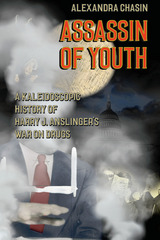
In Assassin of Youth, Alexandra Chasin gives us a lyrical, digressive, funny, and ultimately riveting quasi-biography of Anslinger. Her treatment of the man, his times, and the world that arose around and through him is part cultural history, part kaleidoscopic meditation. Each of the short chapters is anchored in a historical document—the court decision in Webb v. US (1925), a 1935 map of East Harlem, FBN training materials from the 1950s, a personal letter from the Treasury Department in 1985—each of which opens onto Anslinger and his context. From the Pharmacopeia of 1820 to death of Sandra Bland in 2015, from the Pennsylvania Railroad to the last passenger pigeon, and with forays into gangster lives, CIA operatives, and popular detective stories, Chasin covers impressive ground. Assassin of Youth is as riotous and loose a history of drug laws as can be imagined—and yet it culminates in an arresting and precise revision of the emergence of drug prohibition.
Today, even as marijuana is slowly being legalized, we still have not fully reckoned with the racist and xenophobic foundations of our cultural appetite for the severe punishment of drug offenders. In Assassin of Youth, Chasin shows us the deep, twisted roots of both our love and our hatred for drug prohibition.

Volume VI of The Collected Works of William Howard Taft follows the career of William Howard Taft upon his leaving the White House. It consists of two short publications from 1914 and 1915.
The first, The President and His Powers, is based on a series of lectures delivered at Columbia University and draws on Taft’s experience in the presidency and the executive branch. It speaks particularly to the nature of executive power and its place in the American system and is rooted in his disagreement with Theodore Roosevelt regarding presidential power. Taft believed all presidential power must be traced to some specific grant of power or be necessary to its exercise, while Roosevelt saw the presidency as a position of “steward of the people” limited only by some express provision of the Constitution.
The second, The United States and Peace, reflects Taft’s interest in foreign policy, which was intensified by his years as governor of the Philippines and as secretary of war, as well as by his presidency. Originally four lectures delivered in 1914, The United States and Peace discusses the Monroe Doctrine, the threat to peace presented by incidents of violence to foreigners in the United States, the maintenance of peace through international arbitration, and the trend toward federation in international affairs. Taft hoped to see the latter result in the establishment of an independent judiciary to resolve international disputes.
Taft’s reasoned arguments, supplemented by the commentaries of Professors McWilliams and Gerrity, will stimulate interest among historians, lawmakers, political activists, and the general public.

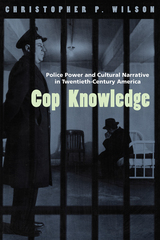
Christopher P. Wilson explores these questions by examining narratives of police power in crime news, popular fiction, and film, showing how they both reflect and influence the real strategies of law enforcement on the beat, in the squad room, and in urban politics. He takes us from Theodore Roosevelt's year of reform with the 1890s NYPD to the rise of "community policing," from the classic "police procedural" film The Naked City to the bestselling novels of LAPD veteran Joseph Wambaugh. Wilson concludes by demonstrating the ways in which popular storytelling about police power has been intimately tied to the course of modern liberalism, and to the rising tide of neoconservatism today.
"A thorough, brilliant blend that crosses disciplines."—Choice
"[S]ophisticated, highly theoretical and ambitious. . . . Connects the history of policing to cultural representations of crime, criminals and cops."—Times Literary Supplement
"[A] deeply satisfying approach to the crime narrative. . . . [Wilson] focuses, ultimately, on the role of police power in cultural storytelling."—American Quarterly
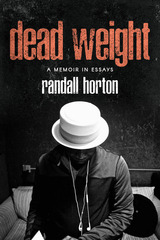
The memoir begins with a conversation between Horton and Ralph Ellison’s Invisible Man statue in New York City. Their imagined dialogue examines the psychological impact of racism on Black men and boys, including Horton’s separation from his mother, immediately after his birth, in a segregated Alabama hospital. From his current life as a professor and prison reformer, Horton looks back on his experiences as a drug smuggler and trafficker during the 1980s–1990s as well as the many obstacles he faced after his release. He also examines the lasting impact of his drug activity on those around him, reflecting on the allure of economic freedom and the mental escapism that cocaine provided, an allure so strong that both sellers and users were willing to risk prison. Horton shares historical context and vivid details about people caught in the war on drugs who became unsuspecting protagonists in somebody else’s melodrama.
Lyrical and gripping, Dead Weight reveals the lifelong effects of one man’s incarceration on his psyche, his memories, and his daily experience of American society.
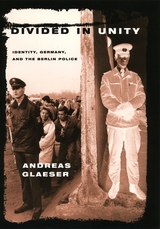
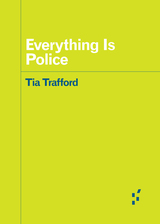
How institutional and interpersonal policing have been central to worldmaking
Policing is constitutive of colonial modernity: normalizing, internalizing, and legalizing anti-Black violence as the ongoing condition for white life and freedom. The result, Tia Trafford argues here, is a situation where we cannot practically experience or even imagine worlds free from policing. From the plantation to the prison, global apartheid, and pandemic control, this book examines why and how policing has become the most ingrained, commonsense—and insidious—way of managing our world.

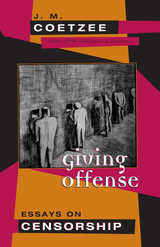
J. M. Coetzee presents a coherent, unorthodox analysis of censorship from the perspective of one who has lived and worked under its shadow. The essays collected here attempt to understand the passion that plays itself out in acts of silencing and censoring. He argues that a destructive dynamic of belligerence and escalation tends to overtake the rivals in any field ruled by censorship.
From Osip Mandelstam commanded to compose an ode in praise of Stalin, to Breyten Breytenbach writing poems under and for the eyes of his prison guards, to Aleksander Solzhenitsyn engaging in a trial of wits with the organs of the Soviet state, Giving Offense focuses on the ways authors have historically responded to censorship. It also analyzes the arguments of Catharine MacKinnon for the suppression of pornography and traces the operations of the old South African censorship system.
"The most impressive feature of Coetzee's essays, besides his ear for language, is his coolheadedness. He can dissect repugnant notions and analyze volatile emotions with enviable poise."—Kenneth Baker, San Francisco Chronicle Book Review
"Those looking for simple, ringing denunciations of censorship's evils will be disappointed. Coetzee explicitly rejects such noble tritenesses. Instead . . . he pursues censorship's deeper, more fickle meanings and unmeanings."—Kirkus Reviews
"These erudite essays form a powerful, bracing criticism of censorship in its many guises."—Publishers Weekly
"Giving Offense gets its incisive message across clearly, even when Coetzee is dealing with such murky theorists as Bakhtin, Lacan, Foucault, and René; Girard. Coetzee has a light, wry sense of humor."—Bill Marx, Hungry Mind Review
"An extraordinary collection of essays."—Martha Bayles, New York Times Book Review
"A disturbing and illuminating moral expedition."—Richard Eder, Los Angeles Times Book Review

"Karl Marx aspired to a world in which our animal needs would be satisfied and our human needs could be addressed. It is a realistic possibility now, as William Robinson outlines—or the alternative that is taking shape before our eyes: a 'global police state' controlled by narrowly concentrated capital with 'surplus humanity' left to survive somehow on its own. The choice is in our hands."
—Noam Chomsky, author of Who Rules the World?
As the world becomes ever more unequal, people become ever more “disposable.” Today, governments systematically exclude sections of their populations from society through heavy-handed policing. But it doesn't always go to plan.
William I. Robinson exposes the nature and dynamics of this out-of-control system, arguing for the urgency of creating a movement capable of overthrowing it. The global police state uses a variety of ingenious methods of control, including mass incarceration, police violence, US-led wars, the persecution of immigrants and refugees, and the repression of environmental activists.
He writes in his Introduction, “I offer a ‘big picture” of the emerging global police state in a short book that is eminently readable. The pages to follow may startle many readers and make them angry. I trust the work will serve as a warning of the dystopic future that is upon us. More importantly, by exposing the nature and dynamic of this out-of-control system, I hope it will contribute to the struggles to bring about an alternative future based on human freedom and liberation.”
Movements have emerged to combat the increasing militarization, surveillance and social cleansing; however, many of them appeal to a moral sense of social justice rather than addressing its root: global capitalism.
Using shocking data which reveals how far capitalism has become a system of repression, Robinson argues that the emerging megacities of the world are becoming the battlegrounds where the excluded and the oppressed face off against the global police state.
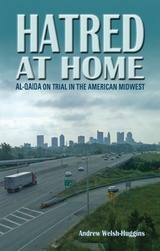
One day in 2002, three friends—a Somali immigrant, a Pakistan–born U.S. citizen, and a hometown African American—met in a Columbus, Ohio coffee shop and vented over civilian casualties in the war in Afghanistan. Their conversation triggered an investigation that would become one of the most unusual and far–reaching government probes into terrorism since the 9/11 attacks.
Over several years, prosecutors charged each man with unrelated terrorist activities in cases that embodied the Bush administration’s approach to fighting terrorism at home.
Government lawyers spoke of catastrophes averted; defense attorneys countered that none of the three had done anything but talk. The stories of these homegrown terrorists illustrate the paradox the government faces after September 11: how to fairly wage a war against alleged enemies living in our midst.
Hatred at Home is a true crime drama that will spark debate from all political corners about safety, civil liberties, free speech, and the government’s war at home.
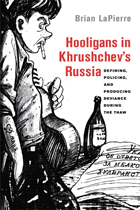
Hooligans in Khrushchev's Russia offers the first comprehensive study of how Soviet police, prosecutors, judges, and ordinary citizens during the Khrushchev era (1953–64) understood, fought against, or embraced this catch-all category of criminality. Using a wide range of newly opened archival sources, it portrays the Khrushchev period—usually considered as a time of liberalizing reform and reduced repression—as an era of renewed harassment against a wide range of state-defined undesirables and as a time when policing and persecution were expanded to encompass the mundane aspects of everyday life. In an atmosphere of Cold War competition, foreign cultural penetration, and transatlantic anxiety over "rebels without a cause," hooliganism emerged as a vital tool that post-Stalinist elites used to civilize their uncultured working class, confirm their embattled cultural ideals, and create the right-thinking and right-acting socialist society of their dreams.
“Call me what you want—corrections officer, C.O., guard, jailcop, turnkey—I helped keep people there against their will. For this, the jail rewarded me with food.”
When Ben Langston took a job at the State Correctional Institute at Rockview, it was because there were few other options. At his previous job—putting labels on water bottles—he did not have cups of human waste thrown in his face. He did not have to finger sweaty armpits in search of weapons. There were no threats against his life. But the jail paid better.
Jail Speak is a memoir written from a guard’s perspective. It’s about the grind, about dehumanization, drama, punishment, and the cycles of harm perpetrated by the prison industry. It’s about masculinity and conformity and emotional detachment. It’s a look at the inside that you didn’t want to know about, and it’s for mature audiences only. Know your limits.

In his analysis of the current Japanese corrections system, internationally respected criminologist Elmer H. Johnson focuses on three basic questions: What are the characteristics of the major programmatic elements? How do various personnel carry out their programmatic responsibilities? Why are the various duties and activities carried out in a particular way?
Johnson points out that compared with the United States, where prison populations are huge and often violent, Japan incarcerates relatively few criminals. In 1989, for example, Japan locked up only 34 out of every 100,000 citizens while the United States imprisoned people at a rate of 271 per 100,000. Examining the cultural differences leading to this disparity, Johnson notes that in Japan prosecutors are reluctant to refer defendants for trial and the courts often suspend sentences for convicted felons.
In Japan, two bureaus—the Correction Bureau and the Rehabilitation Bureau—administer all Japanese correctional activities. Placing these bureaus in the organizational scheme of the Ministry of Justice, Johnson traces the history, describes the organizational ideologies, and outlines the special features of each.
A central feature of the Japanese penal system is the industrial prison, a concept that met such fierce opposition in the United States that it lost almost all access to the free market by the 1940s. Johnson traces the history of the industrial prison, noting particularly that the industrial operations in adult institutions explain in part why there is almost no violence and why few try to escape. Juvenile institutions enjoy similar success; even though they produce no industrial products, the juvenile training schools emphasize education, vocational training, and counseling.
Japanese correctional officers rely heavily on the community and on unsalaried volunteer probation officers for supervision of probationers and parolees. Although Japanese courts regard probationary supervision as too punitive for most convicted defendants and return many to the community without supervision, the probation caseload is weighty. Johnson describes the responsibilities and operations of the Regional Parole Boards. He also discusses the aid hostels (halfway houses) that are primarily operated by private organizations and that serve released or paroled prisoners.
Johnson sums up by noting that both the Correction Bureau and the Rehabilitation Bureau depend on the overall operations of police, prosecutors, and judges. More broadly, he asserts, both bureaus are creatures of Japanese society and culture. The assets and disadvantages of the bureaus reflect society’s reluctance to sentence defendants to prison and, to a lesser extent, the reluctance to place them on probationary supervision.
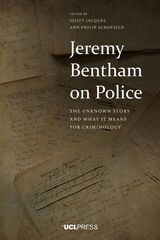
Jeremy Bentham theorized the panopticon as modern policing emerged across the British Empire, yet while his theoretical writing became canonical in criminology, his perspective on the police remains obscure. Jeremy Bentham on Police recovers the reformer’s writings on policing alongside a series of essays that demonstrate their significance to the past, present, and future of criminology.

This is an auto-narrated audiobook version of this book.
A searing, historically rich account of how US policing and punishment have been retrofitted over the last four decades to extract public and private revenues from America’s poorest and most vulnerable communities.
Alongside the rise of mass incarceration, a second profound and equally disturbing development has transpired. Since the 1980s, US policing and punishment have been remade into tools for stripping resources from the nation’s most oppressed communities and turning them into public and private revenues. Legal Plunder analyzes this development’s origins, operations, consequences, and the political struggles that it has created.
Drawing on historical and contemporary evidence, including original ethnographic research, Joshua Page and Joe Soss examine the predatory dimensions of criminal legal governance to show how practices that criminalize, police, and punish have been retrofitted to siphon resources from subordinated groups, subsidize governments, and generate corporate profits. As tax burdens have declined for the affluent, this financial extraction—now a core function of the country’s sprawling criminal legal apparatus—further compounds race, class, and gender inequalities and injustices. Legal Plunder shows that we can no longer afford to overlook legal plunder or the efforts to dismantle it.

Wieviorka demonstrates that the truly terrorist actor has become alienated both from the collective movement and society. The actor turns to the blind violence when he finds himself cut off from the very ideology which legitimates his actions. Pure terrorism, Wieviorka concludes, is more than simply a break between those who use it and those it targets; it is also a relationship—between the individual and the collective he represents—which has been rendered unrealistic or artificial. Thus, terrorist violence should be understood not as the desperate act of a faltering movement but as a substitute for a movement which has fallen away from the ideology in which it was forged.
For the revelations it offers on the roots and motivations of terrorism, for its innovative methods, and for its useful comparative analysis of terrorist groups in recent history, The Making of Terrorism will be an important resource across many disciplines for anyone interested in terrorism or political violence.
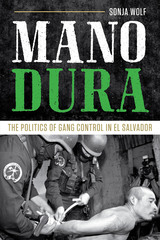
In 1992, at the end of a twelve-year civil war, El Salvador was poised for a transition to democracy. Yet, after longstanding dominance by a small oligarchy that continually used violence to repress popular resistance, El Salvador’s democracy has proven to be a fragile one, as social ills (poverty chief among them) have given rise to neighborhoods where gang activity now thrives. Mano Dura examines the ways in which the ruling ARENA party used gang violence to solidify political power in the hands of the elite—culminating in draconian “iron fist” antigang policies that undermine human rights while ultimately doing little to address the roots of gang membership.
Drawing on extensive ethnographic fieldwork and policy analysis, Mano Dura examines the activities of three nongovernmental organizations (NGOs) that have advocated for more nuanced policies to eradicate gangs and the societal issues that are both a cause and an effect of gang proliferation. While other studies of street gangs have focused on relatively distant countries such as Colombia, Argentina, and Jamaica, Sonja Wolf’s research takes us to a country closer to the United States, where forced deportation has brought with it US gang culture. Charting the limited success of NGOs in influencing El Salvador’s security policies, the book brings to light key contextual aspects—including myopic media coverage and the ironic populist support for ARENA, despite the party’s protection of the elite at the expense of the greater society.
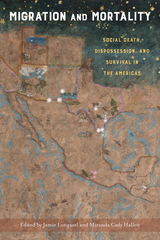
Death threatens migrants physically during perilous border crossings between Central and North America, but many also experience legal, social, and economic mortality. Rooted in histories of colonialism and conquest, exclusionary policies and practices deliberately take aim at racialized, dispossessed people in transit. Once in the new land, migrants endure a web of systems across every facet of their world—work, home, healthcare, culture, justice—that strips them of their personhood, denies them resources, and creates additional obstacles that deprive them of their ability to live fully.
As laws and policies create ripe conditions for the further extraction of money, resources, and labor power from the dispossessed, the contributors to this vibrant anthology, Migration and Mortality, examine restrictive immigration policies and the broader capitalist systems of exploitation and inequality while highlighting the power of migrants’ collective resistance and resilience.
The case studies in this timely collection explore border deaths, detention economies, asylum seeking, as well as the public health and mental health of migrants. Ultimately, these examples of oppression and survival contribute to understanding broader movements for life and justice in the Americas.
Welsh S. White looks at both sides of the issue, emphasizing that Miranda represents just one stage in the Court's ongoing struggle to accommodate a fundamental conflict between law enforcement and civil liberties, and assessing whether the Court's present decisions (including Miranda) strike an appropriate balance between promoting law enforcement's interest in obtaining reliable evidence and the individual's interest in being protected from overreaching police practices.
Welsh S. White is Professor of Law, University of Pittsburgh School of Law. He is best known for his work on capital punishment and has published and lectured on the death penalty for the past twenty years.

How did the government deploy political policing to achieve its policy objectives? What were the consequences and challenges for Indonesian activists? How was the government able to fashion its policing apparatus as the most potent instrument to achieve peace and order when the Great Depression hit the Indies, nationalist and communist forces were gaining strength in other places of the world, and war was coming both in Europe and Asia? This book answers those questions and more, breaking new ground for our understanding of the history of the Dutch Indies state in the early part of the twentieth century.

Joe Peschio offers the first comprehensive history of a set of associated behaviors known in Russian as “shalosti,” a word which at the time could refer to provocative behaviors like practical joking, insubordination, ritual humiliation, or vandalism, among other things, but also to literary manifestations of these behaviors such as the use of obscenities in poems, impenetrably obscure allusions, and all manner of literary inside jokes. One of the period’s most fashionable literary and social poses became this complex of behaviors taken together. Peschio explains the importance of literary shalosti as a form of challenge to the legitimacy of existing literary institutions and sometimes the Russian regime itself. Working with a wide variety of primary texts—from verse epistles to denunciations, etiquette manuals, and previously unknown archival materials—Peschio argues that the formal innovations fueled by such “prankish” types of literary behavior posed a greater threat to the watchful Russian government and the literary institutions it fostered than did ordinary civic verse or overtly polemical prose.
How the police in Minneapolis used electoral politics to accrue power and avoid accountability.
The 2020 murder of George Floyd made Minneapolis synonymous with unjust policing and the pain and outrage left in its wake. The city became ground zero for police reform in the United States—even though liberal politicians in Minnesota had promised, and delivered, police reforms for decades. Centered on professionalization, these changes inadvertently exacerbated injustice. Better training and higher standards broadened the influence of the police, who then claimed expertise in public safety. They deployed it to bargain for governmental support, even when they treated residents unfairly. Though Black, Indigenous, and gay residents resisted, the political power amassed by the police rendered real change almost impossible.
In A Police State, historian and fourth-generation Minneapolis resident Michael J. Lansing chronicles how the police became a political force in one of the nation’s most liberal cities. Lansing shows how, in the years after World War II, public safety policies that appealed to voters in the overwhelmingly white city protected and expanded police discretion. As union members, administrators, and citizens, officers shaped these policies to shield themselves and their violent actions from scrutiny. They campaigned for better wages, secured legal safeguards, resisted race-neutral policing, and elected one of their own to the mayor’s office. Ultimately, they used democratic institutions to cultivate and sustain a police state that protected white people and harmed people of color. Lansing uncovers this dysfunctional relationship between a city and its cops while illuminating a larger American story about reform, resistance, and democracy.
A significant exploration of policing politics, this book helps us understand the history that led to George Floyd’s murder—and insists that the future of community safety depends on reenvisioning the role of police in our society.

When natural disasters and emergencies strike, the short- and long-term effects of these events on first responders—the very people society relies upon in the midst of a catastrophe—are often overlooked. Policing in Natural Disasters provides a comprehensive analysis of the major challenges faced by law enforcement officers during extreme crisis events. Terri Adams and Leigh Anderson examine the dilemmas police departments face as well as the impact of the disasters on the professional and personal lives of the officers. Case studies explore the response and recovery phases of emergencies including Hurricane Katrina, the 2010 earthquake and subsequent tsunami in Santiago, Chile, and the Superstorm Tornado Outbreak in 2011.
Policing in Natural Disasters was inspired by the personal accounts of triumph and tragedy shared by first responders. It provides an understanding of first-responder behaviors during disasters, as well as the preparedness, mitigation, response and recovery policy implications for first responders and emergency managers. As first responders must frequently cope with stress, uncertainty, and threats to their health and safety during high-consequence events, Adams and Anderson provide lessons from first-hand experiences of police officers that can lead to better management in times of crisis.

The first international examination of how police respond to political protests.
The way in which police handle political demonstrations is always potentially controversial. In contemporary democracies, police departments have two different, often conflicting aims: keeping the peace and defending citizens’ right to protest. This collection, the only resource to examine police interventions cross-nationally, analyzes a wide array of policing styles. The contributors look at cultures and political power to examine the methods, the trends and cycles, and the consequences of policing protest.
Focusing on Italy, France, Germany, Great Britain, Switzerland, Spain, the United States, and South Africa, the contributors explore the various police strategies of coercion, negotiation, and information surveillance. They discuss protest policing in relation to specific countries’ governments and consider public opinion, media, and the police’s perception of reality to illustrate the reciprocal ways in which police and protest are defined. Moreover, this volume considers the profound changes from the forceful 1960s to a “softer” 1990s, including the consequences of this move.Comparative and innovative, Policing Protest highlights the crucial influences of demonstration interventions and lends greater understanding to the study of social movements and their relationship to the state. Contributors: Rocco De Biasi, U of Genoa; Olivier Fillieule, Institute of Political Science, Paris; Oscar Jaime-Jiménez, Universidad Nacional de Educación a Distancia, Madrid; Fabien Jobard, U of Rouen, France; Hanspeter Kriesi, U of Geneva; Gary T. Marx, Massachusetts Institute of Technology and U of Colorado, Boulder; John McCarthy, Catholic U of America; Clark McPhail, U of Illinois; Fernando Reinares, Universidad Nacional de Educación a Distancia, Madrid; Robert Reiner, London School of Economics; David Schweingruber; P. A. J. Waddington, U of Reading, UK; Martin Winter, U of Halle, Germany; Dominique Wisler, U of Geneva.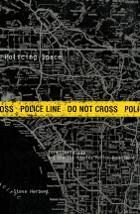
Policing Space is a fascinating firsthand account of how the Los Angeles Police Department attempts to control its vast, heterogeneous territory. As such, the book offers a rare, ground-level look at the relationship between the control of space and the exercise of power.
Author Steve Herbert spent eight months observing one patrol division of the LAPD on the job. A compelling story in itself, his fieldwork with the officers in the Wilshire Division affords readers a close view of the complex factors at play in how the police define and control territory, how they make and mark space. A remarkable ethnography of a powerful police department, underscored throughout with telling on-the-scene vignettes, this book is also an unusually intensive analysis of the exercise of territorial power-and of territoriality as a key component of police power. Unique in its application of fieldwork and theory to this complex subject, it should prove valuable to readers in urban and political geography, urban and political sociology, and criminology, as well as those who wonder about the workings of the LAPD.
With a new vision of non-coercive police work and crime prevention, Progressive reformers exerted political and social pressure to create positions for female officers dedicated to guiding and protecting juveniles and women. Women reformers pointed to changing sexual mores among working-class female youth to emphasize the need for a new approach to policing.
The policewomen who undertook the work of counseling sexually active teenage girls and their families saw themselves as helping young people achieve moral equilibrium during a period in which standards of context were in flux. In the Los Angeles Police Department, the first to hire women, this social work was primarily the responsibility of the City Mother's Bureau; in other major cities, policewomen's roles were similarly constructed as maternalistic. Scrutinizing case records, public statements, and departmental policies governing policewomen, Appier shows how female officers handled the complex gender politics of their work with the public and within their departments.
Appier reveals that many of these pioneering policewomen succeeded in expanding the scope of policework and carving out a rewarding professional niche, despite continued attempts to oust them or limit their sphere of action. But this advancement was short-lived; within a generation a masculinized model of crime fighting took hold, and policewomen's authority eroded.
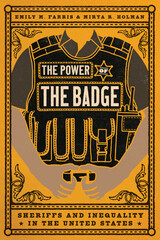
A sobering exploration of the near unchecked power of sheriffs in the United States.
Across the United States, more than 3,000 sheriffs occupy a unique position in the US political and legal systems. Elected by voters—usually in low-visibility, noncompetitive elections—sheriffs oversee more than a third of law enforcement employees and control almost all local jails. They have the power to both set and administer policies, and they can imprison, harm, and even kill members of their communities. Yet, they enjoy a degree of autonomy not seen by other political officeholders.
The Power of the Badge offers an unprecedented, data-rich look into the politics of the office and its effects on local communities. Emily M. Farris and Mirya R. Holman draw on two surveys of sheriffs taken nearly a decade apart, as well as election data, case studies, and administrative data to show how a volatile combination of authority and autonomy has created an environment where sheriffs rarely change; elections seldom create meaningful accountability; employees, budgets, and jails can be used for political gains; marginalized populations can be punished; and reforms fail. Farris and Holman also track the increasingly close linkages between sheriffs and right-wing radical groups in an era of high partisanship and intra-federal conflict.
What transpired during this troubled time cast a bright light on the contemporary relationship between the press and police in the United States. The relationship between these two fundamental institutions is, however, a long and complicated one, dating back to colonial British North America. In the mid-19th century, (1830s–1850s) both the press and the police began to take their modern forms, and since then have continued to develop, routinely interacting with each other as journalists and police officers often found themselves responding to the same crimes and events. At times, members of both institutions managed to co-exist or even cooperate and made efforts to help one another, while at other times they butted heads to the point of conflict, the professional boundaries between journalists and police officers seemingly blurred.
As both the press and the police have fallen under deep scrutiny in more modern times, the present moment marks what is, perhaps, an opportune time to focus on the political, economic, social, and technological problems they face. In “Pressing the Police and Policing the Press,” Scott Memmel offers the first book-length study of the history and legal landscape of the press-police relationship. Each chapter focuses on interactions between the press and the police during a particular era, introducing relevant societal context and how both institutions evolved and responded to that context. Memmel concludes his study with recommendations on how, going forward, the press and the police might work together to tackle some of the similar issues they face and better serve the public.
Clarence Jefferson Hall Jr. reveals that the introduction of correctional facilities—especially in the last three decades of the twentieth century—unearthed long-standing conflicts over the proper uses of Adirondack nature, particularly since these sites have contributed to deforestation, pollution, and habitat decline, even as they've provided jobs and spurred economic growth. Additionally, prison plans have challenged individuals' commitment to environmental protection, tested the strength of environmental regulations, endangered environmental and public health, and exposed tensions around race, class, place, and belonging in the isolated prison towns of America's largest state park.
Pulled Over deftly traces the strange history of the investigatory police stop, from its discredited beginning as “aggressive patrolling” to its current status as accepted institutional practice. Drawing on the richest study of police stops to date, the authors show that who is stopped and how they are treated convey powerful messages about citizenship and racial disparity in the United States. For African Americans, for instance, the experience of investigatory stops erodes the perceived legitimacy of police stops and of the police generally, leading to decreased trust in the police and less willingness to solicit police assistance or to self-censor in terms of clothing or where they drive. This holds true even when police are courteous and respectful throughout the encounters and follow seemingly colorblind institutional protocols. With a growing push in recent years to use local police in immigration efforts, Hispanics stand poised to share African Americans’ long experience of investigative stops.

Global perspectives on policing within LGBTQ+ communities
Relationships between law enforcement and lesbian, gay, bisexual, transgender, and queer (LGBTQ+) communities have always been varied and complex. On one hand, history is filled with incidents of police harassment: raids that sparked famous uprisings and rebellions; shoddy police investigations into the murders of LGBTQ+ community members; a corrosive organizational culture marked by heteronormativity and misogyny. Yet positive changes are being made, such as the creation of LGBTQ+ police associations, participation by police officers in Pride Parades around the world, and formal apologies for past actions. To some LGBTQ+ community members, police are the physical manifestations of state-sanctioned oppression and abuse. To others, they are guardians who have become partners in public safety.
Q Policing features eighteen contributors from around the world who explore the nature of the relationship between LGBTQ+ communities and the police. Part 1 of the book offers insights on policing and racial and ethnic constructions, including efforts to build collaborative models of community-building within groups and with law enforcement. Part 2 highlights the experiences of individuals who may be marginalized due to various social constructions such as transgender, unhoused, southern, or kink-involved. Finally, Part 3 shares perspectives of queer folks inside policing.
The contributors—scholars, social workers, police officers, and other community leaders—cover diverse topics, including queer experiences of policing in southern India, clinical implications for mental health professionals working with Latinx LGBTQ+ people, transgender and nonbinary peoples’ presentation management during encounters with law enforcement, discriminatory policies in place in the southern United States, the pathologization of kink, and more. Essays analyze interviews with the “Pride Defenders” in Hamilton, Canada, as well as British and American police officers transitioning while in uniform. They explore the experiences of gay, lesbian, and genderqueer police officers, map principal findings and central concerns that structure extant scholarship on gay police officers in the UK, use queer theory to explore the effectiveness of LGBTQ+ liaisons, and more.
The volume editors adopt an inclusive global perspective to account for contextually located experiences of queer people within and outside of the United States. The book incorporates a variety of voices, data sources, and methodologies, but contributors share an intentional focus on race, age, sex, gender, and other identities that helps explain and contextualize queer people’s experiences around and in policing. The diverse, international group of contributors—whose voices are not often heard in traditional outlets and mainstream media—demonstrates that despite discrimination, harassment, and violence, LGBTQ+ communities continue to thrive.
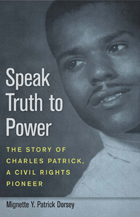
"Patrick did not intend to become a civil rights pioneer, but a minor dispute over a parking spot led to his arrest, beating while in custody, and eventual legal tribulations. His daughter's account of his ordeal is well researched, beautifully narrated, and extremely informative." —Journal of Southern History
On December 11, 1954, Charles Patrick drove to downtown Birmingham to buy a Boy Scout uniform for his son. Christmas traffic around the downtown department stores was heavy, and Patrick circled unsuccessfully until at last a streetside spot opened up and he began to pull in. As he did so, he was cut off by a woman who ordered him out of the way, as she was the wife of a city police officer. Patrick pulled away, remarking, "Ma’am, he doesn’t own the streets of Birmingham."
Normal low-level urban hassle? Not in 1954 Birmingham, when the woman was white and Patrick black. The woman reported to her husband that a black man had sassed her, and Patrick was summarily arrested, charged with disorderly conduct, and placed in a cell where he was beaten by the husband and another police officer.
Usually that would have been the end of it, but Patrick was not the sort of man to meekly endure an injustice. He found an attorney, went to court to fight the charges, and brought his assailants to justice--as whites, blacks, politicians and the press offered public support.
This book tells the story of Patrick’s quest for justice in segregated Alabama on the eve of the civil rights movement and represents a telling instance of the growing determination of African Americans to be treated fairly, part of the broadening and deepening stream of resolve that led to the widespread activism of the civil rights movement.
The period in Northern Ireland known as 'the Troubles' (1968-98) seemed to have been conclusively ended by the official peace process. But recent violence from dissident Republicans shows that tensions from the past remain unresolved.
State Violence, Collusion and the Troubles reveals disturbing unanswered questions about the use of state violence during this period. Maurice Punch documents in chilling detail how the British government turned to desperate, illegal measures in a time of crisis, disregarding domestic and international law. He broadens out his analysis to consider other cases of state violence against ‘insurgent groups’ in Spain and South Africa.
This is the story of how the British state collaborated with violent groups and directly participated in illegal violence. It also raises urgent questions about why states around the world continue to deploy such violence rather than seeking durable political settlements.
One article looks at the emergence of the biometrics industries and its effect on surveillance systems and businesses. Another addresses the labor of surveillance and how surveillance work and policy affect the homeland security workforce. Various geographic areas are highlighted in several essays, including those on sex workers in Bengal, local surveillance in Turkey, and welfare surveillance and resistance in Appalachian Ohio. Additional themes include historical modes of surveillance, processes of legitimation for intensifying surveillance, and cultural representations of surveillance.
Contributors. Kelly A. Gates, Swati Ghosh, John Gilliom, Margaret Morganroth Gullette, Richard Maxwell, Laikwan Pang, David J. Phillips, Michael J. Shapiro, Çagatay Topal
What impact has two decades' worth of policing and counterterrorism had on the state of mind of Muslims in Britain? The Suspect draws on the author's lived experiences of being suspected of terrorism to take the reader on a journey through British counterterrorism practices and the policing of Muslims.
Rizwaan Sabir describes what led to his arrest for suspected terrorism, his time in detention, and the surveillance he was subjected to on release from custody, including stop and frisk on the roadside, detentions at the border, and monitoring by police and government departments throughout his research.
Writing publicly for the first time about the traumatizing mental health effects of these experiences, he argues that these harmful outcomes are not the result of errors in government planning, but the consequences of using a counterinsurgency warfare approach to surveillance. If we are to break this injustice, we need to resist counterterrorism policy and practice.
Crooked politicians, gangsters, madams, and cops on the take: To Serve and Collect tells the story of Chicago during its formative years through the history of its legendary police department.
Doris Marie Provine’s engaging analysis traces the history of race in anti-drug efforts from the temperance movement of the early 1900s to the crack scare of the late twentieth century, showing how campaigns to criminalize drug use have always conjured images of feared minorities. Explaining how alarm over a threatening black drug trade fueled support in the 1980s for a mandatory minimum sentencing scheme of unprecedented severity, Provine contends that while our drug laws may no longer be racist by design, they remain racist in design. Moreover, their racial origins have long been ignored by every branch of government. This dangerous denial threatens our constitutional guarantee of equal protection of law and mutes a much-needed national discussion about institutionalized racism—a discussion that Unequal under Law promises to initiate.
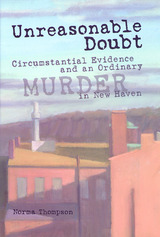

A bold firsthand account of the circumstances surrounding the notorious Bali “Suitcase Murder” and the human cost of overlooking child-to-parent violence and abuse
On August 12, 2014, the body of 62-year-old Sheila von Wiese-Mack—the wealthy Oak Park, Illinois, widow of famed composer James L. Mack—was found stuffed inside a suitcase in the trunk of a taxi in Bali. Back in the Midwest, listening to the radio, Sgt. Rasul Freelain of the Oak Park Police Department pulled his car over to absorb the unthinkable news. Amid his shock, one coherent thought surfaced: “Heather did this.”
Freelain had met the Macks more than three years earlier, when Sheila first reached out to the police for help with her increasingly volatile daughter. Although Heather Mack was just a teenager, she had already displayed a disturbing pattern of escalating violence. Freelain did everything he could to intervene. But as the abuse worsened, he found himself sidelined by a justice system unprepared to deal with child-to-parent violence and abuse (CPVA).
In this gripping and empathetic memoir, Freelain traces the Mack family’s descent from privilege to tragedy, bringing overdue attention to CPVA as a critical yet overlooked public health crisis. He recounts the glamorous but troubled world of the Macks—the parties, the talent, the dysfunction—and his efforts to support both mother and daughter. With rare insight into the web of trauma, race, wealth, and grief that surrounded them, he shows how the system failed them both—and how, even after Sheila’s death, he remained committed to seeking justice and change.
When Lambs Become Wolves moves beyond sensational headlines to examine the roots of one of America’s most hidden forms of domestic violence. While media coverage fixated on the exotic setting and shocking brutality of the crime, along with the growing notoriety of the teenage killer, Freelain urges readers—and institutions in law enforcement, child welfare, and mental health—to focus instead on those harmed. Sheila was more than a victim; she was a sharp, compassionate, creative woman who loved her daughter to the very end. Through meticulous research and raw personal reflection, Freelain explores how abuse cycles form, how institutions look away, and what it means to try—and fail—to protect someone in crisis.
This memoir, with a foreword by Sheila’s brother William Wiese, is a call to action, offering a rare blend of true crime, compassion, and advocacy. This deeply human account of a police officer caught in an impossible situation shows the price of ignoring the violence that starts at home.
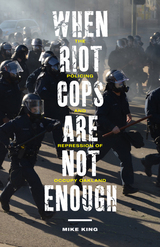
Drawn from King’s intensive field work, the book focuses on the physical, legal, political, and ideological dimensions of repression—in the streets, in courtrooms, in the media, in city hall, and within the movement itself—When Riot Cops Are Not Enough highlights the central role of political legitimacy, both for mass movements seeking to create social change, as well as for governmental forces seeking to control such movements. Although Occupy Oakland was different from other Occupy sites in many respects, King shows how the contradictions it illuminated within both social movement and police strategies provide deep insights into the nature of protest policing generally, and a clear map to understanding the full range of social control techniques used in North America in the twenty-first century.
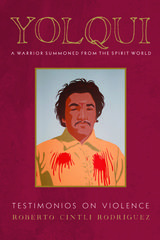
Framed by Rodríguez’s personal testimony of police violence, this book offers a historia profunda of the culture of extralegal violence against Red-Black-Brown communities in the United States. In addition to Rodríguez’s story, this book includes several short essays from victims and survivors that bring together personal accounts of police brutality and state-sponsored violence. This wide-ranging work touches on historical and current events, including the Watts rebellion, the Zoot Suit Riots, Operation Streamline, Standing Rock, and much more.
From the eyewitness accounts of Bartolomé de las Casas to the protestors and allies at Standing Rock, this book makes evident the links between colonial violence against Red-Black-Brown bodies to police violence in our communities today. Grounded in the stories of the lives of victims and survivors of police violence, Yolqui, a Warrior Summoned from the Spirit World illuminates the physical, spiritual, and epistemic depths and consequences of racialized dehumanization.
Rodríguez offers us an urgent, poignant, and personal call to end violence and the philosophies that permit such violence to flourish. Like the Nahuatl yolqui, this book is intended as a means of healing, offering a footprint going back to the origins of violence, and, more important, a way forward.
With contributions by Raúl Alcaraz-Ochoa, Citalli Álvarez, Tanya Alvarez, Rebekah Barber, Juvenal Caporale, David Cid, Arianna Martinez Reyna, Carlos Montes, Travis Morales, Simon Moya Smith, Cesar Noriega, Kimberly Phillips, Christian Ramirez, Michelle Rascon Canales, Carolyn Torres, Jerry Tello, Tara Trudell, and Laurie Valdez.
READERS
Browse our collection.
PUBLISHERS
See BiblioVault's publisher services.
STUDENT SERVICES
Files for college accessibility offices.
RECENTLY PUBLISHED



UChicago Accessibility Resources
home | accessibility | search | about | contact us
BiblioVault ® 2001 - 2026
The University of Chicago Press