
 A SCHOLARLY BOOK REPOSITORY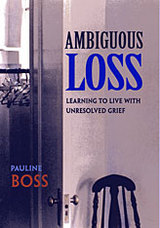
When a loved one dies we mourn our loss. We take comfort in the rituals that mark the passing, and we turn to those around us for support. But what happens when there is no closure, when a family member or a friend who may be still alive is lost to us nonetheless? How, for example, does the mother whose soldier son is missing in action, or the family of an Alzheimer’s patient who is suffering from severe dementia, deal with the uncertainty surrounding this kind of loss?
In this sensitive and lucid account, Pauline Boss explains that, all too often, those confronted with such ambiguous loss fluctuate between hope and hopelessness. Suffered too long, these emotions can deaden feeling and make it impossible for people to move on with their lives. Yet the central message of this book is that they can move on. Drawing on her research and clinical experience, Boss suggests strategies that can cushion the pain and help families come to terms with their grief. Her work features the heartening narratives of those who cope with ambiguous loss and manage to leave their sadness behind, including those who have lost family members to divorce, immigration, adoption, chronic mental illness, and brain injury. With its message of hope, this eloquent book offers guidance and understanding to those struggling to regain their lives.
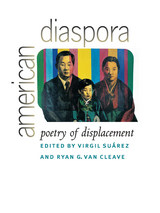
Diaspora constitutes a powerful descriptor for the modern condition of the contemporary poet, the spokesperson for the psyche of America. The poems in American Diaspora: Poetry of Displacement focus on the struggles and pleasures of creating a home-physical and mental-out of displacement, exile, migration, and alienation.
To fully explore the concept of diaspora, the editors have broadened the scope of their definition to include not only the physical act of moving and immigration but also the spiritual and emotional dislocations that can occur-as for Emily Dickinson and other poets-even in a life spent entirely in one location.
v
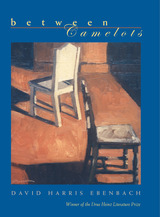
Winner of the 2005 Drue Heinz Literature Prize
Between Camelots is about the struggle to forge relationships and the spaces that are left when that effort falls short. In the title story, a man at a backyard barbecue waits for a blind date who never shows up. He meets a stranger who advises him to give up the fight; to walk away from intimacy altogether and stop getting hurt. The wisdom—or foolhardiness—of that approach is at the heart of each of these stories. In “I’ll Be Home,” a young man who has converted to Judaism goes home for Christmas in Miami, and finds that his desire to connect to his parents conflicts with his need to move on. “The Movements of the Body” introduces us to a woman who believes that she can control the disintegration of her life through a carefully measured balance of whiskey and mouthwash. These are stories about loss and fear, but also about the courage that drives us all to continue to reach out to the people around us.
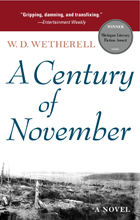
A haunting story of the power of death, the pain of loss, and the possibility of hope.
"Gripping, damning, and transfixing."
---Entertainment Weekly
" . . . possesses a time-bending gravity. . . . [A] small classic of graceful language and earned emotion."
---San Francisco Chronicle
". . . a beautifully written novel of war and the wrenching grief and unanswerable questions it leaves in its wake. . . . A Century of November is full of precise, startling imagery and elegant, richly poetic description---Wetherell seems genuinely incapable of writing a lazy sentence---and this last section of the novel is as surreal, hypnotic and harrowing as any literature in recent memory. The whole thing, in fact, is a jewel, an unforgettable historical novel that Wetherell has carefully (and artfully) seeded with loads of contemporary resonance." ---Star-Tribune (Minneapolis)
"A poignant, probing story. . . . Wetherell's prose and character writing are unflinching . . . [and his] take on a parent's anguish is deeply moving."
---Publishers Weekly
"A timely reminder of the devastation of mortal combat. . . ."
---Atlanta Journal-Constitution
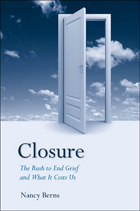
When it comes to the end of a relationship, the loss of a loved one, or even a national tragedy, we are often told we need “closure.” But while some people do find closure for their pain and grief, many more feel closure does not exist and believe the notion only promises false hopes. Sociologist Nancy Berns explores these ideas and their ramifications in her timely book, Closure.
Berns uncovers the various interpretations and contradictory meanings of closure. She identifies six types of “closure talk,” revealing closure as a socially constructed concept—a “new emotion.” Berns also explores how closure has been applied widely in popular media and how the idea has been appropriated as a political tool and to sell products and services.
This book explains how the push for closure—whether we find it helpful, engaging, or enraging—is changing our society.
Viego argues that the repeated themes of wholeness, completeness, and transparency with respect to ethnic and racialized subjectivity are fundamentally problematic as these themes ultimately lend themselves to the project of managing and controlling ethnic and racialized subjects by positing them as fully knowable, calculable sums: as dead subjects. He asserts that the refusal of critical race and ethnic studies scholars to read ethnic and racialized subjects in a Lacanian framework—as divided subjects, split in language—contributes to a racist discourse. Focusing on theoretical, historical, and literary work in Latino studies, he mines the implicit connection between Latino studies’ theory of the “border subject” and Lacan’s theory of the “barred subject” in language to argue that Latino studies is poised to craft a critical multiculturalist, anti-racist Lacanian account of subjectivity while adding historical texture and specificity to Lacanian theory.
A comprehensive and compassionate guide to navigating loss.
When social worker Lisa Keefauver became a widow in 2011, she was alarmed to discover that even though 100 percent of us experience loss, we’re living in a grief illiterate world. In her work as a therapist, and in her search for help in the wake of her own loss, Keefauver began to see how the misguided stories we consume about grief lead to unnecessary suffering. Responding to the problematic narratives that grief is something to move on from after completing the five stages like some sort of to-do list, Keefauver became a grief activist. Through this book and her hit podcast of the same title, she creates a safe place to be inside the messiness of it all, to discover the full spectrum of grief, and to find the tools that help grievers move forward, not on. Grief is a Sneaky Bitch is a comprehensive guide—both a manual full of insights and skills and, even more importantly, a thoughtful companion that helps readers feel seen and held.
Keefauver shares her personal and professional wisdom alongside the lessons she’s learned from clinicians, authors, poets, and friends. In place of rigid instructions and must-do checklists, Grief is a Sneaky Bitch invites reflection, encourages self-compassion, and explores the therapeutic power of humor with, yes, a bit of profanity.
Based on intensive interviews of 29 couples who experienced the death of a child, this book offers perspectives and advice on common marital problems experienced by bereaved parents. Each couple's problems are unique, but often the problems are connected to couple communication, sexuality, parenting of other children, the use of alcohol and drugs, blaming, and differences in such areas as whether to have another child, how to grieve, how to talk about the child who died, whether to go outside the marriage for support, and what to do with things and spaces that were the child's.
Although the book deals with pain and marital distress, it offers a message of hope. Grieving parents can and do get through the hard times, based on respect for differences, mutual understanding, and shared history.
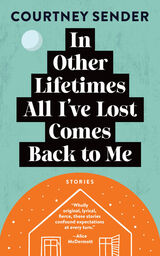
“A deep and howling portrait of longing and loneliness.” —Boston Globe
“A distinctive debut from a promising author.” —Kirkus Reviews
“A stunner from the very first page.” —Deesha Philyaw, author of The Secret Lives of Church Ladies, in the Millions
And praise from Ann Patchett, Alice McDermott, Danielle Evans, Elisa Albert, and Aimee Bender
Populated with lovers who leave and return, with ghosts of the Holocaust and messages from the dead, Courtney Sender’s debut collection speaks in a singular new voice about the longings and loneliness of contemporary love. The world of these fourteen interlocking stories is fiercely real but suffused with magic and myth, dark wit, and distinct humor. Here, ancient loss works its way deep into the psyche of modern characters, stirring their unrelenting lust for life.
In “To Do With the Body,” the Museum of Period Clothes becomes the perfect setting for a bloody crime. In “Lilith in God’s Hands,” Adam’s first wife has an affair in the Garden of Eden. And in the title story, a woman spends her life waiting for any of the men who have left her to come back, only to find them all at her doorstep at once.
For readers of Elena Ferrante, Nicole Krauss, and Carmen Maria Machado, and for anyone who has known love and loneliness, In Other Lifetimes All I’ve Lost Comes Back to Me is a wise and sensual collection of old hauntings, new longings, and unexpected returns, with a finale that is a rousing call to the strength we each have, together or alone.
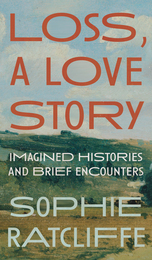
Part memoir, part imagined history, this unique personal essay depicts the intimate experience of childhood bereavement, lost love affairs, and the complicated realities of motherhood and marriage. Framed by an extended train journey, author Sophie Ratcliffe turns to the novels, novelists, and heroines who have shaped her emotional and romantic landscapes. She transports us with her to survey the messiness of everyday life, all while reflecting on steam propulsion and pop songs, handbags and honeymoons, Anna Karenina and Anthony Trollope, former lovers and forgotten muses. Frank, funny, tender, and transporting, Loss, A Love Story asks why we fall in, and out, of love—and how we might understand doing so amid the ongoing upheavals and unwritten futures of the twenty-first century.

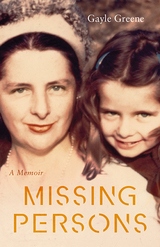
The memoir is structured as an account of her mother's and aunt’s final days and the year that follows, a year in which she reconstructs her life. This is a powerful story about family, what it means to have one, to lose one, never to have made one, and what, if anything, might take its place. It’s the story of a vexed mother-daughter relationship that mellows with age. It is also a search for home, as the very landscape shifts around her and the vast orchards are dug up and paved over for tract housing, strip malls, freeways, and the Santa Clara Valley, once known as the Valley of Heart’s Delight, is transformed to “Silicon.”
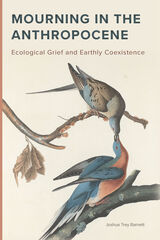
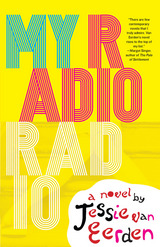
The members of Dunlap Fellowship of All Things in Common share everything from their meager incomes to the only functioning toilet in the community house— everything, that is, except secrets. When Omi Ruth Wincott, the youngest member of the disintegrating common-purse community in this small Indiana town, loses her only brother, Woodrun, she withdraws from everyone and fixates on a secret desire: She wishes only for an extravagant head- stone to mark Woodrun’s grave, an expense that the strict, parsimonious community can’t—or won’t—pay for. In her loneliness, Omi Ruth’s only ties to the world remain her National Geographic magazines and a new resident in the house, Northrop, an old man caught between living and dying, maintained in a vegetative state by hospice care.
Observing everything with the keen eye of a girl with a photographic memory, Omi Ruth finds herself learning to grieve in the company of unlikely strangers. With the help of a homeless and pregnant Tracie Casteel, a rebellious Amish boy named Spencer Frye, and the smooth-talking Vaughn Buey who works third shift at Dunlap’s RV plant, Omi Ruth discovers that there are two things of which there is no shortage in the world’s common purse—love and loss.
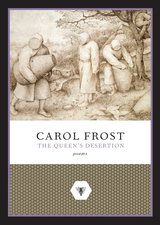
Pretty to think of the mind at its end
as a metaphysician beekeeping
after the leaves have fallen at autumn's end.
The bee metaphor is handled brilliantly and subtly throughout the collection as a reminder of how often our constant activity, whether it is mental or physical, is taken for granted.
Frost continues her investigation of the mortal plight by entering into a Dantesque descent into the ebb and flow of the seascape. Body consumes body over and over again as fish are caught and killed and the poet observes the flora and fauna as they partake in the darker cycles of nature. A long narrative poem about the Spanish explorer de Baca and his harrowing travels from southern Florida to Mexico powerfully reinforces the certainty of consumption and loss as it comments on the colonizing of the new world. In the final section, Frost returns once more to the need for movement and summons the Greek god Pan, who dances a rite of acceptance through a metaphysical landscape on the verge of seasonal change--the bees are not dead, the dark woods are filled with music.
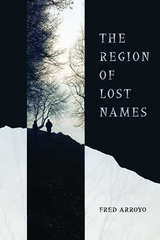
Ernest is searching for a place where he can live beyond his past. His family has returned to Puerto Rico, and Ernest remains in the States, desiring only distance from his memories of childhood displacement and work, his parents’ tumultuous relationship, and his own love for Magdalene. Magdalene, too, looks to move beyond her memories as she follows Ernest’s family home, seeking resolution to her mother’s hurtful secrets, her father’s unknown identity, and her love for Ernest.
As Ernest moves through the fields of Michigan, as Magdalene traverses the jungles of Puerto Rico and the shores of the Caribbean, they discover that their dreams and identities are linked within the framework of their families and their pasts. Together, Ernest and Magdalene must come to terms with the secrets and mistakes made by the previous generation, the histories of disloyalty and abandonment, of secrecy and sorrow.
Their struggles take place in a region of lost names, where loves and memories are banished and found. Fred Arroyo writes a story in two voices, following Ernest and Magdalene by turns in prose that is elegant and lyrical. His words evoke another world lush with the scent of salt spray, the taste of mangoes, and the rush of leaves, alive with characters whose ardors and pathos are achingly real. Arroyo explores the ebb and flow between past and present and themes that are enduring. Ultimately, Ernest and Magdalene must live with more than their memories; they must rediscover the intimacies of the region of lost names.
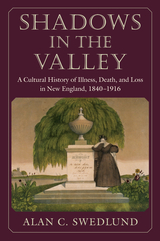
In Shadows in the Valley, Alan Swedlund addresses these questions by closely examining the history of mortality in several small communities in western Massachusetts from the mid-nineteenth to the early twentieth century—from just before the acceptance of the germ theory of disease through the early days of public health reform in the United States. This was a time when most Americans lived in rural areas or small towns rather than large cities. It was also a time when a wide range of healing practices was available to the American public, and when the modern form of Western medicine was striving for dominance and authority. As Swedlund shows, this juncture of competing practices and ideologies provides a rich opportunity for exploring the rise of modern medicine and its impact on the everyday lives of ordinary Americans.
To indicate how individuals in different stages of their lives were exposed to varying assaults on their health, the book is structured in a way that superimposes what the author calls "life-course time" onto chronological time. Thus the early chapters look at issues of infancy and childhood in the 1840s and 1850s and the last chapters at the problems of old age after 1900. The reader becomes familiar with specific individuals and families as they cope with the recurrent loss of children, struggle to understand the causes of new contagions, and seek to find meaning in untimely death. By using a broad time frame and a narrow geographical lens, Swedlund is able to engage with both the particularities and generalities of evolving medical knowledge and changing practice, and to highlight the differences in personal as well as collective responses to illness and loss.

This intimate narrative forms the core of her book. It is emotionally wrenching, but it also provides hope for those going through similar experiences. Just as Davenport used her family's tradition of singing to comfort her mother, readers will be encouraged to find their own sources of comfort in family and legacy. The book concludes with two chapters describing psychological approaches to grief and recommending further reading.
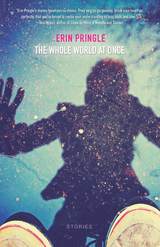
Dark, strange beauties, all of the stories in The Whole World at Once follow the lives of people grappling with what it means to live in a world with death.
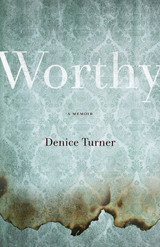
The story unfolds as Turner confronts a history that includes a Greek grandfather whose up-from-the-bootstraps legacy refuses to die, the ghosts of two suicidal uncles, and a Mormon shrink who claims to see her dead relatives. In the end, this is a memoir not just about loss, but about all of the fragile human bonds that are broken in pursuit of perfection.
Wry and extraordinarily candid, Worthy will appeal to readers interested in the dynamics of family heritage, Mormon doctrine, and the subtle corrosive costs of shame.
READERS
Browse our collection.
PUBLISHERS
See BiblioVault's publisher services.
STUDENT SERVICES
Files for college accessibility offices.
RECENTLY PUBLISHED





UChicago Accessibility Resources
home | accessibility | search | about | contact us
BiblioVault ® 2001 - 2024
The University of Chicago Press