
 A SCHOLARLY BOOK REPOSITORY
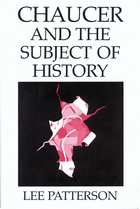
Renowned scholar of medieval literature, Lee Patterson, presents a compelling vision of the shape and direction of Geoffrey Chaucer’s entire career in Chaucer and the Subject of History.
Chaucer's interest in individuality was strikingly modern. At the same time he was profoundly aware of the pressures on individuality exerted by the past and by society—by history. This tension between the subject and history is Patterson's topic. He begins by showing how Chaucer’s understanding of history as a subject for poetry—a world to be represented and a cultural force affecting human action—began to take shape in his poems on classical themes, especially in Troilus and Criseyde. Patterson's extended analysis of this profound yet deeply conflicted exploration of the relationship between "history" and "the subject" provides the basis for understanding Chaucer's shift to his contemporary world in the Canterbury Tales. There, in the shrewdest and most wide-ranging analysis of late medieval society we possess, Chaucer investigated not just the idea of history but the historical world intimately related to his own political and literary career.
Patterson's chapters on individual tales clarify and confirm his provocative arguments. He shows, for example, how the Knight's Tale represents the contemporary crisis of governance in terms of a crisis in chivalric identity itself; how the Miller’s Tale reflects the social pressures and rhetoric of peasant movements generally and the Rising of 1381 in particular; and how the tales of the Merchant and Shipman register the paradoxical placement of a bourgeois class lacking class identity. And Patterson's brilliant readings of the Wife of Bath’s Tale—"the triumph of the subject"—and the Pardoner’s Tale —"the subject of confession"—reveal how Chaucer reworked traditional materials to accomplish stunning innovations that make visible unmistakably social meanings. Chaucer and the Subject of History is a landmark book, one that will shape the way that Chaucer is read for years to come.
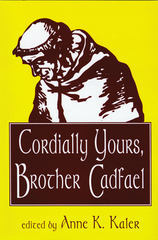
Why, essays ask, is a cloistered monk solving murders? How can an author combine a valid detective and an effective healer?
The Idylls of the King is one of the indisputably great long poems in the English language. Yet Tennyson's doom-laden prophecy of the fall of the West has been dismissed as a Victorian-Gothic fairy tale. John D. Rosenberg maintains that no poem of comparable magnitude has been so misread or so maligned in the twentieth century as Tennyson's symbolist masterpiece.
In The Fall of Camelot the author calls into question the modernist orthodoxy that rejects all of Victorian poetry as a Waste Land and ignores the overriding importance of Tennyson to the development of Yeats, T. S. Eliot,and the symbolists. Far from being an escapist medieval charade, the Idylls offers an apocalyptic prevision of the nightmare of modern history. Concealed under the exquisitely romantic surface of the verse is a world of obsessive sensuality and collapsing values that culminates in the "last dim weird battle the West." Perhaps the subtlest anatomy of the failure of ideality in our literature, the Idylls is not only about hazards of mistaking illusion for reality; it dramatically enacts those dangers, ensnaring the reader in the same delusions that maim and destroy the characters.
Rosenberg shows that Tennyson has created a new genre whose true originality criticism has yet to perceive. By employing landscape as a symbolic extension of character, Tennyson obliterates the gap between self and scene and frees himself from bondage toconventional narration.
Throughout the Idylls charactercannot be extricated from setting orsymbol, and neither has substanceapart from the narrative in which it isenmeshed. In essence, the narrativeis a sequence of symbols protracted intime, the symbolism a kind ofcondensed narration.
"Timescape" in the Idylls, like landscape, serves to bind all eventsof the poem into a continuous present.Arthur is at once a Christ figure andSun-King whose career parallels that ofhis kingdom, waxing and waningwith the annual cycle. At the heart ofArthur's story lies the dual cycle of hispassing and promised return.Incorporating this cycle into itsstructure, the Idylls is itself a kind ofliterary second coming of Arthur, aresurrection in Victorian England of thelong sequence of Arthuriads extendingback before Malory and forwardthrough Spenser, Dryden, Scott, andTennyson.
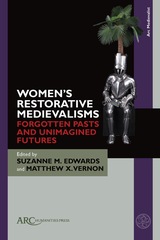
Revising the histories of medievalism—the processes by which the Middle Ages are reimagined in later moments to varied political, social, and cultural ends—is critical to the field’s turn away from its oppressive roots and towards a richer conception of the past. Grounded in intersectional feminist interpretive frameworks, Women’s Restorative Medievalisms examines how contemporary women writers engage the premodern past to animate intertwined histories of oppression and resistance in service of visionary futures. These medievalisms create temporal dialogue between the past and the present to restore the voices of women who have been overlooked in medieval studies and medievalism studies. The book’s contemporary focus will appeal both to students and medieval studies scholars who seek to understand the field’s present value amid the backlash of patriarchal, white supremacist power.
READERS
Browse our collection.
PUBLISHERS
See BiblioVault's publisher services.
STUDENT SERVICES
Files for college accessibility offices.
RECENTLY PUBLISHED



UChicago Accessibility Resources
home | accessibility | search | about | contact us
BiblioVault ® 2001 - 2026
The University of Chicago Press