
 A SCHOLARLY BOOK REPOSITORY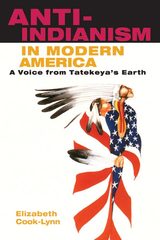
Addressing Native American studies past, present, and future, the essays in New Indians, Old Wars tackle the discipline head-on, presenting a radical revision of the popular view of the American West in the process. Instead of luxuriating in the West's past glories or accepting the widespread historians' view of it as a shared place, Elizabeth Cook-Lynn argues that the American West should be fundamentally understood as stolen.
Cook-Lynn says that the Indian Wars of Resistance to the nineteenth- and twentieth-century colonial effort to seize native lands and resources must be given standing in the face of the ever-growing imperial narrative of America--because the terror the world is now witnessing may be the direct consequence of events which began in America's earliest dealings with the natives of this continent. Cook-Lynn's story examines the ongoing and perennial relationship of conflict between colonizers and indigenous people, and it is a story that every American must read.
Cook-Lynn understands that the story of the American West teaches the political language of land theft and tyranny. She argues that to remedy this situation, Native American studies must be considered and pursued as its own discipline, rather than as a subset of history or anthropology. She makes an impassioned claim that such a shift, not merely an institutional or theoretical change, could allow Native American studies to play an important role in defending the sovereignty of indigenous nations today.

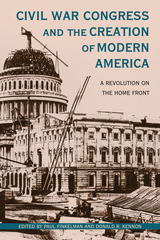
Most literature on the Civil War focuses on soldiers, battles, and politics. But for every soldier in the United States Army, there were nine civilians at home. The war affected those left on the home front in many ways. Westward expansion and land ownership increased. The draft disrupted families while a shortage of male workers created opportunities for women that were previously unknown.
The war also enlarged the national government in ways unimagined before 1861. The Homestead Act, the Land Grant College Act, civil rights legislation, the use of paper currency, and creation of the Internal Revenue Service to collect taxes to pay for the war all illustrate how the war fundamentally, and permanently, changed the nation.
The essays in this book, drawn from a wide range of historical expertise and approaching the topic from a variety of angles, explore the changes in life at home that led to a revolution in American society and set the stage for the making of modern America.
Contributors: Jean H. Baker, Jenny Bourne, Paul Finkelman, Guy Gugliotta, Daniel W. Stowell, Peter Wallenstein, Jennifer L. Weber.
The essays fall into three general sections: the first treats the history of cultural institutions, highlighting the role of museums; the second section focuses on some literary, artistic, and entrepreneurial responses to the new mass culture; and the final group of essays explores the social history of art and architecture. Throughout Harris's diverse writings certain themes recur—the redefining of boundaries between high art and popular culture, the relationship between public taste and technological change, and the very notion of what constitutes a shared social experience. Harris's pioneering work has broadened the field of cultural history and encouraged whole new areas of inquiry. Cultural Excursions will be useful for those in American and culture studies, as well as for the general reader trying to make sense of the culture in which we live.

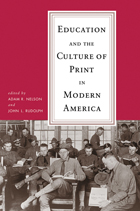
Offering perspectives from print culture history, library and information studies, literary studies, labor history, gender history, the history of race and ethnicity, the history of science and technology, religious studies, and the history of childhood and adolescence, Education and the Culture of Print in Modern America pioneers an investigation into the intersection of education and print culture.
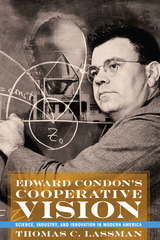
Edward Condon’s Cooperative Vision explores the life cycle of that vision during the Great Depression, the Second World War, and the early Cold War. Condon’s cooperative model of research and development evolved over time and by consequence laid bare sharp disagreements among academic, corporate, and government stakeholders about the practical value of new knowledge, where and how it should be produced, and ultimately, on whose behalf it ought to be put to use.
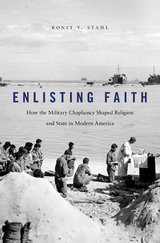
A century ago, as the United States prepared to enter World War I, the military chaplaincy included only mainline Protestants and Catholics. Today it counts Jews, Mormons, Muslims, Christian Scientists, Buddhists, Seventh-day Adventists, Hindus, and evangelicals among its ranks. Enlisting Faith traces the uneven processes through which the military struggled with, encouraged, and regulated religious pluralism over the twentieth century.
Moving from the battlefields of Europe to the jungles of Vietnam and between the forests of Civilian Conservation Corps camps and meetings in government offices, Ronit Y. Stahl reveals how the military borrowed from and battled religion. Just as the state relied on religion to sanction war and sanctify death, so too did religious groups seek recognition as American faiths. At times the state used religion to advance imperial goals. But religious citizens pushed back, challenging the state to uphold constitutional promises and moral standards.
Despite the constitutional separation of church and state, the federal government authorized and managed religion in the military. The chaplaincy demonstrates how state leaders scrambled to handle the nation’s deep religious, racial, and political complexities. While officials debated which clergy could serve, what insignia they would wear, and what religions appeared on dog tags, chaplains led worship for a range of faiths, navigated questions of conscience, struggled with discrimination, and confronted untimely death. Enlisting Faith is a vivid portrayal of religious encounters, state regulation, and the trials of faith—in God and country—experienced by the millions of Americans who fought in and with the armed forces.
Disability and child welfare, together and apart, are major concerns in American society. Today, about 125,000 children in foster care are eligible and waiting for adoption, and while many children wait more than two years to be adopted, children with disabilities wait even longer. In Familial Fitness, Sandra M. Sufian uncovers how disability operates as a fundamental category in the making of the American family, tracing major shifts in policy, practice, and attitudes about the adoptability of disabled children over the course of the twentieth century.
Chronicling the long, complex history of disability, Familial Fitness explores how notions and practices of adoption have—and haven’t—accommodated disability, and how the language of risk enters into that complicated relationship. We see how the field of adoption moved from widely excluding children with disabilities in the early twentieth century to partially including them at its close. As Sufian traces this historical process, she examines the forces that shaped, and continue to shape, access to the social institution of family and invites readers to rethink the meaning of family itself.
How did menopause change from being a natural (and often welcome) end to a woman's childbearing years to a deficiency disease in need of medical and pharmacological intervention? As she traces the medicalization of menopause over the last 100 years, historian Judith Houck challenges some widely held assumptions. Physicians hardly foisted hormones on reluctant female patients; rather, physicians themselves were often reluctant to claim menopause as a medical problem and resisted the widespread use of hormone therapy for what was, after all, a normal transition in a woman's lifespan. Houck argues that the medical and popular understandings of menopause at any given time depended on both pharmacological options and cultural ideas and anxieties of the moment. As women delayed marriage and motherhood and entered the workforce in greater numbers, the medical understanding, cultural meaning, and experience of menopause changed. By examining the history of menopause over the course of the twentieth century, Houck shows how the experience and representation of menopause has been profoundly influenced by biomedical developments and by changing roles for women and the changing definition of womanhood.
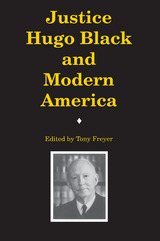
The struggle to accommodate both individual freedom and community welfare shaped modern America. American have disagreed about whether federal protection of national welfare could be reconciled with defense of individual rights; however, no public figure worked longer or more consistently to meet this challenge than Alabama’s Hugo L. Black
A Washington Post Book of the Year
Winner of the Merle Curti Award
Winner of the Jacques Barzun Prize
Winner of the Ralph Waldo Emerson Award
“A masterful study of privacy.”
—Sue Halpern, New York Review of Books
“Masterful (and timely)…[A] marathon trek from Victorian propriety to social media exhibitionism…Utterly original.”
—Washington Post
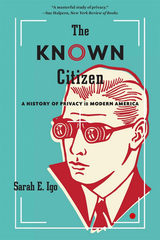
Every day, we make decisions about what to share and when, how much to expose and to whom. Securing the boundary between one’s private affairs and public identity has become an urgent task of modern life. How did privacy come to loom so large in public consciousness? Sarah Igo tracks the quest for privacy from the invention of the telegraph onward, revealing enduring debates over how Americans would—and should—be known. The Known Citizen is a penetrating historical investigation with powerful lessons for our own times, when corporations, government agencies, and data miners are tracking our every move.
“A mighty effort to tell the story of modern America as a story of anxieties about privacy…Shows us that although we may feel that the threat to privacy today is unprecedented, every generation has felt that way since the introduction of the postcard.”
—Louis Menand, New Yorker
“Engaging and wide-ranging…Igo’s analysis of state surveillance from the New Deal through Watergate is remarkably thorough and insightful.”
—The Nation
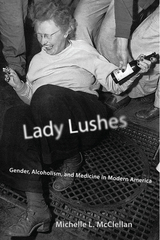
In Lady Lushes, medical historian Michelle L. McClellan traces the story of the female alcoholic from the late-nineteenth through the twentieth century. She draws on a range of sources to demonstrate the persistence of the belief that alcohol use is antithetical to an idealized feminine role, particularly one that glorifies motherhood. Lady Lushes offers a fresh perspective on the importance of gender role ideology in the formation of medical knowledge and authority.
Pietruska argues that this late nineteenth-century quest for future certainty had an especially ironic consequence: it led Americans to accept uncertainty as an inescapable part of both forecasting and twentieth-century economic and cultural life. Drawing together histories of science, technology, capitalism, environment, and culture, Looking Forward explores how forecasts functioned as new forms of knowledge and risk management tools that sometimes mitigated, but at other times exacerbated, the very uncertainties they were designed to conquer. Ultimately Pietruska shows how Americans came to understand the future itself as predictable, yet still uncertain.

Ron Strickland has spent a good deal of time walking. He hiked the 1200 miles of the Pacific Northwest Trail in 1983. In 2004, he completed the Pacific Crest Trail, with a 1500-mile hike from the Mojave Desert to the Columbia River. In 2009, he hiked the length of the New England Trail.
He has also held a longtime dream of showcasing the best hiking of the Rockies, Purcells, Okanogan, Cascades, Olympics, and Wilderness Coast. He spent years raising funds, recruiting volunteers, cutting brush, digging dirt, and lobbying landowners, officials, and politicians—and in 2009, the Pacific Northwest Trail, which runs from the Continental Divide to the Pacific Ocean, traversing three National Parks and seven National Forests, was finally declared a National Scenic Trail.
In this adventurous and moving memoir, Strickland—known in the backcountry as “Pathfinder”—shares his insider view of the joys and adventures of long-distance hiking. He intersperses colorful portraits of memorable trail characters and lush descriptions of hikes he knows firsthand. He also describes the experience of conceiving and establishing the Pacific Northwest Trail, detailing the setbacks and triumphs along the way.
Pathfinder offers the rich insights and experiences of a longtime hiker, inspiring readers to the wonder of hiking and the outdoors.
This magnificent account of the coming of age of physics in America has been heralded as the best introduction to the history of science in the United States. Unsurpassed in its breadth and literary style, Daniel J. Kevles’s account portrays the brilliant scientists who became a powerful force in bringing the world into a revolutionary new era. The book ranges widely as it links these exciting developments to the social, cultural, and political changes that occurred from the post–Civil War years to the present. Throughout, Kevles keeps his eye on the central question of how an avowedly elitist enterprise grew and prospered in a democratic culture.
In this new edition, the author has brought the story up-to-date by providing an extensive, authoritative, and colorful account of the Superconducting Super Collider, from its origins in the international competition and intellectual needs of high-energy particle physics, through its establishment as a multibillion-dollar project, to its termination, in 1993, as a result of angry opposition within the American physics community and Congress.

Enhanced with a new introduction and an updated bibliography, Political Repression in Modern America remains an essential record of the relentless intolerance that suppresses radical dissent in the United States.
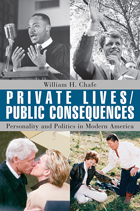
A political leader's decisions can determine the fate of a nation, but what determines how and why that leader makes certain choices? William H. Chafe, a distinguished historian of twentieth century America, examines eight of the most significant political leaders of the modern era in order to explore the relationship between their personal patterns of behavior and their political decision-making process. The result is a fascinating look at how personal lives and political fortunes have intersected to shape America over the past fifty years.
One might expect our leaders to be healthy, wealthy, genteel, and happy. In fact, most of these individuals--from Franklin Delano Roosevelt to Martin Luther King, Jr., from John F. Kennedy to Bill Clinton--came from dysfunctional families, including three children of alcoholics; half grew up in poor or only marginally secure homes; most experienced discord in their marriages; and at least two displayed signs of mental instability. What links this extraordinarily diverse group is an intense ambition to succeed, and the drive to overcome adversity. Indeed, adversity offered a vehicle to develop the personal attributes that would define their careers and shape the way they exercised power.
Chafe probes the influences that forged these men's lives, and profiles the distinctive personalities that molded their exercise of power in times of danger and strife. The history of the United States from the Depression into the new century cannot be understood without exploring the dynamic and critical relationship between personal history and political leadership that these eight life stories so poignantly reveal.
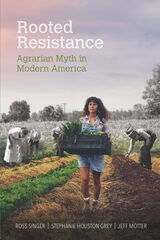
Through a careful examination of several case studies, Rooted Resistance traverses the ground of agrarian myth in modern America. The authors investigate key figures and movements in the history of modern agrarianism, including the World War I victory garden efforts, the postwar Country Life movement for the vindication of farmers’ rights, the Southern Agrarian critique of industrialism, and the practical and spiritual prophecy of organic farming put forth by J. I. Rodale. This critical history is then brought up to date with recent examples such as the contested South Central Farm in urban Los Angeles and the spectacular rise and fall of the Chipotle “Food with Integrity” branding campaign.
By examining a range of case studies, Singer, Grey, and Motter aim for a deeper critical understanding of the many applications of agrarian myth and reveal why it can help provide a pathway for positive systemic change in the food system.
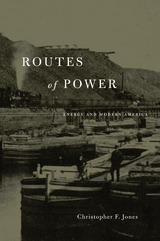
The fossil fuel revolution is usually rendered as a tale of historic advances in energy production. In this perspective-changing account, Christopher F. Jones instead tells a story of advances in energy access—canals, pipelines, and wires that delivered power in unprecedented quantities to cities and factories at a great distance from production sites. He shows that in the American mid-Atlantic region between 1820 and 1930, the construction of elaborate transportation networks for coal, oil, and electricity unlocked remarkable urban and industrial growth along the eastern seaboard. But this new transportation infrastructure did not simply satisfy existing consumer demand—it also whetted an appetite for more abundant and cheaper energy, setting the nation on a path toward fossil fuel dependence.
Between the War of 1812 and the Great Depression, low-cost energy supplied to cities through a burgeoning delivery system allowed factory workers to mass-produce goods on a scale previously unimagined. It also allowed people and products to be whisked up and down the East Coast at speeds unattainable in a country dependent on wood, water, and muscle. But an energy-intensive America did not benefit all its citizens equally. It provided cheap energy to some but not others; it channeled profits to financiers rather than laborers; and it concentrated environmental harms in rural areas rather than cities.
Today, those who wish to pioneer a more sustainable and egalitarian energy order can learn valuable lessons from this history of the nation’s first steps toward dependence on fossil fuels.
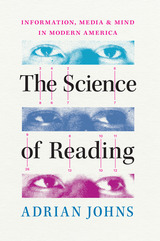
Reading is perhaps the essential practice of modern civilization. For centuries, it has been seen as key to both personal fulfillment and social progress, and millions today depend on it to participate fully in our society. Yet, at its heart, reading is a surprisingly elusive practice. This book tells for the first time the story of how American scientists and others have sought to understand reading, and, by understanding it, to improve how people do it.
Starting around 1900, researchers—convinced of the urgent need to comprehend a practice central to industrial democracy—began to devise instruments and experiments to investigate what happened to people when they read. They traced how a good reader’s eyes moved across a page of printed characters, and they asked how their mind apprehended meanings as they did so. In schools across the country, millions of Americans learned to read through the application of this science of reading. At the same time, workers fanned out across the land to extend the science of reading into the social realm, mapping the very geography of information for the first time. Their pioneering efforts revealed that the nation’s most pressing problems were rooted in drastic informational inequities, between North and South, city and country, and white and Black—and they suggested ways to tackle those problems.
Today, much of how we experience our information society reflects the influence of these enterprises. This book explains both how the science of reading shaped our age and why, with so-called reading wars still plaguing schools across the nation, it remains bitterly contested.

Americans have long been suspicious of experts and elites. This new history explains why so many have believed that science has the power to corrupt American culture.
Americans today are often skeptical of scientific authority. Many conservatives dismiss climate change and Darwinism as liberal fictions, arguing that “tenured radicals” have coopted the sciences and other disciplines. Some progressives, especially in the universities, worry that science’s celebration of objectivity and neutrality masks its attachment to Eurocentric and patriarchal values. As we grapple with the implications of climate change and revolutions in fields from biotechnology to robotics to computing, it is crucial to understand how scientific authority functions—and where it has run up against political and cultural barriers.
Science under Fire reconstructs a century of battles over the cultural implications of science in the United States. Andrew Jewett reveals a persistent current of criticism which maintains that scientists have injected faulty social philosophies into the nation’s bloodstream under the cover of neutrality. This charge of corruption has taken many forms and appeared among critics with a wide range of social, political, and theological views, but common to all is the argument that an ideologically compromised science has produced an array of social ills. Jewett shows that this suspicion of science has been a major force in American politics and culture by tracking its development, varied expressions, and potent consequences since the 1920s.
Looking at today’s battles over science, Jewett argues that citizens and leaders must steer a course between, on the one hand, the naïve image of science as a pristine, value-neutral form of knowledge, and, on the other, the assumption that scientists’ claims are merely ideologies masquerading as truths.
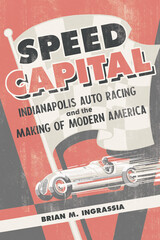
The 1909 opening of the Indianapolis Motor Speedway marked a foundational moment in the history of automotive racing. Events at the famed track and others like it also helped launch America’s love affair with cars and an embrace of road systems that transformed cities and shrank perceptions of space.
Brian Ingrassia tells the story of the legendary oval’s early decades. This story revolves around Speedway cofounder and visionary businessman Carl Graham Fisher, whose leadership in the building of the transcontinental Lincoln Highway and the iconic Dixie Highway had an enormous impact on American mobility. Ingrassia looks at the Speedway’s history as a testing ground for cars and airplanes, its multiple close brushes with demolition, and the process by which racing became an essential part of the Golden Age of Sports. At the same time, he explores how the track’s past reveals the potent links between sports capitalism and the selling of nostalgia, tradition, and racing legends.
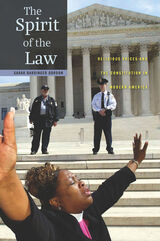
A new constitutional world burst into American life in the mid-twentieth century. For the first time, the national constitution's religion clauses were extended by the United States Supreme Court to all state and local governments. As energized religious individuals and groups probed the new boundaries between religion and government and claimed their sacred rights in court, a complex and evolving landscape of religion and law emerged.
Sarah Gordon tells the stories of passionate believers who turned to the law and the courts to facilitate a dazzling diversity of spiritual practice. Legal decisions revealed the exquisite difficulty of gauging where religion ends and government begins. Controversies over school prayer, public funding, religion in prison, same-sex marriage, and secular rituals roiled long-standing assumptions about religion in public life. The range and depth of such conflicts were remarkable—and ubiquitous.
Telling the story from the ground up, Gordon recovers religious practices and traditions that have generated compelling claims while transforming the law of religion. From isolated schoolchildren to outraged housewives and defiant prisoners, believers invoked legal protection while courts struggled to produce stable constitutional standards. In a field dominated by controversy, the vital connection between popular and legal constitutional understandings has sometimes been obscured. The Spirit of the Law explores this tumultuous constitutional world, demonstrating how religion and law have often seemed irreconcilable, even as they became deeply entwined in modern America.
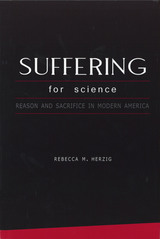
Suffering for Science reveals more than the passion evident in many scientific vocations; it also illuminates a nation's changing understandings of the purposes of suffering, the limits of reason, and the nature of freedom in the aftermath of slavery.
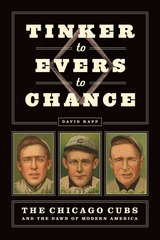
Tinker to Evers to Chance examines this pivotal moment in American history, when baseball became the game we know today. Each man came from a different corner of the country and brought a distinctive local culture with him: Evers from the Irish-American hothouse of Troy, New York; Tinker from the urban parklands of Kansas City, Missouri; Chance from the verdant fields of California’s Central Valley. The stories of these early baseball stars shed unexpected light not only on the evolution of baseball and on the enthusiasm of its players and fans all across America, but also on the broader convulsions transforming the US into a confident new industrial society. With them emerged a truly national culture.
This iconic trio helped baseball reinvent itself, but their legend has largely been relegated to myths and barroom trivia. David Rapp’s engaging history resets the story and brings these men to life again, enabling us to marvel anew at their feats on the diamond. It’s a rare look at one of baseball’s first dynasties in action.
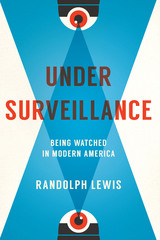
Never before has so much been known about so many. CCTV cameras, TSA scanners, NSA databases, big data marketers, predator drones, “stop and frisk” tactics, Facebook algorithms, hidden spyware, and even old-fashioned nosy neighbors—surveillance has become so ubiquitous that we take its presence for granted. While many types of surveillance are pitched as ways to make us safer, almost no one has examined the unintended consequences of living under constant scrutiny and how it changes the way we think and feel about the world. In Under Surveillance, Randolph Lewis offers a highly original look at the emotional, ethical, and aesthetic challenges of living with surveillance in America since 9/11.
Taking a broad and humanistic approach, Lewis explores the growth of surveillance in surprising places, such as childhood and nature. He traces the rise of businesses designed to provide surveillance and security, including those that cater to the Bible Belt’s houses of worship. And he peers into the dark side of playful surveillance, such as eBay’s online guide to “Fun with Surveillance Gadgets.” A worried but ultimately genial guide to this landscape, Lewis helps us see the hidden costs of living in a “control society” in which surveillance is deemed essential to governance and business alike. Written accessibly for a general audience, Under Surveillance prompts us to think deeply about what Lewis calls “the soft tissue damage” inflicted by the culture of surveillance.
READERS
Browse our collection.
PUBLISHERS
See BiblioVault's publisher services.
STUDENT SERVICES
Files for college accessibility offices.
RECENTLY PUBLISHED




UChicago Accessibility Resources
home | accessibility | search | about | contact us
BiblioVault ® 2001 - 2024
The University of Chicago Press