
 A SCHOLARLY BOOK REPOSITORY
The son of Jewish immigrants from Russia to New York, Charles Reznikoff found himself at the intersection of modernist innovation, ethnic otherness, and economic hardship. He both appreciated the modernists’ formal radicalism and critiqued their political failings—a task he accomplished by writing short lyric poems depicting the hardship and charm of urban life, as well as long poems presenting histories of horrific violence, from factory accidents to the Holocaust. But despite his contributions to American poetry, Reznikoff has remained a somewhat secondary figure, in part because his work—at times—is painful to read.
A Jewish Word or Two recasts Reznikoff ’s poetry as pleasurable and masterful even when disturbing. In their humor, their encounters with Jewish history, holiness, and identity, as well as their use of drama, horror, joy, and beauty, Reznikoff ’s poems help us celebrate what is simultaneously strange, surprising, lovely, and uncanny in our everyday lives.
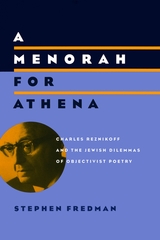
Stephen Fredman illuminates the relationship of Jewish intellectuals to modernity through a close look at Reznikoff's life and writing. He shows that when we regard the Objectivists as modern Jewish poets, we can see more clearly their distinctiveness as modernists and the reasons for their profound impact upon later poets, such as Allen Ginsberg and Charles Bernstein. Fredman also argues that to understand Reznikoff's work more completely, we must see it in the context of early, nonsectarian attempts to make the study of Jewish culture a force in the construction of a more pluralistic society. According to Fredman, then, the indelible images in Reznikoff's poetry open a window onto the vexed but ultimately successful entry of Jewish immigrants and their children into the mainstream of American intellectual life.
READERS
Browse our collection.
PUBLISHERS
See BiblioVault's publisher services.
STUDENT SERVICES
Files for college accessibility offices.
RECENTLY PUBLISHED


UChicago Accessibility Resources
home | accessibility | search | about | contact us
BiblioVault ® 2001 - 2026
The University of Chicago Press