
 A SCHOLARLY BOOK REPOSITORY
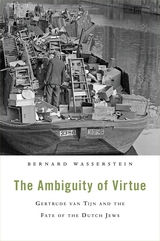
In May 1941, Gertrude van Tijn arrived in Lisbon on a mission of mercy from German-occupied Amsterdam. She came with Nazi approval to the capital of neutral Portugal to negotiate the departure from Hitler’s Europe of thousands of German and Dutch Jews. Was this middle-aged Jewish woman, burdened with such a terrible responsibility, merely a pawn of the Nazis, or was her journey a genuine opportunity to save large numbers of Jews from the gas chambers? In such impossible circumstances, what is just action, and what is complicity?
A moving account of courage and of all-too-human failings in the face of extraordinary moral challenges, The Ambiguity of Virtue tells the story of Van Tijn’s work on behalf of her fellow Jews as the avenues that might save them were closed off. Between 1933 and 1940 Van Tijn helped organize Jewish emigration from Germany. After the Germans occupied Holland, she worked for the Nazi‐appointed Jewish Council in Amsterdam and enabled many Jews to escape. Some later called her a heroine for the choices she made; others denounced her as a collaborator.
Bernard Wasserstein’s haunting narrative draws readers into the twilight world of wartime Europe, to expose the wrenching dilemmas that confronted Jews under Nazi occupation. Gertrude van Tijn’s experience raises crucial questions about German policy toward the Jews, about the role of the Jewish Council, and about Dutch, American, and British responses to the persecution and mass murder of Jews on an unimaginable scale.
Winner of the Yad Vashem International Book Prize for Holocaust Research
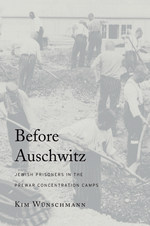
Auschwitz—the largest and most notorious of Hitler’s concentration camps—was founded in 1940, but the Nazis had been detaining Jews in camps ever since they came to power in 1933. Before Auschwitz unearths the little-known origins of the concentration camp system in the years before World War II and reveals the instrumental role of these extralegal detention sites in the development of Nazi policies toward Jews and in plans to create a racially pure Third Reich.
Investigating more than a dozen camps, from the infamous Dachau, Buchenwald, and Sachsenhausen to less familiar sites, Kim Wünschmann uncovers a process of terror meant to identify and isolate German Jews in the period from 1933 to 1939. The concentration camp system was essential to a regime then testing the limits of its power and seeking to capture the hearts and minds of the German public. Propagandized by the Nazis as enemies of the state, Jews were often targeted for arbitrary arrest and then routinely subjected to the harshest treatment and most punishing labor assignments in the camps. Some of them were murdered. Over time, shocking accounts of camp life filtered into the German population, sending a message that Jews were different from true Germans: they were portrayed as dangerous to associate with and fair game for acts of intimidation and violence.
Drawing on a wide range of previously unexplored archives, Before Auschwitz explains how the concentration camps evolved into a universally recognized symbol of Nazi terror and Jewish persecution during the Holocaust.
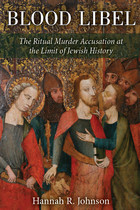
The ritual murder accusation is one of a series of myths that fall under the label blood libel, and describes the medieval legend that Jews require Christian blood for obscure religious purposes and are capable of committing murder to obtain it. This malicious myth continues to have an explosive afterlife in the public sphere, where Sarah Palin's 2011 gaffe is only the latest reminder of its power to excite controversy. Blood Libel is the first book-length study to analyze the recent historiography of the ritual murder accusation and to consider these debates in the context of intellectual and cultural history as well as methodology. Hannah R. Johnson articulates how ethics shapes methodological decisions in the study of the accusation and how questions about methodology, in turn, pose ethical problems of interpretation and understanding. Examining recent debates over the scholarship of historians such as Gavin Langmuir, Israel Yuval, and Ariel Toaff, Johnson argues that these discussions highlight an ongoing paradigm shift that seeks to reimagine questions of responsibility by deliberately refraining from a discourse of moral judgment and blame in favor of an emphasis on historical contingencies and hostile intergroup dynamics.
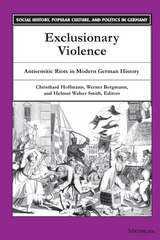
In the Western mind, outbursts of collective violence against Jews have been largely identified with Tzarist Russia and the medieval crusade massacres. However, by narrating pogroms as archaic, historians have overlooked their significance to the development of modern antisemitism in Germany and Europe as well as the reasons for its continued presence in the contemporary world. The evidence presented in this volume suggests that acts of exclusionary violence were not dead-end streets of futile protest. Rather, they were rehearsals for new kinds of destruction.
The integration of various perspectives and the close cooperation of scholars from different disciplines is a major achievement of this volume, which will be of interest to advanced undergraduates, graduate students, academics and the general reader in a variety of disciplines, including German studies, Jewish studies, Holocaust and genocide studies, ethnic relations, history, and the social sciences in general.
Christhard Hoffmann is Associate Professor of Modern European History, University of Bergen, Norway. Werner Bergmann is Professor of Research on Antisemitism, Technical University, Berlin, Germany. Helmut W. Smith is Associate Professor of History, Vanderbilt University.
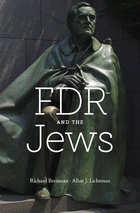
Nearly seventy-five years after World War II, a contentious debate lingers over whether Franklin Delano Roosevelt turned his back on the Jews of Hitler's Europe. Defenders claim that FDR saved millions of potential victims by defeating Nazi Germany. Others revile him as morally indifferent and indict him for keeping America's gates closed to Jewish refugees and failing to bomb Auschwitz's gas chambers.
In an extensive examination of this impassioned debate, Richard Breitman and Allan J. Lichtman find that the president was neither savior nor bystander. In FDR and the Jews, they draw upon many new primary sources to offer an intriguing portrait of a consummate politician-compassionate but also pragmatic-struggling with opposing priorities under perilous conditions. For most of his presidency Roosevelt indeed did little to aid the imperiled Jews of Europe. He put domestic policy priorities ahead of helping Jews and deferred to others' fears of an anti-Semitic backlash. Yet he also acted decisively at times to rescue Jews, often withstanding contrary pressures from his advisers and the American public. Even Jewish citizens who petitioned the president could not agree on how best to aid their co-religionists abroad.
Though his actions may seem inadequate in retrospect, the authors bring to light a concerned leader whose efforts on behalf of Jews were far greater than those of any other world figure. His moral position was tempered by the political realities of depression and war, a conflict all too familiar to American politicians in the twenty-first century.
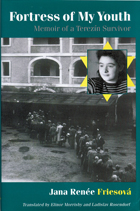
Jana Renée Friesová was fifteen when she was imprisoned by the Nazis in the Czech ghetto town of Terezín. Her memoir tells the poignantly familiar story of a young girl who, even under the most abominable circumstances, engages in intense adolescent friendships, worries with her companions over her looks, and falls in love.
Anne Frank’s diary ends with deportation to a concentration camp; Fortress of My Youth, in contrast, takes the reader deep into the horrors of daily life in a camp that were faced by a young girl and her family. But Friesová also tells of love, joy, sacrifice, and the people who shared in the most profound experiences of her life.
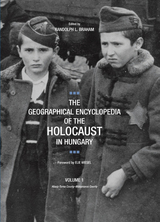
Winner of the 2013 National Jewish Book Award
The illustrated three-volume Geographical Encyclopedia of the Holocaust in Hungary is a definitive, authoritative, and magisterial resource, thorough and exhaustive. It documents and chronicles the wartime fate of the Jewish communities in that country where virulent antisemitism is anything but dead, even today. With scores of detailed maps and hundreds of photographs, this reference work is organized alphabetically by county, each prefaced with a map and a contextual history describing its Jewish population up to and into 1944.
Entries track the demographic, cultural, and religious changes in even the smallest communities where Jews lived before their marginalization, dispossession, ghettoization, and, finally, deportation to labor and death camps. The encyclopedia endows scholars and lay researchers with both panoramic and microscopic views of the virtually last-minute destruction of most of the Jews of Hungary, until then the last sizable surviving Jewish community in occupied Europe.
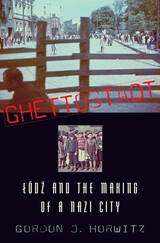
Under the Third Reich, Nazi Germany undertook an unprecedented effort to refashion the city of Łódź. Home to prewar Poland’s second most populous Jewish community, this was to become a German city of enchantment—a modern, clean, and orderly showcase of urban planning and the arts. Central to the undertaking, however, was a crime of unparalleled dimension: the ghettoization, exploitation, and ultimate annihilation of the city’s entire Jewish population.
Ghettostadt is the terrifying examination of the Jewish ghetto’s place in the Nazi worldview. Exploring ghetto life in its broadest context, it deftly maneuvers between the perspectives and actions of Łódź’s beleaguered Jewish community, the Germans who oversaw and administered the ghetto’s affairs, and the “ordinary” inhabitants of the once Polish city. Gordon Horwitz reveals patterns of exchange, interactions, and interdependence within the city that are stunning in their extent and intimacy. He shows how the Nazis, exercising unbounded force and deception, exploited Jewish institutional traditions, social divisions, faith in rationality, and hope for survival to achieve their wider goal of Jewish elimination from the city and the world. With unusual narrative force, the work brings to light the crushing moral dilemmas facing one of the most significant Jewish communities of Nazi-occupied Eastern Europe, while simultaneously exploring the ideological underpinnings and cultural, economic, and social realities within which the Holocaust took shape and flourished.
This lucid, powerful, and harrowing account of the daily life of the “new” German city, both within and beyond the ghetto of Łódź, is an extraordinary revelation of the making of the Holocaust.
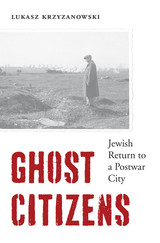
The poignant story of Holocaust survivors who returned to their hometown in Poland and tried to pick up the pieces of a shattered world.
In the immediate aftermath of World War II, the lives of Polish Jews were marked by violence and emigration. But some of those who had survived the Nazi genocide returned to their hometowns and tried to start their lives anew. Lukasz Krzyzanowski recounts the story of this largely forgotten group of Holocaust survivors. Focusing on Radom, an industrial city about sixty miles south of Warsaw, he tells the story of what happened throughout provincial Poland as returnees faced new struggles along with massive political, social, and legal change.
Non-Jewish locals mostly viewed the survivors with contempt and hostility. Many Jews left immediately, escaping anti-Semitic violence inflicted by new communist authorities and ordinary Poles. Those who stayed created a small, isolated community. Amid the devastation of Poland, recurring violence, and bureaucratic hurdles, they tried to start over. They attempted to rebuild local Jewish life, recover their homes and workplaces, and reclaim property appropriated by non-Jewish Poles or the state. At times they turned on their own. Krzyzanowski recounts stories of Jewish gangs bent on depriving returnees of their prewar possessions and of survivors shunned for their wartime conduct.
The experiences of returning Jews provide important insights into the dynamics of post-genocide recovery. Drawing on a rare collection of documents—including the postwar Radom Jewish Committee records, which were discovered by the secret police in 1974—Ghost Citizens is the moving story of Holocaust survivors and their struggle to restore their lives in a place that was no longer home.
Since its founding, the journal Kritika: Explorations in Russian and Eurasian History has led the way in exploring the East European and Soviet experience of the Holocaust. This volume combines revised articles from the journal and previously unpublished pieces to highlight the complex interactions of prejudice, power, and publicity. It offers a probing examination of the complicity of local populations in the mass murder of Jews perpetrated in areas such as Poland, Ukraine, Bessarabia, and northern Bukovina and analyzes Soviet responses to the Holocaust.
Based on Soviet commission reports, news media, and other archives, the contributors examine the factors that led certain local residents to participate in the extermination of their Jewish neighbors; the interaction of Nazi occupation regimes with various sectors of the local population; the ambiguities of Soviet press coverage, which at times reported and at times suppressed information about persecution specifically directed at the Jews; the extraordinary Soviet efforts to document and prosecute Nazi crimes and the way in which the Soviet state’s agenda informed that effort; and the lingering effects of silence about the true impact of the Holocaust on public memory and state responses.
In The Holocaust Odyssey, Rebecca Fromer leads us through the experiences of Danny Bennahmias, a Greek Jew of Italian citizenship whose forced labor as a Sonderkommando at Auschwitz included the disentangling of hundreds of thousands of gassed men, women, and children. The book is the result of a diligent collaboration. As it unfolds, it becomes a poignant reminder of the manner in which enslaved Jews and others were forced to destroy their families and fellow prisoners. It is a story of human decency, the spark of which remains against all odds.
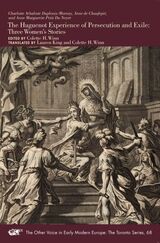
Edited by Colette H. Winn. Translated by Lauren King and Colette H. Winn
The Other Voice in Early Modern Europe: The Toronto Series, Vol. 68

His personal story interweaves the vast forces of politics and history with intimate details of the shtetl--from the pre-war intricacies of Galician society and the textures of a traditional Jewish education, to the agonizing contradictions of Polish-Jewish relations and the complexities of post-war Jewish politics.
His account of the displaced persons camps where 'transit Jews' awaited their chance to emigrate is a signifigant contribution to a little-known aspect of post-war history.
With his gift for observation and his acute powers of analysis, Mark Verstandig has achieved the rare feat of telling the story of his people through his own history. Part autobiography, part Holocaust literature, part sociological analysis, I Rest my Case is a fine achievement.

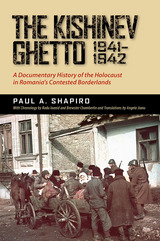
The Kishinev Ghetto, 1941–1942 sheds new light on the little-known historical events surrounding the creation, administration, and liquidation of the Kishinev (Chisinau) ghetto during the first months following the Axis attack on the Soviet Union (Operation Barbarossa) in late June 1941. Mass killings during the combined Romanian-German drive toward Kishinev in Bessarabia, after a year of Soviet rule in this Romanian border province, were followed by the shooting of thousands of Jews on the streets of the city during the first days of reestablished Romanian administration. Survivors were driven into a ghetto, persecuted, and liquidated by year’s end. The Kishinev Ghetto, 1941–1942 is the first major study of these events.
Often overshadowed by events in Germany and Poland, the history of the Holocaust in Romania, including what took place in Bessarabia (corresponding in large part with the territory of the modern Republic of Moldova), was obscured during decades of communist rule by denial and by policies that blocked access to wartime documentation. This book is the result of a lengthy research project that began with Paul A. Shapiro’s missions to Romania for the United States Holocaust Memorial Museum to negotiate access to these documents.
The volume includes:
· A preface describing the origin of the project in the immediate aftermath of the Ceausescu regime in Romania.
· A hundred-page study setting the events of the book within the historical context of Eastern European antisemitism, Romanian-Soviet conflict over control of Bessarabia, and Romania’s alliance with Nazi Germany.
· A thoughtfully curated collection of archival documents linked to the study.
· A chronology of related historical events.
· Twenty-one black and white photographs and a map of the ghetto.
Students and scholars of Holocaust history, Judaic studies, twentieth-century Eastern European history, Romania, Moldova, and historical Bessarabia will want to own this important, revealing volume.
Published in association with the United States Holocaust Memorial Museum
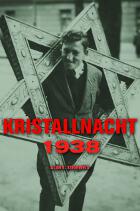
On November 7, 1938, a Jewish teenager, Herschel Grynszpan, fatally shot a German diplomat in Paris. Within three days anti-Jewish violence erupted throughout Germany, initially incited by local Nazi officials, and ultimately sanctioned by the decisions of Hitler and Goebbels at the pinnacle of the Third Reich. As synagogues burned and Jews were beaten in the streets, police stood aside. Men, women, and children—many neighbors of the victims—participated enthusiastically in acts of violence, rituals of humiliation, and looting. By the night of November 10, a nationwide antisemitic pogrom had inflicted massive destruction on synagogues, Jewish schools, and Jewish-owned businesses. During and after this spasm of violence and plunder, 30,000 Jewish men were rounded up and sent to concentration camps, where hundreds would perish in the following months.
Kristallnacht revealed to the world the intent and extent of Nazi Judeophobia. However, it was seen essentially as the work of the Nazi leadership. Now, Alan Steinweis counters that view in his vision of Kristallnacht as a veritable pogrom—a popular cathartic convulsion of antisemitic violence that was manipulated from above but executed from below by large numbers of ordinary Germans rioting in the streets, heckling and taunting Jews, cheering Stormtroopers' hostility, and looting Jewish property on a massive scale.
Based on original research in the trials of the pogrom's perpetrators and the testimonies of its Jewish survivors, Steinweis brings to light the evidence of mob action by all sectors of the civilian population. Kristallnacht 1938 reveals the true depth and nature of popular antisemitism in Nazi Germany on the eve of the Holocaust.
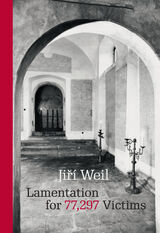
So begins Jiří Weil’s unforgettable prose poem, Lamentation for 77, 297 Victims, his literary monument to the Czech Jews killed during the Holocaust. A Czech-Jewish writer who worked at Prague’s Jewish Museum both during and after the Nazi Occupation—he survived the Holocaust by faking his own death and hiding out until the war had ended—Weil wrote Lamentation while he served as the museum’s senior librarian in the 1950s. This remarkable literary experiment presents a number of innovative approaches to writing about a horror many would deem indescribable, combining a narrative account of the Shoah with newspaper-style reportage on a handful of the lives ended by the Holocaust and quotes from the Hebrew Bible to create a specific and powerful portrait of loss and remembrance. Translated by David Lightfoot, Lamentation for 77,297 Victims is a startling and singular introduction to a writer whose works have been acclaimed by Philip Roth, Michiko Kakutani, and Siri Hustvedt.
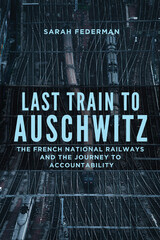
In the immediate decades after World War II, the French National Railways (SNCF) was celebrated for its acts of wartime heroism. However, recent debates and litigation have revealed the ways the SNCF worked as an accomplice to the Third Reich and was actively complicit in the deportation of 75,000 Jews and other civilians to death camps. Sarah Federman delves into the interconnected roles—perpetrator, victim, and hero—the company took on during the harrowing years of the Holocaust.
Grounded in history and case law, Last Train to Auschwitz traces the SNCF’s journey toward accountability in France and the United States, culminating in a multimillion-dollar settlement paid by the French government on behalf of the railways.The poignant and informative testimonies of survivors illuminate the long-term effects of the railroad’s impact on individuals, leading the company to make overdue amends. In a time when corporations are increasingly granted the same rights as people, Federman’s detailed account demonstrates the obligations businesses have to atone for aiding and abetting governments in committing atrocities. This volume highlights the necessity of corporate integrity and will be essential reading for those called to engage in the difficult work of responding to past harms.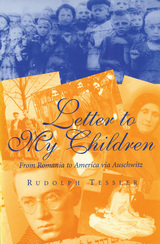
"Sixty-seven members of my family—my mother, her father, my three sisters, three of my brothers, aunts, uncles, and cousins—were murdered at Auschwitz."
As Rudolph Tessler's mother stepped from the train in Auschwitz, shortly before she was sent to the gas chamber, she heard "Hello, Esther." In a polite tone, a young German SS officer greeted her as he would any old friend. His family lived down the road from the Tessler family in Viseu, their hometown in northern Romania. They, like the rest of the town, admired Esther for her wonderful cooking, particularly the delicious cakes she brought them each Christmas. Now he ushered her and six of her children to their deaths.Throughout Letter to My Children, Tessler offers vivid glimpses of the senselessness that surrounded him during World War II. Of the thousands packed in trains and transported from Viseu to Auschwitz, just a small group survived to see liberation. Among the survivors were Tessler, his father, and two of his brothers. This is the amazing story of their experiences as Hasidic Jews caught in the chaos and terror of the Holocaust.
Tessler's upbringing had emphasized community and family devotion—traits not forgotten in the concentration camps, where he and his family members often rescued one another from certain death. Few fathers and sons survived the concentration camps together. In spite of the odds, Tessler and his brother Buroch managed to stick together, sharing their father's labor assignments to protect him from death, preserving not only their family bond but also their spirituality. Tessler's father, always a source of strength and guidance to his family, provided counsel to many prisoners in the camp and eventually assumed the role of rabbi.
Despite an environment in which their captors tried to reduce them to animals, Tessler's remaining family and seven other Jews from Viseu made a special effort to observe their faith. Bending rules in ways that risked their lives, they worked together to smuggle wheat, grind it into flour, and bake matzos to distribute for Passover. The group also secretly gathered to pray on the eve of Rosh Hashanah. These religious observances offered some comfort in the camp.
In addition to vividly portraying the daily struggles of camp life, Letter to My Children follows Tessler beyond liberation, recounting his days as a displaced person struggling for a new life in the midst of the devastation of postwar Europe, as an American immigrant striving to rebuild his family and succeed in business, and as a philanthropist for education and health care. Recalling the age-old way of life in Viseu that was erased by the Holocaust, this inspiring story conveys the hope, determination, and perseverance that made Tessler a survivor.
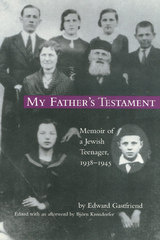
The accelerating Nazi assault on the Jews abruptly shattered Lolek's life. Jews were randomly beaten and arrested, forced out of their homes, deported to slave labor camps, and shot on the streets. During this time, Lolek lost his family, friends, and neighbors, the whole while struggling to hold onto a promise he made to his father before his father was deported. Lolek pledged never to denounce God and to maintain his faith. This covenant proved to be the key to his remarkable survival in several slave labor camps including Auschwitz and several satellite camps of Auschwitz-Birkenau.
My Father's Testament is an intimate portrayal of a teenage boy trying to stay alive without losing his humanity - in hiding, in the camps, and during the death marches at the end of the war.
Embedded in this unique memoir are two other stories of fathers and sons. One lies in the moving Foreword by David R. Gastfriend, Ed's son, now a psychiatrist at Harvard Medical School. The other lies in Bjorn Krondorfer's Afterword. Years after he met Edward Gastfriend, Krondorfer was startled to hear his father mention Blechhammer as one of the places where he was stationed as a young German soldier. Blechhammer was where Lolek was held in a slave labor camp. The coincidence led this German father and son to travel back to the site to confront the Holocaust.
My Father's Testament will engage readers interested in history, the Holocaust, and religion.
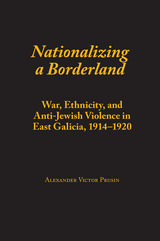
Nationalizing a Borderland enriches understanding of ethnic conflict by examining the factors in the Austro-Hungarian province of Galicia between 1914 and 1920 that led to the rise of xenophobic nationalism and to the ethnocide of World War II. From Russian, Polish, Ukrainian, and Austrian archival sources, Prusin argues that while the violence inflicted upon Jews during that period may at first seem irrational and indiscriminate, a closer examination reveals that it was generated by traditional antisemitism and by the security concerns of the Russian and Polish militaries in the front zone. This violence, Prusin contends, served as a means of reshaping the socio-economic and political space of the province by diminishing Jewish cultural and economic influence.
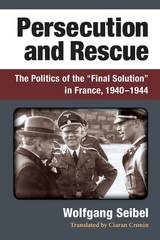
Translated from the German and drawing on German and French sources, Wolfgang Seibel traces the twisted process of political decision-making that shaped the fate of the Jews in German-occupied France during World War II. By analyzing the German-French negotiations, he reveals the underlying logic as well as the actual course of the bargaining process as both the Vichy Regime and the Germans sought a stable relationship. Yet that relationship was continually reshaped by the progress of the war, Germany’s deteriorating prospects, France’s economic and geopolitical position, and the Vichy government’s quest for domestic political support. The Jews’ suffering intensified when the Germans had the upper hand; but when the French felt empowered, the Vichy Regime stopped collaborating in the completion of the “final solution.” Persecution and Rescue: The Politics of the “Final Solution” in France, 1940–1944 demonstrates the ways in which political circumstances can mitigate—or foster—mass crime.
This book represents Ringelbaum's attempt to answer the questions he knew history would ask about the Polish people: what did the Poles do while millions of Jews were being led to the stake? What did the Polish underground do? What did the Government-in-Exile do? Was it inevitable that the Jews, looking their last on this world, should have to see indifference or even gladness on the faces of their neighbors? These questions have haunted Polish-Jewish relations for the last fifty years. Behind them are forces that have haunted Polish-Jewish relations for a thousand years.
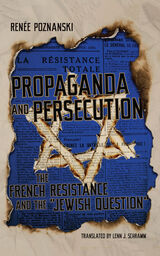
Poznanski argues that Jews in France suffered a double persecution: one led by the Vichy government, the other imposed by the Nazis. Marginalization and exclusion soon led to internment and deportation to terrifying places. Meanwhile, a propaganda war developed between the Resistance and the official voice of Vichy. Poznanski draws on a breathtaking array of sources, especially clandestine publications and French-language BBC transmissions, to show how the Resistance both fought and accommodated the deeply entrenched antisemitism within French society. Her close readings of propaganda texts against public opinions probe ambiguities and silences in Resistance writing about the persecution of the Jews and, in parallel, the numerous and detailed denunciations that could be read in the Jewish clandestine press. This extensive synthesis extends to the post-Liberation period, during which the ongoing persecution of Jews in Europe and North Africa would be portrayed as secondary to the suffering of the nation.
The winner of the 2009 Henri Hertz Prize by the Chancellerie des Universités de Paris, Sorbonne, Propaganda and Persecution makes major contributions to the study of the Resistance and of antisemitism. Lenn J. Schramm’s English translation brings Poznanski’s dynamic prose to life.
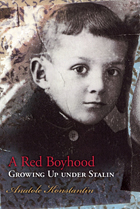
Many children growing up in the Soviet Union before World War II knew the meaning of deprivation and dread. But for the son of an “enemy of the people,” those apprehensions were especially compounded.
When the secret police came for his father in 1938, ten-year-old Anatole Konstantin saw his family plunged into a morass of fear. His memoir of growing up in Stalinist Russia re-creates in vivid detail the daily trials of people trapped in this regime before and during the repressive years of World War II—and the equally horrific struggles of refugees after that conflict.
Evicted from their home, their property confiscated, and eventually forced to leave their town, Anatole’s family experienced the fate of millions of Soviet citizens whose loved ones fell victim to Stalin’s purges. His mother, Raya, resorted to digging peat, stacking bricks, and even bootlegging to support herself and her two children. How she managed to hold her family together in a rapidly deteriorating society—and how young Anatole survived the horrors of marginalization and war—form a story more compelling than any novel.
Looking back on those years from adulthood, Konstantin reflects on both his formal education under harsh conditions and his growing awareness of the contradictions between propaganda and reality. He tells of life in the small Ukrainian town of Khmelnik just before World War II and of how some of its citizens collaborated with the German occupation, lending new insight into the fate of Ukrainian Jews and Nazi corruption of local officials. And in recounting his experiences as a refugee, he offers a new look at everyday life in early postwar Poland and Germany, as well as one of the few firsthand accounts of life in postwar Displaced Persons camps.
A Red Boyhood takes readers inside Stalinist Russia to experience the grim realities of repression—both under a Soviet regime and German occupation. A moving story of desperate people in desperate times, it brings to life the harsh realities of the twentieth century for young and old readers alike.

will move and inform generations. As we lose eyewitnesses to this ultimate
horror, the Kuperhands present us with an elegantly restrained, yet hard-hitting,
Kaddish to Polish Jewry.
Miriam was the daughter of a prosperous furrier; Saul was the son of
a poor shoemaker. Miriam was sixteen when she and her brother roamed the
wild countryside of Poland, searching for food and shelter--and for their
parents. Saul was only a few years older when he watched the smoke rising
from the crematoria and knew that his parents, sister, and eight brothers
were gone forever. Miriam lived by hiding; Saul lived by escaping from
the camp.
The authors emphasize the essential role that Polish Christians played
in their survival and stress that wit, courage, faith, luck, and even
a strong will to live were worthless without their help.
The travail of their survival is wrenching yet comforting, tragic yet
upbeat, cinematic yet intimate. Shadows of Treblinka will haunt
and inspire its readers.
"An extremely accurate and valuable work. There is nothing like it in either the extensive holocaust literature or the ethnomusicology literature."
-- Mark Slobin, author of Chosen Voices: The Story of the American Cantorate
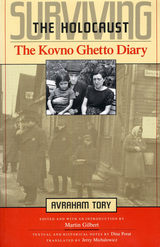
This remarkable chronicle of life and death in the Jewish Ghetto of Kovno, Lithuania, from June 1941 to January 1944, was written under conditions of extreme danger by a Ghetto inmate and secretary of the Jewish Council. After the war, in order to escape from Lithuania, the author was forced to entrust the diary to leaders of the Escape movement; eventually it made its way to his new home in Israel.
The diary incorporates Avraham Tory’s collections of official documents, Jewish Council reports, and original photographs and drawings made in the Ghetto. It depicts in grim detail the struggle for survival under Nazi domination, when—if not simply carted off and murdered in a random “action”—Jews were exploited as slave labor while being systematically starved and denied adequate housing and medical care. Through it all, Tory’s overriding purpose was to record the unimaginable events of these years and to memorialize the determination of the Jews to sustain their community life in the midst of the Nazi terror.
Of the surviving diaries originating in the principal European Ghettos of this period, Tory’s is the longest written by an adult, a dramatic and horrifying document that makes an invaluable contribution to contemporary history. Tory provides an insider’s view of the desperate efforts of Ghetto leaders to protect Jews. Martin Gilbert’s masterly introduction establishes the authenticity of the diary, presents its events against the backdrop of the war in Europe, and considers the crucial questions of collaboration and resistance.
READERS
Browse our collection.
PUBLISHERS
See BiblioVault's publisher services.
STUDENT SERVICES
Files for college accessibility offices.
RECENTLY PUBLISHED



UChicago Accessibility Resources
home | accessibility | search | about | contact us
BiblioVault ® 2001 - 2024
The University of Chicago Press