
 A SCHOLARLY BOOK REPOSITORY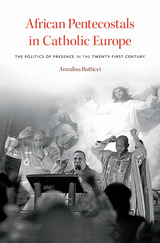
Over the past thirty years, Italy—the historic home of Catholicism—has become a significant destination for migrants from Nigeria and Ghana. Along with suitcases and dreams of a brighter future, these Africans bring their own form of Christianity, Pentecostalism, shaped by their various cultures and religious worlds. At the heart of Annalisa Butticci’s beautifully sculpted ethnography of African Pentecostalism in Italy is a paradox. Pentecostalism, traditionally one of the most Protestant of Christian faiths, is driven by the same concern as Catholicism: real presence.
In Italy, Pentecostals face harsh anti-immigrant sentiment and limited access to economic and social resources. At times, they find safe spaces to worship in Catholic churches, where a fascinating encounter unfolds that is equal parts conflict and communion. When Pentecostals watch Catholics engage with sacramental objects—relics, statues, works of art—they recognize the signs of what they consider the idolatrous religions of their ancestors. Catholics, in turn, view Pentecostal practices as a mix of African religions and Christian traditions. Yet despite their apparently irreconcilable differences and conflicts, they both share a deeply sensuous and material way to make the divine visible and tangible. In this sense, Pentecostalism appears much closer to Catholicism than to mainstream Protestantism.
African Pentecostals in Catholic Europe offers an intimate glimpse at what happens when the world’s two fastest growing Christian faiths come into contact, share worship space, and use analogous sacramental objects and images. And it explains how their seemingly antithetical practices and beliefs undergird a profound commonality.

"Center" is a commonly used term with a variety of meanings. According to editors Liah Greenfeld and Michel Martin, "center" carries a twofold meaning when used as a concept. In its first sense, it is a synonym for "central value system," referring to irreducible values and beliefs that establish the identity of individuals and bind them into a common universe. In its second sense, "center" refers to "central institutional system," the authoritative institutions and persons who often express or embody the central value system. Both meanings imply a corresponding idea of "periphery," referring both to the elements of society that need to be integrated and to institutions and persons who lack authority.
The original essays compiled in this volume examine and apply the concept of the center in different contexts. The contributors come from a broad range of disciplines—classics, religion, philosophy, history, literary criticism, anthropology, political science, and sociology—which serves to underscore the far-reaching significance of the Shilsean theory of society. The interrelated subsets of the "center-periphery" theme addressed here include: symbolic systems, intellectuals, the expansion of the center into the periphery, parallel concepts in the work of other scholars besides Shils, and the paths of research inspired by these concepts. The volume features an introspective essay by Shils himself, in which he reexamines his central ideas in the light of new experiences and the ideas of others, some of them contained in this volume.
By drawing together such diverse scholars around a unified idea, this collection achieves a cohesion that makes it an exciting contribution to the comparative analysis of social and cultural systems. A collective effort in social theory, Center: Ideas and Institutions is a testimony to the breadth and complexity of one of man's ideas.
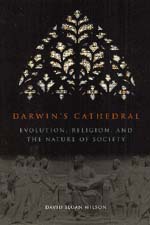
The key, argues Wilson, is to think of society as an organism, an old idea that has received new life based on recent developments in evolutionary biology. If society is an organism, can we then think of morality and religion as biologically and culturally evolved adaptations that enable human groups to function as single units rather than mere collections of individuals? Wilson brings a variety of evidence to bear on this question, from both the biological and social sciences. From Calvinism in sixteenth-century Geneva to Balinese water temples, from hunter-gatherer societies to urban America, Wilson demonstrates how religions have enabled people to achieve by collective action what they never could do alone. He also includes a chapter considering forgiveness from an evolutionary perspective and concludes by discussing how all social organizations, including science, could benefit by incorporating elements of religion.
Religious believers often compare their communities to single organisms and even to insect colonies. Astoundingly, Wilson shows that they might be literally correct. Intended for any educated reader, Darwin's Cathedral will change forever the way we view the relations among evolution, religion, and human society.

South Korea is home to one of the most vibrant evangelical Protestant communities in the world. This book investigates the meanings of—and the reasons behind—an intriguing aspect of contemporary South Korean evangelicalism: the intense involvement of middle-class women. Drawing upon extensive ethnographic fieldwork in Seoul that explores the relevance of gender and women’s experiences to Korean evangelicalism, Kelly H. Chong not only helps provide a clearer picture of the evangelical movement’s success in South Korea, but interrogates the global question of contemporary women’s attraction to religious traditionalisms.
In highlighting the growing disjunction between the forces of social transformation that are rapidly liberalizing modern Korean society, and a social system that continues to uphold key patriarchal structures on both societal and familial levels, Chong relates women’s religious involvement to the contradictions of South Korea’s recent socio-cultural changes and complex engagement with modernity. By focusing on the ways in which women’s religious participation constitutes—both spiritually and institutionally—an important part of their effort to negotiate the problems and dilemmas of contemporary family and gender relations, this book explores the contradictory significance of evangelical beliefs and practices for women, which simultaneously opens up possibilities for gender negotiation/resistance, and for women’s redomestication.
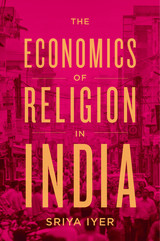
Religion has not been a popular target for economic analysis. Yet the tools of economics can offer deep insights into how religious groups compete, deliver social services, and reach out to potential converts—how, in daily life, religions nurture and deploy market power. Sriya Iyer puts these tools to use in an expansive, creative study of India, one of the most religiously diverse countries in the world.
Iyer explores how growth, inequality, education, technology, and social trends both affect and are affected by religious groups. Her exceptionally rich data—drawn from ten years of research, including a survey of almost 600 religious organizations in seven states—reveal the many ways religions interact with social welfare and political conflict. After India’s economy was liberalized in 1991, she shows, religious organizations substantially increased their provision of services, compensating for the retreat of the state. Iyer’s data also indicate that religious violence is more common where economic growth is higher, apparently because growth increases inequality, which sectarian politicians might exploit to encourage hostility toward other religions. As inequality leads to social polarization, religious doctrines become more extreme. But there are hopeful patterns in Iyer’s data, too. Religious organizations, on balance, play a positive role in India’s socioeconomic development, and women’s participation in religious life is on the rise.
The Economics of Religion in India has much to teach us about India and other pluralistic societies the world over, and about the power of economics to illuminate some of societies’ deepest beliefs and dynamics.

These thirty-two essays with commentaries strike a balance between Caillois’s political and theoretical writings and between his better known works, such as the popular essays on the praying mantis, myth, and mimicry, and his lesser-known pieces. Presenting several new pieces and drawing on interviews and unpublished correspondence, this book reveals Caillois’s consistent effort to reconcile intellectual rigor and imaginative adventure. Perhaps most importantly, The Edge of Surrealism provides an overdue look at how Caillois’s intellectual project intersected with the work of Georges Bataille and others including Breton, Bachelard, Benjamin, Lacan, and Lévi-Strauss.
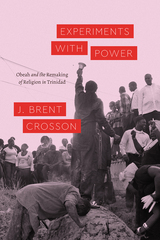
From eighteenth-century slave rebellions to contemporary responses to police brutality, Caribbean methods of problem-solving “spiritual work” have been criminalized under the label of “obeah.” Connected to a justice-making force, obeah remains a crime in many parts of the anglophone Caribbean. In Experiments with Power, J. Brent Crosson addresses the complex question of what obeah is. Redescribing obeah as “science” and “experiments,” Caribbean spiritual workers unsettle the moral and racial foundations of Western categories of religion. Based on more than a decade of conversations with spiritual workers during and after the state of emergency, this book shows how the reframing of religious practice as an experiment with power transforms conceptions of religion and law in modern nation-states.
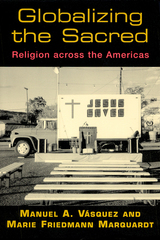
French and German tourists join Mexican migrant workers to venerate the image of the Virgin Mary at a strip mall in Florida; Latino gang members, deported from the United States to home countries they barely know, find Jesus in transnational churches; U.S. evangelicals use electronic media to preach a “neo liberal” gospel of wealth and health to landless peasants in remote indigenous villages in Guatemala. These are just some examples of how religion in the Americas today intersects in complex ways with the economic, political, and cultural dimensions of globalization.
Drawing on case studies in the United States and Latin America, Manuel A. Vásquez and Marie Friedmann Marquardt explore the evolving roles of religion in the Americas in the face of globalization, transnational migration, the rapid growth of culture industries, the rise of computer mediated technologies, and the crisis of modernity. Combining ethnographic research in local congregations, studies of material culture and sacred space, textual analyses, and approaches to mass and electronic media, the authors challenge dominant paradigms in sociology of religion, such as the secularization and rational choice models. Further, the book offers alternative theoretical and methodological tools to understand the increasing complexity of religious life in the Americas.
By illustratingthe challenges that scholars and students must confront in order to understand the complexity of today’s religious landscape, Globalizing the Sacred makes both important theoretical and methodological contributions to the study of religion’s role in social change.
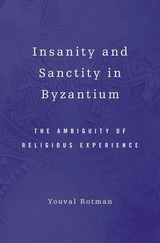
In the Roman and Byzantine Near East, the holy fool emerged in Christianity as a way of describing individuals whose apparent madness allowed them to achieve a higher level of spirituality. Insanity and Sanctity in Byzantium examines how the figure of the mad saint or mystic was used as a means of individual and collective transformation in the period between the birth of Christianity and the rise of Islam. It presents a novel interpretation in revealing the central role that psychology plays in social and historical development.
Early Christians looked to figures who embodied extremes of behavior—like the holy fool, the ascetic, the martyr—to redefine their social, cultural, and mental settings by reading new values in abnormal behavior. Comparing such forms of extreme behavior in early Christian, pagan, and Jewish societies, and drawing on theories of relational psychoanalysis, anthropology, and sociology of religion, Youval Rotman explains how the sanctification of figures of extreme behavior makes their abnormality socially and psychologically functional. The sanctification of abnormal mad behavior created a sphere of ambiguity in the ambit of religious experience for early Christians, which brought about a deep psychological shift, necessary for the transition from paganism to Christianity.
A developing society leaves porous the border between what is normal and abnormal, between sanity and insanity, in order to use this ambiguity as a means of change. Rotman emphasizes the role of religion in maintaining this ambiguity to effect a social and psychological transformation.
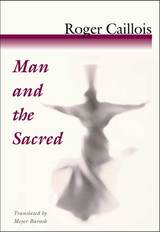
Drawing on a diverse array of ethnographic contexts, including the sexual rituals of the Ba-Thong of South Africa and evidence drawn from aboriginal Australian, Eskimo, and traditional Chinese social systems, Caillois analyzes the role of the forbidden in the social cohesion of the group. He examines the character of the sacred in the light of specific instances of taboos and transgressions, exploring wide differences in attitudes toward diet and sex and extreme behaviors associated with the sacred, such as rapture and paroxysm. He also discusses the festival--an exuberant explosion following a period of strict repression--and compares its functions with those of modern war.
A classic study of one of the most fundamental aspects of human social and spiritual life, Man and the Sacred--presented here in Meyer Barash's superb English translation--is a companion volume to Caillois's Man, Play and Games.
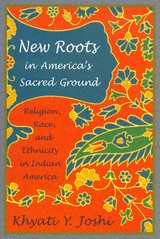
In this compelling look at second-generation Indian Americans, Khyati Y. Joshi draws on case studies and interviews with forty-one second-generation Indian Americans, analyzing their experiences involving religion, race, and ethnicity from elementary school to adulthood. As she maps the crossroads they encounter as they navigate between their homes and the wider American milieu, Joshi shows how their identities have developed differently from their parents’ and their non-Indian peers’ and how religion often exerted a dramatic effect.
The experiences of Joshi’s research participants reveal how race and religion interact, intersect, and affect each other in a society where Christianity and whiteness are the norm. Joshi shows how religion is racialized for Indian Americans and offers important insights in the wake of 9/11 and the backlash against Americans who look Middle Eastern and South Asian.
Through her candid insights into the internal conflicts contemporary Indian Americans face and the religious and racial discrimination they encounter, Joshi provides a timely window into the ways that race, religion, and ethnicity interact in day-to-day life.
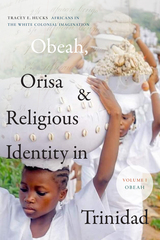
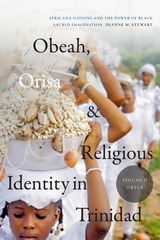
Why does a denomination prohibiting women clergy support parishes run by women? Why does a denomination opt to ordain women when there are few women seeking to join that clergy? And why have some denominations ordained women so much earlier than others? In a revealing examination of the complex relationship among religion, social forces, and organizational structure, Ordaining Women draws examples and data from over 100 Christian denominations to explore the meaning of institutional rules about women's ordination.
Combining historical and sociological perspectives, Mark Chaves deftly shows that formal institutional rules about ordination often diverge from the actual roles of women and are best understood as symbolic gestures in favor of--or in opposition to--gender equality. Ordaining Women concludes that external pressures from the women's movement and ecumenical pressure expressed through interdenominational organizations such as the National Council of Churches influence ordination practices. At the same time, internal factors such as having a source of religious authority that is considered superior to modern principles of equal rights also explain why some denominations ordain women much earlier than others.
Surprisingly, "the Bible forbids it" does not account for policies even among fundamentalists and other biblical inerrantists. Chaves' historical and comparative approach offers a revealing analysis of how the internal denominational debates have changed over time, becoming more frequent, more politicized, and more contentious. The skillful delineation of forces affecting debates and policies about women's ordination makes this book an important contribution to our understanding of religious organizations and of gender equality.
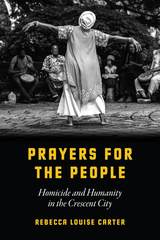
Inspired by ministers and guided by grieving mothers who hold birthday parties for their deceased sons, Prayers for the People traces the emergence of a powerful new African American religious ideal at the intersection of urban life, death, and social and spiritual change. Carter frames this sensitive ethnography within the complex history of structural violence in America—from the legacies of slavery to free but unequal citizenship, from mass incarceration and overpolicing to social abandonment and the unequal distribution of goods and services. And yet Carter offers a vision of restorative kinship by which communities of faith work against the denial of Black personhood as well as the violent severing of social and familial bonds. A timely directive for human relations during a contentious time in America’s history, Prayers for the People is also a hopeful vision of what an inclusive, nonviolent, and just urban society could be.
In The Protestant Ethic Revisited, pioneering sociologist Philip Gorski revisits the question raised by Max Weber in The Protestant Ethic and the Spirit of Capitalism about how the Christian West was reshaped by world-changing energies of the Calvinist movement. Gorski not only considers the perennial debate about religion and capitalism, but he also devotes particular attention to the influence of Calvinism on the political development of the West.
The Protestant Ethic Revisited is a masterful new collection of Gorski's essays on religion and comparative historical sociology. Reflecting the aim of much of Gorski's work, this anthology shows how nationalism, secularism, politics, and religion in public life are either older—or less stable—than previously thought.
During the 1980s, religious traditions around the world, from Islamic fundamentalism to Catholic liberation theology, began making their way, often forcefully, out of the private sphere and into public life, causing the "deprivatization" of religion in contemporary life. No longer content merely to administer pastoral care to individual souls, religious institutions are challenging dominant political and social forces, raising questions about the claims of entities such as nations and markets to be "value neutral", and straining the traditional connections of private and public morality.
Casanova looks at five cases from two religious traditions (Catholicism and Protestantism) in four countries (Spain, Poland, Brazil, and the United States). These cases challenge postwar—and indeed post-Enlightenment—assumptions about the role of modernity and secularization in religious movements throughout the world.
This book expands our understanding of the increasingly significant role religion plays in the ongoing construction of the modern world.
For most of the last twenty years, sociologists have studied the “decline” of religion in the modern world—a decline they saw as a defining feature of modernity, which promotes materialism over spirituality. The revival and political strength of varying religious traditions around the world, however, has forced sociologists to reconsider.
This paradox has led Hervieu-Léger to undertake a sociological redefinition and reexamination of religion. For religion to endure in the modern world, she finds, it must have deep roots in traditions and times in which it was not defined as irrelevant. This reasoning leads her to develop the concept of a “chain of memory”—a process by which individual believers become members of a community that links past, present, and future members. Thus, like cultural tradition, religion may be understood as a shared understanding with a collective memory that enables it to draw upon the deep well of its past for nourishment in the increasingly secular present.
Hervieu-Legér also argues that the modern secular societies of the West have not, as is commonly assumed, outgrown or found secular substitutes for religious traditions; nor are they more “rational” than past societies. Rather, modern societies have become “amnesiacs,” no longer able to maintain the chain of memory that binds them to their religious pasts. Ironically, however, even as the modern world is destroying and losing touch with its traditional religious bases, it is also creating the need for a spiritual life and is thus opening up a space that only religion can fill.

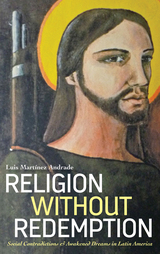
Martínez Andrade focuses on the central role of religion in the region and how it influences people’s interaction with changes in modern economics. Capitalism in Latin America, Martínez Andrade argues, has taken on religious characteristics, with places of worship—shopping malls and department stores—as well as its own prophets. This form of cultural religion is often contradictory in surprising ways: not only does it legitimate oppression, it can also be a powerful source of rebellion, unveiling a subversive side to the status quo. Religion Without Redemption advances the ideas of liberation theory, and challenges the provincialism to which many Latin American thinkers are usually consigned.
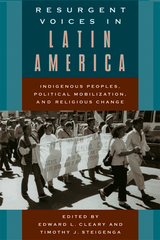
After more than 500 years of marginalization, Latin America’s forty million Indians have recently made major strides in gaining political recognition and civil rights. In this book, social scientists explore the important role of religion in indigenous activism, showing the ways that religion has strengthened indigenous identity and contributed to the struggle for indigenous rights in the region.
Drawing on case studies from Bolivia, Peru, Guatemala, Ecuador, Paraguay, and Mexico, the contributors explore four key questions. How have traditional religions interacted with Christianity to produce new practices and beliefs? What resources, motivations, and ideological legitimacies do religious institutions provide for indigenous social movements? How effective are these movements in achieving their goals? Finally, as new religious groups continue to compete for adherents in the region, how will individuals’ religious choices affect political outcomes?
Resurgent Voices in Latin America offers new insight into the dynamics of indigenous social movements and into the complex and changing world of Latin American religions. The essays show that religious beliefs, practices, and institutions have both affected and been affected by political activism.
The Reader is organized around four central concerns. It seeks to place modernity in theoretical and historical perspective, drawing from major figures in social science, historical and contemporary, from Aristotle and Rousseau through Durkheim and Weber to Habermas and Mary Douglas. It takes the United States to be in some respects the type-case of modernity and in others the most atypical of modern societies, analyzing its common faith in individual freedom and democratic self-government, and its persistent paradoxes of inequality, exclusion, and empire. The Reader is also concerned to test the axiomatic modern assumption that rational cognition and moral evaluation, fact and value, are absolutely divided, arguing instead that they overlap and interact much more than conventional wisdom in the university today usually admits. Finally, it criticizes modernity’s affirmation that faith and knowledge stand even more utterly at odds, arguing instead that their overlap and interaction, obvious in every premodern society, animate the modern world as well.
Through such critical and constructive inquiry this Reader probes many of our deepest social and cultural quandaries, quandaries that put modernity itself, with all its immense achievements, at mortal risk. Through the practical self-understanding such inquiry spurs, Bellah shows how we may share responsibility for the world we have made and seek to heal it.
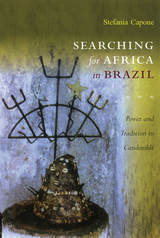
Challenging the usual interpretations of Afro-Brazilian religions as fixed entities, completely independent of one another, Capone reveals these practices as parts of a unique religious continuum. She does so through an analysis of ritual variations as well as discursive practices. To illuminate the continuum of Afro-Brazilian religious practice and the tensions between exegetic discourses and ritual practices, Capone focuses on the figure of Exu, the sacred African trickster who allows communication between gods and men. Following Exu and his avatars, she discloses the centrality of notions of prestige and power—mystical and religious—in Afro-Brazilian religions. To explain how religious identity is constantly negotiated among social actors, Capone emphasizes the agency of practitioners and their political agendas in the “return to roots,” or re-Africanization, movement, an attempt to recover the original purity of a mythical and legitimizing Africa.

“Lively in style and backed by solid, unobtrusive scholarship…In her call for responsibility in borrowing, Liz Bucar singles out for criticism forms of exploitation close to her own identity as privileged and religiously unaffiliated.” —Jonathan Benthall, Times Literary Supplement
“So finely written, so intelligent and fair, and laced with such surprising discoveries that it deserves a reader’s full attention…As the act of walking a religious pilgrimage does invite greater self-awareness…Stealing My Religion is now an essential part of that worthy endeavor.” —Kurt Caswell, Los Angeles Review of Books
“With interpretive subtlety and ethical vision, Liz Bucar explores the moral risk of intercultural theft. Stealing My Religion is a powerful intervention by a leading scholar of religion into the illiberal results of everyday religious exploitation. Highly recommended." —Kathryn Lofton, author of Consuming Religion
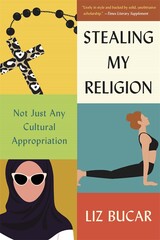
Liz Bucar unpacks the ethical dilemmas of a messy form of cultural appropriation: the borrowing of religious doctrines, rituals, and dress for political, economic, and therapeutic reasons. Does borrowing from another’s religion harm believers? Who can consent to such borrowings? Bucar sees religion as an especially vexing arena for appropriation debates because faiths overlap and imitate each other and because diversity within religious groups scrambles our sense of who is an insider and who is not. Indeed, if we are to understand why some appropriations are insulting and others benign, we have to ask difficult philosophical questions about what religions really are.
Stealing My Religion guides us through three revealing case studies—the hijab as a feminist signal of Muslim allyship, a study abroad “pilgrimage” on the Camino de Santiago, and the commodification of yoga in the West. We see why the Vatican can’t grant Rihanna permission to dress up as the pope, yet it’s still okay to roll out our yoga mats. Reflecting on her own missteps, Bucar comes to a surprising conclusion: the way to avoid religious appropriation isn’t to borrow less but to borrow more—to become deeply invested in learning the roots and diverse meanings of our enthusiasms.
The academics and activists who write this rich volume, edited by Rebecca Alpert, argue passionately on topics that concern all of us. Quoting from the Bible, the Torah, the Qur'an, the teachings of Buddha, as well as Native American folklore, they make the voices of the religious left heard -- teaching lessons of peace and liberation.
As this invaluable sourcebook shows, the religious left is committed to issues of human rights and dignity. Answering questions of identity and ideology, the essays included here stem from the "culture wars" that have divided orthodox and liberal believers. Responding to the needs of and raised by marginalized social groups, the writers discuss economic issues and religious politics as they champion equal rights, and promote the teaching of progressive vision.
Containing insightful perspectives of adherents to many faiths, Voices of the Religious Left makes it clear that there is a group dedicated to instilling the values of justice and freedom. They are far from silent.
All of the essays in this collection "...represent the power of the written word as a vehicle for advocacy and social change....It is my hope that the readers of these essays will themselves feel compelled to think more about the importance of taking a stand on issues from religious perspectives, and to act on something that compels them." --Rabbi Rebecca Alpert
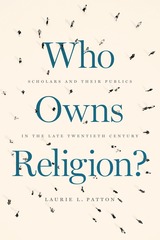
Taking the reader through several compelling case studies, Patton identifies two trends of the ’80s and ’90s that fueled that rise: the growth of multicultural identity politics, which enabled a form of volatile public debate she terms “eruptive public space,” and the advent of the internet, which offered new ways for religious groups to read scholarship and respond publicly. These controversies, she shows, were also fundamentally about something new: the very rights of secular, Western scholarship to interpret religions at all.
Patton’s book holds out hope that scholars can find a space for their work between the university and the communities they study. Scholars of religion, she argues, have multiple masters and must move between them while writing histories and speaking about realities that not everyone may be interested in hearing.
READERS
Browse our collection.
PUBLISHERS
See BiblioVault's publisher services.
STUDENT SERVICES
Files for college accessibility offices.
RECENTLY PUBLISHED




UChicago Accessibility Resources
home | accessibility | search | about | contact us
BiblioVault ® 2001 - 2024
The University of Chicago Press