
 A SCHOLARLY BOOK REPOSITORY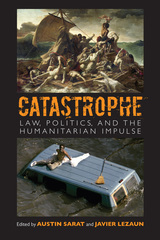
At a time when societies are directing an unprecedented level of resources and ingenuity to anticipating and mitigating catastrophic events, Catastrophe: Law, Politics, and the Humanitarian Impulse examines the tests that catastrophe poses to politics and humanitarianism as well as to the law. It explores legal, political, and humanitarian responses during times when the sudden, discontinuous, and disastrous event has become, perhaps paradoxically, a structural component of our political imagination. It asks whether law, politics, and humanitarianism live up to the tests posed by disaster, and the role all of them play in creating a more resilient world.
Taken together the essays in this book ask us to see through and beyond the myths that surround catastrophe and our responses to it. They ask us to rethink our understanding of catastrophe and to imagine new legal, political, and humanitarian responses.
In addition to the editors, contributors include Thomas Birkland, Michele Landis Dauber, Kim Fortun, Edward Rackley, Peter Redfield, Peter H. Schuck, and Susan Sterett.
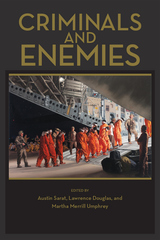
The editors' introduction situates criminals and enemies in a theoretical context, focusing on the work of Thomas Hobbes and Carl Schmitt, while other essays consider topics ranging from Germany's denazification project to South Africa's pre- and post-apartheid legal regime to the complicating factors introduced by the war on terror. In addition to the editors, the contributors include Stephen Clingman, Jennifer Daskal, Sara Kendall, Devin Pendas, and Annette Weinke.
The contributors are Elizabeth Clark, Lauren Berlant, Dorothy Roberts, Georg Lipsitz, and Kenneth Karst.
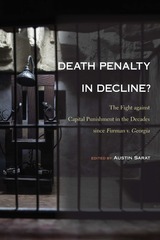
At a time when the United States is undertaking an unprecedented national reconsideration of the death penalty, Death Penalty in Decline? seeks to evaluate how abolitionists might succeed today.
Contributors: John Bessler, Corinna Barrett Lain, James R. Martel, Linda Ross Meyer, Carol S. Steiker, Jordan M. Steiker, and the editor
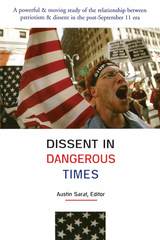
While dissent has played a central role in our national history and in the American cultural imagination, it is usually dangerous to those who practice it, and always unpalatable to its targets. War does not encourage the tolerance of opposition at home any more than it does on the front: if the War on Terror is to be a permanent war, then the consequences for American political freedoms cannot be overestimated.
"Dissent in Dangerous Times examines the nature of political repression in liberal societies, and the political and legal implications of living in an environment of fear. This profound, incisive, at times even moving volume calls upon readers to think about, and beyond, September 11, reminding us of both the fragility and enduring power of freedom."
--Nadine Strossen, President, American Civil Liberties Union, and Professor of Law, New York Law School.
Contributors to this volume
Lauren Berlant
Wendy Brown
David Cole
Hugh Gusterson
Nancy L. Rosenblum
Austin Sarat
For law and legal theory the end of the twentieth century is a time of contradiction; while the newly emerging politics of Eastern Europe seek to establish a new rule of law, voices in this country proclaim the "death of law." For the former, law provides hope for stability and fairness. For the latter, the fundamental values that provide a grounding for legality seem no longer secure or satisfying. The Fate of Law is a collection of five original essays, each of which discusses the problems and prospects of law in the late twentieth century. The essays pay particular attention to the impact of broad intellectual and political movements, especially feminism and postmodernism, on law and legal theory.
The Fate of Law investigates what happens under the critical scrutiny of those movements and in an era of growing skepticism about law's central claim to objectivity, neutrality, and reason. It describes the struggles that ensue and the responses that are made. Each of the essays that comprise this books is written in its own style and voice; each makes it own judgments and assessments.
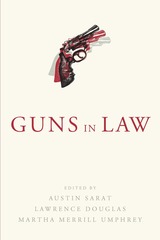
The contributors include the editors and Carl T. Bogus, Jennifer Carlson, Saul Cornell, Darrell A.H. Miller, Laura Beth Nielsen, and Katherine Shaw.
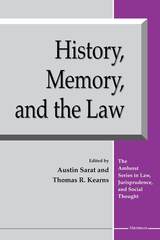
Law looks to the past as it speaks to present needs. In the production of judicial opinions--supposedly definitive statements of what the law is--judges reconstruct law's past, tracing out lines of legal precedent that arguably "compel" their decisions. These essays consider how law treats history, how history appears in legal decisions, and how the authority of history is used to authorize legal decisions.
Furthermore, law plays a role in the construction of memory. The writers here ask how law remembers and records the past as well as how it helps us to remember our past. Law in the modern era is one of the most important of our society's technologies for preserving memory. In helping to construct our memory in certain ways law participates in the writing of our collective history. It plays a crucial role in knitting together our past, present, and future.
The essays in this volume present grounded examinations of particular problems, places, and practices and address the ways in which memory works in and through law, the sites of remembrance that law provides, the battles against forgetting that are fought in and around those sites, and the resultant role law plays in constructing history. The writers also inquire about the way history is mobilized in legal decision making, the rhetorical techniques for marshalling and for overcoming precedent, and the different histories that are written in and through the legal process.
The contributors are Joan Dayan, Soshana Felman, Dominic La Capra, Reva Siegel, Brook Thomas, and G. Edward White.
Austin Sarat is William Nelson Cromwell Professor of Jurisprudence and Political Science and Professor of Law, Jurisprudence, and Social Thought, Amherst College. He is past President of the Law and Society Association and current President of the Association for the Study of Law, Culture, and the Humanities. Thomas R. Kearns is William H. Hastie Professor of Philosophy and Professor of Law, Jurisprudence, and Social Thought, Amherst College.
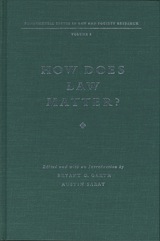
These essays show how law is relevant in both an "instrumental" and a "constitutive" sense, as a tool to accomplish particular purposes and as an important force in shaping the everyday worlds in which we live. Essays examine these issues by focusing on legal consciousness, the body, discrimination, and colonialism as well as on more traditional legal concerns such as juries and criminal justice.
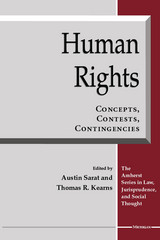
Austin Sarat is William Nelson Cromwell Professor of Jurisprudence and Political Science, Amherst College. Thomas R. Kearns is William H. Hastie Professor of Philosophy and Professor of Law, Jurisprudence, and Social Thought, Amherst College.
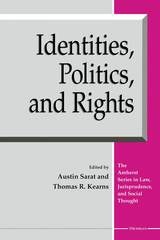
Recognizing that political disputes throughout the world have increasingly been cast as arguments about rights, the essays in this volume examine the varied roles that rights play in political movements and contests. They argue that rights talk is used by many different groups primarily because of its fluidity. Certainly rights can empower individuals and protect them from their societies, but they also constrain them in other areas. Frequently, empowerment for one group means disabling rights for another group. Moreover, focusing on rights can both liberate and limit the imagination of the possible. By alerting us to this paradox of rights--empowerment and limitation--Identities, Politics, and Rights illuminates ongoing challenges to rights and reminds us that rights can both energize political engagement and provide a resource for defenders of the status quo.
Contributors are Richard Abel, Bruce Ackerman, Wendy Brown, John Comaroff, Drucilla Cornell, Jane Gaines, Thomas R. Kearns, Elizabeth Kiss, Kirstie McClure, Sally Merry, Martha Minow, Austin Sarat, and Steven Shiffrin.
Austin Sarat is William Nelson Cromwell Professor of Jurisprudence and Political Science, Amherst College. Thomas R. Kearns is William H. Hastie Professor of Philosophy, Amherst College.
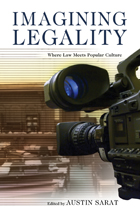
Imagining Legality argues that images of law suggested by television and film are as numerous as they are various, and that they give rise to a potent and pervasive imaginative life of the law. The media’s projections of the legal system remind us not only of the way law lives in our imagination but also of the contingencies of our own legal and social arrangements.
Contributors to Imagining Legality are less interested in the accuracy of the portrayals of law in film and television than in exploring the conditions of law’s representation, circulation, and consumption in those media. In the same way that legal scholars have taken on the disciplinary perspectives of history, economics, sociology, anthropology, and psychology in relation to the law, these writers bring historical, sociological, and cultural analysis, as well as legal theory, to aid in the understanding of law and popular culture.
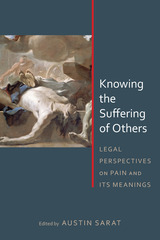
From fetal imaging to end-of-life decisions, torts to international human rights, domestic violence to torture, and the law of war to victim impact statements, the law is awash in epistemological and ethical problems associated with knowing and imagining suffering. In each of these domains we might ask: How well do legal actors perceive and understand suffering in such varied domains of legal life? What problems of representation and interpretation bedevil efforts to grasp the suffering of others? What historical, political, literary, cultural, and/or theological resources can legal actors and citizens draw on to understand the suffering of others?
In Knowing the Suffering of Others, Austin Sarat presents legal scholarship that explores these questions and puts the problem of suffering at the center of thinking about law. The contributors to this volume do not regard pain and suffering as objective facts of a universe remote from law; rather they examine how both are discursively constructed in and by law. They examine how pain and suffering help construct and give meaning to the law as we know it. The authors attend to the various ways suffering appears in law as well as the different forms of suffering that require the law’s attention.
Throughout this book law is regarded as a domain in which the meanings of pain and suffering are contested, and constituted, as well as an instrument for inflicting suffering or for providing or refusing its relief. It challenges scholars, lawyers, students, and policymakers to ask how various legal actors and audiences understand the suffering of others.
Contributors
Montré D. Carodine / Cathy Caruth / Alan L. Durham / Bryan K.Fair / Steven H. Hobbs / Gregory C. Keating
/ Linda Ross Meyer / Meredith M. Render / Jeannie Suk / John Fabian Witt
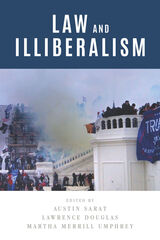
Does the law shield citizens from authoritarian regimes? Are the core beliefs of classical liberalism—namely the rights of all individuals and constraints on state power—still protected by law? Liberalism and its expansion of rights could not exist without the legal system, and unsurprisingly, many scholars have explored the relationship between law and liberalism. However, the study of law and illiberalism is a relatively recent undertaking, a project that takes on urgency in light of the rise of authoritarian powers, among them Donald Trump’s administration, Viktor Orban’s Hungary, Recep Erdogan’s Turkey, and Jair Bolsanoro’s Brazil.
In this volume, six penetrating essays explore the dynamics of the law and illiberal quests for power, examining the anti-liberalism of neoliberalism; the weaponization of “free speech”; the role of the administrative state in current crises of liberal democracy; the broad and unstoppable assault on facts, truth, and reality; and the rise of conspiracism leading up to the Capitol insurrection. In addition to the editors, contributors include Sharon Krause, Elizabeth Anker, Jeremy Kessler, Lee McIntyre, and Nancy Rosenblum.
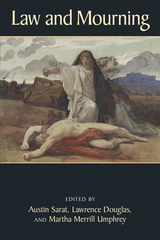
In addition to the editors, the contributors include Andrea Brady, Catherine Kellogg, Shai Lavi, Ray Madoff, Ann Pelligrini, and Mark Sanders.
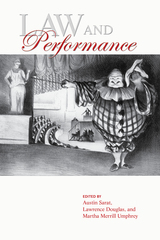
In considering law through the lens of performance studies, the contributors in this volume emphasize the embodied, affective, and reiterative qualities that move law off the printed page and into the thick world of lived experience. They consider the blurring of lines between performance and the enactment of law, the transformative exchanges between the law and its many and varied stagings, and the impact or resonance of performativity in situations where innocence and guilt may be determined. In addition to the editors, the contributors include Joshua Chambers-Letson, Catherine M. Cole, Ryan Hartigan, Lara D. Nielsen, Julie Stone Peters, Ann Pellegrini, and Karen Shimakawa.
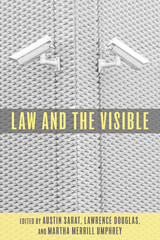
Individual essays discuss the culpability of those who record violence, the history of racialized violence as it streams through police bodycams, the idea of digital images as objective or neutral, the logics of surveillance and transparency, and a defense of anonymity in the digital age.
Contributors include Benjamin J. Goold, Torin Monahan, Kelli Moore, Eden Osucha, Jennifer Peterson, and Carrie A. Rentschler.
"The subject of law in everyday life is timely in theory and in practice. The essays collected here are stimulating for the very different ways in which they reconfigure the meanings of 'the law' as cultural practice, and 'the everyday' as a cultural domain in which the state expresses a range of interests and engagements. Readers looking for an introduction to this topic will come away from the book with a clear sense of the varied voices and modes of inquiry now involved in sociolegal studies, and what distinguishes them. More experienced readers will appreciate the book's meticulous reconsideration of the instrumentalities, agencies, and constructedness of law." --Carol Greenhouse, Indiana University
Contributors include David Engel, Hendrik Hartog, Thomas R. Kearns, David Kennedy, Catharine MacKinnon, George Marcus, Austin Sarat, and Patricia Williams.
Austin Sarat is William Nelson Cromwell Professor of Jurisprudence and Political Science, and Chair of the Department of Law, Jurisprudence, and Social Thought, Amherst College. Thomas R. Kearns is William H. Hastie Professor of Philosophy and Professor of Law, Jurisprudence, and Social Thought, Amherst College.
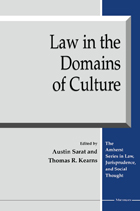
Law and legal studies are relative latecomers to cultural studies. As scholars have come to see law as not something apart from culture and society, they have begun to explore the connections between law and culture. Focusing on the production, interpretation, consumption and circulation of legal meaning, these scholars suggest that law is inseparable from the interests, goals and understandings that deeply shape or compromise social life. Against this background, Law in the Domains of Culture brings the insights and approaches of cultural studies to law and tries to secure for law a place in cultural analysis. This book provides a sampling of significant theoretical issues in the cultural analysis of law and illustrates some of those issues in provocative examples of the genre. Law in the Domains of Culture is designed to encourage the still tentative efforts to forge a new interdisciplinary synthesis, cultural studies of law.
The contributors are Carol Clover, Rosemary Coombe, Marjorie Garber, Thomas R. Kearns, William Miller, Andrew Ross, Austin Sarat, and Martha Woodmansee.
Austin Sarat is William Nelson Cromwell Professor of Jurisprudence and Political Science, Amherst College. Thomas R. Kearns is William H. Hastie Professor of Philosophy, Amherst College.
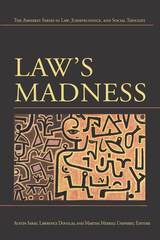
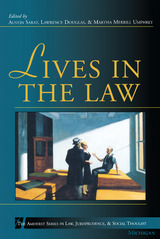
The distinguished contributors to Law's Madness propose a fascinating interdisciplinary approach to the instability and mutual permeability of law and madness. Their essays examine a variety of discursive forms—from the literary to the historical to the psychoanalytic—in which law is driven more by narrative than by reason. Their studies delineate the ways in which the law takes its definition in part from that which it excludes, suppresses, or excises from itself, illuminating the drive to enforce barriers between non-reason and legality, while simultaneously shedding new light on the constitutive force of the irrational in legal doctrine.
Law's Madness suggests that the tense and paradoxical relationship between law and madness is precisely what erects and sustains law. This provocative collection asks what must be forgotten in order to uphold the rule of law.
Austin Sarat is William Nelson Cromwell Professor of Jurisprudence and Political Science at Amherst College. Lawrence Douglas is Associate Professor of Law, Jurisprudence, and Social Thought at Amherst College. Martha Merrill Umphrey is Associate Professor of Law, Jurisprudence, and Social Thought at Amherst College.
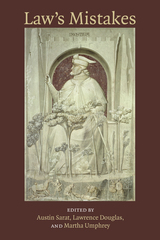
The essays in Law's Mistakes explore the things that law recognizes as errors and the way it responds to them. They identify the jurisprudential and political perspectives that underlie different understandings of what is or is not a legal mistake, and examine the fraught, contested, and evolving relationship between law and error. And they offer templates for thinking about what mistakes can tell us about the aspirations and limits of law, and for understanding how our imagining of law is enabled and shaped by its juxtaposition to a condition labeled mistake.
In addition to the volume editors, contributors include Paul Schiff Berman, Sonali Chakravarti, Jody L. Medeira, Stewart Motha, Kunal Parker, and Jordan Steiker.
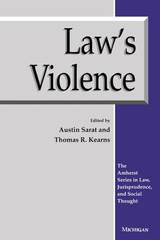
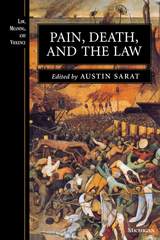
The relationship between law and violence is made familiar to us in vivid pictures of police beating suspects, the large and growing prison population, and the tenacious attachment to capital punishment in the United States. Yet the link between law and violence and the ways that law manages to impose pain and death while remaining aloof and unstained are an unexplored mystery. Each essay in this volume considers the question of how violence done by and in the name of the law differs from illegal or extralegal violence--or, indeed, if they differ at all.
Each author draws on a distinctive disciplinary tradition-- literature, history, anthropology, philosophy, political science, or law. Yet each reminds us that law, constituted in response to the metaphorical violence of the state of nature, is itself a doer of literal violence.
Austin Sarat is William Nelson Cromwell Professor of Jurisprudence and Political Science and Chair of the Program in Law, Jurisprudence, and Social Thought, Amherst College. Thomas R. Kearns is William H. Hastie Professor of Philosophy, Amherst College.
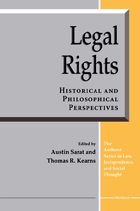
Legal Rights: Historical and Philosophical Perspectives shows that the meaning and extent of rights has been dramatically expanded in this century, though along with the widespread and flourishing popularity of rights, voices of criticism have increasingly been raised. The authors take up the question of the foundation of rights and explore the postmodern challenges to efforts to ground rights outside of history and language. Drawing rich historical analysis and careful philosophical inquiry into productive dialogue, this book explores the many facets of rights at the end of the twentieth century. In these essays, potentially abstract debates come alive as they are related to the struggles of real people attempting to cope with, and improve, their living conditions. The significance of legal rights is measured not just in terms of philosophical categories or as a collection of histories, but as they are experienced in the lives of men and women seeking to come to terms with rights in contemporary life.
Contributors are Hadley Arkes, William E. Cain, Thomas Haskell, Morton J. Horwitz, Annabel Patterson, Michael J. Perry, Pierre Schlag, and Jeremy Waldron.
Austin Sarat is William Nelson Cromwell Professor of Jurisprudence and Political Science, Amherst College. Thomas R. Kearns is William H. Hastie Professor of Philosophy, Amherst College.
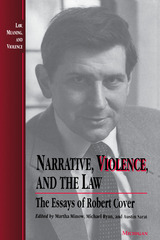
"Robert Cover drew his sources for the authority of law--for its violence, but also for its paideic potential--from the structuring stories that spark our communal imaginations. Literally until the day of his untimely death, his irreplaceably restless spirit was binding itself with the pages of the Midrash, of The Brothers Karamazov, of Billy Budd, Sailor. It is for us now to work also with these--Bob Cover's stories."--Richard Weisberg, Benjamin N. Cardozo Law School, Yeshiva University
"The writings of Robert Cover were usually provocative, sometimes exasperating, but always relevant. In his last years, he concentrated on Jewish sources as well as mystical and Messianic thought. This collection of his articles is a thesaurus of some of his finest writings."--Robert F. Drinan, S.J., Georgetown University Law Center
The late Robert Cover was Professor of Law, Yale Law School. Martha Minow is Professor of Law, Harvard Law School. Michael Ryan is Professor of English, Northeastern University. Austin Sarat is William Nelson Cromwell Professor of Jurisprudence and Political Science and Chair of the Program in Law, Jurisprudence, and Social Thought, Amherst College.
This volume will be an important read for policy makers and legal practitioners and a valuable text for courses in law, the social sciences, and the humanities.
Austin Sarat is William Nelson Cromwell Professor of Jurisprudence and Political Science, Amherst College.
This book helps us see how the law defines territory and attempts to keep things in place; it shows how law can be, and is, used to create particular kinds of places -- differentiating, for example, individual property from public land. And it looks at place as a metaphor that organizes the way we see the world. This important new book urges us to ask about the usefulness of metaphors of place in the design of legal regulation.
From the Gospel of Matthew to numerous US Supreme Court justices, many literary and legal sources have observed that how a society metes out punishment reveals core truths about its character. The Punitive Imagination is a collection of essays that engages and contributes to debates about the purposes and meanings of punishment in the United States.
The Punitive Imagination examines some of the critical assumptions that frame America's approach to punishment. It explores questions such as:
· What is the place of concern for human dignity in our prevailing ideologies of punishment?
· Can we justly punish the socially disadvantaged?
· What assumptions about persons, social institutions, and the ordering of social space provide the basis for American punitiveness?
· Who, if anyone, can be held responsible for excessively punitive criminal sentences?
· How does punishment depend on prevailing views of free will, responsibility, desert, blameworthiness?
· Where/how are those views subject to challenge in our punitive practices?
As Sarat posits in his introduction, the way a society punishes demonstrates its commitment to standards of judgment and justice, its distinctive views of blame and responsibility, its understandings of mercy and forgiveness, and its particular ways of responding to evil. He goes on to discuss the history of punishment in the United States and what it reveals about assumptions made about persons that “undergird” the American system of punishment.
The five additional contributors to The Punitive Imagination seek to illuminate what American practices of punishment tell us about who we are as a nation. Synthesizing cultural, sociological, philosophical, and legal perspectives, they offer a distinctive take on the meaning of punishment in America.
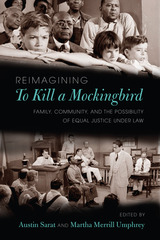
The readings in this volume peel back the film's visual representation of the many-layered social world of Maycomb, Alabama, offering sometimes counterintuitive insights through the prism of a number of provocative contemporary theoretical and interpretive questions. What, they ask, is the relationship between the subversion of social norms and the doing of justice or injustice? Through what narrative and visual devices are some social hierarchies destabilized while others remain hegemonic? How should we understand the sacrifices characters make in the name of justice, and comprehend their failures in achieving it?
Asking such questions casts light on the film's eccentricities and internal contradictions and suggests the possibility of new interpretations of a culturally iconic text. The book examines the context that gave meaning to the film's representation of race and how debates about family, community, and race are played out and reframed in law.
Contributors include Colin Dayan, Thomas L. Dumm, Susan Sage Heinzelman, Linda Ross Meyer, Naomi Mezey, Imani Perry, and Ravit Reichman.
The essays in The Rhetoric of Law reflect the diverse influences of literary theory, feminism, and interpretive social science. Yet all call into question the rigid separation of rhetoric and justice that has been characteristic of the philosophical inquiry as far back as Plato. As a result, they open the way for a new understanding of law--an understanding that takes language to be neither esoteric nor frivolous and that views rhetoric as essential to the pursuit of justice. This volume provides a bracing reminder of the possibilities and problems of law, of its capacity to engage the best of human character, and of its vulnerability to cynical manipulation. Contributors are Lawrence Douglas, Robert A. Ferguson, Peter Goodrich, Barbara Johnson, Thomas R. Kearns, Austin Sarat, Adam Thurschwell, James Boyd White, and Lucie White.
Austin Sarat is William Nelson Cromwell Professor of Jurisprudence and Political Science, Amherst College. Thomas R. Kearns is William H. Hastie Professor of Philosophy, Amherst College.
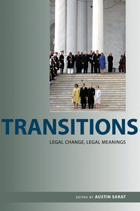
Transitions: Legal Change, Legal Meanings illustrates the various intersections, crises, and shifts that continually occur within the law, and how these moments of change interact with and comment on contemporary society.
Akhil Reed Amar / William L. Andreen /
Jack M. Beermann / Heather Elliott / Joshua
Alexander Geltzer / David Gray / Paul
Horwitz / Daniel H. Joyner / Nina
Mendelson / Meredith Render / Austin
Sarat / Ruti Teitel / Lindsey Ohlsson Worth
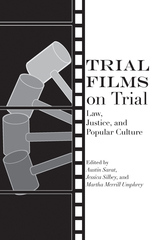
Historically, the emergence of the trial film genre coincided with the development of motion pictures. In fact, one of the very first feature-length films, Falsely Accused!, released in 1908, was a courtroom drama. Since then, this niche genre has produced such critically acclaimed films as Twelve Angry Men, To Kill a Mockingbird, and Anatomy of a Murder. The popularity and success of these films can be attributed to the fundamental similarities of filmic narratives and trial proceedings. Both seek to construct a “reality” through storytelling and representation and in so doing persuade the audience or jury to believe what they see.
Trial Films on Trial: Law, Justice, and Popular Culture is the first book to focus exclusively on the special significance of trial films for both film and legal studies. The contributors to this volume offer a contemporary approach to the trial film genre. Despite the fact that the medium of film is one of the most pervasive means by which many citizens receive come to know the justice system, these trial films are rarely analyzed and critiqued. The chapters cover a variety of topics, such as how and why film audiences adopt the role of the jury, the narrative and visual conventions employed by directors, and the ways mid-to-late-twentieth-century trial films offered insights into the events of that period.
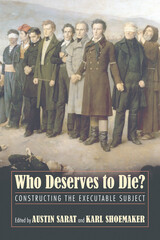
These are more than questions for policy and law. They are one way of getting a handle on how our culture understands what makes life worth preserving and of delving into its complex calculus of punishment and retribution. Who Deserves to Die? brings together a distinguished group of death penalty scholars to assess the forms of legal subjectivity and legal community that are supported and constructed by the doctrines and practices of punishment by death in the United States. They help us understand what we do and who we become when we decide who is fit for execution.
In addition to the editors, contributors include Vanessa Barker, Thomas L. Dumm, Daniel Markel, Linda Meyer, Ruth A. Miller, Ravit Reichman, Susan R. Schmeiser, Mateo Taussig-Rubbo, and Robert Weisberg.
READERS
Browse our collection.
PUBLISHERS
See BiblioVault's publisher services.
STUDENT SERVICES
Files for college accessibility offices.
RECENTLY PUBLISHED




UChicago Accessibility Resources
home | accessibility | search | about | contact us
BiblioVault ® 2001 - 2024
The University of Chicago Press