
 A SCHOLARLY BOOK REPOSITORY

The new chairman of President Reagan's Council of Economic Advisers, Martin Feldstein is also the leading economist in the field of tax analysis. In this important volume he shows how systems of taxation influence the rate and nature of capital formation—a key policy issue in the development of any economy.
The first part of Capital Taxation deals with the overall rate of saving and examines the effects of taxes on both personal and corporate saving as well as on the interaction between the two. The second section describes the effects of tax rules on household portfolios: selection and size of investment and the process of portfolio adjustment. In Part 3, Feldstein turns to corporate investment in plant and equipment and in inventories. Part 4 analyzes the impact of capital taxation in a growing economy. Feldstein's perceptive identification of important economic and policy questions, adroit use of modeling and new data sources, and careful attention to dynamics make this book a powerful addition to the economic literature.
This volume, consisting of papers presented at a conference held at Williamsburg, Va., 2-3 April 1981, is a progress report on the National Bureau of Economic Research project, The Changing Roles of Debt and Equity in Financing U.S. Capital Formation. The National Bureau has undertaken this project—including the conference, the research described in this volume, and the publication of the volume itself—with the support of the American Council of Life Insurance.
This volume contains papers presented at a conference in May 1988 in Washington, D.C., commemorating the fiftieth anniversary of the founding of the Conference on Research in Income and Wealth (CRIW). The call for papers emphasized assessments of broad topics in economic measurement, both conceptual and pragmatic. The organizers desired (and succeeded in obtaining) a mix of papers that, first, illustrate the range of measurement issues that economics as a science must confront and, second, mark major milestones of CRIW accomplishment. The papers concern prices and output (Griliches, Pieper, Triplett) and also the major productive inputs, capital (Hulten) and labor (Hamermesh). Measures of saving, the source of capital accumulation, are covered in one paper (Boskin); measuring productivity, the source of much of the growth in per capita income, is reviewed in another (Jorgenson). The use of economic data in economic policy analysis and in regulation are illustrated in a review of measures of tax burden (Atrostic and Nunns) and in an analysis of the data needed for environmental regulation (Russell and Smith); the adequacy of data for policy analysis is evaluated in a roundtable discussion (chapter 12) involving four distinguished policy analysts with extensive government experience in Washington and Ottawa.
Addressing these questions, the contributors focus chiefly on three themes: the actual use of debt and equity financing by corporations in recent years; the factors that drive the financial markets' pricing of debt and equity securities; and the relationship between corporations' real investment decisions and their financial decisions. While some of the papers are primarily expository, others break new ground. Extending his previous work, Robert Taggart finds a closer relationship between corporate and government debt than has been supposed. Zvi Bodie, Alex Kane, and Robert McDonald conclude in their study that the volatility of interest rates under the Volcker regime has led to a rise in real interest rates because of investors' demand for a greater risk premium. All of the papers present empirical findings in a useful analytical framework.
For its new findings and for its expert overview of issues central to an understanding of the U.S. economy, Financing Corporate Capital Formation should be of both historical and practical interest to students of economics and practitioners in the corporate and financial community.

Americans today often think of thrift as a negative value—a miserly hoarding of resources and a denial of pleasure. Even more telling, many Americans don’t even think of thrift at all anymore. Franklin’s Thrift challenges this state of mind by recovering the rich history of thrift as a quintessentially American virtue.
The contributors to this volume trace how the idea and practice of thrift have been a vital part of the American vision of economic freedom and social abundance. For Benjamin Franklin, who personified and promoted the idea, thrift meant working productively, consuming wisely, saving proportionally, and giving generously. Franklin’s thrift became the cornerstone of a new kind of secular faith in the ordinary person’s capacity to shape his lot and fortune in life. Later chapters document how thrift moved into new domains in the nineteenth and twentieth centuries. It became the animating idea behind social movements to promote children’s school savings, create mutual savings banks and credit unions for working men and women, establish a federal savings bond program, and galvanize the nation to conserve resources during two world wars.
Historians, enthusiasts of Americana or traditional American virtues, and anyone interested in resolving our society’s current financial woes will find much to treasure in this diverse collection, with topics ranging from the inspirational lessons we can learn from the film It’s a Wonderful Life to a history of the roles played by mutual savings banks, credit unions, and thrift stores in America’s national thrift movement. It also includes actual policy recommendations for our present situation.

Inflation, Tax Rules, and Capital Formation brings together fourteen papers that show the importance of the interaction between tax rules and monetary policy. Based on theoretical and empirical research, these papers emphasize the importance of including explicit specifications of the tax system in such study.
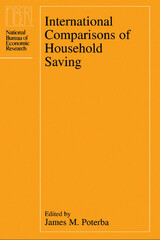
Each of the six chapters examines micro data sets of household saving within a particular country and summarizes statistics on patterns of saving by age, income, and other demographic factors. The authors provide age-earning profiles and analyses of the accumulation of wealth over the lifetime in a clear way that allows quick comparisons between earning, consumption, and saving in the six countries.
Designed as a companion to Public Policies and Household Saving (1994), which addresses saving policies in the G-7 nations, this volume offers detailed descriptions of saving behavior in all G-7 nations except France.

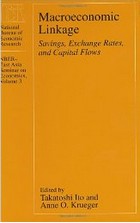
These fourteen papers are organized around four themes: the overall determinants of growth and trading relations in the East Asian region; monetary policies in relation to capital controls and capital accounts; the impact of exchange rate behavior on industrial structure; and the potential for greater regional integration. The contributors examine interactions among exchange rate movements, trade balances, and capital flows; how government monetary policy affects capital flows; the effect of exchange rates on industrial structure, inventories, and prices; and the extent of regional integration in East Asia.
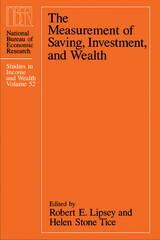
Contributors to this volume investigate ways to improve aggregate and sectoral saving and investment estimates and analyze microdata from recent household wealth surveys. They provide analyses of National Income and Product Account (NIPA) and Flow-of-Funds measures and of saving and survey-based wealth estimates. Conceptual and methodological questions are discussed regarding long-term trends in the U.S. wealth inequality, age-wealth profiles, pensions and wealth distribution, and biases in inferences about life-cycle changes in saving and wealth. Some new assessments are offered for investment in human and nonhuman capital, the government contribution to national wealth, NIPA personal and corporate saving, and banking imputation.
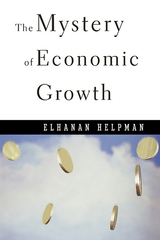
Far more than an intellectual puzzle for pundits, economists, and policymakers, economic growth--its makings and workings--is a subject that affects the well-being of billions of people around the globe. In The Mystery of Economic Growth, Elhanan Helpman discusses the vast research that has revolutionized understanding of this subject in recent years, and summarizes and explains its critical messages in clear, concise, and accessible terms.
The tale of growth economics, as Helpman tells it, is organized around a number of themes: the importance of the accumulation of physical and human capital; the effect of technological factors on the rate of this accumulation; the process of knowledge creation and its influence on productivity; the interdependence of the growth rates of different countries; and, finally, the role of economic and political institutions in encouraging accumulation, innovation, and change.
One of the leading researchers of economic growth, Helpman succinctly reviews, critiques, and integrates current research--on capital accumulation, education, productivity, trade, inequality, geography, and institutions--and clarifies its relevance for global economic inequities. In particular, he points to institutions--including property rights protection, legal systems, customs, and political systems--as the key to the mystery of economic growth. Solving this mystery could lead to policies capable of setting the poorest countries on the path toward sustained growth of per capita income and all that that implies--and Helpman's work is a welcome and necessary step in this direction.

In National Saving and Economic Performance, edited by B. Douglas Bernheim and John B. Shoven, that task is addressed by offering the results of new research, with recommendations for policies aimed to improve saving. Leading experts in diverse fields of economics debate the need for more accurate measurement of official saving data; examine how corporate decisions to retain or distribute earnings affect household-level consumption and saving; and investigate the effects of taxation on saving behavior, correlations between national saving and international investment over time, and the influence of economic growth on saving.
Presenting the most comprehensive and up-to-date research on saving, this volume will benefit both academic and government economists.

Each of the seven chapters focuses on one country and addresses a core set of topics: types of accumulated household savings and debt; tax policies toward capital income; saving in the form of public and private pensions, including Social Security and similar programs; saving programs that receive special tax treatment; and saving through insurance.
This detailed summary of the saving incentives of the G-7 nations will be an invaluable reference for policymakers and academics interested in personal saving behavior.
By addressing some of the most critical policy issues of the day with a minimum of economic jargon, Taxes and Capital Formation makes the results of Bureau research available to a wide audience of policy officials and staff as well as to members of the business community. The volume should also prove useful for courses in public policy, business, and law. In keeping with Bureau tradition, the papers do not contain policy recommendations; instead, they promote a better understanding of how the economy works and the effects of specific policies on particular aspects of the economy.

In these difficult economic times, thrift may seem like a necessity, rather than a route to joy. But in this handbook, the reader learns about the virtue of thrift, and how, in combination with gratitude and generosity, it can lead to deep, lasting contentment.

In today's consumer-driven society, extolling the virtues of thrift might seem like a quaint relic of a bygone era. Americans have embraced the ideas of easy credit, instant gratification, and spending as a tool to combat everything from recessions to the effects of natural disasters and terrorist attacks. In David Blankenhorn's new compendium, Thrift: A Cyclopedia, he reminds readers of a time when thrift was one of America's most cherished cultural values.

The movement brought together a diverse array of social actors with widely divergent agendas—the YMCA, the Boy and Girl Scouts, temperance crusaders, and others seeking to strengthen the moral fiber of urban young men and boys in particular, and to damp down the appeal of radicalism. It also attracted credit union and other progressive activists wanting to empower the working class economically, bankers desiring to broaden their customer base, conservationists and efficiency proponents denouncing "waste," and government leaders, school teachers, and economists who believed that encouraging saving was in the economic interests of both individuals and the nation.
A post–World War II culture that centered on spending and pleasure made the early-twentieth-century thrift messages seem outdated. Nonetheless, echoes of thrift can be found in currently popular ideas of "sustainability," "stewardship," and "simplicity" and in efforts to curtail public and private debt.
READERS
Browse our collection.
PUBLISHERS
See BiblioVault's publisher services.
STUDENT SERVICES
Files for college accessibility offices.
RECENTLY PUBLISHED







UChicago Accessibility Resources
home | accessibility | search | about | contact us
BiblioVault ® 2001 - 2024
The University of Chicago Press