
 A SCHOLARLY BOOK REPOSITORY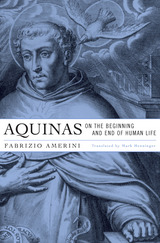
In contemporary discussions of abortion, both sides argue well-worn positions, particularly concerning the question, When does human life begin? Though often invoked by the Catholic Church for support, Thomas Aquinas in fact held that human life begins after conception, not at the moment of union. But his overall thinking on questions of how humans come into being, and cease to be, is more subtle than either side in this polarized debate imagines. Fabrizio Amerini—an internationally-renowned scholar of medieval philosophy—does justice to Aquinas’ views on these controversial issues.
Some pro-life proponents hold that Aquinas’ position is simply due to faulty biological knowledge, and if he knew what we know today about embryology, he would agree that human life begins at conception. Others argue that nothing Aquinas could learn from modern biology would have changed his mind. Amerini follows the twists and turns of Aquinas’ thinking to reach a nuanced and detailed solution in the final chapters that will unsettle familiar assumptions and arguments.
Systematically examining all the pertinent texts and placing each in historical context, Amerini provides an accurate reconstruction of Aquinas’ account of the beginning and end of human life and assesses its bioethical implications for today. This major contribution is available to an English-speaking audience through translation by Mark Henninger, himself a noted scholar of medieval philosophy.

noted, but it has never been examined so thoroughly, nor with such an
eye for the amazing interconnectedness of Indian tribal ceremonies and
practices, as in An Archaeology of the Soul. In this monumental
work, destined to become a classic in its field, Robert Hall traces the
genetic and historical relationships of the tribes of the Midwest and
Plains--including roots that extend back as far as 3,000 years.
Looking beyond regional barriers, An Archaeology of the Soul offers new depths of insight into American Indian ethnography. Hall uncovers the lineage and kinship shared by Native North Americans through the perspectives of history, archaeology, archaeoastronomy, biological anthropology, linguistics, and mythology. The wholeness and panoramic complexity of American Indian belief has never been so fully explored--or more deeply understood.
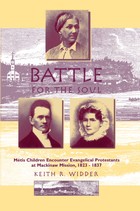
In 1823 William and Amanda Ferry opened a boarding school for Métis children on Mackinac Island, Michigan Territory, setting in motion an intense spiritual battle to win the souls and change the lives of the children, their parents, and all others living at Mackinac. Battle for the Soul demonstrates how a group of enthusiastic missionaries, empowered by an uncompromising religious motivation, served as agents of Americanization. The Ferrys' high hopes crumbled, however, as they watched their work bring about a revival of Catholicism and their students refuse to abandon the fur trade as a way of life. The story of the Mackinaw Mission is that of people who held differing world views negotiating to create a "middle-ground," a society with room for all.
Widder's study is a welcome addition to the literature on American frontier missions. Using Richard White's "middle ground" paradigm, it focuses on the cultural interaction between French, British, American, and various native groups at the Mackinac mission in Michigan during the early 19th century. The author draws on materials from the American Board of Commissioners for Foreign Missions archives, as well as other manuscript sources, to trace not only the missionaries' efforts to Christianize and Americanize the native peoples, but the religious, social, and cultural conflicts between Protestant missionaries and Catholic priests in the region. Much attention has been given to the missionaries to the Indians in other areas of the US, but little to this region.
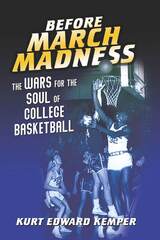
Kurt Edward Kemper tells the dramatic story of the clashes that shook college basketball at mid-century—and how the repercussions continue to influence college sports to the present day. Taking readers inside the competing factions, he details why historically black colleges and regional schools came to embrace commercialization. As he shows, the NCAA's strategy of co-opting its opponents gave each group just enough just enough to play along—while the victory of the big-time athletics model handed the organization the power to seize control of college sports.
An innovative history of an overlooked era, Before March Madness looks at how promises, power, and money laid the groundwork for an American sports institution.

In the struggle against apartheid, one often overlooked group of crusaders was the coterie of black lawyers who overcame the Byzantine system that the government established oftentimes explicitly to block the paths of its black citizens from achieving justice.
Now, in their own voices, we have the narratives of many of those lawyers as recounted in a series of oral interviews. Black Lawyers, White Courts is their story and the anti-apartheid story that has before now gone untold.
Professor Kenneth Broun conducted interviews with twenty-seven black South African lawyers. They were asked to tell about their lives, including their family backgrounds, education, careers, and their visions for the future. In many instances they also discussed their years in prison or exile, or under house arrest. Most told of both education and careers interrupted because of the ongoing struggle.
The story of the professional achievements of black lawyers in South Africa—indeed their very survival—provides an example of the triumph of individuals and, ultimately, of the law. Black Lawyers, White Courts is about South Africa, and about black professionals in that country, but the lessons its protagonists teach extend far beyond circumstances, geography, or race.
The essays "Where Poems Take Place" and "A Shared Humanity" consider the relation between setting or situation and representation. The psychological roots of narrative are considered in "The Primal Storyteller." But the main interest of these essays is how and why narrative is used as a form. The influence of Robinson Jeffers's style of narrative is argued in "Slip, Shift, and Speed Up: The Influence of Robinson Jeffers's Narrative Syntax." In "The Trace of a Story Line" an argument is made that the poets Philip Levine and Charles Wright employ narration or storytelling in their poetry as a mode of meaning. Other essays consider Donald Davie, Philip Larkin, Herbert Lomas, Louis Simpson, Lyn Hejinian, Tess Gallagher, and Ellen Bryant Voigt.
Mark Jarman's poetry has appeared in many publications, including the American Poetry Review and the New Yorker. He has won the Lenore Marshall/Nation Prize of the Academy of American Poets, a Guggenheim fellowship, and multiple grants from the National Endowment for the Arts. He is Professor of English, Vanderbilt University.

The Book of Commentary / Unquiet Garden of the Soul confronts the reader with questions of existential meaning, questions rendered all the more potent by the backdrop of the Coronavirus pandemic: How fragile are we as human beings? How fragile are our societies? What is a “self,” an “I,” a “community”? How are we to orient ourselves? And what, if any, role does commentary play? In a fashion that will be familiar to longtime admirers of Alexander Kluge, the book stretches both back in time to the medieval glossators of Bologna and forward into interstellar space with imagined travel to the moon Europa. Kluge’s characteristic brief, vignette-like prose passages are interspersed with images from his own film work and QR codes, forming a highly engaging, thoroughly contemporary read.
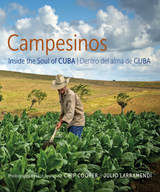
Into the center of this world traveled two photographers to document these extraordinary people. One, Julio Larramendi, was born in Cuba and has spent his whole life there. The other, Chip Cooper, came to visit for the first time from his native Alabama more than a decade ago. Together, Cooper and Larramendi have captured the light, sounds, and spirit of the campesino landscape and the humble and determined people who inhabit it, ways of living that have not changed, in many instances, for a century or more. From green tobacco fields and winding roads to the faces, both stern and smiling, of children and their close-knit families, Cooper and Larramendi have captured in this landmark volume the rhythms and traditions of contemporary rural Cuban life in ways never before documented.
Carry the Rock tells the story of the dramatic ups and downs of a high school football season and reveals a city struggling with its legacy of racial discrimination and the complex issues of contemporary segregation. In the season Jennings masterfully chronicles, Cox finds his ideas sorely tested in his attempts to unify the team, and the result is an account brimming with humor, compassion, frustration, and honesty. What Friday Night Lights did for small-town Texas, Carry the Rock does for the urban South and for any place like Little Rock where sports, race, and community intersect.
—Notes
"No one has written this way about music in a long, long time. Lucid, insightful, with real spiritual, political, intellectual, and emotional grasp of the whole picture. A book about why music matters, and how, and to whom."
—Dave Marsh, author of Louie, Louie and Born to Run: The Bruce Springsteen Story
"This book is urgently needed: a comprehensive look at the various forms of black popular music, both as music and as seen in a larger social context. No one can do this better than Craig Werner."
—Henry Louis Gates, Jr., W.E.B. Du Bois Professor of the Humanities, Harvard University
"[Werner has] mastered the extremely difficult art of writing about music as both an aesthetic and social force that conveys, implies, symbolizes, and represents ideas as well as emotion, but without reducing its complexities and ambiguities to merely didactic categories."
—African American Review
A Change Is Gonna Come is the story of more than four decades of enormously influential black music, from the hopeful, angry refrains of the Freedom movement, to the slick pop of Motown; from the disco inferno to the Million Man March; from Woodstock's "Summer of Love" to the war in Vietnam and the race riots that inspired Marvin Gaye to write "What's Going On."
Originally published in 1998, A Change Is Gonna Come drew the attention of scholars and general readers alike. This new edition, featuring four new and updated chapters, will reintroduce Werner's seminal study of black music to a new generation of readers.
Craig Werner is Professor of Afro-American Studies at the University of Wisconsin, and author of many books, including Playing the Changes: From Afro-Modernism to the Jazz Impulse and Up Around the Bend: An Oral History of Creedence Clearwater Revival. His most recent book is Higher Ground: Stevie Wonder, Aretha Franklin, Curtis Mayfield, and the Rise and Fall of American Soul.
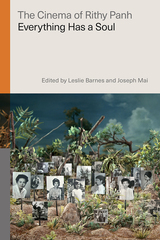
Born in 1964, Cambodian filmmaker Rithy Panh grew up in the midst of the Khmer Rouge’s genocidal reign of terror, which claimed the lives of many of his relatives. After escaping to France, where he attended film school, he returned to his homeland in the late 1980s and began work on the documentaries and fiction films that have made him Cambodia’s most celebrated living director.
The fourteen essays in The Cinema of Rithy Panh explore the filmmaker’s unique aesthetic sensibility, examining the dynamic and sensuous images through which he suggests that “everything has a soul.” They consider how Panh represents Cambodia’s traumatic past, combining forms of individual and collective remembrance, and the implications of this past for Cambodia’s transition into a global present. Covering documentary and feature films, including his literary adaptations of Marguerite Duras and Kenzaburō Ōe, they examine how Panh’s attention to local context leads to a deep understanding of such major themes in global cinema as justice, imperialism, diaspora, gender, and labor.
Offering fresh takes on masterworks like The Missing Picture and S-21 while also shining a light on the director’s lesser-known films, The Cinema of Rithy Panh will give readers a new appreciation for the boundless creativity and ethical sensitivity of one of Southeast Asia’s cinematic visionaries.
In addition to acknowledging familiar themes in the interpretation of the Republic—the sincerity of its utopianism, the justice of the philosopher's return to the Cave—Ferrari provocatively engages secondary literature by Leo Strauss, Bernard Williams, and Jonathan Lear. With admirable clarity and insight, Ferrari conveys the relation between the city and the soul and the choice between tyranny and philosophy. City and Soul in Plato's Republic will be of value to students of classics, philosophy, and political theory alike.
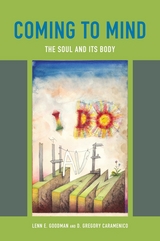
Rooted in some of the richest philosophical and intellectual traditions of Western and Eastern philosophy, psychology, literature, and the arts and the latest findings of cognitive psychology and brain science—Coming to Mind is a subtle manifesto of a new humanism and an outstanding contribution to our understanding of the human person. Drawing on new and classical understandings of perception, consciousness, memory, agency, and creativity, Goodman and Caramenico frame a convincing argument for a dynamic and integrated self capable of language, thought, discovery, caring, and love.
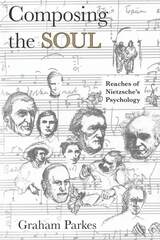
Composing the Soul is the first study to pay sustained attention to this pronouncement and to examine the contours of Nietzsche's psychology in the context of his life and psychological makeup. Beginning with essays from Nietzsche's youth, Graham Parkes shows the influence of such figures as Goethe, Byron, and Emerson on Nietzsche's formidable and multiple talents. Parkes goes on to chart the development of Nietzsche's psychological ideas in terms of the imagery, drawn from the dialogues of Plato as well as from Nietzsche's own quasi-mystical experiences of nature, in which he spoke of the soul. Finally, Parkes analyzes Nietzsche's most revolutionary idea—that the soul is composed of multiple "drives," or "persons," within the psyche. The task for Nietzsche's psychology, then, was to identify and order these multiple persons within the individual—to compose the soul.
Featuring all new translations of quotations from Nietzsche's writings, Composing the Soul reveals the profundity of Nietzsche's lifelong personal and intellectual struggles to come to grips with the soul. Extremely well-written, this landmark work makes Nietzsche's life and ideas accessible to any reader interested in this much misunderstood thinker.
In his exploration of the striking parallels between the development of cosmetic surgery and the field of psychiatry, Gilman entertains an array of philosophical and psychological questions that underlie the more practical decisions rountinely made by doctors and potential patients considering these types of surgery. While surveying and incorporating the relevant theories of Sigmund Freud, Alfred Adler, Karl Menninger, Paul Schilder, contemporary feminist critics, and others, Gilman considers the highly unstable nature of cultural notions of health, happiness, and beauty. He reveals how ideas of race and gender structured early understandings of aesthetic surgery in discussions of both the “abnormality” of the Jewish nose and the historical requirement that healthy and virtuous females look “normal,” thereby enabling them to achieve invisibility. Reflecting upon historically widespread prejudices, Gilman describes the persecutions, harrassment, attacks, and even murders that continue to result from bodily difference and he encourages readers to question the cultural assumptions that underlie the increasing acceptability of this surgical form of psychotherapy.
Synthesizing a vast body of related literature and containing a comprehensive bibliography, Creating Beauty to Cure the Soul will appeal to a broad audience, including those interested in the histories of medicine and psychiatry, and in philosophy, cultural studies, Jewish cultural studies, and race and ethnicity.
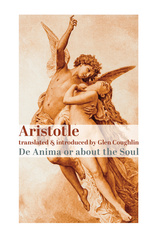
In this text, Aristotle discusses his predecessors’ views of life, defines the principle of life (“soul”), discusses the principle sorts of living things (plants, animals, and human beings), and analyzes the chief activities of each sort of life. In the case of rational life, he shows that the ability to think implies an immaterial aspect to the human soul.
The De Anima is necessary not only to the study of biology, but also advances the understanding of metaphysics, of ethics and of politics, and even of logic, insofar as logic directs the acts of the human mind.
Like Coughlin’s translation of Aristotle’s Physics (also published by St. Augustine Press), this translation attempts to be literal and concrete. The edition includes the translation, introduction, glossary, index, and explanatory notes.
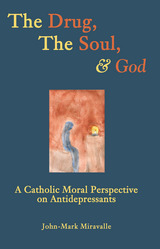
With The Drug, the Soul, and God, John-Mark Miravelle examines the stance of the Catholic Church regarding the prescription and consumption of antidepressants. After a careful investigation of Catholic moral theology and philosophy, Miravelle argues that treating depression with medication alone fails to address the underlying causes of the depression and does not facilitate the cognitive, interpersonal, and environmental changes necessary for a patient’s long-term health. In addition, he suggests that such medication may deprive sufferers of providential opportunities for personal and communal conversion and sanctification. This controversial volume will engage theologians and medical professionals alike.


Historians have long believed that Catholics were late and ambivalent supporters of the German nation. Rebecca Ayako Bennette’s bold new interpretation demonstrates definitively that from the beginning in 1871, when Wilhelm I was proclaimed Kaiser of a unified Germany, Catholics were actively promoting a German national identity for the new Reich.
In the years following unification, Germany was embroiled in a struggle to define the new nation. Otto von Bismarck and his allies looked to establish Germany as a modern nation through emphasis on Protestantism and military prowess. Many Catholics feared for their future when he launched the Kulturkampf, a program to break the political and social power of German Catholicism. But these anti-Catholic policies did not destroy Catholic hopes for the new Germany. Rather, they encouraged Catholics to develop an alternative to the Protestant and liberal visions that dominated the political culture. Bennette’s reconstruction of Catholic thought and politics sheds light on several aspects of German life. From her discovery of Catholics who favored a more “feminine” alternative to Bismarckian militarism to her claim that anti-socialism, not anti-Semitism, energized Catholic politics, Bennette’s work forces us to rethink much of what we know about religion and national identity in late nineteenth-century Germany.
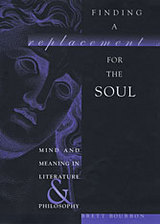
Approaching the study of literature as a unique form of the philosophy of language and mind—as a study of how we produce nonsense and imagine it as sense—this is a book about our human ways of making and losing meaning. Brett Bourbon asserts that our complex and variable relation with language defines a domain of meaning and being that is misconstrued and missed in philosophy, in literary studies, and in our ordinary understanding of what we are and how things make sense. Accordingly, his book seeks to demonstrate how the study of literature gives us the means to understand this relationship.
The book itself is framed by the literary and philosophical challenges presented by Joyce’s Finnegans Wake and Wittgenstein’s Philosophical Investigations. With reference to these books and the problems of interpretation and meaning that they pose, Bourbon makes a case for the fundamental philosophical character of the study of literature, and for its dependence on theories of meaning disguised as theories of mind. Within this context, he provides original accounts of what sentences, fictions, non-fictions, and poems are; produces a new account of the logical form of fiction and of the limits of interpretation that follow from it; and delineates a new and fruitful domain of inquiry in which literature, philosophy, and science intersect.
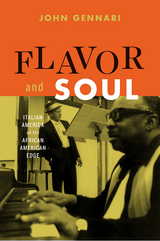
In Flavor and Soul, John Gennari spotlights this affinity, calling it “the edge”—now smooth, sometimes serrated—between Italian American and African American culture. He argues that the edge is a space of mutual emulation and suspicion, a joyous cultural meeting sometimes darkened by violent collision. Through studies of music and sound, film and media, sports and foodways, Gennari shows how an Afro-Italian sensibility has nourished and vitalized American culture writ large, even as Italian Americans and African Americans have fought each other for urban space, recognition of overlapping histories of suffering and exclusion, and political and personal rispetto.
Thus, Flavor and Soul is a cultural contact zone—a piazza where people express deep feelings of joy and pleasure, wariness and distrust, amity and enmity. And it is only at such cultural edges, Gennari argues, that America can come to truly understand its racial and ethnic dynamics.
This lively book offers a wide-ranging study of Greek notions of mind and human selfhood from Homer through Plotinus. A. A. Long anchors his discussion in questions of recurrent and universal interest. What happens to us when we die? How is the mind or soul related to the body? Are we responsible for our own happiness? Can we achieve autonomy? Long asks when and how these questions emerged in ancient Greece, and shows that Greek thinkers’ modeling of the mind gave us metaphors that we still live by, such as the rule of reason or enslavement to passion. He also interrogates the less familiar Greek notion of the intellect’s divinity, and asks what that might mean for us.
Because Plato’s dialogues articulate these themes more sharply and influentially than works by any other Greek thinker, Plato receives the most sustained treatment in this account. But at the same time, Long asks whether Plato’s explanation of the mind and human behavior is more convincing for modern readers than that contained in the older Homeric poems. Turning to later ancient philosophy, especially Stoicism, Long concludes with an exploration of Epictetus’s injunction to live life by making correct use of one’s mental impressions.
An authoritative treatment of Greek modes of self-understanding, Greek Models of Mind and Self demonstrates how ancient thinkers grappled with what is closest to us and yet still most mysterious—our own essence as singular human selves—and how the study of Greek thought can enlarge and enrich our experience.
In this innovative hybrid of biography, memoir, and criticism, Eric G. Wilson describes how John Keats gave him solace during a bout of mental illness in spring 2012. While on a tour of the principal sites in Keats’s life—ranging from his London medical school to the small room in Rome where he died—Wilson discovered analogies between the poet’s troubles and his own. He was most struck by Keats’s enlivening vision of the soul.
For Keats, we don’t possess but rather make a soul. We do this by imaginatively transforming our suffering into empathy toward humans and nature alike. Tracking this idea in Keats’s tumultuous yet exhilarating life and work, Wilson struggles to envision his depression anew, desperate to overcome the apathy alienating him from his family.
How to Make a Soul offers fresh perspectives on Keats’s pragmatism, irony, comedy, ethics, and aesthetics, but is above all a lyrical celebration of those galvanizing instances when life springs into art.

The first complete translation into a modern language of a major authority on the medieval Christian liturgy.
Honorius Augustodunensis’s Jewel of the Soul (the Gemma animae) gleams as one of the most attractive liturgical commentaries from the twelfth century. A lively and effective teacher, Honorius strives to unveil the meaning behind the sacred texts, objects, music, and ritual of the Roman Mass and Divine Office for young initiates. Building on the allegorical approach pioneered in the Carolingian era by Amalar of Metz, he shows readers how their souls are beautified by the liturgy as gold is by a jewel. His flowing and comprehensive commentary gained widespread influence in Western Christendom and was an important source for later liturgical treatises. For the modern scholar this work remains key to understanding the medieval allegorical approach to worship and provides valuable documentation about how these offices were celebrated in the twelfth century. These volumes offer the first complete translation into a modern language of this foundational Latin text on Christian liturgy.
The first complete translation into a modern language of a major authority on the medieval Christian liturgy.
Honorius Augustodunensis’s Jewel of the Soul (the Gemma animae) gleams as one of the most attractive liturgical commentaries from the twelfth century. A lively and effective teacher, Honorius strives to unveil the meaning behind the sacred texts, objects, music, and ritual of the Roman Mass and Divine Office for young initiates. Building on the allegorical approach pioneered in the Carolingian era by Amalar of Metz, he shows readers how their souls are beautified by the liturgy as gold is by a jewel. His flowing and comprehensive commentary gained widespread influence in Western Christendom and was an important source for later liturgical treatises. For the modern scholar this work remains key to understanding the medieval allegorical approach to worship and provides valuable documentation about how these offices were celebrated in the twelfth century. These volumes offer the first complete translation into a modern language of this foundational Latin text on Christian liturgy.
For centuries readers have struggled to fuse the seemingly scattered pieces of Donne’s works into a complete image of the poet and priest. In John Donne, Body and Soul, Ramie Targoff offers a way to read Donne as a writer who returned again and again to a single great subject, one that connected to his deepest intellectual and emotional concerns.
Reappraising Donne’s oeuvre in pursuit of the struggles and commitments that connect his most disparate works, Targoff convincingly shows that Donne believed throughout his life in the mutual necessity of body and soul. In chapters that range from his earliest letters to his final sermon, Targoff reveals that Donne’s obsessive imagining of both the natural union and the inevitable division between body and soul is the most continuous and abiding subject of his writing.
“Ramie Targoff achieves the rare feat of taking early modern theology seriously, and of explaining why it matters. Her book transforms how we think about Donne.”—Helen Cooper, University of Cambridge
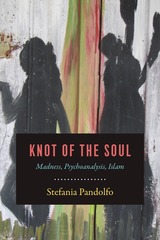
Knot of the Soul moves from the experience of psychosis in psychiatric hospitals, to the visionary torments of the soul in poor urban neighborhoods, to the melancholy and religious imaginary of undocumented migration, culminating in the liturgical stage of the Qur’anic cure. Demonstrating how contemporary Islamic cures for madness address some of the core preoccupations of the psychoanalytic approach, she reveals how a religious and ethical relation to the “ordeal” of madness might actually allow for spiritual transformation.
This sophisticated and evocative work illuminates new dimensions of psychoanalysis and the ethical imagination while also sensitively examining the collective psychic strife that so many communities endure today.

The relationship between the soul and the body was a point of contentious debate among philosophers and theologians in late antiquity. Modern scholarship has inherited this legacy, but split the study of the relation of body and soul between the disciplines of philosophy and religion. Lovers of the Soul, Lovers of the Body integrates, with Plato and Aristotle in the background, philosophical and religious perspectives on the concepts of soul and body in the transformative period of the first six centuries CE, from Philo to Olympiodorus. The polyphonic—but not dissonant—philosophical and theological dialogue is recreated and rethought by an international group of leading experts and up-and-coming scholars in ancient philosophy, theology, and religion.
The synthetic approach of the volume presents the understanding of human psychology in late antiquity, without labels and borders. It invites both experts and enthusiasts to crisscross the pathways of philosophy and religion in pursuit of new crossroads and greater common ground.
“Seymon Lyudvigovich Frank, the author of the volume here made available for the first time in English translation, was one of the leading Russian philosophers of this century; some authorities consider him the most outstanding Russian philosopher of any age….
”Man’s Soul is a book which perfectly exemplifies the generous conception of the mission and competence of philosophy characteristic of Frank and the other members of the Russian metaphysical movement. Frank’s stated aim in the treatise is to reclaim for philosophy a field of investigation which, from the time of Plato and Aristotle to that of the Russian Idealists, philosophers had viewed as properly theirs, but which, since the mid-nineteenth century, they had allowed to fall into almost complete neglect: the study of the nature of the human soul (or psyche)….
“The moral message of Man’s Soul is well summed up by its epigraph, quoted from St. Augustine: ‘Let man first of all return to his own self, so that once he has, as it were, stepped therein, he may rise from thence and be elevated to God.’”
—from the foreword by Philip J. Swoboda
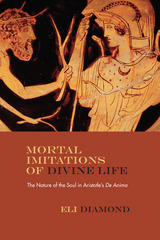
In Mortal Imitations of Divine Life, Diamond offers an interpretation of De Anima, which explains how and why Aristotle places souls in a hierarchy of value. Aristotle’s central intention in De Anima is to discover the nature and essence of soul—the principle of living beings. He does so by identifying the common structures underlying every living activity, whether it be eating, perceiving, thinking, or moving through space. As Diamond demonstrates through close readings of De Anima, the nature of the soul is most clearly seen in its divine life, while the embodied soul’s other activities are progressively clear approximations of this principle. This interpretation shows how Aristotle’s psychology and biology cannot be properly understood apart from his theological conception of God as life, and offers a new explanation of De Anima’s unity of purpose and structure.

From the tombs of the elite to the graves of commoners, mortuary remains offer rich insights into Classic Maya society. In Mortuary Landscapes of the Classic Maya: Rituals of Body and Soul, the anthropological archaeologist and bioarchaeologist Andrew K. Scherer explores the broad range of burial practices among the Maya of the Classic period (AD 250–900), integrating information gleaned from his own fieldwork with insights from the fields of iconography, epigraphy, and ethnography to illuminate this society’s rich funerary traditions.
Scherer’s study of burials along the Usumacinta River at the Mexican-Guatemalan border and in the Central Petén region of Guatemala—areas that include Piedras Negras, El Kinel, Tecolote, El Zotz, and Yaxha—reveals commonalities and differences among royal, elite, and commoner mortuary practices. By analyzing skeletons containing dental and cranial modifications, as well as the adornments of interred bodies, Scherer probes Classic Maya conceptions of body, wellness, and the afterlife.
Scherer also moves beyond the body to look at the spatial orientation of the burials and their integration into the architecture of Maya communities. Taking a unique interdisciplinary approach, the author examines how Classic Maya deathways can expand our understanding of this society’s beliefs and traditions, making Mortuary Landscapes of the Classic Maya an important step forward in Mesoamerican archeology.

"This book is a firework display. It sets off scores of explosions which light up the sky over-arching our field, terrain that is normally traversed nose down and too mindful of the footsteps of our predecessors."—Burlington Magazine
The Platonic Theology is a visionary work and the philosophical masterpiece of Marsilio Ficino (1433-1499), the Florentine scholar-philosopher-magus who was largely responsible for the Renaissance revival of Plato.
A student of the Neoplatonic schools of Plotinus and Proclus, he was committed to reconciling Platonism with Christianity, in the hope that such a reconciliation would initiate a spiritual revival and return of the golden age. His Platonic evangelizing was eminently successful and widely influential, and his Platonic Theology, translated into English for the first time in this edition, is one of the keys to understanding the art, thought, culture, and spirituality of the Renaissance.
The Platonic Theology is a visionary work and the philosophical masterpiece of Marsilio Ficino (1433-1499), the Florentine scholar-philosopher-magus who was largely responsible for the Renaissance revival of Plato. A student of the Neoplatonic schools of Plotinus and Proclus, he was committed to reconciling Platonism with Christianity, in the hope that such a reconciliation would initiate a spiritual revival and return of the golden age. His Platonic evangelizing was eminently successful and widely influential, and his Platonic Theology, translated into English for the first time in this edition, is one of the keys to understanding the art, thought, culture, and spirituality of the Renaissance.
This sixth and final volume of the I Tatti Renaissance Library edition includes comprehensive indexes to the whole work.
The Platonic Theology is a visionary work and the philosophical masterpiece of Marsilio Ficino (1433–1499), the Florentine scholar-philosopher-magus who was largely responsible for the Renaissance revival of Plato.
A student of the Neoplatonic schools of Plotinus and Proclus, he was committed to reconciling Platonism with Christianity, in the hope that such a reconciliation would initiate a spiritual revival and return of the golden age. His Platonic evangelizing was eminently successful and widely influential, and his Platonic Theology, translated into English for the first time in this edition, is one of the keys to understanding the art, thought, culture, and spirituality of the Renaissance.
Ennead I.1 is a succinct and concentrated analysis of key themes in Plotinus' psychology and ethics. It focuses on the soul-body relation, discussing various Platonic, Aristotelian, and Stoic views before arguing that there is only a soul-trace in the body (forming with the body a “compound”), while the reasoning soul itself is impassive and flawless. The soul-trace hypothesis is used to account for human emotions, beliefs, and perceptions, and human fallibility in general. Its problematic relation to our rational powers, as well as the question of moral responsibility, are explored. Plotinus develops his original and characteristic concept of the self or “we,” which is so called because it is investigated as something common to all humans (rather than a private individual self), and because it is multiple, referring to the reasoning soul or to the “living thing” composed of soul-trace and body. Plotinus explores the relation between the “we” and consciousness, and also its relation to the higher metaphysical entities, the Good, and Intellect.
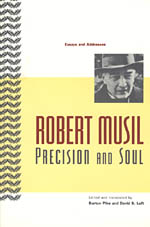
Best known as author of the novel The Man without Qualities, Robert Musil wrote these essays in Vienna and Berlin between 1911 and 1937. Offering a perspective on modern society and intellectual life, they are concerned with the crisis of modern culture as it manifests itself in science and mathematics, capitalism and nationalism, the changing roles of women and writers, and more. Writing to find his way in a world where moral systems everywhere were seemingly in decay, Musil strives to reconcile the ongoing conflict between functional relativism and the passionate search for ethical values.
Robert Musil was born in 1880 and died in 1942. His first novel, Young Törless, is available in English. A new two-volume translation by Burton Pike and Sophie Wilkins of The Man without Qualities is forthcoming from Alfred A. Knopf.
"Now we have these thirty-one invaluable and entertaining pieces, from an article on 'The Obscene and Pathological in Art' to the equally provocative talk 'On Stupidity,' which, with a new translation of The Man without Qualities forthcoming . . . amount to a literary event for the reader of English comparable to Constance Garnett's massive translation of Chekhov's stories."—Joseph Coates, Chicago Tribune
"Musil is one of the few great moderns, one of the handful who ventured to confront the issues that shape and define our time. . . . He has a range and a striking capacity every bit as great as that of Mann, Joyce, or Beckett."—Boston Review
"These essays are crucial in understanding a writer and critic whose lifelong task was an attempt to resolve the dichotomy between the precision of scientific form and the soul—the matter of life and art."—Choice
A Choice Outstanding Academic Title of the Year
A Tablet Book of the Year
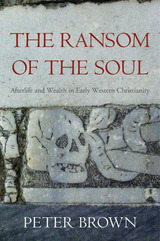
Marking a departure in our understanding of Christian views of the afterlife from 250 to 650 CE, The Ransom of the Soul explores a revolutionary shift in thinking about the fate of the soul that occurred around the time of Rome’s fall. Peter Brown describes how this shift transformed the Church’s institutional relationship to money and set the stage for its domination of medieval society in the West.
“[An] extraordinary new book…Prodigiously original—an astonishing performance for a historian who has already been so prolific and influential…Peter Brown’s subtle and incisive tracking of the role of money in Christian attitudes toward the afterlife not only breaks down traditional geographical and chronological boundaries across more than four centuries. It provides wholly new perspectives on Christianity itself, its evolution, and, above all, its discontinuities. It demonstrates why the Middle Ages, when they finally arrived, were so very different from late antiquity.”
—G. W. Bowersock, New York Review of Books
“Peter Brown’s explorations of the mindsets of late antiquity have been educating us for nearly half a century…Brown shows brilliantly in this book how the future life of Christians beyond the grave was influenced in particular by money.
—A. N. Wilson, The Spectator
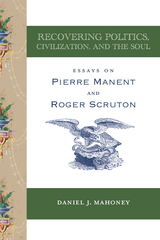
Both Scruton and Manent have repudiated the fashionable nihilism associated with the “thought of 1968” and the “Parisian nonsense machine,” and have shown that gratitude is the proper response of the human person to the “givenness of things.” Both defend the self-governing nation against reckless nationalism and the even more reckless temptation of supranational governance and post-political democracy, what Manent suggestively calls a “kratos” without a “demos.” Both defend the secular state while taking aim at a radical secularism that rejects “the Christian mark” that is at the heart of our inheritance and that sustains the rich and necessary interpenetration of truth and liberty. Scruton’s more “cultural” perspective is indebted to Burke and Kant; Manent’s more political perspective draws on Aristotle, St. Thomas, Tocqueville, and Raymond Aron, among others. By highlighting their affinities, and reflecting on their instructive differences, Mahoney shows how, together, the English man of letters Scruton, and the French political philosopher Manent, guide us to the recovery of a horizon of thought and action animated by practical reason and the wellsprings of the human soul. They show us the humanizing path forward, but first we must make the necessary spiritual decision to repudiate repudiation once and for all.
“With sophisticated and profound scholarship, Daniel Mahoney deploys his elegant style to defend the soul of civilization. Through the writings of Pierre Manent and Roger Scruton, he charts a course through the political and philosophical turmoil of the present age, providing hope and light amid the prevailing darkness.”
— Mark Dooley, Irish philosopher, writer and journalist. Author of Conversations with Roger Scruton and Sir Roger's literary executor.
“Mahoney's collection of essays does a marvelous job of contextualizing and explaining the vital work of these two philosophers. He's also an engaging and elegant writer.”
— Daniel DiSalvo, City Journal
“A series of reflective essays by Mahoney on the philosophical, theological, and political thinking of our best conservative theorists: Pierre Manent and the late Roger
Scruton. Recovering Politics, Civilization, and the Soul expresses well what we need.” — Richard M. Reinsch II, National Review
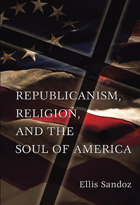
As debates rage over the place of faith in our national life, Tocqueville’s nineteenth-century crediting of religion for shaping America is largely overlooked today. Now, in Republicanism, Religion, and the Soul of America, Ellis Sandoz reveals the major role that Protestant Christianity played in the formation and early period of the American republic. Sandoz traces the rise of republican government from key sources in Protestant civilization, paying particular attention to the influence of the Bible on the Founders and the blossoming of the American mind in the eighteenth century.
Sandoz analyzes the religious debt of the emergent American community and its elevation of the individual person as unique in the eyes of the Creator. He shows that the true distinction of American republicanism lies in its grounding of human dignity in spiritual individualism and an understanding of man’s capacity for self-government under providential guidance. Along the way, he addresses such topics as the neglected question of the education of the Founders for their unique endeavor, common law constitutionalism, the place of Latin and Greek classics in the Founders’ thought, and the texture of religious experience from the Great Awakening to the Declaration of Independence
To establish a unifying theoretical perspective for his study, Sandoz considers the philosophical underpinnings of religion and the contribution that Eric Voegelin made to our understanding of religious experience. He contributes fresh studies of the character of Voegelin’s thought: its relationship to Christianity; his debate with Leo Strauss over reason, revelation, and the meaning of philosophy; and the theory of Gnosticism as basic to radical modernity. He also provides a powerful account of the spirit of Voegelin’s later writings, contrasting the political scientist with the meditative spiritualist and offering new insight into volume 5 of Order and History.
Republicanism, Religion, and the Soul of America concludes with timely reflections on the epoch now unfolding in the shadow of Islamic jihadism. Bringing a wide range of materials into a single volume, it confronts current academic concerns with religion while offering new insight into the construction of the American polity—and the heart of Americanism as we know it today.
Fernando Vidal’s trailblazing text on the origins of psychology traces the development of the discipline from its appearance in the late sixteenth century to its redefinition at the end of the seventeenth and its emergence as an institutionalized field in the eighteenth. Originally published in 2011, The Sciences of the Soul continues to be of wide importance in the history and philosophy of psychology, the history of the human sciences more generally, and in the social and intellectual history of eighteenth-century Europe.
An ARTery Best Book of the Year
An Art of Manliness Best Book of the Year
In a culture that has become progressively more skeptical and materialistic, the desires of the individual self stand supreme, Mark Edmundson says. We spare little thought for the great ideals that once gave life meaning and worth. Self and Soul is an impassioned effort to defend the values of the Soul.
“An impassioned critique of Western society, a relentless assault on contemporary complacency, shallowness, competitiveness and self-regard…Throughout Self and Soul, Edmundson writes with a Thoreau-like incisiveness and fervor…[A] powerful, heartfelt book.”
—Michael Dirda, Washington Post
“[Edmundson’s] bold and ambitious new book is partly a demonstration of what a ‘real education’ in the humanities, inspired by the goal of ‘human transformation’ and devoted to taking writers seriously, might look like…[It] quietly sets out to challenge many educational pieties, most of the assumptions of recent literary studies—and his own chosen lifestyle.”
—Mathew Reisz, Times Higher Education
“Edmundson delivers a welcome championing of humanistic ways of thinking and living.”
—Kirkus Reviews
Through these exchanges, Šafařík argues for the primacy of artistic creativity over scientific explanation, of truth over accuracy, of internal moral agency over an externally imposed social morality, and of personal religious belief over organized church-going. Šafařík is neither anti-scientific nor anti-rational; however, he argues that science has limited power, and he rejects the idea of science that denies meaning and value to what cannot be measured or calculated.
Šafařík’s critiques of technology, the wage economy, and increased professionalization make him an important precursor to the philosophy of deep ecology. This book was also a major influence on the Czech president Václav Havel; in this new translation it will find a fresh cohort of readers interested in what makes us human.
Freely parodying conformist Russian writing, this novel takes its lead as much from Sterne and Diderot as from the brilliant Russian satirist Mikhail Zoshchenko. In the offhand witticisms and jaunty humor speaks the spirit that survived the "era of stagnation" of Soviet literature.
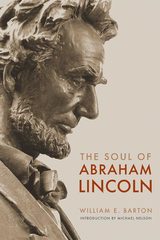
After more than fifty years of hagiographic and contradictory accounts of Abraham Lincoln's life, William Barton stepped boldly into the bedlam of claims and counterclaims about Lincoln's religion. Armed with an enormous collection of Lincoln materials and his own strict evidentiary rules, Barton worked to avoid partisan politicking over Lincoln's legacy and instead to simply "lay bare the facts."
To enable a better examination of the vexed questions surrounding Lincoln's faith and religious principles, Barton gathered Lincoln's most important writing and speeches about religion, and topically and chronologically assembled testimonies by his friends, family, and associates, about the most important and most debated issues. This volume, Barton's first and most important work on Lincoln, is introduced by Michael Nelson who provides a history of the literature on Lincoln's religion, the historical context of Barton's writing, and the details of the method that made Barton's approach to this American icon such a distinctive success.
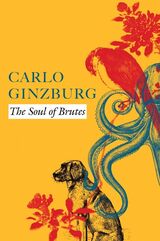
Carlo Ginzburg has been at the forefront of the discipline of microhistory ever since his earliest works were published to great acclaim in the 1970s. The Soul of Brutes brings together four of Ginzburg’s recent scintillating essays and lectures that testify to the diversity of his thoughts on history and philosophy.
“Civilization and Barbarism” resurrects a sixteenth-century debate between two thinkers in Spain about the humanness, or lack thereof, of Native Americans, and highlights the influence of classical thinkers, from Herodotus to Aristotle, and the iterations and interpretations through which their writings have traversed down to the Cinquecento. In “The Soul of Brutes” Ginzburg traces the genealogy of the debate on the rationality of animals and the limits of their imagination, from Plutarch and Aristotle to sixteenth-century thinkers like Pietro Pomponazzi and Girolamo Rorario. Following Montaigne, he provokes, are we to beasts as they seem to us? In “Calvino, Manzoni and the Grey Zone,” Carlo Ginzburg pithily writes about the mental dialogue between Holocaust survivor Primo Levi and two Italians who profoundly influenced Levi’s search for these “unexplored pockets of exception”—his contemporary Italo Calvino and the nineteenth-century novelist and philosopher Alessandro Manzoni. And finally, in “Schema and Bias”, he probes whether the historian can clearly see into the past, peering through the layers of bias, which include their own prejudices, or if relativism is the only path.
With several beautifully reproduced color illustrations, The Soul of Brutes will interest not only scholars of history, philosophy, and art, but also general intellectual readers.
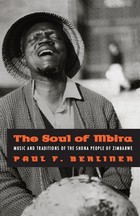
"Paul Berliner's The Soul of Mbira is probably the best ethnography ever written about an African musical tradition. It is a complete classic . . . . I know of no other instrument with the range of the mbira, and the book is equal to the instrument."—John Chernoff
"[The Soul of Mbira] illustrates the fact that Shona mbira music in its beauty, subtlety, and virtuosity demands the same kind of respect that we might hold for any other classical music."—David Reck, Parabola
"The book is a model of ethnomusicological thinking and investigation and it suggests a specific way of approaching a complex socio-musical system."—John Baily, Popular Music
"When next someone asks 'What is ethnomusicology?' or 'What do ethnomusicologists do?' I shall suggest this book. . . . This is a landmark in ethnomusicological literature. Berliner succeeds in conveying both the joy that goes with mbira playing and the mystic relationship between the player and his instrument. In short, this is humanized ethnomusicology."—K.A. Gourlay, Ethnomusicology
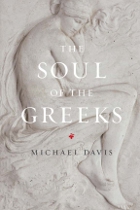
The understanding of the soul in the West has been profoundly shaped by Christianity, and its influence can be seen in certain assumptions often made about the soul: that, for example, if it does exist, it is separable from the body, free, immortal, and potentially pure. The ancient Greeks, however, conceived of the soul quite differently. In this ambitious new work, Michael Davis analyzes works by Homer, Herodotus, Euripides, Plato, and Aristotle to reveal how the ancient Greeks portrayed and understood what he calls “the fully human soul.”
Beginning with Homer’s Iliad, Davis lays out the tension within the soul of Achilles between immortality and life. He then turns to Aristotle’s De Anima and Nicomachean Ethics to explore the consequences of the problem of Achilles across the whole range of the soul’s activity. Moving to Herodotus and Euripides, Davis considers the former’s portrayal of the two extremes of culture—one rooted in stability and tradition, the other in freedom and motion—and explores how they mark the limits of character. Davis then shows how Helen and Iphigeneia among the Taurians serve to provide dramatic examples of Herodotus’s extreme cultures and their consequences for the soul. The book returns to philosophy in the final part, plumbing several Platonic dialogues—the Republic, Cleitophon, Hipparchus, Phaedrus, Euthyphro, and Symposium—to understand the soul’s imperfection in relation to law, justice, tyranny, eros, the gods, and philosophy itself. Davis concludes with Plato’s presentation of the soul of Socrates as self-aware and nontragic, even if it is necessarily alienated and divided against itself.
The Soul of the Greeks thus begins with the imperfect soul as it is manifested in Achilles’ heroic, but tragic, longing and concludes with its nontragic and fuller philosophic expression in the soul of Socrates. But, far from being a historical survey, it is instead a brilliant meditation on what lies at the heart of being human.
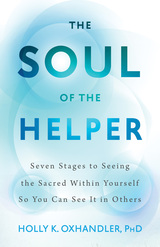
In their devotion to the well-being of others, caregivers routinely put their own well-being last and can unintentionally burn themselves out physically, emotionally, and spiritually. Their self-neglect, paired alongside a deep desire to help others, has the potential to stir up feelings of anger and resentment, leading to a sense of guilt and shame. They often believe that if they were to grant themselves any rest or grace, they would be at risk of failing in their duty.
In The Soul of the Helper, Dr. Holly K. Oxhandler shows caregivers and fellow helpers a more self-compassionate way to cope with their overwhelming responsibilities and to attend to their own needs, particularly when it comes to their mental health and spiritual journey. She invites them to pause and realize that if they let their personal resources run dry, they cannot possibly care for others as fully as they wish. In fact, their efforts are likely to cause more harm than good.
With a background in spiritually-integrated mental health, Dr. Oxhandler teaches helpers a seven-step process to slow down and reconnect with the stillness within themselves. It is in this space of stillness that Oxhandler guides helpers to reconnect with the “sacred spark” within their soul. By allowing themselves to enter that stillness, caregivers will recognize that they, too, are worthy of care. And with that realization, they will see anew the sacred spark that dwells inside everyone else, especially within those they’re helping.
As a social worker, researcher, and person of faith, Dr. Oxhandler writes in a warm and welcoming style, shares many relatable stories, and widens her scope to include believers of all faiths and spiritual traditions. Her book is for caregivers everywhere who sense the sacred spark within them saying, in effect: “Come to me, all you who are weary and burdened, and I will give you rest.”
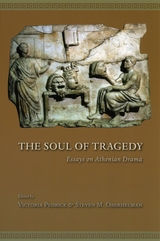
Exemplary of the nature and scope of this book, the essays range from Simon Goldhill's comparative study of music, gender, and culture to Martha Nussbaum's inspection of "the comic soul." Through the critical lenses of psychoanalysis, gender, social history, and philology, this compilation looks at Greek tragedy's peculiar power to illuminate the workings of the human soul. Structures of tragic meaning, the relationship between character desire and spectator experience, and investigations of tragedy's extraordinary preoccupation with gender reveal the form's emotional core and explain its rapid ascent through the hierarchy of cultural practices in classical Greece. The Soul of Tragedy is a celebration and a model of collaboration that will be essential reading for scholars in classics, literature, and drama.
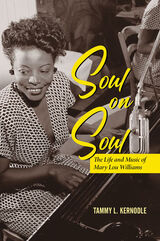
The jazz musician-composer-arranger Mary Lou Williams spent her sixty-year career working in—and stretching beyond—a dizzying range of musical styles. Her integration of classical music into her works helped expand jazz's compositional language. Her generosity made her a valued friend and mentor to the likes of Thelonious Monk, Charlie Parker, and Dizzy Gillespie. Her late-in-life flowering of faith saw her embrace a spiritual jazz oriented toward advancing the civil rights struggle and helping wounded souls.
Tammy L. Kernodle details Williams's life in music against the backdrop of controversies over women's place in jazz and bitter arguments over the music's evolution. Williams repeatedly asserted her artistic and personal independence to carve out a place despite widespread bafflement that a woman exhibited such genius. Embracing Williams's contradictions and complexities, Kernodle also explores a personal life troubled by lukewarm professional acceptance, loneliness, relentless poverty, bad business deals, and difficult marriages.
In-depth and epic in scope, Soul on Soul restores a pioneering African American woman to her rightful place in jazz history.

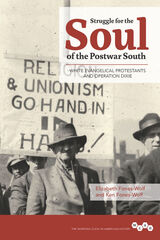
The authors' nuanced look at working class religion reveals how laborers across the surprisingly wide evangelical spectrum interpreted their lives through their faith. Factors like conscience, community need, and lived experience led individual preachers to become union activists and mill villagers to defy the foreman and minister alike to listen to organizers. As the authors show, however, all sides enlisted belief in the battle. In the end, the inability of northern organizers to overcome the suspicion with which many evangelicals viewed modernity played a key role in Operation Dixie's failure, with repercussions for labor and liberalism that are still being felt today.
Identifying the role of the sacred in the struggle for southern economic justice, and placing class as a central aspect in southern religion, Struggle for the Soul of the Postwar South provides new understandings of how whites in the region wrestled with the options available to them during a crucial period of change and possibility.
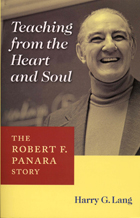
The Sixth Volume in the Deaf Lives Series
Robert F. Panara lost his hearing from spinal meningitis in 1931 at the age of ten. However, he could read and write, and with his friends’ help, Bob (as he was known), made it through high school. His new solitude created a new passion – reading, reading, and reading. The stage was set for the emergence of one of the great deaf educators in modern time, a life fully captured in Harry G. Lang’s Teaching from the Heart and Soul: The Robert F. Panara Story.
Bob Panara’s many achievements began after his discovery of Gallaudet College in the 1940s. There, he wrote “The Significance of the Reading Problem,” which first expressed his belief that teaching “comes from the heart and soul.” The article secured him his first job at the New York School for the Deaf in White Plains. Bob returned to teach at Gallaudet College from 1948 until 1965, when he left to help found the National Technical Institute for the Deaf (NTID) and the National Theatre of the Deaf (NTD) — all in the same year. He continued to expand arts and literature at NTID until his retirement in 1987.
Bob Panara’s genius resides in the people he inspired with his vivacious teaching style. He believed ardently in involving students, that they should “be the book.” Former students tell story after story about his fabulous interpretations of drama and poetry, a legacy confirmed by his own story in Teaching from the Heart and Soul.
One class, located in a private, racially integrated urban school, has had many conversations about the meaning of books. The second group, less advantaged students in a largely black urban school, has not. The reader watches as students in each group begin to draw upon experiences in their personal lives to speculate about events in the play. The students assist one another with the interpretation of complex passages, pose queries that help sustain the conversation, and struggle to "get Shakespeare right." Though the teachers suffer moments of intense frustration, they are rewarded by seeing their students learn to engage in meaningful exchange.
Because Turning the Soul draws on actual classroom conversations, it presents the range of difficulties that one encounters in interpretive discussion. The book describes the assumptions about learning that the use of such discussion in the classroom presupposes, and it offers a theoretical perspective from which to view the changes in both students and teachers.
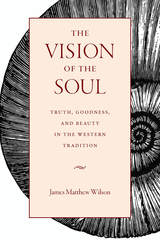
Story-telling is foundational to the forms of the fine arts, but it is no less foundational to human reason. Human life in turn constitutes a specific kind of form—a story form. The ancient conception of human life as a pilgrimage to beauty itself is one that we can fully embrace only if we see the essential correlation between reason and story and the essential convertibility of truth, goodness and beauty in beauty. By turns a study in fundamental ontology, aesthetics, and political philosophy, Wilson’s book invites its readers to a renewal of the West’s intellectual tradition.
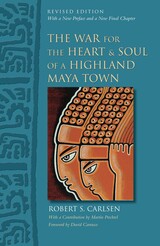
This compelling ethnography explores the issue of cultural continuity and change as it has unfolded in the representative Guatemala Mayan town Santiago Atitlán. Drawing on multiple sources, Robert S. Carlsen argues that local Mayan culture survived the Spanish Conquest remarkably intact and continued to play a defining role for much of the following five centuries. He also shows how the twentieth-century consolidation of the Guatemalan state steadily eroded the capacity of the local Mayas to adapt to change and ultimately caused some factions to reject—even demonize—their own history and culture. At the same time, he explains how, after a decade of military occupation known as la violencia, Santiago Atitlán stood up in unity to the Guatemalan Army in 1990 and forced it to leave town.
This new edition looks at how Santiago Atitlán has fared since the expulsion of the army. Carlsen explains that, initially, there was hope that the renewed unity that had served the town so well would continue. He argues that such hopes have been undermined by multiple sources, often with bizarre outcomes. Among the factors he examines are the impact of transnational crime, particularly gangs with ties to Los Angeles; the rise of vigilantism and its relation to renewed religious factionalism; the related brutal murders of followers of the traditional Mayan religion; and the apocalyptic fervor underlying these events.
Buchanan’s fiery speech marked a high point in the culture wars, but as Andrew Hartman shows in this richly analytical history, their roots lay farther back, in the tumult of the 1960s—and their significance is much greater than generally assumed. Far more than a mere sideshow or shouting match, the culture wars, Hartman argues, were the very public face of America’s struggle over the unprecedented social changes of the period, as the cluster of social norms that had long governed American life began to give way to a new openness to different ideas, identities, and articulations of what it meant to be an American. The hot-button issues like abortion, affirmative action, art, censorship, feminism, and homosexuality that dominated politics in the period were symptoms of the larger struggle, as conservative Americans slowly began to acknowledge—if initially through rejection—many fundamental transformations of American life.
As an ever-more partisan but also an ever-more diverse and accepting America continues to find its way in a changing world, A War for the Soul of America reminds us of how we got here, and what all the shouting has really been about.
“As a guide to the late twentieth-century culture wars, Hartman is unrivalled. . . . Incisive portraits of individual players in the culture wars dramas. . . . Reading Hartman sometimes feels like debriefing with friends after a raucous night out, an experience punctuated by laughter, head-scratching, and moments of regret for the excesses involved.”—New Republic
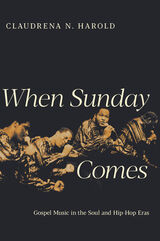
Weaving insightful analysis into a collective biography of gospel icons, When Sunday Comes explores the music's essential place as an outlet for African Americans to express their spiritual and cultural selves.
In this landmark book, Marx sums up a lifetime of work on issues of surveillance and social control by disentangling and parsing the empirical richness of watching and being watched. Using fictional narratives as well as the findings of social science, Marx draws on decades of studies of covert policing, computer profiling, location and work monitoring, drug testing, caller identification, and much more, Marx gives us a conceptual language to understand the new realities and his work clearly emphasizes the paradoxes, trade-offs, and confusion enveloping the field. Windows into the Soul shows how surveillance can penetrate our social and personal lives in profound, and sometimes harrowing, ways. Ultimately, Marx argues, recognizing complexity and asking the right questions is essential to bringing light and accountability to the darker, more iniquitous corners of our emerging surveillance society.
For more information, please see www.garymarx.net.
"The test of all happiness,” said G.K. Chesterton, “is gratitude."
Learning to experience gratitude involves being grateful as an attitude, not as a reaction when good things occur. To be grateful, one does not need to wait until things are perfect. In fact, practicing gratitude makes one receptive to life's blessings, and these blessings continue as we continue to be thankful.
In one study, described by author Robert Emmons, participants who wrote about five things for which they were grateful experienced more positive emotional states and were more likely to help others over a period of ten weeks than were participants who wrote about the hassles and stressors they experienced during the same time.
"Love wholeheartedly,” says Brother David Steindl-Rast, “be surprised, give thanks and praise—then you will discover the fullness of your life."
Gratitude provides gifts to both the giver and the receiver, and this illuminating book will inspire readers to recognize just how truly blessed we are.
What is it about the nature of “soul” that makes it so difficult to adequately capture its complexity in a strictly discursive account? Why do some of the most profound human experiences elude our attempts to theorize them? How can a written document do justice to the dynamic activity of thinking, as opposed to merely presenting a collection of thoughts-as-artifacts? Finally, what can we learn about the activity of philosophizing, and about the human soul, by reflecting on the possibilities and limitations of writing?
These concerns, in various forms and in different registers, have preoccupied Michael Davis throughout his distinguished career. This volume is in honor of, and in dialogue with, Davis’s work, which spans ancient philosophy and literature, continental philosophy and political philosophy. It includes original essays by numerous distinguished scholars in the fields of philosophy and political science. The remarkable range and caliber of the contributions attest to the breadth and depth of Davis’s influence.
The essays in Part I of the volume explore the nature of soul through the lens of tragedy. Part II consists of three essays that explore the human longing for perfect knowledge and completion—and the obstacles to the fulfilment of that longing—in relation to the divine. In Part III, the essays address the distinctive challenges of the political sphere and philosophy’s relation to it. And while the relationship between philosophy and poetry is an implicit theme throughout the volume, the essays in Part IV focus directly on philosophy’s aestheticizing tendencies. Many different philosophical and literary works are discussed throughout these chapters, including ancient works such as Plato’s Republic, Euthydemus and Laws, Homer’s Iliad, and Euripides’ Trojan Women, as well as works by modern philosophers such as Rousseau, Kant, Hegel, Kierkegaard and Nietzsche. In addition, three essays analyze some of Shakespeare’s plays in relation to the thought of Plato and Machiavelli. All of the essays are thematically linked by a common thread as they attend to the poetic dimension of philosophical thinking.
Michael Davis is Professor of Philosophy at Sarah Lawrence College, where he has taught since 1977 and has been the Sarah Yates Exley Chair in Teaching Excellence (2003-2005). He has also taught on the graduate faculty at Fordham University and the New School for Social Research. He is the author of numerous articles and books, which include: Ancient Tragedy and the Origins of Modern Science; The Poetry of Philosophy: On Aristotle’s Poetics; The Politics of Philosophy: A Commentary on Aristotle’s Politics; The Autobiography of Philosophy; Rousseau’s The Reveries of the Solitary Walker; Wonderlust: Ruminations on Liberal Education; and The Soul of the Greeks: An Inquiry. He is also co-translator (with Seth Benardete) of Aristotle’s On Poetics.
Contributors include: Abraham Anderson, Jonathan Badger, Robert Berman, Ronna Burger, Kenneth DeLuca, Gwenda-lin Grewal, Scott Hemmenway, Paul Kirkland, Mary Nichols, Denise Schaeffer, Paul Stern, Richard Velkley, Lisa Pace Vetter, Ann Ward, Lee Ward, Catherine Zuckert and Michael Zuckert.
About the Editor: Denise Schaeffer is Professor of Political Science at the College of the Holy Cross. She is the author of Rousseau on Education, Freedom and Judgment and contributing co-editor (with Christopher Dustin) of Socratic Philosophy and Its Others. She is co-editor (with Gregory McBrayer and Mary P. Nichols) of the Focus Philosophical Library edition of Plato’s Euthydemus, for which she authored the Introduction and co-authored the Interpretive Essay.
Aelred (1110–1167), abbot of Rievaulx Abbey in Yorkshire, has always been a controversial figure. He was beloved by his monks and widely admired, but also sharply criticized for his frankness about his own sinfulness and what some considered his favoritism and excessive leniency.
Writings on Body and Soul includes a selection of the prolific abbot’s theological, historical, and devotional works. Each contains autobiographical elements, showing Aelred at turns confident and fearful, tormented and serene. In A Pastoral Prayer, he asserts his unworthiness and pleads for divine aid in leading his monks wisely and compassionately. Spiritual Friendship adapts Cicero’s dialogue on friendship for Christian purposes. A Certain Marvelous Miracle offers a riveting account of a pregnant teenage nun, the bloody vengeance wreaked on her seducer, and the miracle of her release from her fetters. Finally, Teachings for Recluses, addressed to Aelred’s sister, is a guide for women pursuing solitary religious perfection.
Freshly revised editions of the Latin texts appear here alongside new English translations.
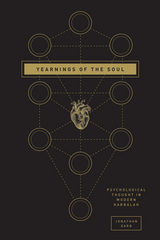
Garb follows the gradual disappearance of the soul from modern philosophy while drawing attention to its continued persistence as a topic in literature and popular culture. He pays close attention to James Hillman’s “archetypal psychology,” using it to engage critically with the psychoanalytic tradition and reflect anew on the cultural and political implications of the return of the soul to contemporary psychology. Comparing Kabbalistic thought to adjacent developments in Catholic, Protestant, and other popular expressions of mysticism, Garb ultimately offers a thought-provoking argument for the continued relevance of religion to the study of psychology.
READERS
Browse our collection.
PUBLISHERS
See BiblioVault's publisher services.
STUDENT SERVICES
Files for college accessibility offices.
RECENTLY PUBLISHED




UChicago Accessibility Resources
home | accessibility | search | about | contact us
BiblioVault ® 2001 - 2024
The University of Chicago Press