
 A SCHOLARLY BOOK REPOSITORY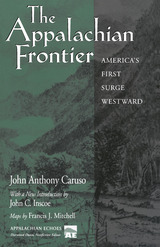
Looking at the rich and mountainous land between the Ohio and Tennessee Rivers, The Appalachian Frontier follows the story of the Long Hunters in Kentucky; the struggles of the Regulators in North Carolina; the founding of the Watauga, Transylvania, Franklin, and Cumberland settlements; the siege of Boonesboro; and the patterns and challenges of frontier life. While narrating the gripping stories of such figures as Daniel Boone, George Rogers Clark, and Chief Logan, Caruso combines social, political, and economic history into a comprehensive overview of the early mountain South.
In his new introduction, John C. Inscoe examines how this work exemplified the so-called consensus school of history that arose in the United States during the cold war. Unabashedly celebratory in his analysis of American nation building, Caruso shows how the development of Appalachia fit into the grander scheme of the evolution of the country. While there is much in The Appalachian Frontier that contemporary historians would regard as one-sided and romanticized, Inscoe points out that “those of us immersed so deeply in the study of the region and its people sometimes tend to forget that the white settlement of the mountain south in the eighteenth century was not merely the chronological foundation of the Appalachian experience. As Caruso so vividly demonstrates, it is also represented a vital—even defining—stage in the American progression across the continent.”
The Author: John Anthony Caruso was a professor of history at West Virginia University. He died in 1997.
John C. Inscoe is professor of history at the University of Georgia. He is editor of Appalachians and Race: The Mountain South from Slavery to Segregation and author of Mountain Masters: Slavery and the Sectional Crisis in Western North Carolina.
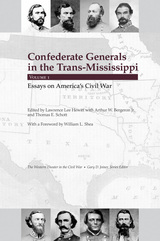
Although the Trans-Mississippi has long been considered a dumping ground for failed generals from other regions, the essays presented here demolish that myth, showing instead that, with a few notable exceptions, Confederate commanders west of the Mississippi were homegrown, not imported, and compared well with their more celebrated peers elsewhere. With its virtually nonexistent infrastructure, wildly unpredictable weather, and few opportunities for scavenging, the Trans-Mississippi proved a challenge for commanders on both sides of the conflict. As the contributors to this volume demonstrate, only the most creative minds could operate successfully in such an unforgiving environment.
While some of these generals have been the subjects of larger studies, others, including Generals Holmes, Parsons, and Churchill, receive their first serious scholarly attention in these pages. Clearly demonstrating the independence of the Trans-Mississippi and the nuances of the military struggle there, while placing both the generals and the theater in the wider scope of the war, these eight essays offer valuable new insight into Confederate military leadership and the ever-vexing questions of how and why the South lost this most defining of American conflicts.
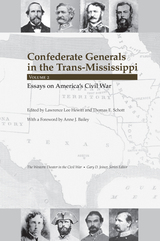
Contrary to popular belief, the Trans-Mississippi did not serve as a dumping ground for generals who had failed in Virginia. Instead, the majority of generals who served in the region were homegrown and faced challenges unknown to their counterparts in the East—expansive territory, few men, and limited transportation for the meager supplies available. Superior Union numbers in the West, however, did not guarantee Union victory. As these essays show, southern generals often beat themselves because of personal failings or an inability to work together. Sterling Price and Ben McCulloch refused to cooperate, Henry Sibley combined alcoholism with cowardice, and the able French-born Prince de Polignac faced language barriers. The war ended before Joseph Brent, a visionary regarding tank warfare, could make his name as a brigadier, and “Prince John” Magruder’s achievements in Texas remain overshadowed by his earlier career in Virginia. The Cajun Alfred Mouton, a superior leader, died on a battlefield in his native Louisiana, while Mosby Parsons survived the war only to be murdered by Mexican cavalry. While some of these generals breathed life into the Confederacy, others hastened its downfall.
By chronicling the lives and careers of these eight generals, this welcome volume integrates the Trans-Mississippi more fully with the Western Theater and illuminates critical issues vital to understanding the South’s ultimate defeat.
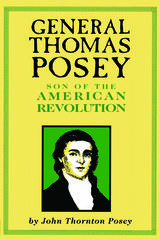
Revolutionary War general Thomas Posey (1750-1818) lived his life against the backdrop of one of the most dramatic periods in American history. Posey, who played a minor role in the actual War for Independence, went on to participate in the development and foundation of several states in the transappalachian West. His experiences on the late 18th- and early 19th-century American frontier were varied and in a certain sense extraordinary; he served as Indian agent in Illinois Territory; as Lieutenant Governor of Kentucky, as U.S. Senator from Louisiana, and as Governor of Indiana during its transition from territorial status to statehood.
His biographer speculates on the contrasting influences of Thomas's ne'er-do-well father, Captain John Posey, and the family's close friend, General George Washington. Posey's progress is then followed as he raises his own family in the newly formed nation. Of particular interest is an appendix containing a detailed analysis of evidence available to support popular 29th-century speculation that Thomas Posey was, in fact, George Washington's illicit son.
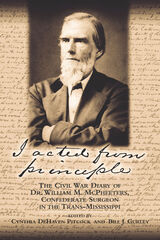
With the surrender of Vicksburg in July 1863, the Confederacy’s TransMississippi Department, which included Texas, Arkansas, Missouri, western Louisiana, and Indian Territory, was cut off from the remainder of the South. Robert Kerby’s insightful volume, originally published in 1972, “has gone far toward filling one of the most conspicuous gaps in the literature on the Confederacy,” according to The Journal of Southern History.
Kerby investigates the many factors that led to the Department’s disintegrating and offers a case study of a segment of American society that consumed itself by surrendering everything, including its principles and ideals, in pursuit of an unattainable military victory.
During the early nineteenth century, Nuttall explored the waters, valleys, plains, and mountains of the Great Lakes, Ohio River, Mississippi River, as well as the Missouri, Arkansas, Red, and Canadian river valleys of the former Louisiana Territory.
In this fascinating account of Nuttall's travels through the wilderness of the middle west, author Russell Lawson-using Nuttall's own journal-captures the sense of excitement of the early wanderer. As much a delight for the mind as the senses, The Land between the Rivers details the unremitting weather and rugged geography of uncharted lands within the Louisiana Territory. A sense of discovery pervades the narrative as Nuttall's odyssey builds to its climax in the prairie wilderness of what is now Oklahoma. Sickened by "ague"-in his case, malaria-Nuttall at times was barely able to go on; yet he continued to search for and catalog plants and animals.
The Land between the Rivers expands our knowledge of the work of one of the country's earliest botanists. We also learn a great deal about the early explorers, the inhabitants of the unsettled land, and about the land and culture of the times.

Life beyond the Boundaries explores identity formation on the edges of the ancient Southwest. Focusing on some of the more poorly understood regions, including the Jornada Mogollon, the Gallina, and the Pimería Alta, the authors use methods drawn from material culture science, anthropology, and history to investigate themes related to the construction of social identity along the perimeters of the American Southwest.
Through an archaeological lens, the volume examines the social experiences of people who lived in edge regions. Through mobility and the development of extensive social networks, people living in these areas were introduced to the ideas and practices of other cultural groups. As their spatial distances from core areas increased, the degree to which they participated in the economic, social, political, and ritual practices of ancestral core areas increasingly varied. As a result, the social identities of people living in edge zones were often—though not always—fluid and situational.
Drawing on an increase of available information and bringing new attention to understudied areas, the book will be of interest to scholars of Southwestern archaeology and other researchers interested in the archaeology of low-populated and decentralized regions and identity formation. Life beyond the Boundaries considers the various roles that edge regions played in local and regional trajectories of the prehistoric and protohistoric Southwest and how place influenced the development of social identity.
Contributors: Lewis Borck, Dale S. Brenneman, Jeffery J. Clark, Severin Fowles, Patricia A. Gilman, Lauren E. Jelinek, Myles R. Miller, Barbara J. Mills, Matthew A. Peeples, Kellam Throgmorton, James T. Watson
“Higginbotham has given to American historiography a microcosmic view of one of the earliest and most important outposts in the colonial new world. The Latin South can henceforth not be ignored.” —Alabama Historical Quarterly
“The definitive account . . . superbly recounted.” —Journal of Southern History
“Meticulously documented. . . . Recommended for libraries interested in the colonial period.” —Choice
“Mind-boggling . . . a stupendous job of research. It is amazing that Higginbotham can recreate in such detail the lives of these people. All history books should be written like this.” —BirminghamMagazine
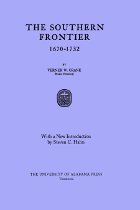
A classic resource on the struggle for dominance in southern North America during the colonial period
This volume recounts the clashes and intrigues that played out over the landscape of the Old Southwest and across six decades as the Spanish, French, British, and ultimately Americans vied for control. Rivalry began soon after initial discovery, mapping, and exploration as the world powers, particularly England and France, competed for control of the lucrative fur trade in the Mississippi valley. The French attempted to establish trade networks stretching from the Atlantic Ocean inland to the Mississippi River and northward from ports on the Gulf of Mexico to the Ohio River. But they found the British already entrenched there.
Verner Crane guides us through this multinational struggle and navigates the border wars and diplomatic intrigues that played crucial roles in the settlement of the South by Euro-Americans. In his new introduction, Steven Hahn places the work in the context of its time, sketches its publication history, and provides biographical information on Crane.

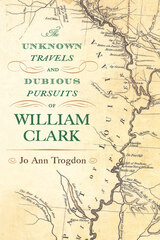
In this vivid history, Jo Ann Trogdon reveals William Clark’s highly questionable activities during the years before his famous journey west of the Mississippi. Delving into the details of Clark’s diary and ledger entries, Trogdon investigates evidence linking Clark to a series of plots—often called the Spanish Conspiracy—in which corrupt officials sought to line their pockets with Spanish money and to separate Kentucky from the United States. The Unknown Travels and Dubious Pursuits of William Clark gives readers a more complex portrait of the American icon than has been previously written.
READERS
Browse our collection.
PUBLISHERS
See BiblioVault's publisher services.
STUDENT SERVICES
Files for college accessibility offices.
RECENTLY PUBLISHED




UChicago Accessibility Resources
home | accessibility | search | about | contact us
BiblioVault ® 2001 - 2024
The University of Chicago Press