
 A SCHOLARLY BOOK REPOSITORY

Through vivid and searching portraits of these three redoubtable journalists, prize-winning historian John L. Thomas traces for the first time the evolving ideologies of the most significant reformers of their age.
Henry George’s Progress and Poverty, Edward Bellamy’s Looking Backward, and Henry Lloyd’s Wealth against Commonwealth each in its turn became an international bestseller, championing a course of national policy and social reform that owed allegiance neither to the large-scale capitalist model then emerging, nor to the bureaucratic socialism espoused on the left. Also common to the vast writings of all three were a deep distrust of partisan machine politics and a mounting sense of social crisis which neither spoilsmanship nor materialism seemed able to address.
Seeking instead diversity and cooperation within society, small economic units, and simplicity in government, the authors of these works were moved to defend strikes during the heyday of industrial capitalism. They spoke out for international peace when imperialism was rampant. They called for the preservation of community values in the face of urban sprawl. And they urged the goals of brotherhood and interdependence in an age when survival of the fittest was seen as holy writ.
They failed magnificently as apostles of a radical culture based on the ideal of a community, yet their intellectual legacy was not lost: their heirs include the broad movement that took the name Progressive, the New Deal, and the hopeful crusades of the 1960s. This magnificent book is their memorial and their history.
From the 1920s—a decade marked by racism and nativism—through World War II, hundreds of thousands of Americans took part in a vibrant campaign to overcome racial, ethnic, and religious prejudices. They celebrated the “cultural gifts” that immigrant and minority groups brought to society, learning that ethnic identity could be compatible with American ideals.
Diana Selig tells the neglected story of the cultural gifts movement, which flourished between the world wars. Progressive activists encouraged pluralism in homes, schools, and churches across the country. Countering racist trends and the melting-pot theory of Americanization, they championed the idea of diversity. They incorporated new thinking about child development, race, and culture into grassroots programs—yet they were unable to address the entrenched forms of discrimination and disfranchisement faced by African Americans in particular. This failure to grasp the deep social and economic roots of prejudice ultimately limited the movement’s power.
In depicting a vision for an inclusive American identity from a diverse citizenry, Americans All is a timely reminder of the debates over difference and unity that remain at the heart of American society.
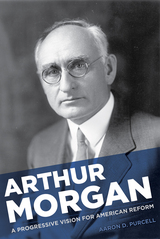
Purcell pinpoints Morgan’s reading of Edward Bellamy’s Looking Backward while a teenager as a watershed moment in the development of his vision for building modern American society. He recounts Morgan’s early successes as an engineer, budding Progressive leader, and educational reformer; his presidency of Antioch College; and his revolutionary but contentious tenure at the TVA. After his dismissal from the TVA, Morgan wrote extensively, eventually publishing over a dozen books, including a biography of Edward Bellamy, and countless articles. He also raised money to support an experimental community in Kerala, India, sharing Mahatma Gandhi’s belief in small, self-sustaining communities cooperatively supported by persons of strong moral character. At the same time, however, Morgan retained many of his late-nineteenth century beliefs, including eugenics, as part of his societal vision. His authoritarian administrative style and moral rigidity limited his ability to attract large numbers to his community-based vision.
As Purcell demonstrates, Morgan remained an active reformer well into the second half of the twentieth century, carrying forward a vision for American reform decades after his Progressive Era contemporaries had faded into obscurity. By presenting Morgan’s life and career within the context of the larger social and cultural events of his day, this revealing biographical study offers new insight into the achievements and motivations of an important but historically neglected American reformer.
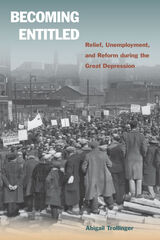
In the 1930s, the unemployed were organizing. Jobless workers felt they were “entitled" to a new kind of government protection—the protection from undeserved unemployment and the financial straits that such unemployment created. They wanted dignified forms of relief (including work relief) during the Depression, and unemployment insurance after.
Becoming Entitled artfully chronicles the emergence of this worker entitlement and the people who cultivated it. Abigail Trollinger focuses largely on Chicago after the Progressive Era, where the settlement house and labor movements both flourished. She shows how reformers joined workers and relief officials to redeem the unemployed and secure government-funded social insurance for them. Becoming Entitled also offers a critical reappraisal of New Deal social and economic changes, suggesting that the transformations of the 1930s came from reformers in the “middle,” who helped establish a limited form of entitlement for workers.
Ultimately, Trollinger highlights the achievements made by reformers working on city- and nation-wide issues. She captures the moment when some people shed the stigma that came with unemployment and demanded that the government do the same.
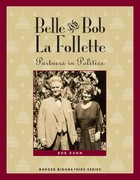
The most famous couple in Wisconsin politics, "Fighting Bob" La Follette and his wife, Belle Case La Follette, come to life in the pages of the newest addition to the Badger Biographies series for young readers. In an accessible format that includes historic images, a glossary of terms, and sidebars explaining political concepts, students learn about Progressive politics and reform in the early 20th century through the experiences of this pioneering couple.
The father of "Progressive politics," Bob La Follette was famous for digging in his heels when it came to reforming government corruption. He also gained a reputation for fiery speeches on the campaign trail and on the Senate floor. Belle La Follette was political in her own right. The first woman to graduate from the University of Wisconsin's Law School, she was an advocate for world peace and an agitator for the women's vote. She was also Bob's most trusted political advisor. Together, the couple raised a family and fought for the changes they believed would make the world a better place.
This unique account of the life of German nationalist and revolutionary Charles Follen opens a window on several worlds during the first half of the nineteenth century. Seldom does one biography embrace so many important historical issues and events.
Trained as a lawyer in his native Germany, Follen was involved in student nationalism, eventually turning to revolutionary Jacobinism. He fled to Switzerland in 1819 after conspiring in the first political murder of modern German history--the assassination of the playwright August von Kotzebue. In Switzerland, Follen secretly continued activities for revolutionizing Germany. When his plans were discovered in 1824, he fled to America. For ten years, Follen taught at Harvard; he was the first professor of German literature at an American institution of higher learning. He played a central role in the early importation of German ideas to New England, contributing to the fields of literature, philosophy, and theology. His marriage to Eliza Lee Cabot allowed him to move in elite Boston social circles. After his ordination as a Unitarian minister in 1836, Follen combined his interest in social reform (including an ardent devotion to the antislavery movement) with clerical service. Unitarian leader William Ellery Channingand abolitionist William Lloyd Garrison became Follen's close friends.
During the last two years of his life, Follen began to doubt his own power to bring about political change and suffered a crisis in self-confidence before his accidental death at the age of forty-three.
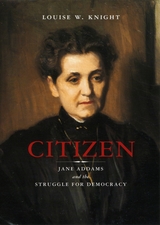
Citizen covers the first half of Addams's life, from 1860 to 1899. Knight recounts how Addams, a child of a wealthy family in rural northern Illinois, longed for a life of larger purpose. She broadened her horizons through education, reading, and travel, and, after receiving an inheritance upon her father's death, moved to Chicago in 1889 to co-found Hull House, the city's first settlement house. Citizen shows vividly what the settlement house actually was—a neighborhood center for education and social gatherings—and describes how Addams learned of the abject working conditions in American factories, the unchecked power wielded by employers, the impact of corrupt local politics on city services, and the intolerable limits placed on women by their lack of voting rights. These experiences, Knight makes clear, transformed Addams. Always a believer in democracy as an abstraction, Addams came to understand that this national ideal was also a life philosophy and a mandate for civic activism by all.
As her story unfolds, Knight astutely captures the enigmatic Addams's compassionate personality as well as her flawed human side. Written in a strong narrative voice, Citizen is an insightful portrait of the formative years of a great American leader.
“Knight’s decision to focus on Addams’s early years is a stroke of genius. We know a great deal about Jane Addams the public figure. We know relatively little about how she made the transition from the 19th century to the 20th. In Knight’s book, Jane Addams comes to life. . . . Citizen is written neither to make money nor to gain academic tenure; it is a gift, meant to enlighten and improve. Jane Addams would have understood.”—Alan Wolfe, New York Times Book Review
“My only complaint about the book is that there wasn’t more of it. . . . Knight honors Addams as an American original.”—Kathleen Dalton, Chicago Tribune

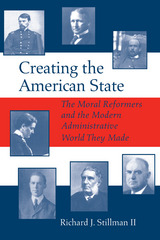
In this illuminating and provocative study, Stillman provides a new understanding of the foundation of the American state.
Whether renewing a driver's license, traveling on an airplane, or just watching in fascination as a robot probes Mars, we all participate in the everyday workings of the modern administrative state. As Stillman demonstrates in this study, however, we have not, until now, fully investigated or appreciated this administrative stateÕs origins or its evolution into the entity that so affects our lives today.
Stillman reveals that this modern enterprise emerged from a complex foundation of ideas and ideals rather than as a result of a simple, rational plan or cataclysmic event, as previously contended. In fact, he finds that the basis for our current administrative state lies in the lives of the seven individuals who, during the late 19th and early 20th centuries, invented its various elements.
Stillman also finds that although they lived at different times, these seven founders-George William Curtis, Charles Francis Adams, Jr., Emory Upton, Jane Addams, Frederick W. Taylor, Richard Childs, and Louis Brownlow-had much in common: all were products of intensely Protestant, small-town America, and all were motivated by strong moral idealism. Indeed, Stillman finds that state making in the United States has been a continuation of the Protestant goal to "protest and purify."
Some names are more recognizable than others, but all, through remarkable moral fervor and exceptional leadership skills, invented the administrative practices and procedures so familiar today.

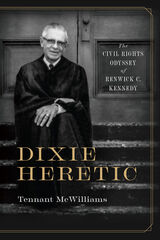
Drawn from some 5,000 letters, six decades of daily-diary writings, and extensive interviews, Dixie Heretic: The Civil Rights Odyssey of Renwick C. Kennedy offers a life-and-times biography of the Alabama Black Belt minister, Renwick C. Kennedy (1900–1985). Here, Tennant McWilliams gives an unvarnished account of Kennedy’s tortuous efforts to make his congregants and other southern whites “better Christians.”
Kennedy came from “upcountry” South Carolina, a place rife with Scotch-Irish Associate Reformed Presbyterians—people of biblical infallibility and individual piety and salvation. In 1927, after a life-changing theology education at Princeton, he moved to Camden, Alabama, county seat of Wilcox County. There, he came to believe that God had a mandate for him: to change the “Half Christian” conservative, and the often violent, racial behaviors around him. As a neo-orthodox Protestant, Kennedy never rejected literal approaches to the Bible. Still, out of the “Full Christian” Social Gospel, he urged changed racial behavior. Ultimately this led him to publish confrontational short stories and essays in Christian Century and New Republic—most set in fictitious “Yaupon County.”
In World War II, Kennedy served as a chaplain with the famed 102nd Evacuation Hospital. He came home hoping the Allied victory would spur Americans to fight racial segregation just as they had fought racial fascism in Europe. The 1948 Dixiecrat movement dashed these hopes, turning much of his neo-orthodox optimism to cynicism. His hope found fleeting resurgence in the civil rights movement, and saw Kennedy quietly leading desegregation of Troy University, where he was an administrator. But the era’s assassinations, combined with George Wallace and the rise of southern white Republicans, regularly returned him to the frustrated hopes of 1948 and fostered a pessimism about truly changed hearts that he took to his grave in 1985.
Dorothea Dix was the most politically engaged woman of her generation, which was itself a remarkable tapestry of activists. An influential lobbyist as well as a paragon of the doctrine of female benevolence, she vividly illustrated the complexities of the "separate spheres" of politics and femininity. Her greatest legislative initiative, a campaign for federal land grants to endow state mental hospitals, assumed a central role in the public land controversies that intertwined with the slavery issues in Congress following the Mexican War. The passage of this legislation in 1854, and its subsequent veto by President Pierce, touched off the most protracted effort to override a veto that had yet taken place.
An activist who disdained the women's rights and antislavery movements, Dix, an old-line Whig, sought to promote national harmony and became the only New England social reformer to work successfully in the lower South right up to the eve of secession. When war broke out, she sought to achieve as Superintendent of Women Nurses the sort of cultural authority she had seen Florence Nightingale win in the same role during the Crimean War. The disastrous failure of one of the most widely admired heroines in the nation provides a dramatic measure of the transformations of northern values during the war.
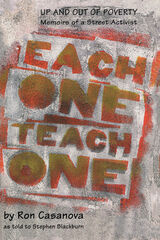
Underlying Each One Teach One, with its vivid cast of characters and intimate descriptions of Harlem and other urban areas, is the profound sense that no matter what your circumstance, you can use your past experience to help others. Ultimately, Casanova's story is a message of hope for the future and for the possibility of self-sufficiency and self-empowerment for each individual.
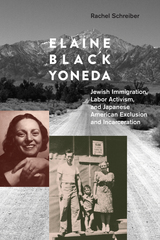
During World War II, Elaine Black Yoneda, the daughter of Russian Jewish immigrants, spent eight months in a concentration camp—not in Europe, but in California. She did this voluntarily and in solidarity, insisting on accompanying her husband, Karl, and their son, Tommy, when they were incarcerated at the Manzanar Relocation Center. Surprisingly, while in the camp, Elaine and Karl publicly supported the United States’ decision to exclude Japanese Americans from the coast.
Elaine Black Yoneda is the first critical biography of this pioneering feminist and activist. Rachel Schreiber deftly traces Yoneda’s life as she became invested in radical politics and interracial and interethnic activism. In her work for the International Labor Defense of the Communist Party, Yoneda rose to the rank of vice president. After their incarceration, Elaine and Karl became active in the campaigns to designate Manzanar a federally recognized memorial site, for redress and reparations to Japanese Americans, and in opposition to nuclear weapons.
Schreiber illuminates the ways Yoneda’s work challenged dominant discourses and how she reconciled the contradictory political and social forces that shaped both her life and her family’s. Highlighting the dangers of anti-immigrant and anti-Asian xenophobia, Elaine Black Yoneda recounts an extraordinary life.
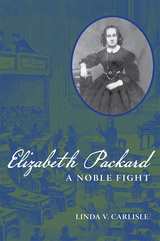
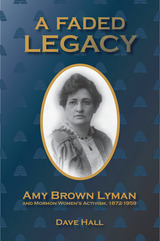
Placing Lyman’s story within a local and national context, award-winning author Dave Hall examines the roots and trajectory of Mormon women’s activism. Born into a polygamist family, Lyman entered the larger sphere of public life at the time when the practice of polygamy was ending and Mormonism had begun assimilating mainstream trends. The book follows her life as she prepared for a career, married, and sought meaning in a rapidly changing society. It recounts her involvement in the Relief Society, the Mormon women’s charity group that she led for many years and sought to transform into a force for social welfare, and it considers the influence of her connections with national and international women’s organizations. The final period of Lyman’s life, in which she resigned from the Relief Society amidst personal tragedy, offers insight into the reasons Mormon women abandoned their activist heritage for a more conservative role, a stance that is again evolving.
Winner of the Mormon History Association's Best First Book Award.
A Fatal Drifting Apart: Democratic Social Knowledge and Chicago Reform explores the efforts of diverse groups within Chicago during the Progressive Era. This backdrop of industrialization, emerging classes, and ethnic and racial pluralism frequently riven with class conflict set the stage on which Chicago reformers took up the seemingly impossible challenge of enacting democracy. Laura M. Westhoff examines historic events and well-known individuals of the period and brings them together in an unusual framework that offers a new perspective on the reorientation of knowledge, civic identity, and democratic culture at the dawn of the twentieth century, which she terms democratic social knowledge. The book raises important questions that continue to resonate: In a democracy, who has the power to define social problems and offer solutions, and whose experience and knowledge are seen as legitimate?
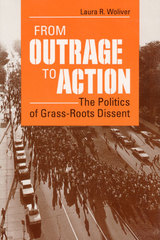
Through in-depth interviews with activists, Laura Woliver examines these community actions, studying the groups involved and linking her conclusions to larger questions of political power and the impact of social movements. Her findings will make fascinating reading for those interested in the rise and fall of grass-roots interest groups, the nature of dissent, and the reasons why people volunteer countless hours, sometimes in the face of community opposition and isolation, to dedicate themselves to a cause. The ad hoc interest groups studied are the Committee to Recall Judge Archie Simonson (Madison), the Coalition for Justice for Ernest Lacy (Milwaukee), Concerned Citizens for Children (Grant County, Wisconsin), and Citizens Taking Action (Madison). Woliver relates the community responses in these cases to those in the Jeffrey Dahmer mass murder case and the beating by Los Angeles police of Rodney King.
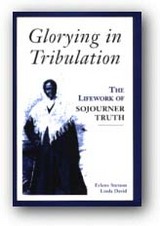
In Glorying in Tribulation, Stetson presents a new dimension of Sojourner Truth's character. Much of the information regarding this oft-quoted African American woman is either the stuff of legend or is in dispute. This important new biography takes both legend and fact and sets them into a larger historical context. The authors utilize archival sources, and other forms of direct and indirect evidence to create a better understanding of Truth. We see her victories as well as her defeats--we see her as a real person. Truth comes alive in the pages of this book through her poignant, prophetic words and we realize that what she spoke of in the nineteenth century is just as relevant to us today.
Glorying in Tribulation offers students, scholars, and teachers of American history and culture studies a comprehensive look and a new perspective on Truth's contribution to American history. It is a long-overdue, exciting interpretation of the meaning of Sojourner Truth's life.


Few surnames resonate in American history more than Beecher. The family’s abolitionist ministers, educators, and writers are central figures in the historical narrative of the United States. The Beechers’ influence was greatest in the nineteenth century, but the family story continued—albeit with less public attention—with a descendant who grew up in Birmingham, Alabama, during the early twentieth century.
John Beecher (1904–1980) never had the public prominence of his famous ancestors, but as a poet, professor, sociologist, New Deal administrator, journalist, and civil rights activist, he spent his life fighting for the voiceless and oppressed with a distinct moral sensibility that reflected his self-identification as the twentieth-century torchbearer for his famous family. While John Beecher had many vocations in his lifetime, he always considered himself a poet and a teacher. Some critics have compared the populist elements of Beecher’s poetry to the work of Walt Whitman and Carl Sandburg, but his writing never gained a broad audience or critical acclaim during his lifetime.
In Here I Stand: The Life and Legacy of John Beecher, Angela J. Smith examines Beecher’s writing and activism and places them in the broader context of American culture at pivotal points in the twentieth century. Employing his extensive letters, articles, unpublished poetry and prose, and audio interviews in addition to his numerous published books, Smith uncovers a record of public concerns in American history ranging from the plight of workers in 1920s steel mills to sharecroppers’ struggles during the Depression to the civil rights movement of the 1960s.

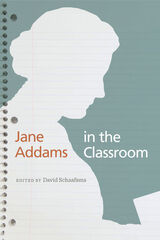
Balancing theoretical and practical considerations, the collection examines Addams's emphasis on listening to and learning from those around her and encourages contemporary educators to connect with students through innovative projects and teaching methods. In the first essays, Addams scholars lay out how her narratives drew on experience, history, and story to explicate theories she intended as guides to practice. Six teacher-scholars then establish Addams's ongoing relevance by connecting her principles to exciting events in their own classrooms. An examination of the Jane Addams Children's Book Award and a fictional essay on Addams's work and ideas round out the volume.
Accessible and wide-ranging, Jane Addams in the Classroom offers inspiration for educators while adding to the ongoing reconsideration of Addams's contributions to American thought.
Contributors include Todd DeStigter, Lanette Grate, Susan Griffith, Lisa Junkin, Jennifer Krikava, Lisa Lee, Petra Munro, Bridget O'Rourke, David Schaafsma, Beth Steffen, Darren Tuggle, Erin Vail, and Ruth Vinz.
—Jeannette Rankin (1880-1973)
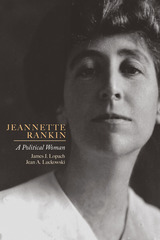
Jeannette Rankin, the first woman elected to Congress, stands tall among American icons. The representative from Montana won her seat at a time when women didn't have the right to vote in most states. Her firm stances inspired both admiration and fury across party lines, and she gained nearly canonical status among feminists and pacifists. In Jeannette Rankin: A Political Woman, James Lopach and Jean Luckowski demythologize Rankin, showing her to be a talented, driven, and deeply divided woman.
Until now, no biography has explored Rankin's inconsistencies. The authors extensively consulted the correspondence of her family members and contemporaries, uncovering ties between her politics and her familial and personal relationships. They reveal how she succeeded through her wealthy brother's influence as well as her own extraordinary efforts; how she drew inspiration not from her rural roots but from the radical hotbed of Greenwich Village; and how she championed an independent, woman-centered life while deferring to family.
Revealing her complexities along with her accomplishments, Jeannette Rankin: A Political Woman will be the definitive biography of this path-breaking politician for years to come.
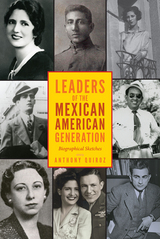
Leaders of the Mexican American Generation explores the lives of a wide range of influential members of the US Mexican American community between 1920 and 1965 who paved the way for major changes in their social, political, and economic status within the United States.
Including feminist Alice Dickerson Montemayor, to San Antonio attorney Gus García, and labor activist and scholar Ernesto Galarza, the subjects of these biographies include some of the most prominent idealists and actors of the time. Whether debating in a court of law, writing for a major newspaper, producing reports for governmental agencies, organizing workers, holding public office, or otherwise shaping space for the Mexican American identity in the United States, these subjects embody the core values and diversity of their generation.
More than a chronicle of personalities who left their mark on Mexican American history, Leaders of the Mexican American Generation cements these individuals as major players in the history of activism and civil rights in the United States. It is a rich collection of historical biographies that will enlighten and enliven our understanding of Mexican American history.
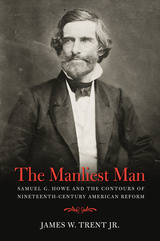
Always quick to refer to himself as a liberal, Howe embodied the American Renaissance's faith in the perfectibility of human beings, and he spoke out in favor of progressive services for disabled Americans. A Romantic figure even in his own day, he embraced a notion of manliness that included heroism under fire but also compassion for the underdog and the oppressed. Though hardly a man without flaws and failures, he nevertheless represented the optimism that characterized much of antebellum American reform.
The first full-length biography of Samuel G. Howe in more than fifty years, The Manliest Man explores his life through private letters and personal and public documents. It offers an original view of the reformer's personal life, his association with social causes of his time, and his efforts to shape those causes in ways that allowed for the greater inclusion of devalued people in the mainstream of American life.
Banks failed, credit contracted, inequality grew, and people everywhere were out of work while political paralysis and slavery threatened to rend the nation in two. As financial crises always have, the Panic of 1837 drew forth a plethora of reformers who promised to restore America to greatness. Animated by an ethic of individualism and self-reliance, they became prophets of a new moral order: if only their fellow countrymen would call on each individual’s God-given better instincts, the most intractable problems could be resolved.
Inspired by this reformist fervor, Americans took to strict dieting, water cures, phrenology readings, mesmerism, utopian communities, free love, mutual banking, and a host of other elaborate self-improvement schemes. Vocal activists were certain that solutions to the country’s ills started with the reformation of individuals, and through them communities, and through communities the nation. This set of assumptions ignored the hard political and economic realities at the core of the country’s malaise, however, and did nothing to prevent another financial panic twenty years later, followed by secession and civil war.
Focusing on seven individuals—George Ripley, Horace Greeley, William B. Greene, Orson Squire Fowler, Mary Gove Nichols, Henry David Thoreau, and John Brown—Philip Gura explores their efforts, from the comical to the homicidal, to beat a new path to prosperity. A narrative of people and ideas, Man’s Better Angels captures an intellectual moment in American history that has been overshadowed by the Civil War and the pragmatism that arose in its wake.
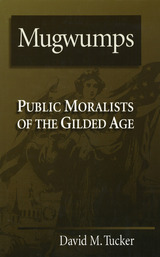
A spirited reevaluation of the public moralists who shaped public policy in nineteenth-century America, Mugwumps: Public Moralists of the Gilded Age provides a refreshing look at a group of Americans whose importance to the history of our country has commonly been dismissed.
A public interest group that labeled the generation following the American Civil War as the "Gilded Age," Mugwumps were college-educated individuals who lived the lessons of their moral philosophy—Christian values, republican virtue, and classical liberalism. Tracing Mugwump values back before the term was commonly used, Tucker defines these liberals as benevolent and altruistic, active campaigners against slavery and imperialism, and for sound money, lower tariffs, and civil service reform. The earliest Mugwumps took on the self-assigned task of advocating public principles over private interests.
Evaluations of these public moralists during the 1950s and 1960s, however, did not paint the Mugwumps in so positive a light. Awash in the popular New Deal public policies that advocated positive government intervention and regulation in the economy, these studies dismissed Mugwump liberalism as outdated. More specifically, the reformers were criticized as being self-interested failures.
Tucker obliges readers to look beyond such dismissals to the history and accomplishments of Mugwumps as a whole. Unlike previous historians, Tucker examines the antebellum roots of the Mugwumps and follows their ever-increasing participation in American government throughout the nineteenth century. Tucker portrays Mugwumps not as selfish agents of the middle class but as fascinating practitioners of eighteenth-century public virtue and nineteenth-century social science.
This book forcefully challenges previous studies on the Mugwumps and restores these public moralists to the mainstream of nineteenth-century American history. Their concerns for morality and free-market economics are again fashionable in contemporary politics and deserving of fresh attention from both the general reader and the scholar.
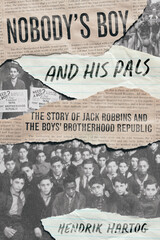
In 1914, social reformer Jack Robbins and a group of adolescent boys in Chicago founded the Boys’ Brotherhood Republic, an unconventional and unusual institution. During a moral panic about delinquent boys, Robbins did not seek to rehabilitate and/or punish wayward youths. Instead, the boys governed themselves, democratically and with compassion for one another, and lived by their mantra “So long as there are boys in trouble, we too are in trouble.” For nearly thirty years, Robbins was their “supervisor,” and the will he drafted in the late 1950s suggests that he continued to care about forgotten boys, even as the political and legal contexts that shaped children’s lives changed dramatically.
Nobody’s Boy and His Pals is a lively investigation that challenges our ideas about the history of American childhood and the law. Scouring the archives for traces of the elusive Jack Robbins, Hendrik Hartog examines the legal histories of Progressive reform, childhood, criminality, repression, and free speech. The curiosity of Robbins’s story is compounded by the legal challenges to his will, which wound up establishing the extent to which last wishes must conform to dominant social values. Filled with persistent mysteries and surprising connections, Nobody’s Boy and His Pals illuminates themes of childhood and adolescence, race and ethnicity, sexuality, wealth and poverty, and civil liberties, across the American Century.
The League of Nations Advisory Committee on the Traffic in Opium and Other Dangerous Drugs, created in 1920, culminated almost eight decades of political turmoil over opium trafficking, which was by far the largest state-backed drug trade in the age of empire. Opponents of opium had long struggled to rein in the profitable drug. Opium’s Long Shadow shows how diverse local protests crossed imperial, national, and colonial boundaries to gain traction globally and harness public opinion as a moral deterrent in international politics after World War I.
Steffen Rimner traces the far-flung itineraries and trenchant arguments of reformers—significantly, feminists and journalists—who viewed opium addiction as a root cause of poverty, famine, “white slavery,” and moral degradation. These activists targeted the international reputation of drug-trading governments, first and foremost Great Britain, British India, and Japan, becoming pioneers of the global political tactic we today call naming and shaming. But rather than taking sole responsibility for their own behavior, states in turn appropriated anti-drug criticism to shame fellow sovereigns around the globe. Consequently, participation in drug control became a prerequisite for membership in the twentieth-century international community. Rimner relates how an aggressive embrace of anti-drug politics earned China and other Asian states new influence on the world stage.
The link between drug control and international legitimacy has endured. Amid fierce contemporary debate over the wisdom of narcotics policies, the 100-year-old moral consensus Rimner describes remains a backbone of the international order.
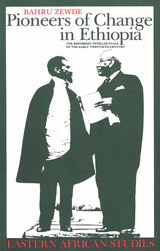
In this exciting new study, Bahru Zewde, one of the foremost historians of modern Ethiopia, has constructed a collective biography of a remarkable group of men and women in a formative period of their country’s history. Ethiopia’s political independence at the end of the nineteenth century put this new African state in a position to determine its own levels of engagement with the West. Ethiopians went to study in universities around the world. They returned with the skills of their education acquired in Europe and America, and at home began to lay the foundations of a new literature and political philosophy. Pioneers of Change in Ethiopia describes the role of these men and women of ideas in the social and political transformation of the young nation and later in the administration of Haile Selassie.
"Modernity" was an inescapable fact of life for the first generation to come of age in the German Empire. Even the most extreme political opponents saw the chaotic transformation of all spheres of life in the wake of industrial capitalism as the central problem facing young men and women at the fin de siècle. This fresh look at Wilhelmine perceptions of modernity challenges both the traditional emphasis on anti-modernism as a peculiarly German response that led to the rise of National Socialism, and the more recent post-Foucauldian studies on the "pathologies of modernity," which point instead to an unreflective faith in science and efficiency on the part of German progressives. Shifting the focus away from radical extremes on either side, Kevin Repp explores the more moderate agendas of hundreds of mainstream intellectuals and activists from diverse social backgrounds who sought to surmount the human costs of industrialization without relinquishing its positive potential.
Repp combines detailed case studies of Adolf Damaschke, Gertrud Bäumer, and Werner Sombart with an innovative prosopography of their milieu to show how leading reformers enlisted familiar tropes of popular nationalism, eugenics, and cultural pessimism in formulating pragmatic solutions that would be at once modern and humane. Easily obscured by radical voices on right and left, this quiet search for alternatives nevertheless succeeded in building a nationwide network of educational centers, associative ties, and institutions that substantially altered the landscape of Wilhelmine political culture in the decades before the First World War.
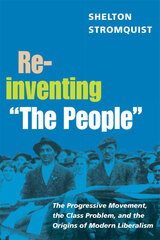
A comprehensive study of the Progressive movement, Reinventing "The People"contends that the persistence of class conflict in America challenged the very defining feature of Progressivism: its promise of social harmony through democratic renewal.
Shelton Stromquist profiles the movement's work in diverse arenas of social reform, politics, labor regulation and so-called race improvement. While these reformers emphasized different programs, they crafted a common language of social reconciliation in which an imagined civic community--"the People"--would transcend parochial class and political loyalties. But efforts to invent a society without enduring class lines marginalized new immigrants and African Americans by declaring them unprepared for civic responsibilities. In so doing, Progressives laid the foundation for twentieth-century liberals' inability to see their world in class terms and to conceive of social remedies that might alter the structures of class power.
On Richard Cobden’s death, Charles Francis Adams noted in his diary that Cobden “had fought his way to fame and honor by the single force of his character. He had nothing to give. No wealth, no honors, no preferment. He first taught the multitude by precept and example that the right of government was not really to the few, but to the many.&rquo; Disraeli was no less acute when he remarked that Cobden was “the greatest political character that the pure middle class of this country has yet produced.”
In this biography, Nicholas Edsall demonstrates how Cobden dominated middle-class radicalism from its high-water mark in the turbulent 1840s to the quieter years immediately before the emergence of the Gladstonian Liberal party in the 1860s. Cobden headed the movement for the incorporation of his adopted city, Manchester; he was the leader of the most successful of Victorian mass agitations, the Anti-Corn Law League, and chief adviser to the movement for the repeal of newspaper taxes; he was a founder of the mid-nineteenth-century peace movement and a vocal opponent of the Crimean War; he was the chief English negotiator of the Anglo–French Commercial Treaty of 1860; and he was one of the earliest critics of the modern arms race.
This is the first full-length biography since the publication of the official life more than a century ago. Not only has a good deal of new material become available, but the passage of time has served to underscore Cobden’s significance both as a spokesman for the middle class in an era of acute class conflict and as a critic of the aims of great-power diplomacy at a time when his own country was the greatest of powers.

A radical abolitionist and early feminist, Francis George Shaw (1809–1882) was a prominent figure in American reform and intellectual circles for five decades. He rejected capitalism in favor of a popular utopian socialist movement; during the Civil War and Reconstruction, he applied his radical principles to the Northern war effort and to freedmen’s organizations.
A partnership with Henry George in the late 1870s provided an international audience for Shaw’s alternative vision of society. Seeking the One Great Remedy is the biography of this remarkable and influential man. In compelling detail, author Lorien Foote depicts the many aspects and exploits of the Shaw family. Their activities provide a perspective on the course of American reform that calls into question previous interpretations of the reform movement of this period.
Francis George Shaw is perhaps best known as the father of Robert Gould Shaw, subject of the movie Glory. Francis and his wife, Sarah Blake Shaw, achieved considerable notoriety for their activities, including their effort to shape public opinion during the Civil War. Turning the tragic death of their son into a public relations and propaganda triumph, they altered Northern opinion about the war and shaped a historical perception of the famous Massachusetts Fifty-fourth that continues today.
Seeking the One Great Remedy argues that social radicalism was pervasive among elite reformers before and after the Civil War and finds in the dramatic story of Francis George Shaw a model of that cause.


Artfully annotated, The Selected Papers of Jane Addams offers an evocative choice of correspondence, photographs, and other primary documents, presenting a multi-layered narrative of Addams's personal and emerging professional life. Themes inaugurated in the previous volume are expanded here, including dilemmas of family relations and gender roles; the history of education; the dynamics of female friendship; religious belief and ethical development; changes in opportunities for women; and the evolution of philanthropy, social welfare, and reform ideas.
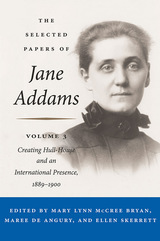
The third volume in this acclaimed series documents Addams’s creation of Hull-House and her rise to worldwide fame as the acknowledged female leader of progressive reform. It also provides evidence of her growing commitment to pacifism. Here we see Addams, a force of thought, action, and commitment, forming lasting relationships with her Hull-House neighbors and the Chicago community of civic, political, and social leaders, even as she matured as an organizer, leader, and fund-raiser, and as a sought-after speaker, and writer. The papers reveal her positions on reform challenges while illuminating her strategies, successes, and responses to failures. At the same time, the collection brings to light Addams’s private life. Letters and other documents trace how many of her Hull-House and reform alliances evolved into deep, lasting friendships and also explore the challenges she faced as her role in her own family life became more complex.
Fully annotated and packed with illustrations, The Selected Papers of Jane Addams, Volume 3 is a portrait of a woman as she changed—and as she changed history.
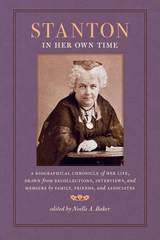
Among nineteenth-century women’s rights reformers, Elizabeth Cady Stanton (1815–1902) stands out for the maternal and secular advocacy that shaped her activism and public reception. A wife and mother of seven, she was also a prolific writer, transatlantic women’s rights leader, popular lecturer, congressional candidate, canny historian, and freethought champion. Her lifelong interest in women’s sexual and reproductive rights and late efforts to reform institutional religion are as relevant to our time as they were to her own.
Stanton’s professional life lasted a half-century, ranging from antebellum women’s rights organization and oratory, to a post–Civil War career as a lyceum lecturer, to a late-century role as an incisive religious and cultural critic. Acutely aware of the medical, religious, legal, and educational barriers to women’s independence, she advocated for married women’s right to vote, obtain a divorce, gain custody of their children, and own property. As she grew more radical over the years, she also demanded judicial reform, the separation of church and state, free love, progressive coeducational opportunities, and women’s right to limit their fertility.
In this richly contextualized collection of primary sources, Noelle A. Baker brings together accounts of Stanton’s life and ideas from both well-known and recently recovered figures. From the teacher chiding an assertive young woman to erstwhile allies worrying about her growing radicalism, their voices paint a vivid portrait of a woman of vaunting ambition, powerhouse intellect, and her share of human failings.
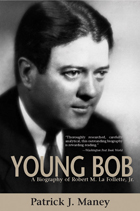
United States senator "Young Bob" La Follette entered politics as a young reformer in the shadow of his legendary father, "Fighting Bob" La Follette. He made his own mark as a key architect of Roosevelt’s New Deal and as a champion of labor rights and civil liberties. But in 1946 he was unexpectedly unseated by Joseph McCarthy, whose rise to Cold War notoriety foreshadowed La Follette’s despair and suicide in 1953. This new edition updates the only full scale biography of La Follette,Jr., the first to exploit his voluminous collection of personal papers. Patrick J. Maney makes clear that Young Bob’s story is as relevant today as it was when he died. His life stands as dramatic evidence of how one of the most respected politicians of his time bridged the political spectrum and was admired by both liberals like FDR and Harry Truman and conservatives like Robert Taft and Richard Nixon.
READERS
Browse our collection.
PUBLISHERS
See BiblioVault's publisher services.
STUDENT SERVICES
Files for college accessibility offices.
RECENTLY PUBLISHED





UChicago Accessibility Resources
home | accessibility | search | about | contact us
BiblioVault ® 2001 - 2024
The University of Chicago Press