
 A SCHOLARLY BOOK REPOSITORY
The essays in this collection assess the impact of Michel Foucault’s work on the conditions of disciplinary knowledge in humanistic studies and speculate on the directions we might take from his work. They cover a wide range of fundamental concerns: from philosophy of knowledge in both theoretical and applied forms to philology, history, psychoanalysis, feminism, and politics. The result is a lively debate and further probing beyond disciplinary boundaries. After Foucault will interest political theorists, feminists, and scholars of history, philosophy, and literature.
True voices, real places, and unforgettable chills: Alabama’s ghost stories, gathered with scholarly care, reveal how memory, history, and belief linger—whispering from bridges, homes, cemeteries, and courthouses statewide today still.
The Face in the Window and Other Alabama Ghostlore is a landmark collection that preserves and brings to life Alabama’s rich tradition of supernatural storytelling. Rather than offering fictional retellings, this book presents ghost stories as they are told—by neighbors, families, students, and elders—rooted firmly in real places and lived experience. Alan Brown captures the voices of Alabamians across generations, revealing how belief, memory, humor, and fear continue to shape the state’s cultural landscape.
The collection is organized by geographic region, spiraling across the state so readers can explore local lore county by county and town by town. Many stories were gathered directly through fieldwork, lectures, and interviews, while others draw on previously unpublished Works Progress Administration materials from the 1930s. Dialect and storytelling style are preserved to maintain authenticity, and scholarly notes are placed at the back to keep the narratives accessible. Brown, a folklorist and former lecturer for the Alabama Humanities Foundation, brings both academic rigor and deep respect for oral tradition to the collection.
This collection will delight readers interested in folklore, Southern history, oral culture, and the supernatural. It is invaluable for scholars and students, irresistible to ghost-story enthusiasts, and especially meaningful for Alabamians eager to see their communities and traditions thoughtfully recorded and remembered.

In this learned romp of science writing, Cambridge professor Simon Conway Morris cheerfully challenges six assumptions—what he calls ‘myths’—that too often pass as unquestioned truths amongst the evolutionary orthodox.
His convivial tour begins with the idea that evolution is boundless in the kinds of biological systems it can produce. Not true, he says. The process is highly circumscribed and delimited. Nor is it random. This popular notion holds that evolution proceeds blindly, with no endgame. But Conway Morris suggests otherwise, pointing to evidence that the processes of evolution are “seeded with inevitabilities.”
If that is so, then what about mass extinctions? Don’t they steer the development of life in radically new directions? Rather the reverse, claims Conway Morris. Such cataclysms accelerate evolutionary developments that were going to happen anyway. And what about that other evolutionary canard: the “missing link”? There is plenty to choose from in the fossil record, but persistently overlooked is that in any group, there is not one but a phalanx of “missing links.” Once again, we under-score the near-inevitability of evolutionary outcomes.
Turning from fossils to minds, Conway Morris critically examines the popular tenet that the intelligence of humans and animals are the same thing, a difference of degree, not kind. A closer scrutiny of our minds shows that, in reality, an unbridgeable gulf separates us from even the chimpanzees, so begging questions of consciousness and Mind.
Finally, Conway Morris tackles the question of extraterrestrials. Undoubtedly, the size and scale of the universe suggest that alien life must exist somewhere beyond Earth and our tiny siloed solar system? After all, evolutionary convergence more than hints that human-like forms are universal. But Dr. Conway Morris has serious doubts. The famous Fermi Paradox (“Where are they?”) appears to hold: Alone in the cosmos—and unique, but not quite in the way one might expect.
“In the top corner of the window a pale, milky-white wisp is rising almost to the top of our ten-foot ceiling…. I am startled but not afraid…. Mostly, I am engrossed; I have never seen anything like this before (or since) and it fascinates me.”
Dennis Waskul writes these lines—about his first-hand experience with the supernatural—in the introduction to his beguiling book Ghostly Encounters. Based on two years of fieldwork and interviews with 71 midwestern Americans, the Waskuls’ book is a reflexive ethnography that examines how people experience ghosts and hauntings in everyday life. The authors explore how uncanny happenings become ghosts, and the reasons people struggle with or against a will to believe. They present the variety and character of hauntings and ghostly encounters, outcomes of people telling haunted legends, and the nested consequences of ghostly experiences.
Through these stories, Ghostly Encounters seeks to understand the persistence of uncanny experiences and beliefs in ghosts in an age of reason, science, education, and technology—as well as how those beliefs and experiences both reflect and serve important social and cultural functions.
"Valuable and highly readable. . . . [Ghosts in the Middle Ages] will be of interest to many students of medieval thought and culture, but especially to those seeking a general overview of this particularly conspicuous aspect of the medieval remembrance of the dead."—Hans Peter Broedel, Medieval Review
"A fascinating study of the growing prevalence of ghost imagery in ecclesiastical and popular writing from the fifth to the fifteenth century."—Choice
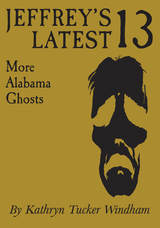
A deluxe, commemorative edition of a beloved collection of ghostly stories from famed southern author and folklorist Kathryn Tucker Windham’s home state of Alabama.
Accompanied by her faithful companion, Jeffrey, a friendly spirit who resided in her home in Selma, Alabama, Kathryn Tucker Windham traveled the South, visiting the sites of spectral legends in Mississippi, Georgia, and Tennessee, among other places. In Jeffrey’s Latest Thirteen: More Alabama Ghosts, a sequel to her landmark Thirteen Alabama Ghosts and Jeffrey, Windham introduces readers to thirteen more of Jeffrey's ghostly acquaintances, each with the charm and universal appeal that has created hundreds of thousands of Jeffrey fans.
Among the other hair-raising tales in this collection, Windham spotlights the apparitions of academia. From the three Yankee soldiers who haunt the University of Alabama’s Civil War–era Little Round House to the Confederate soldier who resides in the University Chapel at Auburn University, Alabama’s institutions of higher learning seem to have more than a few paranormal pupils.
Photographs of the sites about which Windham writes are one of the best-loved features of her series of “Jeffrey the Ghost” books. Jeffrey’s Latest Thirteen features the image of a beautiful child who, though not photographed in life, reappeared long enough to be photographed with his bereaved father's borrowed camera. Bewitched readers will find the startling photograph of the child in the next-to-last chapter, just pages before he book’s photograph of Windham’s own spectral muse, Jeffrey.
This commemorative edition returns Windham’s thrilling classic to its original 1982 keepsake quality and includes a new afterword by the author’s children.
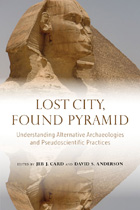
A critical investigation into how modern myths shape interpretations of the ancient past.
Lost City, Found Pyramid delves into the fascinating world of sensational “pseudoarchaeology,” from perennial discoveries of lost pyramids or civilizations to contemporary ghost-hunting and reality TV. It examines how nonscientific pursuit of myths and legends warps both public perceptions of archaeology and of human history itself.
A collection of twelve engaging and insightful essays, Lost City, Found Pyramid does far more than argue for the simple debunking of false archaeology. Rather, it brings into focus the value of understanding how and why pseudoarchaeology captures the public imagination. By comprehending pseudoarchaeology’s appeal as a media product, cultural practice, and communication strategy, archaeologists can enhance and enliven how they communicate about real archaeology in the classroom and in the public arena.
The first part of Lost City, Found Pyramid provides numerous case studies. Some examine the work of well-intentioned romantics who project onto actual archaeological data whimsical interpretative frameworks or quixotic “proofs” that confirm legends, such as that of the Lost White City of Honduras, or other alternative claims. Other case studies lay bare how false claims may inadvertently lead to the perpetuation of ethnic stereotypes, economic exploitation, political adventurism, and a misunderstanding of science.
Offering much of interest to scholars and students of archaeology, archaeology buffs, as well as policy-makers involved in the discovery, curation, and care of archaeological sites and relics, Lost City, Found Pyramid provides an invaluable corrective and hopeful strategy for engaging the public’s curiosity with the compelling world of archaeological discovery.
Often examined separately, play and hauntings in fact act together to frame postcolonial issues. Sushmita Chatterjee showcases their braided workings in social and political fabrics. Drawing on this intertwined idea of play and hauntings, Chatterjee goes to the heart of conundrums within transnational postcolonial feminisms by examining the impossible echoes of translations, differing renditions of queer, and the possibilities of solidarity beyond the fraternal friendships that cement nation-states. Meaning-plays, or slippages through language systems as we move from one language to another, play a pivotal role in a global world. As Chatterjee shows, an attentiveness to meaning-plays discerns the past and present, here and there, and moves us toward responsive ethics in our theories and activisms.
Insightful and stimulating, Postcolonial Hauntings centers the inextricable work of play and hauntings as a braided ethics for postcolonial transnational struggles.
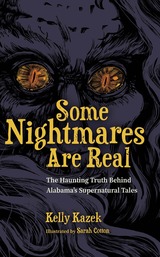
Southern writer and folklorist Kelly Kazek’s collection of eerie and enigmatic Alabama ghost stories
Dark secrets lurk beneath the sleepy surface of Alabama. Ghosts and grisly creatures haunt the towns and forests. In the great Southern ghost-story tradition, famed Alabama storyteller Kelly Kazek weaves a gothic tapestry of ten stories drawn from real people and legendary creatures, cursed places, and harrowing events.
Each story or legend takes readers to a different place in Alabama. Read about the bestial Wolf Woman who terrified Mobilians in the haunted old port city. In the northern city of Huntsville, visit the Dead Children’s Playground in gloomy Maple Hill Cemetery. In Jacksonville, feel the cold grip of the Old Mill Witch, rumored to protect the workers at the rickety cotton yarn mill. Hear about the mysterious green light that drifts along the Alabama River in the Black Belt hamlet of Gee’s Bend and learn about the role the Gee’s Bend Ferry played in the Civil Rights Movement.
Unlike most ghost-story collections, Some Nightmares Are Real includes an appendix of facts, historical resources, and information about how to visit the locations. These contemporary stories embrace a beloved Southern folkloric tradition for a new generation of young readers. The tales will terrify and ensnare ghost-story lovers of all ages. So settle in, pull the covers up tight, and maybe turn on the light, because the truth is: Some Nightmares Are Real.
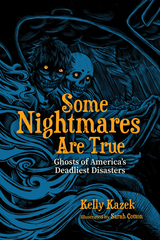
Digging up the eerie aftermath of America’s deadliest disasters—where ghost stories take root, history lingers in the shadows, and the past refuses to stay buried.
In this haunting follow-up to Some Nightmares Are Real: The Haunting Truth Behind Alabama’s Supernatural Tales, journalist and storyteller Kelly Kazek investigates supernatural folklore grounded in historical catastrophe. This time, she ventures far beyond Alabama, unearthing the eerie legends born from their aftermath of nine of America’s most infamous disasters. From the strangling suffocation of the Boston Molasses Flood and the terror of Galveston’s notorious Great Storm, to flames blasting from the Triangle Shirtwaist Factory disaster, Some Nightmares Are True examines ghost stories that have haunted communities long after the news headlines stopped.
Each spooky story blends vivid storytelling with meticulous research, connecting real events to the ghostly lore they inspired. Kazek explores not just the moment of disaster, but how grief, resilience, and remembrance shape the way stories live on—through newspaper archives, folklore, and generations of retelling.
With both wry Southern sensibility and journalistic rigor, Kazek explores how moments of tragedy like the Dixie Tornado Outbreak in Alabama, the capsizing of the SS Eastland in Chicago, and the haunting aftermath of the Schoolchildren’s Blizzard in Nebraska leave lasting imprints on generational memory. These sites of devastation become more than historical footnotes; they transform into hallowed grounds where grief lingers, legends remain, and the line between fact and folklore dissolves.
For ghost hunters, or simply those brave enough to follow their curiosity into learning more about the stories’ historical facts, Kazek has compiled a robust appendix that provides context, source materials, and location details, making this a perfect pick to toss in the car for that late-night road trip adventure. But remember, Some Nightmares Are True.
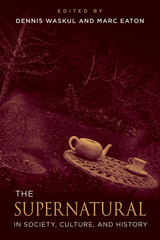
In the twenty-first century, as in centuries past, stories of the supernatural thrill and terrify us. But despite their popularity, scholars often dismiss such beliefs in the uncanny as inconsequential, or even embarrassing. The editors and contributors to The Supernatural in Society, Culture, and History have made a concerted effort to understand encounters with ghosts and the supernatural that have remain present and flourished. Featuring folkloric researchers examining the cultural value of such beliefs and practices, sociologists who acknowledge the social and historical value of the supernatural, and enthusiasts of the mystical and uncanny, this volume includes a variety of experts and interested observers using first-hand ethnographic experiences and historical records.
The Supernatural in Society, Culture, and History seeks to understand the socio-cultural and socio-historical contexts of the supernatural. This volume takes the supernatural as real because belief in it has fundamentally shaped human history. It continues to inform people’s interpretations, actions, and identities on a daily basis. The supernatural is an indelible part of our social world that deserves sincere scholarly attention.
Contributors include: Janet Baldwin, I'Nasah Crockett, William Ryan Force, Rachael Ironside, Tea Krulos, Joseph Laycock, Stephen L. Muzzatti, Scott Scribner, Emma Smith, Jeannie Banks Thomas, and the editors
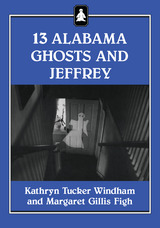
Jeffrey is the mischievous "something" that has headquarters in the Windham home in Selma, Alabama. He first made his presence known in October 1966, and since then he has continued, at irregular and infrequent intervals, to clump down the hall, slam doors, rock in a chair, frighten the family cat (now deceased, through no fault of Jeffrey), move heavy pieces of furniture, cause electronic equipment to malfunction, and hide objects. He frequently accompanies Mrs. Windham on her travels, and tales of Jeffrey's antics are widely recounted.
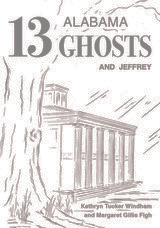
Step into Alabama’s haunted history—one story at a time.
One of the best-known and widely shared books about the South, Thirteen Alabama Ghosts and Jeffrey has haunted the imaginations of generations of delighted young readers since it was first published in 1969. Written by nationally acclaimed folklorists Kathryn Tucker Windham and Margaret Gillis Figh, the book recounts Alabama’s thirteen most ghoulish and eerie ghost legends.
Curated with loving expertise, these thirteen tales showcase both Windham and Figh’s masterful selection of stories and their artful and suspenseful writing style. In crafting stories treasured by children and adults alike, the authors tell much more than ghost tales. Embedded in each is a wealth of fact and folklore about Alabama history and the old South. “I don’t care whether you believe in ghosts,” Windham was fond of saying. “The good ghost stories do not require that you believe in ghosts.”
Millions of readers cherish memories of being chilled as teachers and parents read them unforgettable stories like “The Unquiet Ghost at Gaineswood,” about the ghost of Evelyn Carter, who fills this Demopolis antebellum mansion with midnight musical lamentations because her body wasn’t returned to her native Virginia, and “The Phantom Steamboat of the Tombigbee,” about the wreck of the steamboat Eliza Battle, which caught fire on the way to Mobile and sank one February night in 1858. People who live along the river say the flaming steamboat wreck still rises on cold nights, its cotton cargo blazing across the waves while its terrified survivors cry for help from the icy water.
The title’s “Jeffrey” refers to a friendly ghost who resides in the Windham home and who served as Windham’s unofficial collaborator in this work and the subsequent books in this popular series, all of which are now available in high-quality reproductions of their spooky originals.
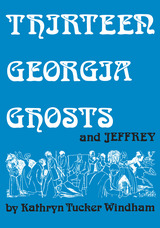
Haunting tales from Georgia—where history lingers in every shadow.
Petrifying the Peach State, hosts of haints have beset the state of Georgia throughout its storied history. In Thirteen Georgia Ghosts and Jeffrey, best-selling folklorist Kathryn Tucker Windham, along with her trusty spectral companion Jeffrey, introduce thirteen of Georgia’s most famous ghost stories.
Windham won hearts across the nation in her regular radio broadcasts and many public appearances. The South’s most prolific raconteur of revenants, Windham, giving new meaning to the phrase “ghost-writer,” does more than tell ghost stories—she captures the true spirit of the place.
Evoking Georgia’s colonial era, “The Eternal Dinner Party” explains why the sounds of an elegant dinner soirée still waft from the grove of Savannah’s Bonaventure estate. At the onset of the Revolution, the Tattnall family abandoned Bonaventure and slipped away to England. Young Josiah Tattnall eventually returned to fight in the Revolution, restored Bonaventure, and later became Georgia’s governor. One holiday eve, when the mansion was bedecked with magnolia and holly and crowded with visitors, a fire too large to control swept through the old house. Tattnall, exhibiting his cool head and impeccable manners, ordered the massive dinner table carried out to the garden where he enjoined his holiday revelers to continue their stately meal. The melancholy strains of Tattnall’s dinner guests still echo through Bonaventure’s ancient oaks on moonlight nights.
In “The Ghost of Andersonville,” Windham takes visitors near the woebegone Confederate prisoner-of-war camp. A plaque there still recounts the tale of Swiss immigrant and Confederate captain Henry Wirz. Convicted—many thought wrongly—of war crimes, Wirz’s restless ghost still perambulates the highways of south Georgia. Writing for the Georgia Historical Commission, Miss Bessie Lewis quips in her preface to this beloved collection, “Who should be better able to tell of happenings long past than the ghosts of those who had a part in them?”
A perennial favorite, this commemorative edition restores Thirteen Georgia Ghosts and Jeffrey to the ghastly grandeur of its original 1973 edition.
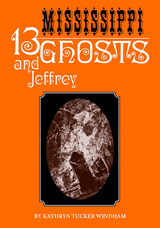
A deluxe, commemorative edition of famed southern author and folklorist Kathryn Tucker Windham’s introduction to Mississippi’s thirteen most famous haunted houses and ghostly visitations.
For as long as Mississippi has existed (and then some), flocks of phantoms have haunted the mortal inhabitants of the Magnolia State. In Thirteen Mississippi Ghosts and Jeffrey, best-selling folklorist Kathryn Tucker Windham, along with her trusty spectral companion Jeffrey, introduces thirteen of the state’s most famous ghost stories.
Although stories about Mississippi’s spirits seemingly outnumber the ghosts themselves, Windham observes that “Southern ghost tales are disappearing because people no longer sit around on the porch on summer nights and tell stories. The old folks who grew up with these stories are dying now, and the stories are dying with them.”
Fortunately for us, Windham was a writer dedicated to preserving these tales in print. The veteran author spent many years tracking down these stories and chronicling the best ones. From the ghost of Mrs. McEwen still wearing her beloved cameo pin and keeping a watchful eye over Featherston Place, her home in Holly Springs, where, she swore, she would stay forever, to the ghostly visage fixed permanently on the bedroom window pane of Catherine McGehee, who searched the horizon ardently for her unrequited love to come to her as promised at Cold Spring Plantation in Pinckneyville, Windham’s stories cover the breadth and depth of Mississippi—at times more moonlight than magnolia.
An enduring classic, this commemorative edition restores Thirteen Mississippi Ghosts and Jeffrey to the ghastly grandeur of its original 1974 edition.

A deluxe, commemorative edition of famed southern author and folklorist Kathryn Tucker Windham’s introduction to the Volunteer State’s most enduring ghost stories.
In Thirteen Tennessee Ghosts and Jeffrey, beloved and best-selling folklorist Kathryn Tucker Windham presents a spine-tingling collection of Tennessee’s eeriest ghost tales. Accompanied by her faithful companion, Jeffrey, a friendly spirit who resided in her home, Windham traveled from the mysterious muds of Memphis to the haunted hollow’s of east Tennessee to collect the spookiest collection of Volunteer State revenants ever written.
In these perennial favorites, Windham captures the gentle folk humor of native Tennesseans as well as fascinating facts about the state’s rich history. In “The Dark Legend,” Windham recounts the story of explorer Merriwether Lewis, who met an untimely end on the Natchez Trace 1809 and whose spirit, it is said, still treads through Tennessee’s forests. Windham also visits central Tennessee’s Chapel Hill, where people who know the town say those who stand on the train tracks on dark, lonely nights can often see a disembodied light floating along the tracks. Neighbors say it’s the ghost of a headless flagman who returns to cavort with night-time guests.
High in Tennessee’s Appalachian mountains, Windham encounters Martin, the phantom fiddler of Johnson County. Legend has it that in life Martin’s musical skills so mesmerized the snakes of the Stone Mountains that they would slither from their dens to listen tamely to his fiddling. Intrepid visitors to the rocky tops of northeast Tennessee’s mountains say you can still hear Martin’s ghost fiddling in the hollows.
This handsome, new commemorative hardback edition returns Windham’s suspenseful classic to its original keepsake quality and includes a new afterword by the author’s children.
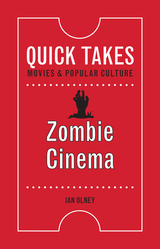
Zombie Cinema is a lively and accessible introduction to this massively popular genre. Presenting a historical overview of zombie appearances in cinema and on television, Ian Olney also considers why, more than any other horror movie monster, zombies have captured the imagination of twenty-first-century audiences.
Surveying the landmarks of zombie film and TV, from White Zombie to The Walking Dead, the book also offers unique insight into why zombies have gone global, spreading well beyond the borders of American and European cinema to turn up in films from countries as far-flung as Cuba, India, Japan, New Zealand, and Nigeria. Both fun and thought-provoking, Zombie Cinema will give readers a new perspective on our ravenous hunger for the living dead.
READERS
Browse our collection.
PUBLISHERS
See BiblioVault's publisher services.
STUDENT SERVICES
Files for college accessibility offices.
RECENTLY PUBLISHED



UChicago Accessibility Resources
home | accessibility | search | about | contact us
BiblioVault ® 2001 - 2026
The University of Chicago Press