
 A SCHOLARLY BOOK REPOSITORY
More than ornamentation, royal objects embodied the strength and status of African rulers. The gold-plated stools of the Ashanti, the delicately carved ivory bracelets of the Edo-these objects were meant not simply to adorn but to affirm and enhance the power and prestige of the wearer. Unlike the abstract style frequently seen in African ritual art, realism became manifest in courtly arts. Realism directly linked the symbolic value of the object-a portrait or relief-with the physical person of the king. The contours of the monarch's face, his political and military exploits rendered on palace walls, became visual histories, the work of art in essence corroborating the ruler's sovereign might.
Richly illustrated and wonderfully detailed, Coquet's influential volume offers both a splendid visual presentation and an authoritative analysis of African royal arts.
"[This] beautiful and exciting book emphasizes the skillful court art of the Benin, Dahomey, and the Kongo. A very interesting and unusual approach to the art of the continent that has been too easily situated 'outside of history.'"—Le Figaro
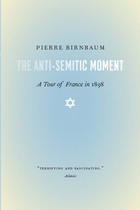
In 1898, the Dreyfus Affair plunged French society into a yearlong frenzy. In Paris and provincial villages throughout the country, angry crowds paraded through the streets, threatening to attack Jews and destroy Jewish-owned businesses. Anger about the imagined power of Jewish capital, as well as fears of treason and racial degeneration, made anti-Semitism a convenient banner behind which social and political factions could fall in line. Anti-Semitic feelings that had been simmering in France for decades came boiling to the surface.
Here Pierre Birnbaum guides readers on a tour of France during this crisis. He shows that in the midst of violence, Jewish citizens bravely and effectively defended themselves and were aided by a police force determined to maintain order. Birnbaum paints a vivid portrait of French Jewish culture at the time and explains why the French state remained strong in this time of widespread unrest.
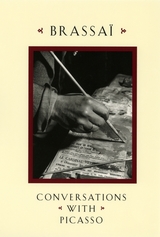
Conversations with Picasso offers a remarkable vision of both Picasso and the entire artistic and intellectual milieu of wartime Paris, a vision provided by the gifted photographer and prolific author who spent the early portion of the 1940s photographing Picasso's work. Brassaï carefully and affectionately records each of his meetings and appointments with the great artist, building along the way a work of remarkable depth, intimate perspective, and great importance to anyone who truly wishes to understand Picasso and his world.
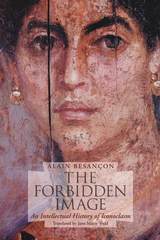
Philosophers and theologians have long engaged in intense debate and introspection over the representation of the deity, its possibilities and its proscriptions. The Forbidden Image traces the dual strains of “iconophilia” and iconoclasm, the privileging and prohibition of religious images, over a span of two and a half millennia in the West.
Alain Besançon’s work begins with a comprehensive examination of the status of the image in Greek, Judaic, Islamic, and Christian thought. The author then addresses arguments regarding the moral authority of the image in European Christianity from the medieval through the early modern periods. Besançon completes The Forbidden Image with an examination of how iconophilia and iconoclasm have been debated in the modern period.
“Even the reader who has heard something of the Byzantine quarrels about images and their theological background will be surprised by a learned and convincing interpretation of the works of Mondrian, Kandinsky, and Malevich in terms of religiously inspired iconoclasm. . . . This is an immensely rich and powerful masterpiece.”—Leszek Kolakowski, Times Literary Supplement
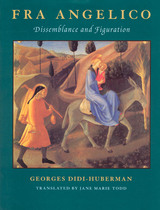
A Florentine painter who took Dominican vows, Fra Angelico (1400-1455) approached his work as a largely theological project. For him, the problems of representing the unrepresentable, of portraying the divine and the spiritual, mitigated the more secular breakthroughs in imitative technique. Didi-Huberman explores Fra Angelico's solutions to these problems—his use of color to signal approaching visibility, of marble to recall Christ's tomb, of paint drippings to simulate (or stimulate) holy anointing. He shows how the painter employed emptiness, visual transformation, and displacement to give form to the mystery of faith.
In the work of Fra Angelico, an alternate strain of Renaissance painting emerges to challenge rather than reinforce verisimilitude. Didi-Huberman traces this disruptive impulse through theological writings and iconographic evidence and identifies a widespread tradition in Renaissance art that ranges from Giotto's break with Byzantine image-making well into the sixteenth century. He reveals how the techniques that served this ultimately religious impulse may have anticipated the more abstract characteristics of modern art, such as color fields, paint spatterings, and the absence of color.
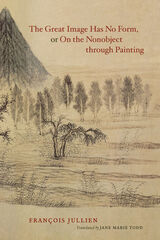
In premodern China, elite painters used imagery not to mirror the world around them, but to evoke unfathomable experience. Considering their art alongside the philosophical traditions that inform it, The Great Image Has No Form explores the “nonobject”—a notion exemplified by paintings that do not seek to represent observable surroundings.
François Jullien argues that this nonobjectifying approach stems from the painters’ deeply held belief in a continuum of existence, in which art is not distinct from reality. Contrasting this perspective with the Western notion of art as separate from the world it represents, Jullien investigates the theoretical conditions that allow us to apprehend, isolate, and abstract objects. His comparative method lays bare the assumptions of Chinese and European thought, revitalizing the questions of what painting is, where it comes from, and what it does. Provocative and intellectually vigorous, this sweeping inquiry introduces new ways of thinking about the relationship of art to the ideas in which it is rooted.
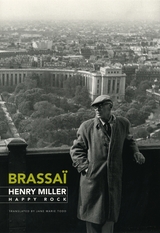
That's Henry Miller's advice for young aspiring artists, as remembered by his very good friend Brassaï in this lively book. One of two that Brassaï wrote about the man who called himself a "happy rock," this volume covers their lives and friendship from the 1950s to 1973. Over the course of a number of warm, intimate conversations, Brassaï and Miller revisit their careers; discuss art, literature, Paris, Greece, Japan, World War II, and more; and consider the lives and works of many others in their circle, including Lawrence Durrell, Henri Matisse, Salvador Dalí, Georges Simenon, André Malraux, Hans Reichel, Paul Klee, and Amedeo Modigliani. Throughout Miller's zest for life shines through, as do his love of art and his passionate intensity for just about everything he does, from discussing a movie or play he'd just seen to reminiscing about a decades-long love.
Brassaï's Henry Miller, Happy Rock presents a vivid portrait of two close friends who thoroughly enjoy each other's company—and just happen to be world—famous artists too.
Jean Starobinski, noted literary critic and intellectual historian from the University of Geneva, was selected as the third curator in the program. In his exhibition and accompanying essay, Starobinski explores the theme of largesse in its broadest sense. Arguing that gift giving and receiving are fundamental human gestures, he examines graphic and textual representations from the offering of the apple to Eve to Salome's gift of the head of John the Baptist, from the giving of laws to the gift of death. Charity, the poetic gift, and the benefits of Fortune all play a role in Starobinski's extended meditation on the act of donation. Lavishly illustrated and
dazzling in its scope and imagination, Largesse is an exemplar of the rich intellectual work that can result from crossing disciplinary boundaries and considering history as a dense network of themes and allusions.
Henry Rousso addresses the rise of contemporary history and the relations of present-day societies to their past, especially their legacies of political violence. Focusing on France, Germany, the United Kingdom, and the United States, he shows that for contemporary historians, the recent past has become a problem to be solved. No longer unfolding as a series of traditions to be respected or a set of knowledge to be transmitted and built upon, history today is treated as a constant act of mourning or memory, an attempt to atone. Historians must also negotiate with strife within this field, as older scholars who may have lived through events clash with younger historians who also claim to understand the experiences. Ultimately, The Latest Catastrophe shows how historians, at times against their will, have themselves become actors in a history still being made.
In The Mountain, geographers Bernard Debarbieux and Gilles Rudaz trace the origins of the very concept of a mountain, showing how it is not a mere geographic feature but ultimately an idea, one that has evolved over time, influenced by changes in political climates and cultural attitudes. To truly understand mountains, they argue, we must view them not only as material realities but as social constructs, ones that can mean radically different things to different people in different settings.
From the Enlightenment to the present day, and using a variety of case studies from all the continents, the authors show us how our ideas of and about mountains have changed with the times and how a wide range of policies, from border delineation to forestry as well as nature protection and social programs, have been shaped according to them. A rich hybrid analysis of geography, history, culture, and politics, the book promises to forever change the way we look at mountains.
Through an analysis of literary, religious, legal, philosophical, and medical texts, Fraisse links a range of positions on women's proper role in society to specific historical and rhetorical circumstances. She shows how the Revolution marked a sharp break in the way women were represented in language, as traditional bantering about the "war of the sexes" gave way to serious discussions of the political and social meanings of sexual difference. Following this discussion on three different planes—the economical, the political, and the biological—Fraisse looks at the exclusion of women against the backdrop of democracy's inevitable lie: the affirmation of an equality so abstract it was impossible to concretely apply.
This study of the place of sexual equality in the founding moment of democracy offers insight into a persistent question: whether female emancipation is to be found through the achievement of equality with men or in the celebration of female difference.
Ozouf uses the woman's portrait, traditionally a male genre, to portray ten French women of letters whose lives span the period from the eve of the French Revolution to the resurgence of the feminist movement in the late twentieth century. She studies the letters and memoirs of Mme du Deffand, Mme de Charrière, Mme Roland, Mme de Staël, Mme de Rémusat, George Sand, Hubertine Auclert, Colette, Simone Weil, and Simone de Beauvoir. Rejecting the male constructions of femininity typical of this genre, Ozouf restores these women's voices in order to study their own often-conflicted attitudes toward education, marriage, motherhood, sex, and work, as well as the dilemma of writing in a literary world that did not support women's work.
Ozouf claims that a uniquely French feminism informed these women's lives, one that stems from the great egalitarian spirit of the French Revolution and is more tolerant of difference than its American counterparts. She argues that as a result, modern French culture has not isolated women from men in the same ways as American and British cultures have done.
Ancient Mesopotamia, the fertile crescent between the Tigris and Euphrates rivers in what is now western Iraq and eastern Syria, is considered to be the cradle of civilization—home of the Babylonian and Assyrian empires, as well as the great Code of Hammurabi. The Code was only part of a rich juridical culture from 2200–1600 BCE that saw the invention of writing and the development of its relationship to law, among other remarkable firsts.
Though ancient history offers inexhaustible riches, Dominique Charpin focuses here on the legal systems of Old Babylonian Mesopotamia and offers considerable insight into how writing and the law evolved together to forge the principles of authority, precedent, and documentation that dominate us to this day. As legal codes throughout the region evolved through advances in cuneiform writing, kings and governments were able to stabilize their control over distant realms and impose a common language—which gave rise to complex social systems overseen by magistrates, judges, and scribes that eventually became the vast empires of history books. Sure to attract any reader with an interest in the ancient Near East, as well as rhetoric, legal history, and classical studies, this book is an innovative account of the intertwined histories of law and language.
READERS
Browse our collection.
PUBLISHERS
See BiblioVault's publisher services.
STUDENT SERVICES
Files for college accessibility offices.
RECENTLY PUBLISHED



UChicago Accessibility Resources
home | accessibility | search | about | contact us
BiblioVault ® 2001 - 2026
The University of Chicago Press