
 A SCHOLARLY BOOK REPOSITORY
91 start with A start with A
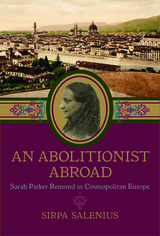
Remond's extensive travels and diverse acquaintances demonstrate that the nineteenth-century grand tour of Europe was not exclusively the privilege of white intellectuals but included African American travelers, among them women. This biography, based on international archival research, tells the fascinating story of how Remond forged a radical path, establishing relationships with fellow activists, artists, and intellectuals across Europe.
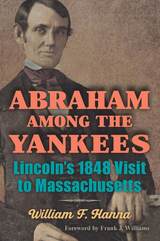
Hanna provides excellent context on the politics of the era, particularly the question of slavery, both in Massachusetts and nationwide, and he features the people Lincoln met and the cities or towns in which he spoke. Lincoln stumped for Taylor in Worcester, New Bedford, Boston, Lowell, Dorchester, Chelsea, Dedham, Cambridge, and Taunton. He gave twelve speeches in eleven days to audiences who responded with everything from catcalls to laughter to applause. Whatever they thought of Lincoln’s arguments, those who saw him were impressed by his unusual western style and remembered his style more than the substance of his talks.
Meticulously researched, Abraham among the Yankees invites readers to take an East Coast journey with a thirty-nine-year-old Lincoln during election season in 1848 to see how Massachusetts audiences responded to the humorous, informal approach that served Lincoln well during the rest of his political career.
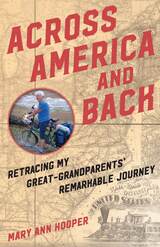
Using the common thread of the same train trip across the American landscape, she weaves together the two stories—her great grandparents, Charles and Fannie Crosby’s leisurely Victorian tourist trip described in both their diaries—and her own trip. Mary Ann’s adventurous and determined voice fills the pages with entertaining encounters on the train, escapades on her folding bike, and her reflections on her birth country and her own life story.
During her journey, she discovers the stories of her 1950s childhood reflect a “Wild West” at odds with the West her great-grandparents record in their diaries, leading her to uncover more of the real and meatier history of the American West—going through conquest, rapid settlement, and economic development. As Mary Ann fulfills her quest to understand better why glorified myths were created to describe the Wild West of her childhood, and reflects on the pitfalls of what “progress” is doing to the environment, she is left with a much bigger question: Can we transform our way of doing things quickly enough to stop our much-loved West becoming an uninhabitable desert?

Biking from Oregon to Maine is no small feat, especially for two newly retired women who carry everything they need for three months, powered only by the strength of their legs and a desire for adventure. Alice Honeywell and Bobbi Montgomery invite readers to follow their ride by bicycle across the United States, as they face scorching sun, driving rain, buffeting winds, equipment failures, killer hills, wild fires, and even a plague of grasshoppers.
As Alice and Bobbi pedal along their 3,600-mile journey, they test and deepen their friendship, defy their aches and pains, experience the vast and varied beauties of their country, and discover the challenges and satisfaction of a scaled-down lifestyle. And, they encounter unfailing generosity from people they meet—from the prayers of a North Dakota woman for their safekeeping, to the offer of a house in Michigan, to invitations for dinner and a place to sleep at stops all along the way. And there are incidents to laugh over, too, such as the bewildered woman who asked them, “Well, but where do you pack your dresses?”
Ride along with Alice and Bobbi as they embrace retirement with gusto and live their dream.
Winner (Gold Medalist), Travel Essays, Foreword Magazine’s Books of the Year
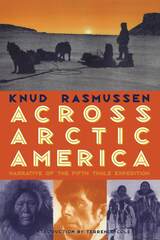
It was the people who most captivated the Greenland-born Rasmussen, who had become a virtual adopted son to the Eskimos of the far northern district still known by the name of the trading post he established there, Thule. His first four Thule Expeditions extended the limits of the known world in Greenland solely, but Rasmussen’s Fifth Thule Expedition demonstrated the unity of the Eskimo world from the Atlantic Ocean to the Chukchi Sea, proving the people all shared the same basic language and culture. As historian Terrence Cole notes in his introductory biography, “The intellectual and spiritual life of the people themselves were his primary interest, not simply geographical discovery, and thus even when following the tracks of previous explorers, he found uncharted territory. His basic principle was to first earn the trust of the local people by showing understanding and patience: living with the people and not apart from them, sharing their work and their food….” That was how Rasmussen approached the entire Arctic: he did not live apart from it, skimming over its surface like the fame-seeking polar explorers of the time such as Peary and Cook, but immersed himself in it—so successfully that a Canadian Inuit elder once marveled that he was “the first white man [he had ever seen] who was also an Eskimo.”
Of most significance to readers today, though, is that Rasmussen was also a noted writer. He wanted to share not just the observations he made but the feelings he experienced, and so in Across Arctic America offered what fellow arctic explorer Vilhjalmur Stefansson described as “not only a work of literary charm but also one of the deepest and soundest interpretations” of Eskimo life ever put into a book.
This volume, published in commemoration of the 75th anniversary of the completion of the Fifth Thule Expedition, includes an introduction by Classic Reprint Series editor Terrance Cole and an index.
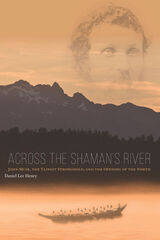
Tucked in the corner of Southeast Alaska, the Tlingits had successfully warded off the Anglo influences that had swept into other corners of the territory. This tribe was viewed by European and American outsiders as the last wild tribe and a frustrating impediment to access. Missionaries and prospectors alike had widely failed to bring the Tlingit into their power. Yet, when John Muir arrived in 1879, accompanied by a fiery preacher, it only took a speech about “brotherhood”—and some encouragement from the revered local shaman Skandoo’o—to finally transform these “hostile heathens.”
Using Muir’s original journal entries, as well as historic writings of explorers juxtaposed with insights from contemporary tribal descendants, Across the Shaman’s River reveals how Muir’s famous canoe journey changed the course of history and had profound consequences on the region’s Native Americans.

In 1997 the celebrated Italian novelist and essayist Gianni Celati accompanied his friend, filmmaker Jean Talon, on a journey to West Africa which took them from Mali to Senegal and Mauritania. The two had been hoping to research a documentary about Dogon priests, but frustrated by red tape, their voyage became instead a touristic adventure. The vulnerable, prickly, insightful Celati kept notebooks of the journey, now translated by Adria Bernardi as Adventures in Africa. Celati is the privileged traveler, overwhelmed by customs he doesn't understand, always at the mercy of others who are trying to sell him something he doesn't want to buy, and aware of himself as the Tourist who is always a little disoriented and at the center of the continual misadventures that are at the heart of travel.
Celati's book is both a travelogue in the European tradition and a trenchant meditation on what it means to be a tourist. Celati learns to surrender to the chaos of West Africa and in the process produces a work of touching and comic descriptions, in the lucid and ironic prose that is his hallmark. Hailed as one of the best travelogues on Africa ever written and awarded the first Zerilli-Marimó prize, Adventures in Africa is a modest yet profound account of the utter discombobulation of travel.
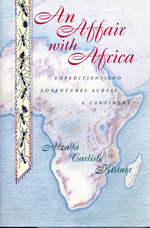
In June 1960, a young faculty wife named Alzada Kistner and her husband David, a promising entomologist, left their 18-month old daughter in the care of relatives and began what was to be a four month scientific expedition in the Belgian Congo. Three weeks after their arrival, the country was gripped by a violent revolution trapping the Kistners in its midst. Despite having to find their way out of numerous life-threatening situations, the Kistners were not to be dissuaded. An emergency airlift by the United States Air Force brought them to safety in Kenya where they continued their field work.
Thus began three decades of adventures in science. In An Affair with Africa, Alzada Kistner describes her family's African experience -- the five expeditions they took beginning with the trip to the Belgian Congo in 1960 and ending in 1972-73 with a nine-month excursion across southern Africa. From hunching over columns of ants for hours on end while seven months pregnant to eating dinner next to Idi Amin, Kistner provides a lively and humor-filled account of the human side of scientific discovery. Her wonderfully detailed stories clearly show why, despite hardship and danger -- and contrary to all of society's expectations -- she could not forsake accompanying her husband on his expeditions, and, to this day, continues to find the world "endlessly beckoning, a lively bubbling cauldron of questions and intrigue."
In the spirit of Beryl Markham's West with the Night and Isak Dinesen's Out of Africa, An Affair with Africa shares with readers the thoughts and experiences of a remarkable woman, one whose unquenchable thirst for adventure led her into a series of almost unimaginable situations. Readers -- from armchair travelers fascinated by stories of Africa to scientists familiar with the Kistners's work but unaware of the lengths to which they went to gather their data -- will find An Affair with Africa a rare treasure.
This edition is a reprinting of the original 1897 edition.
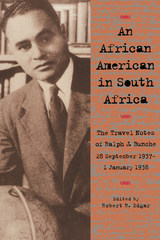
Ralph Bunche, who received the Nobel Peace Prize in 1950, traveled to South Africa for three months in 1937. His notes, which have been skillfully compiled and annotated by historian Robert R. Edgar, provide unique insights on a segregated society.

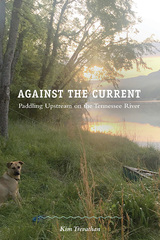
In August 1998 Kim Trevathan summoned his beloved 45-pound German shepherd mix, Jasper, and paddled a canoe down the Tennessee River, an adventure chronicled in Paddling the Tennessee River: A Voyage on Easy Water. Twenty years later, in Against the Current: Paddling Upstream on the Tennessee River, he invites readers on a voyage of light-hearted rumination about time, memory, and change as he paddles the same river in the same boat—but this time going upstream, starting out in early spring instead of late summer. In sparkling prose, Trevathan describes the life of the river before and after the dams, the sometimes daunting condition of its environment, its banks’ host of evolving communities—and also the joys and follies of having a new puppy, 65-pound Maggie, for a shipmate.
Trevathan discusses the Tennessee River’s varied contributions to the cultures that hug its waterway (Kentuckians refer to it as a lake, but Tennesseans call it a river), and the writer’s intimate style proves a perfect lens for the passageway from Kentucky to Tennessee to Alabama and back to Tennessee. In choice observations and chance encounters along the route, Trevathan uncovers meaningful differences among the Tennessee Valley’s people—and not a few differences in himself, now an older, wiser adventurer.
Whether he is struggling to calm his land-loving companion, confronting his body’s newfound aches and pains, craving a hard-to-find cheeseburger, or scouting for a safe place to camp for the night, Trevathan perseveres in his quest to reacquaint himself with the river and to discover new things about it. And, owing to his masterful sense of detail, cadence, and narrative craft, Trevathan keeps the reader at the heart of the journey. The Tennessee River is a remarkable landmark, and this text exhibits its past and present qualities with a perspective only Trevathan can provide.
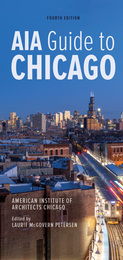
Sumptuously detailed and user friendly, the AIA Guide to Chicago encourages travelers and residents alike to explore the many diverse neighborhoods of one of the world’s great architectural destinations.
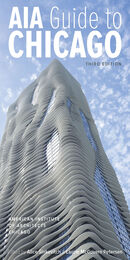
Four hundred photos and thirty-four specially commissioned maps make it easy to find each of the one thousand-plus featured buildings, while a comprehensive index organizes buildings by name and architect. This edition also features an introduction providing an indispensable overview of Chicago's architectural history.

Columbus, the largest city in Ohio, has, since its founding in 1812, been home to many impressive architectural landmarks. The AIA Guide to Columbus, produced by the Columbus Architecture Foundation, highlights the significant buildings and neighborhoods in the Columbus metropolitan area. Skillfully blending architectural interest with historic significance, The AIA Guide to Columbus documents approximately 160 buildings and building groups and is organized geographically. Each chapter provides an opportunity to explore a special area of Columbus' built environment.
The Columbus Architecture Foundation has been affiliated with the American Institute of Architects (AIA), Columbus Chapter, for more than thirty years. Its first book project was Architecture Columbus, published in 1976. This new companion volume updates coverage of the buildings and provides a portable, accessible guide to the city's architectural history.
The AIA Guide to Columbus identifies buildings designated as historic and those that have won awards, and includes information on architectural styles, excellent photographs, maps, a glossary, and an index. The focus is on easy touring, whether the reader is walking or driving. Students, visitors, and residents with a penchant for knowing more about their city will enjoy discovering the rich heritage of Columbus' downtown, special districts, and neighborhoods.

No other state has embraced and preserved its civil rights history more thoroughly than Alabama. Nor is there a place where that history is richer. Alabama’s Civil Rights Trail tells of Alabama’s great civil rights events, as well as its lesser-known moments, in a compact and accessible narrative, paired with a practical guide to Alabama’s preserved civil rights sites and monuments.
In this history of Alabama’s civil rights movement, Cradle of Freedom (University of Alabama Press, 2004), Frye Gaillard contends that Alabama played the lead role in a historic movement that made all citizens of the nation, black and white, more free. This book, geared toward the casual traveler and the serious student alike, showcases in a vividly illustrated and compelling manner, valuable and rich details. It provides a user-friendly, graphic tool for the growing number of travelers, students, and civil rights pilgrims who visit the state annually.
The story of the civil rights movement in Alabama is told city by city, region by region, and town by town, with entries on Montgomery, Birmingham, Selma, Tuscaloosa, Tuskegee, and Mobile, as well as chapters on the Black Belt and the Alabama hill country. Smaller but important locales such as Greensboro, Monroeville, and Scottsboro are included, as are more obscure sites like Hale County’s Safe House Black History Museum and the birthplace of the Black Panther Party in Lowndes County
The Alaska Native Reader describes indigenous worldviews, languages, arts, and other cultural traditions as well as contemporary efforts to preserve them. Several pieces examine Alaska Natives’ experiences of and resistance to Russian and American colonialism; some of these address land claims, self-determination, and sovereignty. Some essays discuss contemporary Alaska Native literature, indigenous philosophical and spiritual tenets, and the ways that Native peoples are represented in the media. Others take up such diverse topics as the use of digital technologies to document Native cultures, planning systems that have enabled indigenous communities to survive in the Arctic for thousands of years, and a project to accurately represent Dena’ina heritage in and around Anchorage. Fourteen of the volume’s many illustrations appear in color, including work by the contemporary artists Subhankar Banerjee, Perry Eaton, Erica Lord, and Larry McNeil.
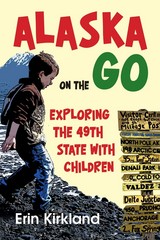
Journalist and Alaska resident Erin Kirkland knows every corner of the state, and she has crossed thousands of miles with her son. In Alaska on the Go, she offers a fresh take on exploring some of the most beautiful land in the world, with tips and tricks that only an insider knows. Serving as the perfect tour guide, Kirkland identifies the best and most kid-friendly destinations in cities across Alaska. She offers practical advice on everything from restaurants to rest stops and from weather surprises to wild animals. Photos, maps, and sample itineraries make it easy for parents to plan a trip that will delight and entertain everyone.
The only family travel guide to Alaska written by a current Alaskan, Alaska on the Go makes the state more accessible than ever. Whether traveling via car, cruise ship, or dogsled, this practical, portable guide will open up a new world of memorable adventures.
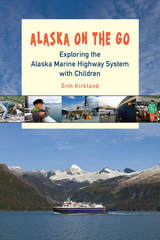
A staple of coastal transportation since the 1950s, the Alaska Marine Highway System is a vital link to cities that are often inaccessible except by air. Alaska on the Go offers fascinating accounts of both the small coastal towns and the larger population centers serviced by the highway along with easy-to-navigate route descriptions, helpful packing lists, and tips for inland and onboard adventures. Portable and personable, and covering all thirty routes that make up the Alaska Marine Highway System, Alaska on the Go is the perfect companion for the intrepid traveler.
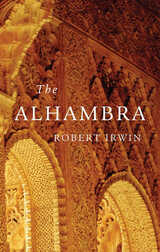
The Alhambra has long been a byword for melancholy beauty. In his absorbing new book, Robert Irwin, Arabist and novelist, examines its history and allure.
The Alhambra is the only Muslim palace to have survived since the Middle Ages. Built by a threatened dynasty of Muslim Spain, it was preserved as a monument to the triumph of Christianity. Every day thousands of tourists enter this magnificent site to be awestruck by its towers and courts, its fountained gardens, its honeycombed ceilings and intricate tile work. It is a complex full of mysteries—even its purpose is unclear. Its sophisticated ornamentation is not indiscriminate but full of hidden meaning. Its most impressive buildings were designed not by architects, but by philosophers and poets. The Alhambra, which resembles a fairy-tale palace, was constructed by slave labor in an era of economic decline, plague, and political violence. Its sumptuously appointed halls have lain witness to murder and mayhem. Yet its influence on art and on literature—including Orientalist painting and the architecture of cinemas, Washington Irving and Jorge Luis Borges—has been lasting and significant. As our guide to this architectural masterpiece, Robert Irwin allows us to fully understand the impact of the Alhambra.
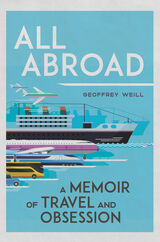
All Abroad is the memoir of a man hungry for the logistics of travel: getting there, staying there, and feeling at home on any continent. Woven into his entertaining anecdotes is an informative account of a lost era in travel. As a witness to compelling and monumental changes in the industry, Weill offers a unique view into how our vacations have been shaped deeply by human trends, tragedies, and technologies. While some long for the grandeur of tourism from decades ago, Weill insists that travel—the conveyances and hotels that await journey’s end—remains as glamorous as ever.
He employs an array of forms and voices, whether penning a break-up letter to America or a literary rock-n-roll road song dedicated to prairie scientists, or giving pregame pep talks to his son’s losing football team. Here, too, are moving portrayals of his father’s last effort as a small-town lawyer to defend the rights of abused women, and his own efforts as a writing teacher to honor the personal stories of his students.
From his Iowa backyard to the edge of the Arctic Circle, from the forgotten recesses of the body to the far reaches of the solar system, this book demonstrates the ways imagination and informed compassion can, as Price describes it, expand thousandfold the boundaries of what we might “have naïvely considered an individual self.”

Maps go far beyond just showing us where things are located. All Mapped Out is an exploration of how maps impact our lives on social and cultural levels. This book offers a journey through the fascinating history of maps, from ancient cave paintings and stone carvings to the digital interfaces we rely on today. But it’s not just about the maps themselves; it’s about the people behind them. All Mapped Out reveals how maps have affected societies, influenced politics and economies, impacted the environment, and even shaped our sense of personal identity. Mike Duggan uncovers the incredible power of maps to shape the world and the knowledge we consume, offering a unique and eye-opening perspective on the significance of maps in our daily lives.
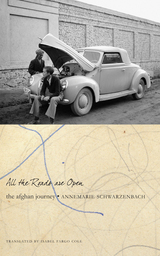
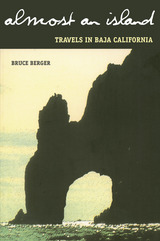
Eight hundred miles long, Baja California is the remotest region of the Sonoran desert, a land of volcanic cliffs, glistening beaches, fantastical boojum trees, and some of the greatest primitive murals in the Western Hemisphere. In Almost an Island, Berger recounts tales from his three decades in this extraordinary place, enriching his account with the peninsula's history, its politics, and its probable future—rendering a striking panorama of this land so close to the United States, so famous, and so little known.
Readers will meet a cast of characters as eccentric as the place itself: Brandy, who ranges the desert in a sand buggy while breathing from an oxygen tank; Katie, the chanteuse; nuns illegally raising pigs. They will encounter the tourist madness of a total eclipse, the story of the heir to an oasis, a musical Mata Hari, rare pronghorn antelope, and a pet tarantula. In prose as glittering as this desert engulfed by the sea, Almost an Island is a fascinating journey into the human heart of a spectacular land.
This volume is the first-ever English translation of the memoirs of Karl Heller, a twenty-year-old aspiring Austrian botanist who traveled to Mexico in 1845 to collect specimens. He passed through the Caribbean, lived for a time in the mountains of Veracruz, and journeyed to Mexico City through the cities of Puebla and Cholula. After a brief residence in the capital, Heller moved westward to examine the volcanoes and silver mines near Toluca. When the United States invaded Mexico in 1846–47 conditions became chaotic, and the enterprising botanist was forced to flee to Yucatán. Heller lived in the port city of Campeche, but visited Mèrida, the ruins of Uxmal, and the remote southern area of the Champotòn River. From there Heller, traveling by canoe, journeyed through southern Tabasco and northern Chiapas and finally returned to Vienna through Cuba and the United States bringing back thousands of samples of Mexican plants and animals.
Heller's account is one of the few documents we have from travelers who visited Mexico in this period, and it is particularly useful in describing conditions outside the capital of Mexico City. In 1853 Heller published his German-language account as Reisen in Mexiko, but the work has remained virtually unknown to English or Spanish readers. This edition now provides a complete, annotated, and highly readable translation.
Alone on the Colorado takes readers on the adventure of running rivers and riding the rails, while painting a unique and optimistic portrait of Depression-era America.

When E.J. Levy arrived in northern Brazil on a fellowship from Yale at the age of 21, she was hoping to help save the Amazon rain forest; she didn’t realize she would soon have to save herself.

Photographer and writer Tim Palmer has spent more than 25 years researching and experiencing life on the waterways of the American continent. He has travelled by canoe or raft on more than 300 different rivers, down wide placid streams and rough raging rapids. His journeys have taken him to every corner of the country, where he has witnessed and described the unique interaction of geographical, historical, and cultural forces that act upon our nation's vital arteries.
America by Rivers represents the culmination of that grand adventure. Palmer describes the rivers of America in all their remaining glory and tarnished beauty, as he presents a comprehensive tour of the whole of America's river systems. Filled with important new information as well as data gathered from hundreds of published sources, America by Rivers covers:
- the network of American waterways and how they fit together to form river systems
- unique features of individual rivers along with their size, length, and biological importance
- environmental problems affecting the rivers of different regions and what is being done to protect and restore them
- cultural connections and conflicts surrounding the rivers of each region
America by Rivers provides a new way of seeing our country, one that embraces the entire landscape and offers fresh avenues to adventure. It is compelling reading for anyone concerned about the health of our land and the future of our waterways.
Travel gets us from one place to another—often with wonderful attendant enjoyment–but exploration makes us understand our travel, the places we travel to—and ourselves. The essays in this collection constitute a major step toward this understanding. They open up new areas for concern and draw many valuable insights and conclusions.
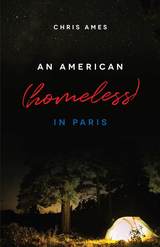
Ames circles serious questions, rarely losing a sense of irony, bewilderment, or amusement, especially at his circumstances, with their inherent discomforts, risks, and not-so-reassuring self-revelation. As readers see him stumble into renewed social bonds, his skewed searching and unconventional existence will engage and sometimes befuddle them.
“I’m not saying become homeless, but do understand it opens many doors, and helps us appreciate the doors we can close.”—from the introduction
Winner of the Nonfiction Award in the Utah Division of Arts and Museums Original Writing Competition
Interview with Tom Williams at Access Utah
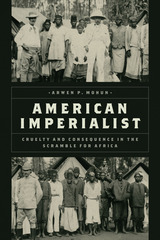
Richard Dorsey Mohun spent his career circulating among the eastern United States, the cities and courts of Europe, and the African continent, as he served the US State Department at some points and King Leopold of Belgium at others. A freelance imperialist, he implemented the schemes of American investors and the Congo Free State alike. Without men like him, Africa’s history might have unfolded very differently. How did an ordinary son of a Washington bookseller become the agent of American corporate greed and European imperial ambition? Why did he choose to act in ways that ranged from thoughtless and amoral to criminal and unforgivable?
With unblinking clarity and precision, historian Arwen P. Mohun interrogates the life and actions of her great-grandfather in American Imperialist. She seeks not to excuse the man known as Dorsey but to understand how individual ambition and imperial lust fueled each other, to catastrophic ends. Ultimately, she offers a nuanced portrait of how her great-grandfather’s pursuit of career success and financial security for his family came at a tragic cost to countless Africans.

Compared to the writings of other American observers of the Third Reich, Plotkin's diary is unique in style, scope, themes, and time span. Most accounts of Hitler's rise to power emphasize political institutions by focusing on the Nazi party's clashes with other political forces. In contrast, Plotkin is especially attentive to socioeconomic factors, providing an alternative view from the left that stems from his access to key German labor and socialist leaders. Chronologically, the diary reports on the moment when Hitler's seizure of power was not yet inevitable and when leaders on the left still believed in a different outcome of the crisis, but it also includes Plotkin's account of the complete destruction of German labor in May 1933.
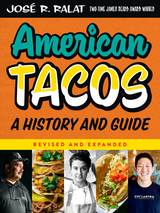
The first history of tacos developed in the United States, now revised and expanded, this book is the definitive survey that American taco lovers must have for their own taco explorations.
“Everything a food history book should be: illuminating, well-written, crusading, and inspiring a taco run afterwards. You’ll gain five pounds reading it, but don’t worry—most of that will go to your brain.”—Gustavo Arellano, Los Angeles Times
“[Ralat] gives an in-depth look at each taco’s history and showcases other aspects of taco culture that has solidified it as a go-to dish on dinner tables throughout the nation.”—Smithsonian Magazine
“A fascinating look at America’s many regional tacos. . . . From California’s locavore tacos to Korean ‘K-Mex’ tacos to Jewish ‘deli-Mex’ to Southern-drawl ‘Sur-Mex’ tacos to American-Indian-inspired fry bread tacos to chef-driven ‘moderno’ tacos, Ralat lays out a captivating landscape.”—Houston Chronicle
“You’ll learn an enormous and entertaining amount about [tacos] in . . . American Tacos. . . . The book literally covers the map of American tacos, from Texas and the South to New York, Chicago, Kansas City and California.”—Forbes
“An impressively reported new book . . . a fast-paced cultural survey and travel guide . . . American Tacos is an exceptional book.”—Taste
2021 Best Travel Book, International Latino Book Awards
Tacos may have been created south of the border, but Americans have made this Mexican food their own, with each style reflective of a time and a place. American Tacos explores them all, taking us on a detailed and delicious journey through the evolution of this dish.In search of every taco variety from California to Texas and beyond, Ralat traveled from coast to coast and border to border, visiting thirty-eight cities across the country. He examines the pervasive crunchy taco and the new Alta California tacos from chefs Wes Avila, Christine Rivera, and Carlos Salgado. He tastes famous Tex-Mex tacos like the puffy taco and breakfast taco, then tracks down the fry bread taco and the kosher taco. And he searches for the regional hybrid tacos of the American South and the modern, chef-driven tacos of restaurants everywhere. Throughout, he tells the story of how each style of taco came to be, creating a rich look at the diverse taco landscape north of the border. Featuring interviews with taqueros and details on taco paraphernalia and the trappings of taco culture, American Tacos is a book no taco fan will want to take a bite without.

For a man who liked being called the American, Mark Twain spent a surprising amount of time outside the continental United States. Biographer Roy Morris, Jr., focuses on the dozen years Twain spent overseas and on the popular travel books—The Innocents Abroad, A Tramp Abroad, and Following the Equator—he wrote about his adventures. Unintimidated by Old World sophistication and unafraid to travel to less developed parts of the globe, Twain encouraged American readers to follow him around the world at the dawn of mass tourism, when advances in transportation made leisure travel possible for an emerging middle class. In so doing, he helped lead Americans into the twentieth century and guided them toward more cosmopolitan views.
In his first book, The Innocents Abroad (1869), Twain introduced readers to the “American Vandal,” a brash, unapologetic visitor to foreign lands, unimpressed with the local ambiance but eager to appropriate any souvenir that could be carried off. He adopted this persona throughout his career, even after he grew into an international celebrity who dined with the German Kaiser, traded quips with the king of England, gossiped with the Austrian emperor, and negotiated with the president of Transvaal for the release of war prisoners. American Vandal presents an unfamiliar Twain: not the bred-in-the-bone Midwesterner we associate with Huck Finn and Tom Sawyer but a global citizen whose exposure to other peoples and places influenced his evolving positions on race, war, and imperialism, as both he and America emerged on the world stage.
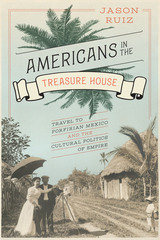
When railroads connected the United States and Mexico in 1884 and overland travel between the two countries became easier and cheaper, Americans developed an intense curiosity about Mexico, its people, and its opportunities for business and pleasure. Indeed, so many Americans visited Mexico during the Porfiriato (the long dictatorship of Porfirio Díaz, 1876–1911) that observers on both sides of the border called the hordes of tourists and business speculators a “foreign invasion,” an apt phrase for a historical moment when the United States was expanding its territory and influence.
Americans in the Treasure House examines travel to Mexico during the Porfiriato, concentrating on the role of travelers in shaping ideas of Mexico as a logical place for Americans to extend their economic and cultural influence in the hemisphere. Analyzing a wealth of evidence ranging from travelogues and literary representations to picture postcards and snapshots, Jason Ruiz demonstrates that American travelers constructed Mexico as a nation at the cusp of modernity, but one requiring foreign intervention to reach its full potential. He shows how they rationalized this supposed need for intervention in a variety of ways, including by representing Mexico as a nation that deviated too dramatically from American ideals of progress, whiteness, and sexual self-control to become a modern “sister republic” on its own. Most importantly, Ruiz relates the rapid rise in travel and travel discourse to complex questions about national identity, state power, and economic relations across the U.S.–Mexico border.

In America's Boardwalks, James Lilliefors takes us on a journey along the edges of the country to twelve of its most famous beach towns. Starting in the Northeast with Coney Island, Asbury Park, Atlantic City, Wildwood, and Cape May, we continue south to Rehoboth Beach; Ocean City, Maryland; Virginia Beach; Myrtle Beach; and Daytona Beach. In California, we explore the exotic scenes at Venice Beach and Santa Cruz. Lilliefors traces each town's history from the building of a boardwalk to what are frequently ambitious plans to revitalize and redevelop today. In every case, he shows how the boardwalk has been integral to the area's economic growth, status, and appeal.
This richly documented and illustrated tale, however, tells more than the story of the birth and development of boardwalks. Weaving together observations and conversations with business owners, planners, and strollers themselves, Lilliefors reveals the vitality of the boardwalk as an idea, rather than just as a place. Boardwalks, he argues, are living monuments to American enterprise, a young country's founding dreams, and its unwavering optimism.
Born at a time when the country was busy rebuilding and reinventing itself as an industrial and economic power, these lively seaside destinations seemed to herald a new life of relaxation, recreation, and middle-class prosperity. On the nation's first boardwalk in Atlantic City, you could find everything from a "home of the future," to diving horses, kangaroo boxing, and the world's largest typewriter. With no admission gate, boardwalks were also a thoroughly democratic idea, inviting visitors from all social and economic groups to join the same parade.
Even today, these glittering coastal hubs, with their always unique blends of people, sea spray, shops, inventions, and oddities remain a last frontier-a testament to the power of individuality in an increasingly homogenized world. From Thrasher's French fries in Ocean City to Mack's Pizza in Wildwood and Nathan's hot dogs in Coney Island, people still visit these resorts for products and pleasures that break the otherwise mundane stream of chain restaurants and retailers. Evoking the spirit, tastes, smells, and sounds that have become a beloved part of our nostalgia and that continue to lure new generations, this book is a deserved tribute to America's iconic seaside wonders.

Bonner therefore brings both recent experience and the sharp eye of a veteran journalist to an analysis of the Afghan situation: the tenacity and courage of the resistance, the massive emmigration, and the toll taken by the seemingly endless conflict on the country and its people.
The author has seen both the great and small of Afghanistan--both the seared flesh of the hand that an Afghan mujahidin held in the fire to demonstrate his courage and the geopolitical reasons that impelled the former Soviet Union of set its might and treasure against a people who resisted with a fierce and sometimes (to Western eyes) thoughtless courage. This is the story of these antagonists--sobering, chilling, and finally enlightening.
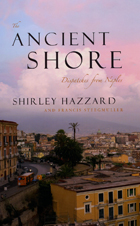
Born in Australia, Shirley Hazzard first moved to Naples as a young woman in the 1950s to take up a job with the United Nations. It was the beginning of a long love affair with the city. The Ancient Shore collects the best of Hazzard’s writings on Naples, along with a classic New Yorker essay by her late husband, Francis Steegmuller. For the pair, both insatiable readers, the Naples of Pliny, Gibbon, and Auden is constantly alive to them in the present.
With Hazzard as our guide, we encounter Henry James, Oscar Wilde, and of course Goethe, but Hazzard’s concern is primarily with the Naples of our own time—often violently unforgiving to innocent tourists, but able to transport the visitor who attends patiently to its rhythms and history. A town shadowed by both the symbol and the reality of Vesuvius can never fail to acknowledge the essential precariousness of life—nor, as the lover of Naples discovers, the human compassion, generosity, and friendship that are necessary to sustain it.
Beautifully illustrated by photographs from such masters as Henri Cartier-Bresson and Herbert List, The Ancient Shore is a lyrical letter to a lifelong love: honest and clear-eyed, yet still fervently, endlessly enchanted.
“Much larger than all its parts, this book does full justice to a place, and a time, where ‘nothing was pristine, except the light.’”—Bookforum
“Deep in the spell of Italy, Hazzard parses the difference between visiting and living and working in a foreign country. She writes with enormous eloquence and passion of the beauty of getting lost in a place.”—Susan Slater Reynolds, Los Angeles Times
“The two voices join in exquisite harmony. . . . A lovely book.”—Booklist, starred review
Michael Taussig’s work is known for its critical insights and bold, experimental style. In the eleven essays in this new collection, Taussig reflects on the act of writing itself, demonstrating its importance for anthropological practice and calling for the discipline to keep experiential knowledge from being extinguished as fieldnotes become scholarship.
Setting out to show how this can be done, And the Garden Is You exemplifies a form of exploratory writing that preserves the spontaneity of notes scribbled down in haste. In these essays, the author’s reflections take us from his childhood in Sydney to trips to Afghanistan, Colombia, Finland, Italy, Turkey, and Syria. Along the way, Taussig explores themes of fabulation and provocation that are central to his life’s work, in addition to the thinkers dearest to him—Bataille, Benjamin, Burroughs, and Nietzsche, among others. This collection is vintage Taussig, bound to interest longtime readers and newcomers alike.
"Lake is not content with simply being precise and original with his descriptions. He possesses another gift of the poetic mind: the ability to make his images, his simple scenes, resonate with meaning."—Wes Ziegler, Arkansas Democrat
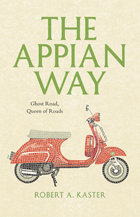
The Roman poet Statius called the via Appia “the Queen of Roads,” and for nearly a thousand years that description held true, as countless travelers trod its path from the center of Rome to the heel of Italy. Today, the road is all but gone, destroyed by time, neglect, and the incursions of modernity; to travel the Appian Way today is to be a seeker, and to walk in the footsteps of ghosts.
Our guide to those ghosts—and the layers of history they represent—is Robert A. Kaster. In The Appian Way, he brings a lifetime of studying Roman literature and history to his adventures along the ancient highway. A footsore Roman soldier pushing the imperial power south; craftsmen and farmers bringing their goods to the towns that lined the road; pious pilgrims headed to Jerusalem, using stage-by-stage directions we can still follow—all come to life once more as Kaster walks (and drives—and suffers car trouble) on what’s left of the Appian Way. Other voices help him tell the story: Cicero, Goethe, Hawthorne, Dickens, James, and even Monty Python offer commentary, insight, and curmudgeonly grumbles, their voices blending like the ages of the road to create a telescopic, perhaps kaleidoscopic, view of present and past.
To stand on the remnants of the Via Appia today is to stand in the pathway of history. With The Appian Way, Kaster invites us to close our eyes and walk with him back in time, to the campaigns of Garibaldi, the revolt of Spartacus, and the glory days of Imperial Rome. No traveler will want to miss this fascinating journey.
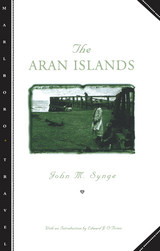
Synge first traveled to the primitive, little-known Aran Islands in 1898. His trip proved to be a wonderfully fruitful and decisive experience. He then went back for part of each summer until 1902. The Aran Islands, his memoir of those experiences, was published in 1907, and the future playwright called it his "first serious piece of work."
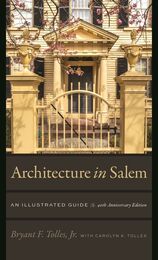
Salem, Massachusetts is home to one of the largest extant collections of historical architecture in the entire nation. In this long-awaited new edition, noted architectural historian Bryant F. Tolles, Jr., presents an illustrated guide and walking tour covering more than three centuries of building styles and types. The book discusses over 350 buildings and complexes, with individual entries and photographs of nearly 230 structures. The material has been arranged according to eight tour districts, each accompanied by an introduction and a map.
A joy for the avid walker and arm-chair enthusiast alike, this book is an essential guide to the architecture of Salem from the early seventeenth century through the Georgian, Federal, Victorian, modern, and contemporary periods. Updated with new maps; color illustrations; a preface by Lynda Roscoe Hartigen, executive director and CEO of the Peabody Essex Museum; and a foreword by Steven Mallory, manager of historic structures and landscapes at the Peabody Essex Museum.

This updated third edition revisits each of Wright’s extant structures, tracing the architect’s development from his Prairie works, such as the Frederick Robie house in Chicago, to the last building constructed to his specifications, the magnificent Aime and Norman Lykes residence in Arizona. Renowned expert William Storrer deftly incorporates a series of key revisions and brings each structure’s history up to the present day, as some buildings have been refurbished, some moved, and others sadly abandoned or destroyed by natural disasters like Hurricane Katrina—including the James Charnley bungalow in Ocean Springs, Mississippi.
Organized chronologically, this updated third edition features full-color photographs of all extant work along with a description of each building and its history. Storrer also provides full addresses, GPS coordinates, and maps of locations throughout the United States, England, and Japan, indicating the shortest route to each building—perfect for Wright aficionados on the go.
From Fallingwater to the Guggenheim, Frank Lloyd Wright is the undisputed master of American architecture. Now fully revised, The Architecture of Frank Lloyd Wright: A Complete Catalog will be indispensable for anyone fascinated with the architect’s unique genius.
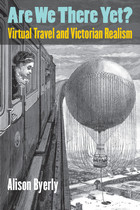
Are We There Yet? Virtual Travel and Victorian Realismconnects the Victorian fascination with "virtual travel" with the rise of realism in nineteenth-century fiction and twenty-first-century experiments in virtual reality. Even as the expansion of river and railway networks in the nineteenth century made travel easier than ever before, staying at home and fantasizing about travel turned into a favorite pastime. New ways of representing place—360-degree panoramas, foldout river maps, exhaustive railway guides—offered themselves as substitutes for actual travel. Thinking of these representations as a form of "virtual travel" reveals a surprising continuity between the Victorian fascination with imaginative dislocation and twenty-first -century efforts to use digital technology to expand the physical boundaries of the self.

For this first toponymic encyclopedia of Arizona, Barnes compiled information from published histories, federal and state government documents, and reminiscences of "old timers, Indians, Mexicans, cowboys, sheep-herders, historians, any and everybody who had a story to tell as to the origin and meaning of Arizona names." The result is a book chock full of oddments, humor, and now-forgotten lore, which belongs on the night table as well as in the glove compartment.
Barnes' original Arizona Place Names has become a booklover's favorite and is much in demand. The University of Arizona Press is pleased to reissue this classic of Arizoniana, which remains as useful and timeless as it was more than half a century ago.

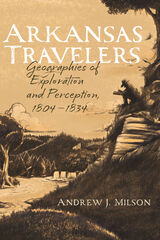
“I reckon stranger you have not been used much to traveling in the woods,” a hunter remarked to Henry Rowe Schoolcraft as he trekked through the Ozark backcountry in late 1818. The ensuing exchange is one of many compelling encounters between Arkansas travelers and settlers depicted in Arkansas Travelers: Geographies of Exploration and Perception, 1804–1834. This book is the first to integrate the stories of four travelers who explored Arkansas during the transformative period between the Louisiana Purchase of 1803 and statehood in 1836: William Dunbar, Thomas Nuttall, Henry Rowe Schoolcraft, and George William Featherstonhaugh.
In addition to gathering their tales of treacherous rivers, drunken scoundrels, and repulsive food, historian and geographer Andrew J. Milson explores the impact such travel narratives have had on geographical understandings of Arkansas places. Using the language in each traveler’s narrative, Milson suggests, and the book includes, new maps that trace these perceptions, illustrating not just the lands traversed, but the way travelers experienced and perceived place. By taking a geographical approach to the history of these spaces, Arkansas Travelers offers a deeper understanding—a deeper map—of Arkansas.
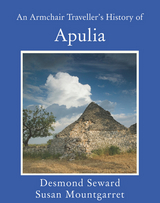
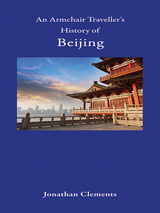
Home to capitals of several states over time, the site of modern Beijing has been ruled by Mongolian chiefs and the glorious Ming emperors, whose tombs can still be found on its outskirts. Through Beijing, we can experience Chinese history itself, including its more famous residents—including Khubilai Khan, Mulan, and Marco Polo. Special emphasis is placed on Beijing’s precarious heritage in the twenty-first century, as modern construction wipes out much of the old city to make way for homes for twenty million people.
This book also offers detailed information on sites of tourist interest, including the pros and cons of different sections of the Great Wall and the best ways to see the Forbidden City and the fast-disappearing relics of the city’s Manchu and Maoist eras. A chapter on food and drink examines not only local delicacies, but the many other Chinese dishes that form part of Beijing’s rich dining traditions. With its blend of rich history and expert tips, An Armchair Traveller’s History of Beijing is an essential introduction to one of the world’s most remarkable cities.


Clements travels the length of the country as he tells these stories, along the way offering accounts of Finland’s public artworks, literary giants, legends and folktales, and famous figures. The result is the perfect introduction to Finland for armchair and actual travelers alike.

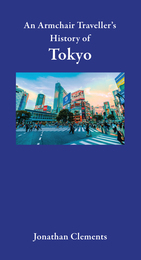
Tokyo, meaning “Eastern Capital,” has only enjoyed that name and status for 150 years. Before that, it was a medieval outpost designed to keep watch over rich farmlands. But this seemingly unassuming geographical location ultimately led to its status as a supercity. Though the imperial court ruled Japan from the sleepy city of Kyoto, the landowners of the Kanto plain where Tokyo lies held the true wealth and power in Japan, which they eventually asserted in a series of bloody civil wars. The Tokyo region became the administrative center of Japan’s Shogun overlords and the site of a vibrant urban culture home to theaters, taverns, and brothels. After the Meiji Restoration in 1868, it became Japan’s true capital, home to the emperors, the seat of government, and a site of rapid urban growth.
Anyone who’s ever longed to look upon Mount Fuji, embody the bravery of the Samurai, or savor the world’s finest sushi will find themselves transported from the comfort of their armchair while reading Clements’s account of Tokyo.
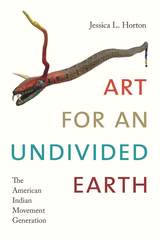

During his fateful journey, Artaud wrote letters to friends in Paris which included several “magic spells,” intended to curse his enemies and protect his friends from the city’s forthcoming incineration and the Antichrist’s appearance. (To André Breton, he wrote: “It’s the Unbelievable—yes, the Unbelievable—it’s the Unbelievable which is the truth.”) This book collects all of Artaud’s surviving correspondence from his time in Ireland, as well as photographs of the locations he traveled through. Featuring an afterword and notes by the book’s translator, Stephen Barber, this edition marks the seventieth anniversary of Artaud’s death.
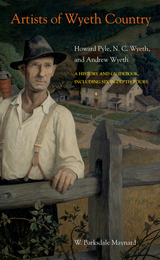
Few artists have ever been so beloved—or so controversial among art critics—as Andrew Wyeth. The groundbreaking book Artists of Wyeth Country presents an unauthorized and unbiased biographical portrait of Wyeth, based on interviews with family, friends, neighbors—even actress Eva Marie Saint. Journalist W. Barksdale Maynard shines new light on the reclusive artist, emphasizing Wyeth’s artistic debt to Howard Pyle as well as his surprising interest in surrealism. The book is filled with brand-new information and fresh interpretations.
Artists of Wyeth Country also comprises the first-ever guidebook to the artistic world of Chadds Ford, Pennsylvania, center of the Brandywine Tradition begun by Howard Pyle. Six in-depth tours for walking or driving allow the reader to stand exactly where N. C. and Andrew Wyeth stood, as has never been fully possible before.
As Maynard explains, Andrew Wyeth’s artistic process was influenced by Henry David Thoreau’s nature-worship and by his habit of walking daily. Newly commissioned maps, rare aerial photographs, as well as glorious full-color images and artworks of the landscape (many never reproduced before) illustrate the text.
A fascinating exploration of the world of Andrew Wyeth, Artists of Wyeth Country is sure to become an essential new source for those who love American art as well as for admirers of the scenic landscapes of the Mid-Atlantic, of which the Brandywine Valley is an exceptional example. As a rare, unauthorized biography of Andrew Wyeth, it opens the door for an entirely new understanding of the American master.

When David Brill’s now-classic account of his 1979 thru-hike of the 2,190-mile Appalachian Trail was released in 1990, it immediately struck a chord with veterans and aspirants of one of the world’s longest continuously marked footpaths. Over the years, the book has continued to sell through multiple printings.
As Far as the Eye Can See: Reflections of an Appalachian Trail Hiker, now in its fifth (thirtieth-anniversary) edition and eighth printing, was recently released by the University of Tennessee Press. The new edition features a new preface on Brill’s 2019 40th-anniversary reunion in Maine with his AT buddies, as well as prefaces to earlier editions and three bonus chapters that bring Brill’s continuing connection with the trail to near the present.
In the years following release of As Far as the Eye Can See, first-person accounts of hiking the trail burgeoned into a literary genre, but Brill’s book was among the first to capture the physical and spiritual aspects of the long journey across fourteen states.
Brill and his fellow hikers, who are all portrayed in the book, were relatively early devotees on a pilgrimage that, within a few decades, would become a popular rite of passage. Indeed, by the end of 1979, a mere 837 people had reported finishing the entire AT route over the trail’s then 42-year history. The total now easily exceeds 20,000.
Brill credits his trail experiences with inspiring his career as a magazine journalist and book author and providing the theme for much of his subsequent writing on nature and adventure travel. The trail also did much to shape his enduring values and beliefs.
“Though it took me a while to realize it, the trail had shaped me, had given me a philosophy, had toughened me in some ways, had softened me in others, and taught me lessons I will never forget: lessons on survival, kindness, strength, friendship, courage, perseverance, and the ways of nature,” Brill writes in the book’s final chapter, “Coming Home.” “Those lessons have affected everything I’ve done since.”
Readers find that Brill’s experiences and observations on the healing power of nature from forty years ago are equally relevant in today’s world.
The book’s first edition received widespread critical acclaim. The San Francisco Book Reader wrote: “Evocatively written gems of observation full of native wisdom brimming over with thoughts and exploits…. You read and read again, this book is that rich.” Many other reviewers have commended the book on its honest portrayal of the trail experience and the literary quality of its prose. In its review, The Roanoke Times effused “Thoreau lives!”

The Important Plant Areas of Mozambique is based on the Mozambique TIPAs project run in collaboration between Royal Botanic Gardens, Kew, Mozambique’s Agricultural Research Institute (Instituto de Investigação Agrária de Moçambique – IIAM), and the University Eduardo Mondlane. Drawing on information from the TIPAs database, The Important Plant Areas of Mozambique includes color maps and photographs, site descriptions, and tables to present information on the botanical significance, habitat, and geology of the region. The book will also address conservation issues and ecosystem services to promote Mozambique’s critical plant sites and inform conservation leaders in government, NGOs, universities, and local communities about Mozambique’s threatened habitats.
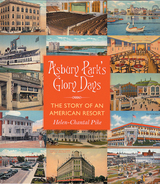
In Asbury Park's Glory Days, award-winning author Helen-Chantal Pike chronicles the city's heyday-the ninety-year period between 1890 and 1980. Pike illuminates the historical conditions contributing to the town's cycle of booms and recessions. She investigates the factors that influenced these peaks, such as location, lodging, dining, nightlife, merchandising, and immigration, and how and why millions of people spent their leisure time within this one-square-mile boundary on the northern coast of the state. Pike also includes an epilogue describing recent attempts to resurrect this once-vibrant city.

This illustrated collection of annotated newspaper articles and memorials by Dorothea Dix provides a forum for the great mid-nineteenth-century humanitarian and reformer to speak for herself.
Dorothea Lynde Dix (1802–87) was perhaps the most famous and admired woman in America for much of the nineteenth century. Beginning in the early 1840s, she launched a personal crusade to persuade the various states to provide humane care and effective treatment for the mentally ill by funding specialized hospitals for that purpose. The appalling conditions endured by most mentally ill inmates in prisons, jails, and poorhouses led her to take an active interest also in prison reform and in efforts to ameliorate poverty.
In 1846–47 Dix brought her crusade to Illinois. She presented two lengthy memorials to the legislature, the first describing conditions at the state penitentiary at Alton and the second discussing the sufferings of the insane and urging the establishment of a state hospital for their care. She also wrote a series of newspaper articles detailing conditions in the jails and poorhouses of many Illinois communities.
These long-forgotten documents, which appear in unabridged form in this book, contain a wealth of information on the living conditions of some of the most unfortunate inhabitants of Illinois. In his preface, David L. Lightner describes some of the vivid images that emerge from Dorothea Dix's descriptions of social conditions in Illinois a century and a half ago: "A helpless maniac confined throughout the bitter cold of winter to a dark and filthy pit. Prison inmates chained in hallways and cellars because no more men can be squeezed into the dank and airless cells. Aged paupers auctioned off by county officers to whoever will maintain them at the lowest cost."
Lightner provides an introduction to every document, placing each memorial and newspaper article in its proper social and historical context. He also furnishes detailed notes, making these documents readily accessible to readers a century and a half later. In his final chapter, Lightner assesses both the immediate and the continuing impact of Dix's work.
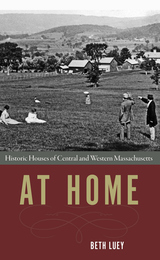
In At Home: Historic Houses of Central and Western Massachusetts, Beth Luey examines the lives and homes of acclaimed poets and writers, slaves who won their freedom, Civil War enlistees, socialites, and leading merchants. Drawing on architectural and genealogical texts, wills, correspondence, and diaries, Luey situates the stories of these notable homes and the people who inhabited them in the context of broader economic, social, and political transformations. Filled with vivid details and fresh perspectives, each chapter is sure to inspire first-time visitors and seasoned travelers alike. All the homes are open to the public.
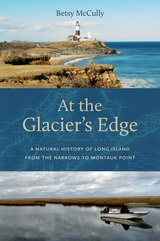
Combining science writing, environmental history, and first-hand accounts from a longtime resident, At the Glacier’s Edge offers a unique narrative natural history of Long Island. Betsy McCully tells the story of how the island was formed at the end of the last ice age, how its habitats evolved, and how humans in the last few hundred years have radically altered and degraded its landscape. Yet as she personally recounts the habitat losses and species declines she has witnessed over the past few decades, she describes the vital efforts that environmental activists are making to restore and reclaim this land—from replanting salt marshes, to preserving remaining grasslands and forests, to cleaning up the waters. At the Glacier’s Edge provides an in-depth look at the flora, fauna and geology that make Long Island so special.
Revered as the birthplace of Western thought and democracy, Athens is much more than an open-air museum filled with crumbling monuments to ancient glory. Athens takes readers on a journey from the classical city-state to today’s contemporary capital, revealing a world-famous metropolis that has been resurrected and redefined time and again.
Although the Acropolis remains the city’s anchor, Athens’ vibrant culture extends far beyond the Greek city’s antique boundaries. James H. S. McGregor points out how the cityscape preserves signs of the many actors who have crossed its historical stage. Alexander the Great incorporated Athens into his empire, as did the Romans. Byzantine Christians repurposed Greek temples, the Parthenon included, into churches. From the thirteenth to fifteenth centuries, the city’s language changed from French to Spanish to Italian, as Crusaders and adventurers from different parts of Western Europe took turns sacking and administering the city. An Islamic Athens took root following the Ottoman conquest of 1456 and remained in place for nearly four hundred years, until Greek patriots finally won independence in a blood-drenched revolution.
Since then, Athenians have endured many hardships, from Nazi occupation and military coups to famine and economic crisis. Yet, as McGregor shows, the history of Athens is closer to a heroic epic than a Greek tragedy. Richly supplemented with maps and illustrations, Athens paints a portrait of one of the world’s great cities, designed for travelers as well as armchair students of urban history.
Translated by Simon Pare, this unique account follows Ransmayr across the globe: from the shadow of Java’s volcanoes to the rapids of the Mekong and Danube Rivers, from the drift ice of the Arctic Circle to Himalayan passes, and on to the disenchanted islands of the South Pacific. Ransmayr begins again and again with, “I saw. . .” recounting to the reader the stories of continents, eras, and landscapes of the soul. Like maps, the episodes come together to become a book of the world—one that charts the life and death, happiness and fate of people bound up in images of breathtaking beauty.
“One of the German language’s most gifted young novelists.”—Library Journal, on The Terrors of Ice and Darkness
Edited by historian Nancy S. Seasholes, this landmark volume captures all aspects of Boston’s past in a series of fifty-seven stunning full-color spreads. Each section features newly created thematic maps that focus on moments and topics in that history. These maps are accompanied by hundreds of historical and contemporary illustrations and explanatory text from historians and other expert contributors. They illuminate a wide range of topics including Boston’s physical and economic development, changing demography, and social and cultural life. In lavishly produced detail, The Atlas of Boston History offers a vivid, refreshing perspective on the development of this iconic American city.
Contributors
Robert J. Allison, Robert Charles Anderson, John Avault, Joseph Bagley, Charles Bahne, Laurie Baise, J. L. Bell, Rebekah Bryer, Aubrey Butts, Benjamin L. Carp, Amy D. Finstein, Gerald Gamm, Richard Garver, Katherine Grandjean, Michelle Granshaw, James Green, Dean Grodzins, Karl Haglund, Ruth-Ann M. Harris, Arthur Krim, Stephanie Kruel, Kerima M. Lewis, Noam Maggor, Dane A. Morrison, James C. O’Connell, Mark Peterson, Marshall Pontrelli, Gayle Sawtelle, Nancy S. Seasholes, Reed Ueda, Lawrence J. Vale, Jim Vrabel, Sam Bass Warner, Jay Wickersham, and Susan Wilson
Oceans drive the world’s climate, nurture marine ecosystems full of aquatic life, and provide shipping lanes that have defined the global economy for centuries. And few realize that half of the world’s population lives in a coastal region within easy reach of one. Yet human activities such as commercial fishing, coastal real estate development, and industrial pollution have taken their toll on the seas. The first book of its kind, The Atlas of Coasts and Oceans documents the fraught relationship between humans and the earth’s largest bodies of water—and outlines the conservation steps needed to protect the marine environment for generations to come.
The Atlas offers a fascinating and often sobering account of how urbanization, climate change, offshore oil drilling, shipping routes, global tourism, and maritime conflict have had a profound impact on the world’s oceans and coasts. Combining text and images in visually engaging, thematically organized map spreads, this volume addresses the ecological, environmental, and economic importance of marine phenomena such as coral reefs, eroding shorelines, hurricanes, and fish populations—and how development threatens to destroy the ultimate source of all life on the “blue planet.” Lavishly illustrated with global and regional maps, from the Arabian Gulf to the Great Barrier Reef, from the Black Sea to the Mediterranean, and all the other major global waterways, The Atlas of Coasts and Oceans will be the definitive companion to any study of its subject for years to come.


This dazzling book takes us on a voyage of discovery around the world at the turn of the last millennium, when for the first time the world was in essence a unity. Islam bridged Eurasia, western Europe, and North Africa. Vikings, with links to Scandinavia and Russia, had just arrived in North America. These and other peoples reached out to create links and put isolated cultures unwittingly in touch. John Man vividly captures these epochal events, and depicts the colorful peoples that defined the world’s mix of stability and change, of isolation and contact. In an immensely learned portrayal, he traces enduring cultural strands that became part of the world as we know it today.
In text, maps, and pictures, most in color, and drawing on the expertise of two dozen consultants, John Man has created a concise compendium of all the major cultures of the lost millennial world of 1000. In some cultures—Europe, Islam, China, and Japan—written records contain a vast range of materials, often revealing sharply focused details of life and personality. Here lie startling contrasts with today’s world, and even foreshadowing of the future that are equally astonishing in their familiarity. For nonliterate cultures—in the United States, Southeast Asia, Polynesia, Africa—this book draws on a wealth of archeological research, some of it made available to nonspecialists for the first time.

Terry Root has used the data from the 1963-72 counts to provide the first large-scale biogeographical account of birds wintering in North America. Using sophisticated computer techniques, Root has translated the data into both traditional contour maps and innovative new maps that stimulate three dimensions. The maps show at a glance that, for example, the Baltimore Oriole winters primarily along the eastern seaboard, with the densest populations in Florida between Tallahassee and Gainesville and in North Carolina from Rocky Mount to the Croatan National Forest.
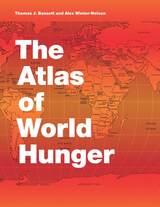
Earlier this year, President Obama declared one of his top priorities to be “making sure that people are able to get enough to eat.” The United States spends about five billion dollars on food aid and related programs each year, but still, both domestically and internationally, millions of people are hungry. In 2006, the Food and Agricultural Organization of the United Nations counted 850 million hungry people worldwide, but as food prices soared, an additional 100 million or more who were vulnerable succumbed to food insecurity.
If hunger were simply a matter of food production, no one would go without. There is more than enough food produced annually to provide every living person with a healthy diet, yet so many suffer from food shortages, unsafe water, and malnutrition every year. That’s because hunger is a complex political, economic, and ecological phenomenon. The interplay of these forces produces a geography of hunger that Thomas J. Bassett and Alex Winter-Nelson illuminate in this empowering book. The Atlas of World Hunger uses a conceptual framework informed by geography and agricultural economics to present a hunger index that combines food availability, household access, and nutritional outcomes into a single tool—one that delivers a fuller understanding of the scope of global hunger, its underlying mechanisms, and the ways in which the goals for ending hunger can be achieved. The first depiction of the geography of hunger worldwide, the Atlas will be an important resource for teachers, students, and anyone else interested in understanding the geography and causes of hunger. This knowledge, the authors argue, is a critical first step toward eliminating unnecessary suffering in a world of plenty.
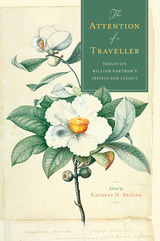
William Bartram, author of Travels through North and South Carolina, Georgia, East and West Florida, the Cherokee Country, the Extensive Territories of the Muscogulees, or Creek Confederacy, and the Country of the Chactaws, was colonial America’s first native born naturalist and artist, and the first author in the modern genre of writers who portrayed nature through personal experience as well as scientific observation. His book, first published in 1791, was based on his journeys through southern Indian nations and Britain’s southern colonies in the years just prior to the American Revolution and provides descriptions of the natural and cultural environments of what would soon become the American South. Scholars and general readers alike have long appreciated Bartram’s lush, vivid prose, his clarity of observation and evident wonder at the landscapes he traversed, and his engagement with the native nations whose lands he traveled through.
The Attention of a Traveller: Essays on William Bartram’s “Travels” and Legacy offers an interdisciplinary assessment of Bartram’s influence and evolving legacy, opening new avenues of research concerning the flora, fauna, and people connected to Bartram and his writings. Featuring 13 essays divided into five sections, contributors to the volume weave together scholarly perspectives from geology, art history, literary criticism, geography, and philosophy, alongside the more traditional Bartram-affiliated disciplines of biology and history. The collection concludes with a comprehensive treatment of the book as a material historical artifact.
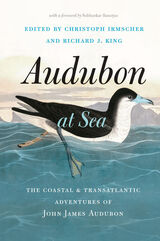
The American naturalist John James Audubon (1785–1851) is widely remembered for his iconic paintings of American birdlife. But as this anthology makes clear, Audubon was also a brilliant writer—and his keen gaze took in far more than creatures of the sky. Culled from his published and unpublished writings, Audubon at Sea explores Audubon’s diverse observations of the ocean, the coast, and their human and animal inhabitants. With Audubon expert Christoph Irmscher and scholar of the sea Richard J. King as our guides, we set sail from the humid expanses of the American South to the shores of England and the chilly landscapes of the Canadian North. We learn not only about the diversity of sea life Audubon documented—birds, sharks, fish, and whales—but also about life aboard ship, travel in early America, Audubon’s work habits, and the origins of beloved paintings. As we face an unfathomable loss of seabirds today, Audubon’s warnings about the fragility of birdlife in his time are prescient and newly relevant.
Charting the course of Audubon’s life and work, from his birth in Haiti to his death in New York City, Irmscher and King’s sweeping introduction and carefully drawn commentary confront the challenges Audubon’s legacy poses for us today, including his participation in American slavery and the thousands of birds he killed for his art. Rounded out by hundreds of historical and ornithological notes and beautiful illustrations, and with a foreword by distinguished photographer and conservationist Subhankar Banerjee, Audubon at Sea is the most comprehensively annotated collection of Audubon’s work ever published.
This comprehensive study of the Russian literary travelogue, a genre that blossomed in the early nineteenth century, sheds new light on Russian literature and culture of the period.
In the decades before and during the rise of the Russian novel, a new form of prose writing took hold in Russia: travel accounts, often fictional, marked by a fully developed narrator's voice, interpretive impressions, scenic descriptions, and extended narrative. Prompted in part by the growth of leisure travel and in part by publication of Western European examples of travel writing, the genre attracted the talents of numerous writers, including Radishchev, Karamzin, and Pushkin. In illuminating analyses of major texts as well as lesser known but influential works, Andreas Schönle surveys the literary travelogue from its emergence in Russia to the end of the Romantic era. His study offers new insight on the construction of the authorial persona and on the emergence of fiction in a culture that valued nonfiction writing.
READERS
Browse our collection.
PUBLISHERS
See BiblioVault's publisher services.
STUDENT SERVICES
Files for college accessibility offices.
RECENTLY PUBLISHED





UChicago Accessibility Resources
home | accessibility | search | about | contact us
BiblioVault ® 2001 - 2024
The University of Chicago Press